The Snakes Of The Florida Keys
The Florida Keys string out into the tropics like stepping stones, and like a lot of islands, they have a wildlife story all their own. Their snakes are a perfect example: there are fewer species here than on the Florida mainland, most of them are completely harmless, and a handful are found almost nowhere else on Earth. From harmless racers gliding through backyards to one of the most dangerous snakes in the country, the Keys pack a surprising range into one small chain of islands. Add in a few rare natives and some unwelcome invaders, and it makes for a genuinely fascinating cast. Here are the snakes of the Florida Keys.
An Island Snake Community

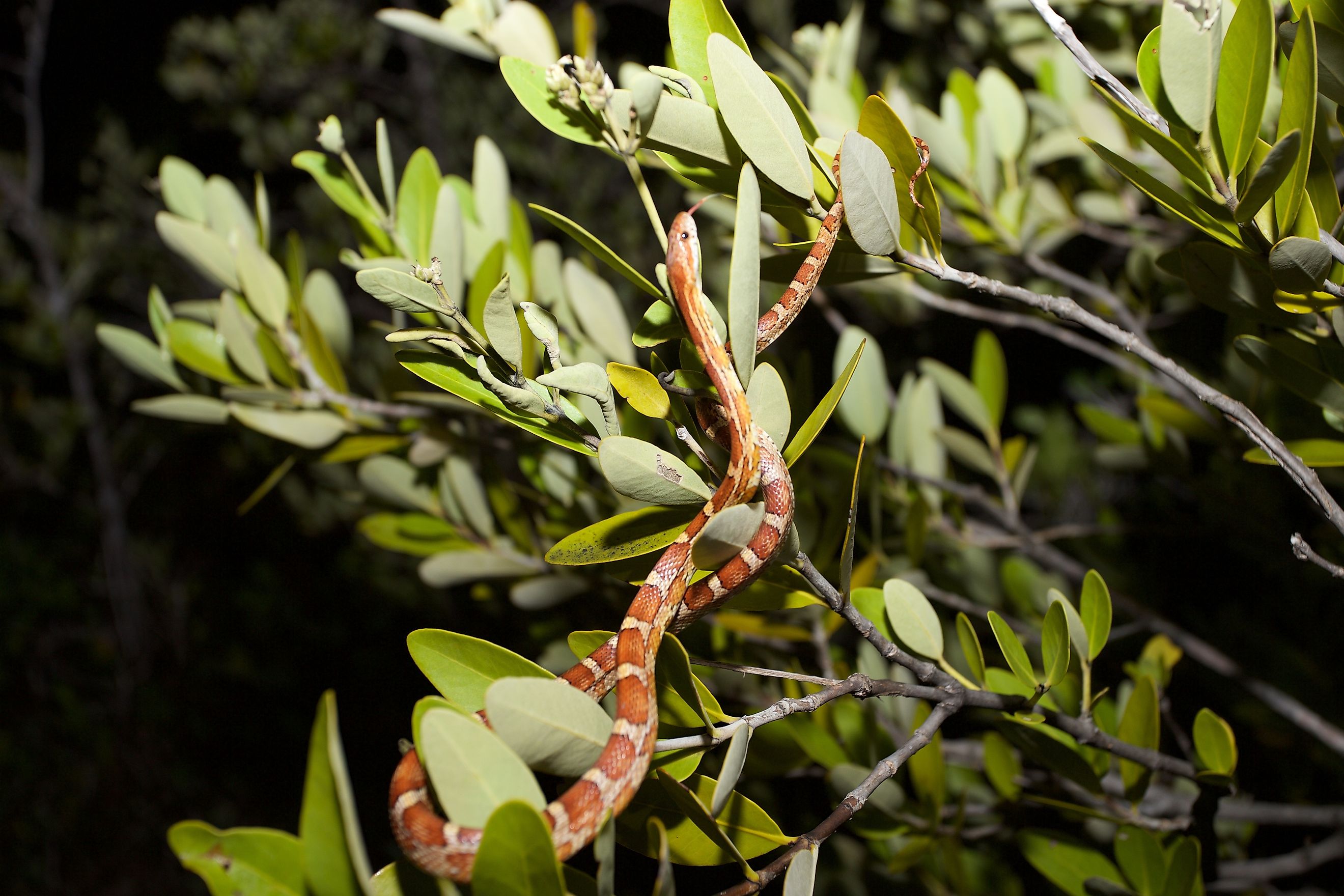
Because the Keys are islands, they follow the rules of island biogeography, which generally means fewer species than you would find on the nearby mainland. Mainland Florida is home to around 50 snake species, but only a fraction of those ever made it out onto the Keys and managed to survive there. The ones that did have sometimes taken on a distinct island character; the Keys' red rat snakes, for instance, tend to run a brighter orange than their mainland cousins. The result is a smaller, quirkier snake community that feels specific to these particular islands.
The Harmless Majority

The good news for visitors is that the vast majority of Keys snakes are completely harmless. The snake you are most likely to meet is the southern black racer, a slim, fast, jet-black snake that bolts for cover the instant it spots you. You might also come across the gorgeous red rat snake, better known as the corn snake, the vividly banded scarlet kingsnake, or the small, secretive Florida brown snake and ring-necked snake rustling through the leaf litter. None of these are venomous; they are simply efficient hunters of rodents, lizards, and frogs.
Snakes of the Mangroves

The Keys also have snakes built for a life most people never think of as snake habitat: the salty mangrove coast. The standout is the mangrove salt marsh snake, a water snake specially adapted to live among the brackish creeks, mudflats, and tangled mangrove roots that ring the islands. It comes in a surprising range of colors, from gray and olive to a striking red-orange, and it hunts small fish and crustaceans in the shallows. In a place surrounded on all sides by salt water, these coastal specialists have carved out a niche that few other snakes could handle.
The Venomous Few

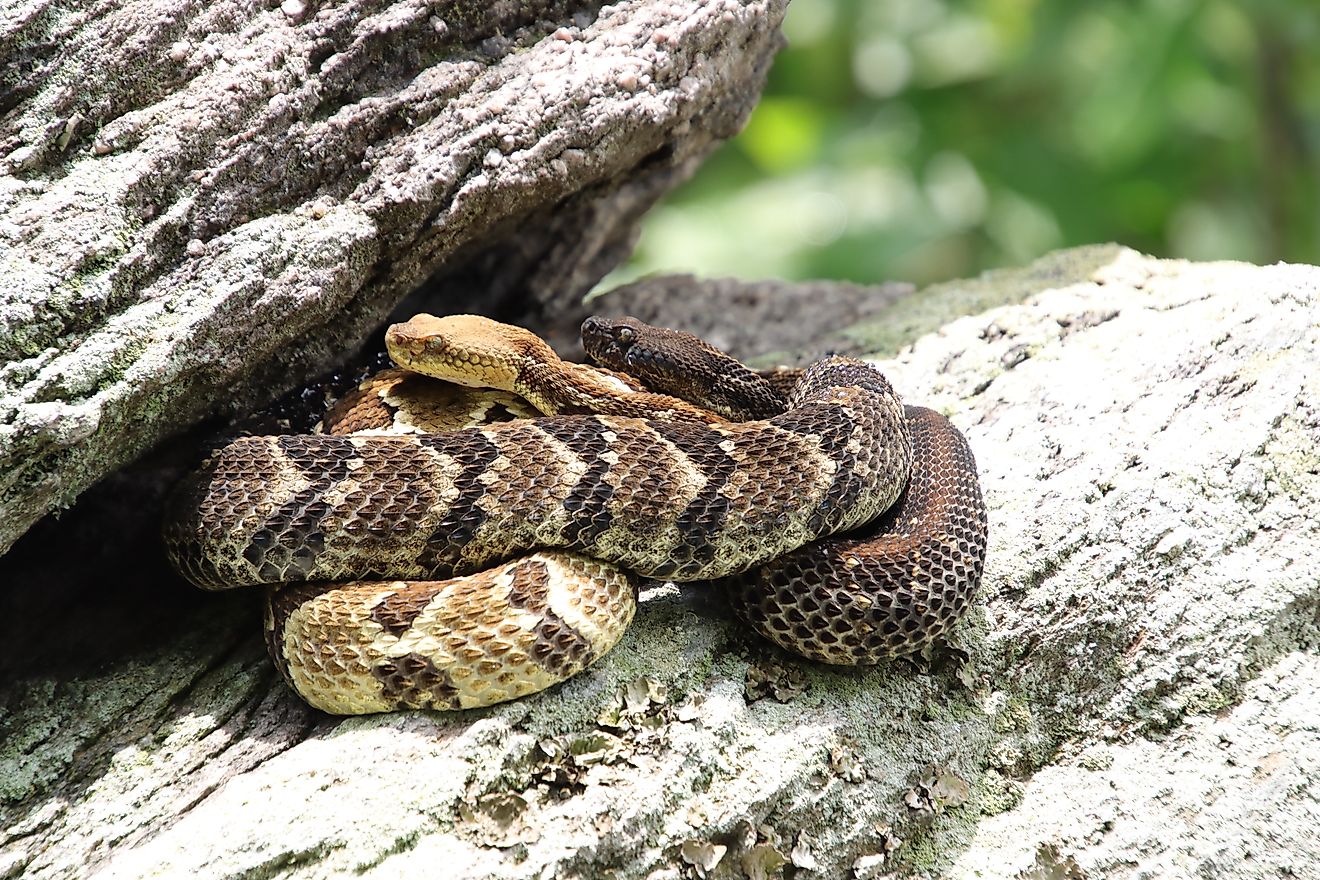
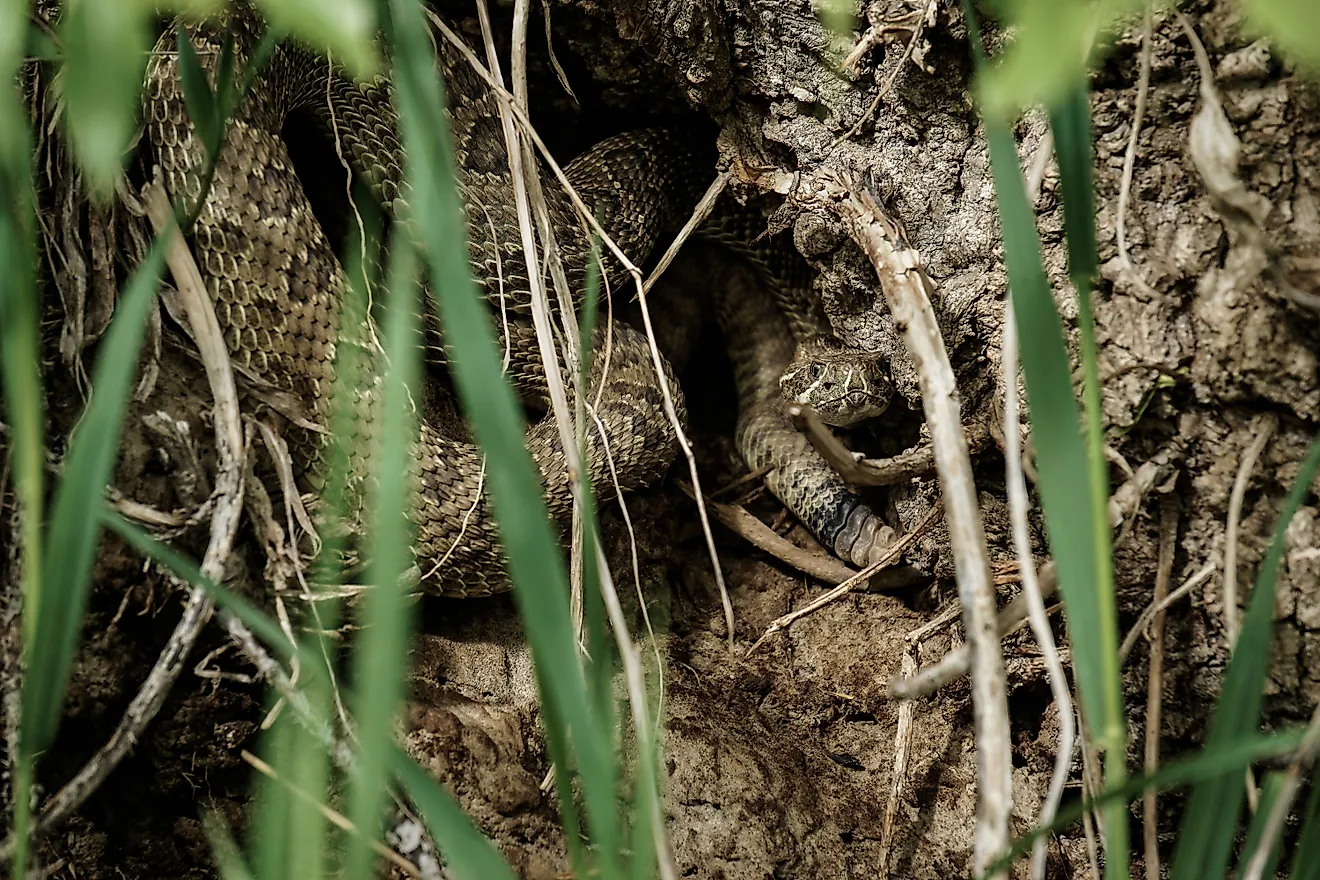
The Keys are refreshingly light on venomous snakes, but they are not entirely free of them. The one to respect is the eastern diamondback rattlesnake, the largest and heaviest venomous snake in North America, which turns up in the Lower Keys on islands like Big Pine Key. The other native venomous species is the eastern coral snake, a small, secretive, brightly banded snake whose rings of red, yellow, and black warn of a potent venom. Both are shy and want nothing to do with people, but both earn a wide, respectful berth if you are lucky enough to spot one.
The Rare and the Invasive

The Keys also host some of the rarest snakes in the country right alongside some of the most unwelcome. On the rare end is the rim rock crowned snake, a tiny, burrowing species of the Keys' limestone pine rocklands that is considered one of the most endangered snakes in North America, together with the threatened eastern indigo, Florida's largest native snake. On the unwelcome end are the invaders: the notorious Burmese python, which has devastated the Everglades and is pressing south toward the islands, plus escaped boa constrictors and the tiny, worm-like Brahminy blind snake. Together, these newcomers are quietly reshaping the Keys' delicate snake community in real time. From a harmless racer in the garden to a rattlesnake in the pinelands, the snakes of the Florida Keys are a small but remarkable cast, each one perfectly suited to life at the tropical edge of the United States.