How Far North Black Widows Live
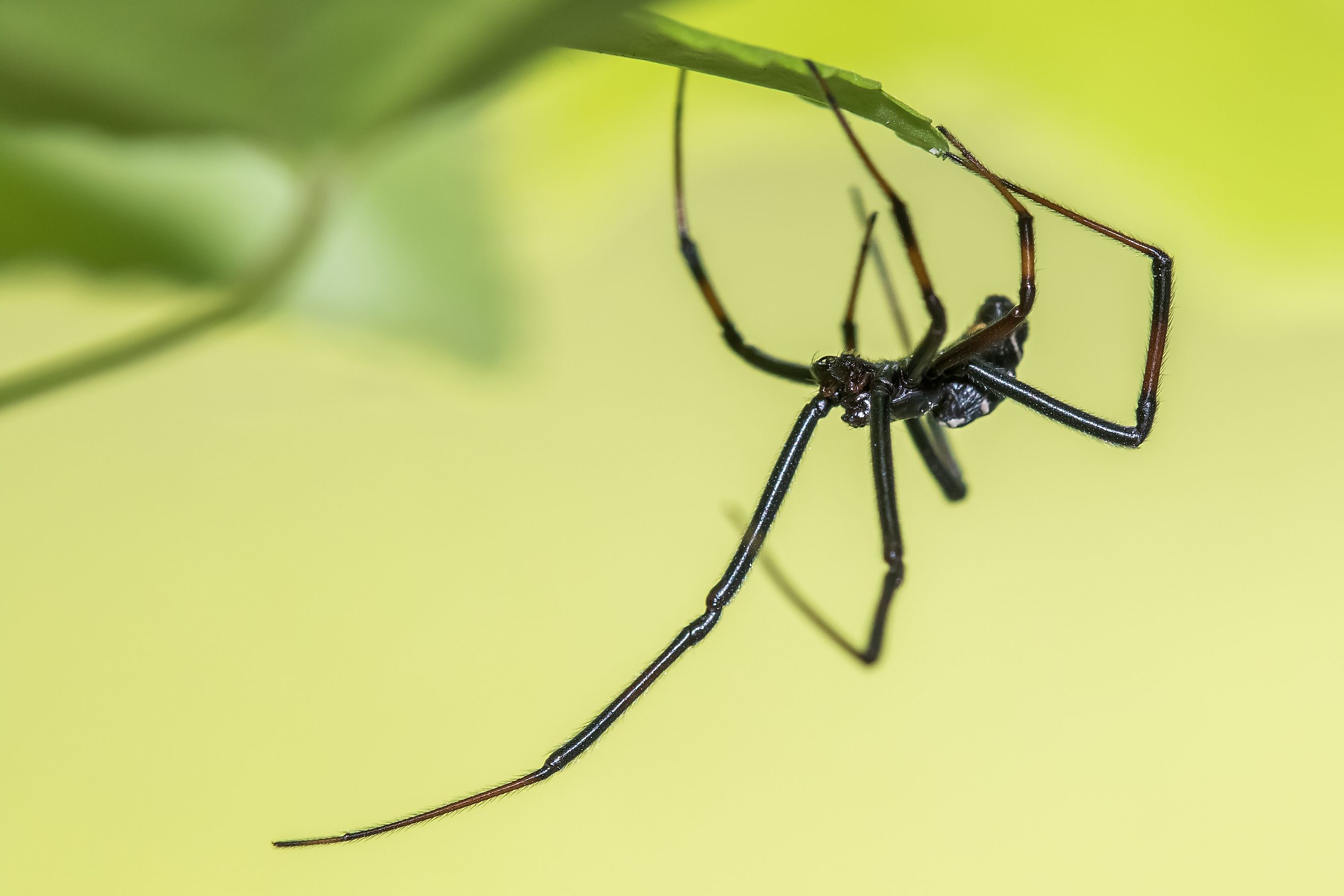
In the hardwood forests and old stone walls of southern Ontario, a spider marked with red on its underside has begun turning up where older field guides drew a firm northern boundary. It is the northern black widow (Latrodectus variolus), the one member of its genus that pushes deeper into the cold than any other widow in North America. The answer to how far north black widows live is sharper now than it was a generation ago, because that line has been moving. Two species carry almost all of the genus into the northern latitudes, one in the east and one in the west, and both now cross into Canada. Their advance is slow and quiet, and it tracks winter temperature more closely than anything else.
The Widow Built For The Cold

Three widow species are established across the United States, and they divide the continent roughly by compass point. The southern black widow (Latrodectus mactans) holds the Southeast. The western black widow (Latrodectus hesperus) owns the arid West. The northern black widow takes the Northeast and the Great Lakes, and it is the one whose name is a promise about latitude. A quick look underneath tells the eastern two apart. The southern species wears a single connected red hourglass, while the northern species usually shows two separate red marks and a row of red spots down its back. All three carry the same class of neurotoxin and the same reputation, yet only L. variolus and L. hesperus are built to winter near the Canadian border.
The Eastern Edge Of Widow Country

The northern black widow ranges along the Atlantic side of the continent. Its territory begins in northern Florida, climbs through New York and Massachusetts, and crosses into southeastern Canada, with records in southern Ontario, southern Quebec, and the Maritime provinces. Westward it follows the Appalachians and the Great Lakes states, including Michigan and Wisconsin, and reaches as far as eastern Texas and Kansas. The spider is most common in the northern part of that range rather than the southern. In Michigan it is the only widow present and an uncommon enough find to be worth remarking on, and across the north it lives as a woodland animal of stumps, walls, and undisturbed ground rather than a resident of houses. Where its territory runs south it overlaps with the venomous spiders of the southern wetlands, and the two eastern widows can be hard to tell apart.
The Western Edge, Dry Country And The Pacific Slope

On the other side of the continent, the western black widow carries the genus just as far north by a different route. occupies the western third of the landmass. It begins in California and the deserts of the Southwest, runs north through the Great Basin, and reaches the dry southern valleys of British Columbia, Alberta, and Saskatchewan, with a toehold in southwestern Manitoba, and it continues south into Mexico. It is widespread in southern British Columbia, where it is the only widow and the species native to the province, and it leans toward human structures far more than its eastern cousin, settling into water meter boxes, woodpiles, and the backs of garages. Taxonomists long treated it as a subspecies of the southern black widow before recognizing it as a species of its own in the twentieth century. Where its range brushes the southern Great Plains it meets L. mactans, and the two can overlap.
Where The Southern Widow Stops Short

The widow most people picture, the glossy southern black widow of back porches and firewood, is in fact the one that travels least far north. Its core lies in the Southeast, and its range thins out around Ohio and the lower Midwest, running west to Texas and Kansas but stopping well short of the border. No established southern black widow population reaches Canada, which leaves the colder latitudes to the two hardier species. Other feared spiders draw their lines even farther south. The brown recluse, for one, keeps to the south-central states, and how far north the brown recluse pushes is a separate question answered by a different map of basements and bioregions.
What Winter Does To A Widow

The northern limit of every widow is drawn, in the end, by cold. The distribution modeling behind the most detailed study of L. variolus found that the single strongest predictor of where the spider can live is the average temperature of the warmest three months of the year, the window in which a widow must mature, mate, and produce an egg sac before the season closes. In the north the active season is short, lasting roughly April through early November, and juveniles must overwinter in sheltered spots to survive. The first hard killing frost ends the year. A widow that cannot complete its life cycle inside that narrow warm window leaves no offspring, and the species goes no farther. That is why the boundary has long sat where summers turn reliably cool rather than at any line a political map would predict.
A Boundary On The Move

Because that boundary is temperature, a warming climate moves it. A 2018 study in the journal PLOS ONE, led by Yifu Wang and colleagues at McGill University and the Montreal Insectarium, assembled museum specimens and citizen-science observations into an updated map of the northern black widow and found that its documented northern edge had shifted markedly over the preceding decades, by roughly 50 kilometers (31 miles). Since 2012, individual spiders have been recorded in eastern Ontario and southern Quebec where none had been documented before, and the authors suggested the real range may already extend another 50 kilometers toward Montreal, a city where none had yet been reported. Warmer winters and a growing season that stretches later into the fall, delaying that first killing frost, are the mechanisms the researchers point to. The northern edge of widow country, in other words, is not a fixed fact but a line that recent decades have nudged upward.
How Dangerous Is A Northern Bite

A widow's venom is potent out of proportion to the animal's size. It contains alpha-latrotoxin, a compound that floods nerve endings and triggers the syndrome known as latrodectism, marked by delayed-onset pain, severe muscle cramps, abdominal rigidity that can mimic a surgical emergency, sweating, and raised blood pressure. Only adult females deliver medically serious bites, usually in defense when the spider is pressed against skin or guarding an egg sac. Males and juveniles have fangs too small to matter. The spiders are not aggressive and will flee or feign death rather than confront a person. The numbers put the danger in perspective. United States poison centers logged 15,299 black widow exposures between 2012 and 2022, an average near 1,400 a year, and no death has been attributed to a black widow in the national poison-center record since 1983. Accounts from before antivenom reached hospitals in the 1930s suggested that roughly five percent of bites could be fatal, a figure modern care has all but erased. Antivenom exists, though it is now used mainly to shorten severe pain rather than to save lives, and far more people die each year from dogs, farm animals, and stinging insects than from every spider in the country combined.
Staying Safe In Widow Country

For anyone who hikes, camps, gardens, or works outdoors within the widow's range, a few habits remove almost all of the risk. Wear gloves when you move firewood, lumber, rocks, or anything that has sat undisturbed on the ground, since that is where a widow builds. Look before reaching blindly into meter boxes, crawl spaces, sheds, outbuildings, and the undersides of outdoor furniture. Shake out boots, gloves, and gear that have been stored in a garage or left outside overnight. Most bites happen when a spider is trapped against the body, so giving one room to drop away is usually enough. If a bite does occur, wash the area, apply a cold compress, and seek medical care should cramping, sweating, or spreading pain set in, and a regional poison center can advise by phone. The great majority of people recover within a day or two with supportive treatment. Even inside the mapped range an encounter stays uncommon, especially in the north, where the spider is thinly spread and shy.
Living With A Northern Neighbor
The northern limits of black widow spiders are not as fixed as they once appeared. In eastern Canada, the northern black widow has been documented in southern Ontario and Quebec, with climate models suggesting suitable conditions could extend closer to Montreal as temperatures rise. In the west, the western black widow reaches the dry southern edges of three Canadian provinces. Together, the two species bring the genus close to the Canadian border at opposite ends of the continent. Warmer conditions have helped make these northern habitats more suitable, although the risk to people remains relatively low. Their expanding range is less a sign of increased danger than another indication of how rising temperatures are changing the distribution of cold-sensitive wildlife.