Which Animals Can Live Without Water For Years?
A human dies after about three days without water. Yet across the planet's deserts and drought-stricken wetlands, some animals go months, years, or even their entire lives without ever taking a drink, and one can be freeze-dried for decades and walk away. They pull it off through a handful of remarkable tricks: squeezing water out of food, recycling their own bladder, harvesting dew through their skin, or shutting their bodies down almost entirely until the rains return. Here are eight animals that have made a mockery of thirst, and the science behind how each one does it.
Kangaroo Rat

The kangaroo rat (genus Dipodomys) of North America may be the ultimate example, because many never drink water at all, for their whole lives. Its secret is metabolic water: the seeds it eats are broken down for energy, and that chemical process releases water as a byproduct, so the animal effectively manufactures its own supply from dry food. It squeezes the most out of every drop with kidneys so efficient its urine comes out about five times more concentrated than a human's, and it does not sweat.
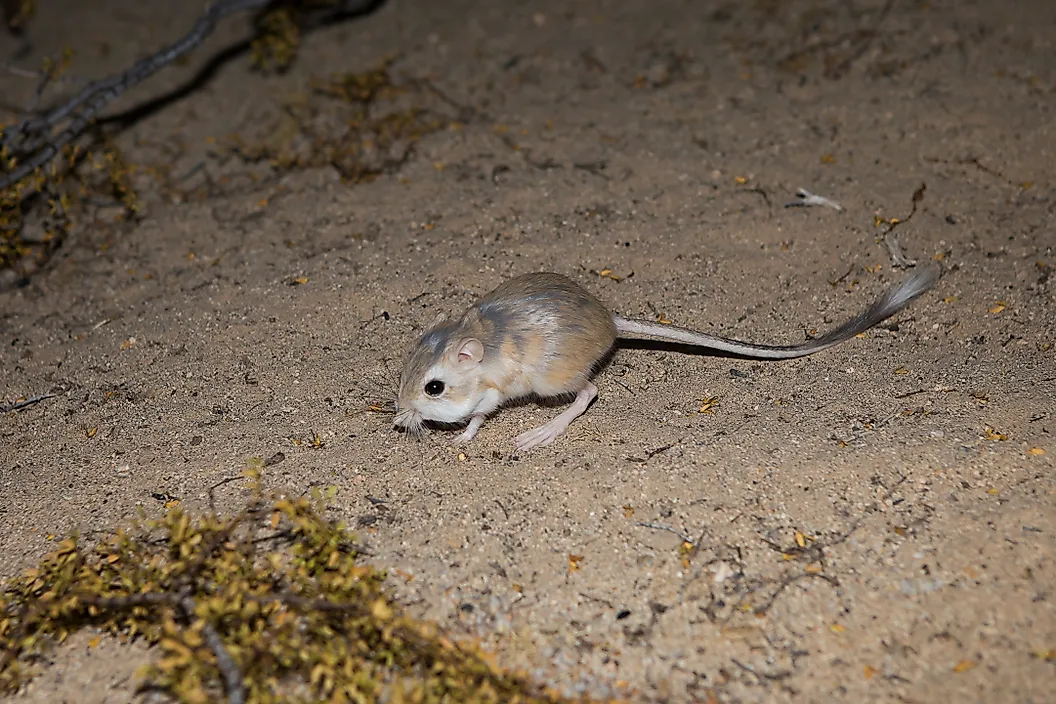
The rest of its body is tuned for conservation, too. Fur-lined cheek pouches let it carry seeds without losing saliva, a cool nasal passage recaptures moisture from each breath before it escapes, and it spends the scorching day sealed in a humid burrow, emerging only at night. Together these adaptations let it produce roughly twice as much usable water from its food as an ordinary mammal.
Desert Tortoise

Here is a myth worth clearing up: the desert tortoise does not store water in its shell. It stores it in an oversized bladder, which can hold water and liquid waste equal to as much as 40% of the animal's body weight, essentially a built-in canteen it slowly reabsorbs during drought. The Mojave desert tortoise (Gopherus agassizii) and the Sonoran desert tortoise (Gopherus morafkai) both use this to survive a year or more between drinks.

When rain finally comes, the tortoise drinks heavily and tops off the reserve, then retreats to a burrow to wait out the dry months. There is one catch to the strategy: if a tortoise is startled and handled in the wild, it may empty its bladder in fright, dumping the water it was counting on. In a bad drought, that panic can be fatal, which is exactly why you should never pick one up.
Thorny Devil

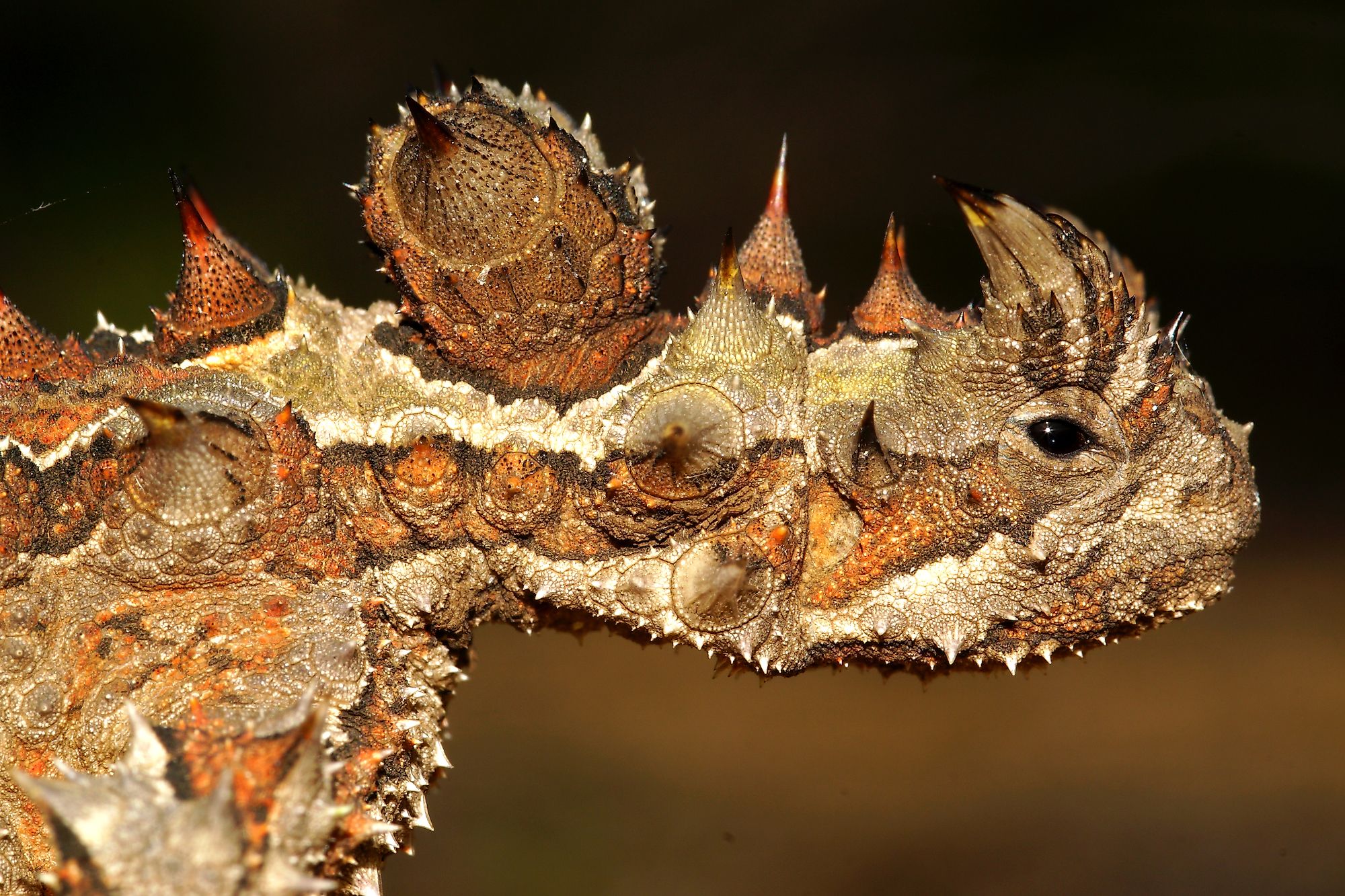
The thorny devil (Moloch horridus) of the Australian outback drinks with its skin. Its whole spiky body is etched with a network of microscopic grooves between the scales, and when dew, rain, or even damp sand touches any part of it, capillary action pulls the moisture uphill against gravity, channeling it along those tiny grooves toward the corners of its mouth. It does not store water in the scales, as is sometimes claimed; it harvests and pipes it, then swallows with pumping jaw movements.

The amount collected is tiny, but so is the lizard's need. It can hydrate just by standing on wet ground overnight, and it never has to find open water. It spends its days eating little else but ants, thousands in a sitting, plucked one at a time with a sticky tongue, and the spines double as shade and as a defense that few predators want to bite.
Camel
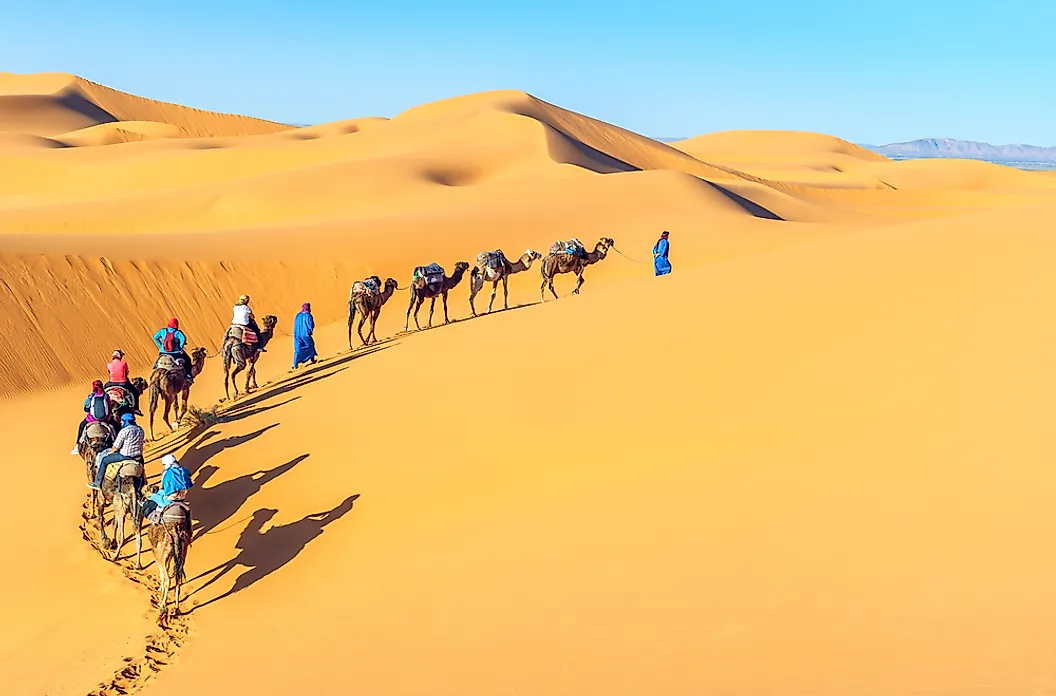
The most famous desert animal comes with the most stubborn myth: camels do not store water in their humps. The hump is fat, an energy reserve that also keeps insulation off the rest of the body so heat can escape. What actually makes a camel a desert legend is its tolerance for dehydration. It can lose up to about 25% of its body weight in water, a level that would kill most mammals at half that, and then rehydrate by drinking enormous volumes in minutes. Oval-shaped red blood cells keep flowing even when the blood thickens, and the camel further saves water by tolerating a swing in body temperature that lets it avoid sweating until it is truly hot. It can go a week or more between drinks in punishing heat, and far longer when the weather is mild.
Water-Holding Frog

The water-holding frog (Cyclorana platycephala) turns its own body into a canteen. In the wet season it lives like any pond frog, but when the Australian desert dries out, it burrows underground, absorbs and stores water in its bladder and tissues until it is bloated, and then seals itself inside a cocoon made of its own shed skin, leaving only its nostrils clear to breathe. Cocooned like this, its metabolism crawls to a near-stop and it can wait out the drought for several years, living off the water and reserves it packed away. Aboriginal Australians historically knew to dig up these frogs and squeeze them for an emergency drink.
West African Lungfish

The West African lungfish (Protopterus annectens) is a fish that survives its pond drying up entirely. A living fossil whose lineage goes back hundreds of millions of years, it breathes air with true lungs as well as gills. When the water vanishes, it burrows into the mud and enters aestivation, a drought version of hibernation: it secretes a mucus cocoon around itself, breathes through a small air channel to the surface, and slows its metabolism to a whisper, even digesting some of its own muscle for nutrients. It can hold out in the dried mud for up to four years, then revive within hours once the rains flood the ground again.
Couch's Spadefoot Toad

Couch's spadefoot toad (Scaphiopus couchii) spends most of its life underground and barely above dormant. Using the spade-shaped tubercles on its hind feet, it digs down to damp sand and buries itself for the dry season, sometimes for the better part of a year, wrapping itself in several layers of partly shed skin that form a semi-permeable membrane to lock in moisture. It raises the salt concentration in its body so it can pull water inward from even slightly damp soil. When a summer storm finally hammers the desert, the toads emerge in a frenzy to breed, and their young live life on fast-forward: eggs hatch in under two days and tadpoles can sprout legs within about ten, a race to grow up before the puddle disappears.
Tardigrade

The real champion is one you cannot see without a microscope. The tardigrade, or "water bear," is a chubby, eight-legged micro-animal barely half a millimeter long, and it does not just tolerate drought, it essentially switches off. When its surroundings dry out, it pulls in its legs, curls into a dehydrated ball called a tun, and enters cryptobiosis, replacing lost water with protective sugars and proteins that turn its cells to glass and suspend life almost completely. In this state its metabolism can drop to a fraction of a percent of normal, and it becomes nearly indestructible, shrugging off boiling heat, near-absolute-zero cold, crushing pressure, radiation, and even the vacuum of space. Tardigrades have been revived after more than 30 years dried out, then rehydrated, unfurled, and carried on as if nothing had happened. In answer to the title's question, the water bear is the animal that can go without water the longest, by far.
How They Beat the Drought
Strip away the species and a few core strategies do all the work. Some animals make water instead of finding it, like the kangaroo rat wringing moisture from dry seeds. Some store and recycle it, like the desert tortoise and its bladder-canteen. Some harvest it from the air, like the thorny devil sipping dew through its skin. And some simply stop, entering aestivation or cryptobiosis to ride out the dry years in suspended animation, as the lungfish, the water-holding frog, and the astonishing tardigrade all do. Evolution, it turns out, has found many more ways around thirst than a human body ever will.