Tiger Rattlesnake
The tiger rattlesnake carries a reputation out of all proportion to its modest size. Drop for drop, its venom ranks as the most toxic produced by any rattlesnake on Earth, a distinction confirmed in laboratory studies of lethal potency. Yet the animal delivering that venom is one of the smallest members of its genus, rarely exceeding three feet in length and weighing about as much as a small apple.
This desert-dwelling pit viper (Crotalus tigris) lives among the rocky slopes and sun-scorched foothills of the Sonoran Desert, splitting its range between southern Arizona in the United States and the Mexican state of Sonora. It takes its name from the dark crossbands that run down its pale body, a pattern that recalls the stripes of a tiger.
For a snake so heavily armed, the tiger rattlesnake is remarkably retiring. It hunts by night through the hottest months, relies on camouflage rather than confrontation, and would far rather slip away than strike. Understanding this animal means separating the real danger of its venom from the myth of an aggressive predator, and appreciating the quiet role it plays in keeping desert rodent populations in check.
Taxonomic Classification

The tiger rattlesnake belongs to the family Viperidae and the subfamily Crotalinae, the pit vipers, a group defined by the heat-sensing pits set between the eye and nostril on each side of the face. Within that family it sits in the genus Crotalus, which contains the true rattlesnakes and numbers more than forty species across the Americas.
The American naturalist Robert Kennicott formally described the species in 1859. Its scientific name, Crotalus tigris, pairs the genus name (from a Greek word for a rattle or castanet) with the Latin word for tiger, a nod to the animal's banded coloration. No subspecies are currently recognized, which sets it apart from many wide-ranging rattlesnakes that have been split into regional forms. Modern venom research has drawn considerable attention to this species, but its basic classification has stayed stable since the nineteenth century.
Physical Description

Among rattlesnakes, the tiger rattlesnake is a compact animal. Adults commonly measure 18 to 36 inches (46 to 91 cm) in total length, with an average closer to 24 inches (61 cm). The largest reliably recorded specimen reached about 35.9 inches (91.2 cm). A heavy adult weighs around 16 ounces (454 g), roughly a pound, making this one of the lighter members of its genus.
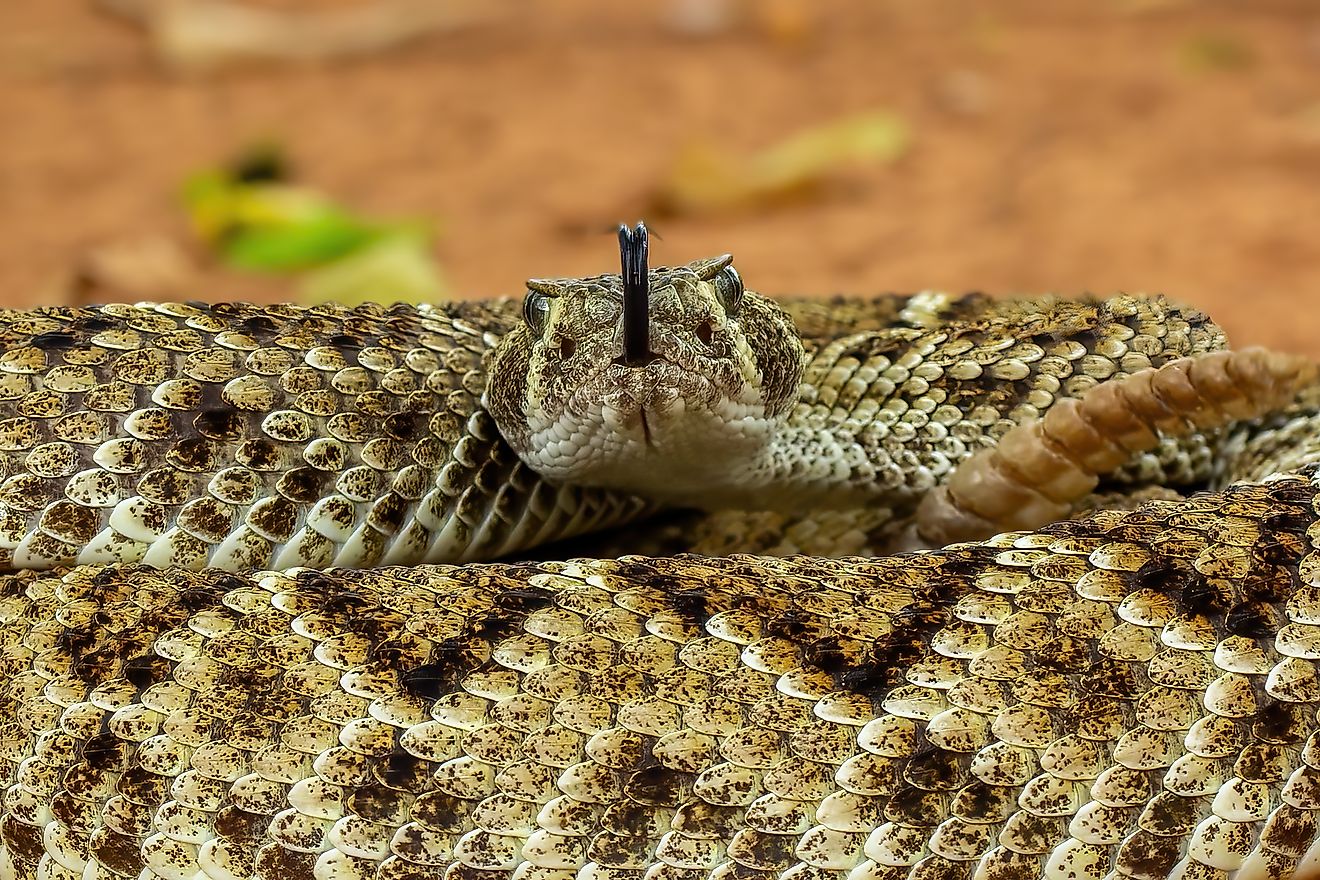
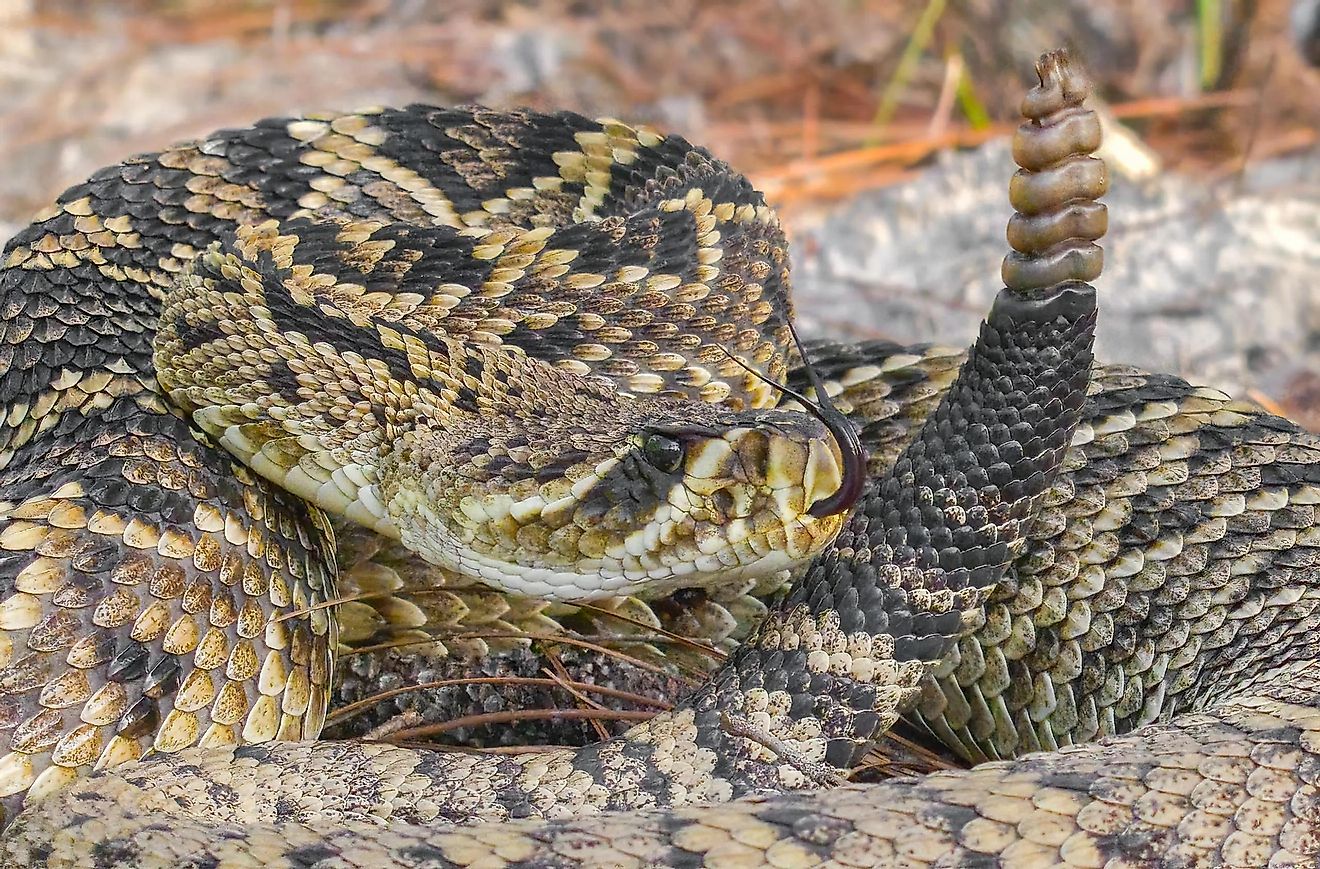
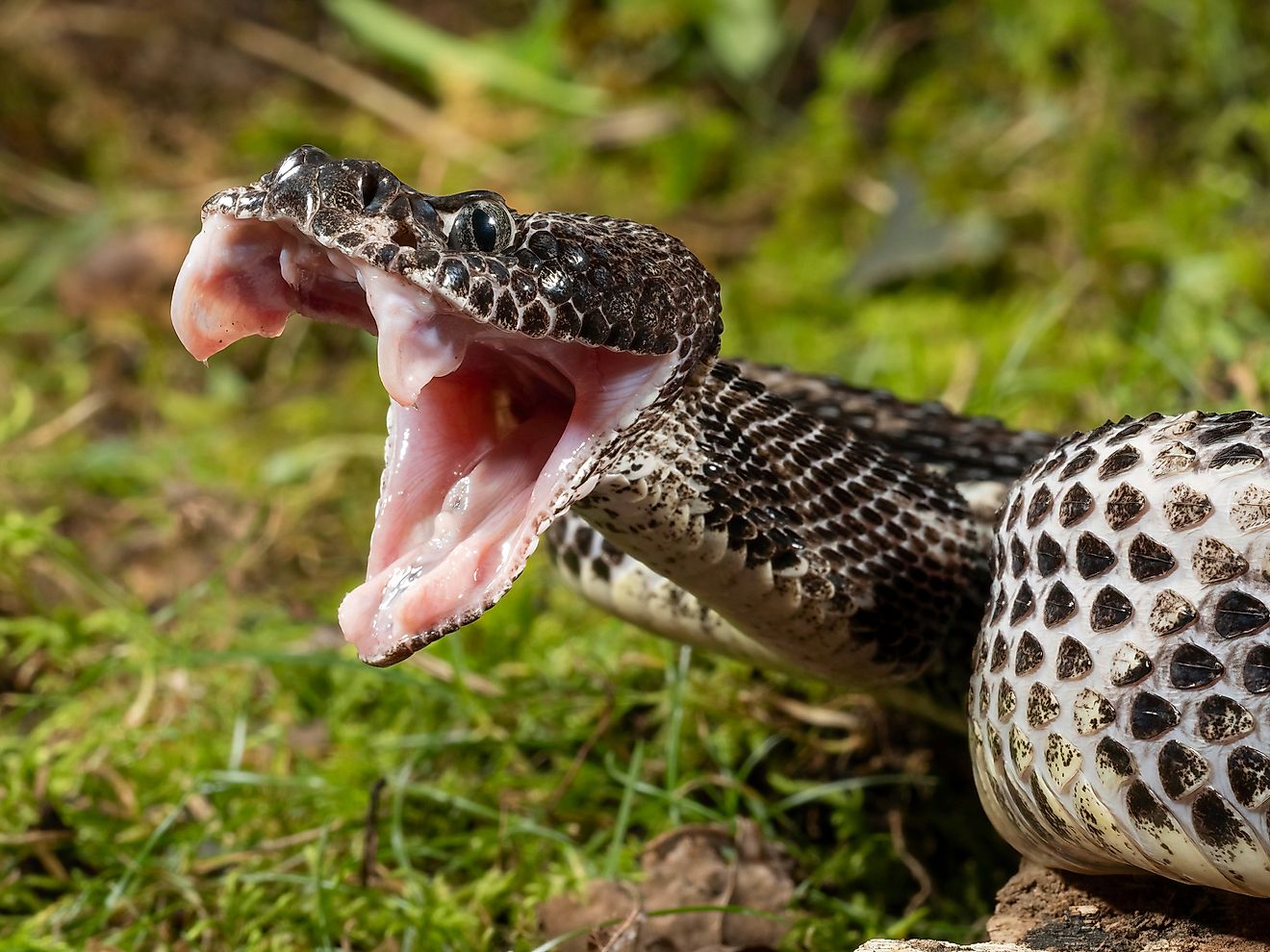
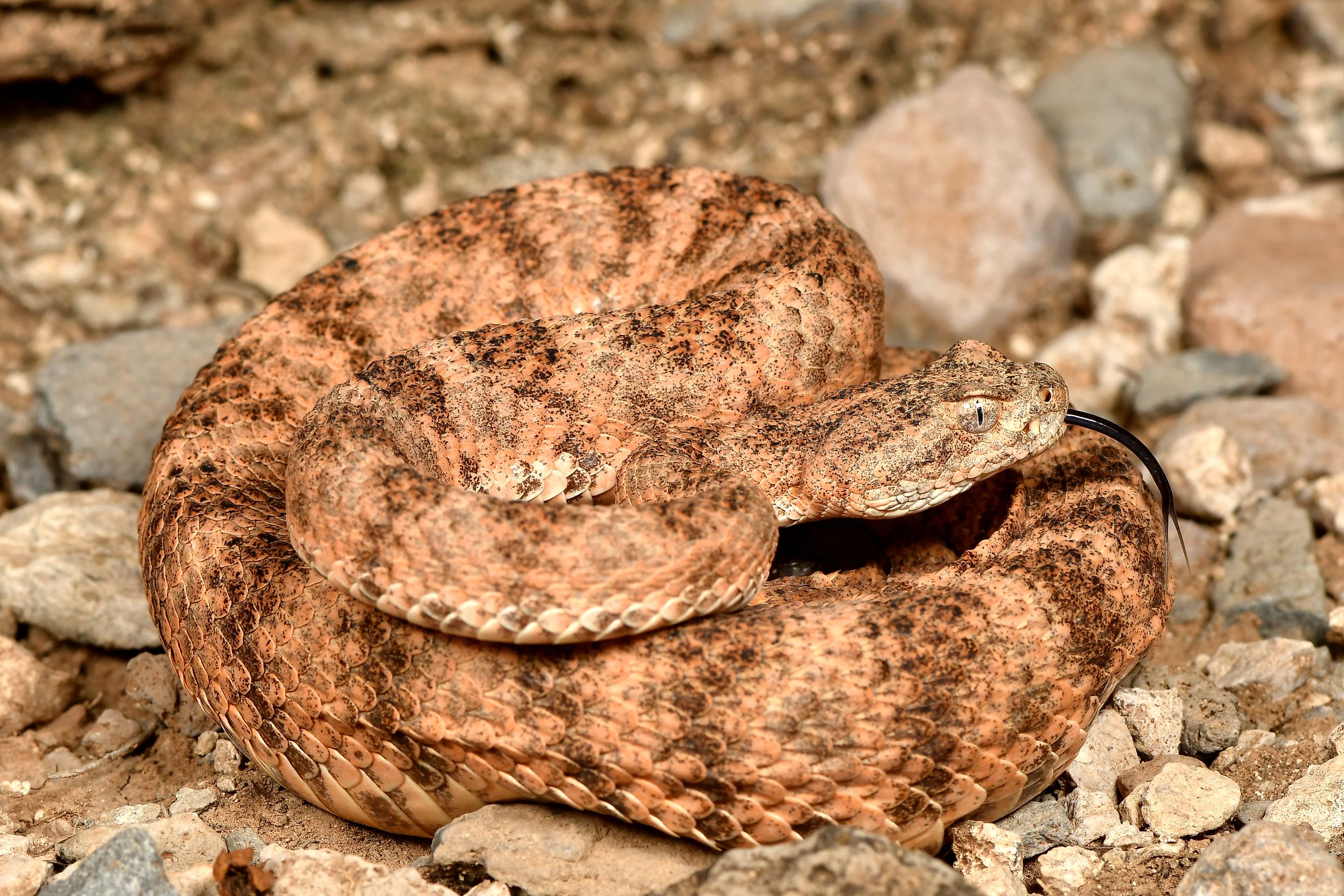
Two features set the tiger rattlesnake apart at a glance. The first is the head, which is strikingly small and narrow for a pit viper, giving the animal an almost undersized look up front. The second is the rattle, which is also proportionally small and produces a higher-pitched buzz than the deep rattle of larger species such as the western diamondback.
The body color ranges through gray, blue-gray, pinkish, buff, and lavender tones, overlaid with a series of darker crossbands. These bands, which number somewhere between 35 and 52, break up the snake's outline against desert rock and give the species its name. The scales are keeled, lending a rough texture, and the eyes are small with the vertical elliptical pupils typical of night-active vipers. Males tend to be slightly larger than females and carry proportionally longer tails.
Range and Habitat

The tiger rattlesnake is one of the most desert-adapted snakes in North America. Its range centers on the Sonoran Desert, covering much of southern and central Arizona in the United States and extending south into the Mexican state of Sonora. An isolated population also occurs on Tiburon Island in the Gulf of California.
Within that range the species favors rough, broken country. It turns up on rocky slopes, in canyons, along the gravelly fans that spill from mountain bases (known as bajadas), and across desert flats studded with creosote bush and cactus. Mesquite grassland and thornscrub suit it as well. The animal is chiefly terrestrial, but it climbs readily into low vegetation and has been found in bushes a couple of feet off the ground. It can also swim when it needs to. This preference for rocky, arid terrain keeps it largely out of the wetter, more heavily settled parts of the Southwest.
Diet

The tiger rattlesnake is a specialist of small desert prey. Lizards and small mammals, particularly rodents such as mice and packrats, make up the bulk of its diet. Young snakes lean more heavily on lizards, while larger adults take a greater share of warm-blooded prey.
Like other pit vipers, it hunts using its facial heat pits, which detect the body warmth of nearby animals and allow the snake to aim a strike in complete darkness. The tiger rattlesnake is largely an ambush hunter, waiting in a coiled position near a rock or burrow for prey to pass within range. When it strikes, it injects venom, releases the prey, and then tracks the dying animal by scent before swallowing it whole. This strike-and-release method spares the snake the risk of injury from struggling prey.
Behavior

For most of the year the tiger rattlesnake keeps a low profile. During the hottest summer months, roughly June through August, it becomes nocturnal, avoiding the punishing daytime heat and emerging after dark to hunt. As temperatures ease in the fall, it shifts toward daytime and twilight activity. Through the late fall and winter it retreats into rock crevices and animal burrows to wait out the cold in a state of reduced activity.
The species is solitary and spends most of its life alone, coming together with others chiefly to mate. It is not an aggressive animal. Confronted by something too large to eat, a tiger rattlesnake typically depends on its camouflage first, staying motionless in the hope of going unnoticed. If that fails, it will raise its rattle in warning, and only strike as a last resort. Bites to humans are uncommon and almost always the result of the snake being handled or accidentally cornered.
Reproduction

Tiger rattlesnakes give birth to live young rather than laying eggs, a strategy that lets the mother regulate the developing embryos' temperature in a harsh, variable climate. Mating takes place during the summer monsoon season, roughly between late May and mid-August. Females typically carry their young and give birth the following summer, and many reproduce only every other year rather than annually.
Litters are small, usually numbering around four to six young, and birth generally occurs between June and September. Pregnant females seek out sheltered, stable sites such as deep rock crevices and shaded ledges, where they can bask safely and hold the temperatures the developing young require. Newborn snakes are independent almost immediately. They already possess venom and carry a small terminal button that becomes a functional rattle after their first shed. The mother provides little care beyond the birth itself, and the young soon disperse to fend for themselves.
Venom

Venom is where the tiger rattlesnake earns its formidable reputation. Laboratory measurements of lethal potency place its venom at the top of the rattlesnake list. One widely cited study reported an intravenous LD50 in mice of 0.056 mg/kg, the highest lethal toxicity recorded for any rattlesnake venom. Later work described the species as the source of the deadliest venom among North American rattlesnakes.
What makes the venom so potent is its chemistry. Rather than the tissue-destroying enzyme cocktail that many rattlesnakes rely on, the tiger rattlesnake produces a largely neurotoxic venom built around a small number of powerful toxins, including a compound closely related to Mojave toxin. Researchers have described it as one of the simplest venoms of any viper, a stripped-down arsenal that trades complexity for sheer lethal punch. The neurotoxins interfere with signaling between nerves and muscles, and severe envenomation can lead to paralysis.
There is an important counterweight to this potency. The tiger rattlesnake produces very little venom, with average yields of only around 10 milligrams of dried venom per snake, far below the output of a large diamondback. Even so, medical authorities treat any bite as a serious emergency that requires prompt hospital care. The combination of extreme toxicity and low volume means the danger of a bite depends heavily on how much venom the snake happens to deliver.
Importance to the Desert Ecosystem

Small and secretive though it is, the tiger rattlesnake occupies a useful place in the Sonoran food web. As a predator of rodents, it helps keep populations of mice and packrats in check, and by extension limits the crop damage and disease those rodents can spread. In this respect the snake performs a quiet service to farmers and rural residents who might otherwise regard it only as a threat.
The species is also prey in its own right. Raptors, kingsnakes, and other larger predators feed on tiger rattlesnakes, so the animal serves as both hunter and hunted. Sitting in the middle of the desert food chain this way, it contributes to the overall balance and diversity of the arid ecosystems it inhabits.
Threats and Conservation

The tiger rattlesnake is currently listed as Least Concern on the IUCN Red List, and its overall population is considered stable. The total number of mature individuals is not precisely known but is thought to exceed ten thousand, and the snake remains locally common across much of its range.
That relatively secure status does not mean the species faces no pressure. Habitat loss from urban expansion, road building, and the intensification of agriculture fragments its home ground, and some low-lying populations in Sonora are more exposed to farmland conversion than others. Snakes are also killed on roads and deliberately destroyed out of fear when people encounter them near homes and trails. Rising temperatures linked to climate change may reshape desert habitats and prey availability over time. For now the tiger rattlesnake holds its own, but continued monitoring and habitat protection remain sensible safeguards for a species so closely tied to a single desert region.
Takeaway
The tiger rattlesnake packs the most toxic venom of any rattlesnake into one of the smallest bodies in its genus, then uses that armament almost entirely for hunting lizards and rodents rather than for defense. Shy, nocturnal through the desert summer, and easily overlooked against the rocks it hunts among, it is far less a menace to people than its chemistry might suggest. As a controller of rodents and a meal for larger predators, it holds a steady place in the Sonoran Desert, and its stable conservation status offers reason for cautious optimism about its future. Respect for the animal, rather than fear of it, is the response its biology actually warrants.
Fun Facts

- Most toxic rattlesnake venom. Drop for drop, the tiger rattlesnake's venom is the most lethally potent measured in any rattlesnake, edging out even the notorious Mojave rattlesnake.
- A minimalist chemistry. Its venom is one of the simplest known among vipers, relying on a handful of powerful neurotoxins rather than the complex enzyme mixtures most rattlesnakes carry.
- Small head, big punch. The species has an unusually small, narrow head for a pit viper, which stands in stark contrast to the strength of what it produces.
- Tiger by name. The species name tigris comes from the Latin word for tiger and refers to the 35 to 52 dark crossbands that stripe its body.
- Long-lived reptile. In favorable conditions, a tiger rattlesnake can live for 20 to 25 years.
- Born ready. Newborns arrive fully venomous and equipped with a small button on the tail that grows into a working rattle after the first shed.
Quick Facts
- Common name: Tiger rattlesnake
- Scientific name: Crotalus tigris
- Family: Viperidae (subfamily Crotalinae, the pit vipers)
- Order: Squamata
- Described by: Robert Kennicott, 1859
- IUCN status: Least Concern (population stable)
- Length: 18 to 36 inches (46 to 91 cm), averaging about 24 inches (61 cm)
- Weight: Up to about 16 ounces (454 g)
- Lifespan: Up to 20 to 25 years
- Diet: Carnivore, mainly lizards and small mammals
- Venom: Highly neurotoxic, the most toxic of any rattlesnake, with a low yield
- Range: Southern and central Arizona (USA) and Sonora (Mexico), including Tiburon Island
- Habitat: Rocky desert slopes, foothills, canyons, and bajadas of the Sonoran Desert