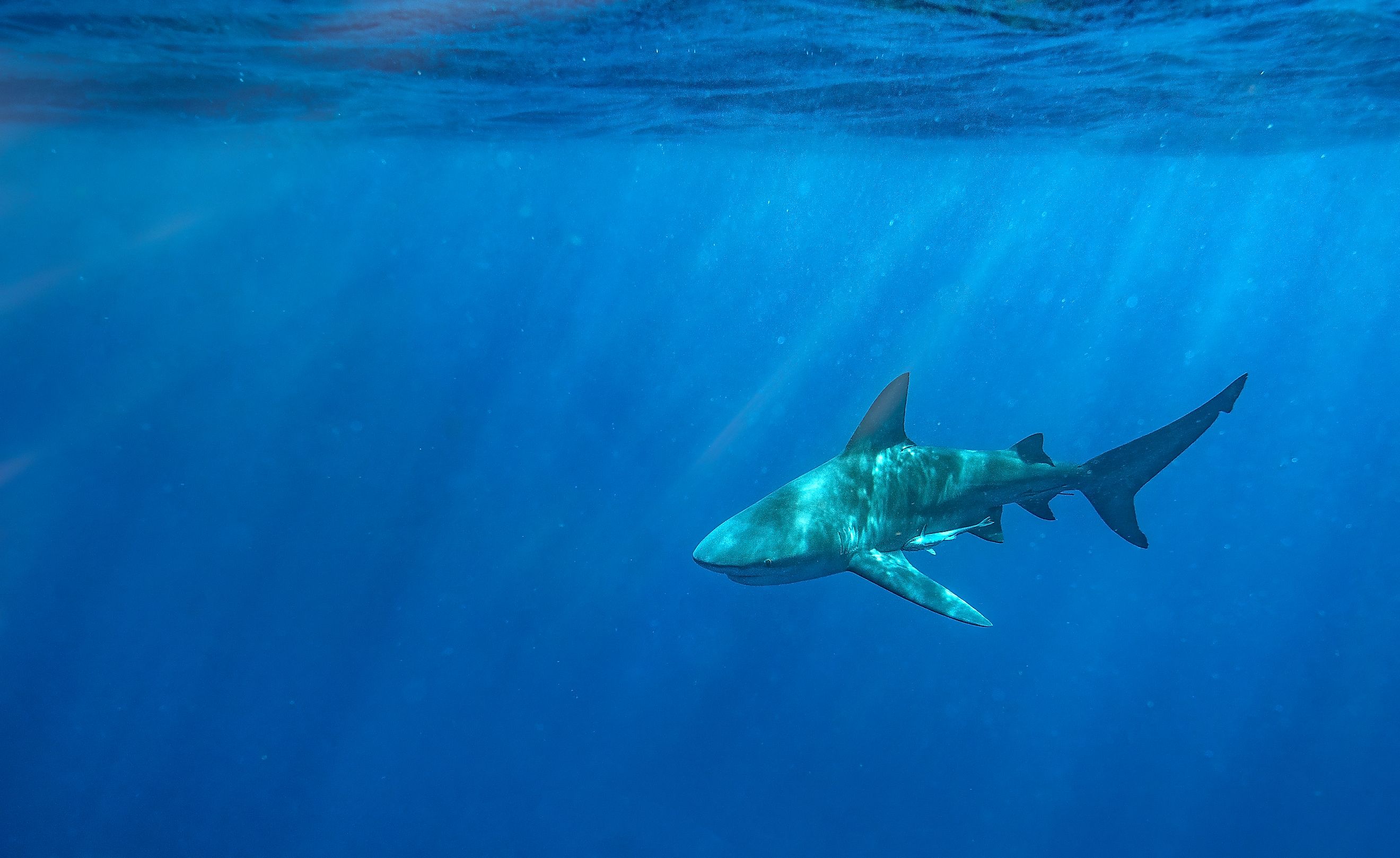
Bull Shark
The bull shark (Carcharhinus leucas) is a large predatory shark found in the coastal waters of tropical and subtropical oceans and seas. Often considered an aggressive species, bull sharks are among the few sharks that can live and breed in both saltwater and freshwater, which can lead to dangerous encounters with humans. Stocky and heavily built, the bull shark relies more on smell and on sensing the faint electrical signals of prey than on its small eyes, an advantage in the cloudy rivers and shallows it favors. People pose a risk to bull sharks as well, and fishing, pollution, and coastal development have earned the species a vulnerable conservation status.
Physiology

Bull sharks are easily recognized by their blunt snouts, small eyes, large, unmarked dorsal fins, serrated triangular teeth in the upper jaw, and stocky build. Though adults reach lengths around seven feet (2.1 meters) among males and 11 feet (3.3 meters) among females, the sharks are fairly wide relative to their length. Adult bull sharks can weigh between 200 and 500 pounds (91 to 227 kilograms).
On their backs, bull sharks have two dorsal fins, the second about one-third the height of the first. There is no ridge of skin between the two dorsal fins. Like many other fish species, bull sharks exhibit countershading, meaning the top and bottom halves of the creatures are darker and lighter, respectively, helping them blend in with the deep waters when seen from above and with the sunlit waters when seen from below. Bull sharks tend to have light-to-dark gray dorsal coloration and white underbellies. Some members of the species might also have a light stripe running along their flanks.
Lifecycle

Typically, a bull shark can be expected to live between 23 and 28 years, though bull sharks as old as 32 have been recorded. Bull sharks are viviparous, meaning they give live birth. After mating, a pregnant bull shark will retain the fertilized eggs until they hatch and the young are independent. The gestation lasts 10 to 11 months, after which 1 to 13 pups are born, tail first. For most of their lives, bull sharks live and hunt alone, coming together only to mate during the summer months. They reach sexual maturity at 18 for females and between 14 and 15 for males, and engage in displays of courtship in which males may bite the female's fins while mating. Young are usually born in spring and summer, but may be born year-round in warmer climates.
Behavior and Habitat
Senses and Hunting

Bull sharks are apex predators. Like other species of shark, the snouts of bull sharks contain an organ called the Ampullae of Lorenzini, which provides them with the ability to detect the weak electrostatic fields emitted by their prey. Known as electroreception, this sense leaves them highly sensitive to even the smallest movements in the waters around them. Alongside their highly developed sense of smell, their electroreception helps them find food despite their relatively poor eyesight. Bull sharks are known to headbutt their prey before attacking, a behavior that, along with their blunt snouts and aggressive temperaments, lends them their name.
The preferred hunting grounds of bull sharks include coral reefs and shallow waters near the shore, usually those with a depth of 30 meters (98 feet) or less. They feast on a diet consisting of bony fish, other sharks, seabirds, mollusks, echinoderms, marine turtles, marine mammals, and even terrestrial mammals they might come across. In times of scarcity, though, they have also been known to hunt crustaceans and scavenge improperly disposed of garbage in oceans or rivers.
Their stocky, muscular bodies make them fast and powerful, helping them ambush prey through murky waters. When they find a meal, they will accelerate in a burst of speed up to 11.8 miles per hour (19 km/h) and headbutt it. Then, as their prey is disoriented, they will bite down with their powerful jaws. Their jaws are, pound for pound, the strongest of any shark, helping them hold on to prey that manages to survive a first blow.
Role in the Ecosystem

By controlling the populations of fish, birds, and other prey species, bull sharks help maintain the ecological balance of their ecosystems. They prevent overpopulation of smaller species, thereby providing security for seagrass and other marine plant populations and helping control greenhouse gas levels. Their varied diet also makes them an important predator of other sharks and rays, particularly stingrays and the young sharks that shelter in inshore nursery grounds. Because they move between salt and freshwater, bull sharks connect marine and freshwater food webs as well. In the Shark River Estuary of the Florida Everglades, juvenile bull sharks take advantage of seasonal pulses of prey from the surrounding freshwater marshes, and researchers believe they may carry marine nutrients into the river's nutrient-poor upper reaches.
Saltwater and Freshwater Range

Bull sharks live in a wide variety of habitats, including harbors, estuaries, and coastal lagoons of tropical and subtropical saltwater oceans and seas, where they are known to swim to depths of at least 492 feet (150 m). They are also the only species of shark known to spend extended periods in freshwater, having been found in the Mississippi, thousands of miles upriver from the mouths of the Amazon and Zambezi rivers, and even breeding in Lake Nicaragua. Highly effective at osmoregulation, the ability that allows them to move between salt and freshwater, bull sharks possess specialized kidneys and glands to store excess salt.
Bull Sharks and Humans

Bull sharks prefer shallow water and often migrate up rivers. This tendency has given rise to the nickname "river sharks." Their ability to swim upriver and their preference for shallow, coastal waters also mean that their habitats often overlap with human-inhabited areas. Because of this, bull sharks have a reputation for being aggressive and are considered one of the "top three" sharks for attacking humans, alongside great white sharks and tiger sharks. However, while bull sharks may act aggressively around people on occasion, it is not believed that their attacks on humans are intentional.
Instead, their poor eyesight, combined with the murky coastal waters where they often live, makes it easy for them to mistake swimming humans for floundering fish or other prey. Out of the over 120 bull shark attacks on humans, the vast majority (almost 100) have not been fatal, and most were unprovoked. Because of that, the prevailing theory is that most attacks by bull sharks stem from curiosity, with the sharks' powerful jaws and sharp teeth causing serious injury. Generally, bull sharks are nonthreatening, and many divers swim near them safely. Nonetheless, bull sharks can be territorial, especially during breeding season, and should be treated with caution. If approached by a bull shark, a swimmer should stay calm and avoid frantic splashing that could remind them of prey. If the shark continues to approach, hold your ground and do not turn your back to them. Slowly retreat back to safety with calm, steady movements.
Threats to Bull Sharks

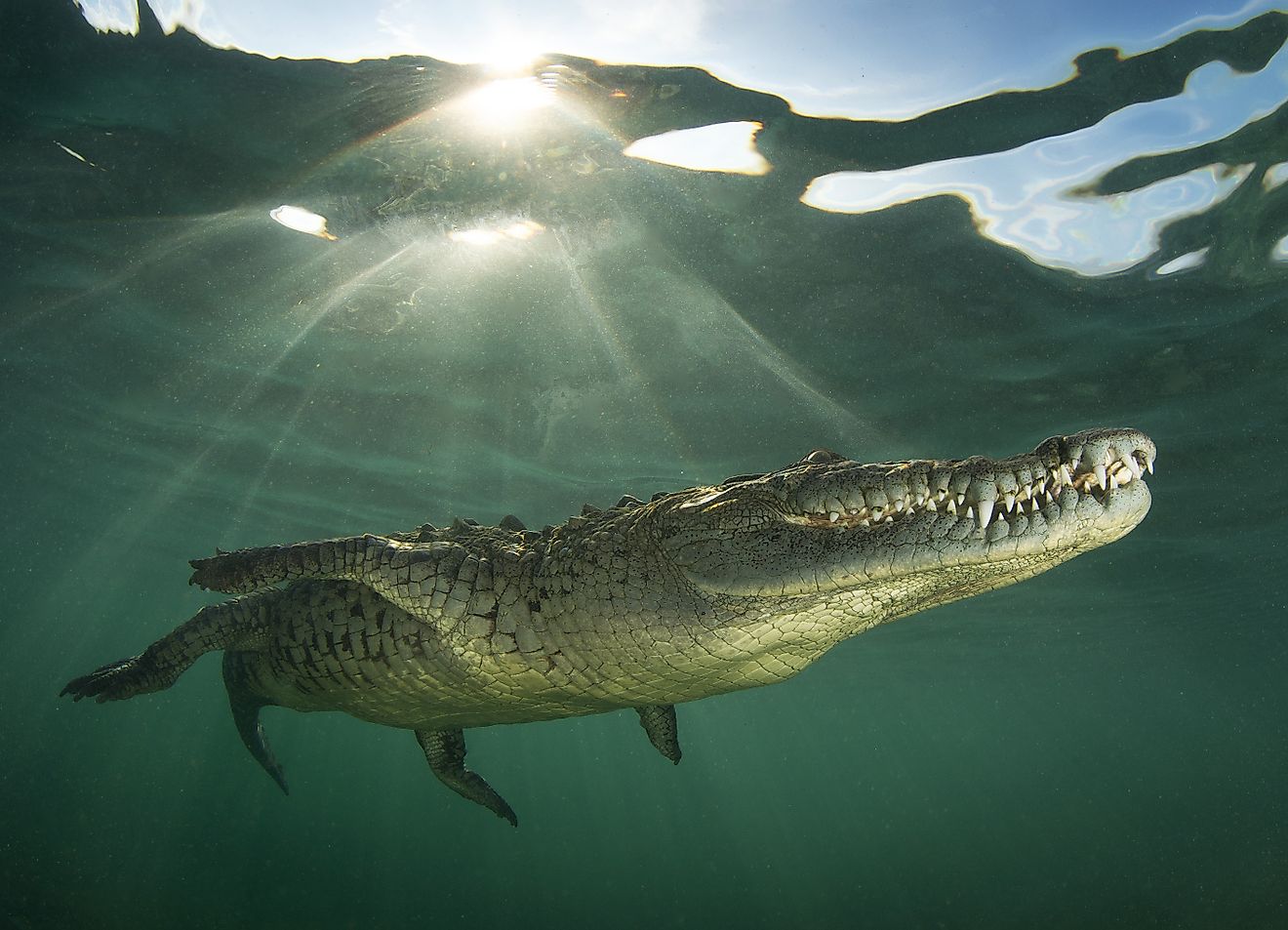
The precarious relationship between bull sharks and humans goes both ways. While young bull sharks often fall prey to crocodiles, as well as other sharks, adult bull sharks are near the top of the food chain, lacking many natural predators. In the wild, they are often preyed upon by tiger sharks, sandbar sharks, and occasionally even other bull sharks. However, bull sharks are also often caught and killed by humans. They are routinely harvested by fisheries and recreational fishers for their meat, fins, liver oil, and skin, or killed by members of beach protection groups. Human development along coastal areas, rivers, and estuaries for urban and agricultural purposes has further threatened the safety of the bull shark population, which has suffered from water pollution and habitat loss. As of 2026, bull sharks are listed as vulnerable by the International Union for Conservation of Nature and Natural Resources.