Weeverfish
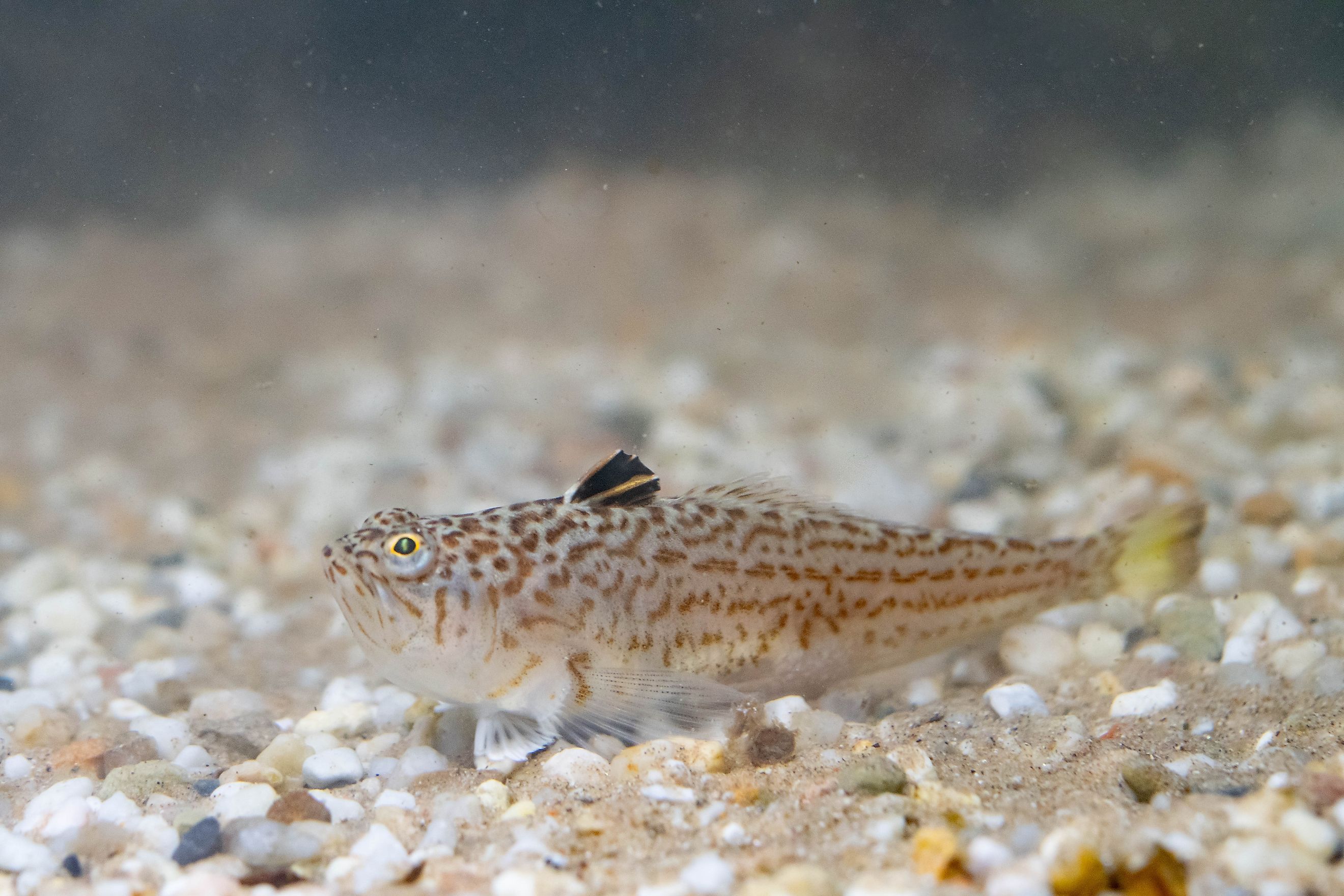
The weeverfish is easy to overlook despite its potent defensive arsenal. Buried beneath the sand in shallow coastal waters, it often leaves little more than its eyes and a row of dark spines visible, making it difficult to spot. A person who accidentally steps on one can experience severe pain, as the fish delivers venom through sharp spines along its back and gill covers. Weeverfish are among the most venomous fishes found in European seas, with the greater weever often regarded as one of the most medically significant venomous fish in the Mediterranean.
Despite that reputation, weeverfish are small, elongated, bottom dwelling fishes that spend most of their lives out of sight. They are ambush hunters, lying motionless beneath a thin layer of sediment until a shrimp or small fish drifts within reach. The same habit that makes them effective predators also makes them a hazard to unwary swimmers and fishermen who never see the fish before the sting arrives.
Taxonomic Classification

Weeverfish make up the family Trachinidae, first described by the naturalist Constantine Rafinesque in 1815. The family sits within the order Perciformes, the vast group of ray finned fishes that includes perches and their many relatives. In some schemes the weevers are grouped with their relatives in the suborder Trachinoidei, a reminder that the classification of ray finned fishes is still being refined with genetic work.
There are nine living species of weever, divided between two genera. The genus Trachinus holds the larger species, including the greater weever (Trachinus draco), the spotted weever (Trachinus araneus), and the starry weever (Trachinus radiatus). The genus Echiichthys contains the small and abundant lesser weever (Echiichthys vipera). The greater weever was named by Linnaeus in 1758, and its scientific name reflects the fish itself, since draco means dragon. The common name has a similar edge to it. Most scholars trace the word weever to the Anglo Saxon term wivre, meaning viper, a nod to the sting rather than to any real relationship with snakes.
Eight of the nine species live in the Old World, spread across European and West African waters. Only one weever occurs in the New World, along the coast of Chile, which makes the family a mostly Atlantic and Mediterranean group with a curious outlier on the far side of the world.
Physical Description

Weeverfish have long, laterally compressed bodies built for lying flat and slipping into sand. Most species grow to between 6 and 14 inches (15 to 35 cm), and the lesser weever, the smallest member of the family, sits at the bottom of that range. The greater weever is the giant of the group. It commonly reaches about 10 inches (25 cm) but can grow to around 21 inches (53 cm) and weigh up to about 4 pounds (1.9 kg), which makes it the largest weever a diver or angler is likely to meet.
The head is compact and somewhat flattened, and the eyes sit high on top of it, angled upward so the fish can watch the water above while its body stays hidden. The mouth is large and steeply inclined, opening upward to seize prey passing overhead. Coloration is generally muted, running through browns, greens, and yellowish tones, often with fine oblique stripes along the flanks. This drab palette is camouflage, allowing a buried fish to vanish against sand and mud.
The defining feature is the venom apparatus. Each weever carries a short first dorsal fin made of stiff spines, and a sharp spine juts from each gill cover. These spines are grooved and connected to venom glands, and they are the tools that give the family its dangerous name. When the fish is threatened or trodden on, the erect dorsal spines drive venom into whatever touches them. The venom itself is a protein based cocktail that damages cells and irritates nerves, which explains the severe and immediate pain that follows a sting.
Range and Habitat

The weever family is centered on the eastern Atlantic. The greater weever reaches as far north as Norway and as far south as Morocco, and other species extend the family's reach along West Africa toward Angola. From the Atlantic the group spills into the Mediterranean, the Aegean, and the Black Sea, where several species are common. The lone New World species lives off Chile in the southeastern Pacific, well separated from its Old World cousins.
Habitat is remarkably consistent across the family. Weevers are benthic fishes, meaning they live on the sea floor, and they favor soft ground made of sand or mud. They occur in shallow water at the edge of the beach and down to depths of about 490 feet (150 m). The greater weever tends to sit in deeper water than the lesser weever, which often lurks in the surf zone only a few feet down. That shallow habit is exactly why the lesser weever accounts for so many stings on European beaches. A bather wading in ankle deep water at low tide is walking straight through its hunting ground.
Diet

Weeverfish are carnivores that hunt from ambush. A buried weever waits with only its eyes and the tip of its dorsal fin exposed, then lunges upward when prey passes within striking distance. The upward slanting mouth is well suited to this attack from below. Small crustaceans such as shrimp form a large part of the diet, along with small fishes and other bottom living invertebrates. Studies of the greater weever in the Adriatic have shown that the mix of prey shifts with the fish's size and with the season, as larger weevers take a greater share of fish while smaller ones rely more on crustaceans.
Feeding is tied closely to the daily cycle. The greater weever often stays buried during the day and leaves its burrow at night to hunt more actively over the surrounding bottom. This combination of camouflage, patience, and a fast upward strike lets a fish that is not built for long pursuit catch prey with very little movement, which suits an animal that spends most of its time motionless in the sand.
Behavior

The behavior of a weever is defined by its burying habit. Rather than swimming in open water, the fish wriggles down into loose sediment until it is almost completely covered, leaving the eyes, the mouth, and the venomous spines clear. From this position it can breathe, watch for prey, and defend itself without moving. The venom is a defensive weapon as much as anything else, since a small fish hidden in the sand is vulnerable to larger predators, and a mouthful of venomous spines is a strong deterrent.
Weevers are not social fish in any elaborate sense. They live largely solitary lives on the bottom and come together mainly to spawn. Their activity pattern leans toward the night for feeding, while daylight hours are often spent motionless and concealed. This quiet, sedentary lifestyle means weevers are rarely noticed by people, right up until the moment of contact.
Reproduction

Weeverfish are oviparous, which means the female releases eggs that are fertilized outside the body. The greater weever spawns in open water, and its eggs are pelagic, drifting freely near the surface rather than being laid on the bottom. Each egg measures roughly a millimeter across. In the Mediterranean, spawning generally takes place across the warm months, roughly June through August, while populations in the Black Sea have been recorded reproducing in July and August.
Sexual maturity comes early. Females of the greater weever can be ready to breed at around one year of age and a length of only about 5 to 6 inches (12 to 16 cm). During the breeding season, weevers move into shallower water to spawn, and this migration into the shallows is also the period when human stings peak, because the fish are concentrated exactly where people swim. After hatching, the larvae live among the plankton before settling to the bottom and taking up the buried life of the adults. The lifespan of a weever is measured in several years, giving each fish a number of breeding seasons over its life.
Venom and Danger to Humans

The weever's venom is what sets the family apart. The toxin is delivered through the grooved spines of the first dorsal fin and the gill covers, and a sting produces intense, burning pain that can spread up the affected limb and last for hours. Swelling, redness, and in some cases tissue damage may follow. Serious systemic effects are uncommon but possible, and while deaths are very rare, they have been reported. Fishermen sorting a catch and swimmers stepping on a buried fish are the most frequent victims.
One useful fact shapes first aid for a weever sting. The venom is protein based and breaks down with heat, so the standard response is to immerse the wound in water as hot as the person can tolerate without scalding, often for 30 minutes or more, which eases the pain as the toxin is denatured. Any remaining spine fragments should be removed carefully. Because the pain can be severe and reactions vary, medical advice is worth seeking, especially where swelling spreads or symptoms persist.
Importance to the World

Within their sandy habitats, weevers serve as mid level predators, helping to control populations of shrimp, small fish, and other invertebrates on the sea floor. They in turn are prey for larger fishes and are caught in numbers as bycatch in bottom trawl fisheries, which links them into the wider food web of the continental shelf. In some regions weevers are eaten and reach local markets, and they are prized enough to appear in fish soups and stews once the dangerous spines have been removed.
Their broader significance to people is a matter of caution. Weevers are a recurring public health concern on European beaches, prompting warnings, protective footwear advice, and clinic visits every summer. Understanding where they live and how to treat a sting reduces the harm they cause, which turns an otherwise obscure sand dwelling fish into a familiar name at coastal first aid stations.
Threats and Conservation

Weeverfish are not considered globally threatened. The greater weever is listed as Least Concern on the IUCN Red List, and most other members of the family face no major identified threats at the level of the whole species. Regional pressures do exist, mainly from coastal habitat change and from being caught as bycatch in trawl fisheries, but these have not driven the family toward broad decline. Some monitoring in northern European waters has even recorded local increases in greater weever catches since around the year 2000. For now the outlook for the family is stable, and the weever's real notoriety rests on its sting rather than on any conservation crisis.
Takeaway
The weeverfish relies on concealment and defense to survive in shallow coastal waters. Small and inconspicuous, it spends much of its time buried in the sand, with only its eyes and part of its body exposed. From this position, it watches for passing prey and strikes upward while remaining difficult for predators and people to detect. Its venomous spines also provide a powerful defense against anything that disturbs it, including an unsuspecting swimmer. Widespread and secure across its range, the weeverfish remains a good example of how an easily overlooked animal can still pose a serious hazard when encountered at close range.
Fun Facts

- Its name means viper. The word weever likely comes from the Anglo Saxon wivre, meaning viper, and the greater weever's scientific name, Trachinus draco, translates to dragon.
- A dead weever can still sting. The venom apparatus stays active for some time after the fish dies, so handling a dead or discarded weever is still risky.
- Hot water is the cure. Because the venom is protein based, it breaks down with heat, and soaking the wound in hot water is the recommended first aid.
- It hunts almost entirely from hiding. A weever buries itself with only its eyes and spines showing, then strikes upward, so it barely has to move to catch a meal.
- It has a long list of nicknames. Weevers have been called the sea dragon, sea cat, adder pike, and viperfish, though they are not related to the true viperfish of the deep sea.
- The lesser weever is the family's smallest. Despite causing many beach stings, the lesser weever is the tiniest species in the entire weever family.
Quick Facts
- Common name: Weeverfish (weever)
- Scientific name: Family Trachinidae (notable species include Trachinus draco, the greater weever, and Echiichthys vipera, the lesser weever)
- Family and order: Trachinidae, order Perciformes
- Number of species: 9 living species in 2 genera
- IUCN status: Least Concern (greater weever). Most species not considered threatened
- Size: Most 6 to 14 inches (15 to 35 cm), and the greater weever up to about 21 inches (53 cm)
- Weight: Greater weever up to roughly 4 pounds (1.9 kg)
- Lifespan: Several years
- Diet: Carnivore (shrimp and other crustaceans, small fish, bottom invertebrates)
- Habitat: Sandy and muddy sea floors, shore down to about 490 feet (150 m) deep
- Range: Eastern Atlantic (Norway to Angola), Mediterranean, Aegean, and Black Seas, with one species off Chile
- Distinctive trait: Venomous spines on the first dorsal fin and gill covers