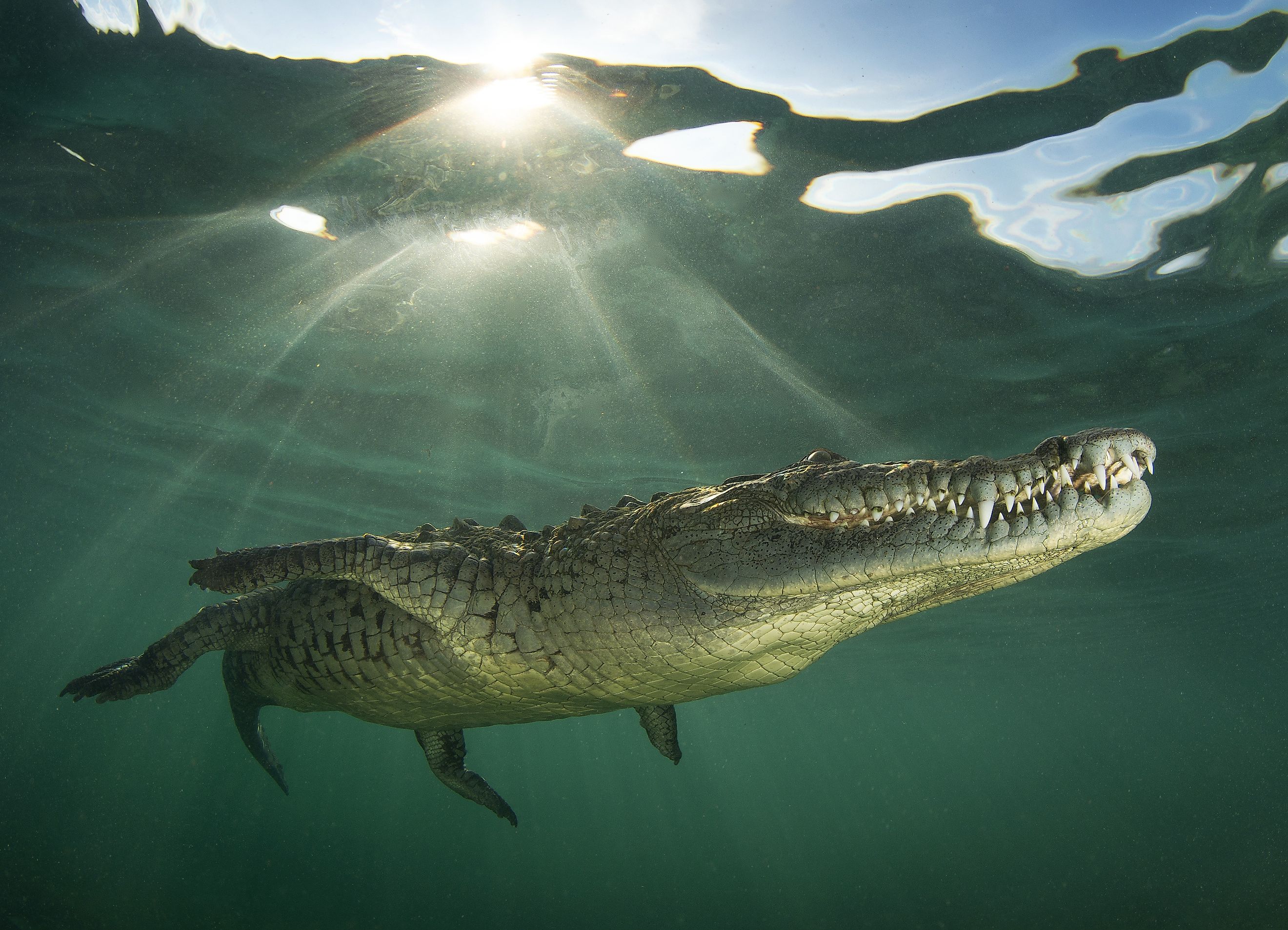
Are There Crocodiles Sneaking Up the Mississippi River Delta?
The Mississippi River Delta is home to a healthy population of American alligators (Alligator mississippiensis), but not a single American crocodile (Crocodylus acutus). Both are crocodilians, yet their ranges throughout the United States vary considerably. American crocodiles are limited to only South Florida, hundreds of miles from Louisiana's coastal wetlands. Even though American crocodiles can tolerate saltwater and could theoretically make the journey, they could not survive long-term in the Mississippi.
Where Do Crocodiles Live In The United States?

American crocodiles are the most widespread New World crocodilians on Earth. Although their range extends through much of the Caribbean, Central America, and into northern South America, they are limited to South Florida in the United States, which represents the northern extent of their range.
They are characteristically shy animals that prefer to live in brackish and saltwater habitats, like coastal lagoons and mangrove swamps. They are able to tolerate saltwater by excreting excess salt from their bodies using specialized lingual salt glands on their tongue.
There are several reasons American crocodiles are only found in South Florida. Primarily, it is because, apart from Hawaii, it is the only place in the United States with year-round tropical temperatures. While American alligators can enter periods of dormancy to survive cold periods, American crocodiles are much more sensitive to temperatures. A cold snap could kill them, which is why their native range in the United States is limited to South Florida.
The Difference Between A Crocodile And An Alligator
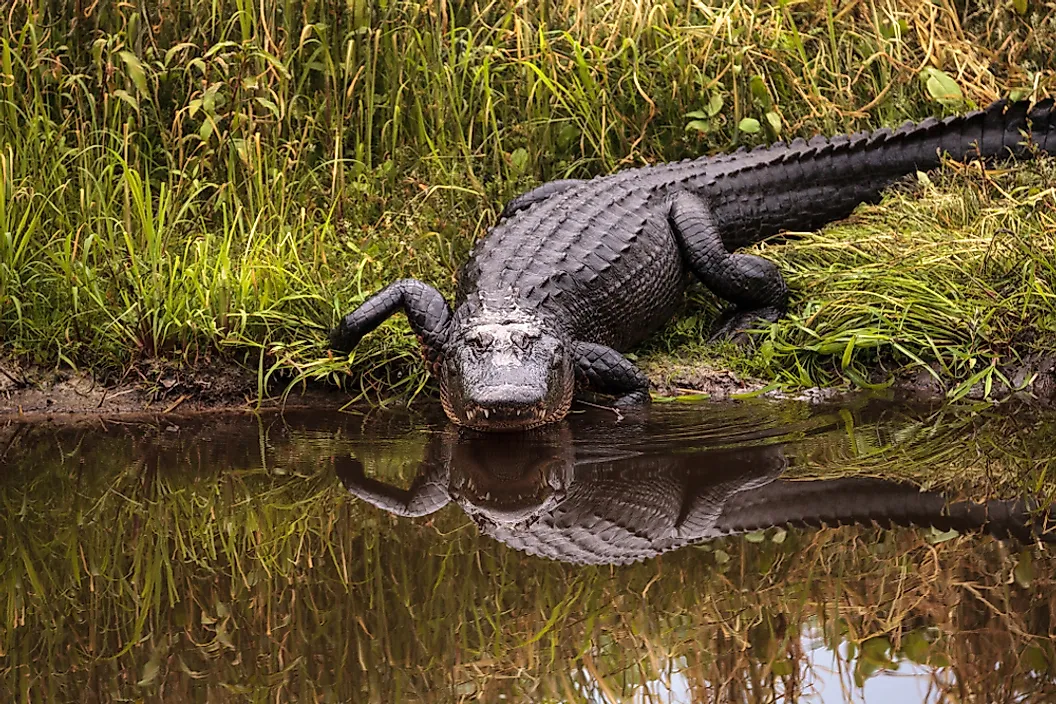
The Florida Everglades are the only place in the world where the American alligator and the American crocodile coexist. Since they are both large crocodilians, it can be hard to differentiate the two, but there are clear differences.
American crocodiles are longer and lighter in color, have narrower V-shaped snouts, and both their upper and lower teeth are visible when their jaws are closed. American alligators are shorter but stockier, darker in color, have wider U-shaped snouts, and only their upper teeth are visible when their jaws are closed.
Unlike American crocodiles, American alligators primarily inhabit inland freshwater swamps and marshes, as well as rivers, lakes, and smaller bodies of water. Although they lack functional lingual salt glands, they can occasionally tolerate brackish water around mangrove swamps for short periods of time.
Have Crocodiles Ever Been Found Outside Of Florida?

In June 2008, a 6-foot-long American crocodile was removed from the surf of the Isle of Palms, a barrier island in South Carolina. The circumstances surrounding how it arrived in South Carolina are uncertain. The South Carolina Department of Natural Resources speculated about several possible explanations. It could have been an escaped pet that was being kept illegally, someone may have transported it from Florida and released it into the wild, or it may even have swum hundreds of miles up the Atlantic coast from South Florida.
How Could Crocodiles Reach The Mississippi River Delta?
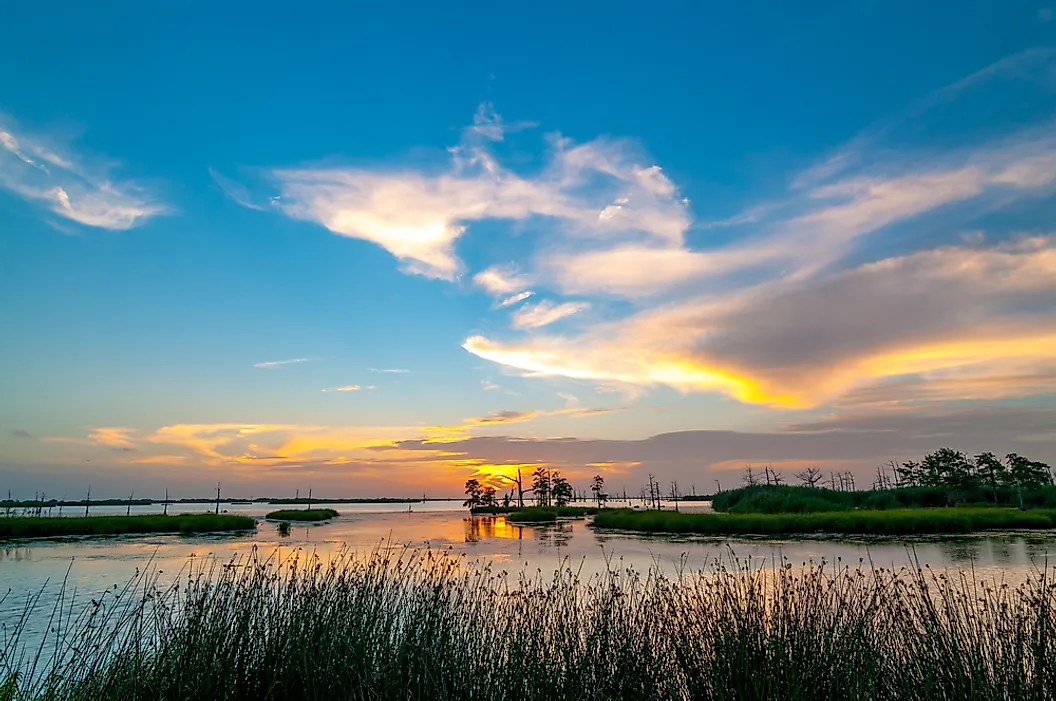
Approximately 40% of the coastal wetlands in the contiguous United States are found in the Mississippi River Delta in Louisiana. Over three million acres of wetlands were created over thousands of years by Mississippi River floodwaters that deposited huge amounts of sediment at the river's delta. The wetlands are composed of interior forests, freshwater marsh, brackish marsh, salt marsh, river estuaries, and coastal barrier islands. There is a significant population of American alligators in the Mississippi River Delta. Louisiana is home to over three million alligators, more than any other state. While Louisiana has a healthy population of alligators, it does not have any crocodiles.
There are two ways American crocodiles could migrate between South Florida and Louisiana. They could swim along the open Gulf Coast, or they could swim the Gulf Intracoastal Waterway.
Swimming through the open waters of the Gulf of Mexico is possible due to the American crocodile's tolerance to saltwater. Barrier islands off the coast of Alabama and Mississippi would provide rest stops on their journey. Even though crocodiles are adapted to saltwater, they are not built for long-distance open-water swimming. Crossing the Gulf would depend on their ability to ride ocean currents.
Swimming through the Gulf Intracoastal Waterway would provide them with protection from the open ocean, but would also create other issues. They would have to swim from South Florida to Carrabelle, where the completed inland portion of the Gulf Intracoastal Waterway begins. From there, the American crocodile would no longer have access to mangrove habitats it frequents, and it would have to navigate locks and floodgates. These structures create physical blockades that crocodiles could not easily bypass.
What Would Happen If Crocodiles Successfully Made It To Louisiana?

If crocodiles somehow made it to the Mississippi River Delta in Louisiana in the summer, they would most likely survive. The appropriate mangrove habitats that American crocodiles favor are found in southern Louisiana, like Port Fourchon and Grand Isle. However, while the habitat types may be appropriate for American crocodiles, the Mississippi River Delta generally has more freshwater and lower levels of salinity than what American crocodiles are accustomed to. But this does not automatically rule out the possibility that crocodiles could survive in the delta.
Crocodiles' sensitivity to cold temperatures, however, would not allow them to survive the winter or establish a population in Louisiana. Severe winter weather in Louisiana consists of freezing temperatures, freezing rain, sleet, and sometimes snow. Alligators can survive this. Crocodiles cannot.
If crocodiles were to migrate anywhere from South Florida, it would likely be across the ocean to their native range in Cuba or other parts of the Caribbean.
Will Crocodiles Ever Extend Their Range In The United States?
The American crocodile's range has already extended in South Florida. Over 50 years ago, they were limited to Key Largo and the northeast corner of Florida Bay in Everglades National Park. But as their population rose, they ran out of space and moved north and west. Today, they inhabit beaches, marinas, and golf courses along both Florida coasts, with a coastal range reaching roughly Pinellas County on the Gulf side and southern Brevard County on the Atlantic side. But with rising temperatures and sea levels in South Florida projected to rise several feet by 2100, American crocodiles may have to travel even farther to find new habitats.