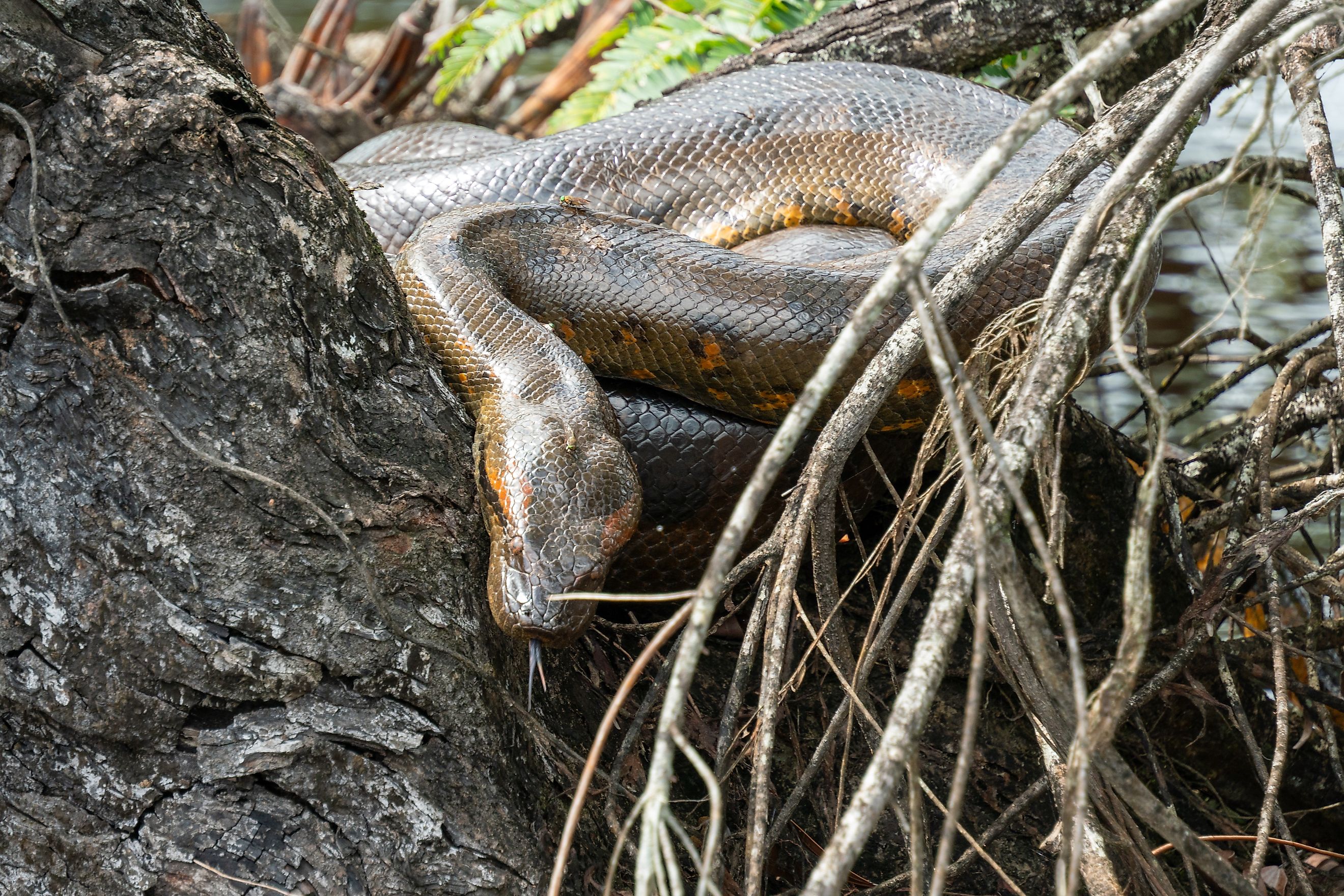
Dark-Spotted Anaconda
The dark-spotted anaconda is a little-studied, nonvenomous constrictor known from northeastern Brazil and French Guiana, where it inhabits open and forested flooded environments. This elusive predator is the smallest and least-studied member of the iconic anaconda genus. It is smaller than the green anaconda and has dark blotches that help conceal it among wetland vegetation and turbid water.
Taxonomic Classification

Eunectes deschauenseei, commonly known as the dark-spotted anaconda or De Schauensee's anaconda, is a snake in the family Boidae and subfamily Boinae. The Reptile Database continues to recognize it as a species, although a 2024 genetic study proposed treating it and the Bolivian anaconda as part of Eunectes notaeus. Its specific name is in honor of American ornithologist Rodolphe Meyer de Schauensee, who donated a specimen to the Philadelphia Zoo in 1924. The etymology of the dark-spotted anaconda is a fascinating mix of Ancient Greek and a historical mistake from Sri Lanka. The genus Eunectes translates to "good swimmer," while the name anaconda itself did not originate in South America, instead coming from Sri Lanka, several thousand miles away. The origin of "anaconda" remains uncertain; proposed sources include a Tamil expression associated with killing an elephant and the Sinhalese name of a whip snake. English accounts initially applied a form of the name to a supposed large snake from Ceylon before it became attached to South American anacondas. By the 19th century, the name had been transferred, apparently through misidentification, to the South American water boas known in Brazil as sucuri or sucuriuba.
Range And Habitat

Its confirmed range includes northeastern Brazil, particularly Pará, Amapá, and Marajó Island, and French Guiana; its possible occurrence in neighboring Suriname remains unconfirmed. The dark-spotted anaconda is semi-aquatic and inhabits swamps, marshes, slow-moving waters, and seasonally flooded environments at elevations below 1,000 feet (300 meters), broadly resembling the wetland habitats used by other anacondas.
Food

The dark-spotted anaconda is a carnivorous predator adapted to hunting in and around water, although its precise position in the local food web has not been established. These snakes will sit motionless under the surface of the water or along riverbanks, striking when prey comes to drink. Like all constrictors, they are non-venomous, killing instead via constriction by wrapping their powerful muscles around the victim until blood flow and respiration stop. Published accounts record fish, birds, and mammals in its diet, but detailed species-specific dietary data remain sparse.
Physical Description

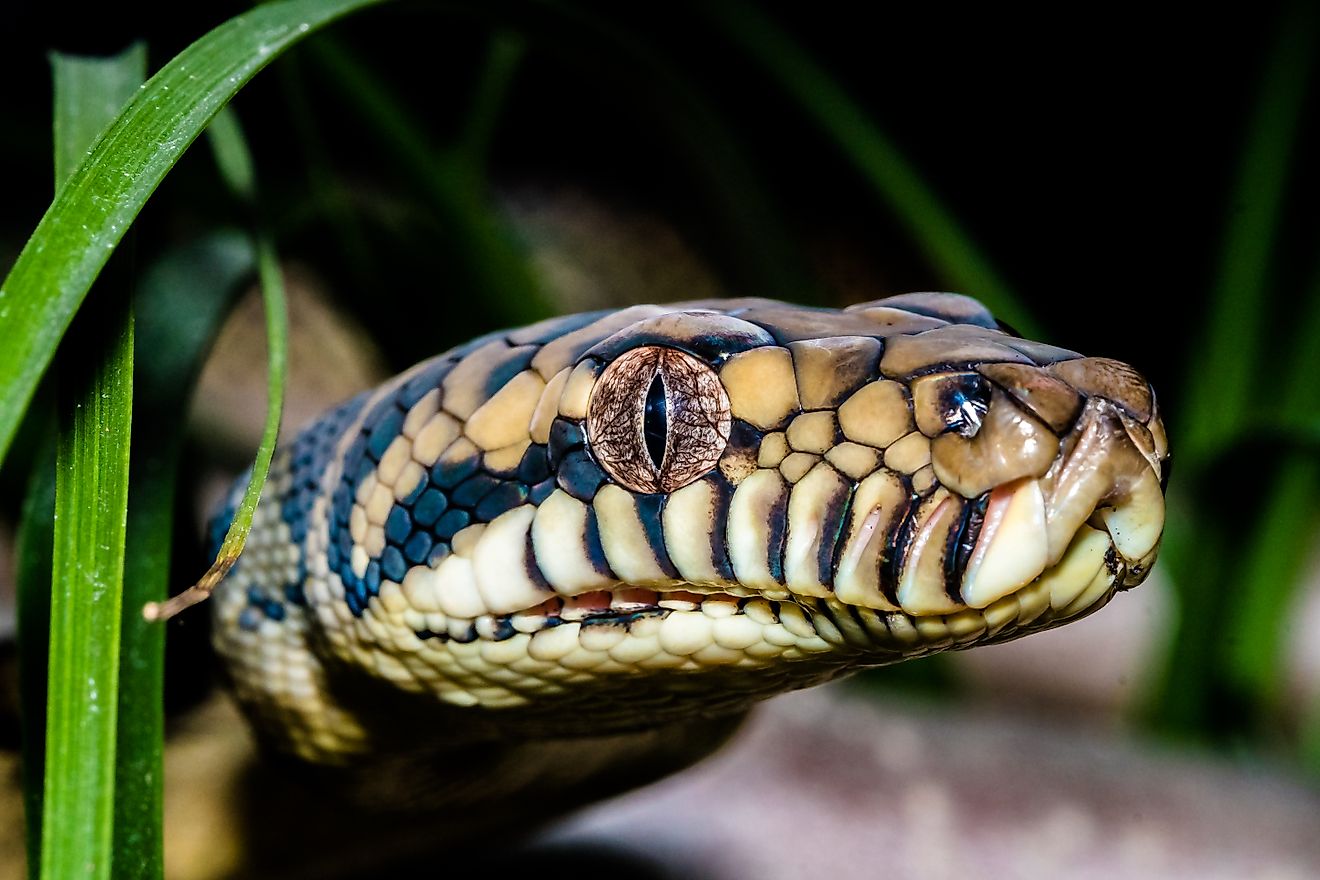
Unlike the massive and better-known green anaconda, the dark-spotted anaconda is much smaller and lighter. Published specimens vary considerably in size, with maximum recorded total lengths of about 6.3 feet for males and 9.8 feet for females. Females can reach a greater maximum size, although measured male and female body lengths overlap, and one study found no statistically significant difference. All dark-spotted anacondas have a greenish-brown or yellowish-brown background color while covered in bold dark brown or black spots and blotches along their back and sides. This coloring provides the perfect camouflage in murky, vegetation-rich environments in which they hunt. Their eyes and nostrils are positioned high on top of the head, allowing them to fully submerge their body while breathing and watching for prey. Because they are smaller and lighter than other anacondas, they are relatively agile on land.
Behavior

Dark-spotted anacondas are mostly active at dusk, dawn, and at night, spending the hot, humid days hiding under protection or in vegetation near water lines. The species is seldom observed, and little is known about its social behavior outside reproduction. Available records describe the snake as primarily aquatic but also capable of moving on land.
Reproduction
These snakes are live-bearing rather than egg-laying. Researchers infer that vitellogenesis probably occurs from the Southern Hemisphere's autumn through spring, while gestation in anacondas may last as long as nine months; five examined females carried between three and 27 young, with an average of about 10 per litter. The newborns measure approximately 11 to 21 inches (29 to 53 centimeters) in snout-to-vent length and receive no documented parental care.
Importance to the World

As a predator of fish, birds, and mammals, the dark-spotted anaconda participates in wetland food webs, although its ecological effects have not been quantified. Its predation may influence local food webs, but there is insufficient research to determine how strongly it affects prey populations or wetland conditions. Its presence confirms that suitable flooded habitat remains available, but the species has not been established as an indicator of overall ecosystem health.
Threats
The dark-spotted anaconda is classified as a species of Least Concern by the International Union for Conservation of Nature (IUCN) and is listed in CITES Appendix II, meaning international commercial trade is allowed only when the required permits and findings are in place. Agricultural expansion threatens some of its savanna habitat, but its population trend and the severity of this threat remain unknown; species-specific evidence of frequent conflict with people is lacking. Anacondas are traded for skins and as exotic pets, although the scale of such exploitation specifically involving the dark-spotted anaconda is poorly documented.
Rarely studied and seen even less, the dark-spotted anaconda is a reminder of how many secrets the Amazon delta still holds. Agricultural expansion threatens portions of its restricted habitat, but more field research is needed to determine the effects on its population and ecological role.