Where Black Bears Are Spreading Back In The East
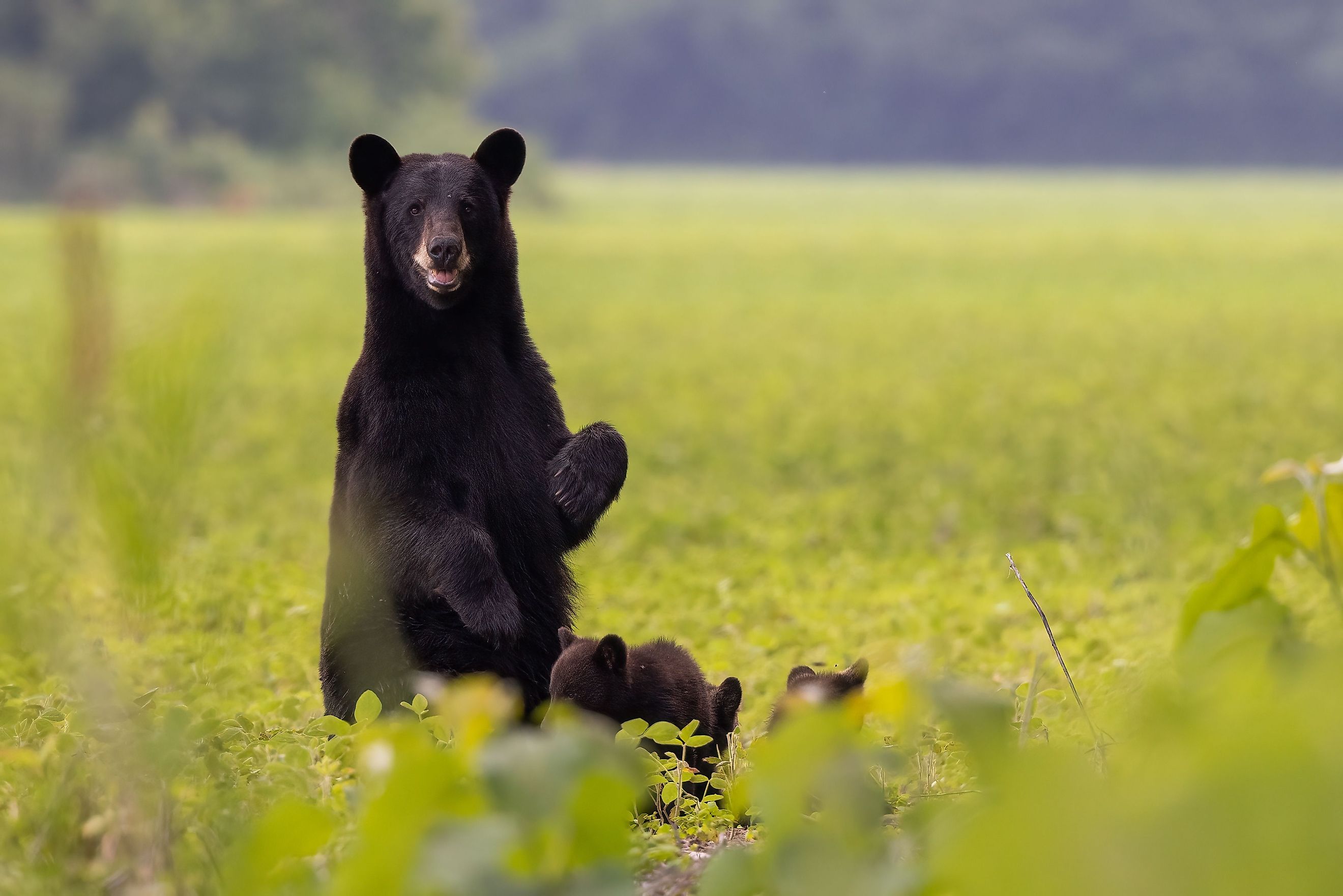
For much of the past century, seeing a black bear (Ursus americanus) in the eastern woods meant going to one of the few remote mountains or swamps where they survived after people cleared most of the land. Today, the continent's smallest and most widespread bear numbers around 800,000 across North America. For the past forty years, black bears have been expanding their range, moving back into farm areas, river bottoms, and the outskirts of towns where no one alive had seen them before. In the United States, black bears now occupy about half the area they did before European settlers arrived. In Canada, they still roam about 95 percent of their original territory. The eastern U.S. is where these changes are happening most quickly.
Why They Left, And Why They Came Back

Black bears used to live in almost all the forests of the United States, including the entire lower Mississippi basin. But within two generations, market hunting and clearing land for farms drove them out of most of that area. In the early 1900s, hunters could get about two dollars for a bear pelt, and even though they didn't mean to wipe out the species, they helped remove bears from much of the country. By 1900, records show that black bears had disappeared from over half their range in the lower 48 states, a number that wildlife ecologist Mark Boyce and his colleagues confirmed in a 2025 review in the Journal of Wildlife Management. The bears managed to survive only in swamps that were too wet to drain and on ridges too steep to plow, and almost nowhere else.
One famous hunt shows just how rare black bears had become in the bottomlands. When President Theodore Roosevelt visited the Delta region of Mississippi in November 1902 to hunt a bear, his guides spent days searching before they finally found one. The bear they cornered was so exhausted and in such poor shape that Roosevelt refused to shoot it. A newspaper cartoon about his decision spread quickly, and soon after, a Brooklyn shopkeeper started selling a stuffed "Teddy's bear," or so the story goes, though there are different versions of how the toy came to be. The story may have become part of American folklore, but it reflects a real decline. Roosevelt struggled to find even a single bear in an area where thousands had roamed only a generation earlier.
The black bear's comeback started with two main changes. In the early twentieth century, states began to regulate bear hunting across the East. Around the same time, forest cover nearly doubled after 1900, as families left less-productive farms and new trees grew in the old fields. Black bears don't need much more than thick woods and a changing food supply, so as forests returned, the bears had space to spread out again. But as a 2011 study by Frary and colleagues on the Appalachian front pointed out, this kind of recovery isn't all good news. When bears move back into areas where people live, there's always a chance for conflict.
The Arkansas Releases

The main reason for the eastern bear comeback is in Arkansas, and it happened by design. By the 1930s, fewer than fifty bears were left in the state, mostly near the lower White River, and Arkansas had already closed its bear season in 1927. From 1958 to 1968, the Arkansas Game and Fish Commission trapped 254 wild bears in Minnesota and Manitoba, Canada, and released them into the Ozark and Ouachita national forests. The commission ran this program for eleven years with little public input, which allowed them to restock bears before anyone could object.
The releases were more successful than most people expected. In a 1994 paper in the Journal of Mammalogy, biologists Kimberly Smith and Joseph Clark counted over 2,500 bears across the Interior Highlands of Arkansas, Missouri, and Oklahoma, calling it one of the most successful carnivore translocations ever. The bears and their offspring did not stay only in Arkansas. A 2014 genetic study led by Emily Puckett showed that the bears now returning to Missouri and Oklahoma came directly from the Minnesota and Manitoba bears.
The Missouri Department of Conservation now estimates there are about 900 to 1,000 bears in the state, growing by about 9 percent each year. This is up from around 300 bears in 2010. In 2024, the agency recorded 372 bear reports across 70 counties, including some north of the Missouri River and far from the southern Ozarks where the bears first returned. Missouri held its first regulated bear season in 2021. In Oklahoma, the eastern bear population is spreading from the same highlands and is growing by about 6 percent a year.
North and East, Into Older Ground

Farther north, bears are returning on their own. Ohio lost its last resident bears by the 1850s due to logging and hunting, and the animal is still listed as state-endangered. Even so, biologists are tracking a growing population across sixty-nine counties, with paperwork struggling to keep up. In 2025, the state recorded 537 bear sightings, the highest number on record and a substantial increase over 2024. The resident population is now estimated at about 100 bears, most of them young males moving out of Pennsylvania and West Virginia to find new territory. Female bears are more important for a lasting population because they settle and make dens instead of roaming. In June 2025, the Ohio Division of Wildlife put its first GPS collar on a female bear in Ashtabula County, showing that bears are now breeding in the state, not just passing through.
West of the mountains, the gaps are closing too. Black bears are strong swimmers, and some have crossed the Ohio River from Kentucky and the Mississippi River from Missouri into Illinois. If female bears make the same journey, the southern forests of Illinois could support a breeding population. Tennessee is an example of how far this recovery can go. By the early 1970s, wildlife managers saw the state's bears shrink to about ten mountainous counties along the eastern border, and many thought bears would disappear from the rest of Tennessee. Now, sightings are reported in the middle and western parts of the state, and biologists expect bears to keep reclaiming their old habitats.
What A Returning Bear Means For People

As black bears spread to more areas, encounters with people are becoming more common. The best reaction is not panic, but also not ignoring the risks. Black bears rarely kill people. Stephen Herrero, a bear researcher, and his team reviewed every known fatal black bear attack in North America from 1900 to 2009. They found 63 deaths in 59 incidents, which is less than one per year, even though there are now nearly a million black bears on the continent. Fatal attacks are very rare and tend to follow a pattern. Herrero's team discovered that 88 percent of these deaths were caused by predatory bears, not bears acting out of fear or defense. Almost all of these predatory bears were lone males, and most victims were alone when attacked.
Florida's bear population has quietly grown from just a few hundred in the mid-1900s to several thousand today. In one area, the number of bears has doubled to about 1,200 since 2002. On May 5, 2025, a black bear killed Robert Markel, an 89-year-old man, near Everglades City. This was the first fatal black bear attack ever recorded in Florida. One death after so many years of population growth shows how rare these incidents are, but it also reminds us that even a recovered predator is still a predator.
Most problems with bears do not involve attacks. When a bear finds garbage, pet food, a bird feeder, or an unattended grill, it quickly learns to come back for more. Bears that stop being afraid of people are the ones most likely to be killed or moved elsewhere. Wildlife agencies consistently warn that feeding bears makes them more likely to become problem animals. In most cases, human behavior is what creates the problem in the first place.
Sharing The Ground

If you hike, camp, or live in areas where black bears are spreading, a few habits can help you coexist with them. Always keep food, trash, and anything that smells like food secured and out of reach, both at home and at camp. Removing these temptations helps keep bears wild. Black bears become bolder and hungrier in the fall as they eat almost nonstop to prepare for winter. Through those autumn months, it is especially important to be careful with anything that might attract them.
If you see a bear nearby, stay calm and don't run, since running can make the bear chase you. Face the bear, back away slowly, and try to look bigger while speaking in a low, firm voice. Never approach or corner a bear, and never get between a mother and her cubs. Always keep dogs on a leash, because many encounters start when a loose dog gets into a fight with a bear. If a black bear attacks, don't play dead like you would with a grizzly. Instead, fight back hard, aiming for the bear's face and nose. Most black bears will stop if they meet strong resistance. WorldAtlas also tracks which parks have the most bear encounters, which is helpful if you're planning a trip to bear country.
The Bottom Line
The recovery of black bears across the eastern United States is one of the major wildlife conservation successes of the past century. Their return has brought them into closer contact with people, sometimes in places where they had been absent for generations. Protecting these populations now means more than preserving forests and limiting hunting. It also requires people to secure garbage, avoid feeding bears and learn to coexist with an animal that has reclaimed much of its former range.