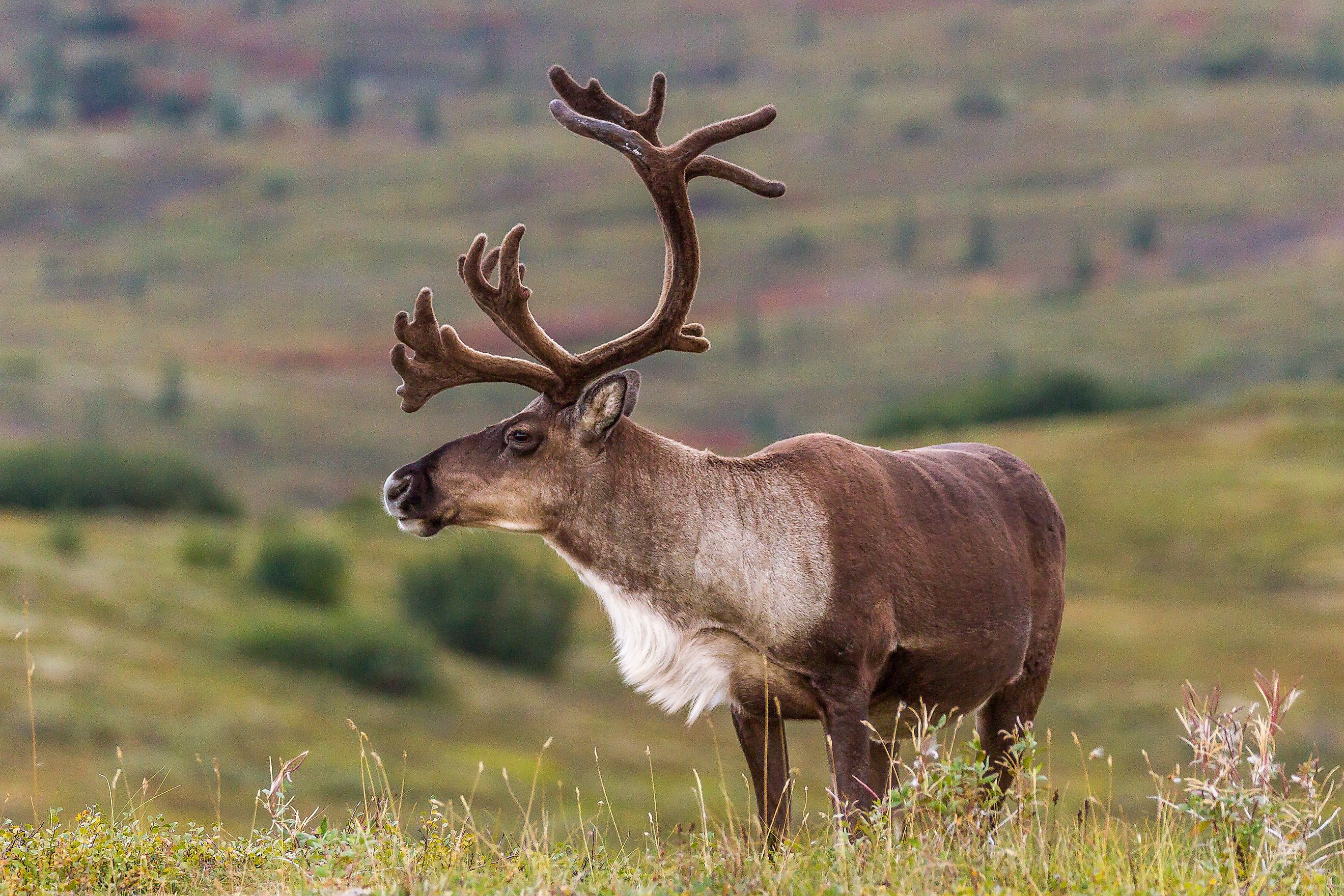
The Last Caribou In The Lower 48
In January 2019, a helicopter crew in the Selkirk Mountains of the Idaho-Washington-British Columbia borderlands captured a lone female caribou, the last known member of the last wild herd of caribou in the contiguous United States, and flew her north into Canada for a captive breeding program. When her net gun fired, a 10,000-year residency ended: for the first time since the ice sheets left, the lower 48 states held no wild caribou at all. The animals locals called the gray ghosts had haunted the Selkirks in dwindling numbers for decades, down to a few dozen, then a dozen, then three, then one, and their disappearance is not a mystery but a mechanism, a chain of consequences that began with chainsaws and ended with mountain lions, worth understanding because it is the textbook case of how a species can be protected on paper for 35 years and vanish anyway.
The Gray Ghosts

These were not the barren-ground caribou of Alaska's vast migrations but a stranger, rarer thing: southern mountain caribou, a deep-forest ecotype that solved winter with a trick no other large mammal in the lower 48 attempted. When snow buried the mountains, Selkirk caribou migrated up, not down, riding snowshoe-sized hooves onto a snowpack that could run 10 feet deep, which lifted them into the canopies of old-growth subalpine forest where their entire winter diet hung waiting: arboreal lichens, the wispy strands that drape century-old trees and nothing younger.
The strategy made them untouchable and fragile at once. On deep snow among the lichen trees, nothing could follow them or compete with them; but the whole act depended on big, old, continuous forest, because young stands grow no lichen worth eating, and a caribou that cannot reach its hanging pantry in February is finished. The gray ghosts were, in effect, tenants of a single resource that takes a century to grow and an afternoon to cut.
A Range That Once Reached Maine

The Selkirk herd was the final fragment of something continental. Woodland caribou once ranged across the northern tier of the United States, through Maine and New Hampshire, the Great Lakes states, Minnesota's boreal edge, and the mountain Northwest, and the retreat ran through the 19th and 20th centuries on the usual engines, unregulated hunting and the logging-over of the mature forests the animals required, with Maine's last native caribou gone by the early 1900s and Minnesota's not long after. By the time the Endangered Species Act arrived, the entire US population had contracted to the one deep-snow herd in the Selkirks, listed as endangered in 1984, by then already among the rarest mammals in the country.
The listing bought time and effort, including transplants of Canadian caribou into the herd through the late 1980s and 1990s to shore up its numbers. The augmented herd held on through the 1990s and 2000s at a few dozen animals, straddling the border, while the mechanism that was actually killing it kept turning in the background.
How The Forest Was Rewired

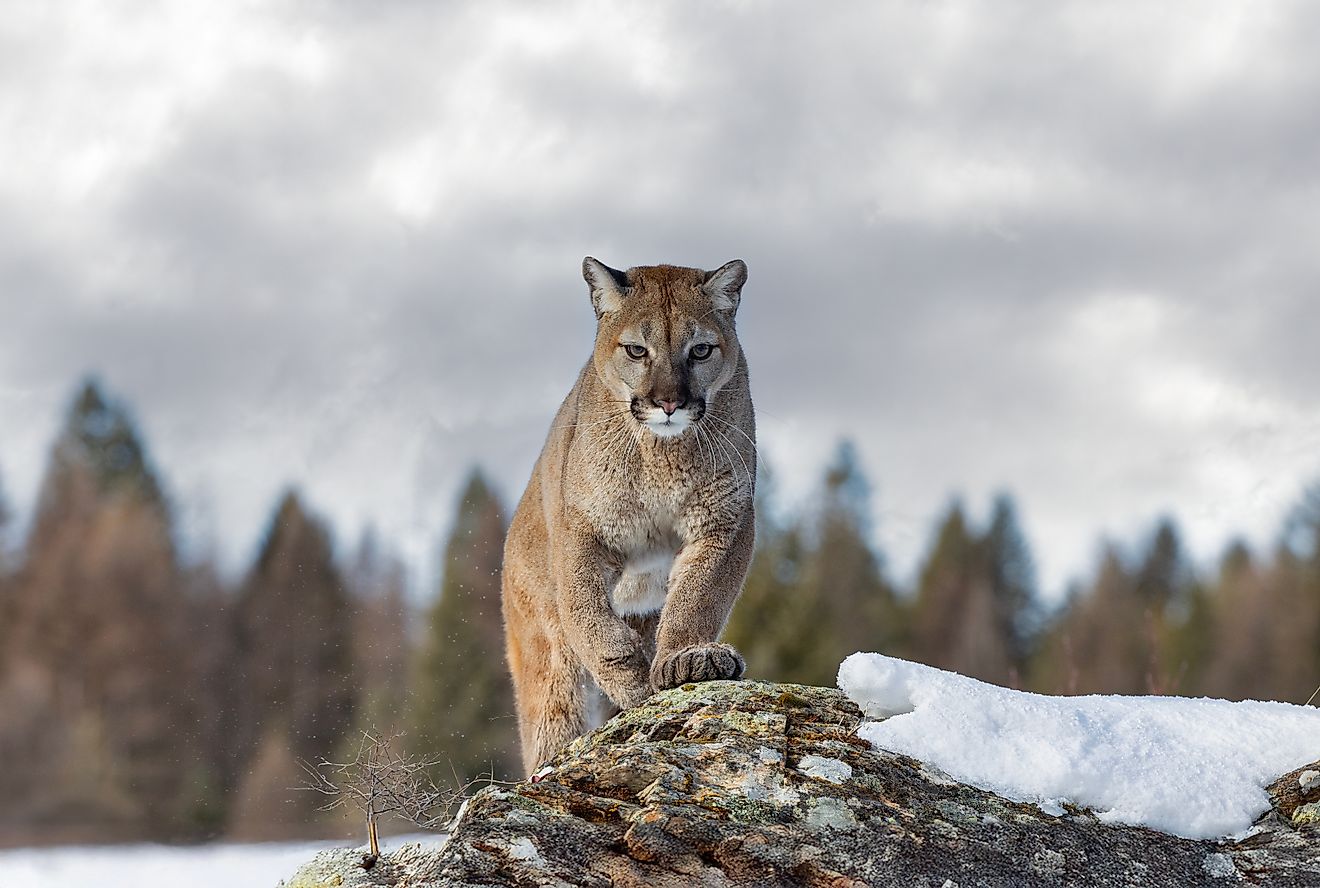
The mechanism has a name in the ecology textbooks, apparent competition, and the Selkirks ran the experiment at full scale. Logging the old forest did not just remove lichen; it replaced it with young, brushy regrowth, which is poor caribou country but superb food for deer, elk, and moose, and those species flooded into the rewired mountains in numbers the old forest had never supported. The newcomers brought their predators, with mountain lions and, later, recovering wolves settling in to work the enlarged prey base, and the predators did not read species labels.
A caribou herd that had always been too sparse and too high to be worth a predator's time was suddenly living next door to a permanent, deer-subsidized population of lions and wolves, and even occasional, incidental kills were unsurvivable arithmetic for a herd of 40. The caribou were not out-eaten and were barely hunted on purpose; they were collateral in a food web their forest's conversion had built, which is why protecting the animals without restoring the old forest never had a chance of working.
The Last Ones

The endgame came fast. The South Selkirk herd counted around 46 animals in 2009, a dozen by 2016, and three, all female, in the 2018 census, by which point the herd was functionally extinct, with no bull, no calves, and no future. The January 2019 capture of the survivors for British Columbia's maternity-pen breeding program was conducted as a rescue of individuals rather than a herd, and with it the contiguous United States, which within living memory had held caribou in a dozen states, held none.
It happened quietly, which is part of the story. The gray ghosts never had the constituency of wolves or grizzlies; most Americans never knew the lower 48 had caribou at all, and so the only extirpation of a large mammal from the contiguous US in modern times passed with a few regional headlines and a helicopter's worth of witnesses. The biologists on that flight understood exactly what the net gun meant, and said so in the plainest terms the agencies allowed: an era, measured properly, in millennia.
What Remains

North of the border, the story continues on the knife's edge, with British Columbia's southern mountain caribou herds also collapsing under the same mechanism and the province fighting back through maternity pens, predator management, and, most meaningfully, large-scale protection of remaining old-growth caribou forest in partnership with First Nations. Any future return of caribou to Idaho or Washington depends entirely on those herds surviving and the old forest regrowing, which places the timeline somewhere between generations and never.
The Selkirk lesson travels farther than the Selkirks. The herd was legally protected for 35 years while the thing it actually needed, old forest and the sparse predator regime that came with it, kept eroding, proof that a species and its habitat are not separable line items. The gray ghosts did not run out of protection. They ran out of the century-old trees their whole winter hung from, and everything else followed as mechanically as snowmelt.
An Empty Set Of Tracks

So the last caribou in the lower 48 was a single female lifted out of the Selkirks in the first days of 2019, the end of a retreat that began when woodland caribou still browsed Maine and Minnesota, and the cause was a chain with no villain in it anywhere near the end: cut the old forest, gain the deer, gain the lions, lose the ghosts. The deep snow still falls on the Selkirks every winter, and the lichen still drapes the surviving old stands, a table set each year for an animal that no longer comes. Whether it stays empty is being decided now, in Canada, one penned calf and one protected valley at a time.