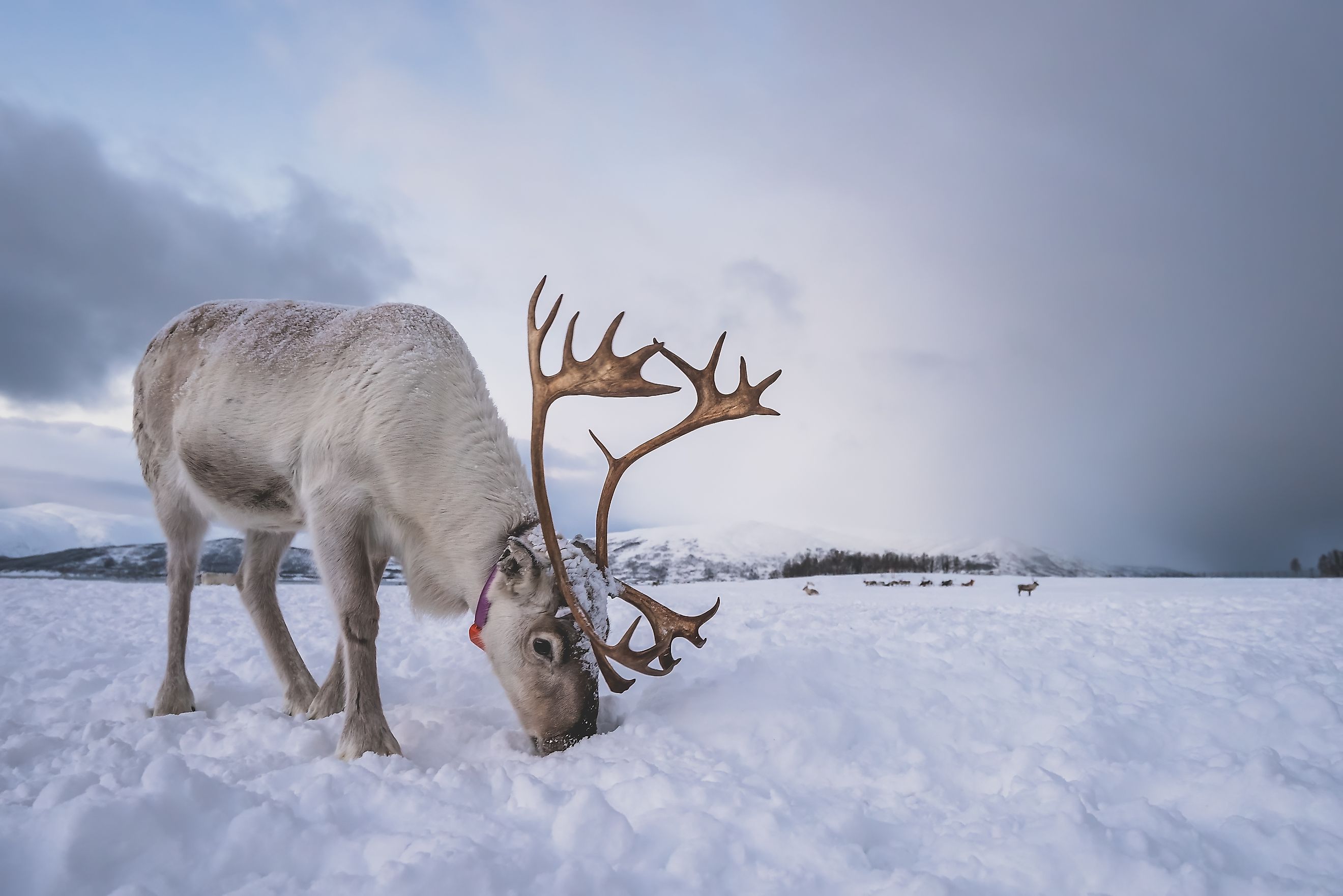
Caribou
Caribou are among the most recognizable animals of the far north. Built to withstand environments inhospitable to humans, these animals play an important role in the northern ecosystem. Vast herds of up to half a million animals migrate thousands of miles over Arctic tundra, eluding predators and insects while navigating freezing rivers and lakes to reach their destinations, shaping the Arctic ecosystem as they move. Modern threats like climate change and industrial activity are challenging this species, and their numbers have dropped drastically over the last few decades, leaving the future of these herds in doubt.
Taxonomic Classification

Caribou and reindeer belong to the single species Rangifer tarandus, part of the deer family (Cervidae) and the subfamily Capreolinae, or New World deer and allies including moose and roe deer. Taxonomy experts divide Rangifer tarandus into several regional subspecies, the most notable being Rangifer tarandus caribou (woodland caribou), Rangifer tarandus pearyi (Peary caribou), Rangifer tarandus granti (Grant's caribou), and Rangifer tarandus tarandus (Eurasian tundra reindeer). The etymology of Rangifer tarandus has interesting origins. The genus name Rangifer is not classical Latin like many species in this series. Instead, it is a linguistic blend of Old French, Latin, and ancient northern European origins. Rangier comes from Old French, which means "reindeer," and this term traces back to the Old Norse word hreinn, the native Viking term for the animal. Fera is Latin for "wild animal" or "untamed." Therefore, the genus name translates to "wild reindeer." Tarandus tracks back to ancient Greek and Latin descriptions of a legendary northern beast, and comes from the Greek word tarandos, used by Aristotle and Aelian to describe a stag-sized, color-changing deer from Scythia. Scholars suggest tarandos originally developed from ancient northern or Scythian roots linked to northern deer species, literally meaning "reindeer."
Range And Habitat
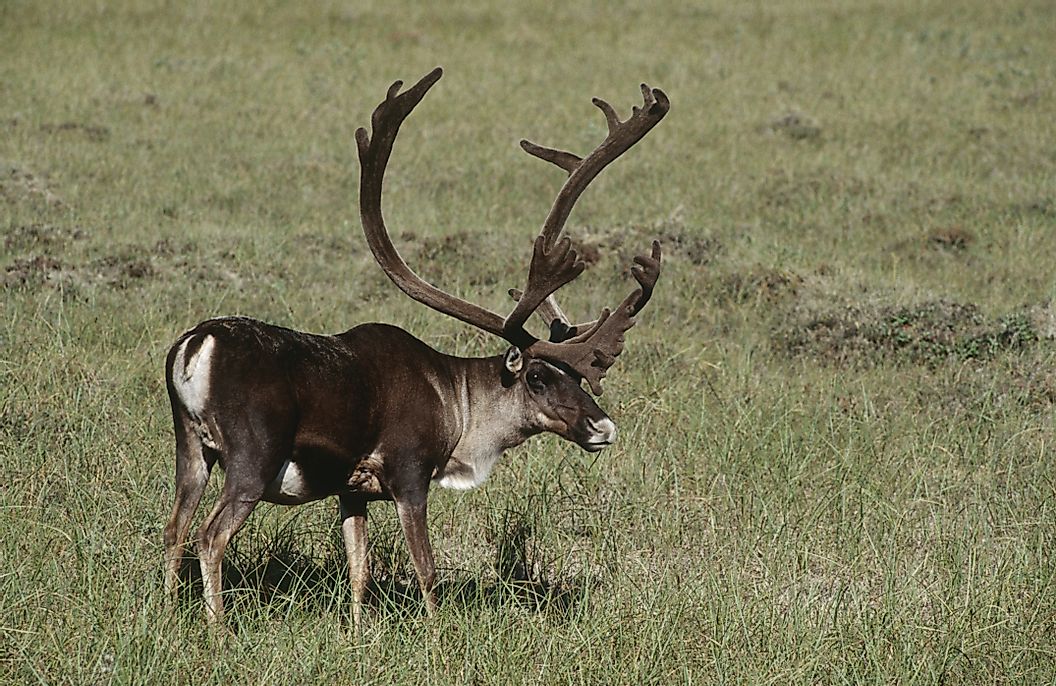
Caribou have a circumpolar distribution, meaning they are found across the northernmost regions of the Northern Hemisphere. North American caribou are distributed widely across Canada, except for New Brunswick, Nova Scotia, and Prince Edward Island, and across Alaska in the US, while the Eurasian reindeer can be found throughout Norway, Sweden, Finland, Iceland (introduced), and across northern Russia and Siberia. Caribou occupy a widespread geographic footprint, and populations have adapted into two distinct habitats: tundra and Arctic islands (migratory ecotypes) and boreal forest and taiga (sedentary ecotypes). The migratory ecotypes inhabit treeless, flat, or mountainous regions of the extreme High Arctic where the landscape is open, wind-swept rocky alpine zones or polar deserts. The caribou that live in these conditions are highly migratory, spending summers on the coastal tundra to calve and escape insects, then moving hundreds (sometimes thousands) of miles south into the northern edges of the tree line for winter shelter. Sedentary caribou, often referred to as woodland caribou or forest reindeer, live further south and prefer mature to old-growth coniferous forests, peatlands, and bogs. They migrate short distances, relying heavily on dense forest canopies to shelter them from deep snow and hide them from predators like wolves.
Food

Regardless of where they live, all Rangifer tarandus populations rely heavily on lichens, specifically reindeer moss, which serve as their primary winter food source. The animals dig these lichens up through the snow using their wide, shovel-like hooves. Where the snow is deep, woodland caribou switch to eating tree lichens on old-growth coniferous branches. Lichens are highly energetic and packed with carbohydrates but low in protein. Caribou compensate by recycling urea in their digestive system to conserve nitrogen. These herbivorous ungulates have a highly adaptable diet that switches drastically between seasons to survive the harsh environments in which they live. As soon as the warmer months arrive, they quickly shift their diet to high-protein and highly nutritious vascular plants to rebuild body fat, support lactation, and grow new antlers. They graze heavily on new leaves and buds of willow, birch, and blueberry and consume vast amounts of grasses, sedges, and rushes found in wetlands and alpine meadows. Flowering tundra plants, horsetails, and herbs provide other essential nutrients. In late summer and early autumn, caribou feast on fungi and mushrooms, which provide a late-season boost of nitrogen and phosphorus right before the autumn breeding season, when males cut down on their food intake. The average adult consumes between nine and 18 pounds of vegetation daily.
Physical Description

Caribou are medium-sized members of the deer family adapted to survive extreme Arctic and subarctic conditions. Adult males weigh between 265 and 550 pounds, while females average 175 to 265 pounds, standing three to 4.5 feet at the shoulders. Rangifer tarandus is the only deer species where both males and females grow antlers, which are large and complex. They feature a unique forward-facing branch called a brow tine that flattens into a wide shovel shape. Mature males shed their antlers in early winter after mating, while pregnant females keep theirs throughout the winter until they give birth in the spring, using them to defend feeding areas from larger males. Caribou have specialized fur that provides some of the best insulation in the animal kingdom. The outer coat consists of long, brittle guard hairs with hollow, air-filled cores. These hairs trap a dense layer of warm air against the skin and make the animals buoyant when swimming across freezing Arctic rivers. Beneath the guard hairs lies a dense, woolly, interwoven undercoat that blocks wind and moisture. Depending on the season, their color shifts from nearly pure white, like the Peary caribou, to chocolate brown, like the woodland caribou. Almost all caribou have a white patch around the neck and rump. Along with their fur, the hooves of caribou evolved for survival. Their hooves are wide and spread when weight is applied, ideal for walking in deep snow or soggy peat. In winter, the fleshy pads on the bottom of the foot shrink and tighten, allowing the hard, knife-edged rim of the hoof to act like an ice cleat for traction and digging. When caribou walk, a tendon slips over a sesamoid bone in their foot, producing a loud clicking sound that allows herds to stay together in dense fog or blizzards.
Behavior

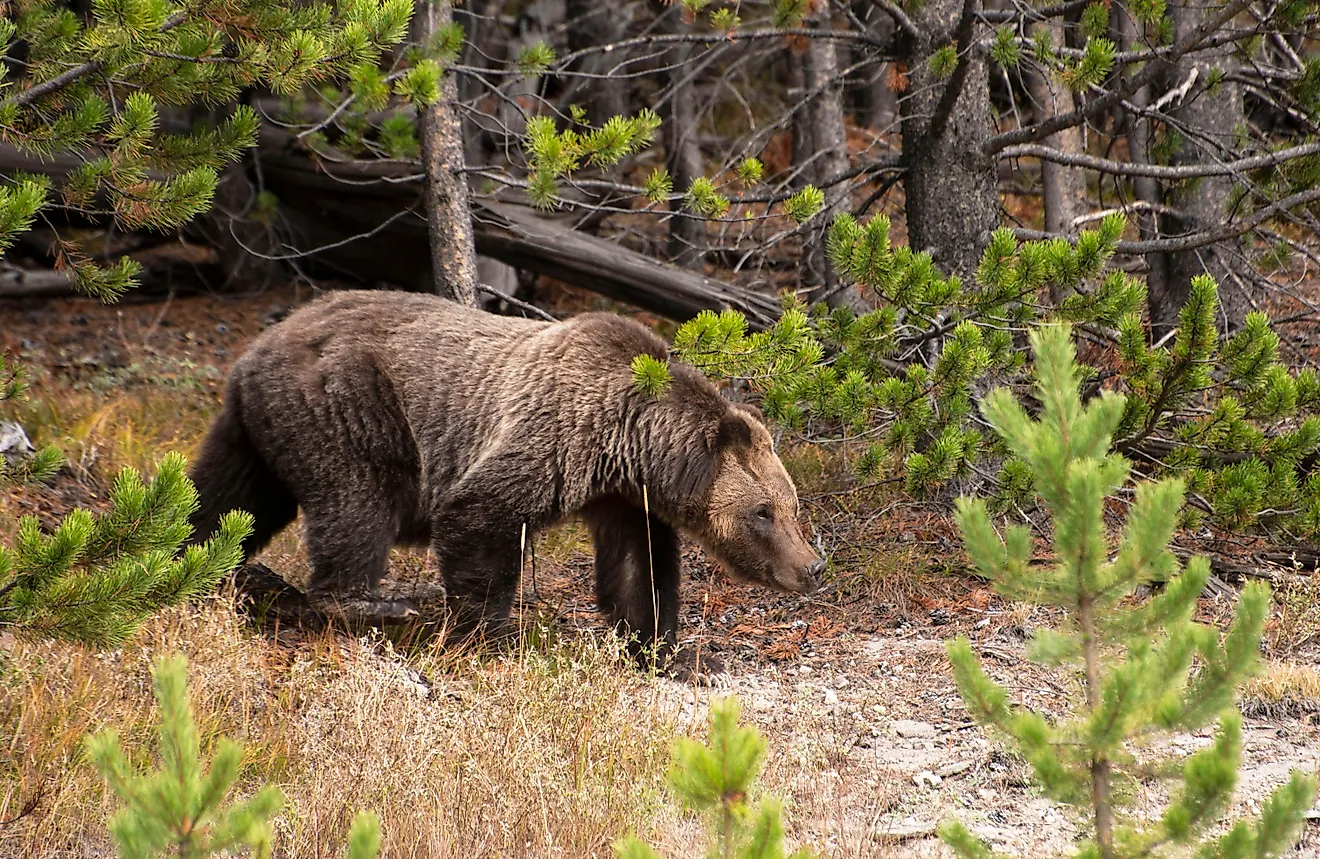
The behavior of caribou is shaped almost entirely by survival. Their lives are directed by the changing Arctic seasons, food availability, and the constant threat of predators and insects. Still, these are intensely social animals that, like many prey species, find safety in numbers. Woodland herds generally move in smaller groups of 10 to 100 individuals, while migratory herds can band together into super-herds in the summer that number anywhere between 50,000 individuals and more than half a million. Leadership of these herds is fluid, and no herd has a permanent leader. Highly nomadic, even non-migratory woodland populations are always on the move, constantly shifting across vast home ranges to find food and protection. Migratory caribou undertake one of the longest overland migrations of any land animal, with some herds traveling as much as 3,000 miles a year between winter forest shelters and summer tundra calving grounds. Even rivers, lakes, and ocean inlets rarely stall them, as caribou are powerful swimmers, able to cross freezing rapids and rough marine channels to reach their destination. Easily startled, they respond to a predator like a wolf or grizzly bear by moving swiftly in a unified wave through the landscape to escape.
Reproduction

Reindeer and caribou are seasonal breeders with an annual cycle. The rut occurs in autumn, peaking in mid to late October. At this time, males experience high testosterone, turn highly aggressive, stop eating, and do plenty of grunting and scent-marking in an attempt to attract females. The most dominant males are polygamous and defend harems of females. Once pregnant, females carry the calf for about 7.5 months, relying on stored body protein and fat reserves over winter to support themselves and their unborn young. They give birth to a single calf between mid-May and June. To reduce predation, or at least improve their odds, females calve close together with other females. Newborns are precocial, can stand and walk within hours, and will double their weight in the first two weeks.
Importance to the World

In death, caribou and reindeer support a vast array of biodiversity. They are a primary source of food for apex predators like wolves, bears, wolverines, and golden eagles, which are known to take calves. Carcasses feed a large secondary network of scavengers like Arctic foxes, ravens, and beetles. Once their calcium-rich antlers are shed, the antlers become a mineral supplement for rodents, lemmings, and even insects. As the herds travel, they deposit great amounts of urine and feces across vast distances, recycling nitrogen and phosphorus back into nutrient-poor Arctic soil. In winter, as they consume lichens, they prevent lichens from choking out other small plants. In summer, their consumption of leaves and buds slows the encroachment of thicker shrubs and bushes into the tundra. Because Rangifer tarandus requires huge blocks of unbroken wilderness to survive, biologists read the health of a caribou population as a signal of how healthy and intact the surrounding boreal forest and tundra are.
Threats

Climate change is the most severe threat facing caribou and reindeer, and migratory tundra herds across the Arctic have declined by roughly 65 percent over the last two to three decades. Scientists have found that warmer winters allow rain to fall on snow, creating thick layers of crust that lock lichens away under ice and lead to mass starvation. Longer, warmer summers also trigger increased insect activity, especially parasitic botflies and warble flies. In an effort to flee these pests, herds burn through critical energy reserves they cannot easily replenish. Rising temperatures also bring rapid ice thaws that swell rivers into fast-moving currents, drowning countless newborn calves, while more frequent and intense wildfires burn away slow-growing lichen supplies, destroy habitat, and pose a direct threat to herds. As northern lands thaw, countries expand activities like mining, forestry, and pipeline construction that slice through caribou habitat, fragmenting migration routes and disturbing calving grounds. The International Union for Conservation of Nature lists Rangifer tarandus as Vulnerable.
The Takeaway
Recognized globally as a vital link in the northern ecosystem, biologists in circumpolar countries are working to protect caribou and reindeer herds. In Canada, a facility in Jasper National Park breeds caribou in large, predator-free enclosures, eventually releasing them into wild herds. In northern Europe and Russia, herders and scientists use strategic grazing to counter the impacts of climate change, keeping shrubs from blanketing open tundra and holding the landscape suitable for caribou and reindeer. Indigenous communities, who have co-existed with Rangifer tarandus for millennia, are also leading modern recovery plans by tracking herd health, reporting illegal habitat destruction and poaching, and setting voluntary hunting limits to avoid a trophic cascade that would permanently alter the Arctic landscape.