Speckled Rattlesnake
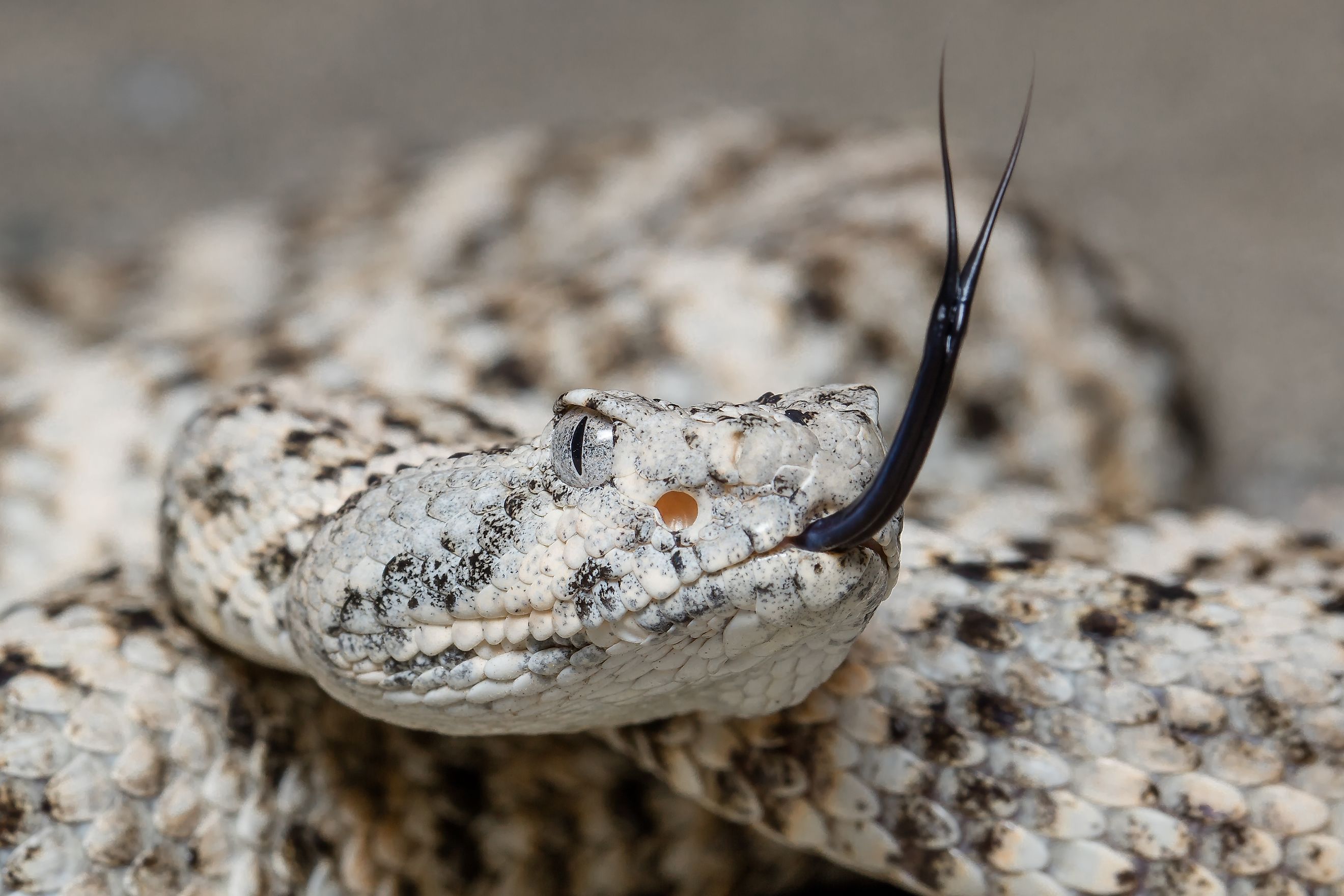
Few desert reptiles vanish into their surroundings as completely as the speckled rattlesnake. Across the rocky mountains and canyons of the American Southwest, this medium-sized pit viper wears a coat that mirrors the exact color of the stone beneath it, whether pale granite gray, rust red, or nearly white. A snake resting on a boulder can be almost invisible until it moves or sounds its rattle.
The name "speckled rattlesnake" covers a group of closely related pit vipers native to the southwestern United States and northwestern Mexico. For much of the twentieth century, scientists placed them all in a single species, Crotalus mitchellii, named for a physician who studied snake venom. Modern genetic work has since split the group apart, and the common snake that ranges across California, Nevada, Arizona, and Utah now carries the name Crotalus pyrrhus. Whatever label it wears, it remains one of the most variable and best-camouflaged rattlesnakes in North America.
Taxonomic Classification

The speckled rattlesnake belongs to the family Viperidae, the vipers, and to the genus Crotalus, the rattlesnakes proper. The genus name comes from the Greek word "krotalon," meaning rattle or castanet, a nod to the horny segments at the tip of the tail. Edward Drinker Cope first described the original single species in 1861 from specimens collected on the Baja California peninsula, placing it in the now-abandoned genus Caudisona. That form was named Crotalus mitchellii for Silas Weir Mitchell (1829 to 1914), an American physician and early researcher of rattlesnake venom. The mainland form now recognized as Crotalus pyrrhus was described separately by Cope in 1867.
For decades, herpetologists recognized a single wide-ranging species, Crotalus mitchellii, divided into several subspecies. That arrangement changed after detailed DNA studies. A 2015 revision elevated the southwestern mainland form to full species status as Crotalus pyrrhus, whose name derives from the Latin for reddish or flame-colored. The Angel de la Guarda Island population became Crotalus angelensis, and the original Crotalus mitchellii is now restricted to the southern tip of Baja California. This kind of reshuffling is common in modern reptile taxonomy, where genetic tools frequently reveal that one apparent species is really several.
Physical Description

This is a medium-sized, heavy-bodied snake. Mainland adults average about 3 feet (91 cm) in length and occasionally exceed 4 feet (120 cm), while island populations depart from that norm in striking ways. Snakes on Angel de la Guarda Island grow unusually large, with one specimen reaching 53.8 inches (136.7 cm), whereas the dwarfed rattlesnakes of El Muerto Island top out at just 25.1 inches (63.7 cm).
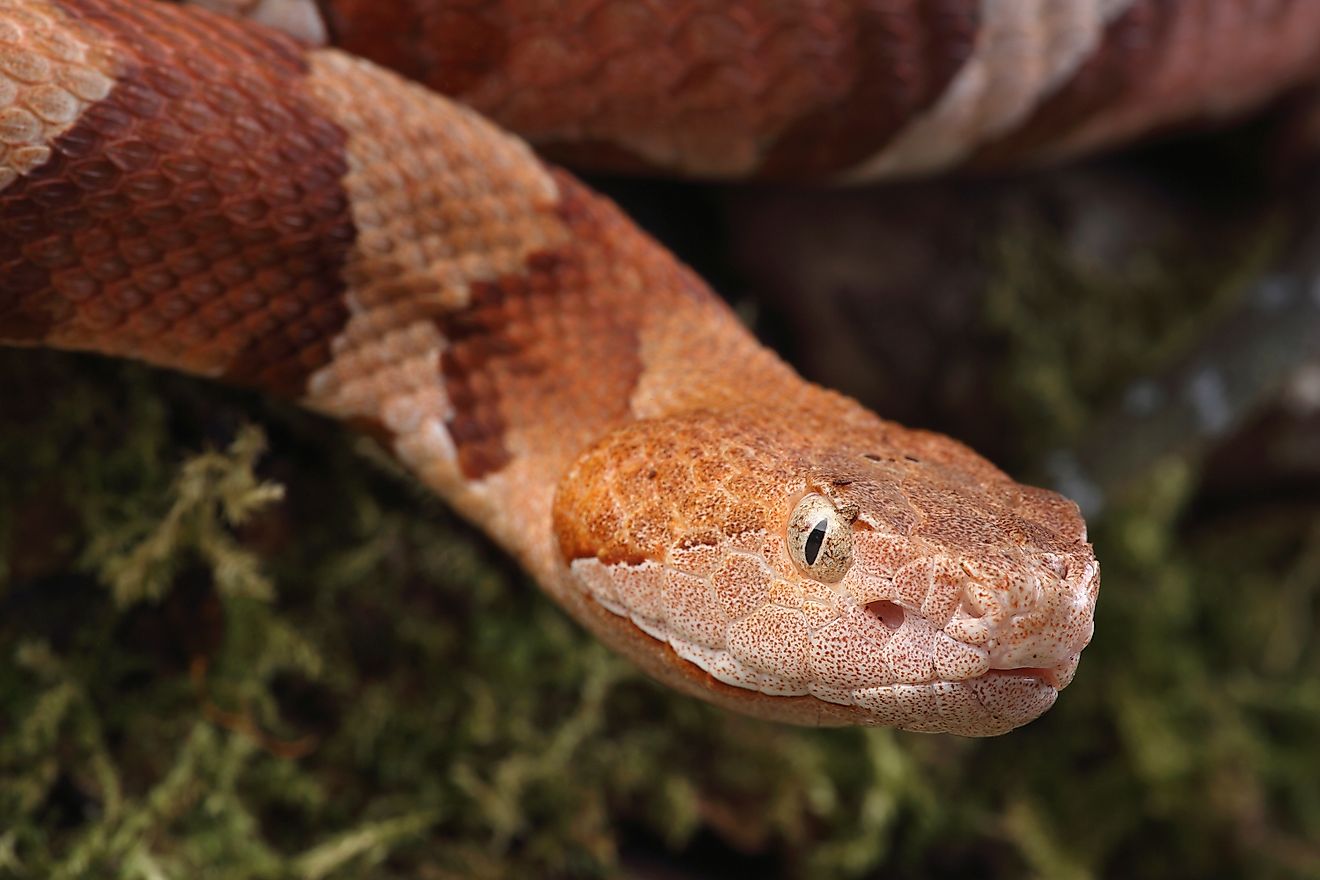
Like other pit vipers, the speckled rattlesnake has a broad, triangular head set off from a narrow neck, vertically elliptical pupils, and keeled scales that give the body a rough texture. A heat-sensing pit sits on each side of the face between the eye and the nostril, and a segmented rattle caps the tail. The feature that gives the animal its name is the fine peppering of black and white flecks across its body, an effect produced in part by the unusual fragmentation of the scales on its head.
Coloration is the snake's defining trait, and it varies enormously. Ground color may be pink, gray, tan, yellow, orange, or almost white, and it tends to match the dominant rock and soil of the local terrain. Faint crossbands, diamonds, or blotches often break up the pattern, and dark rings encircle the tail near the rattle. Because color tracks the environment so closely, two snakes from ranges only a few miles apart can look like different animals.
Range and Habitat

The speckled rattlesnake complex occupies the rocky heart of the Mojave and Sonoran deserts. In the United States, the mainland species ranges through east-central and southern California, southwestern Nevada, the extreme southwestern corner of Utah, and western Arizona. From there its range continues south into northwestern Mexico, and several island populations persist on landmasses off the coast of Baja California in the Gulf of California.
True to its build, this is a snake of rugged ground. It favors rocky hillsides, boulder fields, canyon walls, and outcrops where cracks and crevices offer both cover and ambush sites. It also turns up in chaparral, desert flats studded with cactus, and dry grassland, and it can climb well into the mountains, occurring at elevations of up to about 8,000 feet (2,400 m). The rocky habitat is central to the animal's biology, providing the varied stone backdrop that its camouflage has evolved to imitate.
Diet

The speckled rattlesnake is a carnivore and an ambush hunter. Its prey consists mainly of small mammals, especially desert rodents such as mice, kangaroo rats, and young rabbits, but it also takes lizards and birds when the chance arises. Juvenile snakes rely more heavily on lizards, shifting toward warm-blooded prey as they grow larger and their venom yield increases. One large individual was recorded having swallowed a nearly full-grown cottontail rabbit, a reminder of how much this snake can consume relative to its size.
Rather than chasing prey, the snake coils in a promising spot and waits, sometimes for days, using its heat-sensing pits to detect the body warmth of passing animals in total darkness. A single rapid strike injects venom, after which the snake releases the bite and follows the scent trail until the prey succumbs. This ambush strategy suits an animal that must conserve water and energy in a harsh desert setting.
Behavior

Activity in the speckled rattlesnake shifts with the seasons. During the cooler months of spring and fall it may move about by day, but through the searing heat of summer it becomes largely nocturnal, hunting and traveling after dark when surface temperatures drop. In winter it retreats into rock crevices and dens to brumate, the reptilian form of dormancy, emerging when warmth returns.
The species is solitary for most of the year and relies first on stillness and camouflage to avoid trouble. When a snake feels threatened and cannot slip away, it raises and vibrates its tail to produce the familiar buzzing rattle, a warning that asks a larger animal to keep its distance. If the warning fails, the snake will strike in defense. Encounters with people are relatively uncommon because the animal favors remote, rocky country and generally prefers to avoid confrontation.
Reproduction

Like nearly all rattlesnakes, the speckled rattlesnake gives birth to live young rather than laying eggs, a reproductive mode known as viviparity. Mating takes place in spring, soon after the snakes emerge from their winter shelters. The female carries the developing embryos internally through a gestation of roughly four to five months.
By late summer she gives birth to a litter of live neonates, usually somewhere between three and eleven, though the exact number depends on her size and condition. The young arrive fully formed and equipped with venom, a small terminal button in place of a rattle, and the instincts they need to hunt. They receive little or no parental care and disperse to fend for themselves within a short time of birth. Snakes of this genus generally reach breeding maturity at about three years of age.
Importance to the World

As an abundant mid-level predator, the speckled rattlesnake helps hold desert ecosystems in balance. By preying heavily on rodents, it acts as a natural check on populations of mice and rats that might otherwise damage vegetation and spread disease. In this sense the snake provides a form of free pest control across the arid lands it inhabits.
The rattlesnake is also prey itself. Hawks, roadrunners, kingsnakes, and other predators feed on speckled rattlesnakes, making the species a link that passes energy up the food web and helps sustain larger hunters. Its venom, meanwhile, has drawn scientific interest, since studies of how venom composition varies with body size and geography help researchers understand both snake biology and the development of medical treatments for bites.
Threats and Conservation

The speckled rattlesnake is not currently considered at risk. The International Union for Conservation of Nature lists the species as Least Concern, reflecting its wide distribution, large presumed population, and stable trend at the time of assessment. No major range-wide decline has been documented.
That status does not mean the snake faces no pressure. Like other desert reptiles, it loses habitat to urban expansion, roads, and land development, and individuals are frequently killed on highways or destroyed out of fear when they turn up near homes. Because island populations are small and isolated, they are more vulnerable to disturbance than the widespread mainland form. Leaving the snakes alone in the wild and protecting large tracts of intact desert remain the most effective ways to keep the species secure.
Takeaway
The speckled rattlesnake is well suited to the harsh conditions of the arid Southwest. Its variable coloration provides camouflage among rocks, while patient ambush hunting allows it to conserve energy in an environment where prey can be scarce. Like other rattlesnakes, it gives birth to live young, and it can tolerate the intense heat of its desert habitat. The recent division of the former Crotalus mitchellii into several species has also revealed greater evolutionary diversity within this group than was previously recognized. The species remains common and secure, although preserving its rocky desert habitat will be important for maintaining healthy populations. Its secretive nature also makes it a good example of how much of desert wildlife can remain hidden in plain sight.
Fun Facts

- A living chameleon of stone. The snake's ground color tends to match the local rock so precisely that populations only a few miles apart can look like entirely different animals.
- Named for a venom pioneer. The species honors Silas Weir Mitchell, a nineteenth-century American physician whose research on rattlesnake venom helped lay the groundwork for modern neurology.
- Giants and dwarfs. Island populations off Baja California include both unusually large snakes on Angel de la Guarda and miniature ones on El Muerto, a rare case of both gigantism and dwarfism appearing in one snake group.
- Mistaken identity. Because of its banded markings, the speckled rattlesnake is sometimes wrongly called the tiger rattlesnake, which is a different desert species.
- Built-in heat vision. The pits on its face detect the body heat of prey, letting the snake strike accurately in complete darkness.
Quick Facts
- Common name: Speckled Rattlesnake
- Scientific name: Crotalus pyrrhus (formerly part of Crotalus mitchellii)
- Family / Order: Viperidae / Squamata
- IUCN status: Least Concern
- Length: Average about 3 feet (91 cm), sometimes over 4 feet (120 cm)
- Weight: Varies with size, roughly 1 to 2 pounds (0.5 to 0.9 kg)
- Lifespan: Up to about 20 years, with a recorded captive age of 22 years
- Diet: Carnivore, feeding on small mammals, lizards, and birds
- Range: Southwestern United States and northwestern Mexico
- Habitat: Rocky deserts, hillsides, and canyons up to about 8,000 feet (2,400 m)