Red-Bellied Black Snake
The red-bellied black snake is one of the few large venomous snakes that tends to inspire admiration rather than dread. Glossy jet-black along the back with vivid red or orange flanks fading to a pink belly, it is among the most frequently encountered sizeable snakes in eastern Australia. Despite carrying venom capable of causing serious illness, it has never been reliably linked to a human death, a record that sets it apart from most of the continent's dangerous elapids.
Known to science as Pseudechis porphyriacus, this is a member of the elapid family, the same lineage that includes cobras, taipans, and tiger snakes. It is a semi-aquatic frog specialist that rarely strays far from water, and its range follows the moist eastern edge of Australia through Queensland, New South Wales, and Victoria. Timid by temperament, it usually flees rather than fights when a person approaches.
What makes this snake worth a closer look is not only its striking appearance or its relatively forgiving venom, but its remarkable evolutionary story. Over just a few decades, red-bellied black snakes have begun adapting to one of the worst invasive threats Australia has ever faced, offering biologists a rare front-row view of natural selection at work.
Taxonomic Classification

The red-bellied black snake belongs to the kingdom Animalia, the phylum Chordata, the class Reptilia, and the order Squamata, which contains all lizards and snakes. Within the suborder Serpentes it sits in the family Elapidae, the front-fanged venomous snakes. Its genus, Pseudechis, is the group commonly called the black snakes of Australia and New Guinea.
The naturalist George Shaw first described the species in 1794, originally placing it in the genus Coluber because he believed it was harmless. The scientific name translates loosely as red-purple false viper, a nod to its colouring and to early confusion about its identity. No subspecies are currently recognised, though some researchers suspect the northern and southern populations may eventually prove distinct. One detail sets this snake apart from every one of its close relatives. It is the only member of the genus Pseudechis that gives birth to live young rather than laying eggs.
Physical Description

Adult red-bellied black snakes average around 1.25 m (4 ft 1 in) in total length, although fully grown individuals commonly reach 1.5 to 2 m (5 to 6.5 ft). The largest reliably recorded specimen measured 2.55 m (8 ft 4 in). Males tend to grow slightly larger than females. These snakes are heavier than their slender profile suggests, and one large 2 m animal caught near Newcastle was estimated to weigh close to 10 kg (22 lb).
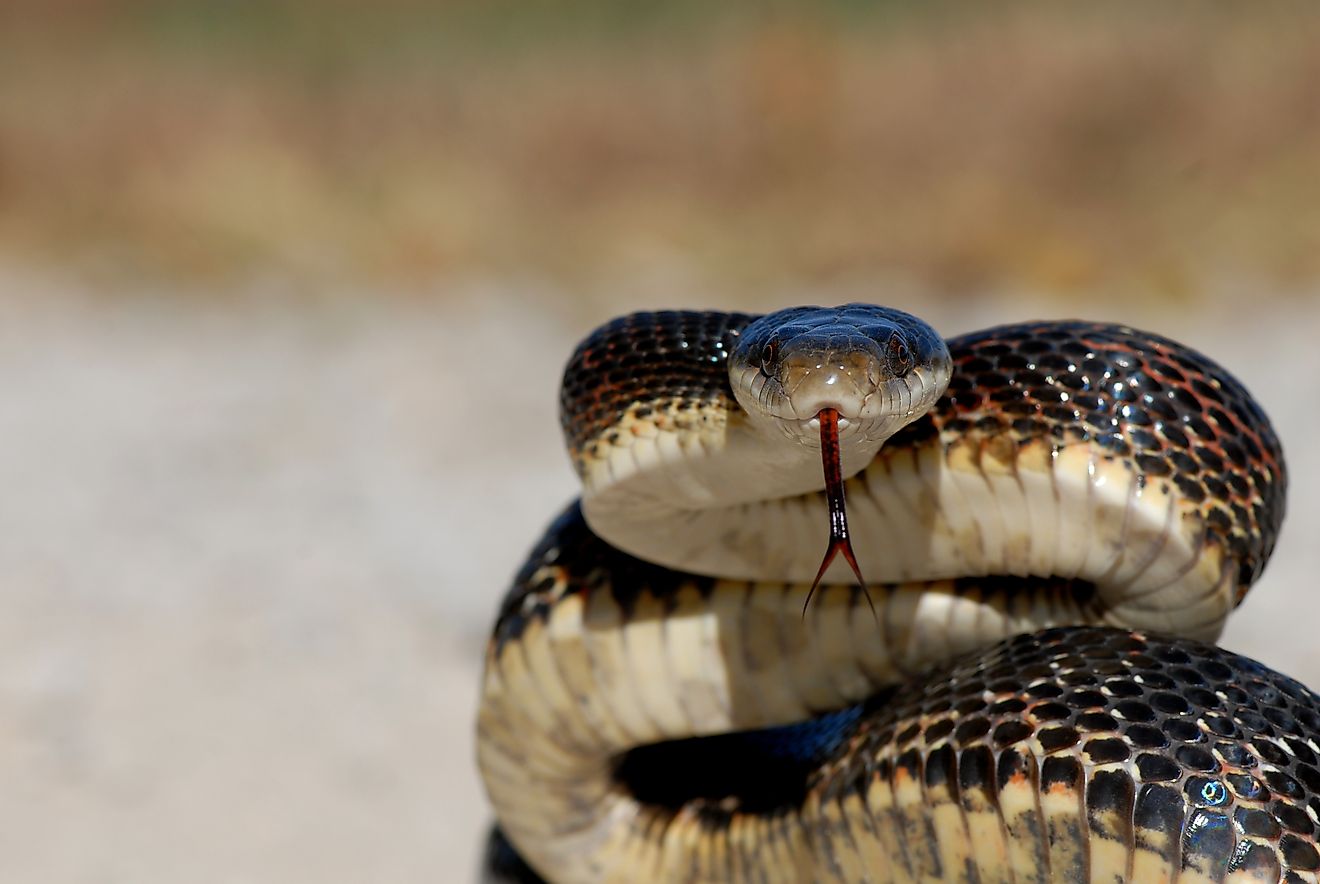
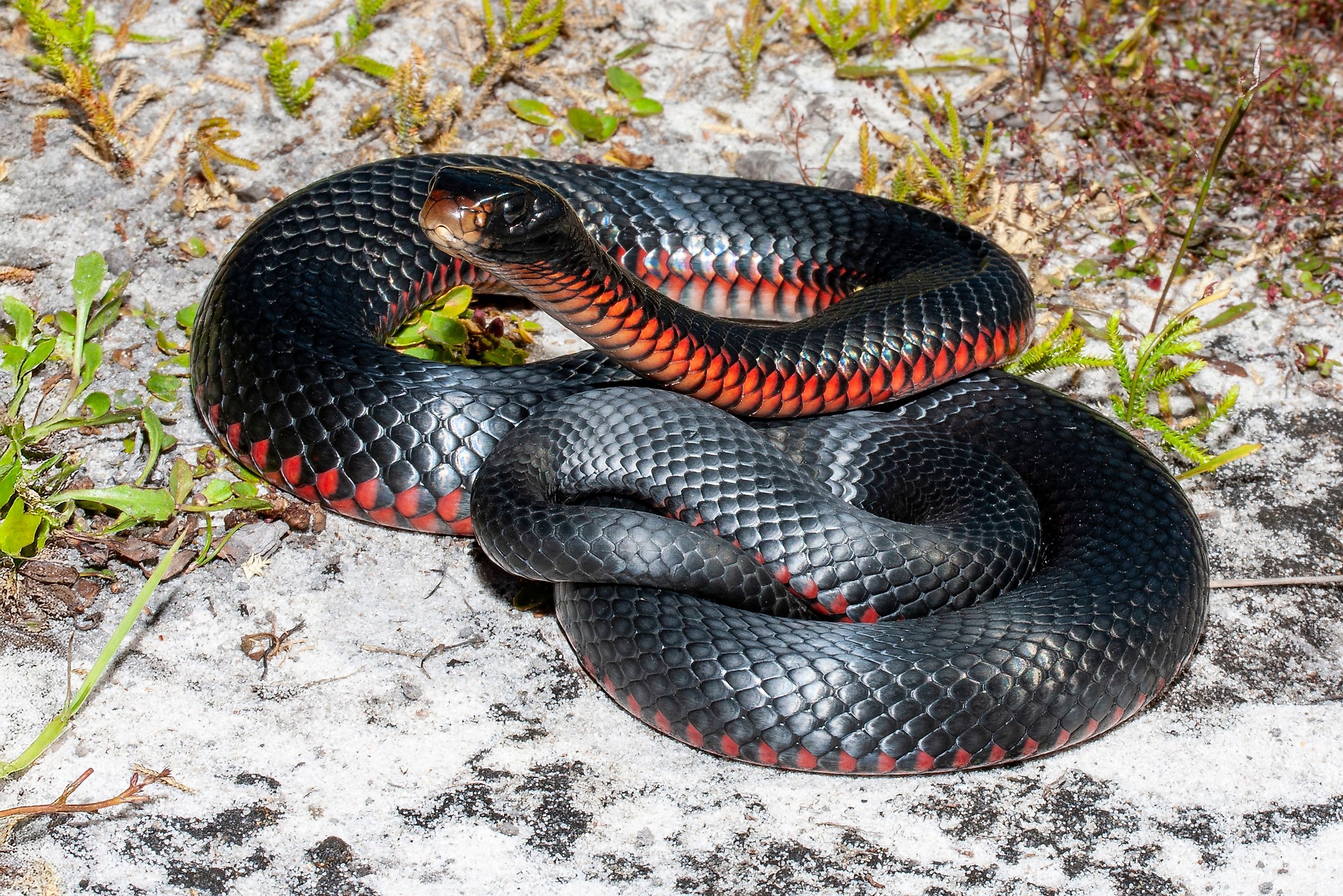
The upper body is a uniform, high-gloss black that can shine almost metallic in sunlight. The defining feature is the flanks, which are bright red or orange and fade to pink or dull red across the belly, with each of these scales edged in black. Snakes from the northern parts of the range often have paler, more cream or pink undersides. The head merges smoothly into the body with no obvious neck, and the snout is usually a lighter brown or grey. Like all snakes, it has round pupils, no eyelids, and a forked tongue, and it is effectively deaf to airborne sound, sensing the world instead through ground vibration and scent.
Range and Habitat

This snake is found only in eastern Australia. Its distribution is patchy in the tropical north, with isolated pockets in northern and central Queensland, then becomes continuous across southeastern Queensland, eastern New South Wales, and Victoria. A separate, isolated population persists around Adelaide in South Australia. In New South Wales the range pushes well inland, extending hundreds of kilometres from the coast.
Water is the constant thread running through its habitat. Red-bellied black snakes favour swamps, creeks, lagoons, and the margins of rivers and farm dams, and they seldom venture more than about 100 m (330 ft) from a water source. Within these wetter zones they occupy forests, woodlands, and grasslands, and they readily colonise disturbed rural land, drainage canals, and irrigation channels. During the day active snakes hold a body temperature of roughly 28 to 31 degrees Celsius (82 to 88 degrees Fahrenheit) by shuttling between sunny and shaded spots, warming quickly in the morning and cooling slowly through the evening.
Diet

The red-bellied black snake is a carnivore and, above all, a frog specialist. Amphibians form the core of its diet, but it is an opportunistic hunter that will also take tadpoles, fish, lizards, small mammals, and eggs. It readily eats other snakes, including smaller members of its own species. This is a capable aquatic forager that hunts in and under water, submerging its head to search or diving fully beneath the surface to seize prey, then often returning to land to swallow its meal.
Captive animals reveal just how adaptable this appetite can be. They accept rats and mice with enthusiasm and have been recorded eating fish fillets, raw chicken, and even canned dog food. Prey is frequently swallowed rapidly, sometimes before the venom has taken full effect, and captured snakes have occasionally regurgitated live frogs, a hint that some amphibians may carry partial resistance to the venom.
Behavior

Red-bellied black snakes are diurnal, hunting and basking through the day and sometimes remaining active on warm evenings. They are notably active foragers, and one tracked individual was recorded 420 m (about 1,380 ft) from its release site just a day later. Males in particular travel long distances in search of mates. When not on the move, these snakes shelter in thick grass, hollow logs, mammal burrows, and beneath large rocks, often keeping several favoured retreats within a home range.
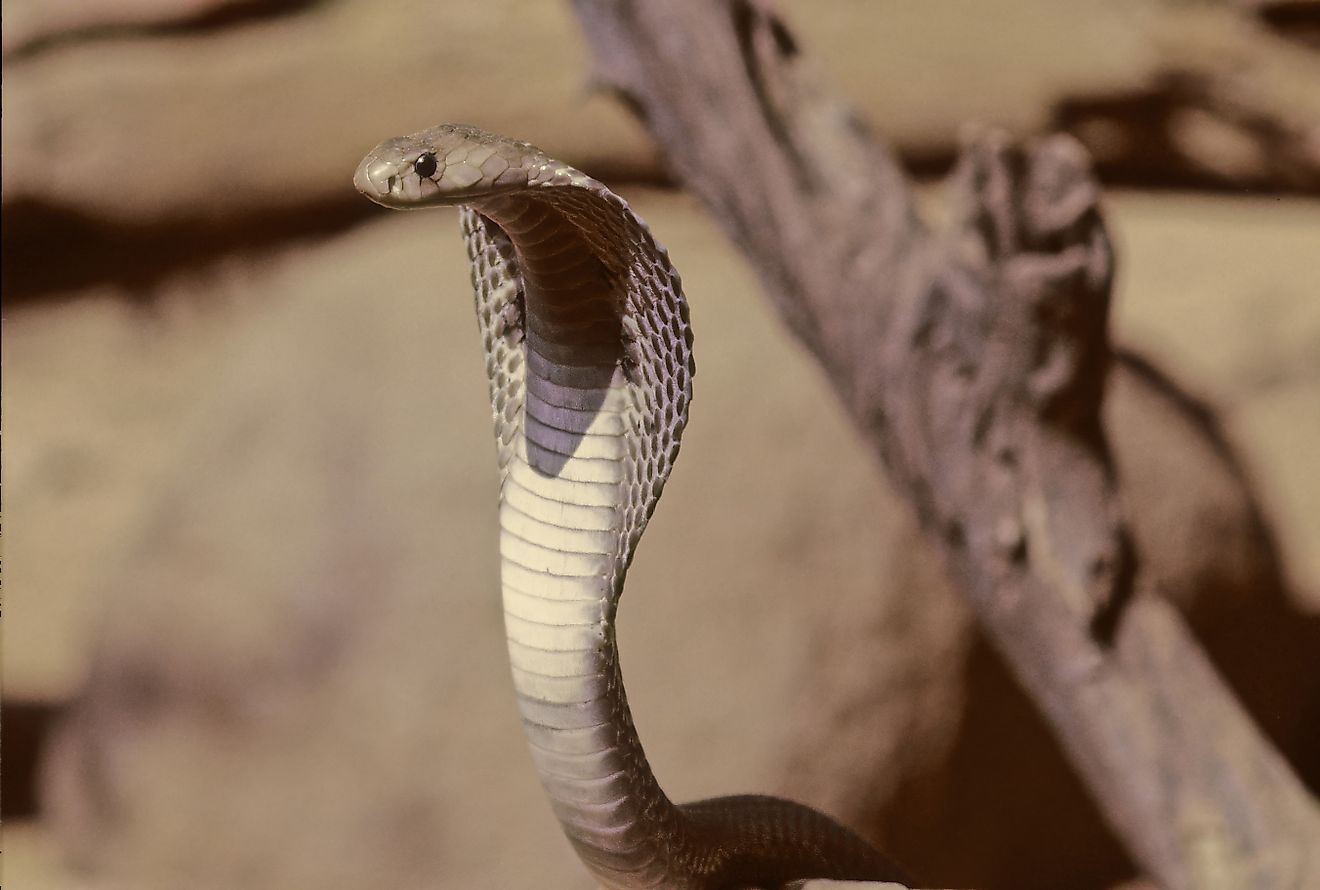
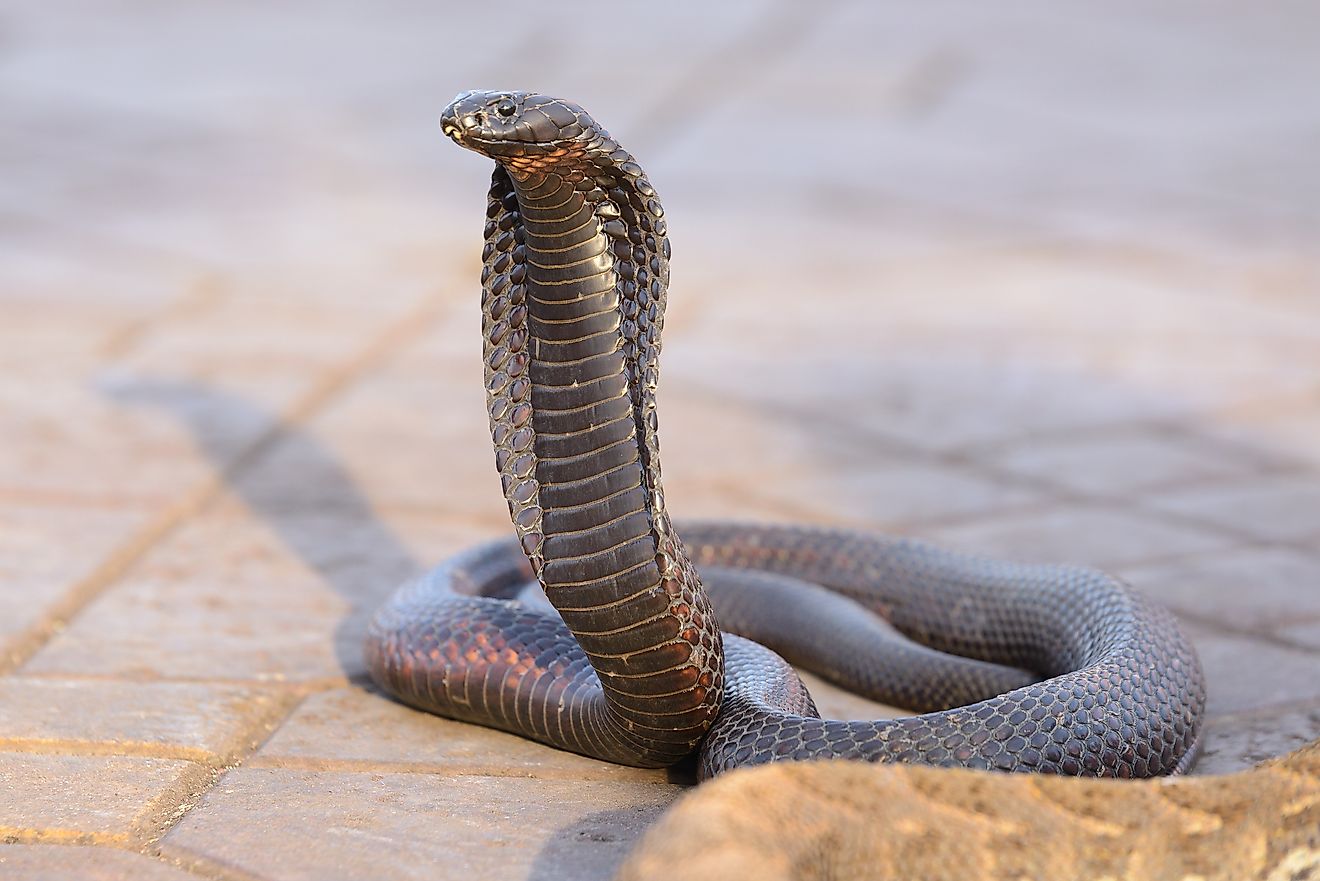
For all its fearsome reputation, this is a shy animal that almost always retreats from people. When cornered it puts on a dramatic defensive display, raising the front of its body off the ground, flattening its neck to look broader, hissing loudly, and holding its mouth ready to strike. Bites usually happen only when the snake is trodden on or deliberately handled. Its venom carries neurotoxins, myotoxins, and blood-clotting agents, and a bite can bring severe pain, swelling, nausea, and prolonged bleeding. Even so, the venom is lower in potency and yield than that of many Australian relatives, and prompt medical care resolves the great majority of cases. The species accounted for roughly 16 percent of identified snakebites in Australia between 2005 and 2015, still with no recorded fatalities.
Reproduction

Reproduction begins in the Australian spring, generally October and November, when males roam widely to find females. Rival males engage in ritual combat, raising and intertwining the front portions of their bodies as they wrestle for dominance, a contest that relies on pressure and posture rather than biting and can last more than an hour. After mating, females carry their developing young internally for about four to five months.
Unlike its egg-laying relatives, the red-bellied black snake gives birth to live young, usually in late summer around February and March. Litters commonly number between 8 and 40, although many studies report smaller broods of 5 to 18, with larger females tending to produce more offspring. Each newborn arrives wrapped in a thin, transparent membrane from which it soon breaks free, measuring around 12 cm (about 5 in) long. Females provide no care once the young are born, and juveniles are independent from the outset. They reach breeding maturity in roughly two to three years.
Importance to the World

As a mid to upper level predator in eastern Australia's wetlands and adjacent forests, the red-bellied black snake helps regulate the animals it feeds on, with an especially strong functional link to frog populations. By preying on rodents it also provides natural pest control across farmland and rural properties, a service that benefits landholders whether they welcome the snake or not.
The species matters to people in other ways too. Its venom is a valuable subject for toxinology and clinical research, and captive-bred animals support antivenom production and public education at reptile parks and zoos. Culturally the snake has travelled a long road. Early European settlers feared it as a deadly menace, yet decades of study have shown it to be one of the more inoffensive large snakes a person is likely to meet, and attitudes toward it continue to soften.
Threats

The red-bellied black snake is currently listed as Least Concern on the IUCN Red List, assessed in 2018. It remains locally common and widespread across its range, and no overall population estimate exists. That relatively secure status does not mean it faces no pressure. Wetland drainage and urban development steadily erode its preferred habitat, and the decline of frogs, driven in part by the chytrid fungus, chips away at its main food source. Road mortality and deliberate killing by people add to the toll.
The most notorious threat is the cane toad, introduced to Australia in 1935. The toad's powerful toxins are lethal to many native predators, and where cane toads spread through New South Wales, red-bellied black snake numbers fell sharply. Remarkably, the story did not end there. Snakes from toad-exposed populations have evolved a reduced appetite for toads, a measure of physiological resistance to the toxin, and even shifts in body shape, and their populations have since stabilised in many affected areas.
Takeaway
The red-bellied black snake is a resilient species that has adapted well to life alongside people. It is generally calm and poses little danger to the millions of Australians who share its range, while its role as a frog specialist makes it an important part of wetland ecosystems. Its ability to adapt to the threat posed by toxic cane toads also offers a clear example of wildlife responding to rapid environmental change. Its future appears reasonably secure, provided the waterways and amphibian populations it depends on receive adequate protection.
Fun Facts

- It is evolving in real time. In response to toxic cane toads, red-bellied black snakes have developed toxin resistance, a reduced desire to eat toads, and even longer bodies and smaller heads, all within roughly 23 generations.
- It breaks the family mould. Every other snake in the genus Pseudechis lays eggs, but the red-bellied black snake gives birth to live young.
- It can bite after death. A freshly killed or seemingly dead individual can still deliver a reflex bite for hours, so a limp snake should never be handled.
- Some of its prey fight back chemically. Blue-tongue lizards carry a blood protein that neutralises red-bellied black snake venom, a resistance that appears tailored specifically to this snake.
- You can sometimes smell it. The species gives off a strong musky odour, and experienced field workers have located hidden snakes by scent alone.
- It is deadly on paper, not in practice. Despite being one of the most commonly encountered venomous snakes in eastern Australia, it has never been confirmed to have killed a human.
Quick Facts
- Scientific name: Pseudechis porphyriacus
- Family and order: Elapidae, Squamata
- IUCN status: Least Concern (assessed 2018)
- Length: average around 1.25 m (4 ft 1 in), commonly 1.5 to 2 m (5 to 6.5 ft), maximum 2.55 m (8 ft 4 in)
- Weight: heavy for its build, a large 2 m individual estimated near 10 kg (22 lb)
- Lifespan: wild lifespan unknown, up to about 11 to 12 years recorded in captivity
- Diet: carnivore and frog specialist, also taking fish, tadpoles, lizards, small mammals, eggs, and other snakes
- Range: eastern Australia across Queensland, New South Wales, and Victoria, with an isolated population near Adelaide