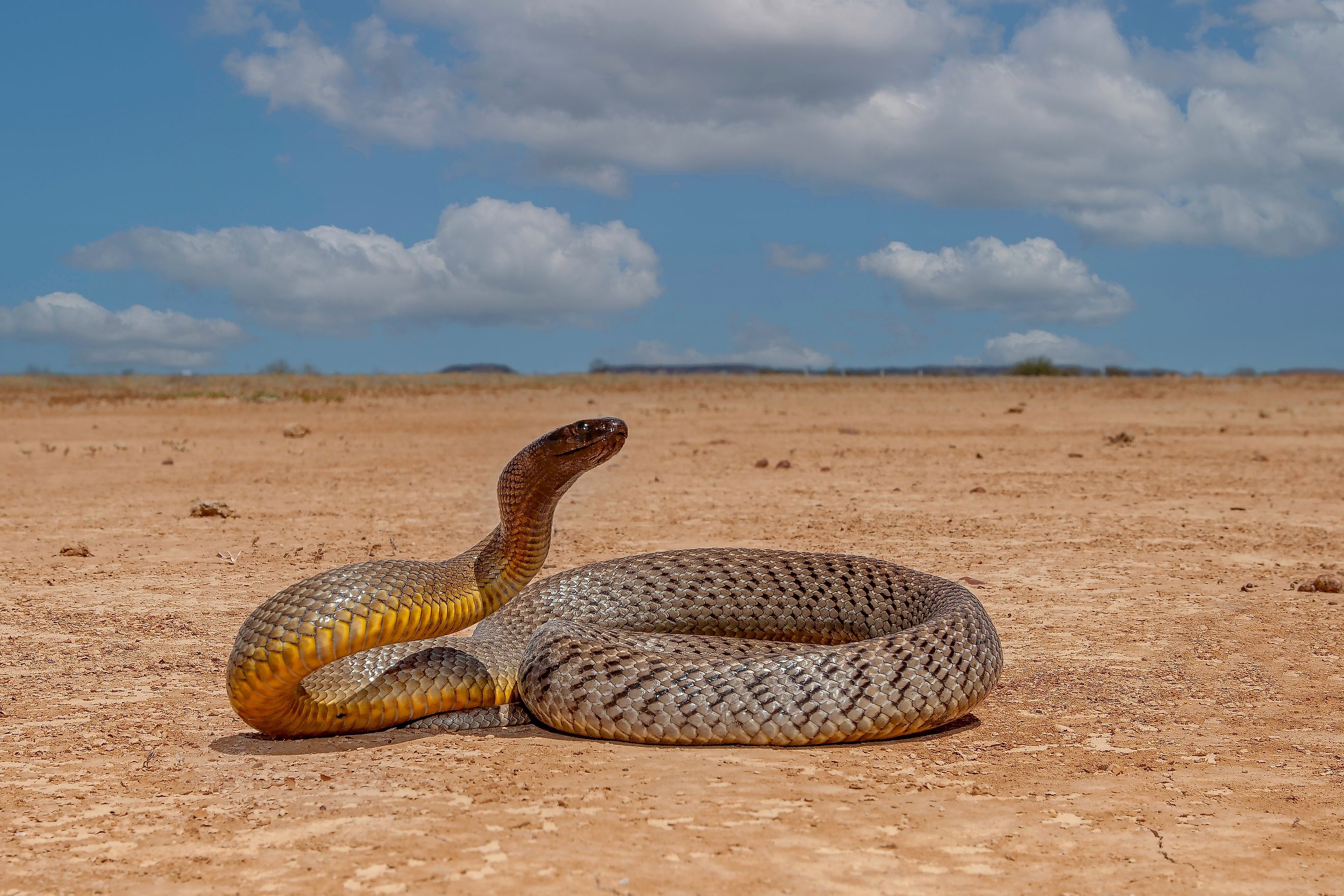
Inland Taipan
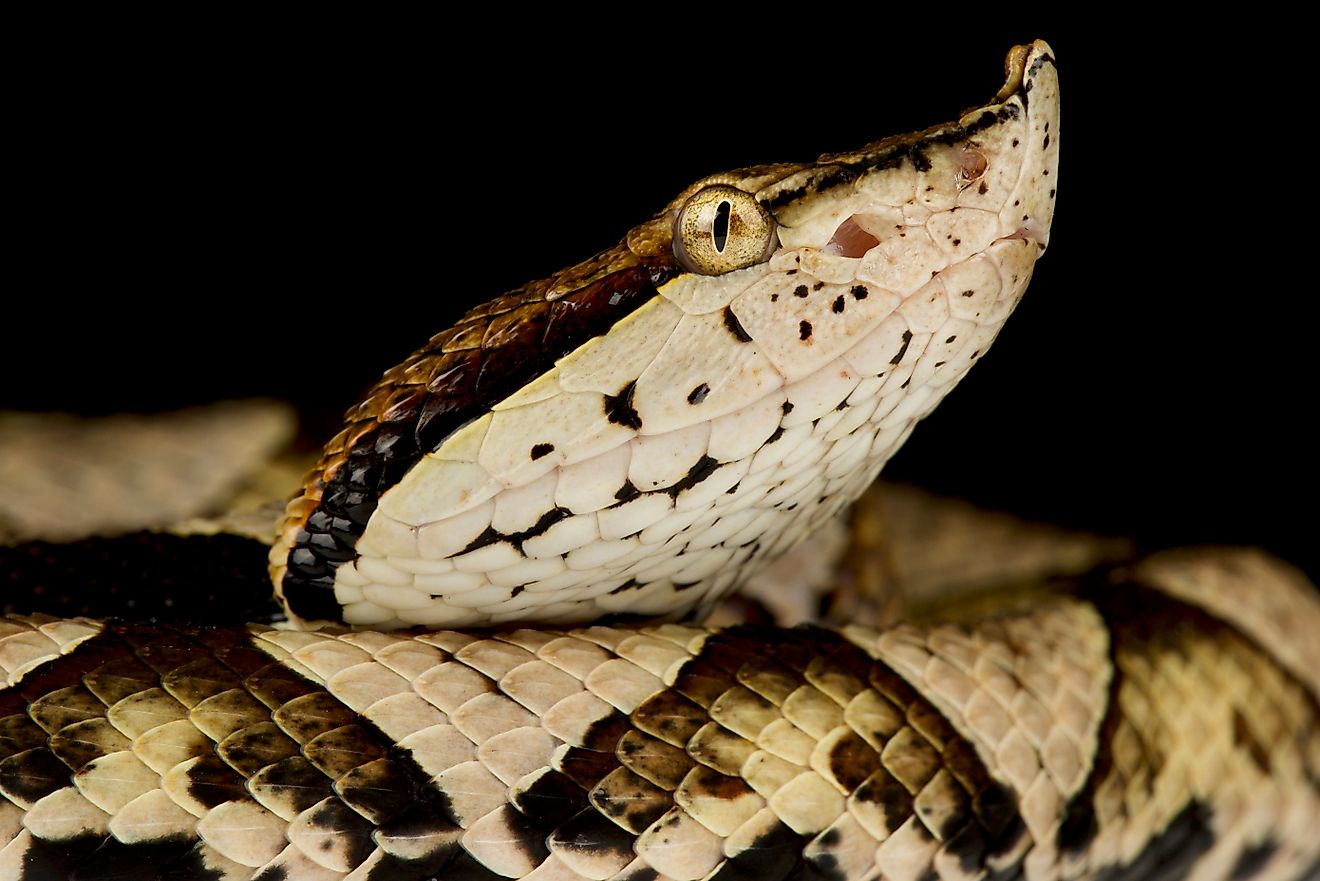
Drop for drop, the inland taipan (Oxyuranus microlepidotus) carries the most potent venom of any snake on Earth. Measured by the median lethal dose in mice, its venom outranks that of every other land snake and every sea snake tested, and a single bite holds enough toxin to kill roughly 100 adult humans. It is a slender Australian elapid, rarely longer than a tall person, that hunts across the cracked clay of one of the most remote corners of the continent.
What makes the snake worth reading about is the gap between its reputation and its record. Despite owning the deadliest venom in the reptile world, the inland taipan is shy, reclusive, and slow to bite, and there is not a single confirmed human death attributed to it. It lives so far from people, and behaves so cautiously, that most Australians will never see one. The nickname "fierce snake" describes the venom in its glands, not the temper of the animal that carries it.
Taxonomic Classification

The inland taipan belongs to the family Elapidae, the group of front-fanged venomous snakes that also includes cobras, mambas, and Australia's brown snakes. It belongs to the genus Oxyuranus, which includes the taipans and two other living species, the coastal taipan (Oxyuranus scutellatus) and the central ranges taipan (Oxyuranus temporalis). The latter was only described by science in 2007. The species name microlepidotus is Latin for "small-scaled," which is why the animal is also called the small-scaled snake. Other common names include the western taipan and the fierce snake, and Aboriginal people of the Channel Country knew it as dandarabilla.
Its scientific history is unusually tangled. Frederick McCoy first described the species in 1879 as Diemenia microlepidota, and William John Macleay described a second specimen in 1882 under a different name, believing it was a separate animal. Then the snake effectively vanished from science for about 90 years, with no confirmed specimens collected until its rediscovery in 1972, when herpetologists Jeanette Covacevich and Charles Tanner tracked it down on the black-soil plains west of Windorah in far southwestern Queensland. In 1981, Covacevich and colleagues placed it firmly in the genus Oxyuranus. The genus name comes from Greek roots meaning "sharp" and "arch," a reference to a needle-like process on the arch of the snake's palate.
Physical Description

The inland taipan is a medium-sized snake with a slim, muscular body built for speed rather than bulk. Adults average about 5.9 feet (1.8 m) in total length, and the largest recorded specimens reach roughly 8.2 feet (2.5 m). Its fangs are relatively short for such a dangerous animal, between 3.5 and 6.2 mm (about 0.14 to 0.24 in), noticeably shorter than those of its larger cousin, the coastal taipan.
Coloration varies between a rich dark tan and a brownish olive, with many scales carrying a dark edge that lines up into faint broken chevrons along the body. The most striking feature is that the snake changes color with the seasons. It grows darker in winter and lighter in summer, and the head and neck are usually darker still, a glossy black in the colder months that fades to dark brown in the heat. This is a strategy for managing body temperature. A dark head allows the snake to warm up quickly while exposing only a small part of its body at the entrance of a burrow, while the seasonal color shift helps it absorb radiant heat in winter without overheating during summer. Its small, smooth scales, arranged in 23 rows at midbody, give the species its "small-scaled" name.
Range and Habitat

The inland taipan is endemic to the semi-arid interior of central east Australia. Its core range centers on the cracking black-soil floodplains and stony gibber plains where the borders of Queensland and South Australia converge, a country of baking summers, low rainfall, and very few people. In Queensland it turns up in the Channel Country, including Diamantina and Astrebla Downs national parks, and in South Australia it occurs across the Marree and Innamincka region, around Goyder Lagoon, and along the margins of the Tirari and Sturt Stony deserts. An isolated population persists near Coober Pedy.
The snake shelters in the deep cracks that open across drying clay, in soil crevices, and in the abandoned burrows of the mammals it hunts. Two nineteenth-century records placed it much further southeast, at the junction of the Murray and Darling rivers in Victoria in 1879 and near Bourke in New South Wales in 1882, but it has not been reliably recorded in either state since, and both jurisdictions now treat it as locally gone. For a broader look at the landscapes it calls home, see the largest deserts in Australia and the wider community of creatures that share the Australian outback.
Diet

Unlike many snakes that take whatever prey they can subdue, the inland taipan is a mammal specialist, feeding almost entirely on small rodents. Its staple is the long-haired rat (Rattus villosissimus), supplemented by the plains rat (Pseudomys australis), the introduced house mouse, and various small native marsupial carnivores called dasyurids. Its venom is finely tuned to kill warm-blooded prey quickly.
Its hunting method matches that potency. Where a viper typically delivers one strike and then releases its prey to avoid a struggle, the inland taipan often corners a rodent in a burrow or soil crack and subdues it with a rapid series of bites, sometimes up to eight in a single attack, frequently holding on while it does so. The venom acts so fast that the prey has little chance to retaliate, so the risk of holding on is low. The snake's fortunes are closely tied to its main food source. After good rains, long-haired rat populations can surge across the outback, and taipan numbers often rise with them. During lean years, when prey is scarce, the snakes tend to breed less.
Behavior and Reproduction

The inland taipan is primarily diurnal, most active on the surface in the cooler hours of the day and retreating underground as the heat builds. For an animal with such lethal equipment, it is remarkably even-tempered. It is shy and reclusive, and its first response to a threat is almost always to escape. Cornered or mishandled, it may raise the front of its body into a tight, low S-shaped curve as a warning, and if that is ignored it can strike with speed and accuracy, envenomating in nearly every bite. This calm disposition stands in sharp contrast to the more nervous, defensive coastal taipan.
Even the world's most venomous snake has enemies. The mulga snake (Pseudechis australis), which is largely immune to the venom of other Australian snakes, will eat young inland taipans, and the large monitor lizard known as the perentie (Varanus giganteus) shares the same habitat and takes venomous snakes as prey once it is big enough.
Inland taipans are egg layers. A female typically produces a clutch of one to two dozen eggs, usually deposited in an abandoned animal burrow or a deep crevice, and the eggs hatch after about two months. Clutch size is tied to food supply, so reproduction tracks the boom-and-bust rhythm of the desert. In captivity these snakes generally live 10 to 15 years, and one individual at the Australia Zoo reportedly passed 20 years of age.
Importance to the World

As a specialist rodent hunter, the inland taipan helps regulate populations of native rats and mice across the arid interior, part of the natural check on the rodent booms that follow heavy rain. It is both predator and prey within that food web, feeding on rodents while supplying meals to mulga snakes and monitor lizards, so its presence is woven into the wider ecology of the black-soil plains.
Its greatest value to people, though, may be scientific. Because its venom is so potent, it has become a focus of medical research. The venom contains paradoxin, considered one of the most powerful presynaptic neurotoxins yet described, alongside some of the strongest blood-clotting activators known from any snake. Studying these molecules helps researchers understand how nerves and blood clotting work, and snake venoms in general have inspired real-world drugs, including treatments that target blood pressure and clotting. The inland taipan sits alongside the world's other headline venomous species, and you can see where it ranks among the most venomous snakes in the world and among the venomous snakes of South Australia.
Threats and Conservation

The inland taipan was assessed on the IUCN Red List for the first time in 2017 and listed as Least Concern. It is widespread across its arid range and is not considered to be in overall decline, though the assessment notes that potential threats are poorly studied and are likely to be localized. Like every native Australian snake, it is protected by law. It has fared worse at the historical edges of its range. New South Wales considers it presumed extinct, while Victoria lists it as regionally extinct, based on nineteenth-century records rather than evidence of any recent populations.
Because the species depends so heavily on a single prey group, its long-term outlook is tied to the health of the desert food web. The long-haired rat's boom-and-bust cycles are driven by rainfall, so shifts in climate that change how often the outback floods could ripple up to the taipan through its prey. For now, its remoteness is its best protection. It so rarely meets people that only about eleven bites have ever been well documented, most of them inflicted on snake handlers or on captive specimens rather than on the public. Every one of those victims survived once specific antivenom became available, which is why a snake with the deadliest venom on the planet has never been confirmed to have killed anyone. It is a very different profile from the aggressive, fast-moving species that cause most bites, as a comparison of the inland taipan and the black mamba makes clear.
Takeaway
The inland taipan holds the title of the most venomous snake on Earth, yet it is one of the least dangerous to people, a shy desert hunter that would rather flee than fight and that has never been shown to cause a human death. Its story ties together extreme biochemistry, a specialist life pinned to the rhythm of desert rains, and a range so remote that the snake stayed hidden from science for nearly a century. Listed as Least Concern and protected across Australia, its future looks secure for now, though it remains quietly dependent on the fragile, rain-driven food web of the outback interior. For related species, compare it with the coastal taipan, read more about the wider group of taipans of Australia, or meet the continent's most dangerous animals.
Fun Facts

- The numbers are staggering. The subcutaneous median lethal dose of its venom in mice is around 0.025 mg/kg, and an average bite delivers about 44 mg of venom, with a maximum recorded yield of 110 mg, enough in theory to kill roughly 100 adults or a quarter of a million mice.
- Deadliest venom, zero deaths. There is no confirmed human fatality on record, a paradox explained entirely by the snake's remote home and gentle disposition.
- It changes color with the calendar. The inland taipan darkens in winter to soak up warmth and lightens in summer to shed it, a rare seasonal wardrobe change among snakes.
- "Fierce" is a compliment to its chemistry. The name fierce snake refers to the strength of its venom, not to any aggression, since the animal itself is famously placid.
- It was lost to science for 90 years. Described in 1879, it then went unrecorded until 1972, when it was rediscovered on the Channel Country plains of Queensland.