Why Utah Drops Fish From Airplanes Into Its Mountain Lakes
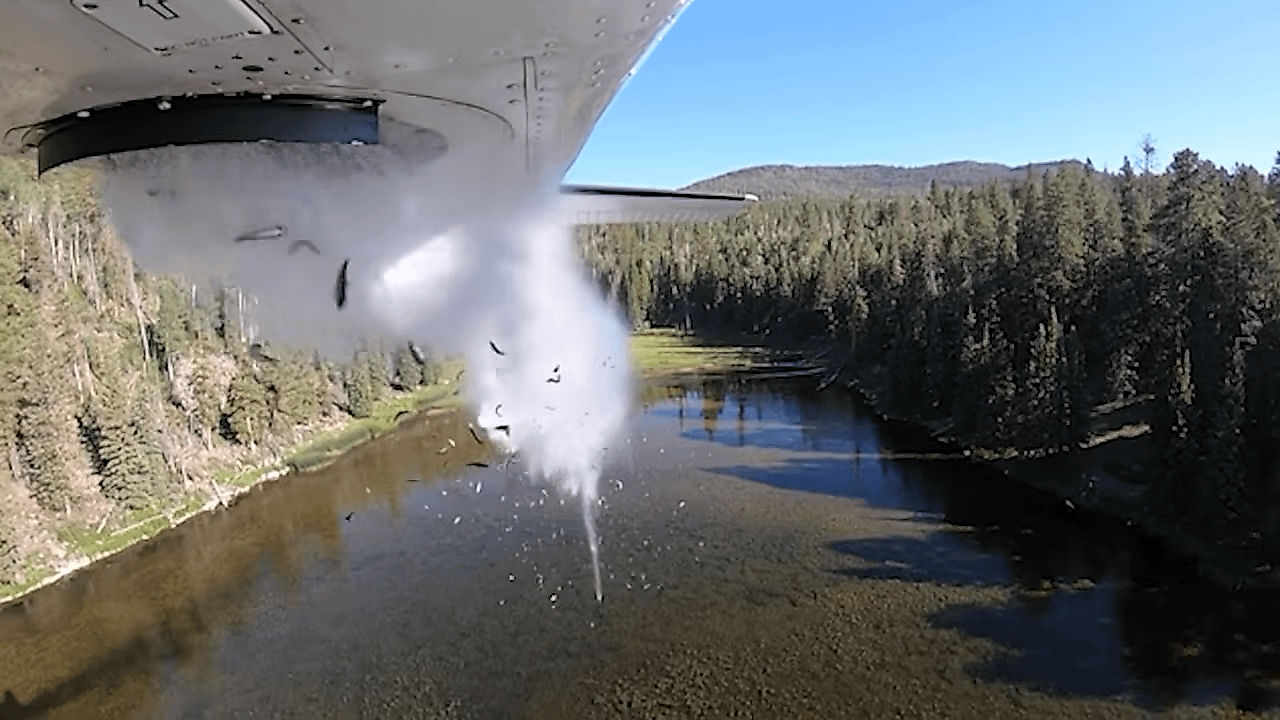
Every summer, small aircraft bank low over the lakes of Utah's high country, open their belly tanks, and rain live fish into the water, thousands of them per pass, glittering down 50 to 150 feet like a cloudburst with fins. The videos go viral on a reliable schedule, and every viewer asks the same two questions in the same order: why on earth, and do the fish survive? The answers are better than the spectacle. The fish survive the fall almost universally, the airplane is genuinely the most humane and practical tool for the job, and the reason the job exists at all reaches back past the airplane, past the state of Utah, all the way to the Ice Age, which left the American high country studded with thousands of beautiful lakes that contained, until people intervened, no fish whatsoever.
The Lakes Were Born Empty

The premise most people miss is that alpine lakes are not naturally fishy places. The glaciers that gouged the basins of the Uintas and the rest of the Mountain West left them brand-new and sterile, and in the millennia since, fish attempting to colonize upstream met the waterfalls, cascades, and bone-dry gaps that guard nearly every high basin, barriers no trout can climb. The result was a paradox the first surveyors noted everywhere: thousands of cold, clean, insect-rich lakes, seemingly perfect trout water, holding no trout at all, because the fish had simply never been able to get there.
People corrected the oversight with enthusiasm. Beginning in the late 1800s, miners, shepherds, and eventually game agencies hauled fish into the high country, and a tradition was born that turned the empty lakes into one of the West's signature fisheries, backcountry trout angling, sustained ever since by deliberate stocking, since many high lakes lack the spawning streams to keep their populations going without periodic deliveries.
The Milk-Can Era

For the first half-century, delivery meant muscle. The national stocking boom ran on the railroads first, with special fish cars ferrying hatchery stock across the country in the late 1800s, but rails stop at the foot of the mountains, and the high lakes belonged to the pack string. Delivery meant animals carrying animals. Fingerling trout traveled from hatcheries in milk cans and barrels lashed to mules and packhorses, up switchbacks for a day or two per lake, with handlers stopping at every stream crossing to refresh the water before the cargo suffocated, and a single remote basin could cost a week of mule train for one modest planting. It worked, barely, for the lakes nearest the trailheads, and it meant the deepest backcountry, hundreds of lakes in the High Uintas alone, got stocked rarely or never.
The arithmetic changed forever when agencies put the hatchery in the sky. Utah began experimenting with aerial stocking in the 1950s, and the modern version is almost comically efficient: a single small plane with partitioned water tanks can deliver fish to dozens of lakes in a morning, a season's worth of mule trains before lunch, hitting lakes no pack string could reasonably serve, which is why a state with more than a thousand stocked mountain lakes treats its pilots as the fleet the fishery runs on.
Do The Fish Survive The Fall

Yes, overwhelmingly, and the physics is the best part. The passengers are fingerlings an inch to three inches long, and at that size a fish is nearly all surface area and almost no mass, so it falls slowly, flutters rather than plummets, and meets the water with roughly the impact of a leaf, with the drop's cloud of accompanying tank water softening the arrival further. Utah's follow-up surveys consistently find survival rates above 95 percent, better, wildlife officials like to note, than the old mule-can method, where heat, sloshing, and suffocation on the trail claimed a steady toll before the fish ever saw their lake.
The cargo list reads like a fly shop's daydream: rainbow and cutthroat trout, brook trout, golden trout in a few storied basins, Arctic grayling, and sterile hybrid tiger trout, each matched to its lake's management plan, with the tiny fish spending a summer growing into the insect wealth of their new homes and reaching catchable size within a season or two, with the coldest, most food-poor lakes sometimes skipped for years between flights because their slow-growing fish need no reinforcements. By the time a backpacker reaches the shoreline, the airdrop has matured into the oldest-feeling experience in the mountains, wild trout rising at dusk in a lake the glacier built.
The Fishless-Lake Footnote
The modern programs carry an asterisk the milk-can era never considered: a naturally fishless lake was never really empty. The old alpine lakes ran their own economies of zooplankton, insects, and, most visibly, native amphibians, and a century of universal stocking taught ecologists that trout in the wrong basin can strip it, with high-country frog and salamander declines across the West tracing partly to the fish people added everywhere. The response has been a quiet rebalancing rather than a retreat, with agencies across the region, Utah included, now stocking strategically, leaving designated lakes fishless on purpose, and in some basins removing fish to restore amphibian strongholds.
The result is a managed mosaic that would bewilder the old mule packers: some lakes planted by air on rotation for anglers, others deliberately returned to their pre-airplane, pre-milk-can, pre-anybody condition, both by design. The airplane made it possible to put fish anywhere, and the science that followed decided anywhere was not the same as everywhere.
The Prettiest Delivery Route In Government
So Utah drops fish from airplanes because the Ice Age built a thousand perfect trout lakes and forgot the trout, because waterfalls kept the fish from ever correcting it themselves, and because a low pass with a belly tank does in seconds, more gently, what a week of mule train once did badly, with the inch-long passengers fluttering down to a 95-percent-plus survival rate and a lake full of food. It is the rare government program that is simultaneously practical, humane, viral content, and 10,000 years overdue, and it keeps one of the West's great backcountry traditions alive one glittering cloudburst at a time. Somewhere over the Uintas this summer, it will briefly rain trout. The lake below has been waiting since the glacier left.