Birds That Start With B
The letter B is quietly hoarding superlatives. It has the heaviest flying bird on Earth, the most widely distributed land bird, the only bird that hunts in total darkness by sound alone, a bird that builds and decorates an art installation to attract a mate, and a national emblem that is not bald and does not make the sound everyone thinks it does. Here is a field guide to the best-known birds whose names begin with B, arranged alphabetically, with the detail that makes each one worth a second look.
Bald Eagle
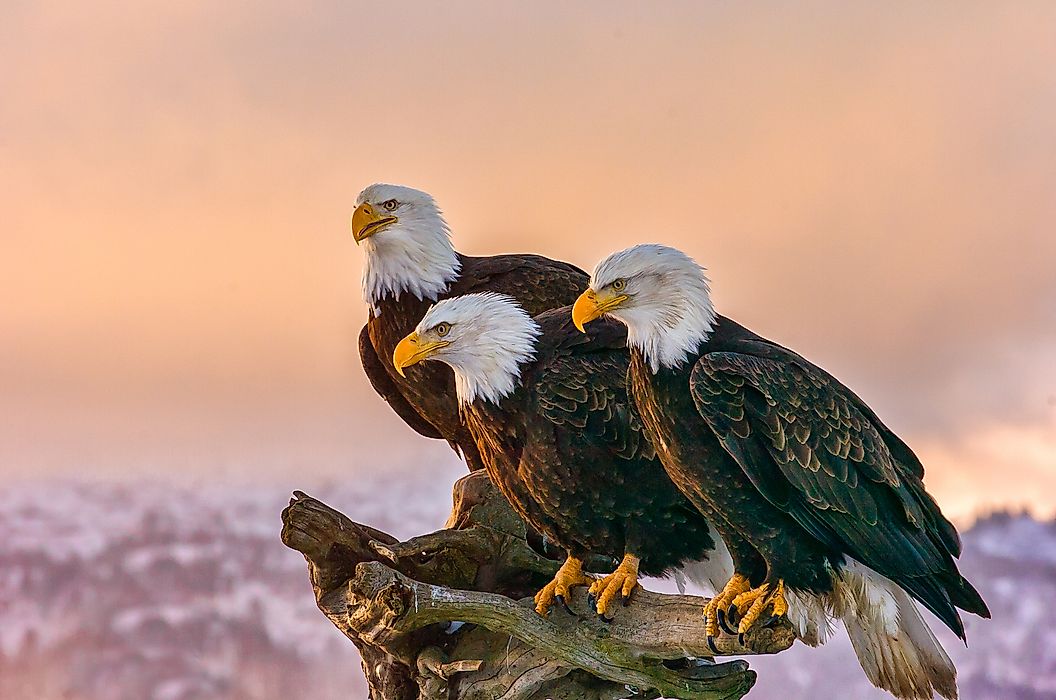
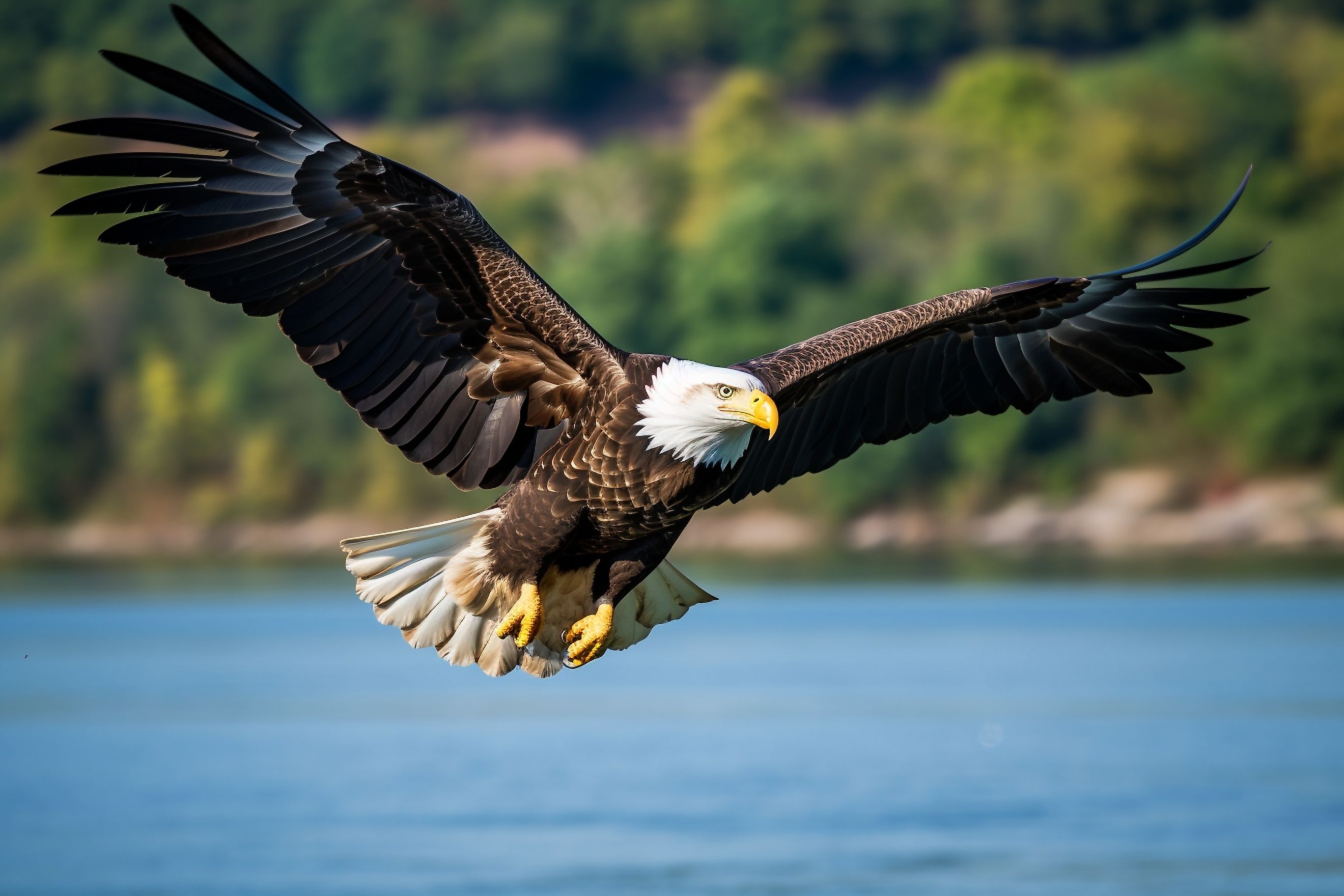
Start with the name, because it is wrong in the way most people assume. Haliaeetus leucocephalus is not bald. The word comes from an older sense of "balde" meaning white-marked or piebald, and the bird's head is thickly feathered in white, which it does not develop until around four or five years old. Juveniles are mottled brown and get mistaken for golden eagles constantly. The bald eagle is also a committed thief, harassing ospreys until they drop their catch, which is part of why Benjamin Franklin called it a bird of bad moral character. And the piercing scream it makes in every film and advert is not its voice at all. That is a red-tailed hawk dubbed over the top, because the actual bald eagle call is a thin, wheezy chirp that nobody thought sounded sufficiently patriotic. Hit hard by DDT, the species fell to roughly 417 nesting pairs in the lower 48 by 1963 and has since recovered into the tens of thousands.
Barn Owl

Tyto alba is one of the most widely distributed land birds in the world, found on every continent except Antarctica, and it is built around a single extraordinary sense. Its ear openings are placed asymmetrically, one slightly higher than the other, so a sound reaches each ear at a marginally different moment and from a different angle. The owl's brain reads that difference as a position in three dimensions, which means a barn owl can locate and catch a mouse under snow, in a barn loft, in absolute darkness, without ever seeing it. The pale heart-shaped face is not decoration either. It works as a parabolic dish, funneling sound toward those ears. Its flight is effectively silent, thanks to comb-like fringes on the leading edge of the wing feathers that break up the turbulence which would otherwise make noise.
Barn Swallow

The most widespread swallow on the planet, Hirundo rustica breeds across the northern hemisphere and winters deep into the southern one, with some birds covering many thousands of miles twice a year. It is the one with the deeply forked tail and the rust-colored throat, and it has attached itself so completely to human structures that it now nests almost exclusively on barns, bridges, culverts and porches, building a cup out of mud pellets carried one beakful at a time. The migration was a genuine mystery for centuries. Aristotle concluded that swallows spent the winter hibernating in the mud at the bottom of ponds, an idea that survived in European natural history for around two thousand years, largely because the alternative explanation sounded even less believable.
Bee-Eater
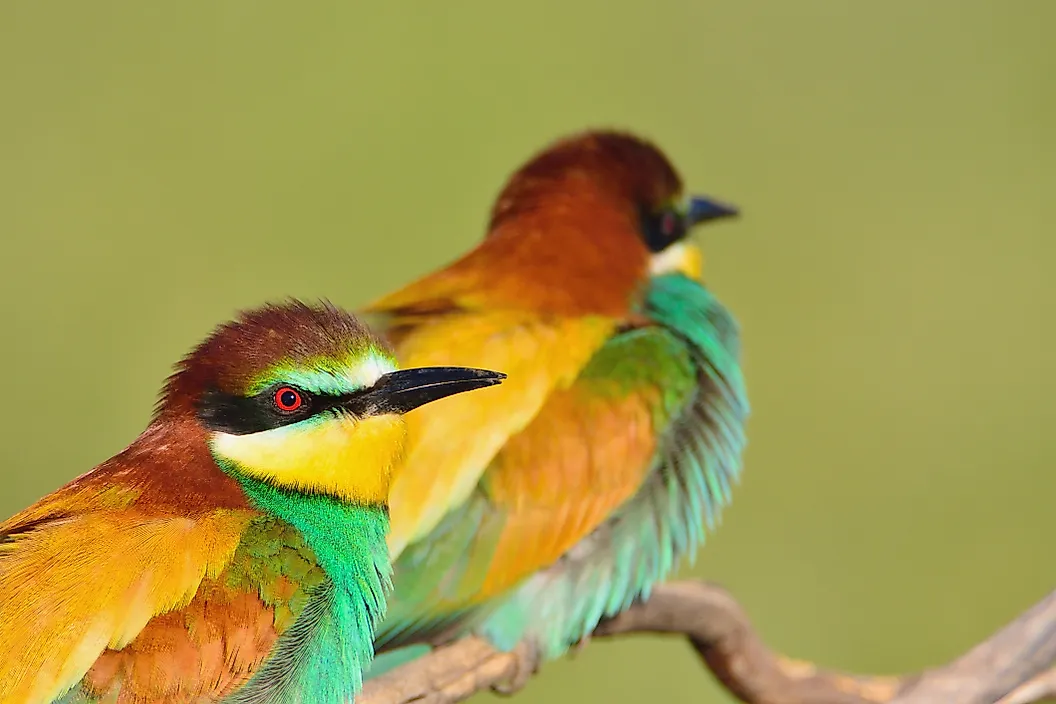
The roughly 30 species of the family Meropidae are among the most brilliantly colored birds outside the tropics, and they do exactly what the name promises. A bee-eater catches flying insects on the wing, and when it takes something with a sting, it returns to a perch and deals with the problem methodically: it beats the insect against the branch to kill it, then rubs and squeezes the abdomen against the wood to discharge the venom before swallowing. Bees and wasps can make up the large majority of the diet, which occasionally puts the birds in conflict with beekeepers. They nest in tunnels, excavating burrows up to several feet long in sandy banks, and many species are highly social, breeding in colonies of hundreds.
Bittern
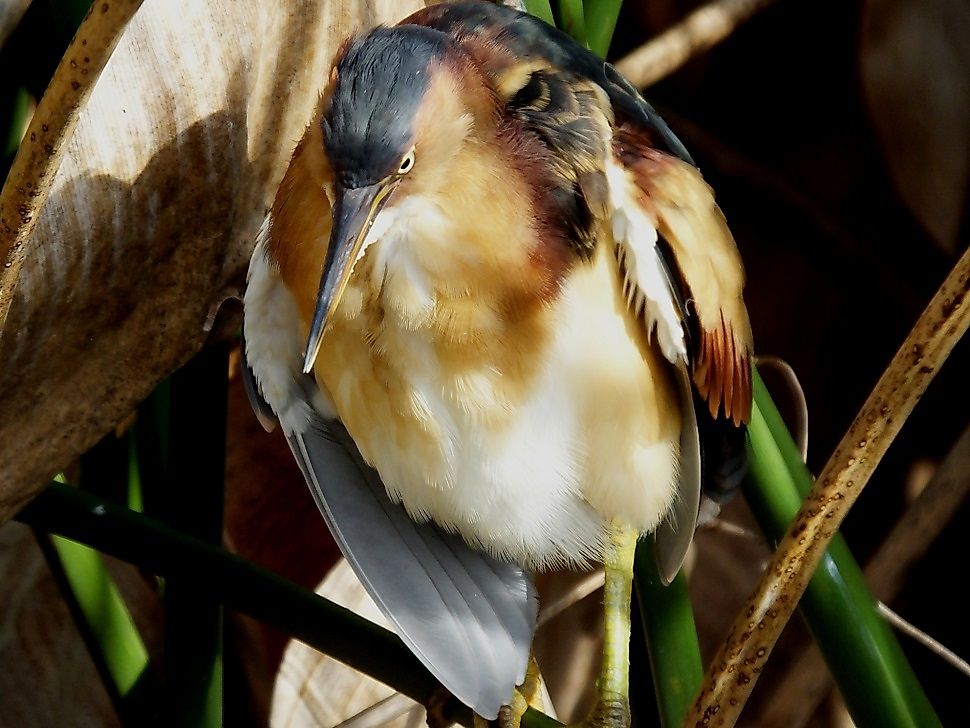
Bitterns are reclusive marsh herons with two remarkable tricks. The first is the disappearing act: when alarmed, a bittern freezes with its bill pointed straight up, its streaked brown neck plumage lining up perfectly with the vertical reeds around it, and in a breeze it will even sway gently in time with the vegetation. The effect is close to total. The second is the sound. The male Eurasian bittern produces a deep, resonant boom by inflating its esophagus and expelling air, and the call is among the lowest-frequency sounds any bird makes, carrying up to three miles across open wetland. For a bird that almost nobody sees, it is extraordinarily easy to hear.
Blackbird

Two entirely unrelated groups of birds answer to this name, and the confusion runs deep. In Europe, the blackbird is Turdus merula, a thrush and a close relative of the American robin, and it is one of the finest songsters in the world, the bird behind a great deal of English poetry and the one Paul McCartney was writing about. In North America, the blackbirds are the family Icteridae, which includes the red-winged blackbird, grackles, cowbirds and orioles, and they are not thrushes at all. The red-winged blackbird is among the most abundant birds on the continent, and the males spend spring perched on cattails flashing scarlet shoulder patches and shouting at anything that comes near.
Blue Jay
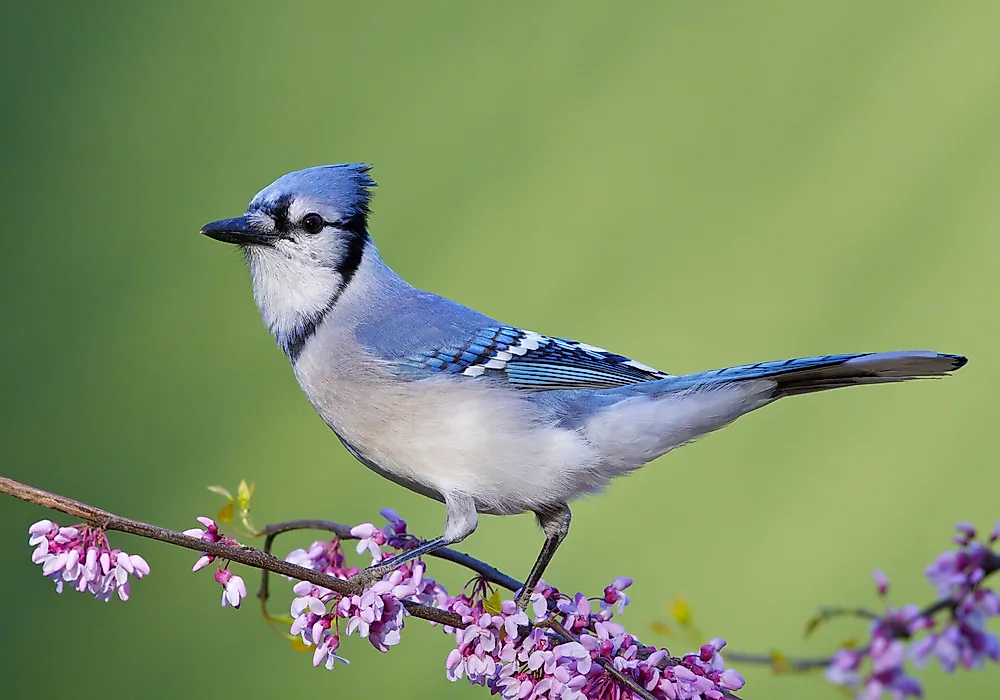
Here is a fact that ruins the name: Cyanocitta cristata is not blue. There is no blue pigment in its feathers at all. The color is structural, produced by microscopic air pockets in the feather barbs that scatter light and cancel out every wavelength except blue. Grind a blue jay feather to dust and the dust is brown. Being a corvid, the jay is also clever and thoroughly dishonest: it imitates the calls of red-shouldered and red-tailed hawks, which sends smaller birds scattering from a feeder the jay then has to itself. It also caches thousands of acorns each autumn and forgets enough of them that blue jays are credited with helping oak forests spread north across North America after the last ice age.
Bluebird
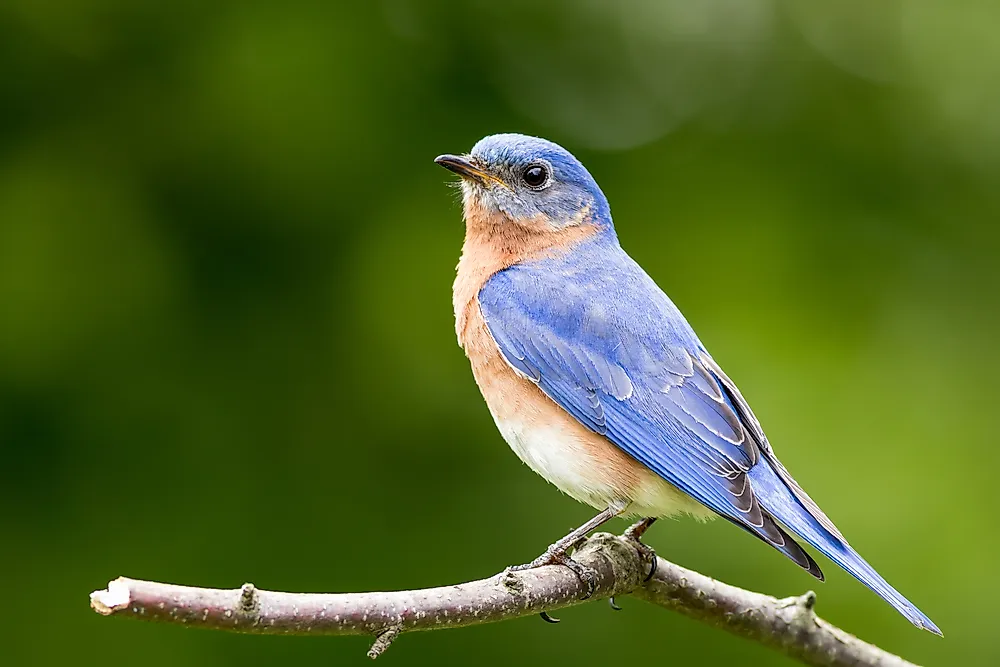
The three North American bluebirds, genus Sialia, are cavity nesters, which turned out to be an unlucky specialty. They cannot excavate their own holes, so they depend on old woodpecker cavities and rotting fence posts, and through the twentieth century they lost that housing to modern agriculture, metal fence posts, and aggressive competition from introduced house sparrows and European starlings. Populations crashed. What followed is one of the great amateur conservation stories: volunteers across the continent put up hundreds of thousands of nest boxes along carefully spaced bluebird trails, and the birds recovered. The eastern bluebird is the state bird of both New York and Missouri, and it shares the blue jay's trick of having no blue pigment whatsoever.
Booby
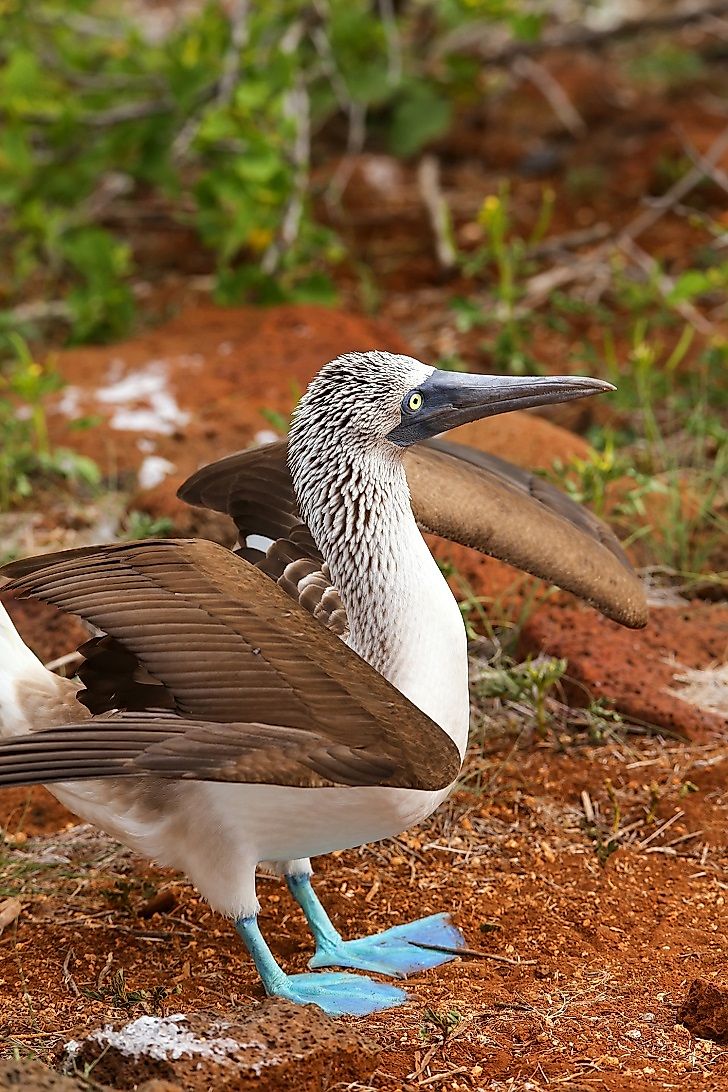
The name is an insult that stuck. Spanish sailors called these seabirds bobo, meaning fool or clown, because the birds nested on the ground, showed no fear of humans and were consequently very easy to catch and eat. The blue-footed booby of the eastern Pacific has turned the joke into a courtship system: the male high-steps in front of the female, lifting each foot in turn to display it, and the brightness of that blue is an honest signal of health. Feet fade within days if a bird is not feeding well, so females can read a male's recent hunting record directly off his shoes. Boobies hunt by plunge-diving from as high as 80 feet, hitting the water at speed with air sacs in the skull absorbing the impact.
Bowerbird

The 27 species of the family Ptilonorhynchidae, native to Australia and New Guinea, do something no other animal does. The male builds a bower, a structure of woven sticks that is not a nest and never holds an egg, and then decorates the area in front of it with collected objects sorted by color. Satin bowerbirds famously collect blue: bottle caps, pen lids, drinking straws, clothes pegs, anything. The great bowerbird goes further and arranges its stones and shells by size, smallest nearest the bower, which creates a forced-perspective illusion that makes the male appear larger to a female standing in the right spot. Males with better-arranged displays get more mates, which means these birds are practicing deliberate visual perspective, and they were doing it long before any human painter worked it out.
Budgerigar

Melopsittacus undulatus is the budgie, a small grass parakeet from the arid interior of Australia and, after the dog and the cat, one of the most popular pets in the world. Wild budgerigars are green and yellow with fine black barring, and they gather in flocks that can number in the tens of thousands, wheeling across the outback in search of water. The captive color range, from the familiar blue through white, grey and violet, is entirely the product of selective breeding. They are also formidable talkers for their size. A budgie named Puck held the Guinness record for the largest vocabulary of any bird, credited with 1,728 words, which is several hundred more than most parrots many times his weight.
Bunting
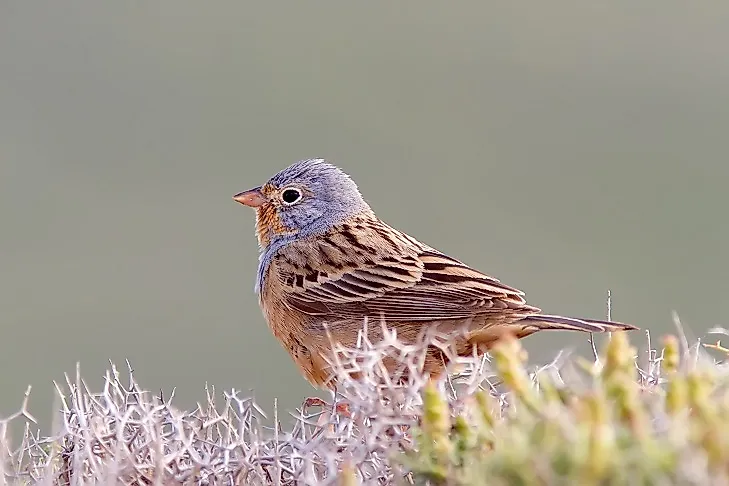
Buntings are small, seed-eating songbirds, and as with blackbirds the name covers two unrelated groups: the Old World buntings of the family Emberizidae and the New World cardinal-buntings of the Cardinalidae. The indigo bunting belongs to the second group and is responsible for one of the most elegant experiments in ornithology. In the 1960s researchers placed captive buntings in a planetarium and rotated the artificial night sky, and the birds reoriented their migratory restlessness to match. They were navigating by the stars, specifically by the pattern of rotation around the North Star, which they learn as juveniles by watching the sky turn. And like the blue jay, the indigo bunting is not actually blue.
Bustard
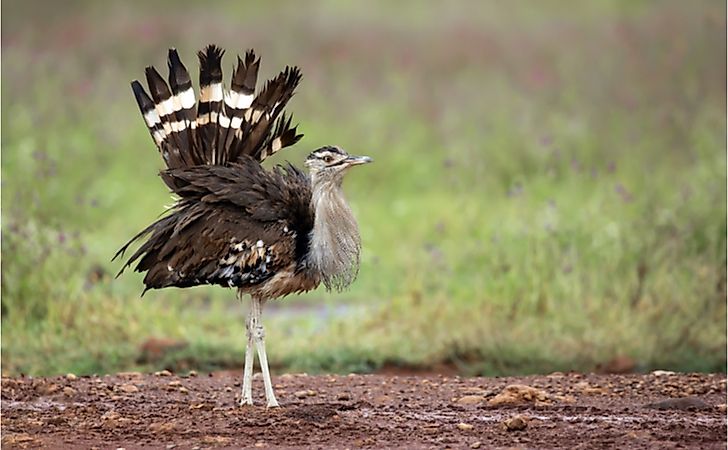
Bustards are the heavyweight division. These large, long-legged birds of open grassland include the kori bustard of Africa and the great bustard of Eurasia, and between them they hold the title of heaviest flying bird alive, with the largest males reaching around 40 pounds. That is close to the physical ceiling for powered flight, and it shows: a bustard needs a running start and prefers to walk away from trouble rather than take off. Males perform spectacular display, inflating throat pouches and turning their plumage half inside out into a white ball visible across a mile of grassland. The great bustard was hunted to extinction in Britain by 1832 and has since been reintroduced on Salisbury Plain.
Buzzard
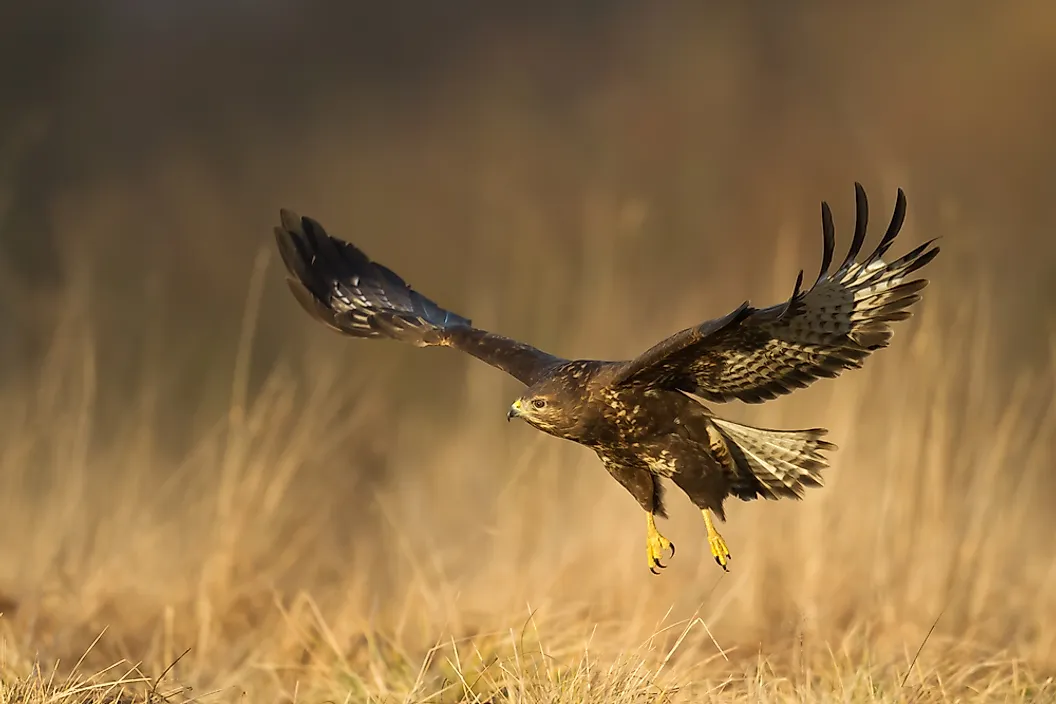
This name means two completely different birds depending on which side of the Atlantic you are standing on, and it is the single most common bird-name mix-up in English. In Britain and across Europe, a buzzard is a Buteo, a broad-winged soaring hawk, and the common buzzard is now one of the most abundant birds of prey in the region after recovering from persecution and pesticides. In American usage, "buzzard" means a vulture, usually the turkey vulture, and has nothing to do with hawks at all. The confusion dates to early English colonists in North America, who saw large soaring birds overhead and reached for the familiar word. The birds those settlers were actually looking at are the Americas' equivalent of the Buteo group, which North Americans call hawks.
The Common Thread
For one letter, B covers a startling range: the heaviest bird that can still get off the ground, an owl that hunts by arithmetic performed on sound, a parrot with a bigger vocabulary than most parrots twice its size, and a bird that invented forced perspective to look bigger than it is. It also contains a recurring lesson about names. The bald eagle is not bald, the blue jay and the indigo bunting contain no blue pigment, the booby was named an idiot by sailors it was too trusting to avoid, and a buzzard is either a hawk or a vulture depending on your postcode. The birds themselves have been getting on with it regardless.