Why There Are No Wolves Left In The Southeast
Anyone who drives U.S. Highway 64 east toward the Outer Banks passes through the last country on Earth where wild red wolves hunt, and almost no one who makes that drive ever sees one. In its 2026 update, the U.S. Fish and Wildlife Service counted 22 collared adults and subadults in the eastern North Carolina population, plus an estimated 12 to 16 pups that survived from four litters born that spring, the most the wild population had produced in at least five years. Those animals range across five counties of the Albemarle Peninsula, on and around the Alligator River and Pocosin Lakes national wildlife refuges, and nowhere else in the wild.
The headline exaggerates by about two dozen animals, which is a small difference in a region whose wild wolves once ranged across the Atlantic coast and as far inland as central Texas. People in the South got rid of their wolves on purpose and kept track of it. In the early 1700s, colonial lawmakers put bounties on wolves, and for almost two hundred years, farmers and bounty hunters claimed those rewards. By the time Congress passed the Endangered Species Act in 1973, federal biologists had to search the marshes along the Texas and Louisiana coast to find any wolves at all. The few that survived did so thanks to some determined people, but most disappeared because of cars, guns, and coyotes.
The Wolf That Belonged To The South

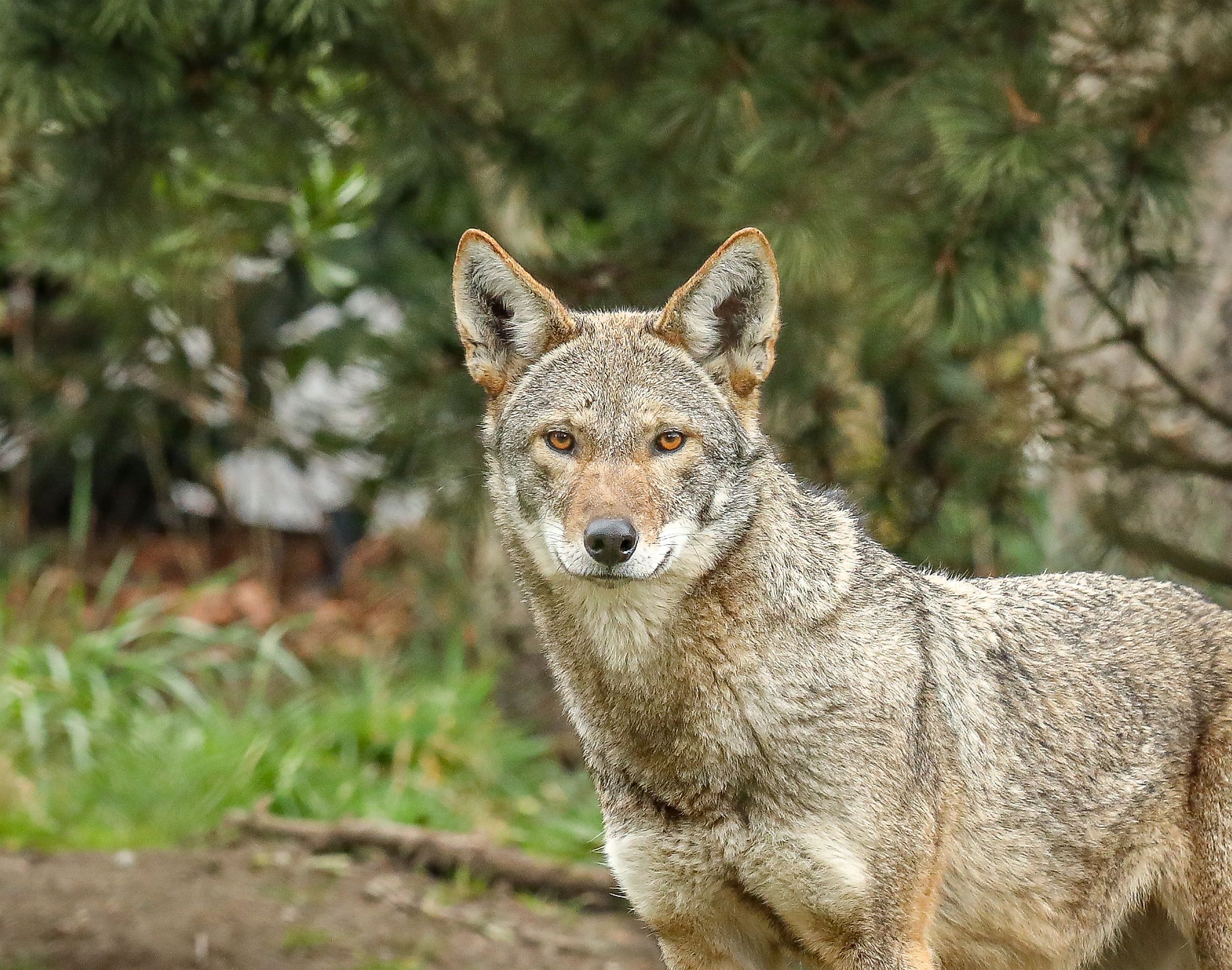
The wolf in question is the red wolf, Canis rufus, a lean, long-legged canid that is bigger than a coyote but smaller than a gray wolf. Its coat is tawny with reddish fur behind the ears and along the legs. Red wolves once ranged across much of the eastern United States, reaching central Texas in the west, Florida in the south, and the Ohio Valley and southern Pennsylvania at the northern edge. Today, they have lost about 99.7 percent of their original range, which is more than any other large carnivore. They were most common in bottomland forests and river swamps, areas that were later cleared by planters and timber companies.
For decades scientists argued over whether the red wolf counted as a species at all or merely as a hybrid of gray wolves and coyotes. In 2019 a committee of the National Academies of Sciences, Engineering, and Medicine reviewed the evidence and concluded that the red wolf merits recognition as a distinct species. The naming carried its own misstep. Early authors called the southern animal Canis niger after the black wolves of Florida, but in 1957, the International Commission on Zoological Nomenclature threw that name out because its original author had not applied Latin binomials consistently, which is how a wolf first cataloged for its black coat came to carry a Latin name meaning red.
A Price On Every Scalp

Wolves disappeared from the Southeast mostly because of one economic practice. In the Carolinas and Georgia, colonists let their cattle and hogs wander freely in the woods, where the animals fed on acorns and chestnuts. For wolves, a loose hog was an easy target. In 1715, North Carolina's colonial legislature passed An Act to Encourage the Destroying of Vermin, offering five to ten shillings from the public treasury for each wolf, panther, or wildcat scalp. Seven years later, lawmakers repealed the act, partly because some hunters figured out they could turn in the same carcass more than once. In a way, those early Carolina wolves became the first Southern predators to be worth more dead than alive, several times over.
Not all colonists thought of wolves as a threat. In 1728, William Byrd II of Virginia led the commissioners who marked the boundary between Virginia and North Carolina. He wrote that the local wolves were smaller and less fierce than those farther north, and that they would run away from people. Byrd also described the deep pits settlers dug to catch wolves, joking that a trapped wolf could no more climb out "than a husband who had taken the leap can scramble out of marriage."
August Gottlieb Spangenberg, the Moravian bishop who scouted land near present Winston-Salem in 1752, wrote that wolves serenaded his party every morning and that, unlike the wolves of Germany and Poland, they kept clear of people. He also recommended hiring a hunter, because the wolves and bears would have to be exterminated if cattle raising was to succeed. Set side by side, Spangenberg's two observations contain the whole Southern case against the wolf. The settlers had little reason to fear it and every reason, as they saw it, to want it gone.
The legislature returned to the problem in 1748 with a second bounty act that set a ten-shilling reward for a wolf and ordered claimants to bring the head or scalp, with both ears attached, before a magistrate, swear an oath, and then burn the remains so no one could sell the same wolf twice. Deer hunters, meanwhile, stripped the forests of the wolf's natural prey. Charleston merchants shipped roughly 317,000 deerskins to England between 1699 and 1705 alone, and carcasses left in the woods drew wolves close to the settlements. When white-tailed deer numbers fell, hungry wolves turned to the hogs and calves.
The Long Finish

Western North Carolina counties kept paying wolf bounties until at least 1894, and a 2003 study of the state's bounty laws at Western Carolina University describes a mountain practice that bordered on husbandry. Some farmers raided wolf dens each spring, killed the pups for the bounty money, and let the adults go free to breed another litter the following year. The surviving county records make this "wolf farming" hard to measure, so the story goes that it paid handsomely in some mountain counties, though no tally confirms how many scalps it produced. By 1900 hunters had removed the last wolves from North Carolina, and the black wolves of Florida disappeared within roughly another decade.
Across the rest of the region, people finished removing wolves during the twentieth century. Loggers and farmers cleared most of the old bottomland forests, and state predator-control agents killed red wolves using guns, traps, and poison. Settlers farther north had already cleared out the eastern forests. As wolf numbers dropped, coyotes moved east from the Great Plains to fill the empty land. The few red wolves left, unable to find mates of their own kind, started breeding with coyotes. By the early 1970s, the last red wolves that biologists could identify lived in the coastal prairies and marshes of southeastern Texas and southwestern Louisiana. Most wildlife biologists thought these marshes were poor wolf habitat, which says more about the loss of other habitats than about the marshes themselves.
The federal government listed the red wolf as endangered in 1967. After Congress passed the Endangered Species Act in 1973, a Fish and Wildlife Service biologist named Curtis Carley led efforts to save the species. Between 1973 and 1980, Carley's teams trapped over 400 wild canids along the Gulf Coast. They identified 43 as red wolves by their skull shape and howl, but breeding trials showed that only 17 were pure red wolves. Fourteen of these animals bred in captivity at the Point Defiance Zoo and Aquarium in Tacoma, Washington, and all red wolves alive today are descended from them. In 1980, the service declared the red wolf extinct in the wild.
Two Returns And One Survivor

The Fish and Wildlife Service released four breeding pairs onto Alligator River National Wildlife Refuge in 1987, the first time anyone had returned a carnivore declared extinct in the wild to its native range. Few people lived on the peninsula and prey was plentiful, so the wolves bred, formed packs, and by the early 2010s numbered roughly 130 across 1.7 million acres.
The second attempt to reintroduce wolves in Great Smoky Mountains National Park did not go well. Biologists released the first family at Cades Cove in November 1991 and added 37 more wolves over the next few years. Most of the wolves struggled to keep territories in the steep mountains and ended up moving down to farmland. Many pups died from parvovirus, malnutrition, and parasites. The project officially ended in October 1998, and the biologists learned a costly lesson about trying to bring wolves back to the mountain coves.
Back on the coast, the population crashed in the 2010s. Illegal shootings rose sharply in 2011 and 2012, state wildlife officials called for an end to the program, and the federal service halted releases until a federal judge ruled in 2018 that its policies violated the Endangered Species Act. By then the wild count had fallen to as few as seven animals.
Today, drivers are the leading cause of red wolf deaths. The state built U.S. 64 right through the middle of the Alligator River refuge, making it the main road to the Outer Banks. A federal grant application reported that at least six red wolves were killed on this stretch of highway in the five years leading up to late 2024. In June 2024, a driver struck and killed a breeding male called 2444M, and his five pups died soon after. That December, the Federal Highway Administration gave North Carolina $25 million to build 11 wildlife underpasses with guide fencing. By July 2026, the agencies had finalized contracts and moved into design.
Biologists found some reasons to be hopeful in the 2026 litters. One litter was born on private land that takes part in Prey for the Pack, a program that pays landowners to make space for wolves. Around 280 more red wolves are living in zoos and breeding centers. Geneticists also discovered something interesting on the Gulf Coast. Wild canids on Galveston Island and in southwestern Louisiana still carry substantial red wolf ancestry. These so-called ghost genes have lasted in coyote-like animals for decades after Carley's traps were removed.
Visiting Wolf Country Safely

Hikers, birders, and paddlers on the Albemarle Peninsula have little to worry about when it comes to wolves. The Fish and Wildlife Service states that no one has ever documented a red wolf attacking a person, and the recovery program's head reported in 2023 only nine suspected attacks on farm animals or pets. Wolves in general rarely harm people, and a review of a century of encounters in Alaska and Canada found only 16 bites by healthy wild wolves, none of them life-threatening.
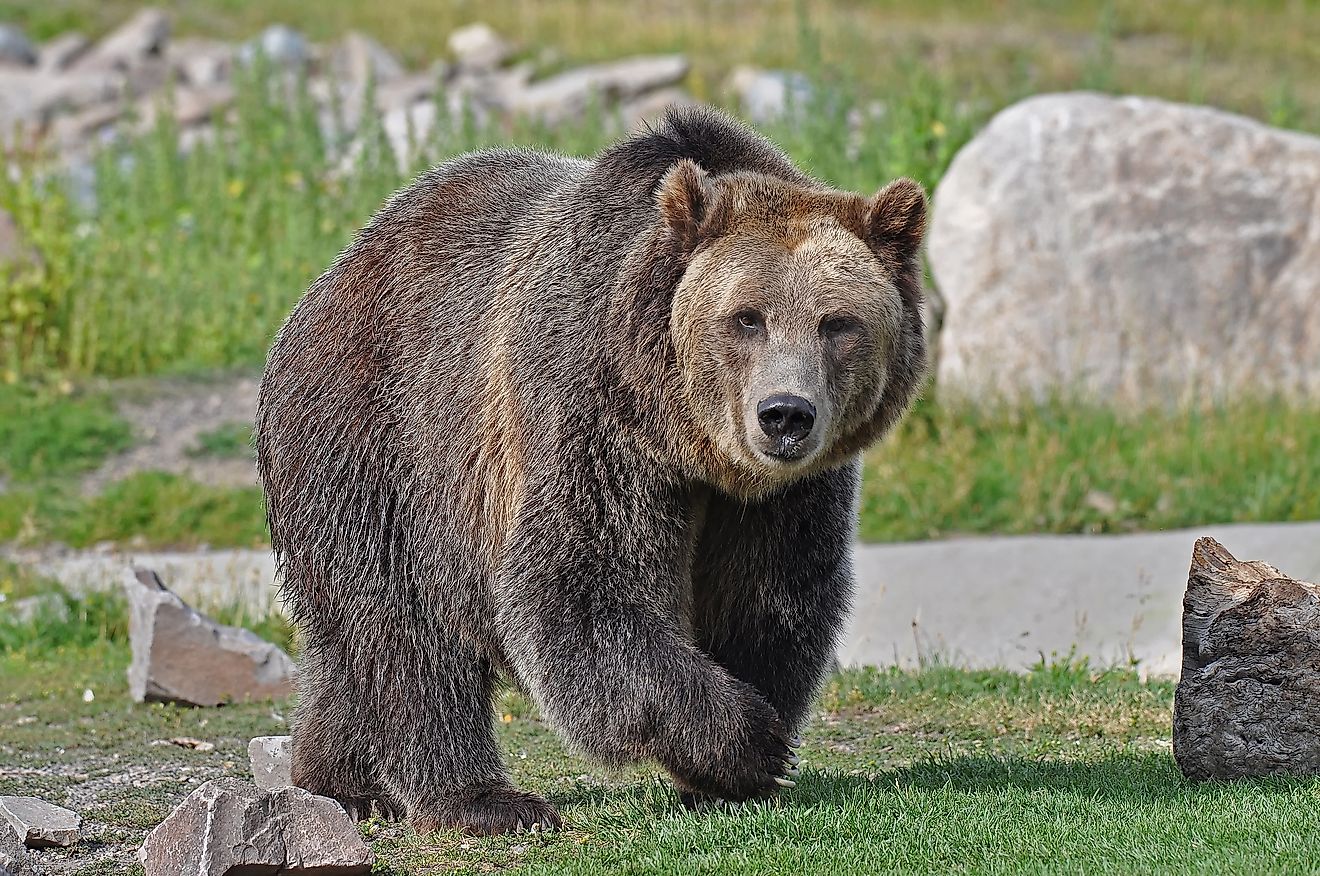
The road and the peninsula's other large animals pose the greater risk. North Carolina drivers reported between 20,000 and 22,000 collisions with large wildlife each year from 2021 through 2023, and the refuge holds black bears that can top 600 pounds. Drivers on U.S. 64 should hold to the speed limit, watch the shoulders closely around dawn and dusk when wolves and deer move, and look for the reflective orange collars that biologists fit on released wolves.
Visitors who spot a wolf should stay well back, never offer food, and move away if the animal lingers near a den or pups. Dog owners should keep pets leashed and bring small animals indoors at night, advice that holds across the Southeast because coyotes now live in every state of the region and their range increasingly overlaps with the last wild wolves. Hunters in the five recovery counties carry the heaviest responsibility, since a red wolf and a large coyote look alike at a distance and in low light, and a single mistaken shot can remove a breeding animal from a population that numbers in the low twenties. Anyone who finds a dead or injured canid can report it to the Red Wolf Recovery Program.
The Next Fifty Years
In 1715, lawmakers put a price on wolves in the Southeast. Hunters kept collecting bounties until the 1890s, and by 1980, biologists had removed the last wild wolves from the Gulf Coast marshes. The small group now living on the Albemarle Peninsula is there because people decided to reintroduce them. Whether their descendants will still roam the pocosins in 2050 depends on the choices people make on the roads, with their guns, and in their back pasture