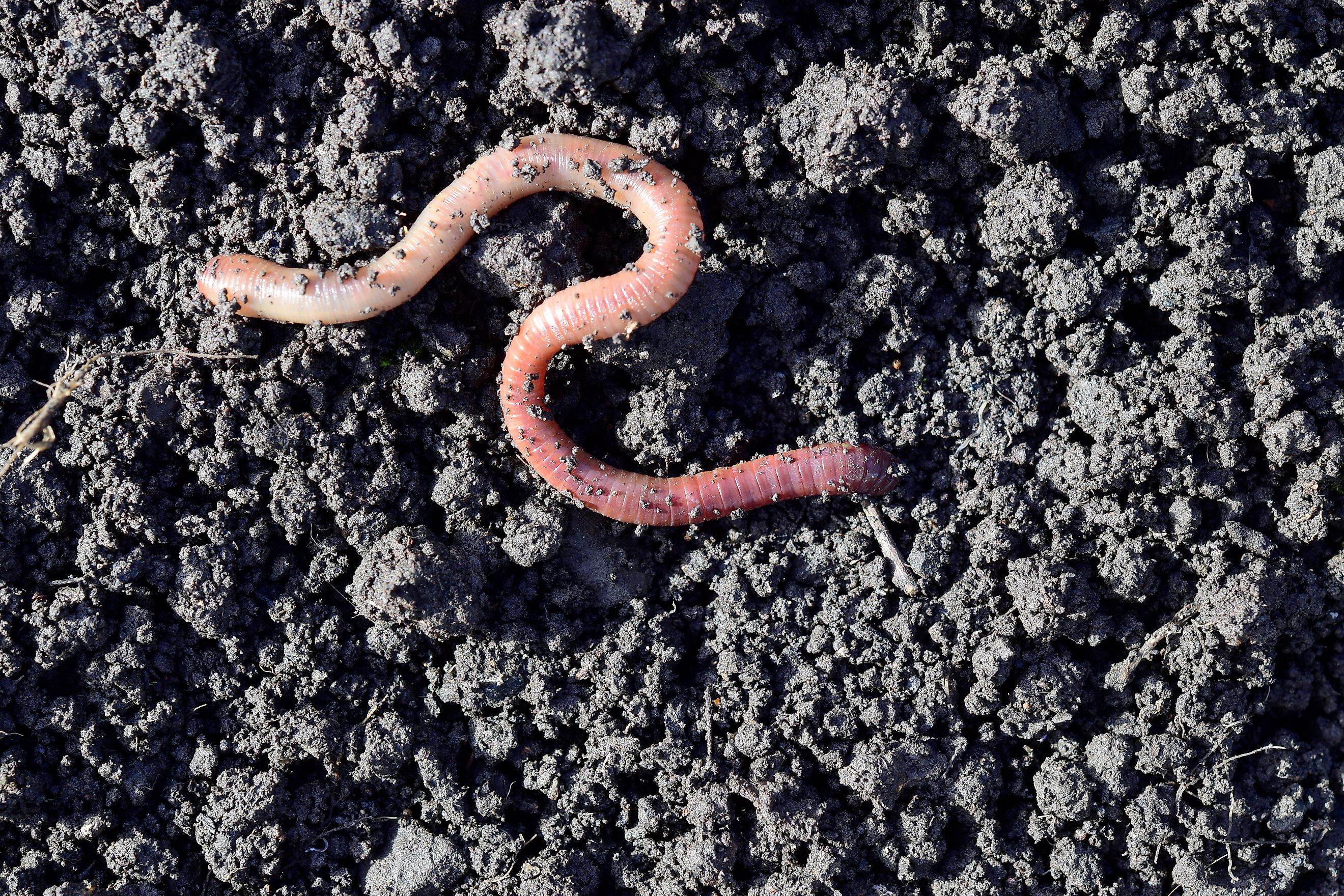
Why The Upper Midwest Has No Native Earthworms
A nightcrawler dug up near Duluth, Minnesota, or Marquette, Michigan, is an immigrant, and so is the one an angler threads onto a hook on Lake Vermilion. According to the Minnesota Department of Natural Resources, every land-dwelling earthworm in the state originally came from Europe or Asia. People have introduced at least fifteen species so far, and the only native worm is an aquatic one that woodcock search for in wet ground. The Wisconsin Department of Natural Resources reports the same for its state, adding that no native earthworm has lived there since the last glacier scraped the land down to bedrock. Two events, one geological and one human, explain the absence, and more than ten thousand years separate them.
The Ice That Cleared the Ground

In July 1837, Swiss naturalist Louis Agassiz, known for his work on fossil fish, stood before the Swiss Society of Natural Sciences in Neuchâtel and argued that large sheets of ice had once covered much of Europe. This idea surprised his audience, and most did not agree with him. He later published his theory in detail as Études sur les glaciers in 1840, moved to the United States in 1846, and in 1848 led a summer expedition along the north shore of Lake Superior. There, he recognized the grooved bedrock and scattered boulders as signs he had seen before in the Alps. Although Agassiz was not interested in worms, his theory explained why they were missing. The last ice age had buried almost the entire Upper Midwest under the Laurentide Ice Sheet, which reached its largest size about 21,000 years ago and pushed a lobe of ice as far south as central Iowa.
Soil animals cannot survive under a kilometer or more of ice, and the ice also removed the soil they needed. Today's native North American earthworms, about a hundred species in groups like Diplocardia, Bimastos, and Eisenoides, come from populations that survived south of the ice or in unglaciated areas along the Pacific coast. In a 2002 review in BioScience, Paul Hendrix and Patrick Bohlen compared these earthworm ranges to the glacial boundary and found they matched closely. The Missouri Department of Conservation, whose state is mostly south of the ice line, explains that only the parts of the continent that were not covered by glaciers still have native earthworms. The same glaciers that removed the soil also carved out the Great Lakes, which were much larger during the ice age than they are now.
Why the Native Worms Never Walked Back

Earthworms move slowly, and that simple fact explains why native species stayed in the south after the ice melted. According to Scientific American, earthworm populations naturally spread only five to ten meters each year. The Minnesota DNR says this is less than half a mile per century. The glaciers left northern Minnesota about 10,000 to 11,000 years ago. Even if earthworms moved north at the fastest rate the whole time, they would have covered only about 100 kilometers, or 60 miles. That is much less than the distance from the old ice margin in Iowa to the maple forests of the Arrowhead. A 2023 report from Michigan State University says that one or two native species made it to the southernmost counties of Michigan, with more in Indiana and Ohio. This matches what the numbers suggest.
The Driftless Area of southwestern Wisconsin supplies an odd complication, because the last ice sheet flowed around it and left it uncovered, yet the Wisconsin DNR still lists no native earthworms anywhere in the state. The likeliest explanation is that the country beside the ice front stayed frozen for long stretches, with permafrost and tundra conditions that no earthworm could tolerate, though that remains an inference from the geology and the record is thin on direct evidence. Geologists named the region for the glacial drift it lacks, and the name turned out to cover worms as well.
The forests that grew up on the new ground did so for about ten millennia without any earthworms at all. Sugar maple, basswood, red oak, paper birch, and aspen dropped their leaves each autumn, and fungi, bacteria, mites, and springtails broke that litter down slowly into a spongy layer of duff several centimeters thick. The University of Minnesota Forest Ecology Lab describes how natural processes kept those soils loose without any help from burrowing worms. Trout lilies, trilliums, Canada mayflower, and a dozen kinds of fern rooted in the duff, and ground-nesting songbirds built their nests on it.
The Worms That Arrived With the Settlers

European colonists brought earthworms to North America from the 1600s onward, and most of them arrived by accident in the soil around the roots of imported plants and in the dirt and rock that ships carried as ballast. A popular version of the story credits tobacco ships sailing between England and Virginia with the first large introduction, since the vessels arrived loaded with ballast and left loaded with leaf, so the story goes, though no record ties any particular cargo to any particular worm. By the 1800s, as settlers and loggers moved into the Great Lakes states, the common European species came with them in potted plants and soil.
Charles Darwin shaped how people see earthworms, a view that has lasted ever since. In 1881, just a year before he died, he published The Formation of Vegetable Mould, Through the Action of Worms. He wrote it after years of studying how earthworms buried stones and old ruins in the fields near his home in Kent. The book sold well and made people think of worms as a gardener's friend. Darwin's ideas fit Kent, where earthworms and European forests had lived together for thousands of years. But his readers were mistaken when they thought this was true everywhere. Within a generation, American anglers had made the nightcrawler, Lumbricus terrestris, a common bait in shops across the northern lake country.
Anglers, loggers, and road builders spread the worms farther in the twentieth century than the colonists ever did. The worms moved inland in the tire treads of logging trucks and off-road vehicles, in loads of fill and mulch, and in coffee cans of leftover bait that fishermen emptied at the edge of the woods at the end of a day, which is a kindness to the worm and a problem for the forest. Researchers at the University of Minnesota and Michigan Tech find the heaviest invasions along roads, trails, and lakeshores, which matches the paths people take.
What the Forests Lost

Cindy Hale, then a graduate student at the University of Minnesota, joined a field trip to the Chippewa National Forest in the 1990s and found stands of hardwood with bare ground where ferns, wildflowers, and tree seedlings should have been, according to a profile of her work in Science News Explores. The guides on that trip blamed European earthworms, and Hale spent the following decade testing the claim. She and her colleagues Lee Frelich and Peter Reich reported in a series of studies, including a 2006 paper in the journal Ecology, that invading worms can consume the entire duff layer within a few years and that native understory plants decline sharply as they do.
In a 2019 study published in Frontiers in Ecology and the Environment, Frelich and a group of international researchers tracked how invasive earthworms set off a series of ecological changes. They found that earthworm invasions lead to changes in soil chemistry, a decline in native plants and soil animals, and impact the animals that rely on the forest floor. Soil disturbed by earthworms also becomes an easy place for European buckthorn and garlic mustard to grow, while white-tailed deer eat most of the native seedlings that remain. In 2023, Tara Bal from Michigan Technological University found that earthworm activity was linked to sugar maple dieback at 120 study sites across Michigan's Upper Peninsula, northern Wisconsin, and eastern Minnesota. Frelich has even called earthworms the worst invasive species in the Great Lakes region. This is a surprising statement about an animal many people were taught to appreciate in school, but the helpful ecological role earthworms play in older soils elsewhere helps explain why there is confusion.
The Newest Arrivals From Asia

Jumping worms of the genus Amynthas, native to eastern Asia, reached North America in the late nineteenth century, most likely in horticultural shipments, and now pose the sharpest present threat. The North Central Integrated Pest Management Center reported in 2024 that the worms had spread to 38 U.S. states. Frelich spotted Amynthas agrestis in Loring Park in Minneapolis in 2006, and staff at the University of Wisconsin-Madison Arboretum confirmed two species, A. agrestis and A. tokioensis, in the arboretum's forests in the autumn of 2013, the first confirmed record for the Upper Midwest.
Jumping worms reproduce without mating, mature in about 60 days, and leave the topsoil loose and granular, with a texture the Minnesota DNR compares to coffee grounds. Their cocoons survive northern winters in the soil, which explains much of their success in the region. The Minnesota DNR listed jumping worms as prohibited invasive species beginning July 1, 2024, which makes it a misdemeanor to possess, buy, transport, or release them without a permit, and Wisconsin regulates them under its own invasive species rule. They belong on any list of the invasive species threats facing the Great Lakes, although the damage they do happens out of sight beneath the leaf litter.
What Hikers, Anglers, and Gardeners Can Do

Earthworms are not a threat to people, so hikers in the north woods do not need to worry about them. The real risk is to the forest itself. State agencies agree that once earthworms are established, there is no affordable way to remove them, so prevention is key. The Minnesota DNR reminds everyone that releasing most non-native species into the wild is against state law. They ask anglers to throw unwanted bait in the trash instead of dumping it on shore or in the woods.
Visitors who hike or paddle in the national parks of the Upper Midwest and the surrounding state forests can help by brushing mud from boots, bike tires, and gear before they leave a trailhead, since earthworm cocoons ride along in small clumps of soil. Gardeners can inspect mulch, compost, and potted plants for thrashing worms and coffee-ground soil, avoid moving soil or plants out of an infested yard, and buy compost from suppliers whose piles reach at least 131 degrees Fahrenheit, a temperature that UW-Madison researchers found jumping worm cocoons do not survive. Home composters in wooded areas can freeze finished compost for at least a week to kill worms and eggs before spreading it. Anyone who finds a suspected jumping worm can photograph it on a plain surface with the pale band near its head in clear view and report it through EDDMapS or the state DNR.
Where the Worms Have Not Reached
Some stands of northern hardwood forest in Minnesota, Wisconsin, and Michigan still have no earthworms in them at all, especially far from roads, and the University of Minnesota's Great Lakes Worm Watch program is working with landowners to map those stands so they can be protected. Earthworms spread slowly on their own, and nearly every mile they have gained in the Upper Midwest over the past two centuries came from a person carrying them there, which means the same people can decide where the spread stops.