What Animals Live In The Taiga?
The taiga, or boreal forest, is the largest land biome on Earth, a nearly continuous belt of coniferous forest, dominated by pines, larches, and spruces, that rings the Northern Hemisphere. In North America it covers Alaska, much of inland Canada, and the northern edge of the continental United States. Across Eurasia it stretches through Finland, Sweden, and Norway, across Russia and northern Mongolia and Kazakhstan, to northern Japan.
Its long, brutal winters and short growing season limit biodiversity, so the animals that live here are specialists, built to endure months of deep cold and snow. The species below are among the most notable residents of the world's boreal forests.
Siberian Tiger
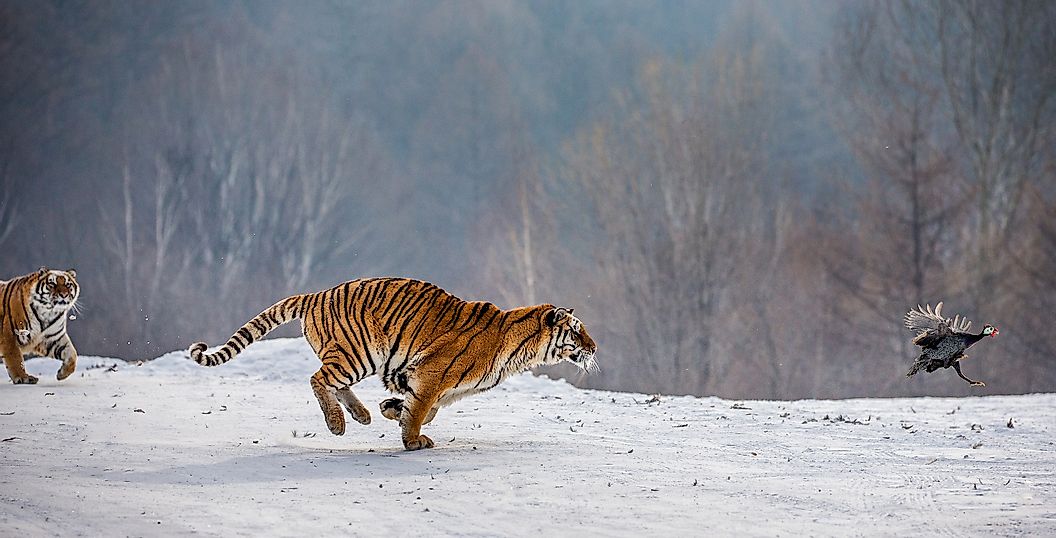
The Siberian tiger (Panthera tigris altaica), also called the Amur tiger, is the taiga's apex predator and the largest cat on Earth, with big males topping 600 pounds. Once ranging across Korea, northeastern China, and eastern Russia, it now survives almost entirely in the Sikhote-Alin mountains and Primorye of the Russian Far East, in a mosaic of Korean pine and boreal forest. Decades of intensive anti-poaching work have driven a real recovery: from a low of a few hundred in the 1990s, the population reached about 750 animals, including roughly 200 cubs, in the 2022 census. It hunts wild boar, red deer, Siberian roe deer, and musk deer across enormous territories, and dense fur plus a thick fat layer let it endure the cold. The species remains endangered.
Brown Bear

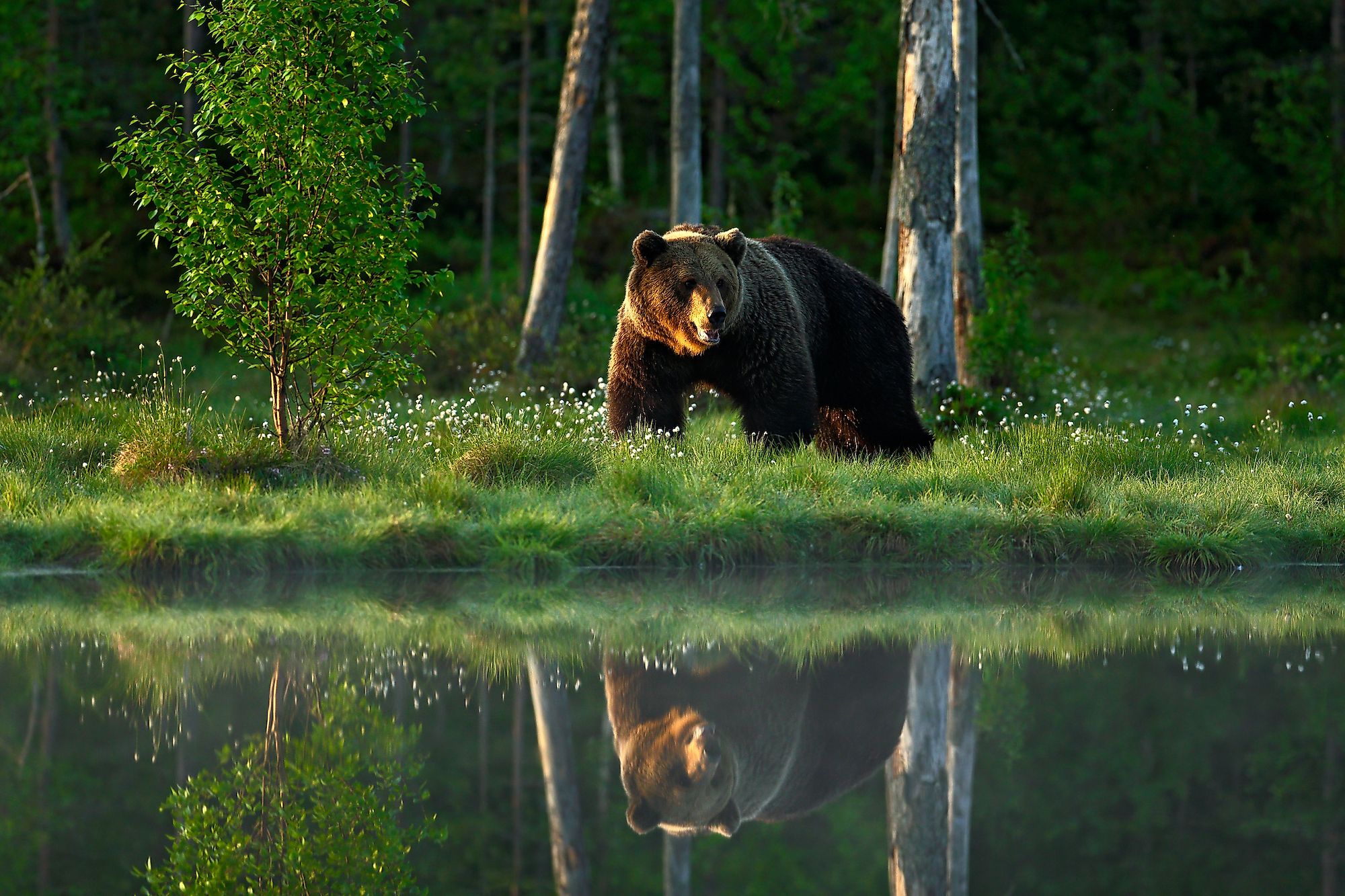
The brown bear (Ursus arctos) is the taiga's largest land carnivore, ranging across Alaska, western Canada, Russia, and pockets of the Caucasus and Carpathians. Omnivorous and opportunistic, it fattens through late summer and fall on berries, roots, fish, and carrion, then dens through the worst of winter in a state of dormancy. The taiga's other bears include the American and Asiatic black bears, and, at the biome's northern fringe where forest gives way to ice, the polar bear. Brown bears are listed as of Least Concern globally, though some isolated populations are far more fragile.
Gray Wolf, Coyote, and Red Fox

The gray wolf (Canis lupus) ranges across the boreal forests of both North America and Eurasia, hunting moose, deer, and hares in coordinated packs, and it is one of the few large predators that thrives in deep snow. Alongside it, the coyote (Canis latrans) fills a similar role in North America, and the red fox (Vulpes vulpes), the most widespread wild carnivore on Earth, works the taiga for rodents, rabbits, and birds. All three rely on rich winter coats and, in the foxes' case, a bushy tail wrapped over the nose for warmth while resting.
Wolverine

The wolverine (Gulo gulo) is the largest land-dwelling member of the weasel family and one of the taiga's toughest animals, a stocky, bear-like mustelid with a reputation for strength far beyond its size. Ranging across the boreal forest and tundra of Canada, Alaska, Scandinavia, and Russia, it covers vast territories in search of food and readily scavenges carcasses left by wolves and bears, using powerful jaws to crush frozen bone. Broad, snowshoe-like paws let it travel and hunt over deep snow where heavier predators bog down, and it will take prey as large as a caribou weakened by winter. Solitary and elusive, it depends on reliable spring snow cover to den, which makes it especially sensitive to a warming climate.
Canada Lynx and Eurasian Lynx

Two lynx species patrol the taiga. The Canada lynx (Lynx canadensis) is a snow specialist, with oversized, furred paws that work like snowshoes and a diet built almost entirely around the snowshoe hare; their populations rise and fall together in one of ecology's most famous predator-prey cycles. The larger Eurasian lynx (Lynx lynx), the biggest of the lynxes, ranges from Western Europe across Siberia and takes bigger prey, including roe deer and young red deer. Both wear a thick silver-grey winter coat, tufted ears, and a ruffed face.
Moose

The moose (Alces alces) is the largest deer alive, and the boreal forest is its stronghold across North America and Eurasia, where it is known as the elk. Long legs let it wade through deep snow and into lakes and bogs to feed on aquatic plants, willow, and birch shoots, and a bull's broad antlers can span nearly two meters. Largely solitary, moose come together only to mate, and they can be dangerously aggressive when cornered. Gray wolves and bears are their main predators.
Caribou

Caribou, known as reindeer in Eurasia, are all one species (Rangifer tarandus), with the boreal woodland caribou being the forest-dwelling type of the taiga. Uniquely among deer, both males and females grow antlers, and their broad, splayed hooves act as snowshoes and as paddles when swimming. Their winter diet leans heavily on lichens, which they reach by digging through snow with their hooves, supplemented by the leaves of birch and willow. Many populations of woodland caribou are now in serious decline as logging and development fragment the old forest they depend on.
Elk and Roe Deer

The elk or wapiti (Cervus canadensis), a large deer of North America and eastern Asia, ranges into the southern taiga, moving to higher, snow-free ground as seasons shift and stripping bark and browse through winter. Smaller and more secretive are the roe deer: the European roe deer (Capreolus capreolus) ranges from Britain to the Caucasus, and the Siberian roe deer (Capreolus pygargus) across Siberia, Mongolia, Kazakhstan, and the Korean Peninsula. Both browse on leaves, shoots, and buds, and rely on cover rather than speed to avoid the taiga's many predators. The Siberian musk deer, a small, fanged deer that eats lichen through winter, shares the same eastern forests and is a favored prey of the Amur tiger.
American Marten and Sable

The American marten (Martes americana) is a cat-sized member of the weasel family that hunts through the conifers of Alaska and Canada, taking voles, squirrels, and hares, and denning in tree cavities. Its Eurasian counterpart, the sable (Martes zibellina), ranges across the Siberian taiga and is famous for a luxuriant dark coat that made it one of the most valuable furs in the world, and a driver of Russia's historic eastward expansion. Both were heavily trapped, and both recovered where hunting was controlled; ongoing deforestation is now their main threat.
Weasels, Stoats, and Mink

The taiga is prime territory for the smaller mustelids. Weasels and the stoat (Mustela erminea) are slim, relentless hunters of rodents and lagomorphs; the stoat famously turns snow-white in winter, when its coat is known as ermine, keeping only a black tail-tip. The American mink (Neogale vison) and its threatened European relative (Mustela lutreola) are semiaquatic, hunting frogs, fish, waterfowl, and small mammals along the region's rivers and lakes. All are preyed on in turn by owls, foxes, and larger carnivores, and all are built long and low to follow prey into burrows.
Snowshoe Hare and Rodents

The small herbivores are the engine of the whole food web. The snowshoe hare, named for its huge hind feet, swaps a brown summer coat for a white winter one and is the staple prey of the Canada lynx. Alongside it, beavers engineer the wetlands, and squirrels, voles, lemmings, and mice feed nearly every predator in the biome. Red squirrels cache spruce and pine cones to survive the winter, while beavers fell trees to build the lodges and dams that shape boreal streams. When these populations boom or crash, the numbers of martens, foxes, owls, and lynx follow close behind.
Great Grey Owl and Eagle-Owl
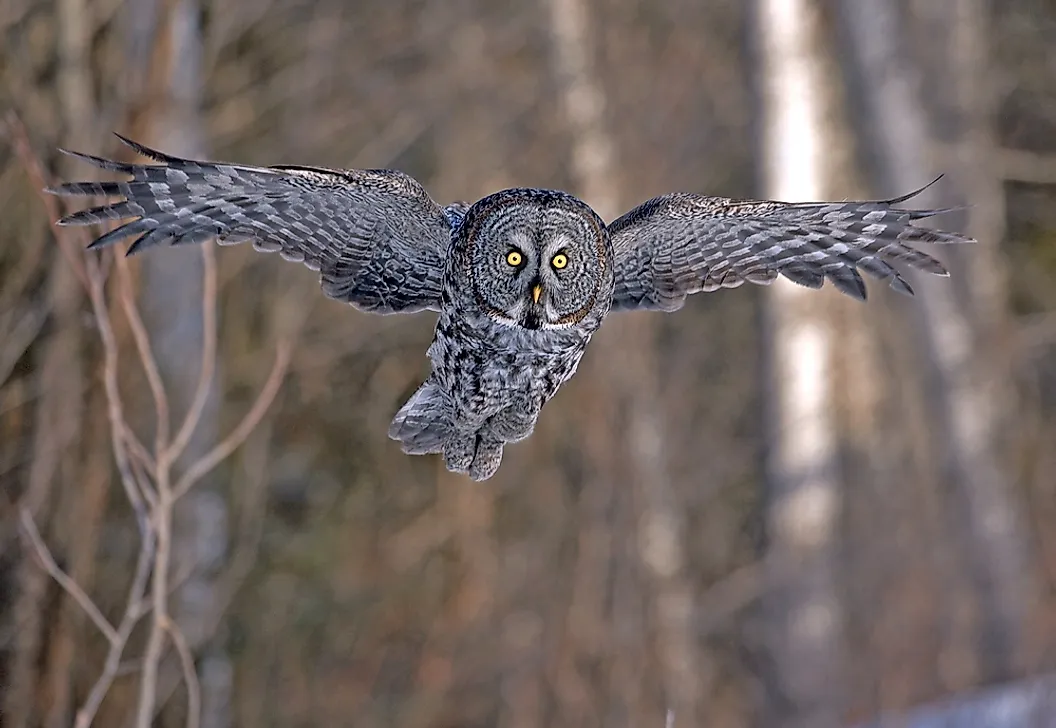
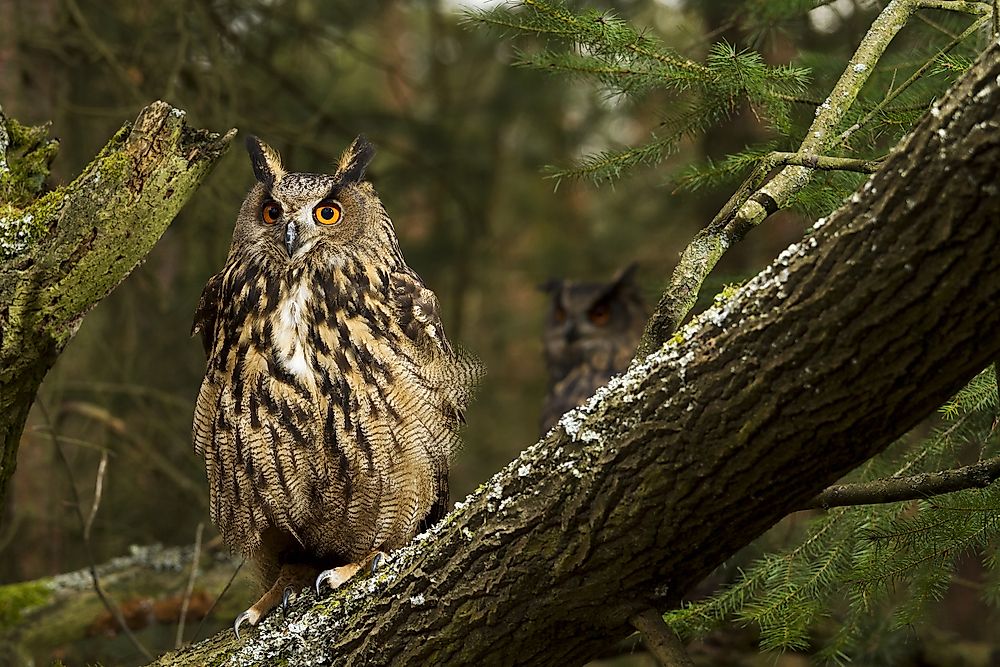
The boreal forest is owl country. The great grey owl (Strix nebulosa), one of the largest owls in the world by length, haunts the taiga of both North America and Eurasia, and can hear and punch through more than a foot of snow to seize voles it never sees. The Eurasian eagle-owl (Bubo bubo), among the largest owl species by weight and wingspan, takes prey up to the size of hares and young foxes across the forests of Eurasia. Owls are only part of the picture: an estimated 60% of North America's bird species north of Mexico rely on the boreal forest, among them the common loon, spruce grouse, boreal chickadee, and countless warblers that migrate north each spring to breed.
Waterbirds and gamebirds round out the taiga's avian life. The common goldeneye and bufflehead nest in tree cavities near boreal lakes, the capercaillie displays in forest clearings, and the herring gull and common tern work the water. Many of these birds are entirely dependent on the health of the boreal forest, so the logging and industrial development pressing into the taiga threaten them directly.
Otters

Two otters work the rivers and lakeshores of the taiga: the North American river otter (Lontra canadensis) and the Eurasian otter (Lutra lutra). Both are semiaquatic members of the weasel family, insulated by a dense, water-repellent coat, and both feed mainly on fish, supplemented by amphibians, crayfish, clams, and the occasional small mammal or bird. Playful and territorial, they range along waterways throughout the boreal zone wherever the water stays open enough to hunt.
Fish

The cold lakes and rivers of the taiga hold fewer fish species than warmer regions, but the ones that live here are superbly cold-adapted, surviving under surface ice through the long winter. Common boreal fish include the Alaska blackfish, lake and round whitefish, brook trout, walleye, cisco, lake chub, and the burbot, the only freshwater member of the cod family. Eurasian waters add the Siberian taimen, the largest member of the salmon family, along with lenok and grayling, while chum salmon run up rivers to spawn.
Reptiles and Amphibians

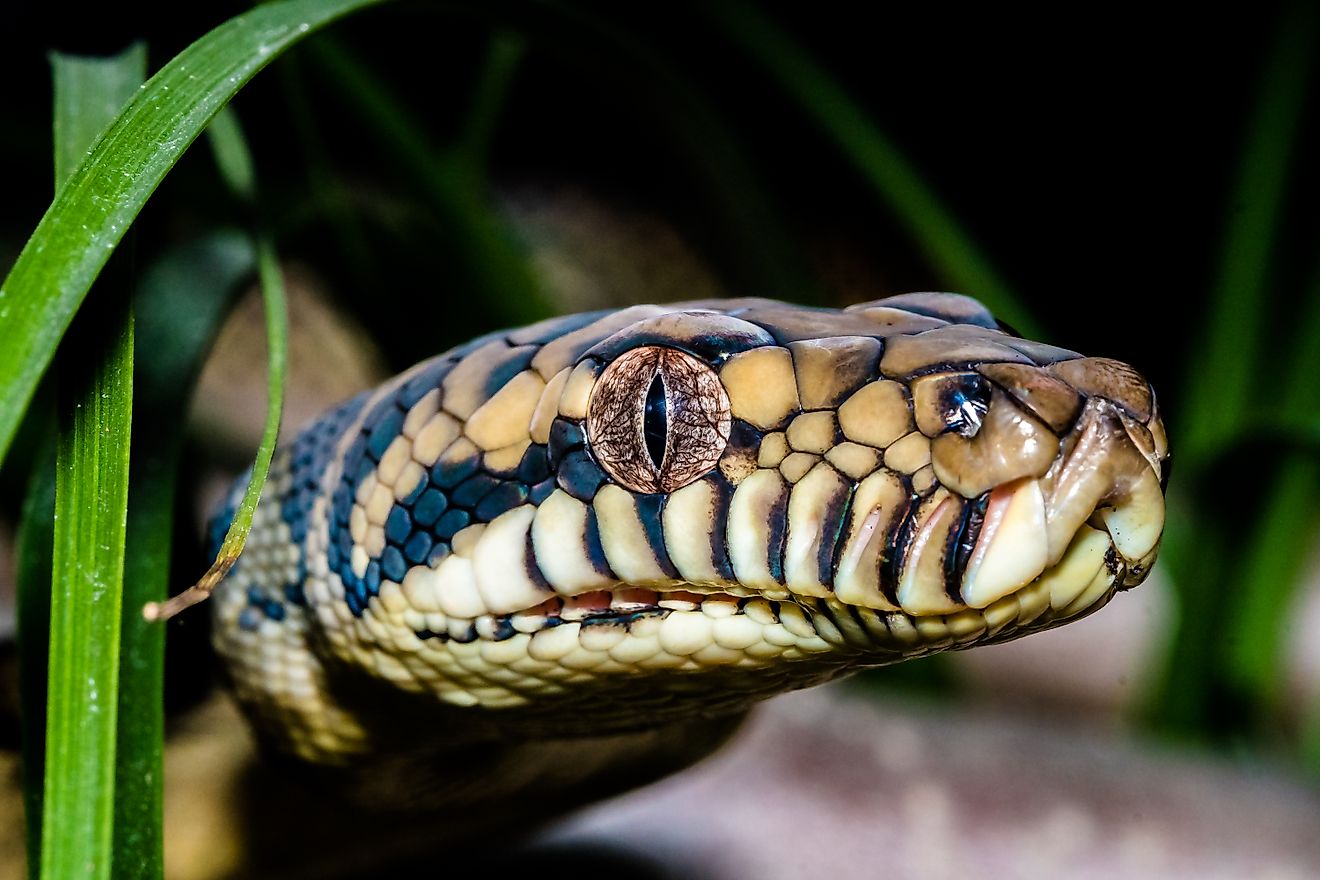
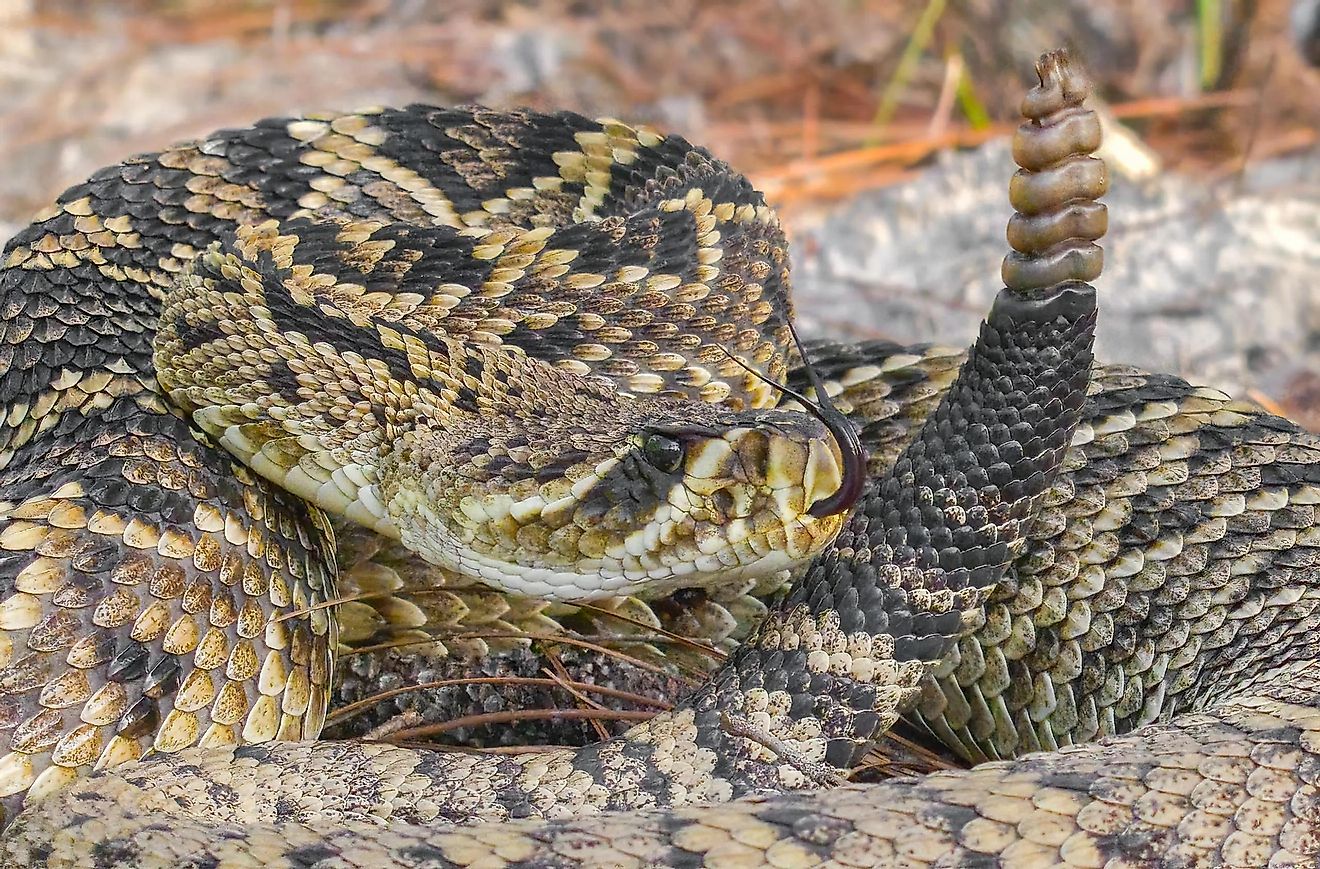
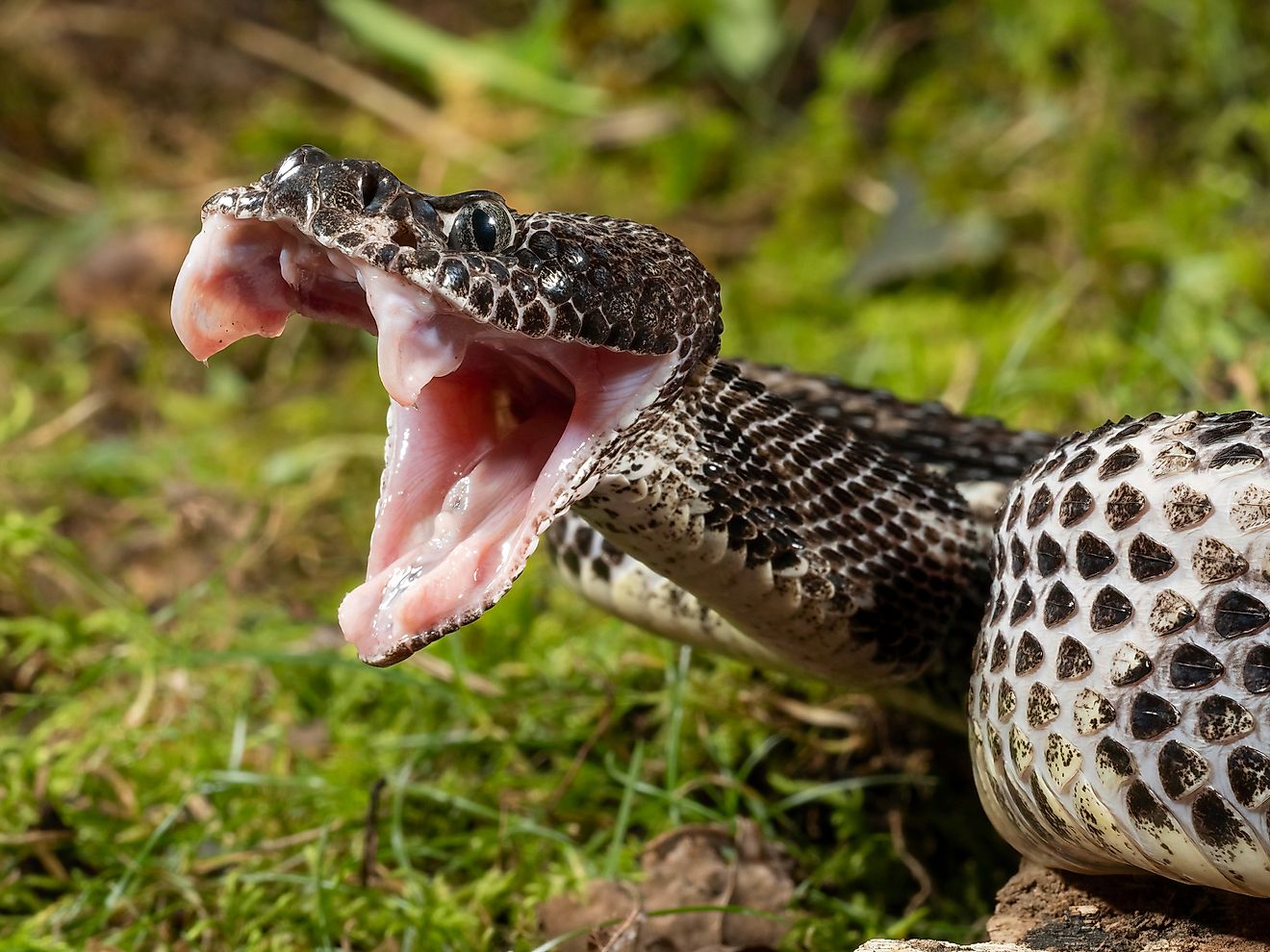
Cold-blooded animals struggle in the taiga, so reptiles and amphibians are few and specialized. The red-sided garter snake reaches farther north than almost any other snake in the Americas, and the European adder ranges into the boreal zone of Eurasia; both survive the winter by hibernating in communal dens below the frost line. Among amphibians, the wood frog is the standout, able to freeze nearly solid and thaw back to life in spring, while the Siberian salamander endures similar extremes. Blue-spotted salamanders, northern leopard frogs, and American and Canadian toads round out the biome's limited cold-blooded fauna.
The Fragile Web of the Boreal Forest
For all its harshness, the taiga knits together a tightly linked community, from the lichens and cone-caching squirrels at the base to the tigers, wolves, and wolverines at the top, with the boom-and-bust of hares and voles driving the whole system. It is also one of the planet's great carbon stores and the breeding ground for billions of migratory birds. Logging, mining, and a warming climate are now reshaping the boreal forest faster than many of its specialists can adapt, which makes the survival of these cold-adapted animals a question that reaches well beyond the far north.