Ethiopian Wolf
The Ethiopian wolf (Canis simensis) holds a distinction no other member of the dog family can claim. It is one of the rarest canids on Earth and the most endangered carnivore in Africa, with fewer than 500 individuals surviving in the wild. This slender, russet-coated hunter lives nowhere else but the high moorlands of the Ethiopian Highlands, a cluster of cold, wind-scoured peaks often called the Roof of Africa.
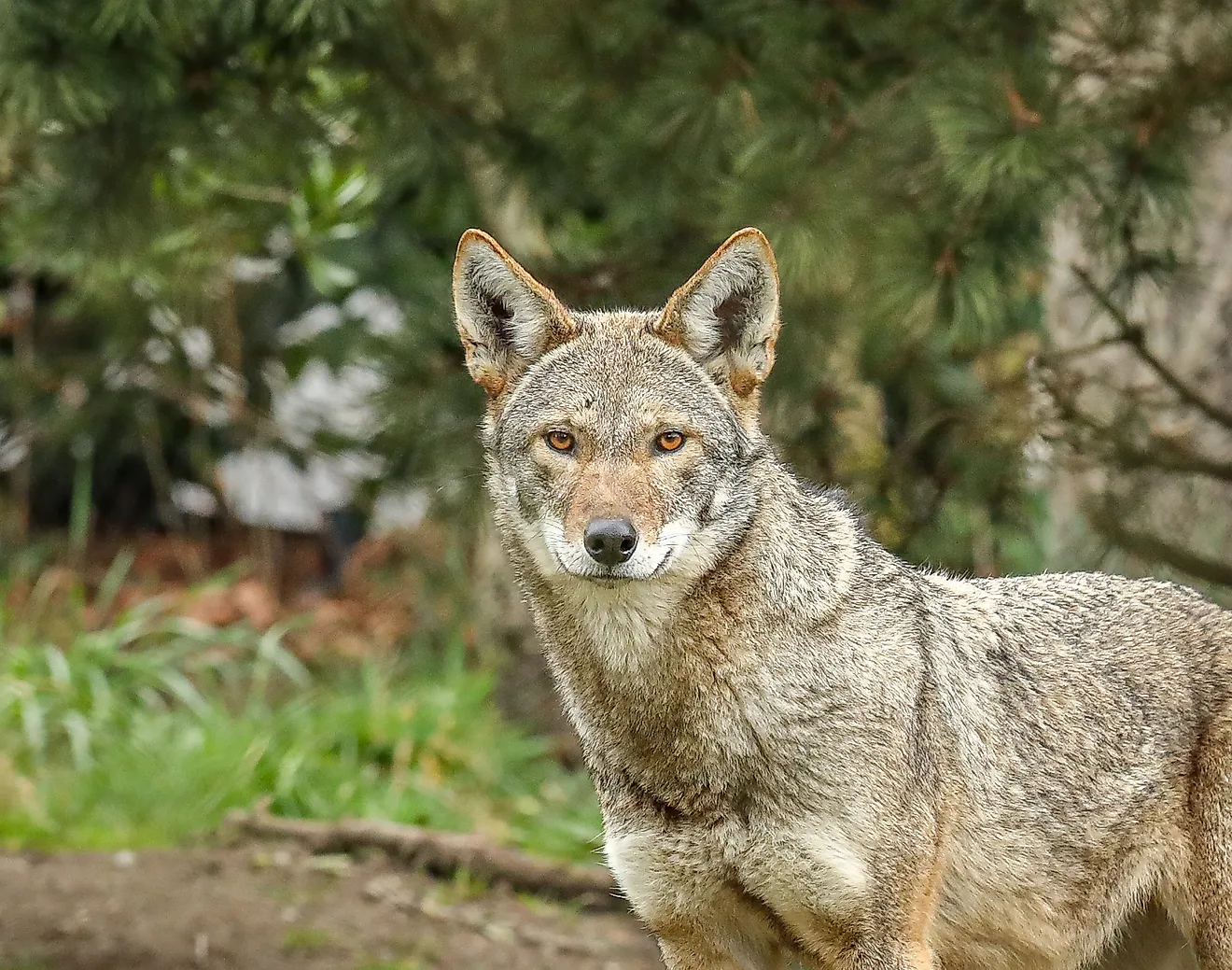
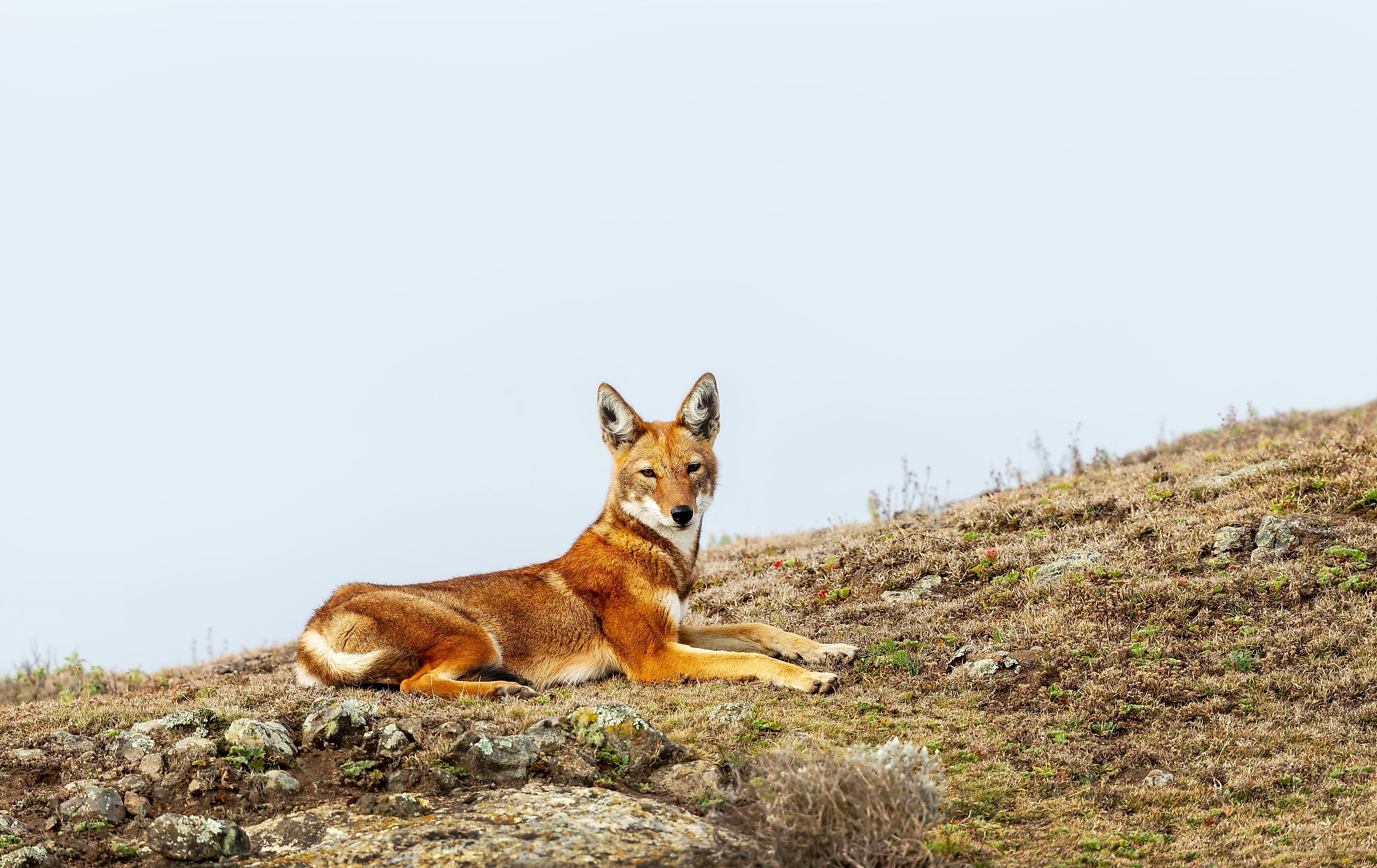
Despite the name, the Ethiopian wolf looks more like an oversized fox than a grey wolf. Long legs, a narrow muzzle, and a bright tawny-red coat set it apart from every other African predator. Yet its story is far more than a matter of good looks. This is an animal shaped by isolation, specialized down to a diet of highland rodents, and pushed to the edge of extinction by disease and a shrinking world.
Understanding the Ethiopian wolf means understanding one of the planet's most fragile ecosystems. Its survival is tied to the fate of the Afroalpine grasslands it patrols, and to the tireless conservation work that keeps its small populations from blinking out.
Taxonomic Classification

The Ethiopian wolf belongs to the family Canidae and the genus Canis, the same genus that contains the grey wolf, the coyote, and the domestic dog. Its scientific name, Canis simensis, was assigned by the German naturalist Eduard Rüppell in the 1830s, and the species has collected a long list of common names over the years, among them the Abyssinian wolf, the Simien jackal, the Simien fox, and the red jackal. In Amharic it is known as key kebero.
For a long time researchers puzzled over where this animal fit. Its fox-like build led some early naturalists to classify it as a jackal. Modern genetic work settled the question. Mitochondrial DNA analysis showed that the Ethiopian wolf is not an African jackal at all but a close relative of the grey wolf and the coyote. The most widely accepted explanation is that ancestral wolves crossed into Africa from Eurasia during a glacial period roughly 100,000 years ago, then adapted to the cold Afroalpine heights as the climate warmed and the lower ground became unsuitable. Two subspecies are sometimes recognized, one living northwest of the Great Rift Valley and one to the southeast, though the distinction remains debated.
Physical Description

The Ethiopian wolf is a medium-sized canid, roughly the size of a coyote and built for a life of chasing small prey across open ground. Adults measure about 33 to 40 inches (84 to 101 cm) in head and body length and stand around 21 to 24 inches (53 to 62 cm) at the shoulder. Adults weigh about 24 to 44 pounds (11 to 20 kg), and males are noticeably larger than females, a clear case of sexual dimorphism.
The coat is the animal's most recognizable feature. A rich ochre-red covers the back and flanks, fading to white on the underparts, chest, chin, and throat. A crisp white crescent sits below each eye, and the boundary between the red and white fur is sharp rather than blended. The bushy tail carries a dark stripe along its length and ends in a brush of black hair. Long legs and a slender, elongated muzzle give the wolf both speed and the precision needed to snatch rodents from their burrows. A dense underfur insulates against the bitter cold of the highlands, where night temperatures can drop to 5 degrees Fahrenheit (minus 15 Celsius). The teeth are small and widely spaced, an adaptation suited to gripping small, wriggling prey rather than tearing large carcasses.
Range and Habitat

Few large mammals have a range as restricted as the Ethiopian wolf. The species is found only in the Ethiopian Highlands, confined to isolated pockets of Afroalpine grassland and heathland above the tree line. These habitats sit at extreme elevations, generally between 9,800 and 14,800 feet (3,000 to 4,500 m), where the air is thin, nights are freezing, and the vegetation grows low and tough.
Today the wolf clings to six or seven mountain enclaves separated by valleys and farmland it cannot cross. More than half of all Ethiopian wolves live in the Bale Mountains of the southeast, the single largest stronghold. Smaller populations hold on in the Simien Mountains, Mount Guna, the Arsi Mountains, and a handful of other highland blocks in the north and center of the country. The total extent of occurrence is estimated at only about 1,600 square miles (4,200 sq km), a tiny footprint for a species that once ranged more widely before farming climbed the slopes. As agriculture pushes higher up the mountainsides, the wolf's world grows smaller and more fragmented with each passing decade.
Diet

The Ethiopian wolf is a rodent specialist, and few predators are so narrowly focused on a single type of prey. Studies of the animal's droppings show that Afroalpine rodents make up around 96 percent of its diet. The favorite target is the giant molerat (Tachyoryctes macrocephalus), a plump burrowing rodent found only in the Bale Mountains, along with various grass rats and other small mammals. Hares round out the menu, and the wolf will occasionally take goslings or eggs when the chance arises.
Unlike most wolves, the Ethiopian wolf usually hunts alone. It spends the daylight hours pacing the open moorland, listening and watching for movement, then pouncing or digging prey out of shallow burrows. This solitary foraging style suits a diet of scattered small animals that would hardly feed a whole pack from a single kill. In late 2024 researchers documented a startling addition to the wolf's feeding habits. Individuals were seen licking nectar from the Ethiopian red hot poker (Kniphofia foliosa), a tall flowering plant of the highlands, with some wolves visiting as many as 30 blooms in a single outing. This makes the Ethiopian wolf the first large carnivore ever recorded feeding on nectar, and because pollen coats their muzzles as they feed, they may even help pollinate the flower.
Behavior

For all its solitary hunting, the Ethiopian wolf is a deeply social animal. It lives in tight-knit family packs that usually number between 3 and 13 members, with about 6 being typical. The pack shares and defends a territory, and members gather for energetic social greetings and border patrols at dawn, midday, and dusk before dispersing to hunt on their own.
Pack life is organized around a clear hierarchy, with dominant and subordinate animals of each sex. Ethiopian wolves are diurnal, active through the day and resting in the open at night, often huddled together against the cold. They communicate through scent marking, vocal calls, and body posture, and they patrol the edges of their range regularly to keep neighboring packs at bay. This combination of cooperative territory defense and independent hunting is unusual among canids and reflects the demands of a landscape where food is small and thinly spread.
Reproduction

Breeding in an Ethiopian wolf pack is a privilege reserved for the dominant pair. Only the top-ranking female typically produces a litter, and she mates most often with the dominant male, though she will sometimes breed with males from neighboring packs, which helps introduce fresh genes into small populations. After a gestation of about two months, she gives birth to a litter of 2 to 6 pups in a den dug into the ground.
What follows is a model of cooperative breeding. The whole pack pitches in to raise the young, with subordinate members guarding the den, playing with the pups, and carrying them food as they grow. This shared parenting improves the odds that pups will survive their first vulnerable months. Young wolves reach maturity at around two years of age, and in the wild an Ethiopian wolf may live up to about 10 years. The reliance on a single breeding female, however, means that the loss of a dominant animal can disrupt an entire pack's reproduction.
Importance to the World

As the top predator of the Afroalpine ecosystem, the Ethiopian wolf plays a role far larger than its small numbers suggest. By preying heavily on molerats and grass rats, it helps regulate rodent populations that would otherwise strip the fragile highland vegetation. A healthy wolf population signals a healthy moorland, which makes the species an important indicator of the condition of one of Africa's rarest habitats.
The newly discovered nectar feeding hints at an even wider ecological reach, raising the possibility that this carnivore also serves as a pollinator, a role almost never filled by a meat-eating predator. The Ethiopian wolf is also an important national symbol of Ethiopia and a flagship species for conserving the country’s highland ecosystems. Protecting it helps preserve the mountain water sources, grasslands, and countless other endemic species that depend on the same habitat.
Threats

The Ethiopian wolf is listed as Endangered on the IUCN Red List, and its situation is precarious. Recent estimates put the wild population at fewer than 500 animals, with roughly 360 to 440 adults spread across about 99 packs in just six isolated populations. Fewer than 250 of these are mature breeding individuals, and the long-term trend has been one of decline.
Disease is the single deadliest threat. Rabies and canine distemper, both carried by the domestic dogs that live alongside highland communities, have repeatedly swept through wolf populations and wiped out large fractions of a pack or subpopulation in a matter of weeks. Habitat loss compounds the danger as subsistence farming and livestock grazing climb ever higher into the wolf's range, squeezing and dividing the survivors. Hybridization with domestic dogs threatens the genetic integrity of the species, and road building, persecution, and a warming climate add further pressure to an animal with almost no room left to retreat.
Conservation efforts are holding the line. The Ethiopian Wolf Conservation Programme, founded in 1995, monitors packs across the highlands and has pioneered an oral rabies vaccine delivered inside goat meat bait, a method that protects wolves without the need to trap them. Vaccinating domestic dogs, protecting habitat, and working closely with local communities all form part of a broad strategy to keep this remarkable predator from vanishing.
Takeaway
The Ethiopian wolf has evolved into a highly specialized predator of Africa’s high mountains. An Ice Age relative of the grey wolf, it found refuge on the continent’s highest peaks and adapted so closely to this environment that it can survive nowhere else. Its russet coat, precise rodent-hunting techniques, cooperative family groups, and recently documented taste for nectar make it one of the world’s most distinctive predators. Yet its survival depends on a small number of mountain strongholds and the continued efforts of people who vaccinate, monitor, and protect its populations. Preserving the Ethiopian wolf also means safeguarding the high-altitude ecosystems of Africa’s Roof of the World.
Fun Facts

- A wolf that acts like a bee. In 2024, Ethiopian wolves became the first large carnivore ever recorded feeding on flower nectar, and pollen on their muzzles suggests they may help pollinate the Ethiopian red hot poker.
- More wolf than jackal. Despite its fox-like looks, DNA shows the Ethiopian wolf is a close cousin of the grey wolf and coyote, descended from ancestors that crossed into Africa from Eurasia around 100,000 years ago.
- Built for the freeze. A thick underfur lets the wolf endure highland nights as cold as 5 degrees Fahrenheit (minus 15 Celsius).
- One mother per pack. Usually only the dominant female breeds, while the rest of the pack helps raise her pups, a system known as cooperative breeding.
- The horse jackal. In parts of southeastern Ethiopia the wolf is called the horse jackal, a name tied to its reported habit of trailing mares and cows about to give birth.
Quick Facts
- Common name: Ethiopian wolf (also Abyssinian wolf, Simien jackal, Simien fox, red jackal)
- Scientific name: Canis simensis
- Family / Order: Canidae / Carnivora
- IUCN status: Endangered (fewer than 500 in the wild)
- Length: 33 to 40 inches (84 to 101 cm) head and body
- Height: 21 to 24 inches (53 to 62 cm) at the shoulder
- Weight: 24 to 44 pounds (11 to 20 kg)
- Lifespan: Up to around 10 years in the wild
- Diet: Carnivore, mainly Afroalpine rodents such as the giant molerat
- Range: Endemic to the Ethiopian Highlands, in six isolated Afroalpine populations