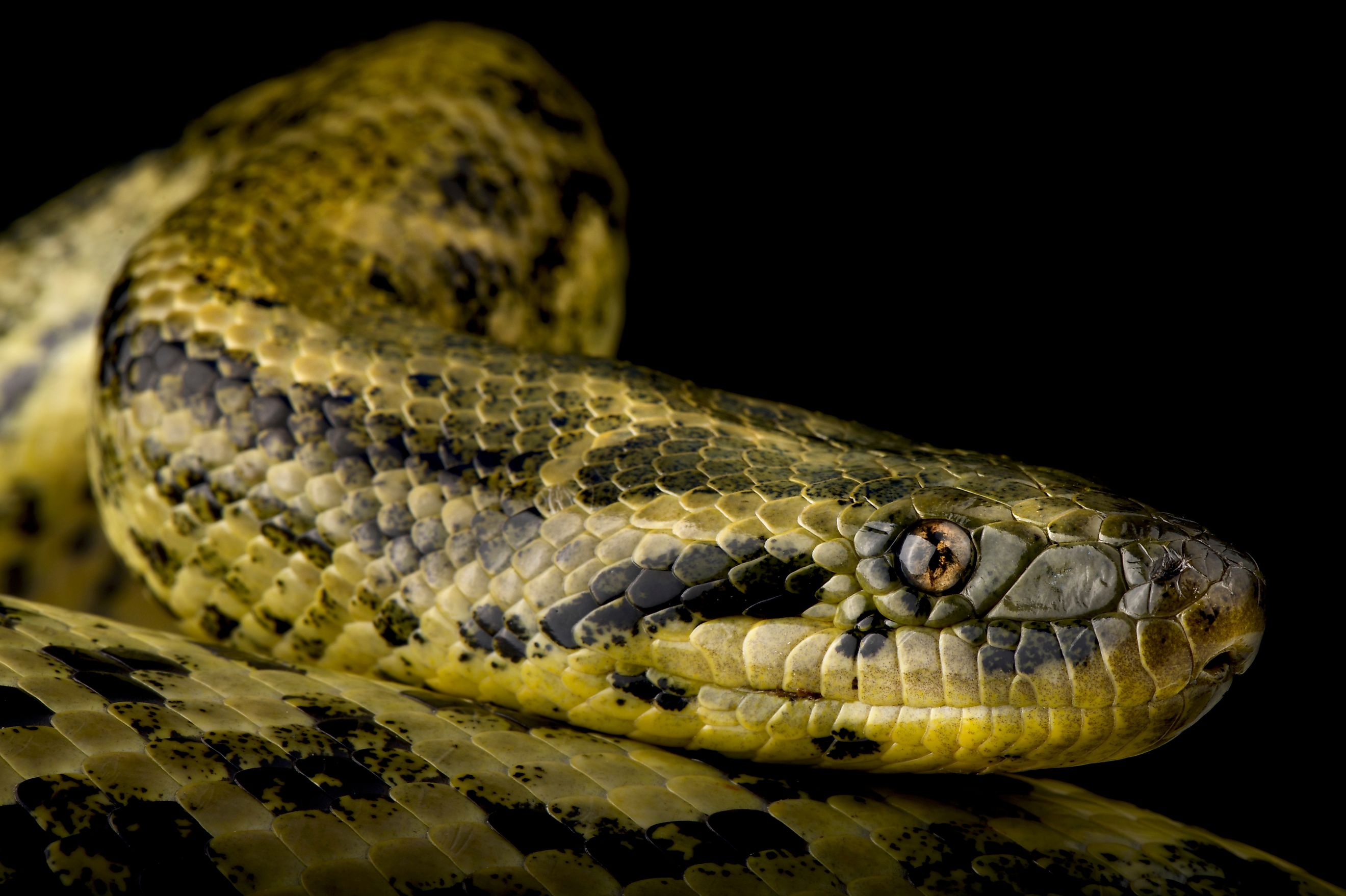
Yellow Anaconda
In the flooded grasslands and slow brown rivers of southern South America lives a giant that most people have never heard of, mostly because it spends its life in the shadow of a more famous relative. The yellow anaconda (Eunectes notaeus) is the green anaconda's smaller cousin, a golden, black-blotched constrictor that can still stretch well past the length of a car. It is a patient ambush hunter, a powerful swimmer, and, for its size, a surprisingly shy neighbor. Here is a closer look at the water boa of the southern wetlands.
Range and Habitat

The yellow anaconda is a creature of the south. Its range covers the Paraguay and Paraná river basins, spreading across Paraguay, Bolivia, northern Argentina, and southern Brazil, with its stronghold in the Pantanal, the largest tropical wetland on Earth. This is a snake that never strays far from water. It favors swamps, marshes, seasonally flooded grasslands, and the sluggish edges of slow-moving rivers. These are warm, shallow, muddy places where it can hunt and hide in equal measure. In the dry season, when the wetlands shrink, it simply follows the water into whatever pools and channels remain.
Physical Description

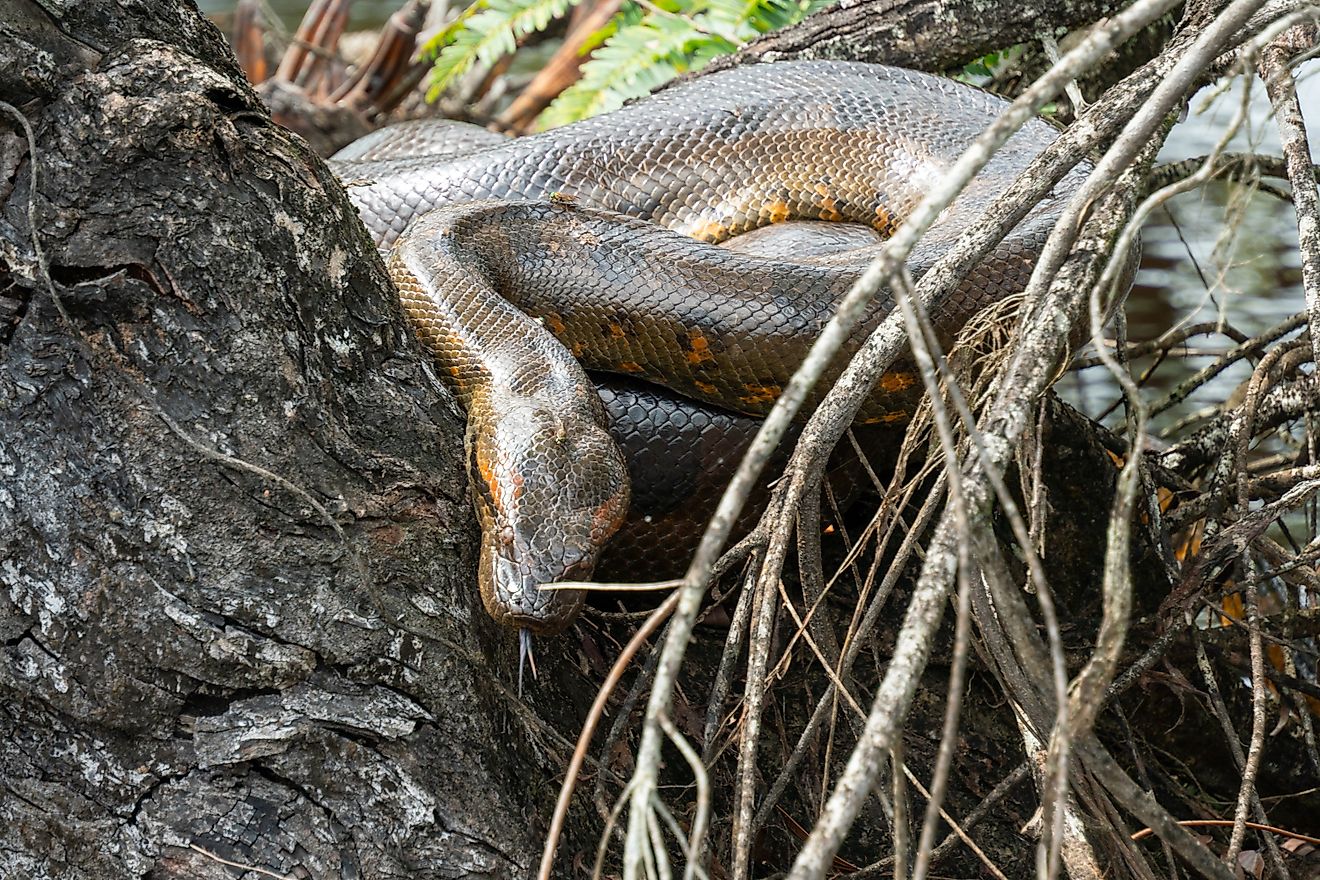
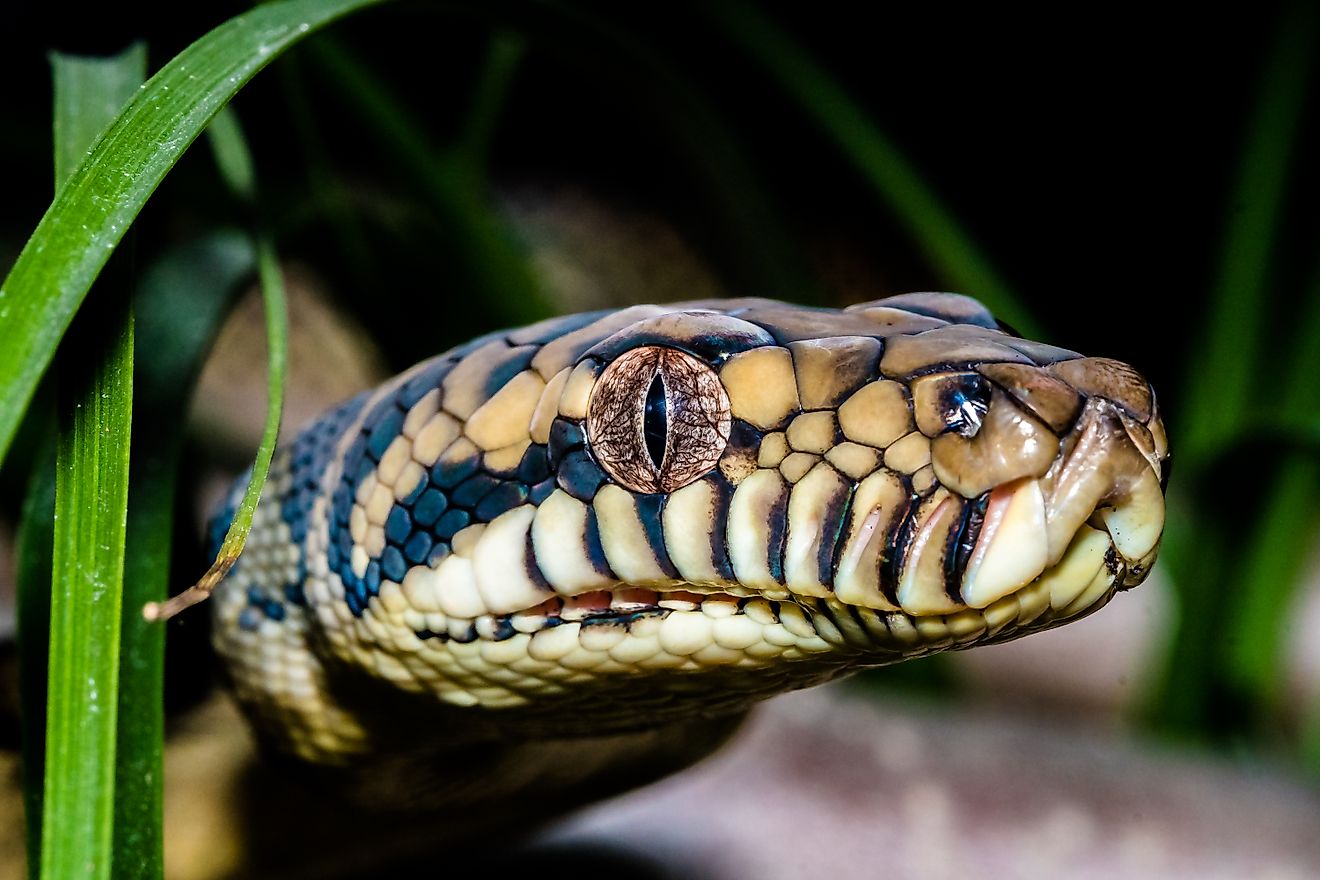
Adults typically run about 3 to 4 meters long, and the largest individuals reach close to 4.6 meters. That makes the yellow anaconda one of the largest snakes on the planet, though it is noticeably slimmer and shorter than the record-setting green anaconda. As with its cousin, the females are the giants here, growing heavier and longer than the males. The base color is a yellowish or golden tan, overlaid with dark brown or black blotches and streaks. The pattern breaks up its outline in dappled, weed-choked water. Its eyes and nostrils sit high on its head, so it can lie almost completely submerged with just the top of its face above the surface.
Behavior

The yellow anaconda is sometimes called a water boa, and the nickname fits. It spends most of its life in or beside the water, often floating with only its snout and eyes breaking the surface. It is a solitary animal and, for such a large predator, a timid one. Faced with a human, its first instinct is almost always to slip away into the reeds rather than fight, though it will defend itself firmly if cornered or hauled out of the water. It can be active by day or night, and it has one genuinely odd trick: it gives off a smell that helps keep ticks from latching onto its skin.
Food and Feeding

Like all anacondas, the yellow anaconda is non-venomous. It is a constrictor and an ambush hunter, lying still in shallow water until a meal wanders close, then seizing it and squeezing until it can swallow the animal whole. It is not a picky eater. The menu includes fish, waterbirds, rodents, turtles, eggs, and even young caimans. A large female can take on surprisingly big prey, and because anacondas digest slowly, it can go a long time between meals.
Reproduction
Breeding is where anacondas get strange. During the season, a single female may be pursued by several males at once, which pile onto her in a slow, writhing tangle called a breeding ball that can last for weeks. The yellow anaconda does not lay eggs. Instead it gives birth to live young, producing litters that commonly range from about 10 to 40 babies, each already around 60 centimeters long. There is no parental care whatsoever. The newborns simply slip away into the wetland and start hunting on their own.
Yellow vs Green Anaconda

The two names cause endless confusion, so it is worth sorting out. The green anaconda (Eunectes murinus) is the heavyweight, the largest snake in the world by mass, native mainly to the Amazon and Orinoco basins to the north. The yellow anaconda is smaller, lighter, and lives farther south, and its Latin name notaeus points to the distinct blotched pattern running down its back. Both belong to the same genus and share the same water-loving, prey-crushing lifestyle. But if you meet a golden, heavily spotted anaconda in the Pantanal, you are almost certainly looking at the yellow one.
Importance
As a top wetland predator, the yellow anaconda helps keep populations of fish, rodents, and other prey in balance across its range. It is also woven deep into local culture. Along the rivers of the Paraná and Paraguay, giant water serpents appear again and again in folklore, from the Yacumama, the Mother of Water, to countless tales of huge snakes guarding the flooded forests. Today the species is a genuine draw for wildlife tourism in the Pantanal, where visitors on jaguar safaris often spot one draped along a riverbank.
Threats
For all its size, the yellow anaconda has plenty to fear from people. Its patterned skin has long made it a target for the leather trade, and it is hunted in large numbers across parts of its range, a fact captured in one of its grimmer nicknames, matatoro, or bull killer. Habitat loss from the draining and clearing of wetlands adds more pressure. For now the species is still widespread enough that the IUCN lists it as Least Concern, and some countries manage the skin harvest to keep it sustainable, but the future of the yellow anaconda is tied directly to the future of the wetlands it depends on.