The Most Snake Infested Lakes in Missouri
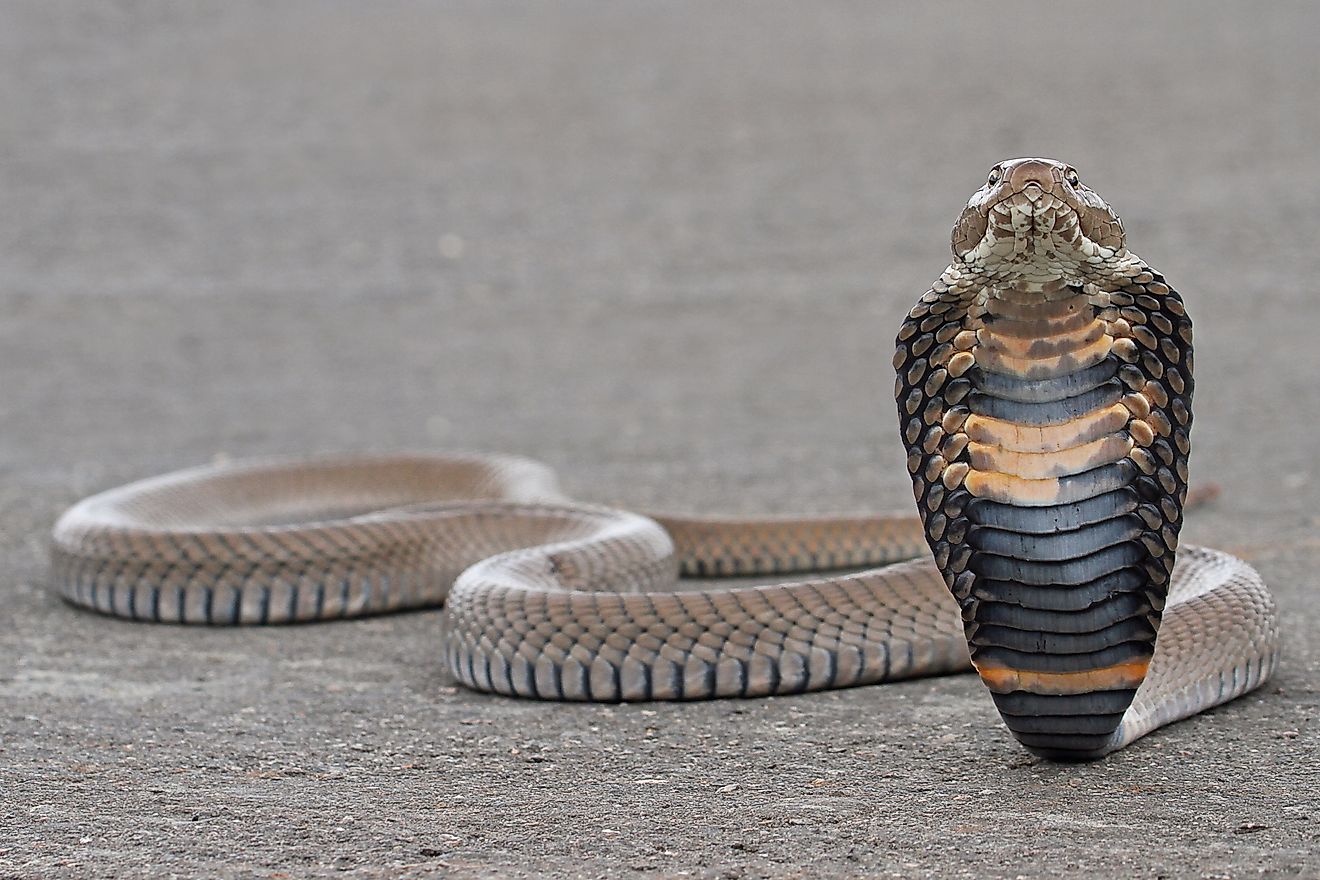
Missouri holds 47 species and subspecies of snakes, and exactly five of them are venomous. Those five are the eastern copperhead, the northern cottonmouth, the timber rattlesnake, the eastern massasauga, and the western pygmy rattlesnake. Everything else you meet at the water's edge is harmless, which is worth knowing before you panic at a shape in the shallows. With sites like Rocky Falls, Montauk Springs, and Table Rock Lake drawing people from all over, it helps to know which lakes hold which snakes. This article covers Missouri's most snake-heavy lakes so you can stay safe while swimming, boating, or hiking along them.
Table Rock Lake

Straddling southwestern Missouri and northwestern Arkansas, Table Rock Lake is one of the state's most popular attractions. This reservoir was created in the 1950s by Table Rock Dam and covers a surface area of over 43,000 acres. It is a strong destination for boating, scuba diving, fishing, and swimming. The shoreline is well developed, with sixteen public campgrounds and plenty of hiking areas that offer visitors a complete outdoor experience. Add the clear water and the Ozark backdrop for an environment like no other.
Table Rock's surroundings hold several snake species. Among the most common are the ring-necked snake (Diadophis punctatus), the western ratsnake (Pantherophis obsoletus), and the common watersnake (Nerodia sipedon). The common watersnake is the one you are most likely to meet in the water itself, and it is a strong, agile swimmer. It is brown or reddish with dark crossbands, and large specimens reach 4 feet 5 inches (135 cm). It is not venomous, and it will retreat if given room.
One species here does warrant real caution. The western pygmy rattlesnake (Sistrurus miliarius streckeri) is venomous and occurs in the Ozark counties around the lake. It is small, grayish, and its rattle is faint enough that people often do not hear it. Table Rock also sits near the northwestern edge of the northern cottonmouth's Missouri range, so watch where you step in brushy shallows and give any snake you cannot identify a wide berth.
Smithville Lake

Smithville Lake is another Missouri reservoir with plenty to offer. Sitting on the Little Platte River in Clay County, it was created in the late 1970s by Smithville Dam. Today it covers over 7,000 acres with 175 miles of shoreline. It has a large swimming area suited to families as well as boat rentals for exploring the water. Those who want to relax along the shore can choose between two beaches, Camp Branch Beach and Little Platte Beach, each with access to trails, marinas, and historical sites.
Snakes are common here too. Dekay's brownsnake (Storeria dekayi) is among the most frequently encountered, a small gray-to-brown species that usually measures 9 to 13 inches, occasionally reaching 20 inches. It is worth correcting a widespread belief about this one: the brownsnake is among the most inoffensive snakes in North America. It almost never bites, and a stressed individual is far more likely to freeze or slip away under cover. It is also one of the most misidentified snakes on the continent, regularly mistaken for a young copperhead and killed for it. Other species around the lake include the common watersnake, the common gartersnake (Thamnophis sirtalis), and the venomous eastern copperhead (Agkistrodon contortrix), the only one of the five venomous species you are likely to encounter this far northwest.
Lake Of The Ozarks

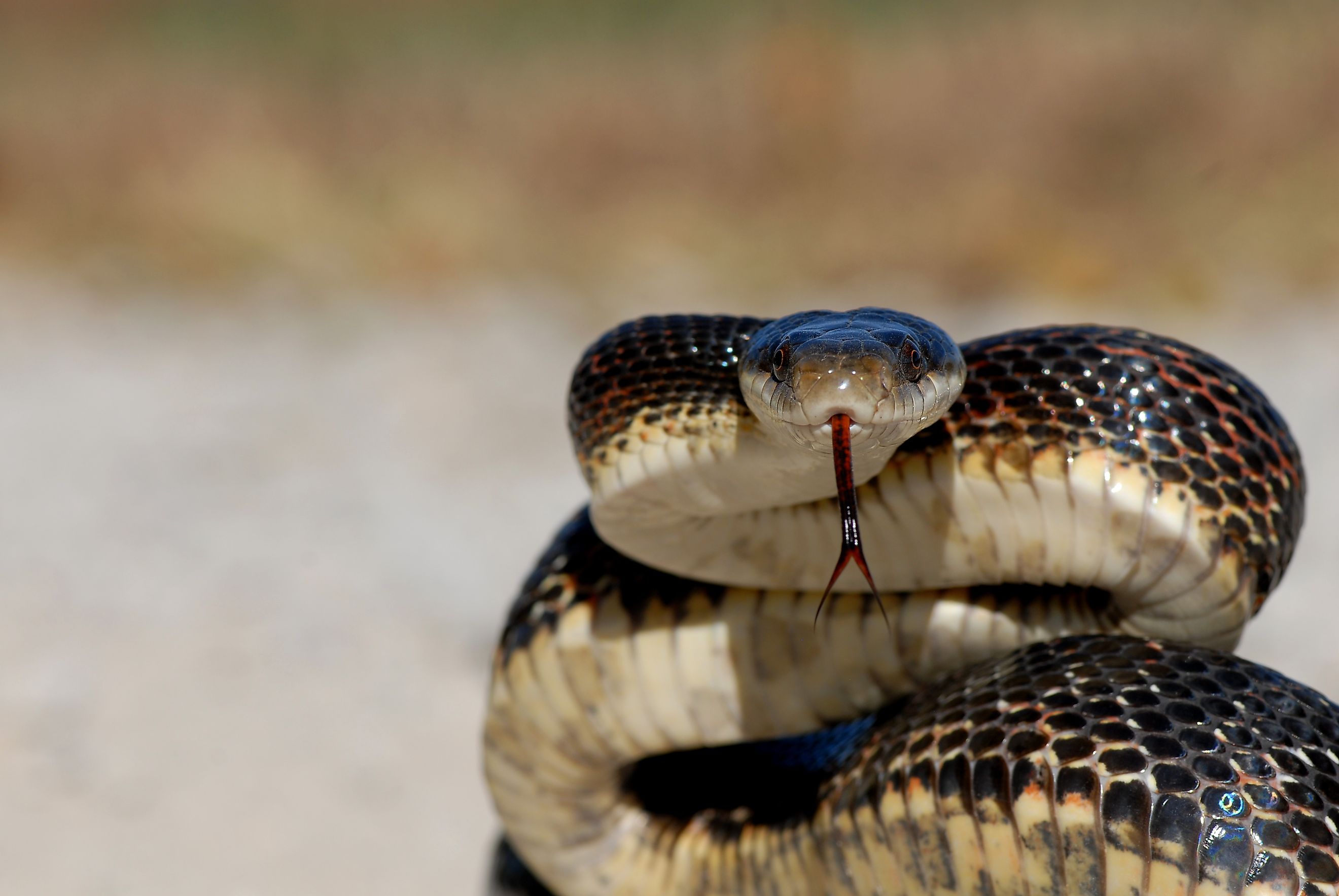
Lake of the Ozarks, named for its long serpentine shape, is another Missouri lake with a healthy snake population. Common species in and around the water include the common watersnake, the western ratsnake, the speckled kingsnake (Lampropeltis holbrooki), and Dekay's brownsnake. The western ratsnake is worth knowing on sight. Adults run between 3 feet 6 inches and 6 feet (106.5 cm and 183 cm), with glossy black or gray coloration. Despite its size, it is not an aquatic snake; it is primarily a ground and tree species, and an excellent climber, so scan the branches along the shoreline as well as the bank. It swims perfectly well when it needs to, but you are more likely to find one draped in a tree than cruising the shallows. The eastern copperhead also turns up here, which is the practical reason to leave every snake alone rather than trying to sort the harmless from the rest.
Beyond the snakes, Lake of the Ozarks is a major reservoir in the Missouri Ozarks. It covers 54,000 acres and has a shoreline of 1,150 miles, thanks to that winding shape. The lake features recreational areas including Lake of the Ozarks State Park and hosts events such as powerboat races and a polar bear plunge. It is a strong destination for outdoor enthusiasts who keep their distance from the wildlife.
Harry S. Truman Reservoir

Named for Harry S. Truman, the thirty-third President of the United States and a Missouri native, the Truman Reservoir is the largest body of water on this list. It covers 55,500 acres at normal pool and expands to roughly 200,000 acres at flood stage, which makes it central to flood control in the region. The lake is also important for power generation, wildlife management, and recreation. Visitors can choose between nearby landmarks like the Truman Visitor Center and Harry S. Truman State Park. The former has a 67-seat theatre with wildlife programming, while the latter offers 1,440 acres of boating, camping, swimming, and hiking.
While camping or swimming along the shore, stay alert, because this is one of Missouri's snakiest lakes. The most common sight is the brown form of the common watersnake, often seen moving through shallow water. The western ratsnake is prevalent as well, with plenty of shoreline trees suitable for climbing. A lesser-known resident is the prairie kingsnake (Lampropeltis calligaster), a medium-sized snake in tan, brownish gray, or greenish gray with dark blotches down the back. It lives in prairies, open woods, and rocky wooded hillsides, often sheltering under logs or debris, and it vibrates its tail against dry leaves to produce a convincing rattling sound when threatened. That bluff gets it killed regularly, since people mistake it for a copperhead. It is in fact harmless to humans and immune to the venom of copperheads, cottonmouths, and rattlesnakes, which it will eat given the chance.
Those three species are all non-venomous, but do not read that as an all-clear. The eastern copperhead occurs throughout this part of Missouri, and the timber rattlesnake (Crotalus horridus) is distributed statewide, so both can turn up along the reservoir.
Snakes and Missouri's Lakes: Be Aware, Not Alarmed
Snakes are a permanent part of the landscape at Missouri's lakes, and awareness keeps an outing safe rather than spoiling it. Each lake has its own mix, from the common watersnake at Table Rock to the western ratsnake at Lake of the Ozarks and the prairie kingsnake at Truman Reservoir. The single most useful thing to remember is that harmless species vastly outnumber venomous ones, and that most snakes reported as cottonmouths in Missouri are actually watersnakes, which are neither venomous nor aggressive. The true northern cottonmouth is confined to the southern Ozarks and the wetlands of the southeast. Give any snake space, leave it alone, and the encounter ends the way nearly all of them do, with the animal going one way and you going the other.