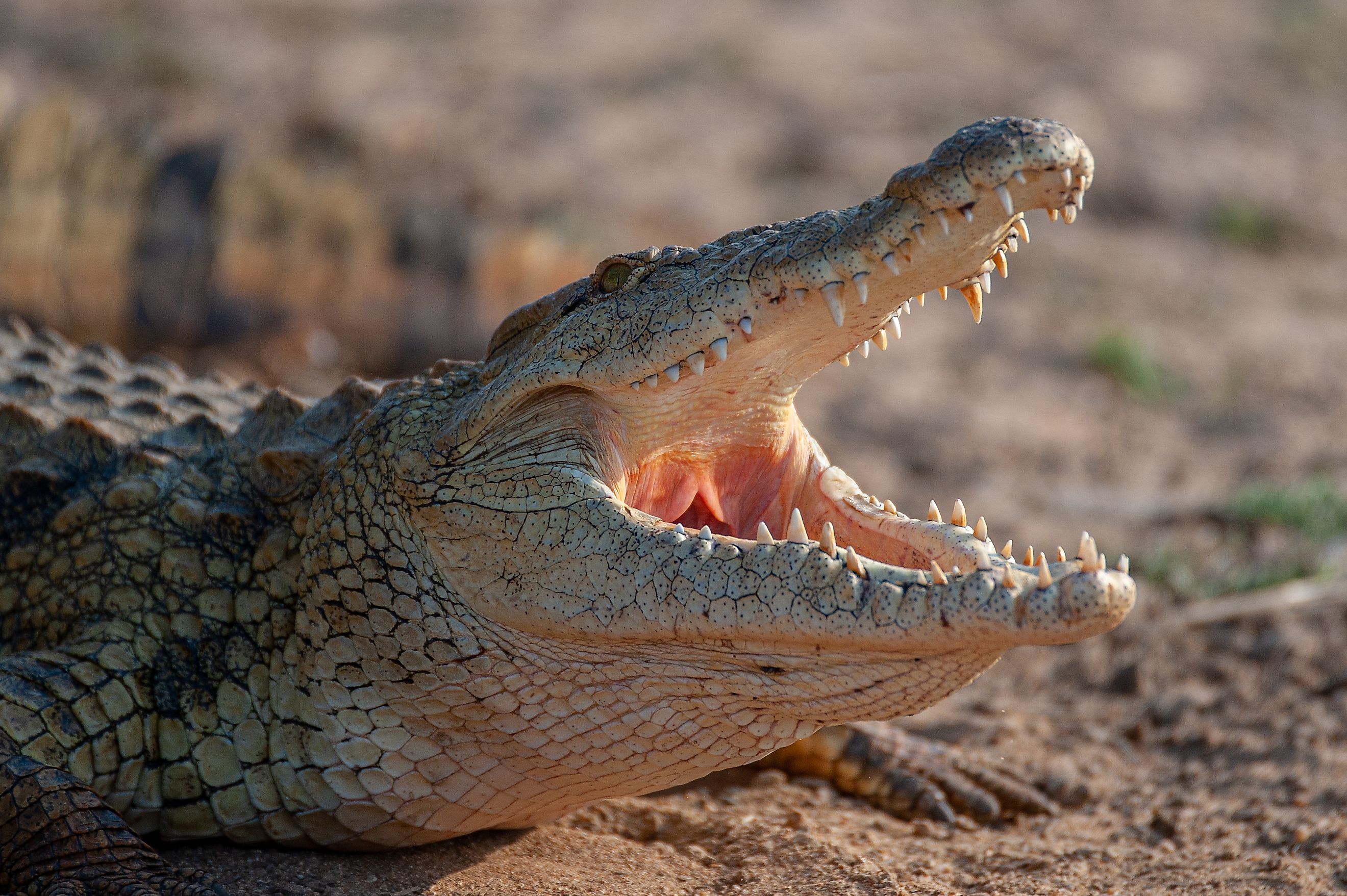
Nile Crocodile
The Nile crocodile is the largest crocodilian in Africa and the second-largest living reptile on Earth, trailing only the saltwater crocodile. It is a heavyweight ambush hunter that can lie motionless at the water's edge for hours, then launch itself with astonishing speed to seize prey as large as a zebra or a wildebeest. Few animals combine such patience, power, and reach. The species occurs in more than two dozen African countries, turning up in waters as different as the tributaries of the Nile, the wetlands of southern Africa, and the rivers of Madagascar.
Crocodylus niloticus is a freshwater specialist that also tolerates brackish water, and it sits at the very top of its food web. It has one of the most powerful bites of any animal, a body plan largely unchanged for tens of millions of years, and a surprisingly tender side as a parent. It is also one of the few predators for which humans regularly feature on the menu, which has made it both feared and, in some cultures, revered.
Taxonomic Classification

The Nile crocodile belongs to the order Crocodilia, the family Crocodylidae (the true crocodiles), and the genus Crocodylus. It was formally described by Austrian naturalist Josephus Nicolaus Laurenti in 1768, which makes it one of the earliest crocodilians to receive a scientific name. Its species epithet, niloticus, simply means "of the Nile," a nod to the river along which ancient observers first knew it.
For most of that history, scientists treated the Nile crocodile as a single wide-ranging species. That picture changed in 2011, when a genetic study led by Evon Hekkala, working with DNA from living animals and from 2,000-year-old mummified crocodiles, showed that the "Nile crocodile" was in fact two distinct species. The name Crocodylus niloticus now applies to the larger, more aggressive eastern and southern African populations, while western and central African animals were split off as the resurrected Crocodylus suchus, the West African or desert crocodile. The two look almost identical, yet they are not close kin. One of the great surprises of that work is that the Nile crocodile's nearest relatives are the crocodiles of the Americas, not the West African species living right next door. Anyone comparing the two in the field should treat the distinction with care, because the split has real consequences for conservation and trade.
Physical Description

An adult Nile crocodile is a formidable animal. Males typically measure 11.5 to 16.5 feet (3.5 to 5 m) and can weigh 500 to 1,650 pounds (225 to 750 kg), with exceptional old individuals approaching 20 feet (6 m) and passing 2,000 pounds (about 900 kg). Females run roughly 30 percent smaller. The species shows clear sexual dimorphism, with the largest males dominating the best territories.
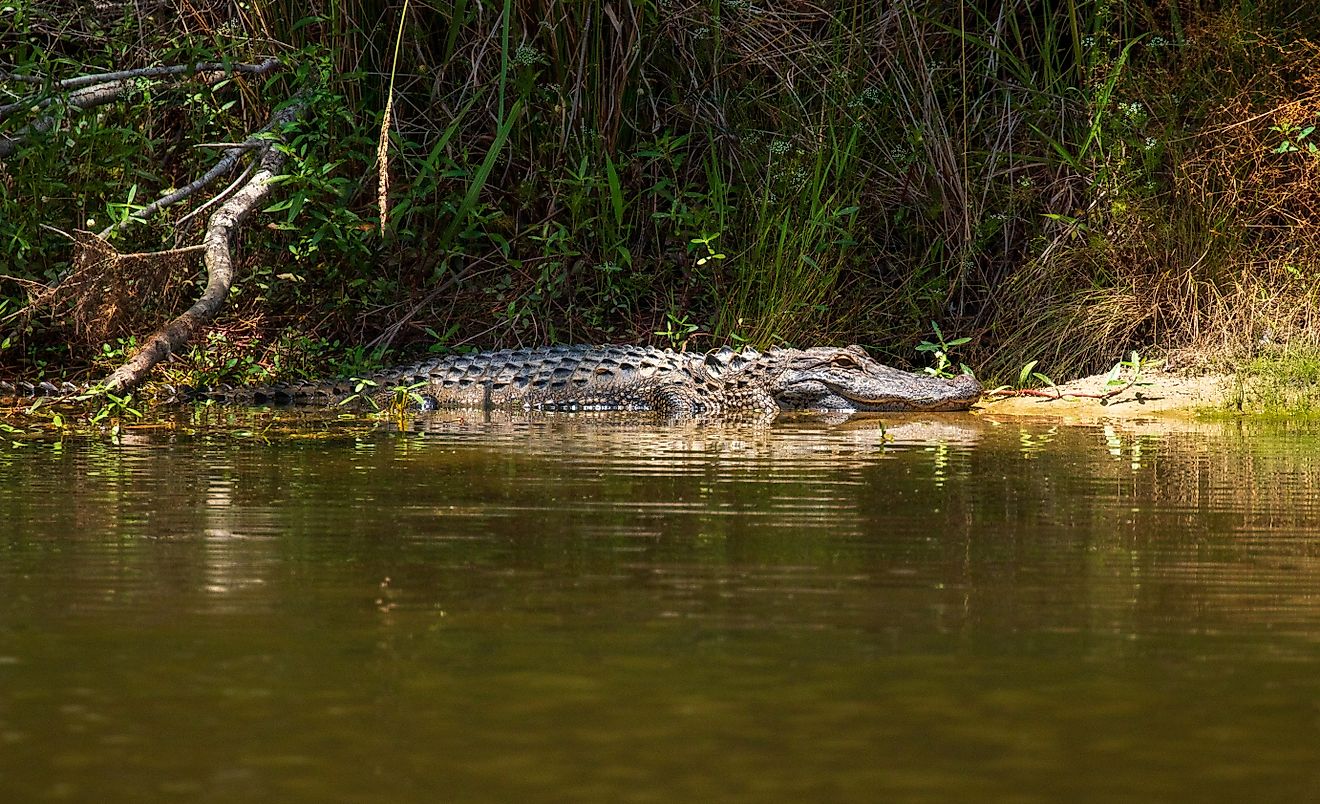
The body is armored with bony plates called osteoderms set into thick, scaled skin, dark bronze to olive-gray on top and paler underneath, with darker crossbands on the tail. That coloring works as camouflage in murky water. The eyes, ears, and nostrils sit high on the head, so a crocodile can float almost fully submerged, resembling a drifting log, while still watching, listening, and breathing. A muscular, laterally flattened tail drives it through the water at speed, and short but powerful legs carry it on land, where it can move faster than its bulk suggests over short distances.
The jaws are the headline feature. A Nile crocodile carries 64 to 68 conical teeth designed to grip rather than slice, and its bite is often cited at around 5,000 pounds per square inch (psi). That figure should be treated with caution, because it is an estimate rather than a peer-reviewed measurement. The strongest bite ever directly recorded in a living animal belongs to a saltwater crocodile at about 3,700 psi. What is beyond dispute is that crocodilian bite force scales almost perfectly with body size, so a very large Nile crocodile bites with tremendous crushing power. Curiously, the muscles that snap the jaws shut are ferociously strong while the muscles that open them are weak enough that a person can hold the snout closed by hand. A flap of tissue at the back of the throat, the palatal valve, seals the mouth from the airway, letting the animal open its jaws underwater without drowning. That single adaptation makes it a lethal hunter beneath the surface.
Range and Habitat

The Nile crocodile is widespread across sub-Saharan Africa. Its range stretches from the Nile River system in the northeast, south through the great lakes and river basins of East Africa, and on into southern Africa, reaching the Okavango Delta in Botswana and the rivers of South Africa and Eswatini. Isolated populations also persist on Madagascar, where some animals have adapted to living in caves. In total, the species occurs in roughly 26 countries, though its historic range once extended even farther north and east, as far as parts of the Middle East.
Within its range, it prefers freshwater habitats such as large rivers, lakes like Lake Victoria, freshwater swamps, and marshlands. It can also tolerate brackish estuaries, mangrove fringes, and coastal lagoons, and there are records of individuals venturing briefly into the sea. What it needs above all is water deep enough to submerge in, banks or sandbars for basking and nesting, and a steady supply of prey. Because those requirements overlap so heavily with human needs for water, crocodiles and people end up sharing many of the same rivers and lakeshores.
Diet

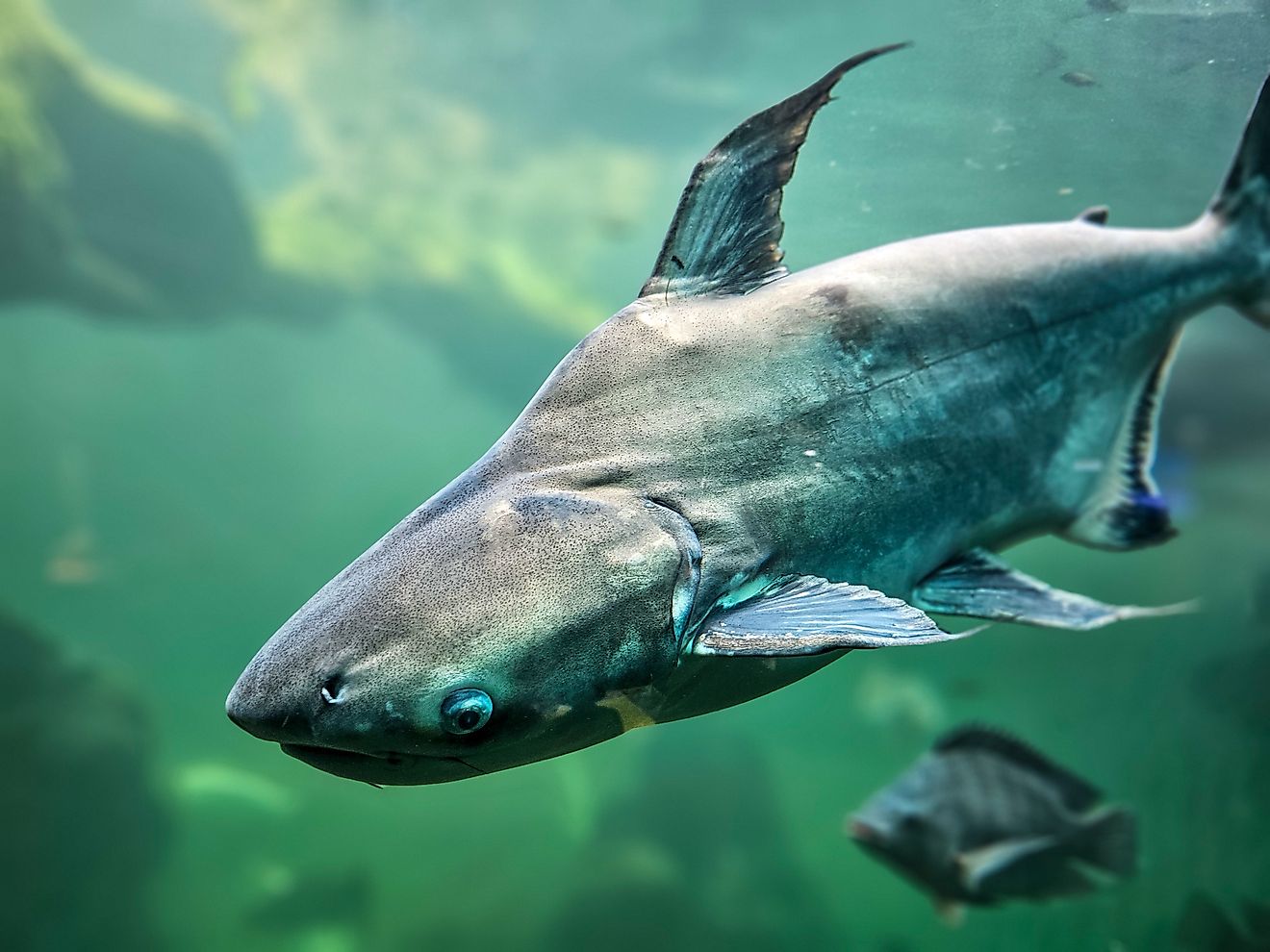
The Nile crocodile is a carnivore and an opportunist. Its diet shifts dramatically with age. Hatchlings and juveniles start on insects, frogs, crustaceans, and small fish, then graduate to larger fish, reptiles, and birds as they grow. In many populations, fish make up the bulk of an adult's intake, with catfish and other bottom feeders often accounting for the majority of what large crocodiles eat. That fish-heavy diet is easy to underestimate given the animal's fearsome reputation.
Larger crocodiles, though, are more than capable of taking big mammals. At a river crossing, they will ambush antelope, zebra, warthog, and wildebeest, and the biggest individuals will tackle buffalo and even young hippos, along with the occasional giraffe that lingers too long at the water. The hunting method is remarkably consistent. The crocodile approaches unseen, suddenly lunges forward, seizes its prey with a powerful bite, and pulls it into deeper water. To dismember large prey it performs the notorious "death roll," spinning its whole body to tear off manageable chunks, since its teeth cannot chew. A slow reptilian metabolism means a well-fed adult can go weeks or even months between meals, so patience, not frequency, defines its feeding.
Behavior and Reproduction

Because it is ectothermic, or cold-blooded, the Nile crocodile spends much of the day basking on sandbanks to raise its body temperature, then cools off by slipping into the water or by holding its mouth open in a wide gape that sheds heat through the mouth lining. Much of its hunting and socializing happens from late afternoon into the night. For all its solitary, log-like stillness, the species is more social than most reptiles. Crocodiles maintain a loose hierarchy in which the largest, oldest animals dominate the best basking sites and eat first at a kill, and they will tolerate one another and even share carcasses. They are also among the most vocal of reptiles, using bellows, hisses, and slaps on the water surface to communicate.
Nile crocodiles are unusually devoted parents by reptile standards. Mating takes place in the water during the dry season, and when nesting time arrives the female digs a hole up to about 20 inches (50 cm) deep in a sandy bank, often returning to the same site year after year. She lays a clutch of roughly 25 to 80 eggs, covers them with sand, and guards the nest closely for about 90 days, frequently going without food the entire time. As with many crocodilians, the sex of the hatchlings is set not by chromosomes but by the temperature inside the nest, with cooler and warmer extremes and intermediate temperatures producing different ratios of males and females. When the young are ready, they call from inside the eggs with high-pitched chirps, prompting the mother to dig them out and, if needed, gently roll an egg between tongue and palate to help a hatchling free. She then carries the tiny crocodiles to the water in her mouth and guards them for weeks. Even so, hatchlings are vulnerable, and predators such as monitor lizards, birds, and larger crocodiles take a heavy toll, so only a small fraction survive to adulthood. Those that do can live around 45 years in the wild, and considerably longer in captivity.
Importance to the World

As the apex predator of Africa's freshwater ecosystems, the Nile crocodile plays a role that ripples through its entire ecosystem. By preying on abundant fish such as catfish, it helps keep those populations in balance, which in turn benefits the smaller fish that many waterbirds depend on. Crocodiles also scavenge carrion, recycling nutrients that would otherwise be lost, and their movements between water and land help move energy through the system. Remove the top predator and these freshwater communities can shift in unexpected ways, which is one reason biologists pay close attention to the ecological role of crocodiles. The hippopotamus, another heavyweight of these rivers, shares the water with them, and the two shape the banks and shallows together.
The Nile crocodile matters to people as well. In ancient Egypt it was worshipped as the crocodile god Sobek, feared and honored in equal measure, and mummified crocodiles have turned up by the thousands in tombs and temple sites. In the modern era, the species has been one of the most commercially exploited crocodilians, farmed and ranched for its hide, which is prized in the leather trade, and it draws tourists to rivers and reserves across the continent. Managed well, that economic value can give local communities a direct stake in keeping wild populations healthy.
Threats and Conservation

On the global IUCN Red List, the Nile crocodile is currently assessed as Least Concern, reflecting a species that remains widespread and reasonably abundant across much of Africa. Recent figures put the population at roughly 50,000 to 70,000 mature individuals, with some broader estimates of the total population ranging into the hundreds of thousands. While the species holds steady across its range as a whole, conditions differ sharply by region. Some national populations have declined, and in parts of southern Africa, the species has been assessed as regionally vulnerable.
Like most large predators that share their habitat with people, it runs into a predictable set of pressures. Habitat loss and degradation from dams, agriculture, and the draining of wetlands reduce the rivers and marshes crocodiles need. Pollution from mining, industry, and growing towns fouls their water. Hunting and poaching for skins and meat continue in places, sometimes using cruel snares and nets, and animals drown in gill nets set for fish. Human-wildlife conflict is a constant, since a predator capable of killing people is rarely welcome near a village. Estimates commonly cite around 200 human deaths a year from Nile crocodiles, though hard data are scarce and the true figure is uncertain.
There is a real conservation win underpinning where the species stands today. Skin-trade hunting went unchecked through the middle of the 20th century and sent numbers tumbling, until CITES placed the Nile crocodile under strict international protection in 1973. Numbers rebounded across much of its territory, and today many populations fall under regulated sustainable-use schemes like ranching, which allow a capped harvest of eggs or animals under quota. By making the crocodile worth money, these arrangements give people a reason to keep it thriving in the wild.
Takeaway
The Nile crocodile is an ancient body plan and a slow metabolism paired with explosive speed and one of nature's most powerful bites, a fearsome killer that is also a careful, attentive parent. As the apex predator of African fresh water, it helps hold entire river and lake communities in balance, and its long entanglement with human culture reaches back to the temples of Sobek and continues in today's leather trade and ecotourism. For now the species is secure across most of its vast range, listed as Least Concern, but its future depends on protecting the wetlands it needs and managing the hard reality of living side by side with an animal this dangerous.
Fun Facts

- Its name means "of the Nile." The epithet niloticus ties the species to the river where ancient observers first documented it, even though it lives far beyond the Nile today.
- Temperature decides sex. Nile crocodiles have no sex chromosomes. Whether an egg becomes male or female depends on the temperature inside the nest as it incubates.
- They can bite underwater without drowning. A palatal valve at the back of the throat seals off the airway, so the jaws can open and clamp shut beneath the surface.
- Fierce predators, gentle parents. Females guard the nest for about three months and carry their newly hatched young to the water in the same jaws that crush buffalo bone.
- Their closest relatives live in the Americas. Genetics show the Nile crocodile is more closely related to the crocodiles of the New World than to the West African crocodile it was long confused with.
- They swallow stones. Nile crocodiles ingest small stones, called gastroliths, which may help with ballast and digestion.
Quick Facts
- Scientific name: Crocodylus niloticus (Laurenti, 1768)
- Family and order: Crocodylidae, Crocodilia
- IUCN status: Least Concern (population trend stable)
- Length: Males typically 11.5 to 16.5 feet (3.5 to 5 m); exceptional individuals near 20 feet (6 m)
- Weight: About 500 to 1,650 pounds (225 to 750 kg); large males can exceed 2,000 pounds (900+ kg)
- Lifespan: Around 45 years in the wild; longer in captivity
- Diet: Carnivore and apex predator (fish, birds, reptiles, mammals)
- Range: Sub-Saharan Africa and Madagascar, roughly 26 countries