Neotropical Rattlesnake
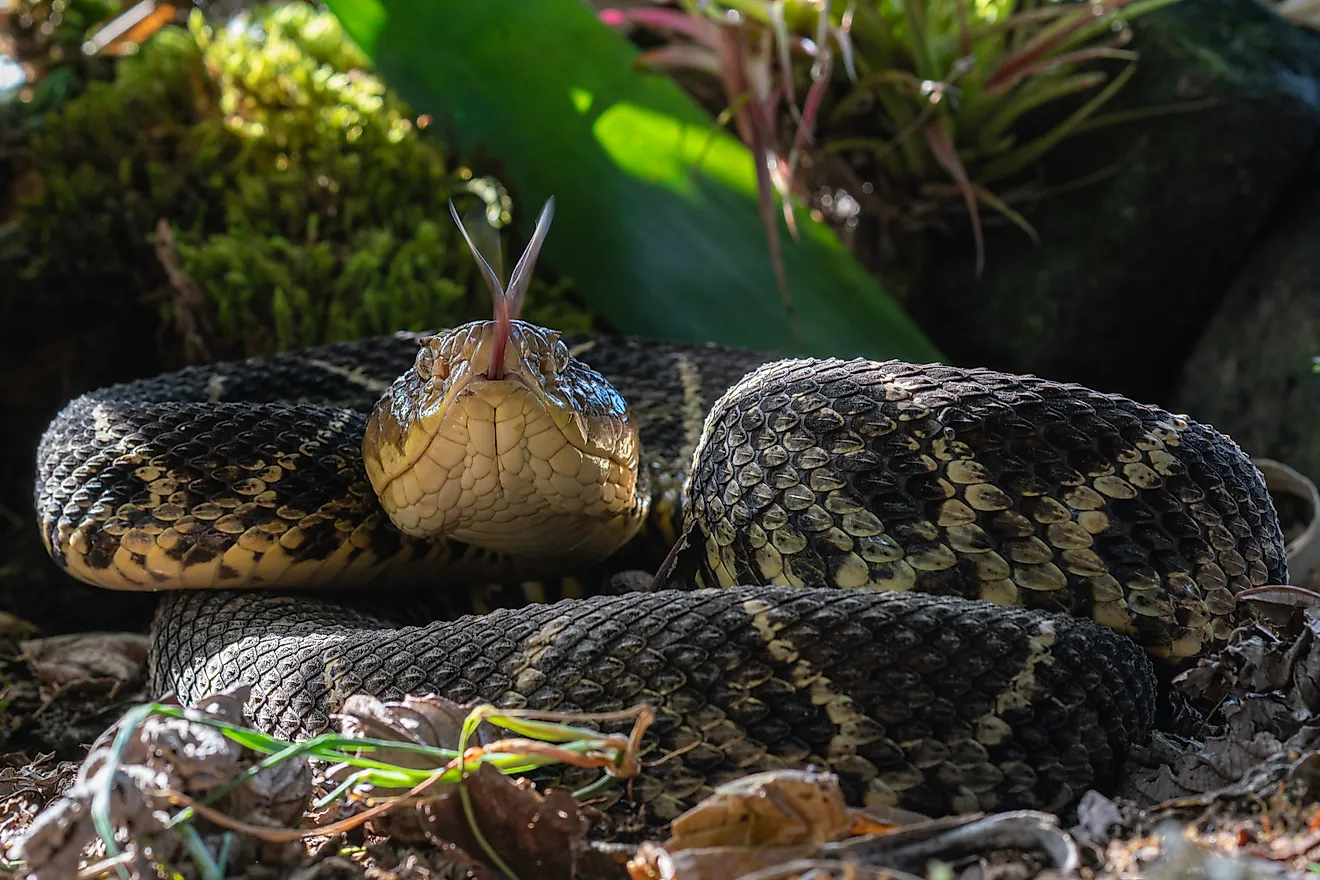
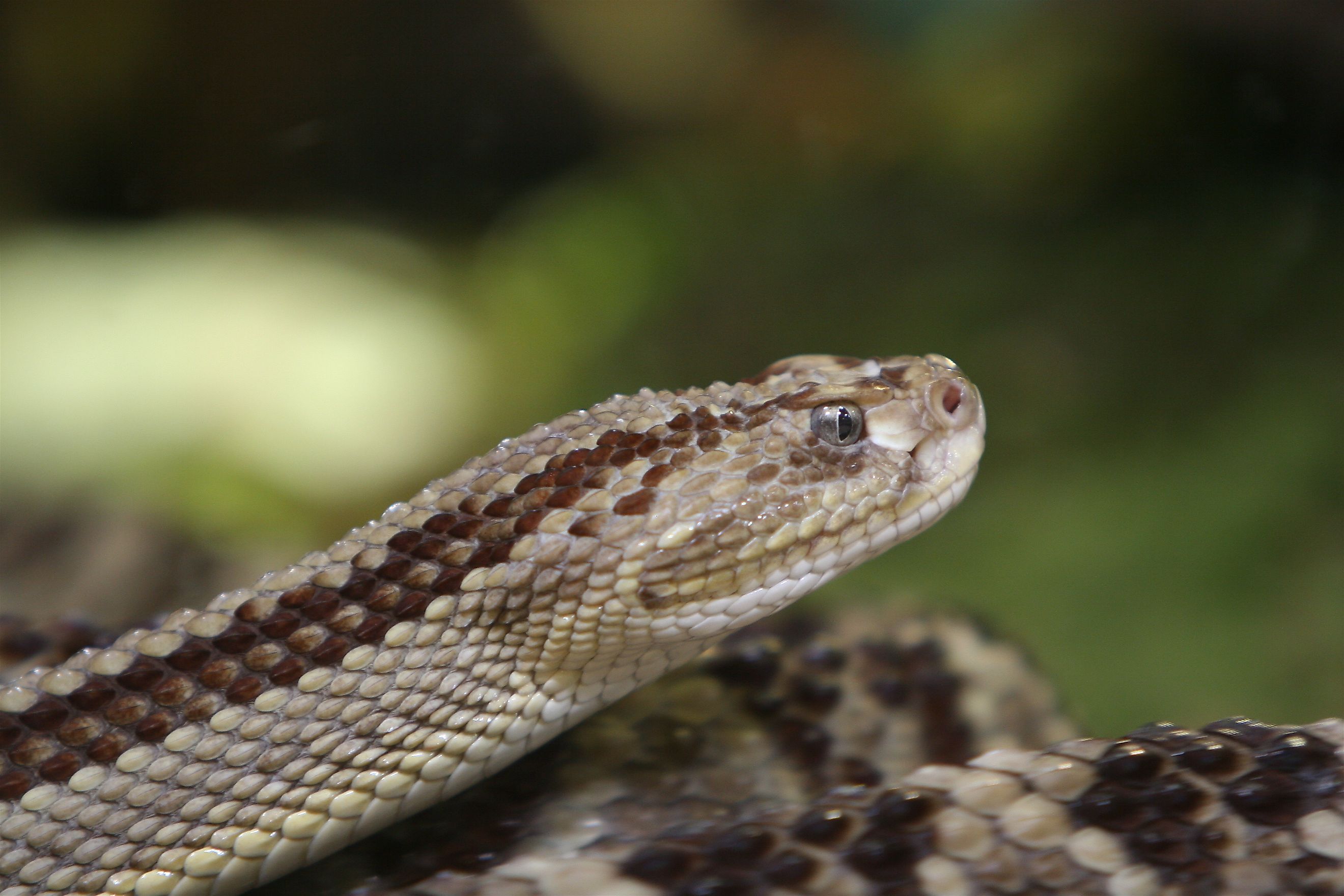
The Neotropical rattlesnake is one of the most formidable rattlesnakes in the Americas. It has highly potent venom and occupies a broader range across South America than any other living rattlesnake. Its dry, buzzing rattle, tan body marked with dark diamonds, and two dark stripes along the back of its neck make it a distinctive and easily recognized reptile.
The Neotropical rattlesnake, known scientifically as Crotalus durissus, is a heavy-bodied venomous pit viper in the family Viperidae. The common name is sometimes stretched to cover a wider group of closely related rattlesnakes in Mexico and Central America, but it applies most precisely to the South American species, also called the South American rattlesnake or, in Portuguese and Spanish, the cascavel. It lives in the open, dry country of the continent rather than in dense rainforest, and across much of that range it is a leading cause of dangerous snakebite.
Taxonomic Classification

The Neotropical rattlesnake belongs to the kingdom Animalia, phylum Chordata, class Reptilia, and order Squamata, which holds the lizards and snakes. Within the snakes it sits in the family Viperidae and the subfamily Crotalinae, the pit vipers, a group defined by the heat-sensing pit organ set between each eye and nostril. Its genus, Crotalus, contains the true rattlesnakes, and its full scientific name is Crotalus durissus, first described by Carl Linnaeus in 1758.
Taxonomy within this group has shifted a great deal in recent decades as DNA studies reshaped older classifications. What was once treated as a single wide-ranging species covering much of the Americas, its range reaching Mexico in the north and Argentina in the south, has been divided. The Mexican and Central American populations were reassigned to separate species such as Crotalus simus, Crotalus culminatus, Crotalus tzabcan, and Crotalus totonacus, leaving Crotalus durissus as the South American member of the complex. Roughly seven subspecies are currently recognized, the best known being the widespread Crotalus durissus terrificus of Brazil, Argentina, and Paraguay. Crotalus durissus remains the most widely distributed species in its genus.
Physical Description

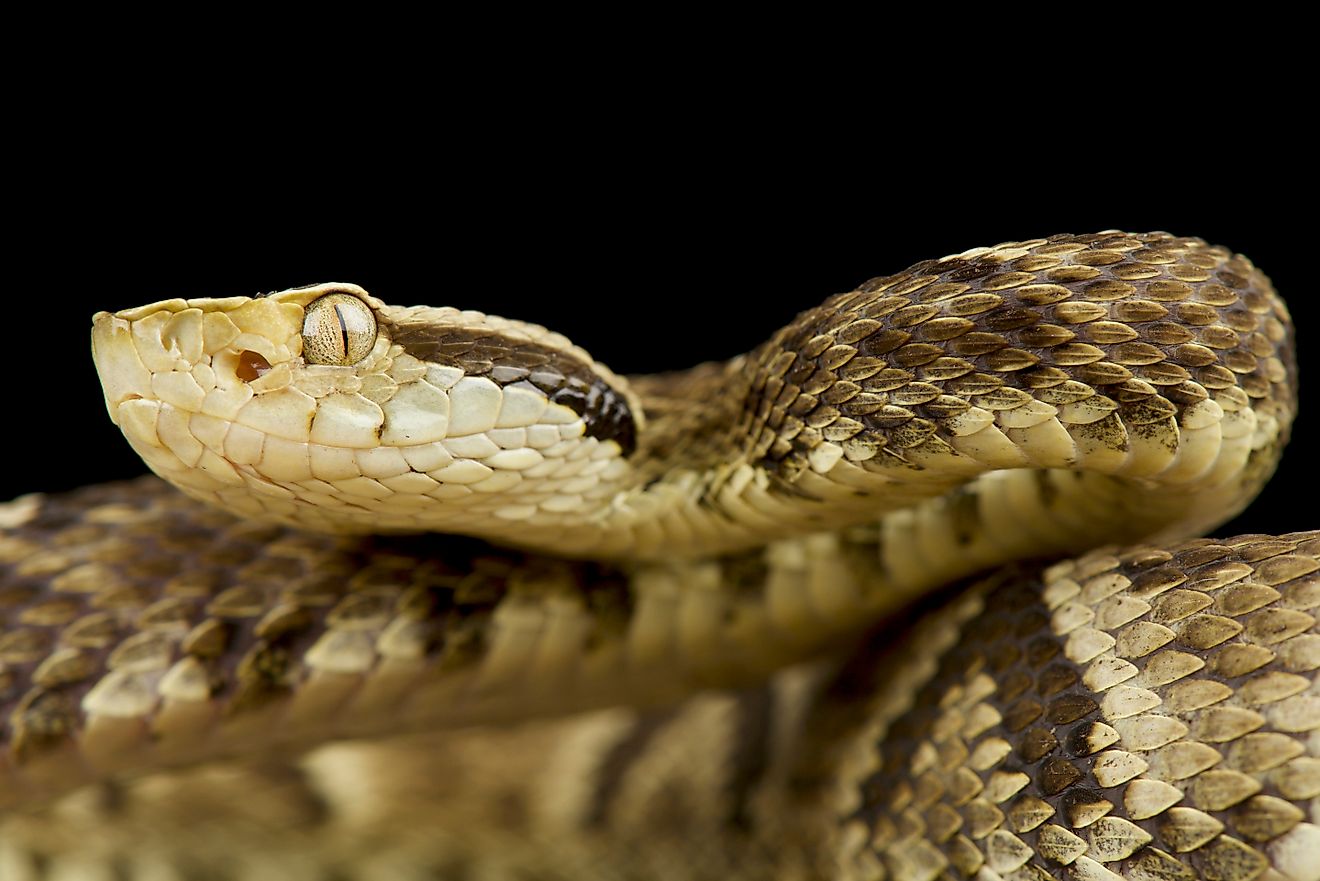
This is a stout, muscular snake. Adults commonly measure between 3 and 5 feet (about 1 to 1.5 m), and large individuals of the southern subspecies can approach 6 feet (1.8 m). The body is thick relative to its length, tapering to a tail tipped by the segmented keratin rattle that gives the group its name.
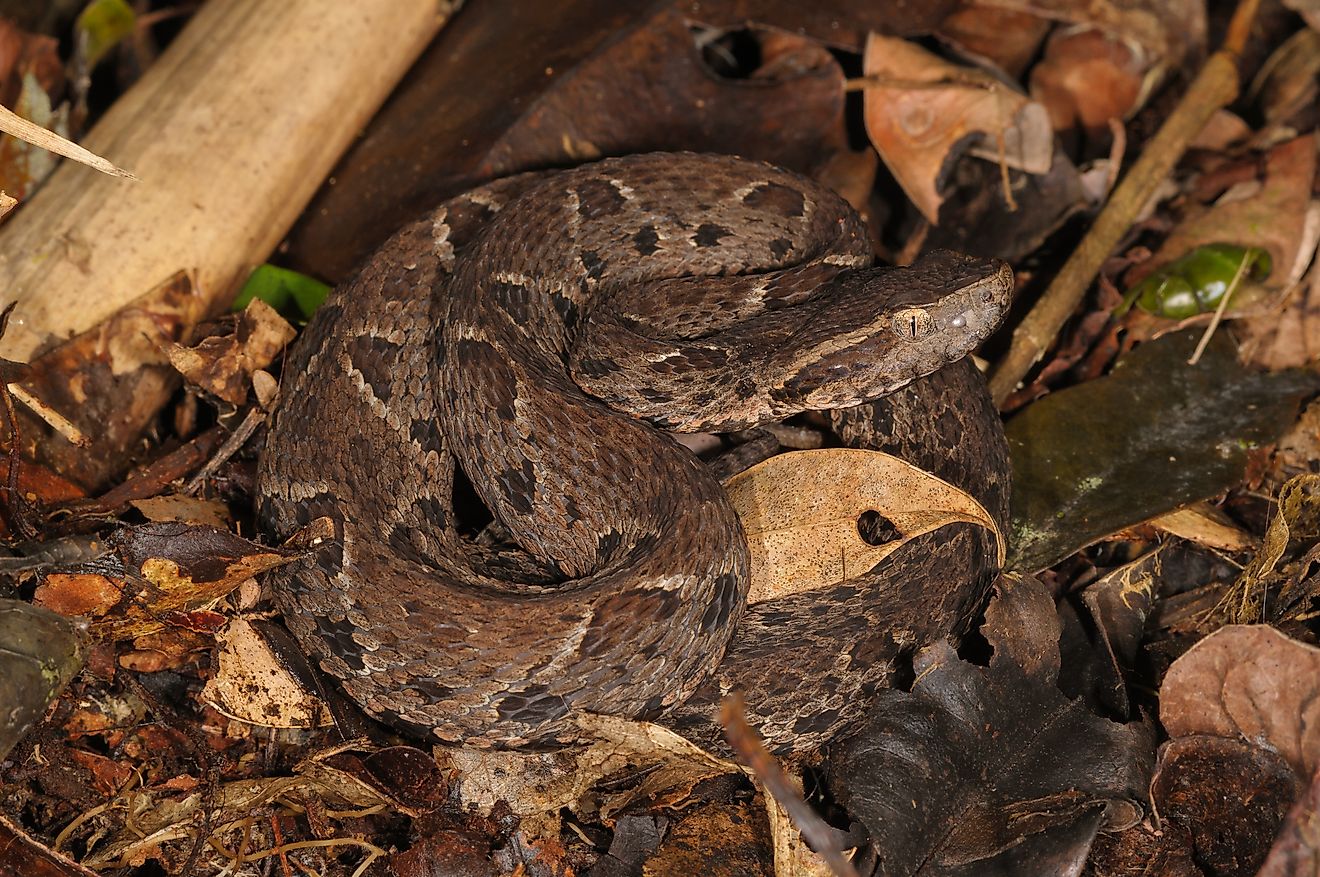
Coloration runs through shades of brown, tan, olive, and gray, patterned with a row of darker diamond or rhomboid blotches down the back. The single most useful field mark is a pair of dark longitudinal stripes that begin behind the head and run down the neck, a feature shared by few other South American snakes. The head is broad and triangular, wider than the neck, and houses the folding, hollow fangs that deliver venom. Like all pit vipers, the animal has vertical pupils and the deep facial pits it uses to detect the body heat of prey. Scales are strongly keeled, giving the snake a rough, matte texture rather than a glossy one. Males tend to grow slightly larger than females.
Range and Habitat

The Neotropical rattlesnake is spread across much of South America, though its distribution is patchy rather than continuous. It occurs in Brazil, Argentina, Paraguay, Uruguay, Bolivia, Colombia, Venezuela, the Guianas, and the extreme eastern edge of Peru. Its stronghold is the belt of dry, open landscapes that cuts diagonally across the continent.
Unlike many tropical snakes, it avoids closed rainforest. It favors savanna, the Brazilian cerrado, the thorny caatinga scrub of the northeast, dry grassland, and rocky open ground. This preference for open country has had an unusual consequence. As forests have been cleared for pasture and agriculture since the middle of the twentieth century, new open habitat has appeared, and the snake has expanded into areas that were once unsuitable, including parts of the Amazon arc of deforestation and the Argentine Chaco. For a venomous animal of real medical importance, that spread into newly settled farmland has become a public health concern.
Diet

The Neotropical rattlesnake is an ambush hunter that feeds mainly on small mammals. Rodents make up the bulk of its diet, and it also takes marsupials, birds, lizards, and, less often, amphibians. Abundant rodents in savanna and scrub habitats make this prey base reliable across most of its range.
Rather than chase its food, the snake relies on stealth. It coils in cover and waits, using its heat-sensing pits and tongue to locate warm-blooded animals moving nearby. When a target comes within reach it strikes, injects venom, and then usually releases the prey, tracking it by scent until the venom takes effect. The meal is swallowed whole, head first, and digestion can occupy the snake for days. Because a single large kill can sustain it for a long stretch, an adult may go weeks between meals.
Behavior

These snakes are largely solitary and spend much of their time hidden and motionless. Activity shifts with temperature. In cooler conditions they may bask and hunt by day, while in the heat of the tropical dry season they become more active at dusk and after dark. This flexible daily rhythm lets them stay within a workable temperature range year round.
The rattle is a warning device, not a weapon. When threatened, the snake raises and vibrates its tail, producing the buzzing sound that gives fair notice before it strikes. It would rather warn and retreat than bite, and most bites to humans happen when the animal is stepped on, cornered, or handled. During the breeding season, rival males perform a ritual contest sometimes called the combat dance, rearing up and wrestling to push each other down without biting, with the winner gaining access to nearby females.
Reproduction

Like most rattlesnakes, the Neotropical rattlesnake is viviparous, meaning it gives birth to live young rather than laying eggs. The developing embryos are nourished inside the female, and the timing of the cycle tracks the seasons, with mating in many populations falling in the southern autumn months of April and May.
After a gestation period spanning several months, the female bears a litter of live young. Newborns arrive fully formed, equipped with functional fangs and venom, and receive no parental care beyond birth. Each is born with a single small rattle segment, called a button, at the tip of the tail. From that first day the young snake is on its own, able to hunt small prey and defend itself. Reaching breeding size takes a few years, and wild individuals can live well over a decade, with reports of captive animals surviving roughly 20 years.
Venom and Medical Importance

The venom of the Neotropical rattlesnake sets it apart from most other vipers and explains much of its reputation. It is dominated by crotoxin, a neurotoxic complex built from two joined protein subunits that becomes far more lethal when the parts combine. Some populations also carry crotamine, a toxin that damages muscle tissue.
The medical picture of a serious bite is unusual. Where the venom of a lancehead (genus Bothrops) tends to destroy tissue around the wound, a Neotropical rattlesnake bite often causes little swelling or local damage while attacking the body from within. Effects can include drooping eyelids and a slack, mask-like face, muscle breakdown, disrupted blood clotting, and acute kidney injury, any of which can be dangerous without treatment. Effective antivenom exists, and institutions such as the Instituto Butantan in Brazil have produced it for generations, but timely care remains essential. That same crotoxin has drawn intense scientific interest, and researchers continue to study it for possible uses in pain relief and cancer therapy.
Threats and Conservation

On the IUCN Red List, Crotalus durissus is assessed as Least Concern, reflecting its very wide distribution, large presumed population, and stable overall trend. In a period when many reptiles are declining, this snake is holding its ground and, in places, increasing. Its appetite for open habitat means that forest clearance has opened new territory for it rather than shrinking its range.
That does not make it free of pressure. Individual snakes are widely killed on sight out of fear, taken for the venom trade, and lost to vehicle strikes on the growing road network. Local populations can be thinned where persecution is heavy. At the species level, though, the Neotropical rattlesnake remains one of the more secure large venomous snakes in the Americas, and the greater concern for many public health workers is not its decline but its steady spread into farmland and settled country.
Takeaway
The Neotropical rattlesnake is one of the most dangerous snakes in South America and one of the most useful, a rodent controller that anchors dry-country food webs and a source of venom that has advanced medicine for more than a hundred years. Its wide range, its distinctive neck stripes and warning rattle, and its unusually systemic venom all set it apart from the other pit vipers of the region. While many reptiles face shrinking habitat and falling numbers, this snake is stable and even spreading, which shifts the real challenge from saving it toward helping people share the land with it safely. Understanding the animal, its warning behavior, and the treatment that a bite requires is the surest way to keep both the snake and its human neighbors out of harm's way.
Fun Facts

- The rattle is not an age counter. A new segment is added each time the snake sheds its skin, which can happen several times a year, so the number of rattle rings does not equal the snake's age.
- Newborns are ready to bite. Young are born live, fully venomous, and completely independent, hunting and defending themselves from their first day.
- Its bite hides in plain sight. Unlike many vipers, its venom often causes little swelling at the wound while doing serious damage to nerves, muscle, and the kidneys.
- Deforestation has helped it. Because it favors open ground, clearing of forest for pasture has expanded its range rather than reducing it.
- Its rattle records what it ate. Chemical signatures locked into the keratin rings preserve a record of the snake's dietary history.
- A poison with promise. Crotoxin, the main toxin in its venom, is being studied as a potential source of pain-relieving and anti-cancer compounds.
Quick Facts
- Common name: Neotropical rattlesnake (South American rattlesnake, cascavel)
- Scientific name: Crotalus durissus
- Family: Viperidae (subfamily Crotalinae, the pit vipers)
- Order: Squamata
- IUCN status: Least Concern (population trend stable)
- Length: commonly 3 to 5 feet (1 to 1.5 m), occasionally near 6 feet (1.8 m)
- Weight: roughly 2 to 6.6 pounds (1 to 3 kg) in large adults
- Lifespan: over 10 years in the wild, up to about 20 in captivity
- Diet: carnivore, mainly rodents, plus marsupials, birds, and lizards
- Reproduction: viviparous, bearing live young
- Range: much of South America, including Brazil, Argentina, Paraguay, Bolivia, Colombia, Venezuela, and the Guianas
- Habitat: savanna, cerrado, caatinga scrub, and other dry, open country