Milk Snake
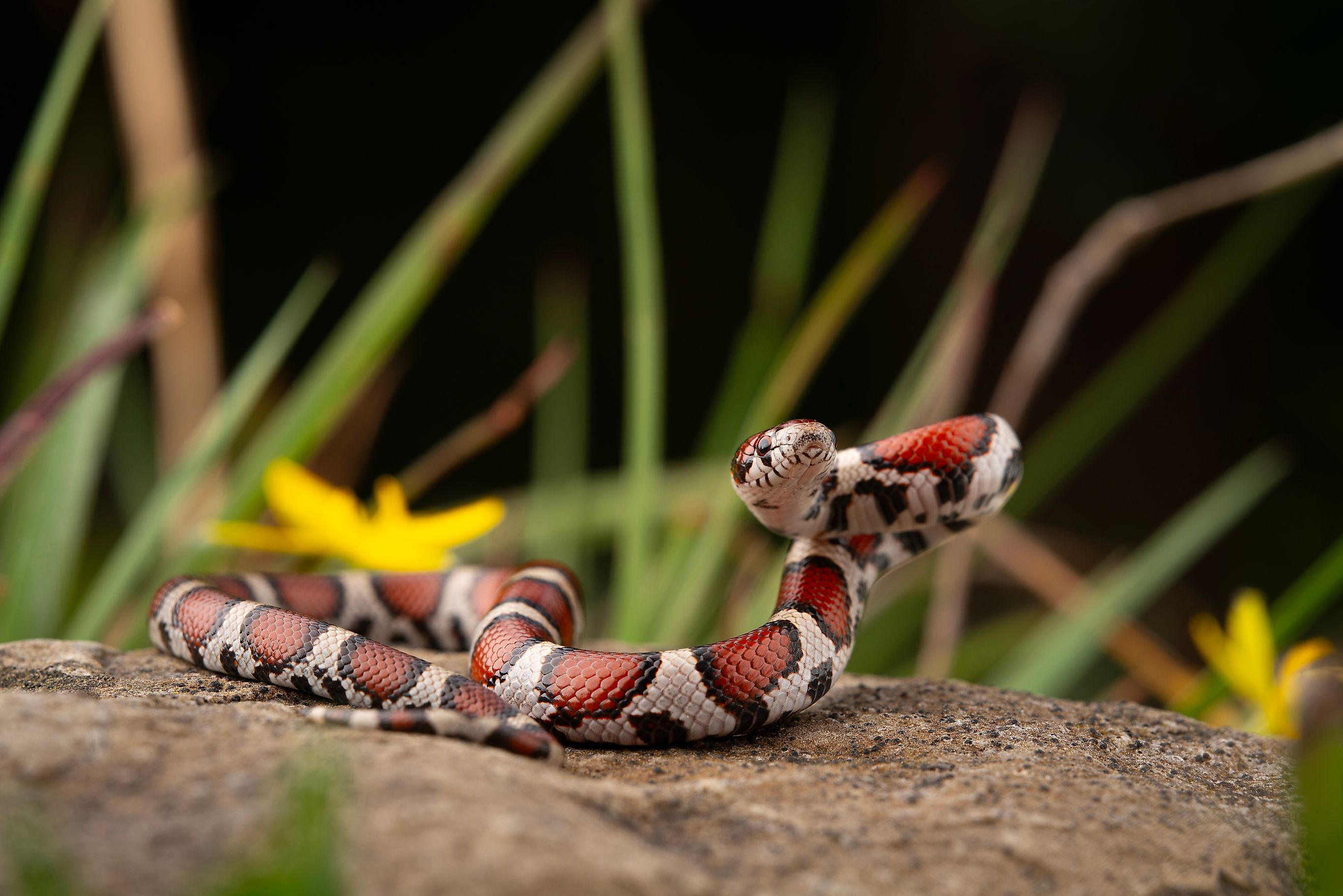
What's long, thin, and has red spots with black and white border stripes all over? It's not a rejected candy cane, but rather the shy and nonvenomous milk snake. With a lifespan of up to 20 years in the wild, these snakes can live much longer than the typical snake would. As a result, these common snakes have several interesting features well worth discussing. For instance, despite being nonvenomous, they ward off predators by pretending to be venomous snakes by "buzzing" their tails like a rattlesnake, and their color pattern resembles that of a coral snake. Read on to discover more fascinating facts about the milk snake, including the milky origins of its name.
Taxonomic Classification

Milk snakes belong to the kingsnake genus Lampropeltis in the family Colubridae. Historically, most milk snakes were classified as Lampropeltis triangulum, a single species containing roughly two dozen subspecies. Genetic research published in 2014 divided this complex into seven species, however, later studies have questioned parts of that division, particularly the distinction between L. triangulum and L. gentilis.
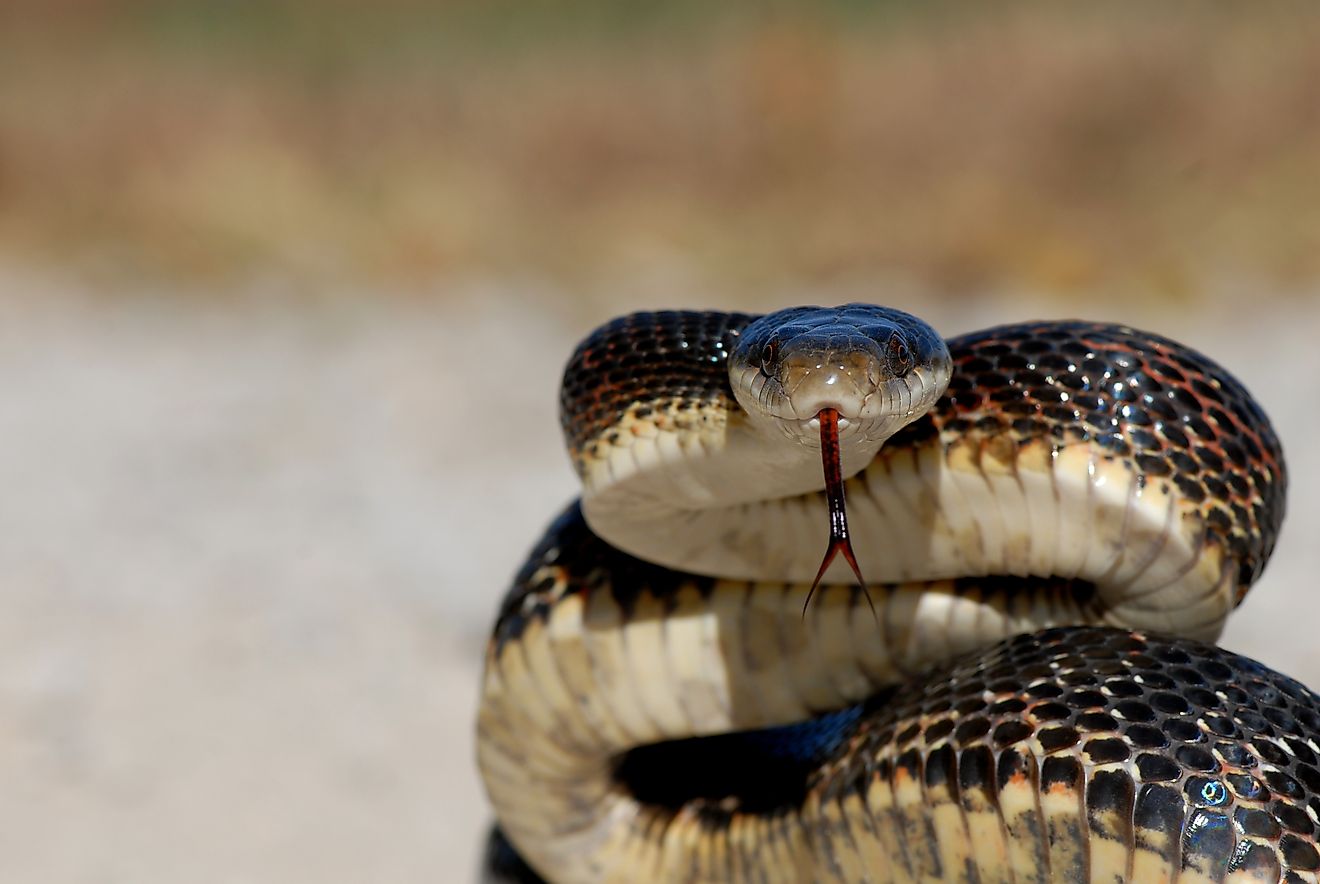
Lampropeltis triangulum triangulum, the Eastern milksnake, is the most well-known species in North America. Often mistaken for copperheads, and subsequently persecuted, these relatively docile critters gained their common name for their propensity for hanging out in old barns and agricultural facilities. As a result, a myth emerged that they came to feed on cow's milk, hence the name. In reality, they were just running pest control and enjoying the numerous crevices in which they could nest.
Range And Habitat

Taken as a group, milk snakes occur from southeastern Canada through much of the United States and Mexico, across Central America, and into Colombia and Ecuador. Under classifications that divide the historical milk snake complex into several species, the eastern milksnake occupies eastern and portions of central North America, while related milk snake species inhabit western North America, Mexico, Central America, and northern South America.
Because of the wide differences in climate and the region itself, the habitat of milk snakes is going to have some variances to it. That said, milk snakes prefer to live in forested regions or areas where there is open woodland. They can also be spotted in swamps, prairies, farmland, rocky slopes, semi-arid areas, and sand dunes and beaches. In some rare instances, milk snakes might also migrate, with some moving to higher and drier habitats for hibernation in the winter and moister areas during the summer. In northern parts of their range, some milk snakes make seasonal movements between summer habitat and winter hibernation sites. Roads and habitat fragmentation can make these movements more hazardous.
Diet

Having some milk snakes in your yard or by your cottage is a good thing because their main source for food is mice and other small rodents. That being said, milk snakes have a wider range of palates, with them also eating amphibians, worms, smaller snakes (including other milk snakes), small birds, and even some fish. Milk snakes are nocturnal creatures and are more active during the night when their preferred prey is also most active.
Physical Description

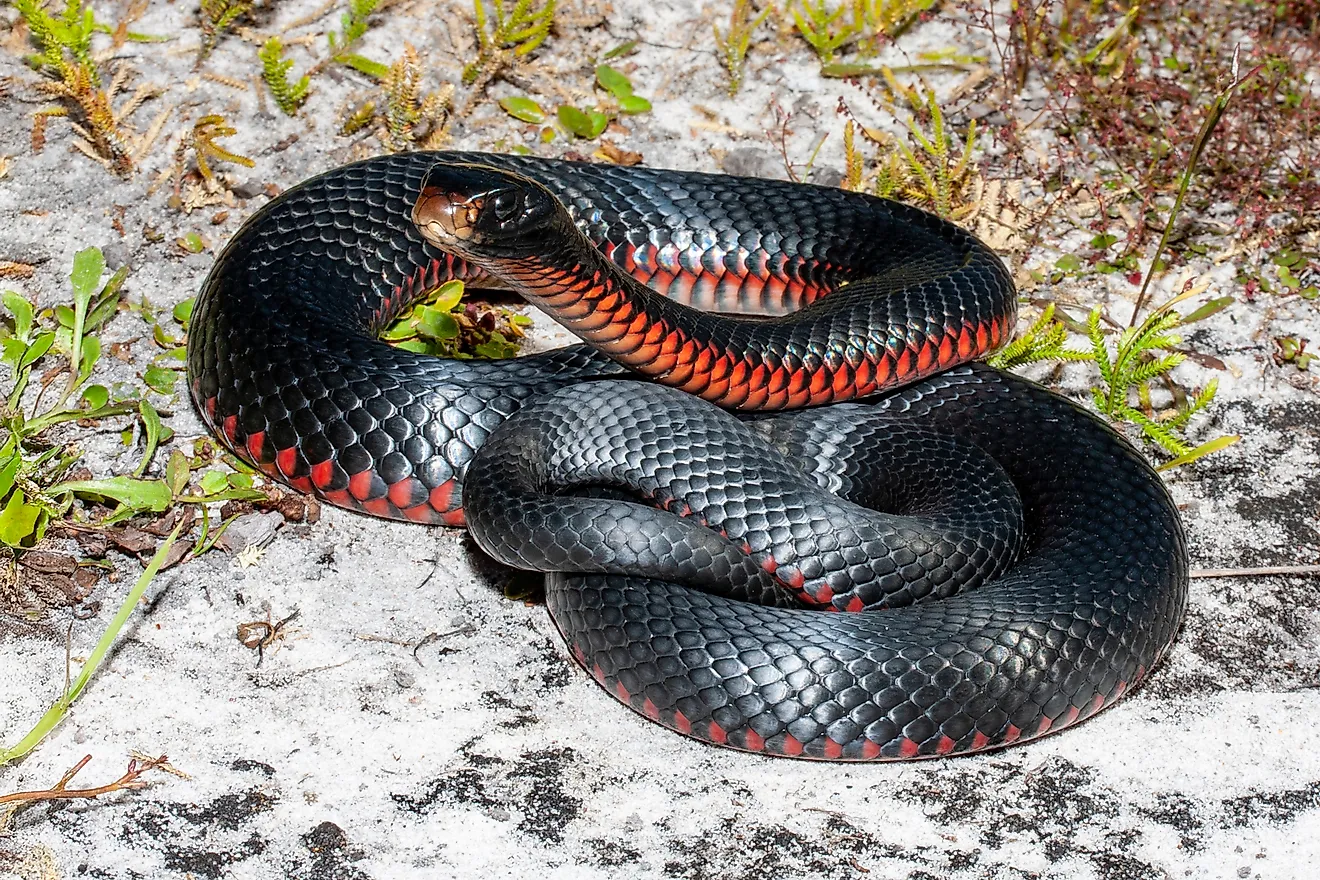
Milk snakes have smooth and shiny scales with alternating bands of different colors. These bands vary from red-black-yellow to white-black-red, though some milk snakes defy that logic and have red blotches instead of bands around their bodies.
Other brightly banded milk snakes resemble venomous coral snakes. This is generally interpreted as Batesian mimicry, in which a harmless species gains protection by resembling a dangerous one. However, not all milk snakes are banded. Eastern milksnakes commonly have reddish-brown, black-bordered blotches on a gray or tan background and may instead be mistaken for corn snakes or copperheads.
The familiar rhyme about red, yellow, and black bands (Red on yellow kills a fellow. Red on black, venom they lack.) should not be treated as a universal identification rule. It is especially unreliable outside the United States, where coral snakes and harmless mimics display a much wider range of patterns. Anyone uncertain about a snake’s identity should leave it alone rather than attempting to handle it.
Behavior

Milk snakes are mostly nocturnal creatures, especially during the summer months. Individual milksnakes may occupy home ranges of roughly 10 to 20 hectares, although recorded ranges vary by sex, location, and habitat.
But not only do they stick to that range, but they also prefer slithering through foliage and ground litter, preferring to stay as low to the ground as possible. Even with their scales, they can still manage to blend in with what's on the ground in most situations. Generally, the milk snake is shy and prefers to be secretive and remain hidden at all times, if possible. It's fair to say that in most circumstances, a milk snake is fairly docile.
In the event their safety is ever threatened, milk snakes will often vibrate or "buzz" their tail as if to rattle it to ward off predators. They'll also bite energetically if it comes to that; however, since they are nonvenomous, they're largely harmless. Their teeth are small and their tails lack a rattle.
Reproduction

Milk snakes are oviparous, and will generally lay about 10 eggs per clutch, though the numbers can vary by the region. The eggs are normally laid in rotting logs or under rocks.
Mating season generally starts in early May to late June and typically is among the milk snakes that are 3 to 4 years old, the age at which they reach sexual maturity. Furthermore, the eggs incubate for two months, hatching around August or September. Females may not reproduce every year, particularly near the northern edge of the range, although their reproductive frequency remains uncertain.
Ecological Importance And Relationship With Humans

Due to the milk snake's docile nature and lack of venom, it's fairly common practice to raise milk snakes as pets. But before you go outdoors and catch one in the wild, it's important to know that catching milk snakes in the wild can be potentially dangerous or illegal. They can be dangerous due to the fact that depending on where you live, they could be a nonvenomous milk snake or a genuine venomous one. Beyond that, states do have bans on raising wild animals in certain cases.
Captive-bred milk snakes are commonly sold through the pet trade. Milk snakes can live for more than 20 years, particularly under managed care, although dependable estimates of their average lifespan in the wild are scarce. Beyond their popularity as pets, they serve as a natural predator of mice, controlling rodent populations and serving as food sources to larger predators.
Threats
Even with milk snakes living for at least 12 years on average, the reason they are lower than the ones who are captive and sold as pets comes down to the various threats in the wild. For one, their predators include weasels, raccoons, coyotes, foxes, birds of prey, and even other snakes, all which hunt nocturnally on occasion.
Human activity presents some of the most serious local threats to milk snakes. Development and intensive agriculture can remove or fragment the forests, fields, rock outcrops, old buildings, and underground retreats they use for shelter, nesting, and hibernation. Road mortality is another concern because snakes may cross pavement while moving between habitats or may linger on warm road surfaces. Milk snakes are also sometimes deliberately killed after being mistaken for venomous species.