Marbled Polecat
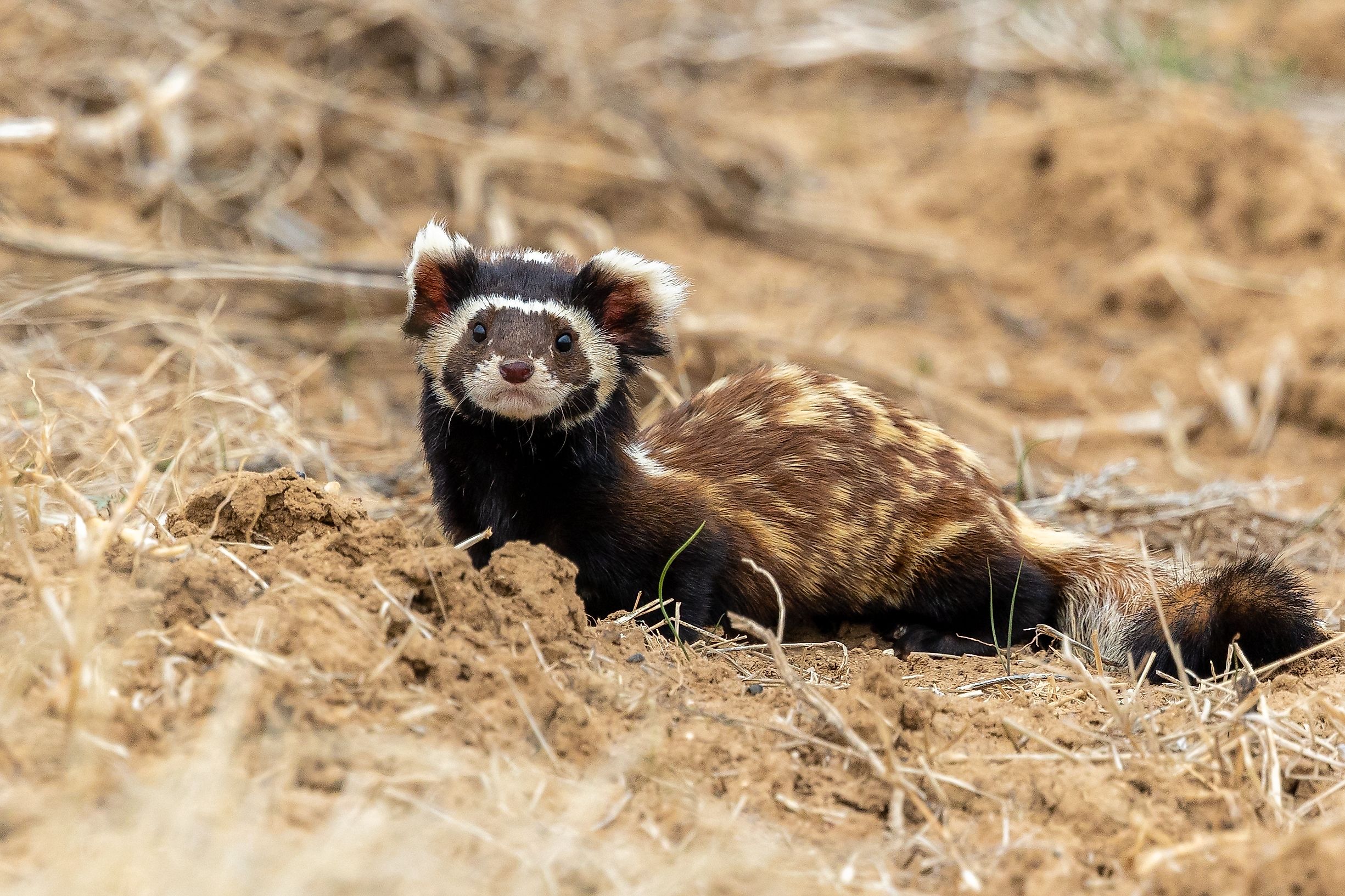
The marbled polecat is one of the most vividly patterned small carnivores in the world, wrapped in a mottled coat of black, cream, yellow, and rust that looks almost hand painted. About the size of a slim house cat, this member of the weasel family ranges across the dry steppes and semi deserts of the Balkans and southeastern Europe, the Middle East, Central Asia, and western China. Its bold markings are not for show alone. When cornered, it throws its whole body into a dramatic warning display that few predators care to test.
Known to science as Vormela peregusna, the marbled polecat is the only living species in its genus, a true one of a kind within the mustelid family. It is a creature of open, arid country, rarely seen even where it occurs, and poorly studied across much of its enormous range. For an animal spread over two continents, remarkably little is understood about how it lives.
What is clear is that the marbled polecat is a capable hunter, a determined burrower, and a species in slow retreat. Listed as Vulnerable on the IUCN Red List, it is losing ground as the grasslands and semi deserts it depends on are plowed, built over, and drained of the rodents that feed it.
Taxonomic Classification

The marbled polecat belongs to the family Mustelidae, the sprawling group that includes weasels, otters, badgers, and true polecats. Within that family it sits in the subfamily Ictonychinae alongside the African striped polecats and the grisons of the Americas. It is the sole member of the genus Vormela, which makes it what biologists call a monotypic genus. The German naturalist Johann Anton Güldenstädt first described the animal in 1770.
The scientific name has an interesting backstory of its own. Vormela comes from the German word Würmlein, meaning little worm, a nod to the animal's long, low, twisting body. The species name peregusna traces back to the Ukrainian word perehuznya, an old term for polecat. Researchers have proposed as many as six subspecies based on coat color and region, though genetic studies find surprisingly little variation across the whole range, which hints at a relatively recent expansion.
Physical Description

A marbled polecat is unmistakable up close. Its upperparts are a swirl of yellow, orange, brown, and black blotches, while its underbelly is dark. A white or cream band runs across the forehead, the ears are rounded and pale, and a black mask covers the eyes and muzzle. The tail is long and bushy, banded in dark and pale fur, and it ends in a dark tip. No other Eurasian carnivore wears quite this pattern.
The body itself is long and low to the ground, built for slipping through burrows and dense cover. Head and body together measure roughly 11 to 19 inches (29 to 48 cm), with the tail adding another 6 to 8 inches (15 to 20 cm). Adults weigh between about 10 and 25 ounces (295 to 715 g). Males are noticeably larger and heavier than females, a common pattern among mustelids.
The legs are short but powerful, and the front feet carry long, curved claws that reach about two thirds of an inch (16.7 mm). These claws are digging tools, used to excavate dens and to pull prey from underground tunnels. The jaws hold 34 sharp teeth suited to gripping and killing small animals. The animal's senses of smell and hearing are keen, an advantage for a hunter that works low to the ground in fading light.
Range and Habitat

The marbled polecat has one of the widest ranges of any small carnivore in Eurasia. It occurs across the Balkans and southeastern Europe, then eastward through Turkey, the Caucasus, and the Middle East, across Central Asia and Mongolia, and into northwestern and western China. Within the Middle East, some of the highest recorded densities come from Israel.
This is an animal of dry, open landscapes. It favors treeless steppe, semi desert, and arid grassland, and it also turns up in scrubland, foothills, and the margins of farm country. Marbled polecats have been found from sea level up to around 9,800 feet (3,000 m) in elevation. What ties these habitats together is open ground with soil soft enough for digging and a healthy supply of burrowing rodents. Where those grasslands have been converted to crops or lost to desertification, the polecat's range has quietly contracted, and several European populations have vanished or dwindled to scattered pockets.
Diet

The marbled polecat is an opportunistic carnivore that eats whatever small prey it can catch. Rodents form the core of its diet, especially ground dwelling species such as great gerbils, ground squirrels, voles, and house mice. It rounds this out with birds, lizards, and the occasional insect, and it is not above raiding a poultry yard or taking scraps of meat near human settlements.
Its hunting style is direct and efficient. A polecat typically approaches prey from the side, then bites small animals across the midsection and larger ones at the back of the neck. If a victim struggles hard, the polecat shifts its grip to the throat. Much of its food lives underground, so the animal spends a great deal of time excavating burrows or muscling into the tunnel systems of the rodents it hunts. In this way a single polecat can work through a steady number of pests over the course of a season.
Behavior

Marbled polecats are solitary animals that keep to themselves outside the breeding season. They are mainly crepuscular, most active in the early morning and around dusk, and they spend the hottest part of the day resting in a burrow or basking briefly in the sun. Each animal holds a home range of roughly 125 to 150 acres (0.5 to 0.6 sq km) and defends it against other polecats.
They dig their own dens but readily take over the burrows of the ground squirrels and gerbils they prey on, sometimes using these chambers to cache food. Marbled polecats rarely climb or jump, though they can rear up on their hind legs to look around. Their most memorable trait is the threat display. When alarmed, a polecat raises its fur, arches its back, throws its banded tail up over its body, bares its teeth, and hisses. If that fails, it can release a foul smelling spray from glands beneath the tail, a defense shared with skunks and other mustelids. The bold coat likely warns would be attackers that this small animal is not worth the trouble.
Reproduction

Breeding brings the otherwise solitary polecats together between March and June. What follows is one of the more unusual reproductive strategies in the mustelid family. After mating, the female's fertilized eggs do not implant right away. Through a process called delayed implantation, development pauses until conditions are right, which can stretch the total time between mating and birth across many months. The active gestation, once implantation begins, lasts only around 40 days.
Litters usually number four to eight young, born in a den in late winter or early spring. The cubs grow quickly. They begin nibbling solid food before their eyes even open at around 38 to 40 days, are weaned by roughly 50 to 54 days, and start to disperse near 61 to 68 days of age, though they are not yet full grown. Young females can breed in their first spring, while males reach maturity at about a year. Reliable lifespan data from the wild is scarce, but a captive marbled polecat lived nearly nine years.
Ecological and Human Importance

As a predator of rodents, the marbled polecat plays a useful role in the ecosystems it inhabits. By hunting gerbils, ground squirrels, voles, and mice, it helps keep populations of these fast breeding animals in check across the steppes and farmlands of its range. In some areas it has even been observed hunting near red foxes, sharing the same prey rich ground.
People have recognized this pest control value for a long time. In parts of Central Asia, marbled polecats were historically kept in shops and homes to deal with rodents, much as cats are used elsewhere. Their fur has been taken on rare occasions but carries little commercial value. On the negative side, a hungry polecat may occasionally take poultry, which can bring it into conflict with farmers. On balance, though, its appetite for rodents makes it far more helpful than harmful to the people who share its landscape.
Threats and Conservation

The marbled polecat is listed as Vulnerable on the IUCN Red List, with a population trend that is decreasing. The assessment reflects a wide but thinning distribution, as the animal grows rarer across much of the ground it once occupied. In Europe it has already disappeared from some countries and clings on in small, scattered numbers in others.
The pressures are familiar ones for a grassland specialist. The plowing of steppe and semi desert into cropland, the spread of desertification, and the general modification of natural habitat all strip away the open country the polecat needs. Poisoning is a double blow. Rodenticides can kill the polecat directly and also wipe out the rodents it depends on for food. Road traffic claims many animals, and hunting and trapping take a further toll. Ticks and fleas add to the burden on an already stressed species.
Because the marbled polecat is so poorly studied, conservationists often lack the basic population data needed to act. Protecting remaining tracts of natural steppe, curbing indiscriminate rodent poisoning, and filling the large gaps in research are the measures most often called for to keep this species from sliding further.
Takeaway
The marbled polecat is a small predator with a surprisingly strong presence. Its striking coat, dramatic threat display, and appetite for crop-damaging rodents make it a distinctive hunter of open landscapes. It has adapted to harsh conditions across two continents, yet its future is becoming increasingly uncertain. As Eurasia’s steppes and semi-deserts shrink, so does the habitat available to this elusive predator. Protecting the marbled polecat will require conserving the wild grasslands it depends on and giving greater attention to a species that has long been overlooked.
Fun Facts

- A one of a kind. The marbled polecat is the only living species in its genus, Vormela, with no close cousins that share the name.
- Its name means little worm. Vormela comes from the German Würmlein, a fitting label for such a long, low, wriggling body.
- A skunk style defense. When a warning display is not enough, the polecat can spray a foul smelling fluid from glands under its tail.
- A pause button on pregnancy. Thanks to delayed implantation, months can pass between mating and birth as the female waits for good conditions.
- Borrowed burrows. Rather than always digging, a polecat will happily move into the tunnels of the gerbils and ground squirrels it hunts.
- A living mouser. In parts of Central Asia, people once kept marbled polecats in shops and homes to control rats and mice.
Quick Facts
- Scientific name: Vormela peregusna
- Family: Mustelidae (subfamily Ictonychinae)
- Order: Carnivora
- IUCN status: Vulnerable, population decreasing
- Head and body length: about 11 to 19 inches (29 to 48 cm)
- Tail length: about 6 to 8 inches (15 to 20 cm)
- Weight: about 10 to 25 ounces (295 to 715 g)
- Lifespan: up to nearly 9 years (recorded in captivity)
- Diet: carnivore, mainly rodents, plus birds, lizards, and insects
- Range: the Balkans and southeastern Europe, the Middle East, Central Asia, and western China
- Habitat: dry steppe, semi desert, and arid grassland
- Litter size: 4 to 8 young