What Animals Live In The Gobi Desert?
The Gobi Desert stretches across southern Mongolia and northern China, a vast rain-shadow desert covering roughly 1.3 million square kilometers, which makes it the largest desert in Asia. Its Mongolian name simply means a waterless place, and the land mostly lives up to it: less than 5% is true sand dune, and the rest is bare rock, gravel plain, and stony steppe. This is a place of brutal extremes, where summer highs push past 40 degrees Celsius and winter lows plunge toward minus 40.
And yet it is far from lifeless. The Gobi supports a remarkable community of hardy animals, and a handful of them are found almost nowhere else on Earth. Some are world-famous survivors, like the snow leopard and the two-humped wild Bactrian camel. Others are almost mythically rare, like the takhi, the only horse never domesticated, and the mazaalai, or Gobi bear, the only bear on the planet adapted to true desert. This is fossil country, too: it was here, at the Flaming Cliffs, that Roy Chapman Andrews's expeditions dug up the first scientifically confirmed dinosaur eggs in 1923.
Surviving in the Gobi takes serious adaptation. Water can vanish for weeks, forage is thin, and the temperature can swing 70 degrees between a summer afternoon and a winter night. So the desert's animals hoard fat rather than water, wring moisture from the plants they eat, tolerate salt water no other creature can stomach, burrow underground to dodge the heat and cold, and travel long distances to chase scarce grazing. Many are pale and sandy for camouflage, and a good number move mostly at dawn, dusk, or after dark.
The result is one of Asia's most distinctive animal communities, a cast of specialists tuned to a place that would defeat most creatures in a day. Here are some of the animals that call the Gobi Desert home.
Jump To A Species
- Wild Bactrian Camel
- Wild Horses and Wild Asses
- Snow Leopard
- Gobi Bear
- Gray Wolf
- Marbled Polecat, Pallas's Cat, and Foxes
- Siberian Ibex and Argali
- Gazelles and Saiga
- Jerboa and Other Small Mammals
- Birds of the Gobi
- Reptiles
Wild Bactrian Camel

The Gobi's most famous resident is the wild Bactrian camel (Camelus ferus), the only truly wild camel left on Earth. Genetic studies show it split from the domestic Bactrian camel hundreds of thousands of years ago, well before either was tamed, and it can drink water saltier than the sea, a trick no domestic camel can manage. Fewer than 1,000 remain, roughly 600 in China and 450 in Mongolia, which makes it one of the most endangered large mammals in the world. The IUCN lists it as Critically Endangered, and hunting, wolf predation, and interbreeding with domestic herds continue to thin its numbers.
Wild Horses And Wild Asses

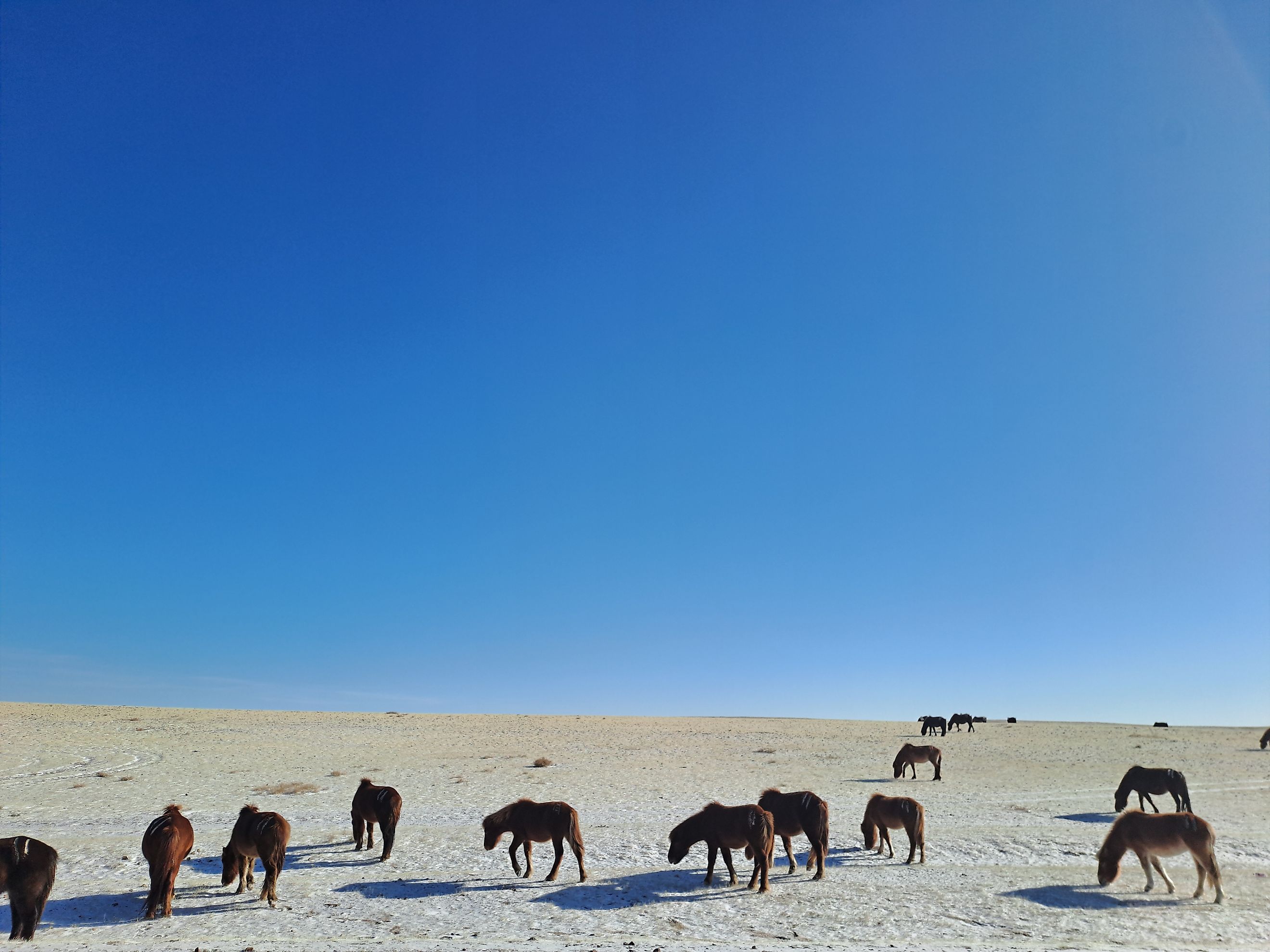
Mongolia's national animal, Przewalski's horse (Equus ferus przewalskii), or takhi, is the only horse on Earth that was never domesticated. Stocky and sandy-coated with a stiff dark mane, it went extinct in the wild by the 1960s and survived only in zoos until a reintroduction program began airlifting captive-born horses back to the Dzungarian Gobi in 1992. Today small, free-roaming herds again graze the Great Gobi B reserve, one of conservation's great comeback stories.
Sharing those same plains is the khulan, or Mongolian wild ass (Equus hemionus), a Near Threatened grazer that scrapes a living from the desert's thin vegetation. Mongolia holds the great majority of the world's khulan, around 23,000 mature animals, though poaching and competition with domestic livestock keep the population under pressure. Fast and wary, khulan travel long distances between grazing grounds and water.
Snow Leopard

The snow leopard (Panthera uncia) is the Gobi's apex predator, haunting the mountain ranges that rise from the desert such as the Tian Shan and the Gobi Altai. Superbly camouflaged and famously elusive, it hunts ibex and argali across near-vertical terrain; a male stretches about 1.3 meters in the body and weighs around 57 kilograms. Fewer than 500 are thought to survive in the Gobi's mountains. The species was reclassified as Vulnerable in 2017 after decades listed as Endangered, but it remains under pressure from poaching and conflict with herders who lose livestock to it.
Gobi Bear
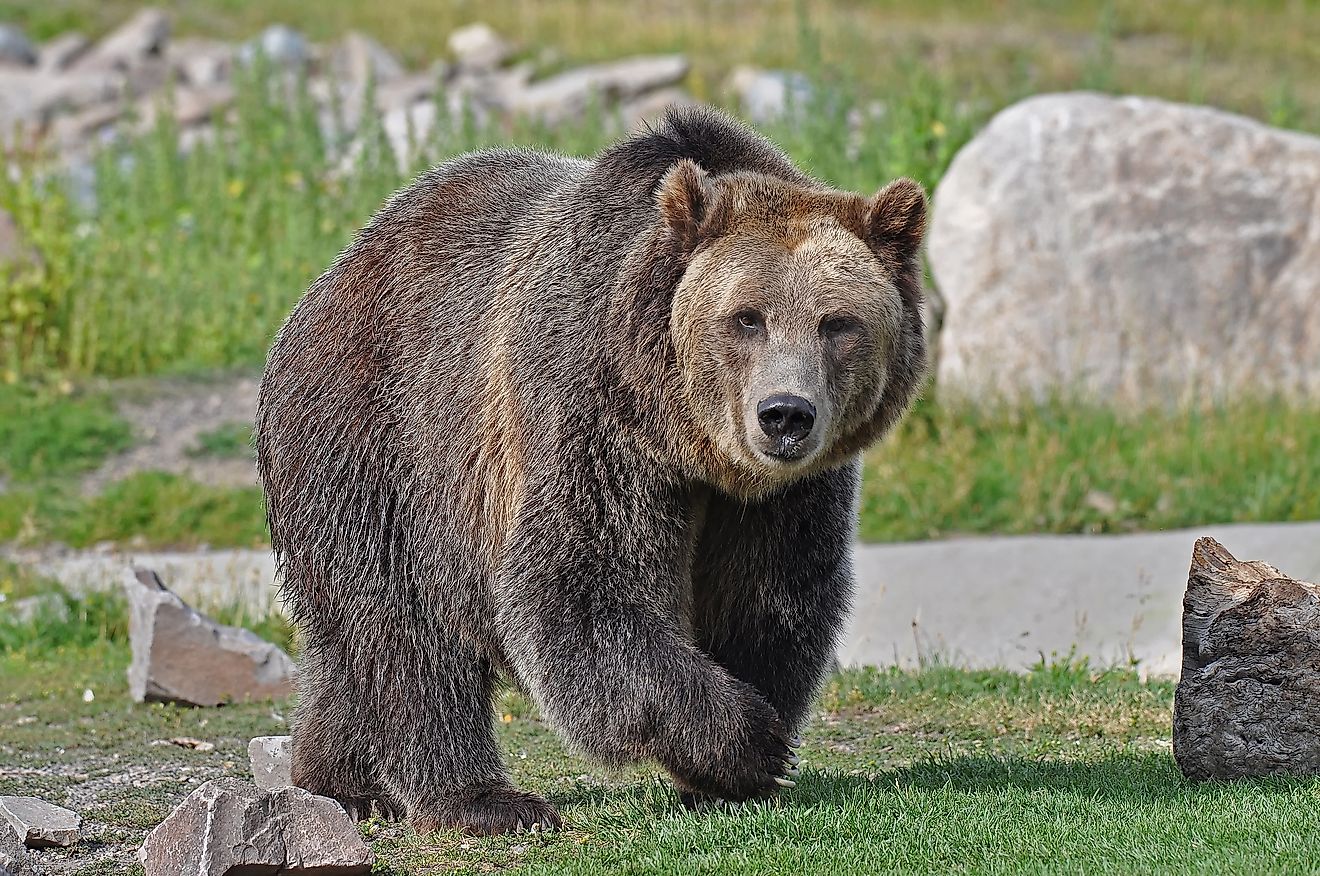
Rarer still is the Gobi bear (Ursus arctos gobiensis), called mazaalai in Mongolian, the only bear on Earth adapted to true desert. A small, pale brown subspecies of brown bear, it survives on roots, wild rhubarb, berries, rodents, and the occasional carcass across the driest reaches of Mongolia's Great Gobi reserve. It is almost certainly the rarest bear in the world: recent surveys count only around 31 individuals. Climate change, a shrinking food supply, and habitat fragmentation all threaten its survival, and Mongolia treats the mazaalai as a national symbol of conservation.
Gray Wolf

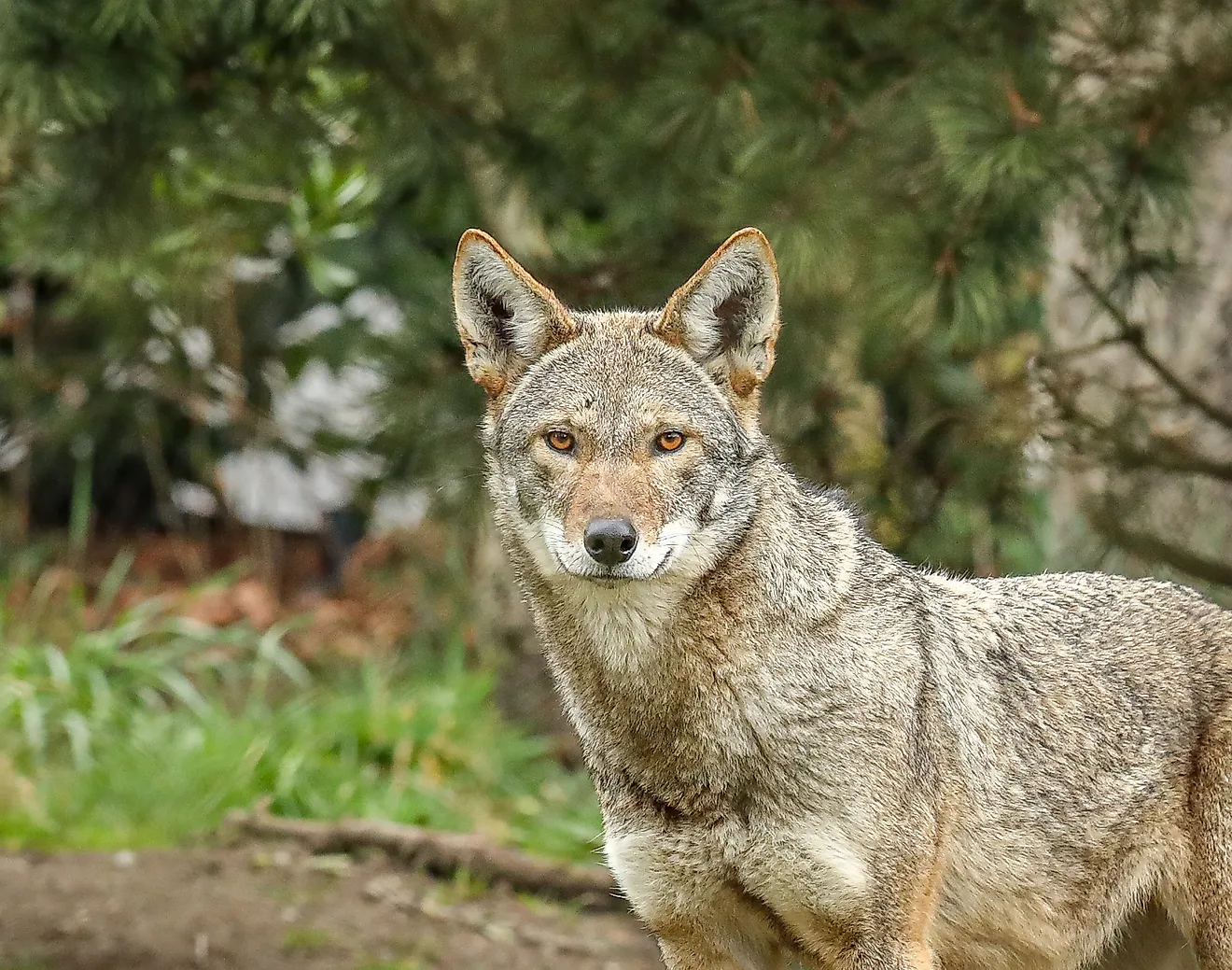
The gray wolf (Canis lupus) is the Gobi's most widespread big predator, ranging across the plains and mountains alike. Working in family packs, wolves hunt gazelles, ibex, marmots, and hares, and they are one of the few predators that will take on a young or weakened wild camel, which is part of why they weigh on that camel's fragile numbers. Highly adaptable and wide-ranging, the gray wolf endures across Mongolia despite a long history of persecution by herders protecting their flocks.
Marbled Polecat, Pallas's Cat, And Foxes

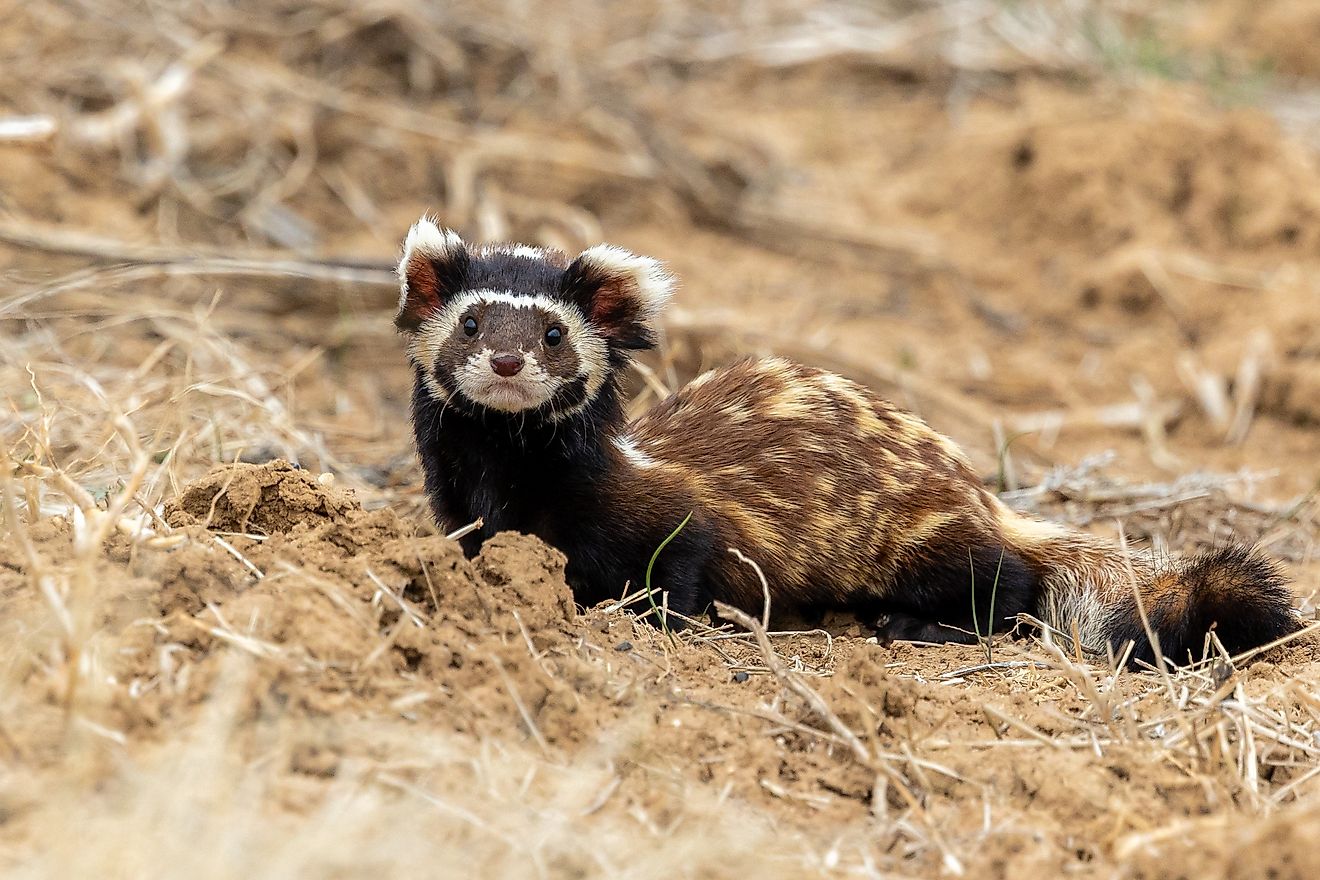
Beneath the big predators hunts a guild of smaller carnivores. The marbled polecat (Vormela peregusna) is a boldly mottled member of the weasel family, not a cat at all, that dens in old rodent burrows and ranges across open desert and steppe; steep declines have earned it a Vulnerable listing. Stalking the same rocky ground is Pallas's cat (Otocolobus manul), a stocky, impossibly thick-furred wildcat with a flat, grumpy-looking face, which ambushes pikas and gerbils and is one of Mongolia's most sought-after sightings.
Two more hunters round out the group. The corsac fox (Vulpes corsac) is a small, social steppe fox that follows the desert's rodents, while the Eurasian lynx (Lynx lynx) prowls the wooded uplands at the Gobi's mountainous edges. Together these carnivores keep the desert's rodents and hares in check.
Siberian Ibex And Argali

High on the Gobi's rocky massifs live two mountain grazers built for vertical country. The Siberian ibex (Capra sibirica), known locally as the Gobi ibex, is a wild goat with long scimitar horns and a light brown coat, standing over a meter at the shoulder. It clings to cliffs and steep scree, where its chief enemy is the snow leopard, and it is a key part of that cat's diet.
Towering over it in sheer size is the argali (Ovis ammon), the largest wild sheep on Earth. Rams carry massive spiraling horns and can weigh as much as an adult person, and Mongolia's arid mountain ranges hold some of the species' most important herds. Both animals are classed as Near Threatened, prized by trophy hunters and squeezed by competition with domestic livestock.
Gazelles And Saiga

The open gravel plains belong to fleet-footed grazers. The goitered, or black-tailed, gazelle (Gazella subgutturosa) ranges across the Gobi and much of arid Central Asia, sprinting up to 60 kilometers per hour to outrun wolves and eagles and migrating with the seasons to follow the grazing. On the eastern steppe fringe roams the Mongolian gazelle (Procapra gutturosa), which still gathers in some of the largest wild-ungulate herds left in Asia, tens of thousands strong during the summer calving.
Rarer, and stranger, is the saiga (Saiga tatarica), an ancient antelope with a bulbous, trunk-like snout that filters dust in summer and warms freezing air in winter. Its Mongolian population clings on in the western basins near the Gobi and is considered highly threatened, vulnerable to harsh winters and disease.
Jerboa And Other Small Mammals
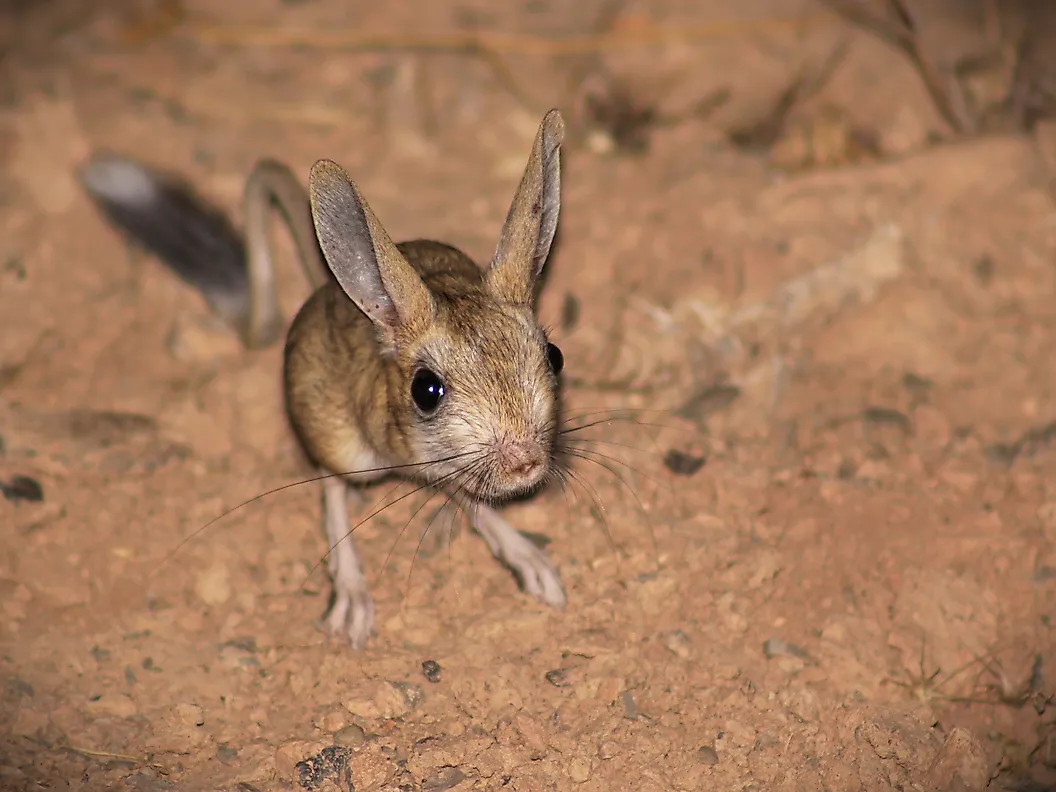
Out of sight underfoot, the Gobi teems with the small mammals that feed almost everything else. Jerboas, long-tailed hopping rodents of the family Dipodidae, bound across the sand on outsized hind legs and can hit 24 kilometers per hour when chased; the long-eared jerboa (Euchoreutes naso), with ears nearly a third of its body length, is one of the desert's strangest residents. Gerbils and jirds tunnel through the gravel, pikas stack cut grass among the rocks, and Siberian marmots (Marmota sibirica) fatten through the short summer before hibernating underground for months. All of them feed the desert's foxes, cats, snakes, and raptors.
Birds Of The Gobi

The desert sky belongs to raptors. The golden eagle (Aquila chrysaetos) soars over the plains hunting marmots, hares, and gazelle fawns, and in Mongolia's west, Kazakh falconers still hunt with trained eagles. Sharing the airspace is the saker falcon (Falco cherrug), a powerful open-country hunter now listed as Endangered, its numbers thinned by illegal capture for the falconry trade.
Two great scavengers ride the thermals: the cinereous vulture (Aegypius monachus), among the heaviest flying birds in the world, and the bearded vulture, or lammergeier (Gypaetus barbatus), which drops bones onto rocks to crack them open for the marrow. On the ground, the houbara bustard (Chlamydotis undulata) picks across the flats, and flocks of Pallas's sandgrouse (Syrrhaptes paradoxus) fly miles to reach scarce waterholes.
Reptiles
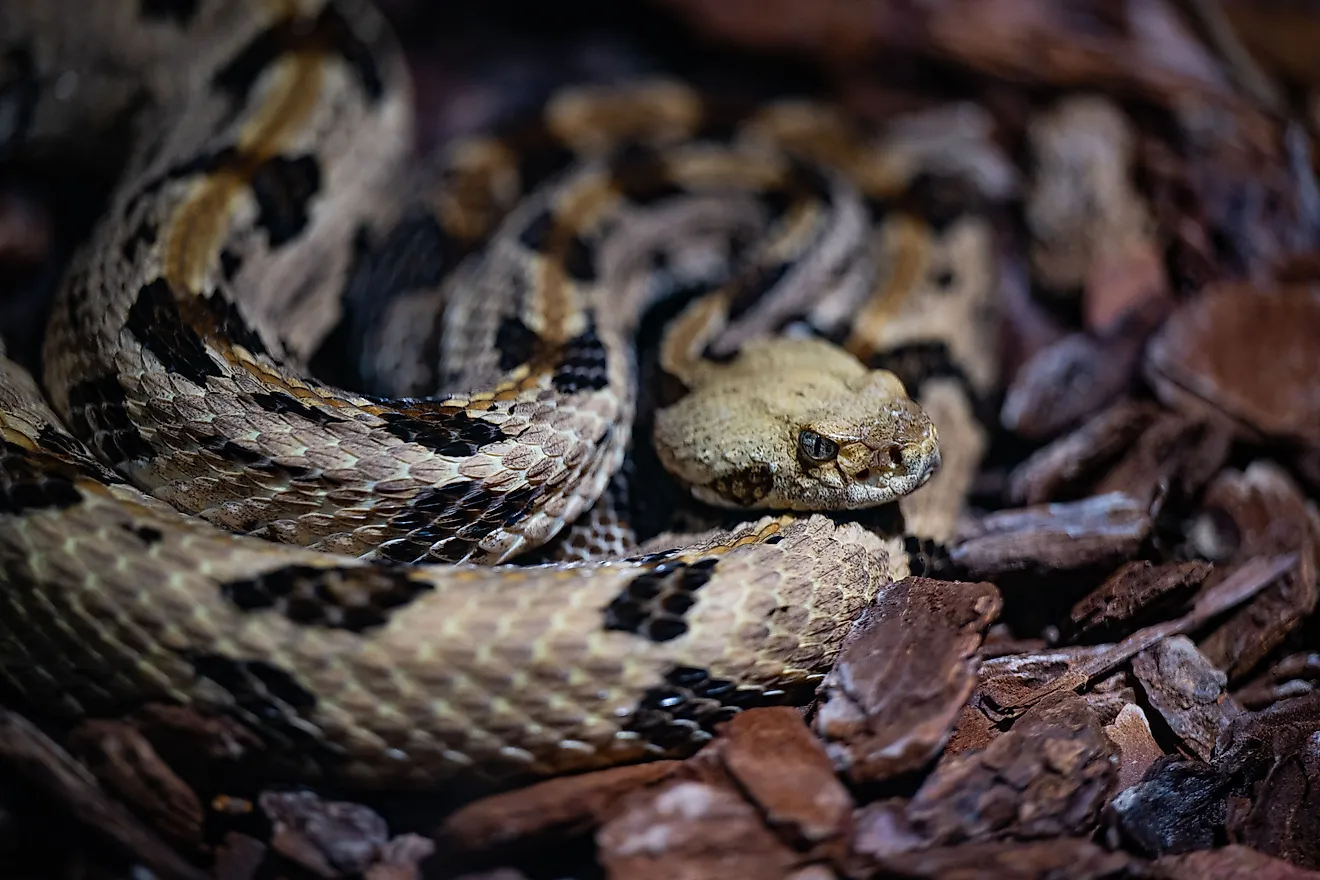
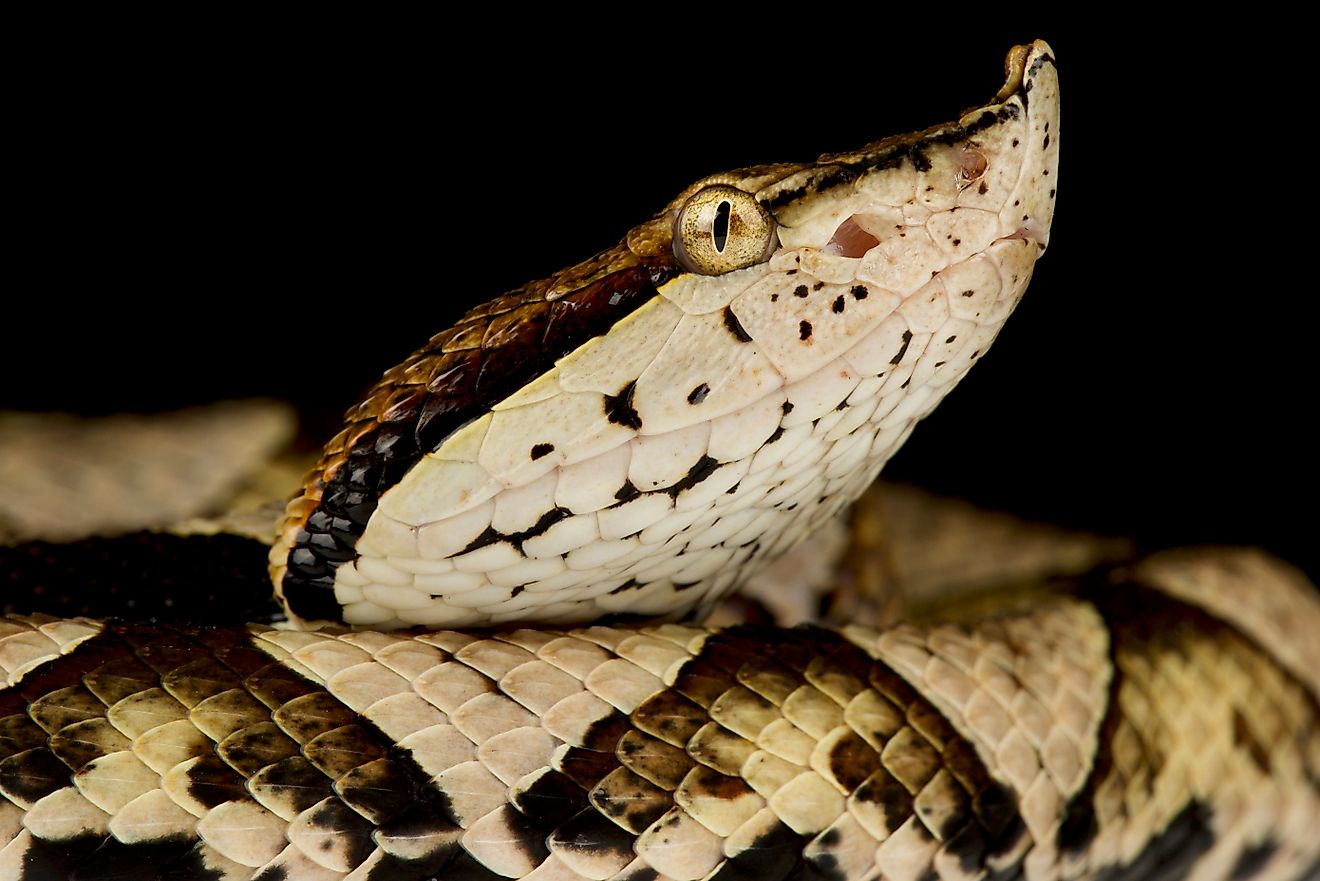
Cold-blooded life persists here too, active in the warm months and buried below the frost line through the brutal winter. The Gobi's most notable snake is the Central Asian pit viper (Gloydius intermedius), a venomous ambush hunter found along the desert's rocky edges in Inner Mongolia and northern China, where it preys on rodents and lizards. It shares the ground with toad-headed agamas (Phrynocephalus), flat little lizards that shimmy into the sand to escape heat and predators and flash their curled tails to signal one another, along with geckos and fast-moving racerunners. Whether wild camel or takhi, mazaalai or saiga, the animals of the Gobi are a roster of survivors found almost nowhere else, and many now depend on the desert's protected reserves for their future.