Indian Cobra
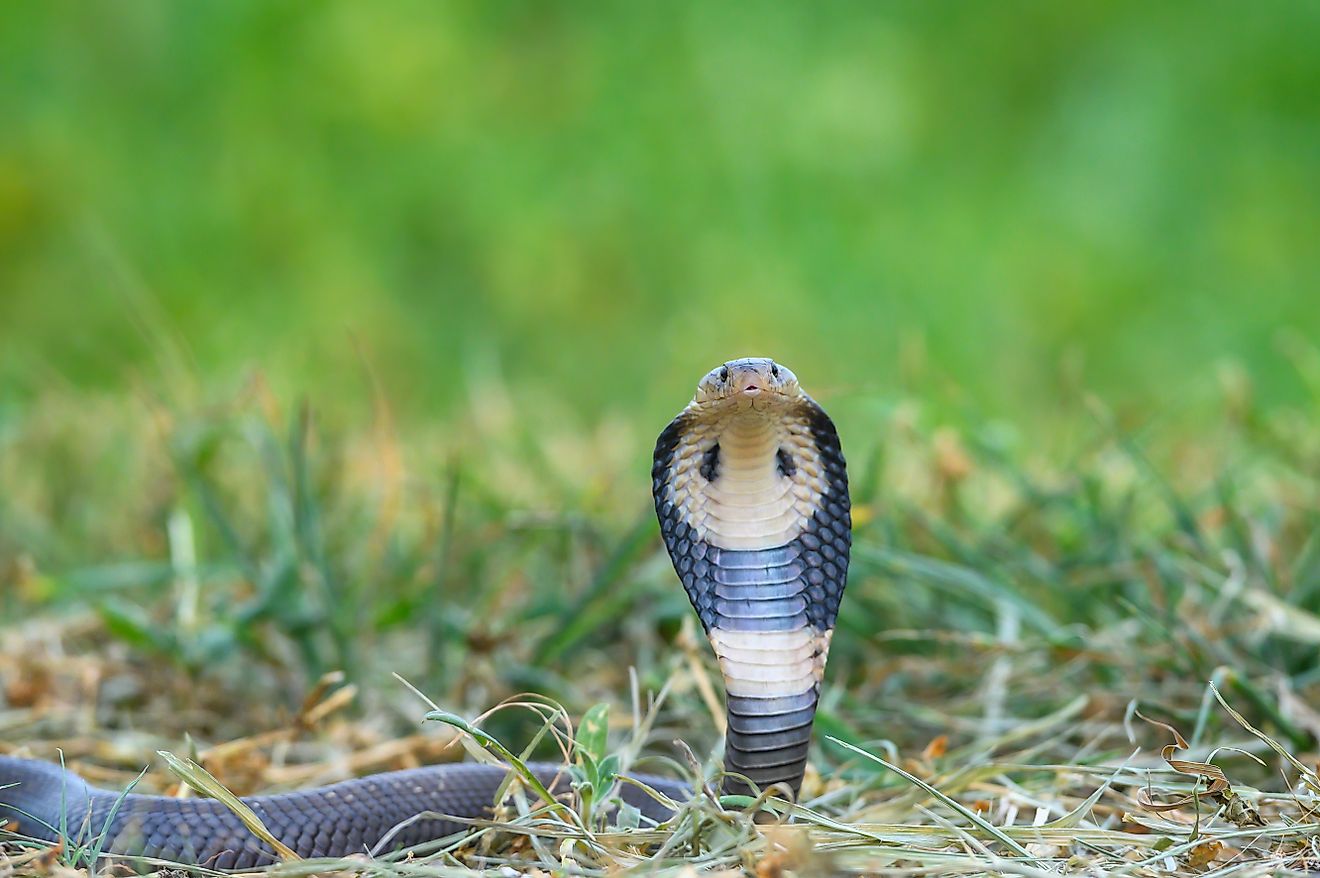
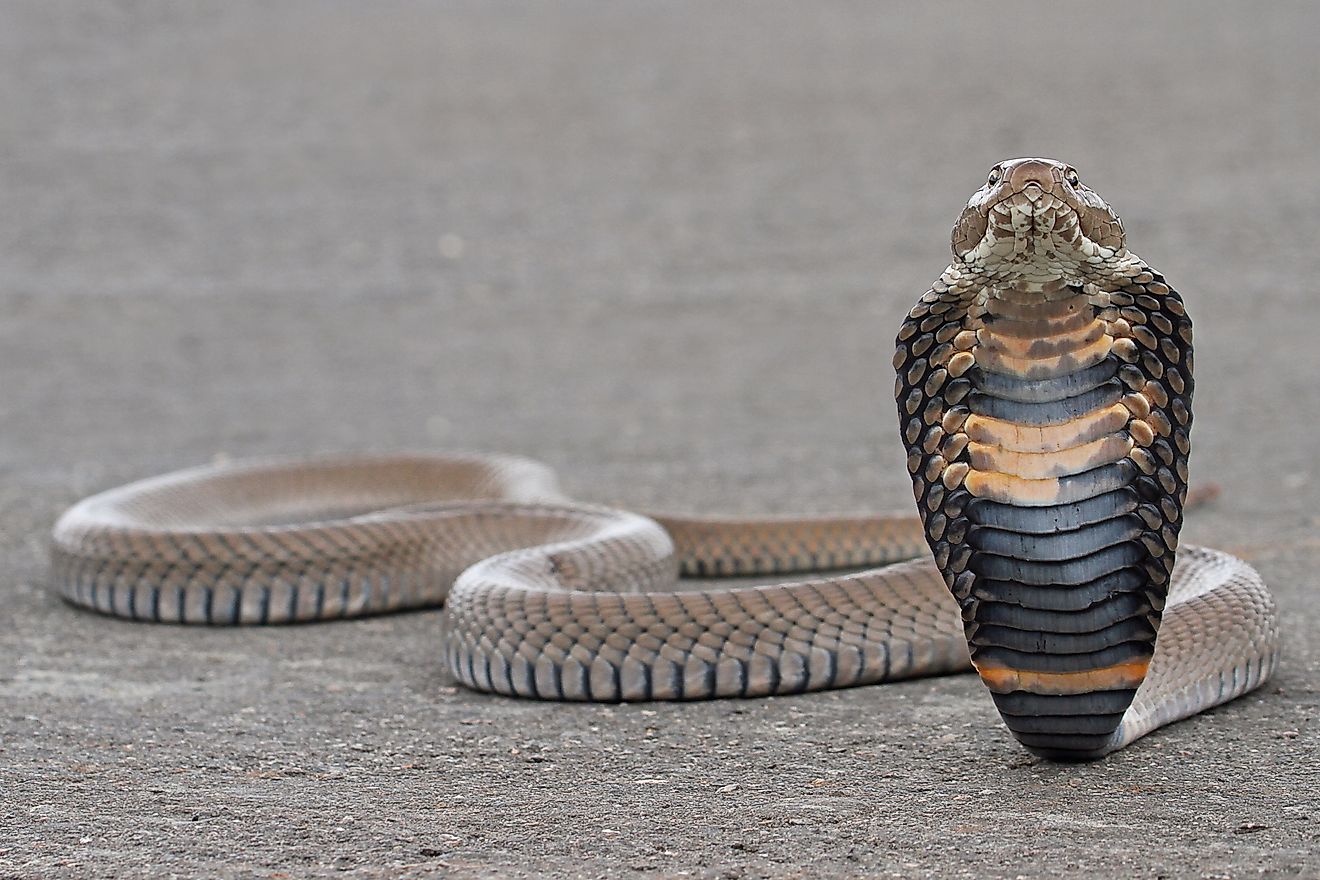
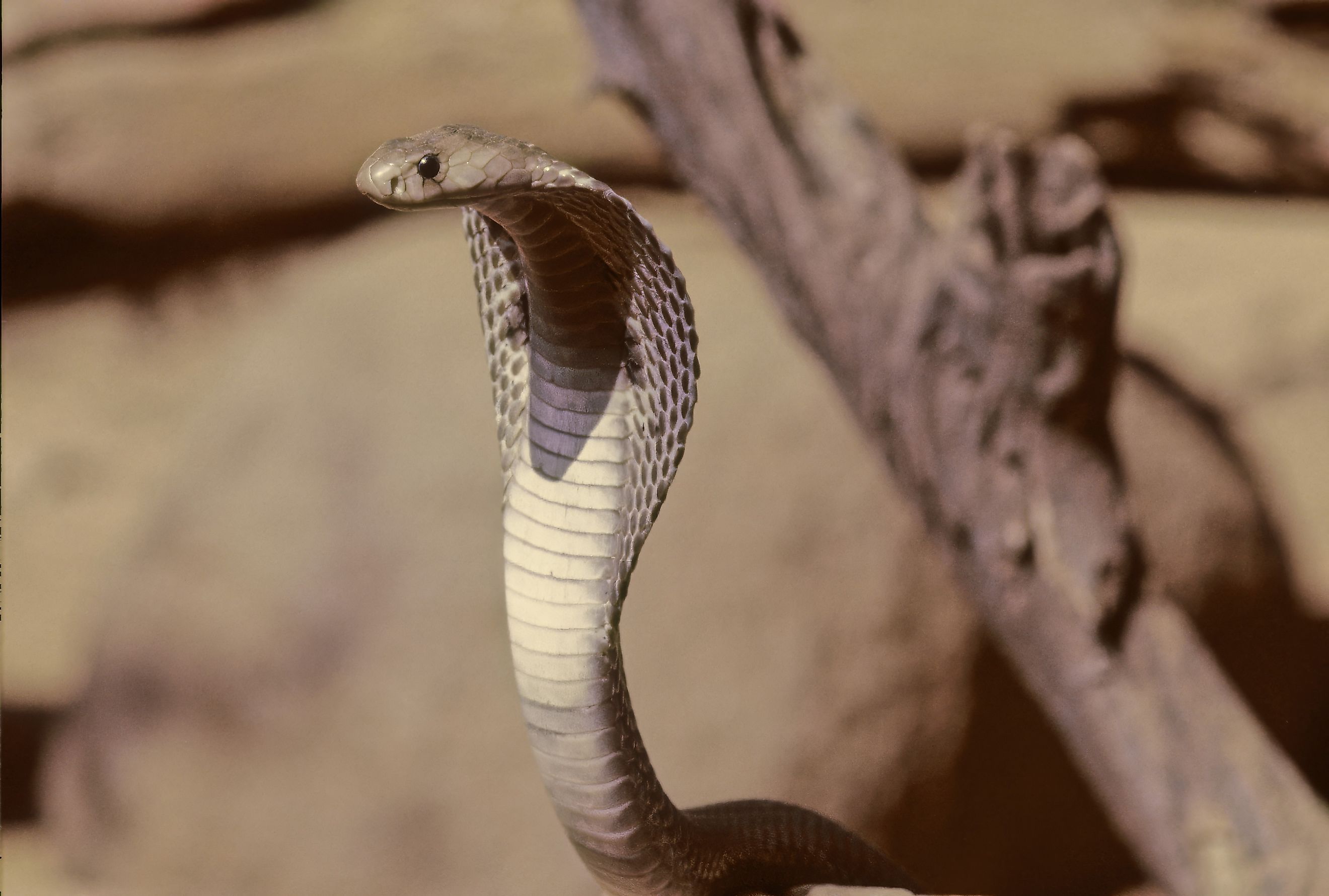
One of the most recognizable snakes in South Asia, the Indian cobra raises the front part of its body when threatened and spreads a broad hood, often displaying a distinctive pattern of connected rings that resembles a pair of spectacles. This striking image of a hooded cobra has appeared in temple carvings, folklore, and traditional stories throughout South Asia for thousands of years.
The Indian cobra (Naja naja) is a highly venomous member of the elapid family, native to the Indian subcontinent. It is also called the spectacled cobra, the Asian cobra, or the binocellate cobra, names that all point back to the marking on its hood. Beyond its fame, this snake matters in practical terms. It is one of the "big four" species responsible for most serious snakebite cases in India and Sri Lanka, which makes understanding it a matter of public health as much as natural history.
Taxonomic Classification

The Indian cobra belongs to the kingdom Animalia, phylum Chordata, class Reptilia, order Squamata, and family Elapidae, the group that also includes mambas, kraits, and sea snakes. Its genus is Naja, the true cobras, and its species name is naja, a Latinized form of the Sanskrit word naga, meaning cobra or serpent.
The species was formally described by Carl Linnaeus in 1758, and it is often treated as the prototypical cobra of the entire genus. That status carries a complication. For most of the twentieth century, nearly all Asiatic cobras were lumped together as subspecies of Naja naja. Only with the arrival of detailed morphological and genetic study in the 1990s did researchers split these populations into distinct species such as the monocled cobra (Naja kaouthia) and the Caspian cobra (Naja oxiana). Because of that history, older books and papers can be misleading, since the name Naja naja once covered a far wider range of snakes than it does today.
Physical Description

The Indian cobra is a moderately sized, heavy-bodied snake. Most adults measure 3.3 to 4.9 feet (1 to 1.5 m) in length, though some individuals, especially those from Sri Lanka, can reach 6.9 to 7.2 feet (2.1 to 2.2 m). The head is elliptical and only slightly distinct from the neck, with a short rounded snout, large nostrils, and medium-sized eyes with round pupils.
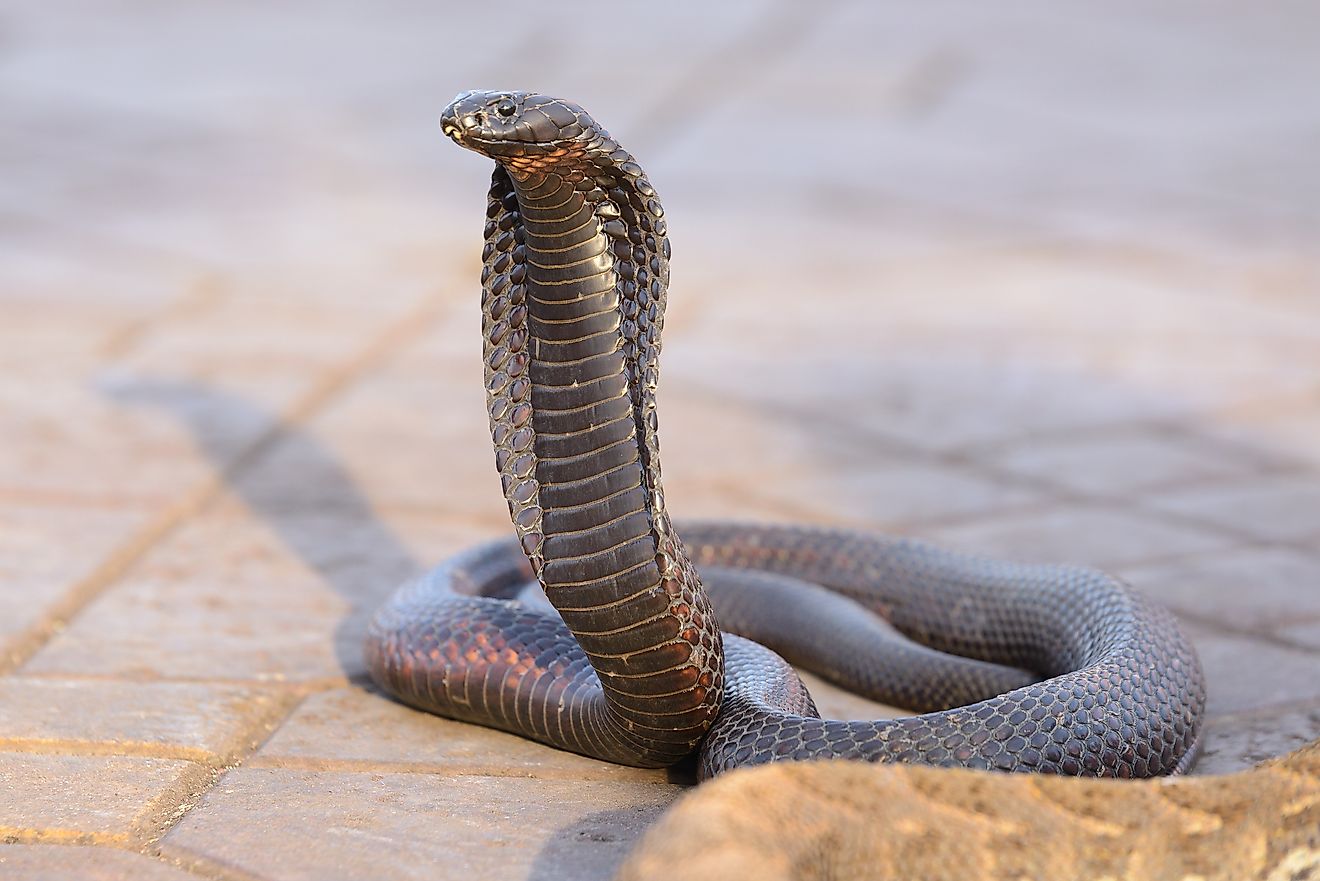
The most famous feature is the hood. It is not a permanent structure but a display the snake creates by spreading elongated neck ribs, stretching the loose skin behind the head into a broad, flattened shield. On the back of that hood, many individuals carry the spectacle mark, two circular eye-like patterns (ocelli) joined by a curved line.
Coloration varies enormously across the range. The underside can be grey, yellow, tan, brown, reddish, or black, and the back may be plain or patterned with speckling and light bands. In southern Pakistan and northwestern India, young snakes are often grey while adults turn a solid, glossy black. This variability means color alone is an unreliable guide, and the Indian cobra is often confused with harmless look-alikes such as the Oriental rat snake (Ptyas mucosa), a longer, more prominently ridged species that lacks the hood display.
Range and Habitat

The Indian cobra is found throughout India, Pakistan, Sri Lanka, Bangladesh, and southern Nepal, with scattered records suggesting it may reach eastern Afghanistan and Bhutan. It occupies almost every kind of terrain within that range, including dense and open forest, plains, wetlands, and rocky ground.
What sets this snake apart from many of its relatives is its comfort around people. It thrives in agricultural land, particularly rice paddies and wheat fields, and it readily turns up in villages and on the outskirts of cities. It ranges from sea level up to roughly 6,600 feet (2,000 m) in elevation but avoids true deserts and the highest mountains. The Indian cobra is often found near water and favors shelter in embankment holes, tree hollows, termite mounds, rock piles, and abandoned rodent burrows. This overlap with human settlement is central to its ecology and to the risk it poses.
Diet

The Indian cobra is a generalist predator. Its diet centers on rodents, but it also takes lizards, frogs, toads, birds, and other snakes. The preference for rats and mice explains much of its behavior, because rodents draw the snake toward farms, grain stores, and homes, exactly the places where people are likely to cross its path.
When hunting, the cobra strikes quickly and injects venom, then often waits as the toxin disables the prey's nervous system before moving in. Like all snakes, it swallows its meal whole. By keeping rodent numbers in check, the Indian cobra provides a real service to the farming communities that share its habitat, even as it remains a danger to them.
Behavior

Indian cobras are primarily terrestrial but capable climbers and swimmers. They tend to be most active from dusk into the night, especially during hot weather, and spend the heat of the day sheltering in cover. When undisturbed, a cobra will usually try to retreat rather than fight.
The hood display is a warning, not an attack. By rearing up and spreading the hood, the snake makes itself look larger and more formidable, buying time for a threat to back away. A long-standing myth holds that the cobra dances to a snake charmer's music. In reality the snake cannot hear airborne sound in the way people do, and it tracks the swaying movement of the performer's pipe rather than any melody. Cobras face predators of their own, including mongooses, birds of prey, crocodiles, and even the much larger king cobra.
Reproduction

The Indian cobra is oviparous, meaning it lays eggs rather than giving live birth. Breeding produces a clutch usually between April and July, and the female deposits roughly 10 to 30 eggs in a sheltered spot such as a rat hole or termite mound. In some observations, the female remains near the nest until the eggs are ready to hatch.
Incubation lasts about 48 to 69 days. Each hatchling emerges at 8 to 12 inches (20 to 30 cm) long and is fully independent from the moment it leaves the egg, equipped with working venom glands and the instinct to use them. Survival in the wild is difficult for the young, but individuals that reach adulthood can be long-lived. In the wild, lifespans of around 15 to 20 years are typical, while snakes in captivity, free of predators and with steady food, have been recorded living well past 20 years and in some cases beyond 30.
Venom and Medical Importance

The Indian cobra's venom is a potent mixture dominated by postsynaptic neurotoxins and cardiotoxins. The neurotoxins act at the junction between nerve and muscle, blocking signals and causing progressive paralysis. In severe cases this leads to respiratory failure. Additional enzymes such as hyaluronidase help the venom spread through tissue, and local effects can include severe pain, swelling, and, over the following days, necrosis around the bite.
Symptoms may appear anywhere from fifteen minutes to two hours after a bite. An early and telling sign is drooping of the eyelids, known as ptosis, which clinicians watch for as a marker of systemic envenoming. In mice, the median lethal dose has been estimated at about 0.56 mg per kilogram by subcutaneous injection, though potency varies widely across the range, and a single bite can deliver a large quantity of venom. Without treatment, mortality has been estimated at roughly 20 to 30 percent, but with prompt care and antivenom the outlook improves dramatically, and only a small fraction of bites prove fatal.
Effective polyvalent antivenom exists and is central to the treatment of "big four" snakebites across South Asia. Beyond its danger, cobra venom is also a subject of medical research, studied as a potential source of compounds relevant to pain relief and other therapies.
Importance to the World

Ecologically, the Indian cobra plays an important role in controlling rodent populations, which can damage crops and food stores while also contributing to the spread of disease. In that respect, the snake provides an important service to the same rural communities that often fear it.
Its cultural significance is equally remarkable. The Indian cobra has long been woven into the religious and mythological traditions of the subcontinent. In Hinduism, Shiva is often depicted with a cobra around his neck, while Vishnu is traditionally shown resting on the coils of the many-hooded serpent Shesha. Cobras are also honored during festivals such as Naga Panchami. In Buddhism, the naga king Mucilinda is said to have protected the Buddha from a storm by spreading his hood over him. The species has also found a place in modern literature through Rudyard Kipling's Rikki-Tikki-Tavi, which features two Indian cobras named Nag and Nagaina.
Threats and Conservation

The Indian cobra is listed as Least Concern on the IUCN Red List, reflecting a wide range and a large, adaptable population. It is also listed under CITES Appendix II, in part because it closely resembles other species that need protection. In India, it is safeguarded under the Wild Life (Protection) Act of 1972.
Legal protection has not erased the pressures the snake faces. Habitat loss from urban growth, deforestation, and expanding agriculture reduces available range, and direct conflict with people remains a constant, since cobras near homes and fields are frequently killed. The snake has also historically been hunted for its skin and captured for the declining practice of street performance. For now the species remains common, but its future is tied closely to how people manage the shared spaces where cobra and human lives overlap.
Takeaway
The Indian cobra holds a unique place among ancient animals. It is both one of the most dangerous snakes to live alongside and an important subject of medical research. Its bites still send thousands of people to hospitals across South Asia each year, but the venom responsible for these cases is now being studied for its potential to improve treatment. When researchers sequenced the cobra's genome in 2020 and identified the genes responsible for producing its toxins, they were doing more than documenting the species. Their work helped reveal the precise proteins that future antivenoms could target, potentially making them more effective than the broad-spectrum sera that have been used in clinics for decades. In that sense, the same venom that has made the Indian cobra so feared could eventually help save far more lives than it has taken.
Fun Facts

- The spectacles are a disguise. The linked ring pattern on the hood looks like a pair of eyes staring backward, a display that can startle predators approaching from behind.
- It does not dance to music. A cobra cannot hear a snake charmer's tune the way we do and instead follows the movement of the swaying pipe.
- Hatchlings are born dangerous. Newborn Indian cobras are fully independent and carry working venom glands from the day they leave the egg.
- The hood is built from ribs. The snake spreads elongated neck ribs to stretch its skin into that famous shield, then folds it away when calm.
- Its genome has been fully mapped. Scientists published a high-quality reference genome in 2020, identifying many of the genes behind its venom toxins.
Quick Facts
- Common name: Indian cobra (also spectacled, Asian, or binocellate cobra)
- Scientific name: Naja naja
- Family and order: Elapidae, Squamata
- IUCN status: Least Concern
- Length: Most adults 3.3 to 4.9 feet (1 to 1.5 m), rarely up to 7.2 feet (2.2 m)
- Lifespan: About 15 to 20 years in the wild, often longer in captivity
- Diet: Carnivore, mainly rodents, plus lizards, frogs, birds, and other snakes
- Range: India, Pakistan, Sri Lanka, Bangladesh, and southern Nepal
- Reproduction: Oviparous, laying roughly 10 to 30 eggs per clutch