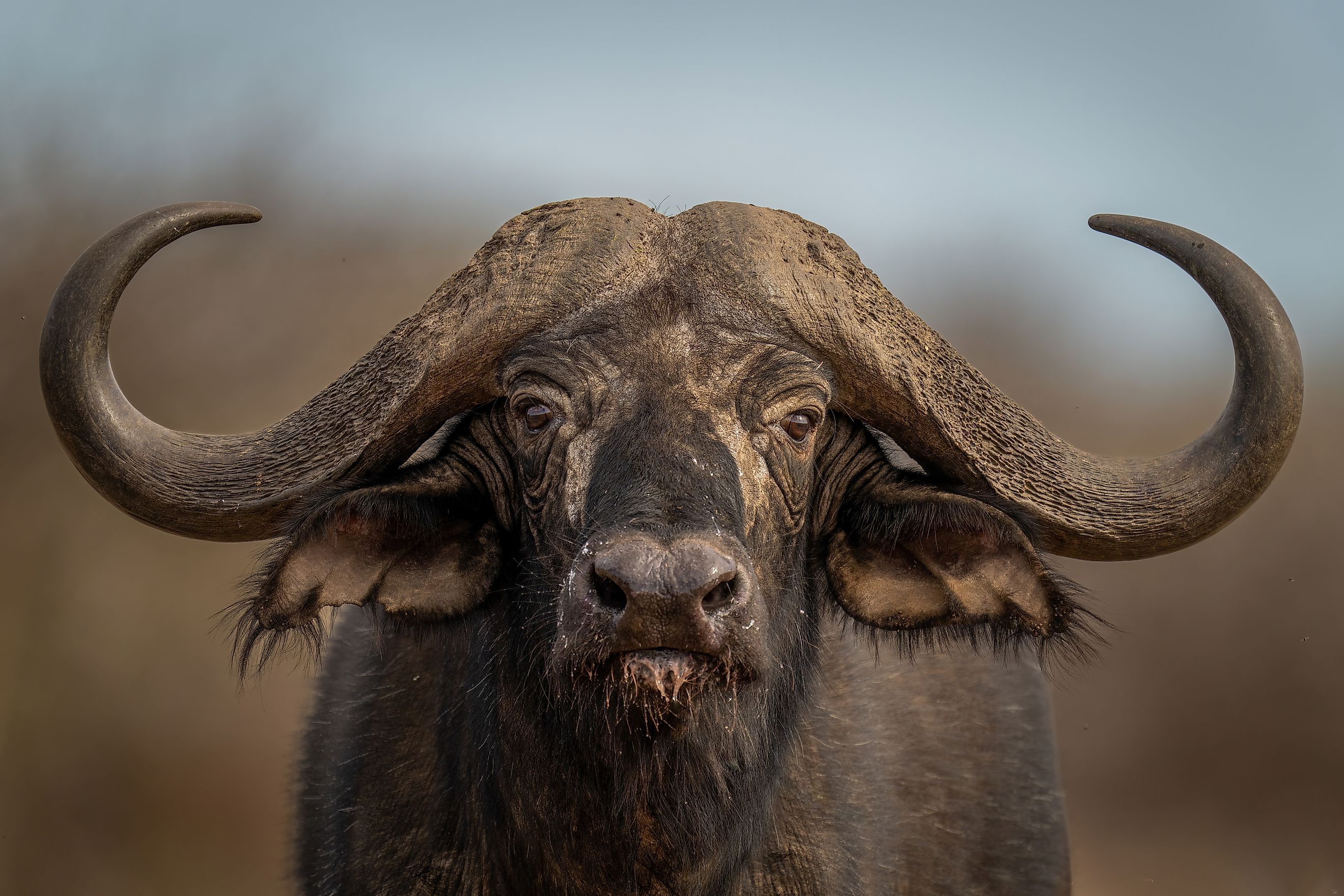
Cape Buffalo
Few animals earn a wide berth on the African savanna as reliably as the Cape buffalo. Big-game hunters gave it the grim nickname "Black Death," and the reputation is well earned. A cornered or wounded bull can suddenly turn and charge at speeds of nearly 35 miles per hour (56 km/h) with little warning. This is the largest wild bovid in Africa, the nominate and biggest subspecies of the African buffalo, Syncerus caffer, and one of the continent's celebrated "Big Five."
The Cape buffalo, Syncerus caffer caffer, ranges across the grasslands, floodplains, and open woodlands of eastern and southern Africa, between southern Ethiopia and the Cape. It is a bulk grazer that lives in herds sometimes hundreds strong, a fixture of safari country, and a genuine heavyweight of savanna ecology. It is worth knowing not just because it is dangerous, but because it is unusually social, surprisingly cooperative, and quietly essential to the grasslands it shapes.
Taxonomic Classification

The Cape buffalo belongs to the order Artiodactyla (even-toed ungulates), the family Bovidae, the subfamily Bovinae, and the cattle tribe Bovini. Its genus is Syncerus, and the species is Syncerus caffer, first described by the Swedish naturalist Anders Sparrman in 1779 (originally as Bos caffer). The Cape buffalo is the nominate subspecies, Syncerus caffer caffer, also called the southern savanna buffalo, and it is the largest of the group.
Zoologists have traditionally recognized four subspecies. These include the Cape or southern savanna buffalo (Syncerus caffer caffer), the smaller forest buffalo (Syncerus caffer nanus) of Central and West Africa, the West African savanna buffalo (Syncerus caffer brachyceros), and the Central African savanna buffalo (Syncerus caffer aequinoctialis). The boundaries between them blur, and a large 2024 genomic study found little support for the four-way split, suggesting gene flow and intermediate forms across contact zones. One thing is clear, however. The African buffalo is not an ancestor of domestic cattle. It is only distantly related to other large wild bovines and has never been successfully domesticated. It is also the only member of the cattle tribe that occurs naturally in Africa, and despite a passing resemblance, it is not closely related to the Asian water buffalo.
Physical Description

The Cape buffalo is a massive, front-heavy animal built low to the ground. Bulls stand roughly 4 feet 3 inches to 5 feet 7 inches (130 to 170 cm) at the shoulder, measure about 7 to 11 feet (2.1 to 3.4 m) nose to rump, and weigh roughly 935 to 1,910 pounds (425 to 870 kg). The largest bulls approach 2,000 pounds (roughly 900 kg), close to a full ton. The head is carried below the line of the back, which shifts weight forward, and the front hooves are broader than the rear to carry it.
The signature feature is the horns. In mature bulls, the bases thicken and fuse across the forehead into a solid shield of bone called the "boss," from which the horns sweep down, then out and up. The spread between the tips can exceed 35 inches (90 cm), and the outer curve of each horn may reach 63 inches (160 cm) in a large old bull. Horns reach full size at five or six years but do not fully harden until around eight or nine. Cows carry thinner horns roughly 10 to 20 percent smaller, with a reduced boss or none at all. The coat is sparse and ranges from dark brown to near-black, thinning with age until old bulls look almost hairless. Calves are born reddish-brown. Bulls also show a neck hump and a loose skin fold, or dewlap, under the chin.
Range and Habitat

The Cape subspecies occupies eastern and southern Africa. The subspecies ranges across southern Ethiopia, South Sudan, Somalia, and Kenya, then continues southward through Tanzania, Zambia, Malawi, Zimbabwe, Mozambique, Botswana, and northeastern Namibia into South Africa. It favors savanna, grassland, floodplain, swamp margins, and open miombo or montane woodland, generally where annual rainfall exceeds about 10 inches (250 mm) and standing water is close by. True deserts are avoided.
Water is the hard constraint. A Cape buffalo is rarely more than a day's walk from a drink, which anchors herds near rivers, pans, and wetlands. Strongholds today include South Africa's Kruger National Park, which holds tens of thousands of buffalo, along with Tanzania's Serengeti National Park, the Selous, and the Okavango. The picture was very different a century and a half ago. African buffalo once occupied most of sub-Saharan Africa, but the species has undergone a severe reduction in range since the 19th century, driven by the 1890s rinderpest panzootic, land conversion, and hunting.
Diet

The Cape buffalo is a grazer and a ruminant. Grasses and sedges make up the bulk of its diet, supplemented by some browse when grass is poor. A wide row of incisors and a strong, mobile tongue let it crop tall, coarse grass quickly, faster than many of its neighbors. Like cattle, it chews cud, re-processing forage to extract more nutrients from tough plant material. Because it can process rank, fibrous grass that pickier grazers cannot, the buffalo often feeds first, opening the sward and exposing the shorter, more nutritious growth that smaller herbivores prefer.
That daily need for water shapes feeding as much as the food itself. Herds graze in the cooler hours, drink at least once a day, and time their movements around reliable water. Where water is seasonal, buffalo shift to drier standing grass through the dry months and stay tethered to whatever pans and rivers persist. They also rotate feeding grounds, returning only once the vegetation has recovered, a pattern shared with wildebeest and zebras across the same plains.
Behavior

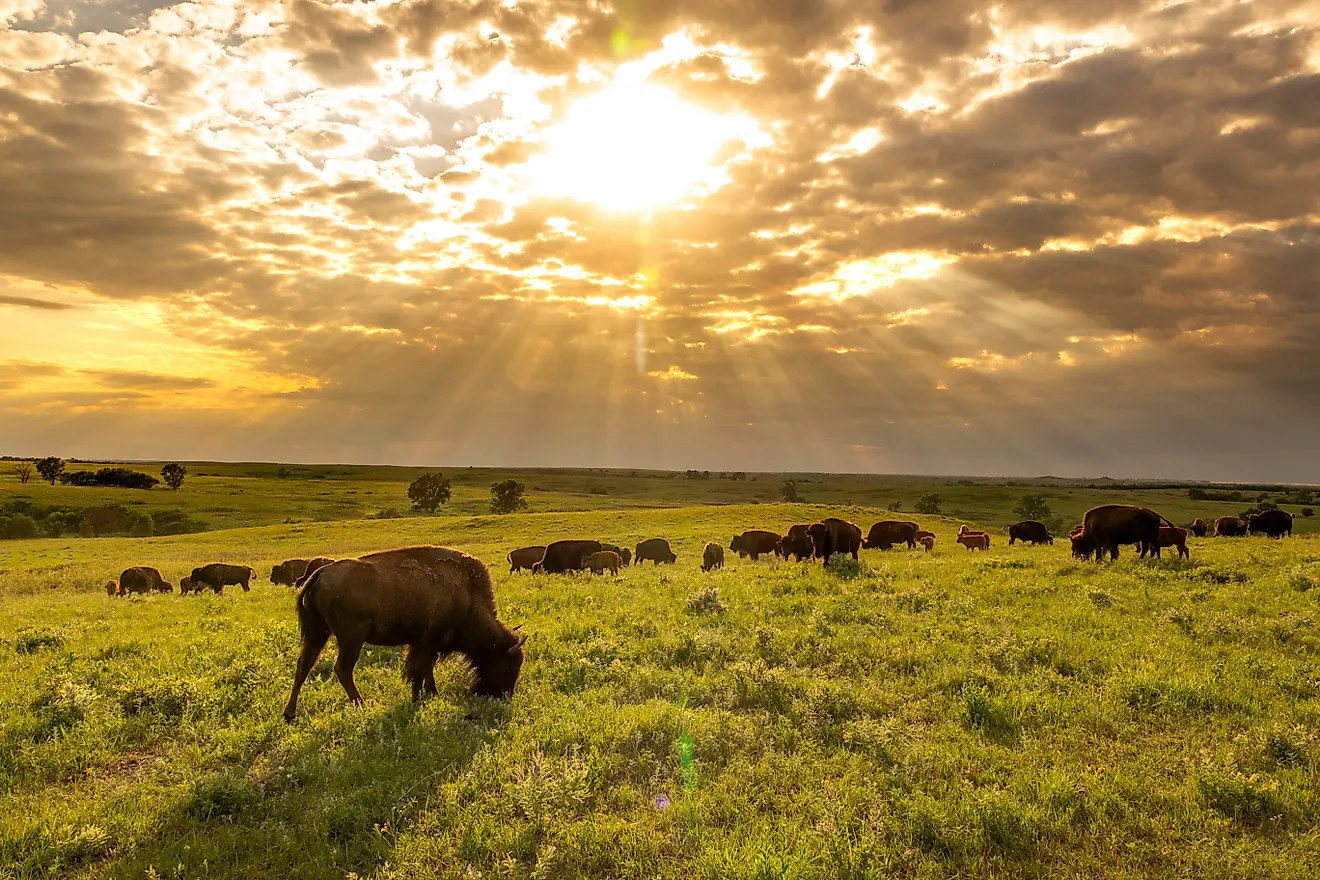
Cape buffalo are intensely social. Mixed herds of cows, calves, and subordinate bulls typically number 50 to 500 animals and can swell past a thousand where grazing and water allow. The core of a herd is a group of related females arranged in a stable dominance hierarchy, while a separate hierarchy among bulls decides which males breed. Old bulls, known in southern Africa as "dagga boys," drop out to form small bachelor groups or turn solitary, and they are among the most short-tempered animals in the bush.
What sets the buffalo apart is cooperation. A herd will mass together and mob a predator, respond to the distress calls of a herd-mate, and put lions to flight. Grown buffalo have been recorded killing lions outright when roused. Researchers have documented a striking form of group decision-making in which individuals stand and orient themselves in different directions before a resting herd moves on. The herd then tends to travel in the direction favored by the majority, a behavior sometimes described as "voting." The buffalo's fearsome reputation comes from this combination of bulk, unpredictability, and collective defense. Healthy adults are formidable, and a wounded bull that circles back on a pursuer is the reason the animal is feared on foot.
Reproduction

Females are polyestrous, cycling about every 23 days with an estrus of five to six days. Buffalo can breed year-round, but where water is seasonal, most births cluster at the end of the wet season when grazing is richest. As breeding approaches, bachelor bulls rejoin the mixed herds. A dominant bull "tends" a receptive cow, following and guarding her until she mates or a higher-ranking male displaces him.
Gestation lasts roughly 11 months (about 340 days) and produces a single calf; twins are rare. Unlike some antelope, buffalo calves do not go through a hiding phase. A newborn is on its feet quickly and follows the herd within hours, sheltered inside the group and defended collectively. Calves are weaned at around six to ten months and reach sexual maturity at roughly three and a half to five years. In the wild, Cape buffalo commonly live into their late teens or early twenties, and captive animals have reached close to 29 years.
Importance to the World

Ecologically, the Cape buffalo is a grassland engineer. By grazing tall, coarse grass in bulk and trampling regular paths, it keeps swards open and prevents rank overgrowth, which in turn benefits the more selective grazers and browsers that follow it. Large herds influence the structure of the savanna nearly as much as rainfall does. Buffalo are also an important part of the food web. They provide a major source of prey for lions, while their carcasses support a wide range of scavengers. Their presence ripples out through the whole community of the plains, including the African elephant and rhinoceros that round out the Big Five alongside them.
Economically and culturally, the buffalo looms large. It is one of Africa's "Big Five," a phrase coined by hunters for the animals considered most dangerous to pursue on foot, and it remains a marquee draw for wildlife tourism and regulated trophy hunting. There is a harder side to its importance too. The Cape buffalo is a maintenance host for foot-and-mouth disease and bovine tuberculosis, which makes it a central concern at the boundary between wildlife and livestock. Movement of buffalo is tightly regulated in some countries, and disease-free breeding herds are managed with veterinary oversight, precisely because the species sits at the crossroads of conservation and agriculture.
Threats and Conservation

The African buffalo has been listed as Near Threatened on the IUCN Red List since its 2019 assessment, with a population estimated at roughly 400,000 and a decreasing trend. The Cape subspecies is by far the most numerous and robust, which is why some fenced or well-protected populations are stable or even growing while the species overall continues to slip. Older references, including some that are still in circulation, cite a "Least Concern" status and higher population estimates based on the 2008 assessment. The current listing provides the more accurate figures to use.
The pressures are mostly human. Habitat loss and fragmentation shrink and isolate herds, bushmeat poaching targets buffalo for meat and horns, competition with cattle strains shared grazing, and disease moves in both directions across the livestock boundary. Drought intensified by climate change adds further stress. Natural predators are a minor factor for healthy adults; lions take mainly calves, stragglers, and weakened animals. Conservation rests largely on Africa's protected-area network, which spans Kruger, the greater Mara-Serengeti ecosystem, and the Okavango, backed by anti-poaching work, veterinary movement controls, and managed disease-free herds such as the historic population at Addo in South Africa.
Takeaway
The Cape buffalo rewards a second look. Its danger is real, but so is its role as a social, cooperative grazer that helps hold the savanna together, mowing the tall grass, feeding the predators, and shaping the plains that so many other species depend on. With the African buffalo now listed as Near Threatened and its numbers slowly falling, the strength of the Cape subspecies rests on the same protected landscapes that make it one of the great sights of an African safari. Keep those landscapes intact, and the "Black Death" of the grasslands will keep doing its quiet, essential work.
Fun Facts

- The "boss" is body armor. A mature bull's fused horn bases form a helmet of solid bone across the skull that even a rifle bullet can struggle to penetrate.
- Never tamed. The Cape buffalo has never been domesticated and is not the ancestor of cattle; it is only distantly related to the world's other large bovines.
- Herds "vote." Before moving, resting buffalo orient their bodies toward a preferred direction, and the group follows the majority, a rare example of collective decision-making in a mammal.
- Lion killers. Buffalo will mob predators, answer a herd-mate's distress call, and have been filmed rescuing calves from lions and killing attackers.
- Big Five means dangerous, not big. The term came from hunters and refers to the animals hardest and most hazardous to hunt on foot, not the largest species.
Quick Facts
- Scientific name: Syncerus caffer caffer
- Family / Order: Bovidae / Artiodactyla
- IUCN status: Near Threatened (2019); population decreasing
- Shoulder height: 4 ft 3 in to 5 ft 7 in (130 to 170 cm)
- Length: 7 to 11 ft (2.1 to 3.4 m)
- Weight: 935 to 1,910 lb (425 to 870 kg); large bulls near 2,000 lb (900 kg)
- Horn spread (bull): Over 35 in (90 cm)
- Lifespan: About 18 to 22 years wild; up to 29 in captivity
- Diet: Grazer (grasses and sedges)
- Range: Eastern and southern sub-Saharan Africa