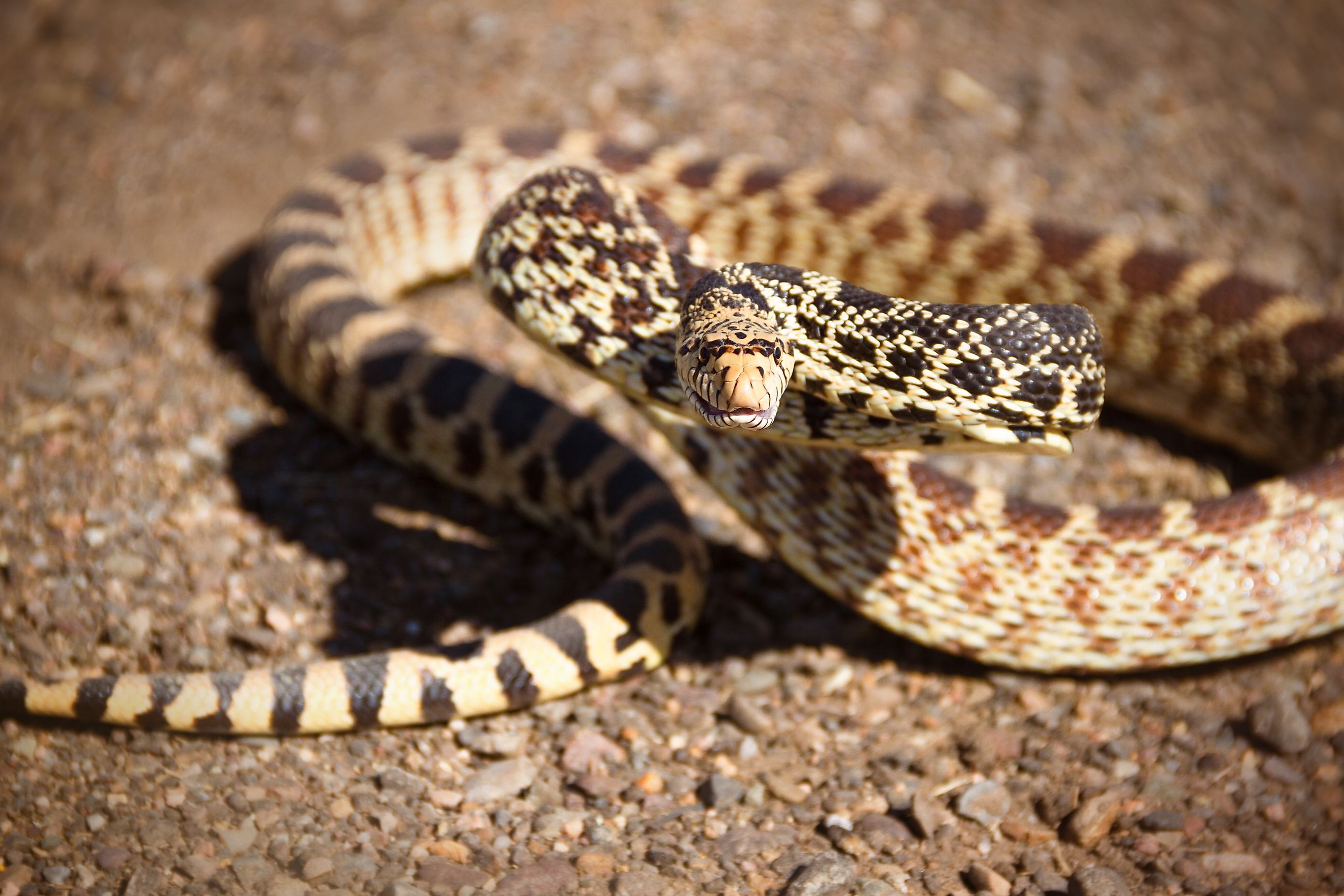
Bull Snake
Stretched out along a Great Plains fence line, a bull snake can measure longer than a person is tall. At up to 8 feet 4 inches (2.5 m), it ranks among the largest and longest snakes native to the United States and Canada. It is a thick, muscular constrictor built to pursue rodents into their own burrows. Yet for all that size, it cannot harm you. The bull snake has no venom and no rattle, only a convincing bluff.
The bull snake (Pituophis catenifer sayi) is a subspecies of the wide-ranging gopher snake, and it is a true creature of open country, found from southern Canada through the American Great Plains into northern Mexico. Wherever the grass grows and rodents dig, this snake tends to follow.
The bull snake is also one of the most misjudged animals on the prairie. Its habit of hissing, coiling, and buzzing its tail like a rattlesnake fools predators, and it fools people too, which is why so many harmless bull snakes are killed on sight.
Taxonomic Classification

The bull snake is a nonvenomous member of the family Colubridae, the largest family of snakes, within the order Squamata. Its full scientific name is Pituophis catenifer sayi, and it sits in the kingdom Animalia, phylum Chordata, class Reptilia. The genus name Pituophis comes from Greek words for pine and snake, while the species epithet catenifer is Latin for "chain bearing," a nod to the linked pattern of blotches down the back.
The point that causes the most confusion is that the bull snake is not a separate species. It is one of the recognized subspecies of the gopher snake (Pituophis catenifer), a broadly distributed animal whose other subspecies include the Sonoran, Pacific, and Great Basin gopher snakes. The bull snake is the only one of the group whose common name drops the word "gopher," which leads many people to assume it stands alone when it does not. The subspecies was first described by Hermann Schlegel in 1837, originally as Coluber sayi, and the honorific commemorates the American naturalist Thomas Say. Taxonomists have shuffled these snakes repeatedly, and the exact count of gopher snake subspecies varies between sources (commonly given as six), so any reference should follow the currently accepted classification.
Physical Description

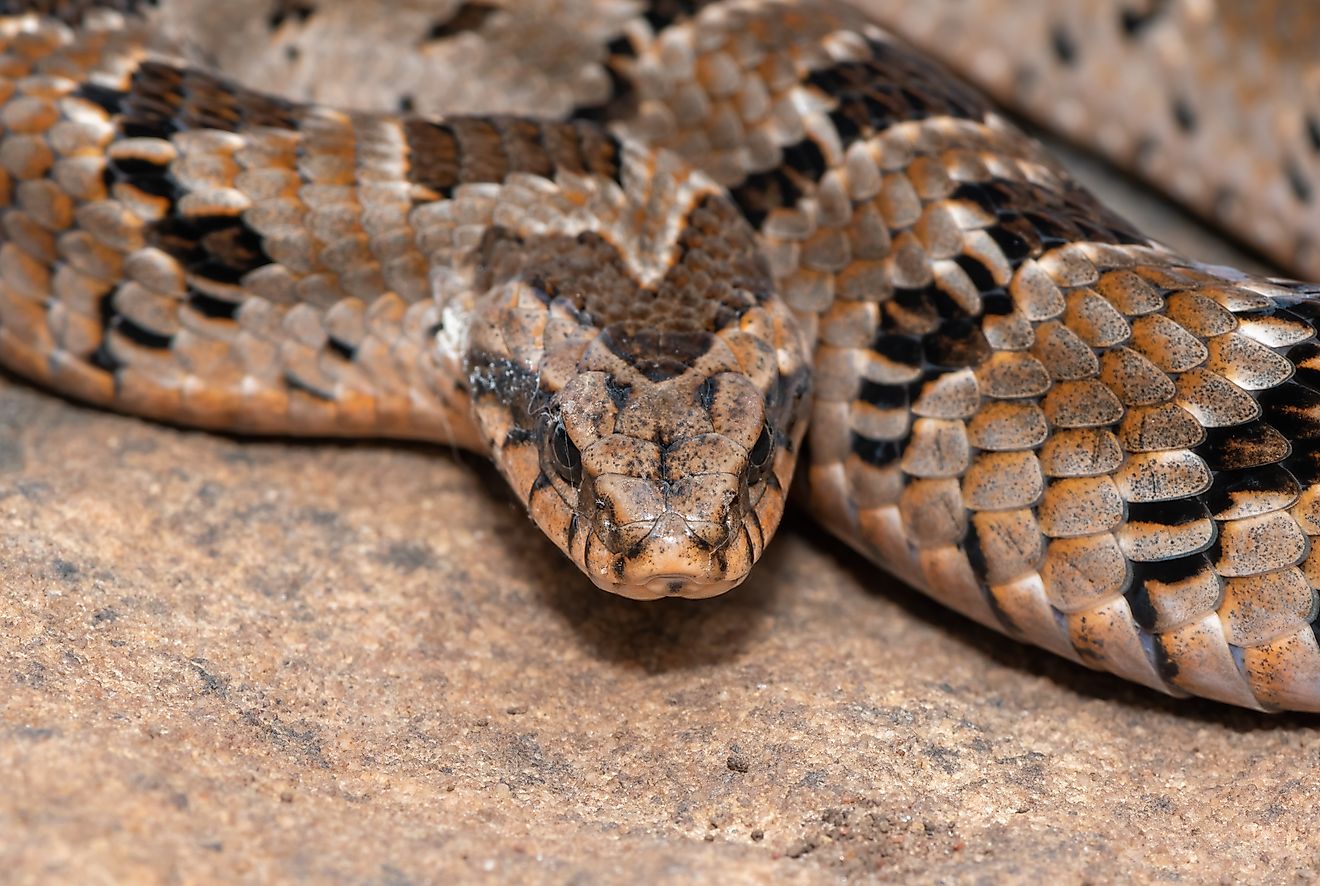
This is a big, thick, powerful snake. Adults typically measure 4 to 6 feet (1.2 to 1.8 m) in total length, and exceptional individuals have been recorded up to 8 feet 4 inches (2.5 m), which places the bull snake among the longest snakes native to the United States and Canada. It is the longest snake in several states, including Missouri, Montana, and New Mexico. Most adults weigh 2 to 3 pounds (1 to 1.5 kg), though the bulkiest specimens can reach 8 to 10 pounds (3.6 to 4.5 kg), heavy for a colubrid.
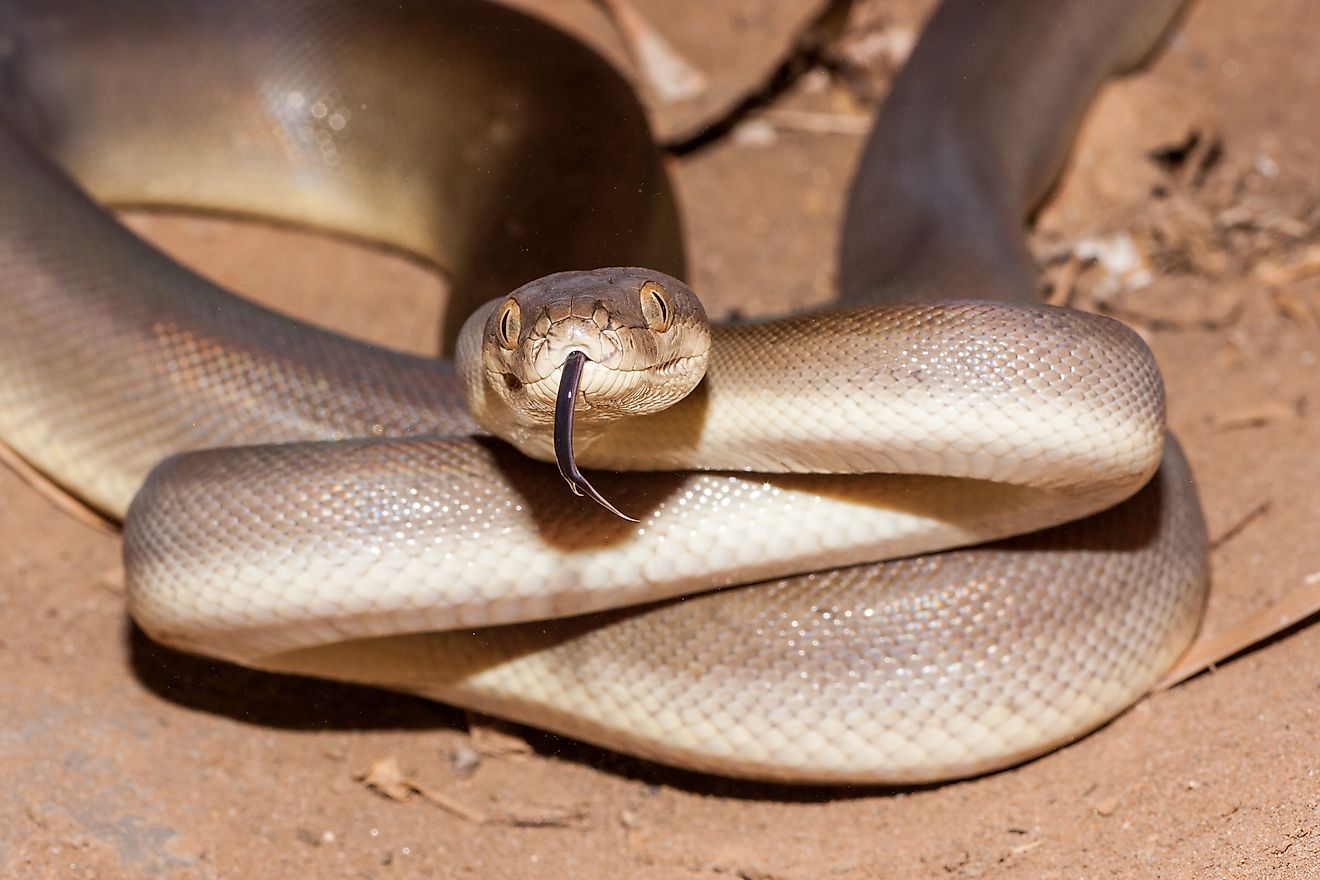
The base color is usually yellow, straw, or tan, overlaid with 41 to 66 dark brown or black blotches that run the length of the body and grow more widely spaced toward the tail. The belly is pale, often cream or yellow, and marked with a checkerboard of dark spots that flashes into view when the snake moves over rough ground. The scales are keeled, meaning each carries a raised ridge, which gives the animal a matte, roughened surface rather than a glossy one. Several features suit a life spent partly underground. The head is relatively small and narrow, and the snout ends in an enlarged, slightly upturned rostral scale that works like a shovel for pushing through soil and rodent burrows. A dark bar usually crosses the head in front of and below each eye. Crucially for anyone trying to tell it from a rattlesnake, the bull snake has round pupils and lacks the broad, triangular head and the segmented tail rattle of a true pit viper. Sexual differences are slight and relate mostly to proportion rather than color.
Range and Habitat

The bull snake is one of the most widely distributed snakes on the continent. Its range stretches from southern Canada, through the American Great Plains, and south into northern Mexico, reaching from the eastern edge of the Rocky Mountain states across to Indiana. Within that broad territory, it is above all a creature of open country. Prairies, grasslands, sandy plains, agricultural land, and open woodland edges all suit it, provided the soil is loose enough to burrow in and rodents are plentiful.
Where the bull snake lives is dictated in large part by where its prey lives, so it turns up reliably in the same fields, pastures, and grain areas that support mice, ground squirrels, and pocket gophers. In the colder parts of its range, it depends on communal wintering dens, shared underground refuges where many snakes gather to survive the winter dormancy. These dens can be scarce on the landscape, which ties the animal's fortunes to specific, irreplaceable sites. As native grassland has been converted to intensive agriculture and development, the bull snake's available habitat has narrowed even though its overall range remains large.
Diet

The bull snake is a constrictor, and its menu explains both its common association with farms and the affection farmers hold for it. Small mammals make up the bulk of its diet, including mice, rats, ground squirrels, and the pocket gophers that give the wider species group its name. Rabbits, birds, bird eggs, lizards, and the occasional amphibian round it out. Rather than injecting venom, the snake seizes prey in its jaws, throws several coils around the body, and tightens with each exhalation until the animal can no longer breathe.
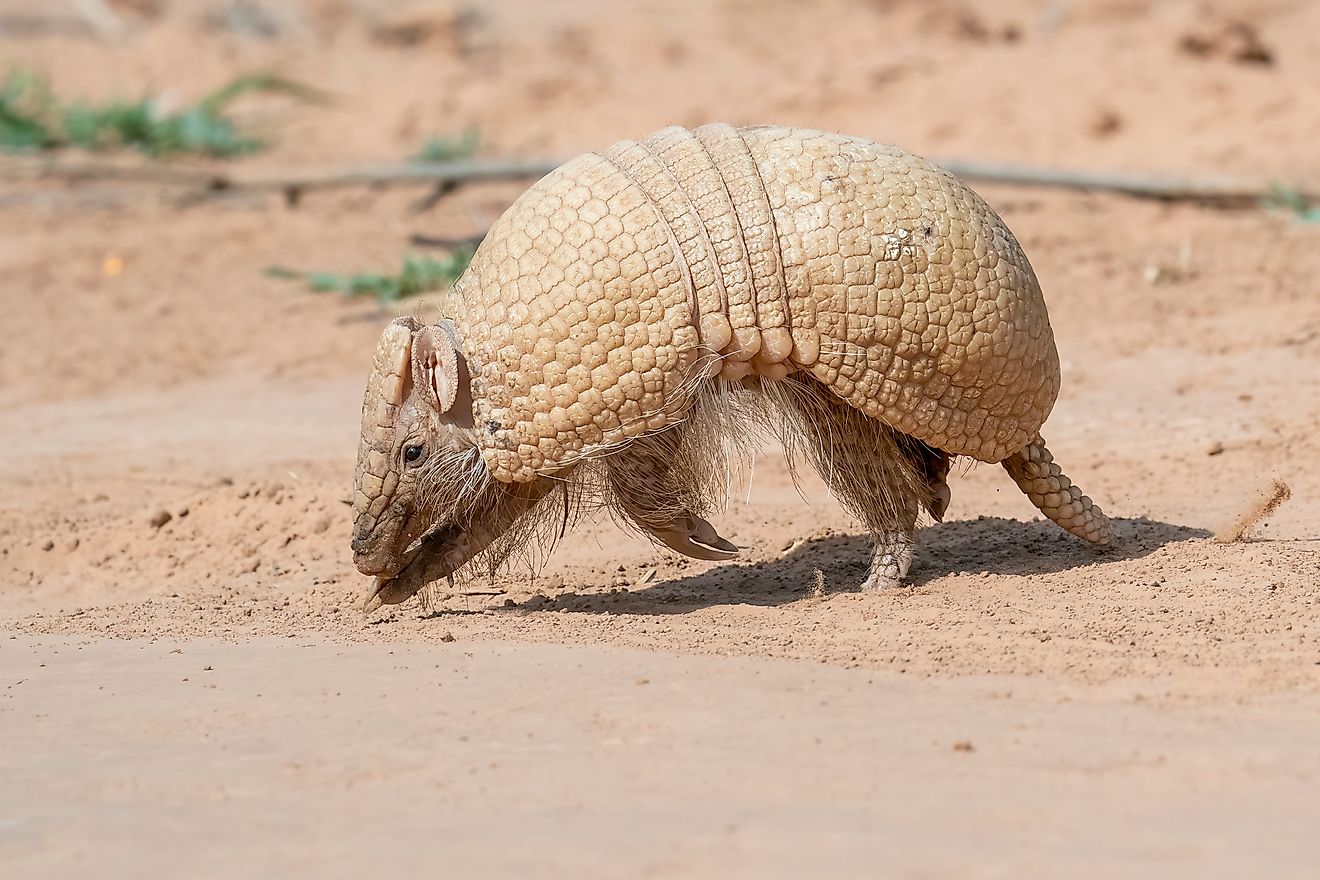
This snake is a capable and determined hunter, pursuing rodents directly into their burrows while using its shovel-shaped snout to work through tunnels, and it can take prey surprisingly large for its size. One often-repeated account describes a Texas bull snake more than 9 feet long that regurgitated a young armadillo after being captured. A single adult removes a steady stream of rodents from a field over a season, which is exactly why its presence around grain stores is a benefit rather than a nuisance.
Behavior

Bull snakes are mainly diurnal, active during daylight, though in the hottest weather they shift toward dawn, dusk, and cooler night hours. They are generally solitary and roam sizable areas, with home ranges estimated at roughly 18 acres, and they are not strongly territorial, although a snake may defend a productive hunting patch from a rival.
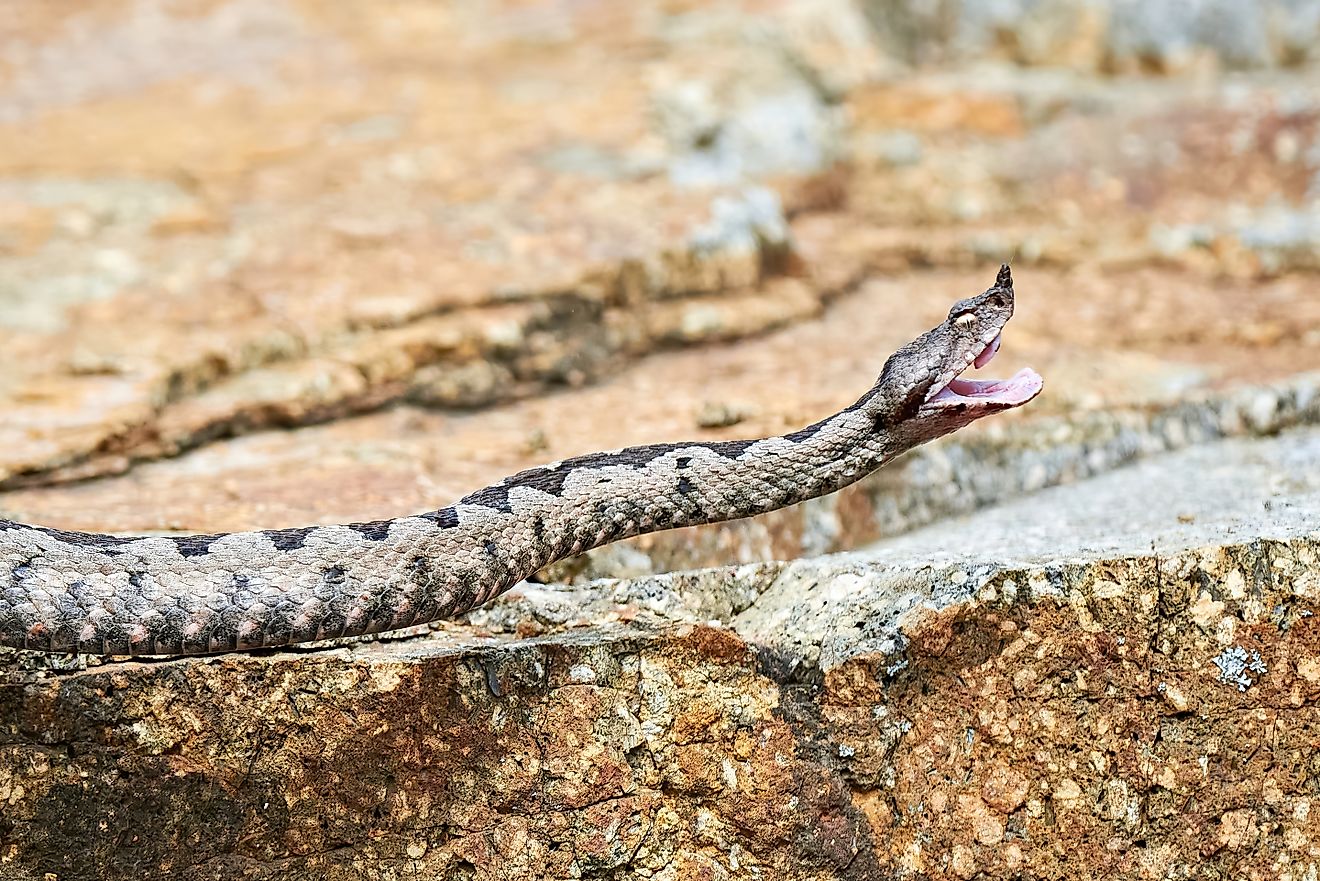
The animal is best known for its defensive theater, one of the finest examples of Batesian mimicry among North American reptiles. Batesian mimicry is when a harmless species imitates a dangerous one to ward off predators. When threatened, a bull snake draws itself into a coil, inflates its body to look larger, flattens and raises its head, and drives air out through a thin flap of tissue in the throat to produce a loud, rasping hiss. That hiss, said to resemble the grunt of a bull, most likely gave the snake its name. Many individuals also vibrate the tail, and against dry leaves or grass, which sounds startlingly like a rattle. The bluff is convincing enough to fool coyotes, foxes, and birds of prey, and it is most effective in places where real rattlesnakes share the ground and predators have learned to keep their distance. Despite the show, a bull snake will usually flee if given the chance and bites only as a last resort. Its bite is harmless to people beyond a scratch.
Reproduction

Bull snakes are oviparous, meaning they lay eggs. Mating takes place in spring, generally between March and May, once the snakes emerge from their winter dens. Females reach breeding maturity after about two seasons, while males mature a little earlier, at roughly a year and a half. Courtship gives way to egg laying in early summer, usually June or July.
A female deposits a clutch of leathery eggs, most often somewhere between 3 and 24, in loose soil, a burrow, or a cavity beneath rocks or roots. Multiple females sometimes use the same communal nest site. There is little to no parental care. The female leaves the eggs to incubate on their own, and the hatchlings, already patterned like miniature adults, emerge in late summer or early autumn after roughly 50 to 80 days of incubation. That reliance on a single burst of eggs with no aftercare, combined with late maturity, makes bull snake populations slow to recover from losses. In the wild, the snake may live around 12 years, while protected captive animals commonly reach 15 to 25 years, and some individuals surpass 30.
Importance to the World

The bull snake earns its keep. As a leading predator of rodents across the grain belt, it suppresses populations of mice, rats, and gophers that would otherwise damage crops, contaminate stored grain, and undermine fields with their tunnels. This service has earned the bull snake a well-known nickname among the people who benefit from it, the "farmer's friend." Encouraging one to stay near a barn is a far cheaper and cleaner form of pest control than poison, which also risks killing the very predators that keep rodents in check.
Beyond the farm, the bull snake occupies a valuable place in prairie food webs. It is both hunter and hunted, controlling rodents from above while feeding hawks, owls, coyotes, and other snakes from below, especially as eggs and juveniles. In an ecosystem where native grassland has already been heavily reduced, a large, adaptable, rodent-eating predator helps hold the remaining system in balance.
Threats and Conservation

At the species level, the gopher snake, which includes the bull snake, is listed as Least Concern on the IUCN Red List, and its overall population is considered stable. However, some regional populations face significant conservation concerns. In Canada, the bull snake was designated a species of Special Concern by COSEWIC in 2017, and several states track it as a species of conservation concern where local populations have declined.
The threats are consistent across its range, with grassland loss being the most significant. As prairie is plowed and developed, both hunting habitat and the scarce communal denning sites the snakes rely on are reduced. Because bull snakes move slowly and often bask on warm surfaces, roads take a heavy toll, and countless individuals are killed crossing them. Perhaps the most needless loss comes from the animal's own defense. The rattlesnake act that saves it from a coyote invites a shovel or a car tire from a frightened human, and enormous numbers of harmless bull snakes are killed each year simply because they are mistaken for something venomous. The species is slow to bounce back from these losses given its late maturity and low reproductive rate.
Conserving the bull snake requires both protecting its habitat and improving public understanding. Preserving native grasslands and known denning sites is essential, as is reducing road mortality where roads cross snake habitat. Educating people to distinguish a bluffing bull snake from a genuine rattlesnake is equally important, because one of the most effective ways landowners can help is simply by leaving the snake alone.
Takeaway
Consider what a single bull snake can do over the course of a prairie summer, and its value becomes clear. It can consume dozens of mice, rats, and gophers without poison or traps, reaching prey deep inside burrows where conventional pest control cannot. For generations, plains farmers have learned that leaving these snakes alone is more beneficial than killing them.
The species remains secure overall, but its future depends on smaller places, including scattered winter dens and shrinking patches of native grassland that cannot easily be restored once lost. Whether bull snakes remain common will often come down to simple decisions made one at a time, such as leaving a den undisturbed, preserving a field from development, or allowing a snake to cross the road safely. Give it enough space, and the plains can keep one of their most valuable natural pest controllers.
Fun Facts

- It is a professional impostor. The bull snake's hiss, head flattening, and tail buzzing form one of the most polished cases of Batesian mimicry among North American snakes, all without a drop of venom.
- The hiss is engineered. A thin flap of tissue in the throat vibrates as the snake exhales, amplifying the sound into a grunt that many people compare to a bull, which likely gave the animal its name.
- It is not actually a "gopher" by name. Of the gopher snake subspecies, the bull snake is the only one whose common name drops the word "gopher," which is why so many people wrongly think it is a separate species.
- It once coughed up an armadillo. A famous account describes a bull snake over 9 feet long regurgitating a young armadillo, a reminder of how large a meal a big constrictor can manage.
- It can outlive a dog. Well-kept captive bull snakes routinely reach 15 to 25 years, and some have passed 30.
Quick Facts
- Scientific name: Pituophis catenifer sayi
- Family and order: Colubridae (order Squamata)
- IUCN status: Least Concern at the gopher snake species level (Pituophis catenifer); listed as Special Concern in Canada by COSEWIC (2017)
- Length: 4 to 6 feet (1.2 to 1.8 m) on average, with records up to 8 feet 4 inches (2.5 m)
- Weight: 2 to 3 pounds (1 to 1.5 kg), with the heaviest reaching 8 to 10 pounds (3.6 to 4.5 kg)
- Lifespan: around 12 years in the wild; 15 to 25 years or more in captivity, occasionally past 30
- Diet: carnivore and constrictor, feeding mainly on rodents, plus rabbits, birds, and eggs
- Range: southern Canada through the American Great Plains into northern Mexico