Brown Bear
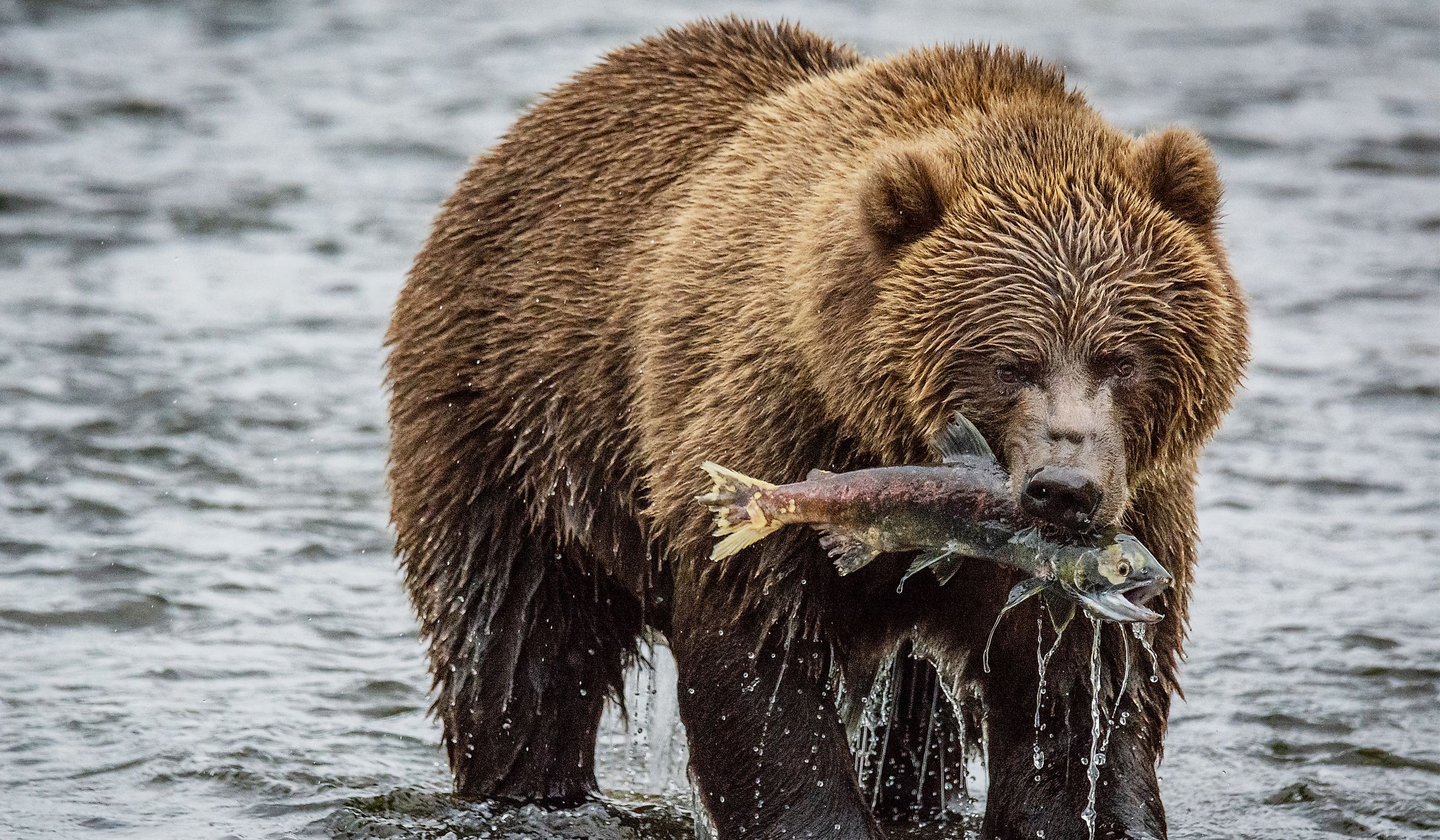
The Brown Bear (Ursus arctos) is a large, omnivorous mammal native to Europe, Asia, and North America. One of the largest bear species, the brown bear has a bulky body covered in shaggy brown fur. They walk low to the ground on four muscular legs, though they are capable of standing on just the back two. At the end of each leg is a huge, clawed paw that is ideal for digging. Read on to discover more about this iconic species.
Physical Description

Brown bears can be easily identified by the shape of their faces, which slope down from the ridge of their eyebrows towards their snout. The high hump over their shoulders is the other giveaway, a mass of muscle that drives their digging. As a whole, brown bears stand at around 3.4 feet tall at the shoulders, are approximately 6.5 feet in length, and can weigh up to 1,500 pounds. They are among the largest of all bear species, particularly the Kodiak bear, which is a subspecies of brown bear. In fact, there are numerous subspecies. North America accounts for two of the most familiar, the massive Kodiak bear of Alaska's Kodiak Island and the mainland grizzly. The Eurasian brown bear is the most widespread subspecies of all.
They are excellent swimmers and are capable of running short distances. Their noses provide them with an excellent sense of smell. Their eyesight is roughly comparable to a human's, while their hearing is about twice as sensitive as ours and reaches frequencies we cannot pick up at all. Like humans, brown bears are intelligent creatures with their own individual personalities. That intelligence helps the mostly solitary animals navigate social situations when big groups gather around a source of food.
Habitat & Diet

Brown bears are native to Europe, Asia, and North America, where they occupy forests, tundra, mountain ranges, and coastal river valleys. As omnivores, meaning they eat both plants and animals, a brown bear's diet is fairly varied. A brown bear's meals often include berries, grasses, roots, and bulbs, the last two of which they dig for with their long claws. Those claws also come in handy for holding on to fish, which are also a major part of a brown bear's diet. Among the largest predatory mammals in the world, brown bears also use their powerful muscles to chase down hoofed mammals like moose and caribou, whose young calves they especially prefer. Despite their immense strength, they frequently snack on ground squirrels and scavenge carrion too.
Behavior

When they're not hunting fish or mammals or scavenging berries, brown bears are known to dig. Using their long claws, brown bears dig into the ground after rodents and roots, dig shallow beds to rest in, dig holes to stash food, and dig out the dens they sleep in through the winter. Famously, brown bears go into a deep, restful state during the winter. Biologists still disagree over what to call it. Some describe it as hibernation and others as an extended torpor, because a denning bear's temperature falls only about 10 to 12 degrees Fahrenheit rather than dropping near freezing the way a ground squirrel's does. Whatever the label, a bear's heart rate and breathing slow sharply, which saves energy during the winter months when food is scarce. Temperature is not a major concern for the bears, though, as their thick, shaggy coats protect them from the cold temperatures of winter. Still, given their size, brown bears need to conserve as much energy as possible until spring arrives. A denning bear may still need to wake and defend itself or its den from a curious animal or a rival. Winter dormancy, therefore, slows a brown bear's systems only so far, and it can spring back into action when it has to.

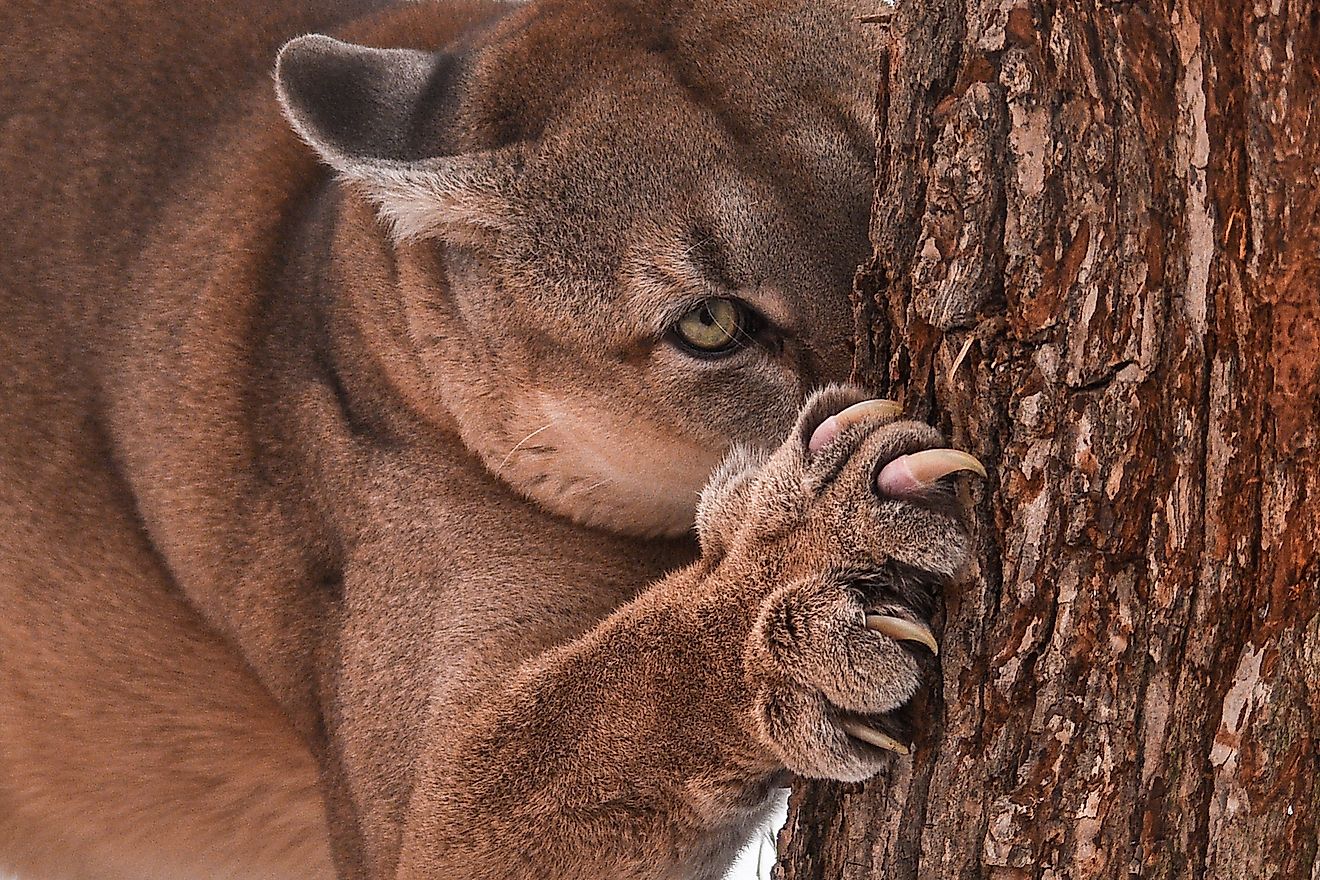
Each year, brown bears typically emerge from their dens in the spring. Solitary by nature, brown bears can often be seen rubbing or scratching at the bark of trees to mark the boundaries of their territory. After spring, brown bears spend the next several months bulking up for winter, when food will be harder to find, and reserves will be needed to let them rest through the frozen environment. The bears eat tremendous amounts as they build the fat reserves needed to rest all winter. They also spend time storing food and digging dens. Once winter arrives, they head into their den and rest until spring, starting the yearly cycle all over again.
Reproduction

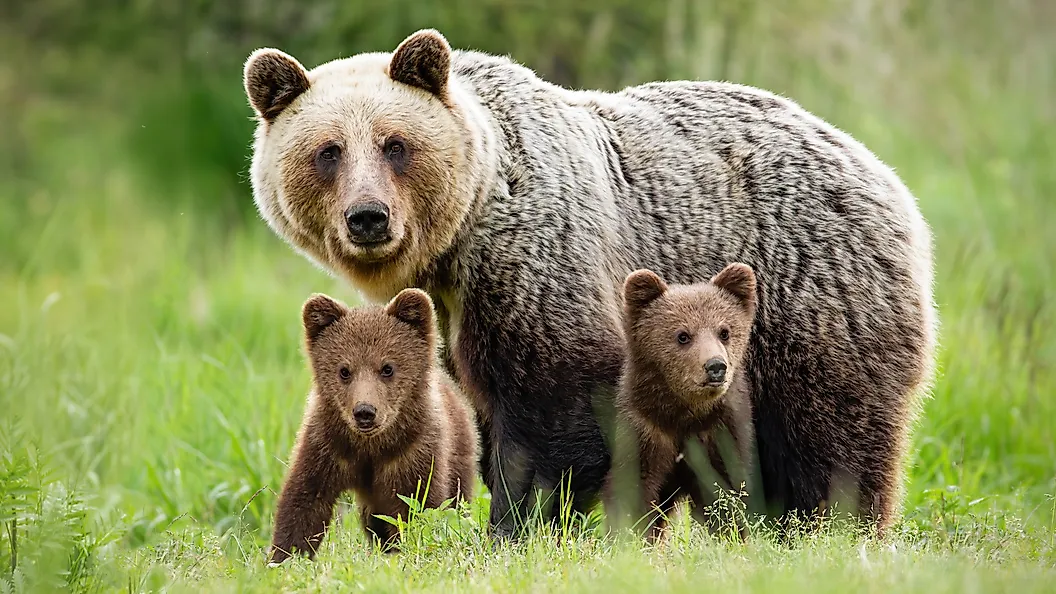
Although they typically live on their own, brown bears can also be very social, forming families when cubs are born. Brown bears participate in the mating season in the springtime, around the same time they emerge from their dens. Their mating system is promiscuous, meaning males and females both pair with several partners over a single season. Cubs are born in the months of January and February, usually in groups of two, though groups of one to four are common. After they're born, cubs will stick with their mothers for two to three years, after which the male bears will spread out, and the females will stay in the broad area near where they were raised.

Though brown bears are mostly solitary, they often congregate in areas with lots of food, like salmon runs, whale carcasses, berry patches, and dumpsters. Brown bears have complex social structures and communication styles that help prevent serious fights when these large groups form. Overall, however, brown bears try to keep to themselves.
Interactions with Humans

Because of their size and demeanor, brown bears are often considered frightening or dangerous when encountered by humans. Though brown bear attacks on humans do happen, generally the creatures focus on protecting themselves, their cubs, their space, and their food.
When encountering an aggressive brown bear, the most important thing to do is to identify yourself as a human. Stand still and speak in a low, level voice while slowly waving your arms, and do not scream or yell. A defensive brown bear might feign an attack, charging and then stopping at the last second. It is important not to turn your back or run away, as the charging bear might see you as a prey animal. Instead, humans should stand tall and try to make themselves appear as large as possible, slowly backing away while facing the bear.
For the most part, we are more of a threat to brown bears, which do not actively hunt humans, than they are to us. In much of the world, brown bears are considered something of a pest, often breaking into garbage cans or frightening people as they wander through urban spaces in search of food.
Conservation and Cultural Legacy
Brown bears hold a special place in the hearts of many humans across the world, and human activity has shaped their story throughout history. They have been a source of meat and pelts across many cultures, and ancient Rome sent them into the arena as fighting animals. Today, they are among the biggest draws at zoos and national parks, and the sight of one still impresses even the most seasoned naturalist. In spite of hunting and poaching, habitat loss, traffic collisions, and other dangers posed by humans, brown bears live across the world in the hundreds of thousands, and the IUCN lists the species globally as Least Concern. Several small and isolated populations remain at risk of local extinction, but as a species, the brown bear endures as an inspiring sight, in nature or in captivity, for millions of people.