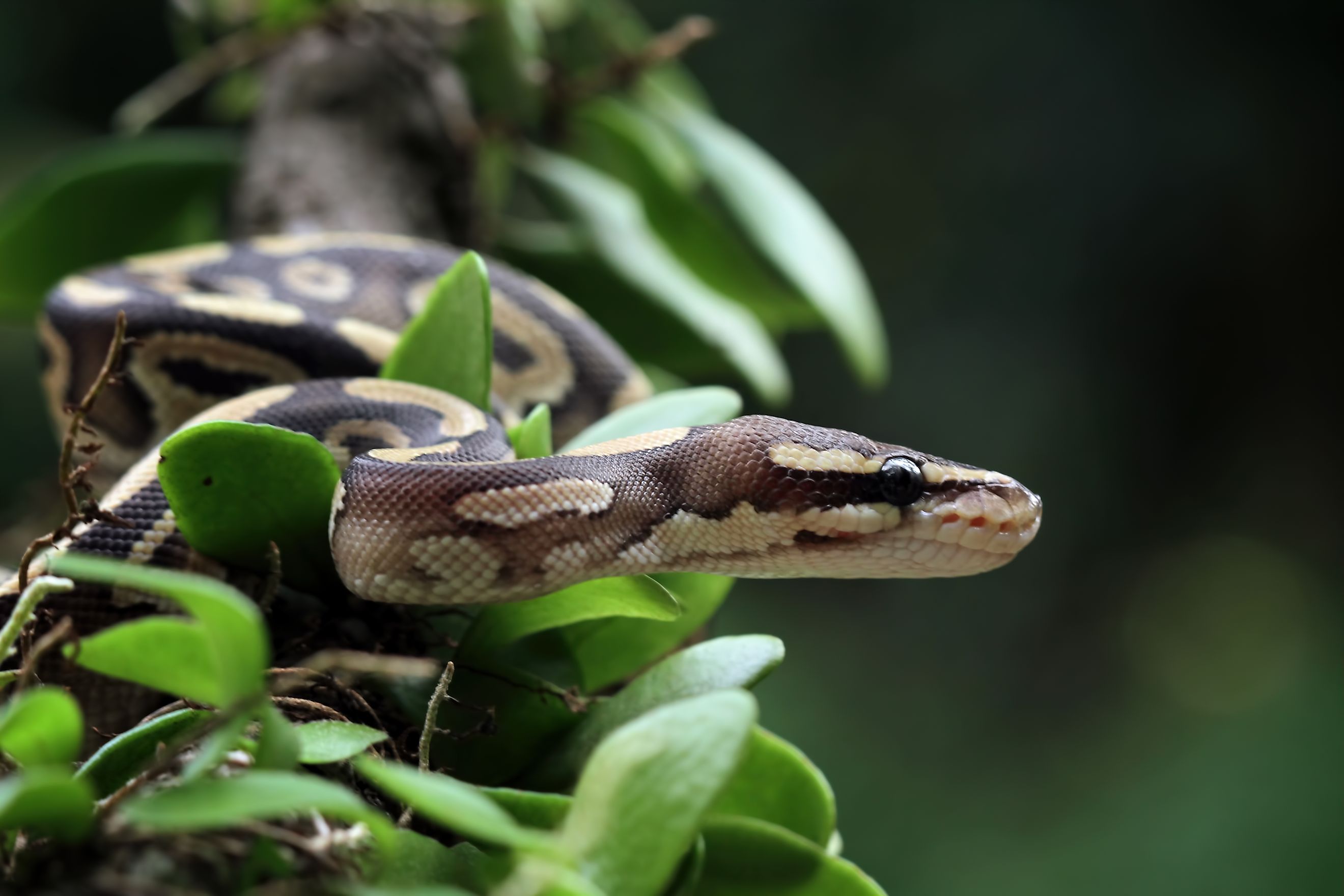
Ball Python
The ball python is the smallest of Africa's pythons and, by a wide margin, the most popular pet snake on the planet. When threatened, it does something unique among African pythons. It tucks its head into the center of its body and coils into a tight defensive ball. That single habit gave the species its common name and helps explain why a shy, slow constrictor from the West African grasslands became a global fixture in living rooms and reptile shows.
Known scientifically as Python regius, the ball python is a nonvenomous constrictor native to the grasslands, shrublands, and open forests of West and Central Africa. Adults rarely exceed 5 feet (1.5 m) in length, making them manageable compared to the giant constrictors they are related to. That modest size, a generally calm temperament, and an astonishing range of captive-bred color patterns have turned the species into a cornerstone of the reptile trade.
Yet the same popularity that made the ball python famous is now a conservation problem. Millions have been exported from a handful of West African countries over the past few decades, and in 2021 the species was reclassified as Near Threatened. This profile covers what the ball python is, how it lives, and why its future is more uncertain than its abundance in captivity might suggest.
Taxonomic Classification

The ball python belongs to the family Pythonidae, the Old World pythons, within the order Squamata and suborder Serpentes. Its full scientific name is Python regius, placing it in the genus Python alongside larger African relatives such as the African rock python (Python sebae). The species name regius is Latin for "royal," which is the source of its other widely used common name, the royal python.
George Shaw first described the animal in 1802, originally under the name Boa regia, working from a specimen of uncertain African origin. The genus Python was proposed by François Marie Daudin in 1803, and the species was later reassigned there. Several other names were floated for the same animal through the nineteenth century, but Python regius is the accepted classification today. No subspecies are currently recognized, so every ball python, wild or captive, belongs to a single taxon.
Physical Description

Among Africa's four python species, the ball python is the smallest. It reaches a maximum recorded length of about 6 feet (1.8 m, or 182 cm), but most adults settle in the range of 3 to 5 feet (0.9 to 1.5 m). Hatchlings emerge at roughly 10 to 16 inches (25 to 43 cm). The build is heavy for its length, with a thick, muscular body, a relatively small head set apart by a slender neck, and a short tail. Adults commonly weigh 2 to 5 pounds (0.9 to 2.3 kg), and females tend to be noticeably longer and heavier than males, a clear case of sexual dimorphism.
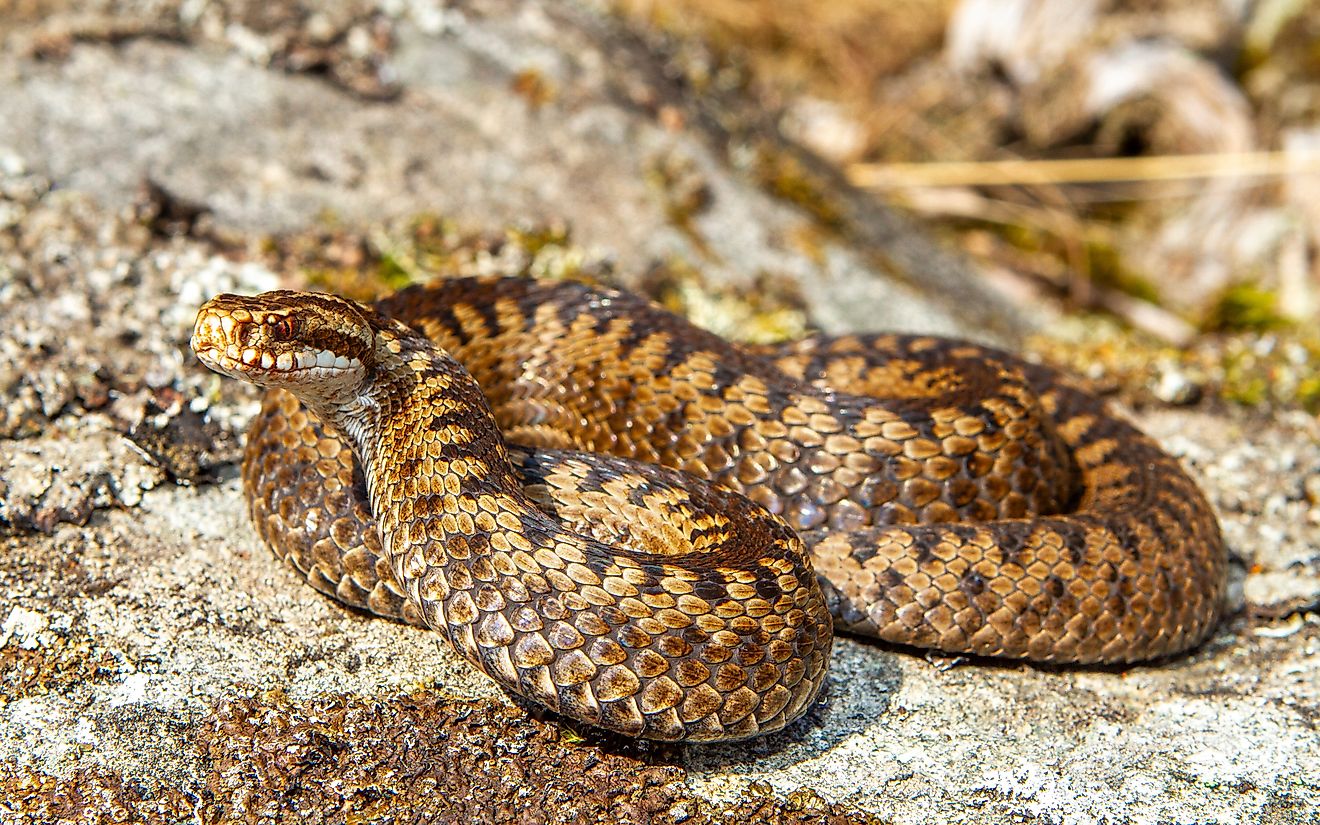
Wild ball pythons have a practical camouflage pattern, with a dark brown to black background marked by tan or golden blotches and side patterns, along with a pale belly. The pattern breaks up the snake's outline against leaf litter and dry grass. As a constrictor, the ball python has backward-curving teeth for gripping prey and no venom. It kills by coiling and applying steady pressure rather than by a toxic bite.
Captivity has transformed the species' appearance far beyond anything seen in the wild. Selective breeding for heritable color and pattern mutations, known in the hobby as morphs, has produced thousands of distinct looks: stark white "piebald" animals, high-contrast pastels, and near-solid variants. These morphs are the engine of the pet market, and some individual snakes carrying rare gene combinations have sold for very large sums.
Range and Habitat

The ball python is a West and Central African species. Its range stretches across a broad belt south of the Sahara, from Senegal and the Gambia in the west through Guinea, Sierra Leone, Ivory Coast, Ghana, Togo, Benin, Nigeria, and Cameroon, and eastward toward Sudan, South Sudan, and Uganda. This wide distribution is one reason the species remains numerous overall even as pressure mounts in specific countries.
Within that range, ball pythons prefer dry, open habitats such as savanna grasslands, shrublands, and lightly wooded forest edges. They also do well in land cleared for farming, which puts them in frequent contact with people. Rather than climb or bask in the open, they spend much of their time on or under the ground, sheltering in abandoned mammal burrows and termite mounds. These underground refuges maintain steady temperatures and humidity, which protect the snake from both overheating and drying out in a hot, seasonal climate.
Diet

Ball pythons are carnivores that feed mainly on small mammals, above all rodents. In the wild, the exact menu shifts with the snake's size and sex. Smaller males take more birds, while larger females rely more heavily on ground-dwelling rodents such as rats, mice, gerbils, and shrews. This dietary split between the sexes is unusual and lines up neatly with the size difference between males and females.
As ambush and burrow hunters, ball pythons often wait near rodent runs and inside the burrows their prey uses, striking when an animal comes within reach. A strike is quickly followed by constriction, as the snake wraps several coils around its prey and gradually tightens its grip. Feeding is infrequent by mammal standards. A wild ball python may go weeks between meals, whereas captive animals are typically fed every 1 to 2 weeks, with adults needing even less.
Behavior

The behavior that names the species is its defense. When frightened, a ball python coils into a compact sphere with its head buried safely in the middle, presenting only a smooth ball of muscle to a would-be predator. It is a passive, almost inert response that reflects a broadly shy, non-aggressive nature. Ball pythons rarely bite defensively and are far more likely to freeze or hide than to strike at a large threat.
These snakes are most active at dawn and dusk, a crepuscular pattern that helps them avoid both the midday heat and the coolest part of the night. They are largely solitary and terrestrial, though juveniles will climb low vegetation. Much of their life is spent motionless in burrows, conserving energy between hunts. Ball pythons are also known to be reluctant feeders when stressed. A wild-caught or anxious animal may refuse food for extended periods, which is one reason captive-bred specimens often adapt more easily to life in a terrarium.
Reproduction

Ball pythons are oviparous, meaning they lay eggs rather than giving live birth. Breeding is tied to the seasonal cycle, typically the cooler, drier months, and males locate females by scent. After mating, a female produces a clutch that usually numbers between 3 and 11 eggs in the wild, though captive clutches can run larger, often averaging around 15 under good conditions.
What sets python reproduction apart is maternal care, which is rare among snakes. The female coils tightly around her clutch and incubates it for roughly two months until hatching. She can even raise her body temperature through rhythmic muscle contractions, a form of "shivering thermogenesis" that helps keep the developing eggs warm. Hatchlings are independent from the moment they emerge. Females reach breeding maturity at around 4 to 5 years and males a little sooner, at 3 to 4 years.
Importance to the World

In its native ecosystems the ball python is a useful check on rodents. As a specialized small-mammal predator, it helps control populations of rats, mice, and other rodents that damage crops and stored grain, which gives the species real value to farming communities across its range. It also serves as prey for other animals. Juveniles in particular are vulnerable to birds of prey, larger snakes, and wild mammals, placing the ball python firmly in the middle of the food web.
Its cultural and economic footprint is large. In parts of West Africa the snake carries traditional significance and has long been associated with royalty, and globally it anchors a multimillion-dollar pet industry built on captive breeding. That commercial importance cuts both ways, because the same demand that sustains breeders also drives the wild harvest that now threatens the species.
Threats and Conservation

In 2021 the IUCN reassessed Python regius as Near Threatened, an upgrade in concern from its earlier Least Concern listing. The reassessment was driven by a suspected population decline of around 30 percent over three generations, concentrated in West Africa. The single largest pressure is the international pet trade. Ball pythons are the most heavily traded live snakes exported from Africa, and Benin, Ghana, and Togo have supplied nearly all of those exports since the mid-1970s, mostly bound for the United States and the European Union.
The scale of collection is significant. Historical records show tens of thousands of animals leaving single countries in a year, and interviews with rural hunters in Togo documented thousands of live snakes and thousands of eggs gathered in a single year. Gravid females and egg clutches are often taken from the wild and funneled through "ranching" operations, a practice that can strip local populations of their next generation. Additional threats include habitat loss from expanding, increasingly mechanized agriculture, heavy pesticide use, and hunting for skin, meat, and traditional medicine. Captive-bred individuals are widely available, but breeding has not reduced the damage to wild populations, and disease agents such as ball python nidovirus add further risk.
The species has been listed on Appendix II of CITES since 1977, which regulates but does not halt international trade. Conservation attention now centers on tightening export quotas, improving the transparency of ranching operations, and monitoring wild populations in the most heavily harvested countries. The ball python's broad range and continued abundance in captivity mean it is not in immediate danger of extinction, but the declining trend in its West African heartland is why its status has changed.
Takeaway
The ball python is a shy, burrow-dwelling rodent hunter from the African savanna that has become one of the world's most recognizable reptiles. Its small size, calm temperament, long life, and endless variety of captive patterns explain why it fills terrariums on every continent. That success, though, has come at a cost to the wild populations that supplied it, and the 2021 shift to Near Threatened is a reminder that even an animal thriving in captivity can be losing ground in its native range. The species' long-term outlook will depend less on how many ball pythons are bred in homes and more on whether the harvest across West Africa can be brought into balance with what the wild can sustain.
Fun Facts

- It can outlive a dog many times over. Ball pythons commonly reach 20 to 30 years in captivity, and the oldest individual with reliable records, a male at the Philadelphia Zoo, lived past 47 years.
- Thousands of "morphs" exist, none of them natural. Selective breeding for color and pattern mutations has produced a vast catalog of captive varieties, some of which have commanded very high prices.
- Females can incubate their own eggs. A brooding female coils around her clutch and generates heat through muscle contractions, a rare example of parental care in snakes.
- It is the reptile behind an entire industry. The ball python is the most popular pet snake in the world and among the most traded reptiles overall.
- The "ball" is a defense, not a game. Curling into a head-hidden sphere is the snake's main response to a threat it cannot flee.
Quick Facts
- Scientific name: Python regius
- Family / Order: Pythonidae / Squamata
- IUCN status: Near Threatened (2021)
- Length: typically 3 to 5 ft (0.9 to 1.5 m); maximum about 6 ft (1.8 m)
- Weight: about 2 to 5 lb (0.9 to 2.3 kg); females larger than males
- Lifespan: 20 to 30 years in captivity (record over 47); shorter in the wild
- Diet: Carnivore, mainly small rodents
- Range: West and Central Africa