10 Iconic Animals That Live Only In Canada
The surprising thing about Canada's endemic wildlife is that it isn't moose, bears, or wolves. Those animals also live in Alaska, Greenland, and the northern US. What's actually unique to Canada is much more localized. A marmot confined to a single island. White-coated spirit bears living in one stretch of rainforest. Wildlife found only on Haida Gwaii, an archipelago often called the Canadian Galápagos.
Many of these animals exist because Canada's geography allowed them to evolve in isolation. Offshore islands, remote Arctic archipelagos, and watersheds cut off from neighboring rivers gave small populations thousands of years to diverge from their mainland relatives. Some became entirely new species. Others became distinct subspecies or isolated populations found nowhere else in the wild. Together, they represent some of the country's rarest and most remarkable wildlife.
Vancouver Island Marmot

About the size of a housecat and covered in chocolate‑brown fur, the Vancouver Island marmot (Marmota vancouverensis) lives in subalpine meadows above 1,000 metres. It is the only mammal species found nowhere else but British Columbia, and one of the rarest on Earth.
By 2003, the wild population had collapsed to just 30 animals before a captive‑breeding program led by the Toronto and Calgary Zoos pulled it back from the brink. Highly social by nature, these marmots rely on a critical mass of neighbors to endure the winter and warn each other of predators.
Spirit Bear

The Spirit Bear (Ursus americanus kermodei) isn’t a separate species but a population of American black bears carrying a rare recessive gene for a white or cream‑colored coat. The gene is concentrated almost entirely in the Great Bear Rainforest on British Columbia’s central coast, especially on Princess Royal and Gribbell Islands.
Fewer than 500 of these white‑coated bears are thought to exist, making them unique to this region. Researchers suspect the pale coat offers a fishing advantage, since salmon appear less able to spot white bears against a bright sky than their darker counterparts.
Peary Caribou

The smallest and northernmost caribou subspecies, Peary caribou (Rangifer tarandus pearyi) are pale, compact, and built for polar desert conditions. They live only on Canada’s High Arctic islands, often crossing sea ice to move between seasonal ranges.
Their entire range lies within the Arctic Archipelago, leaving their future especially uncertain. As sea ice grows less reliable, the frozen corridors that once linked the islands become harder to cross, limiting movement between herds and further isolating an already isolated animal.
Newfoundland Marten

The Newfoundland marten (Martes americana atrata) is a dark-furred, orange-throated subspecies of the American marten. It has been isolated on the island of Newfoundland for roughly 7,000 years, long enough to become genetically and ecologically distinct from its mainland cousins. It's one of only 14 land mammal species native to the island.
Historic habitat loss and incidental trapping caused a dramatic population decline during the late 20th century. Since then, habitat protection and changes to trapping practices have helped the Newfoundland marten recover to more than 2,500 mature animals.
Haida Gwaii Black Bear

The Haida Gwaii black bear (Ursus americanus carlottae) is another black bear subspecies found only on Haida Gwaii, off British Columbia's north coast. It's also the largest black bear subspecies in the world. Unlike mainland black bears, which occur in several color phases, Haida Gwaii bears are consistently black with a tan muzzle.
Thousands of years of isolation have given them unusually large skulls and molars. Along the coast, they also depend heavily on the annual salmon run, obtaining about 70 percent of their yearly protein from spawning salmon during the fall migration.
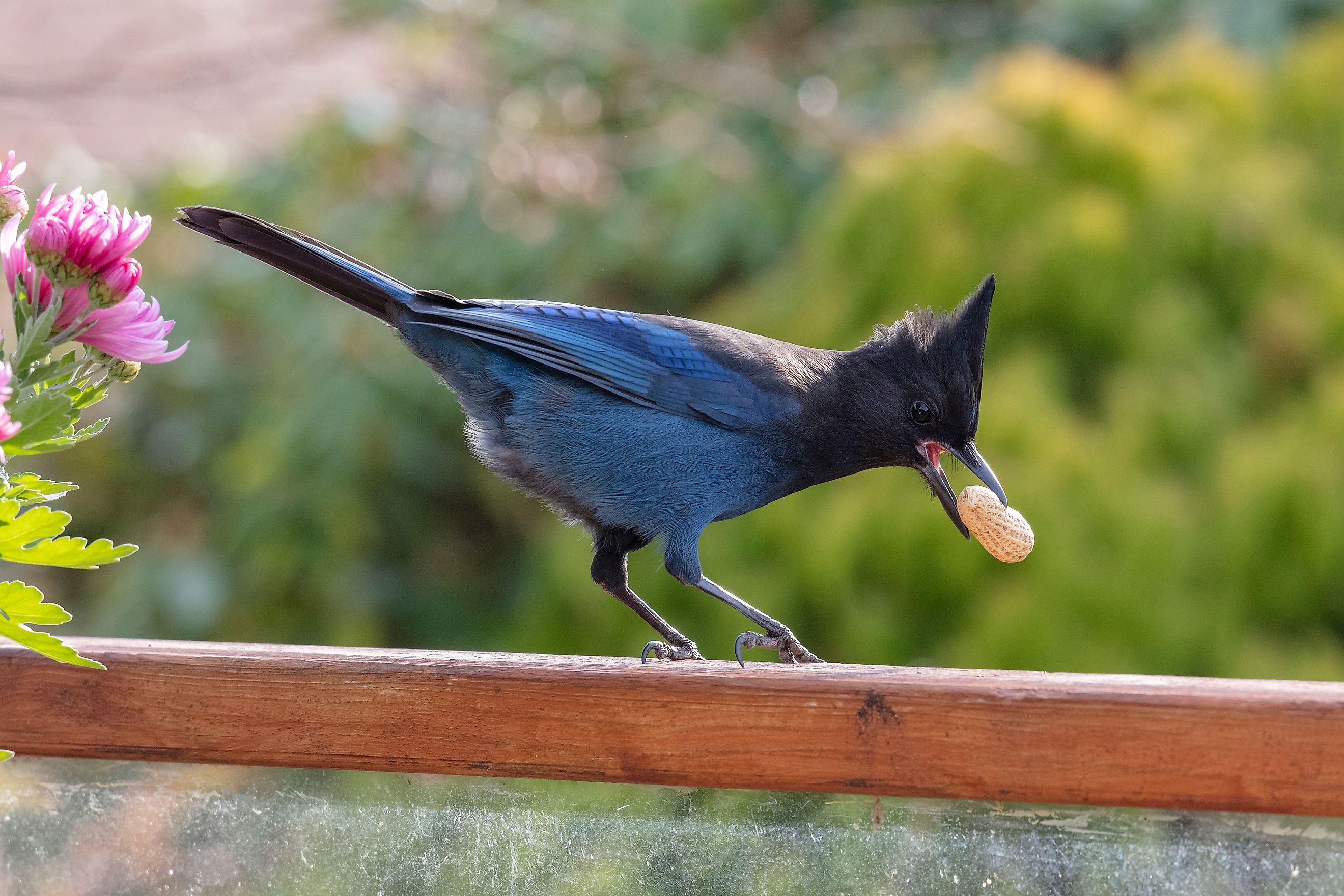
Pacific Steller's Jay

This Haida Gwaii subspecies of the familiar Steller's jay is larger and darker than populations found elsewhere in western North America, the result of thousands of years of isolation on the archipelago. The Pacific Steller's Jay (Cyanocitta stelleri carlottae) lives year-round across Haida Gwaii rather than migrating south.
Unlike many island endemics, it's remarkably adaptable, nesting in conifer forests, forest edges, shrubby areas, and even around towns and other modified habitats. Even so, its entire global range is confined to Haida Gwaii, making it one of Canada's most distinctive island birds.
Northern Saw-whet Owl

Unlike Northern Saw‑whet Owls elsewhere in North America, the Aegolius acadicus brooksi subspecies on Haida Gwaii has darker plumage, a trait shaped by thousands of years of isolation. Found nowhere else on Earth, its entire global range is confined to Haida Gwaii, where mature and old-growth forests provide much of the nesting and hunting habitat it depends on.
The subspecies is listed as Threatened in Canada because of its small population and restricted range. Forest harvesting, introduced species, and habitat changes are the biggest long-term challenges, making the protection of Haida Gwaii's remaining old forests essential to its survival.
Haida Gwaii Hairy Woodpecker

Larger and darker than its mainland relatives, this subspecies (Dryobates villosus) is another example of how isolation on Haida Gwaii subtly reshaped a widespread North American bird. It lives in coniferous and mixed forests across the archipelago, where it chisels into dead and dying trees in search of beetle larvae and other wood-boring insects.
Like other woodpeckers, it excavates its own nesting cavities, which are later reused by small owls, songbirds, and mammals that cannot create cavities themselves. Because its entire global range is confined to Haida Gwaii, conserving the islands' forests is essential to the bird's long-term survival.
Vancouver Lamprey

Looking more like an eel than a typical fish, the Vancouver lamprey (Entosphenus macrostoma) is a jawless species found nowhere else on Earth. Its natural range is limited to Cowichan and Mesachie lakes on southern Vancouver Island and the lower reaches of their tributaries.
Scientists believe it evolved from the Pacific lamprey after a population became isolated in the Cowichan lake system, eventually adapting as a permanent freshwater resident. Because it exists in such a small area and faces growing pressure from human activity, COSEWIC lists the Vancouver lamprey as Threatened, making it one of Canada’s most geographically restricted vertebrates.
Atlantic Whitefish

Once found in more than one Nova Scotia watershed, the Atlantic whitefish (Coregonus huntsmani) now survives naturally only in the Petite Rivière system, making it one of the most narrowly distributed vertebrates in Canada. The species is confined to three interconnected lakes, Hebb, Milipsigate, and Minamkeak, where it completes its entire life cycle in fresh water.
Dams that block fish passage, the introduction of smallmouth bass, and declining habitat quality have all contributed to its dramatic range contraction. If that population is lost, there is nowhere else on Earth where Atlantic whitefish survive naturally.
Wildly Canadian Animals Found Nowhere Else
Canada's most remarkable wildlife isn't always the biggest or easiest to spot. In many cases, it's the animals that never spread beyond a single island, watershed, or remote corner of the country. Thousands of years of geographic isolation let these populations evolve in their own direction, creating species and subspecies found nowhere else on Earth. That same isolation also makes them unusually vulnerable.
Protecting these animals means protecting the isolated forests, islands, lakes, and Arctic landscapes that allowed them to evolve in the first place. Once those habitats are gone, there is nowhere else on Earth these uniquely Canadian animals can simply move to.