Which Animals Have The Strongest Sense Of Smell?
- Recent studies have found that the African elephant has the strongest sense of smell in the animal kingdom.
- A bloodhound is often referred to as a nose attached to a dog since these pooches have the amazing ability to scan a terrain with their nose.
- The male silk moth's large, elaborate, feathery antennae are filled with scent receptors that enable them to sense a single pheromone scent particle from a female more than seven miles away.
Your nose has roughly four hundred working genes for smell. A bloodhound has about eight hundred. An elephant has close to two thousand. By that math the human sense of smell is a rounding error, and the rest of the animal kingdom has spent millions of years leaving us in the dust. Evolution hands out a killer nose to whatever needs one, whether the job is finding dinner, dodging a predator, or tracking down a mate in the dark.
Some of these animals detect things we cannot imagine: a drop of blood dispersed through a swimming pool, a single molecule of perfume, water sitting twelve miles away. A few are so good at it that humans have put them on the payroll. Here are some of the animal kingdom's most powerful noses, ending with the current record holder.
African Giant Pouched Rats

Start with a rodent that holds a job most humans would refuse. The African giant pouched rat (Cricetomys ansorgei) is a cat-sized rodent from sub-Saharan Africa with weak eyes and an extraordinary nose, and groups like the Belgian nonprofit APOPO have trained it to sniff out buried landmines left behind by old wars. The rats work in Cambodia, Angola, and Mozambique, and they are perfect for the task for one grim, practical reason: they are far too light to set off the mines they find.
A trained rat can clear a patch of ground the size of a tennis court in about thirty minutes, work that would take a person with a metal detector days, because the rat ignores scrap metal and homes in on the explosive itself. The same nose has been put to work in hospitals, where the rats screen sputum samples for tuberculosis faster than a lab technician can. They are paid, reliably, in bananas and peanuts.
Grizzly Bears

The grizzly bear (Ursus arctos horribilis), the silvertipped bear of western North America, may have the finest nose of any animal on land. The scent-detecting surface inside its snout is roughly a hundred times larger than a human's, and estimates put a bear's sense of smell at about seven times sharper than a bloodhound's, which is already the gold standard among dogs. A grizzly can wind a carcass from well over a dozen miles away.
That nose runs the bear's entire life. It locates buried roots, ripening berries, spawning salmon, and rival bears, and a mother can track her cubs across a valley. It is also why every rule in bear country is really a rule about smell: a candy wrapper left in a tent is not a snack to a grizzly, it is a dinner bell it can pick up from the next drainage over.
Great White Shark

Sharks are older than the dinosaurs as a lineage, patrolling the oceans for more than four hundred million years, though the great white shark (Carcharodon carcharias) itself is a relative newcomer that appeared only around eleven million years ago, long after the last dinosaur died out. What the great white lacks in seniority it makes up for in nose. A large share of its brain is wired for smell, and its nostrils, set on the underside of the snout, do nothing but smell. They are not used for breathing at all.
The myth is that a shark can smell a single drop of blood from miles away. The truth is more precise and more interesting. A shark detects blood and other chemicals at concentrations of roughly one part per million to one part per billion, something like one drop in a backyard swimming pool, and it picks up that trace from a few hundred meters as the current carries it. To find the source, the shark registers which nostril caught the scent a split second sooner and turns that way, smelling in stereo as it closes in.
Kiwi

The flightless kiwi (Apteryx), endemic to New Zealand, is the only bird on Earth with its nostrils at the very tip of its beak instead of up near its face. That seems a strange place to keep a nose until you watch a kiwi work. It walks the forest floor at night, jabs its long bill into the soil, and sniffs out earthworms and grubs it cannot see, giving an audible snuffle as it goes. It even sneezes to blow the dirt back out of its nostrils.
Researchers at Massey University found the kiwi's bill tip is studded with sensory pits that pick up prey moving underground, so the bird effectively smells and feels its dinner before it starts digging. Its olfactory bulb is among the largest of any bird relative to brain size, which for a nearly blind, ground-bound bird is exactly the sense worth investing in.
Bloodhound

Among dogs, the bloodhound (Canis lupus familiaris) is the specialist every other breed is measured against. It carries roughly 230 million scent receptors, against about five or six million in a human, packed in behind long ears and loose, wrinkled skin that scoop and trap odor as the dog works a trail nose-down. Breeders were not going for a pretty face. They built a scent-collecting machine and hung a dog behind it.
The results are almost hard to believe. A bloodhound can pick up a trail more than thirteen days old and follow it over a hundred and thirty miles without losing the thread. Police and search teams have leaned on the breed for more than a century to find missing people and track suspects, and a trained bloodhound's identification is considered solid enough to be admitted as evidence in most US courts. No other animal's nose gets to testify.
Turkey Vultures

Most birds have an unremarkable sense of smell. The turkey vulture (Cathartes aura) is the striking exception. Its olfactory bulb is about four times the size of the closely related black vulture's and carries roughly twice as many scent-relaying mitral cells, the most of any bird ever studied. Its nostrils are so open you can see clear through its beak, all the better to catch the faint gas of decay drifting up on a thermal. It can find a hidden carcass from more than a mile up.
The bird is tuned to one chemical in particular: ethyl mercaptan, the sulfurous compound that seeps from a dead animal. It happens to be the same stuff gas companies add to odorless natural gas so people can smell a leak. In the mid-twentieth century, engineers pumped extra mercaptan through a leaky pipeline and simply watched for the turkey vultures to gather over the break. The birds found the leak every time.
Moths

A moth does not smell with a nose. It smells with its antennae, and in males those antennae can be enormous feathery fans built to pull a female's scent out of the air. The silk moth (Bombyx mori) is the classic case: its pheromone, bombykol, was the first animal scent that chemists ever identified, and a male's antennae are so sensitive that a single molecule landing on them can register. That is the theoretical floor of chemical detection. You cannot smell less than one molecule.
Here is the punchline. The domestic silk moth has been bred for silk for thousands of years and, somewhere along the way, lost the ability to fly, so it can detect a mate it has no way of reaching. For the famous feat of tracking a female from a mile or more off, look to its wild relatives, the giant silk moths and emperor moths, whose males ride the wind upwind for miles along a scent trail thinner than almost anything a machine can measure.
Basset Hound

The basset hound (Canis lupus familiaris) is the bloodhound's short-legged cousin and very nearly its equal on a trail. Almost every part of the breed is a scent tool. It stands low so its nose rides right over the track; its long ears drag through the grass and stir scent up toward the face; and the heavy folds of skin around its muzzle trap those molecules and hold them close, so the smell lingers as the dog moves along.
Put it all together and the basset is one of the best trailing dogs alive, second among breeds only to the bloodhound, which is why it cleans up in the sport of scent work. The droopy face and the ambling walk read as lazy. The nose attached to them is anything but.
Snakes

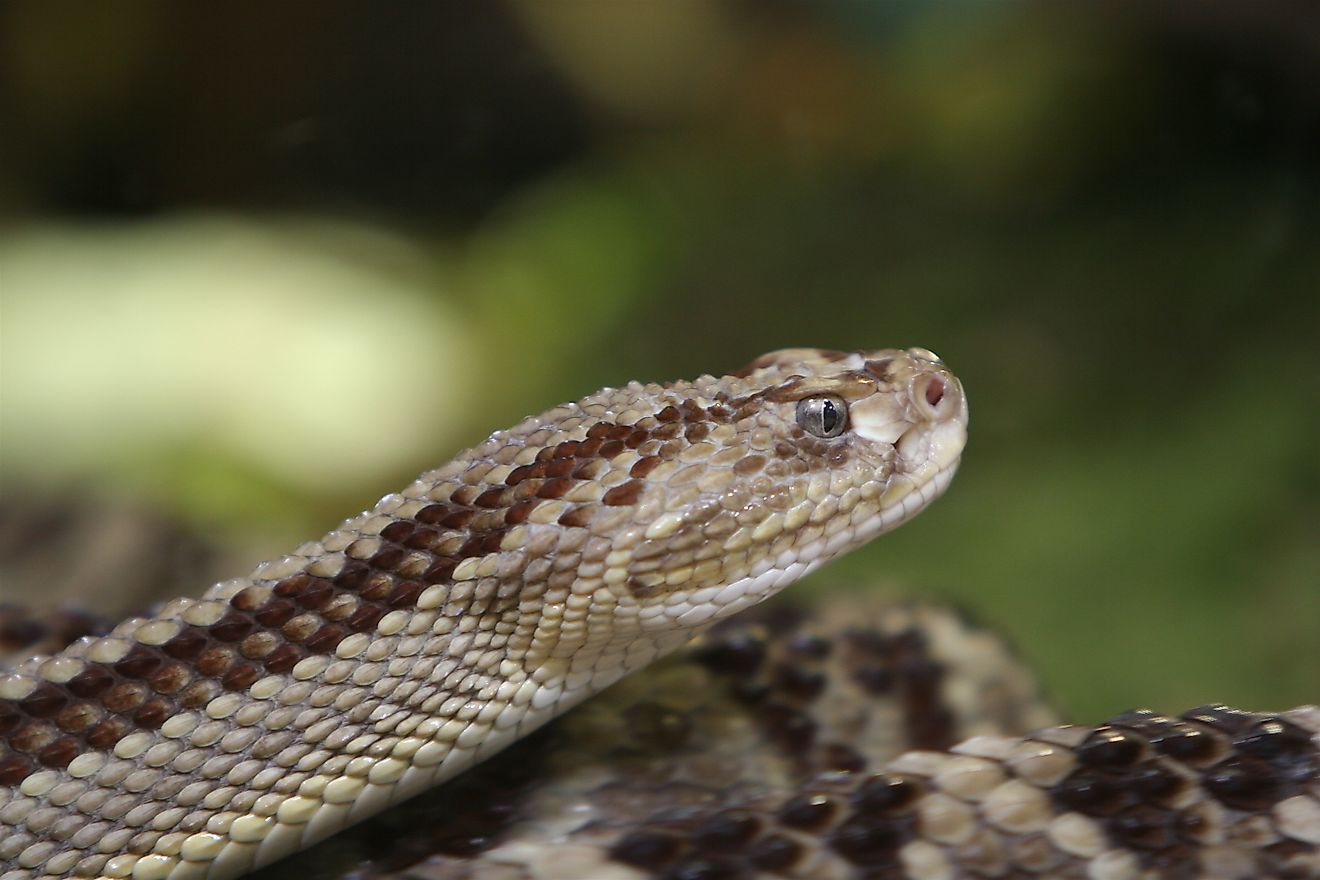
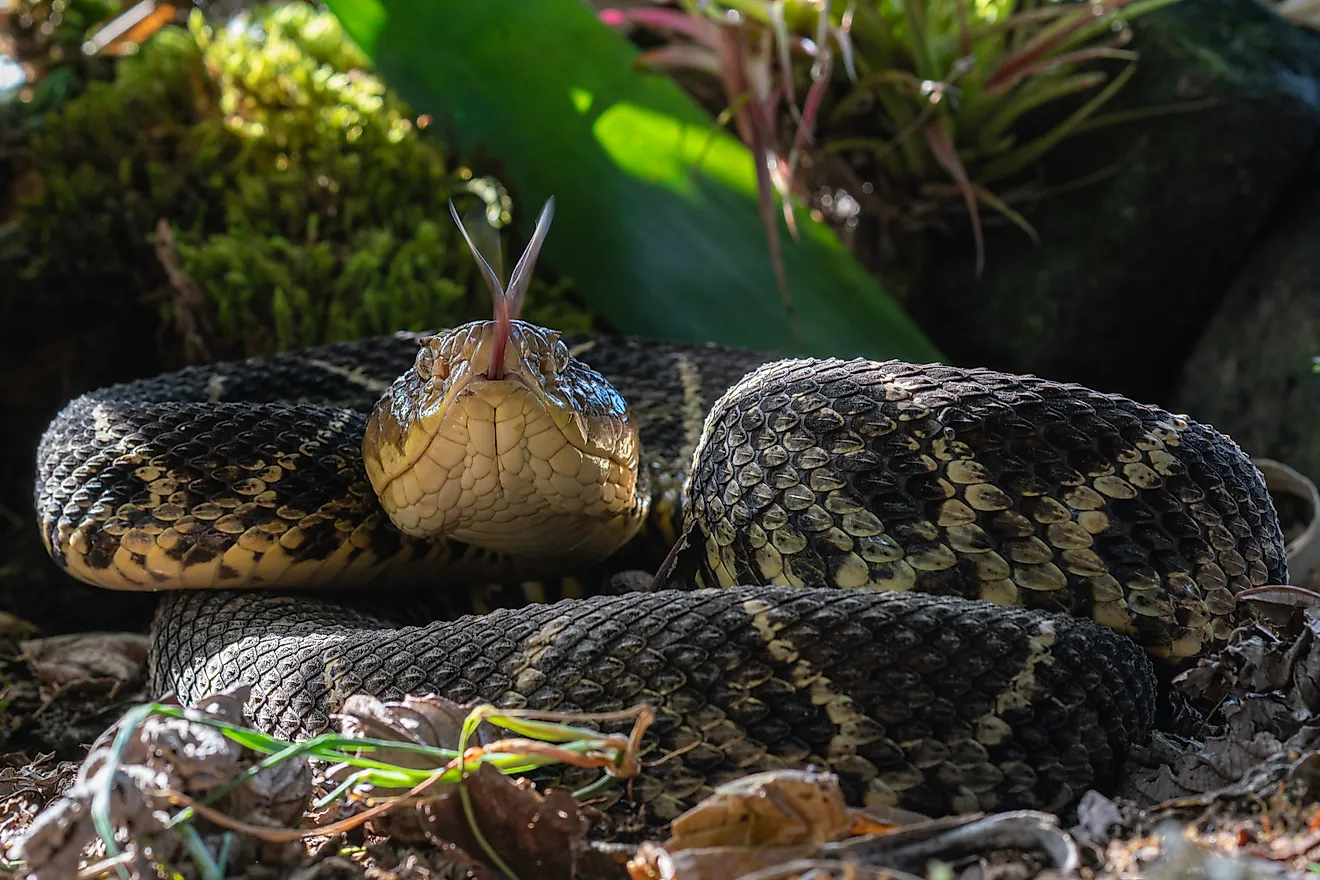
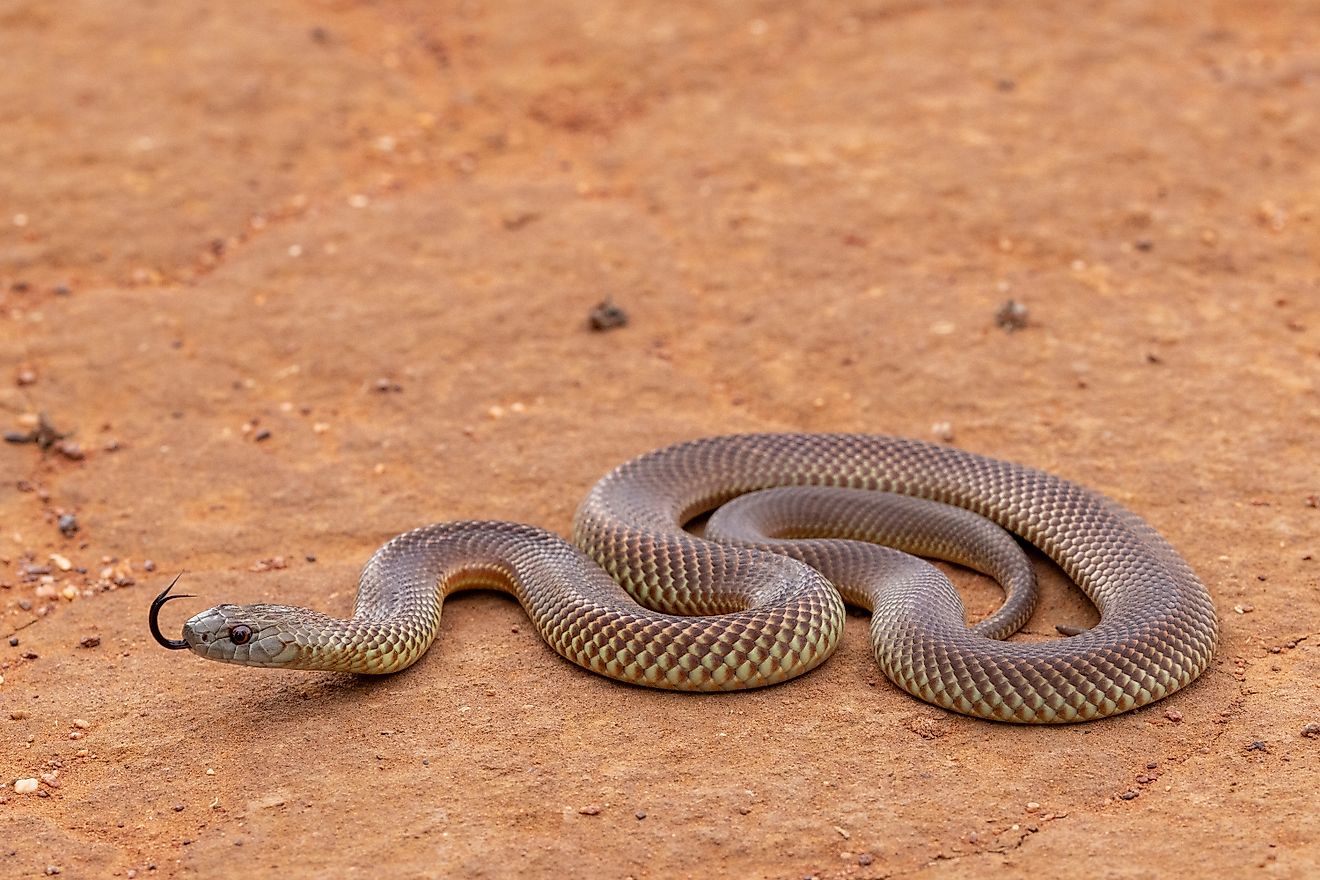
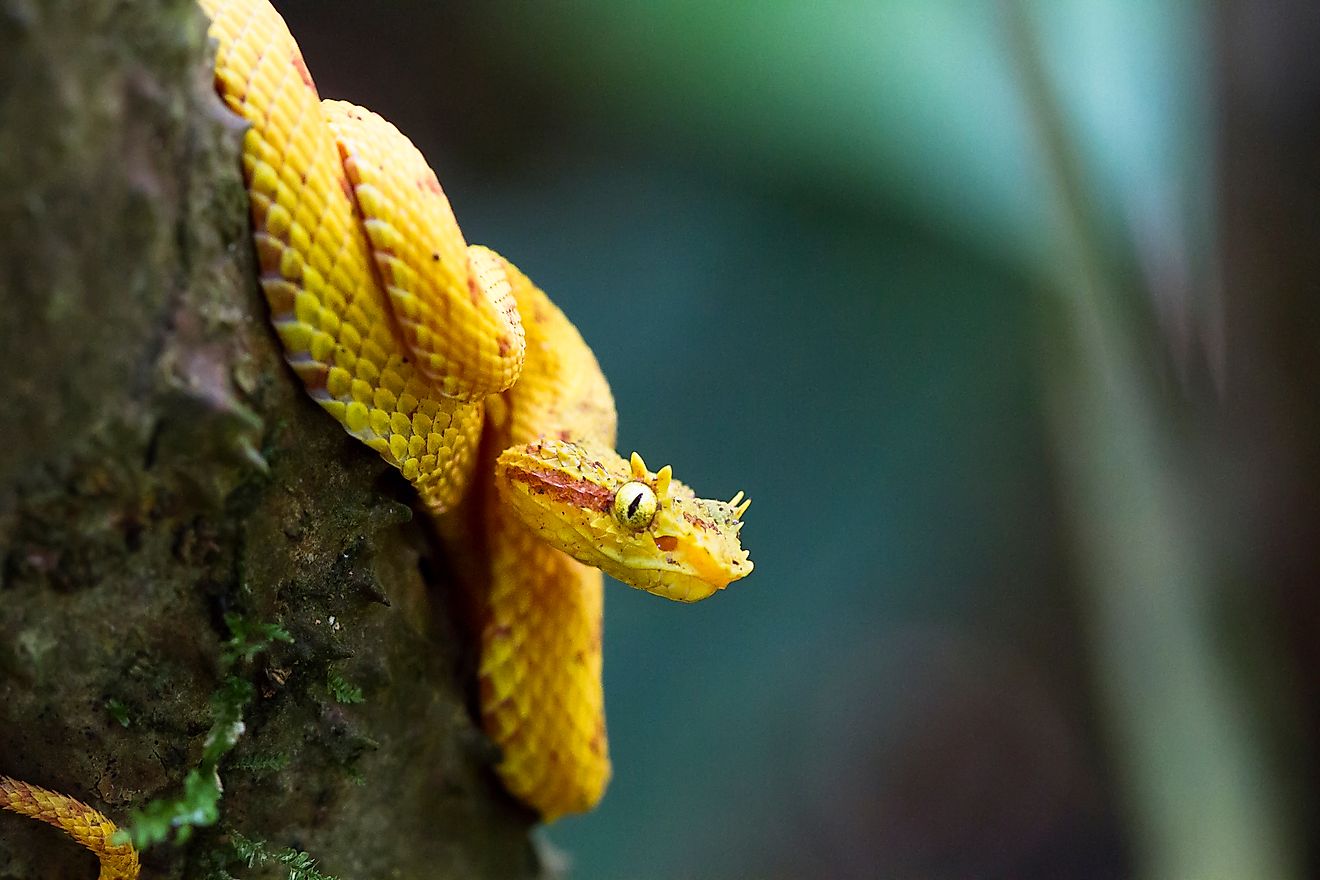
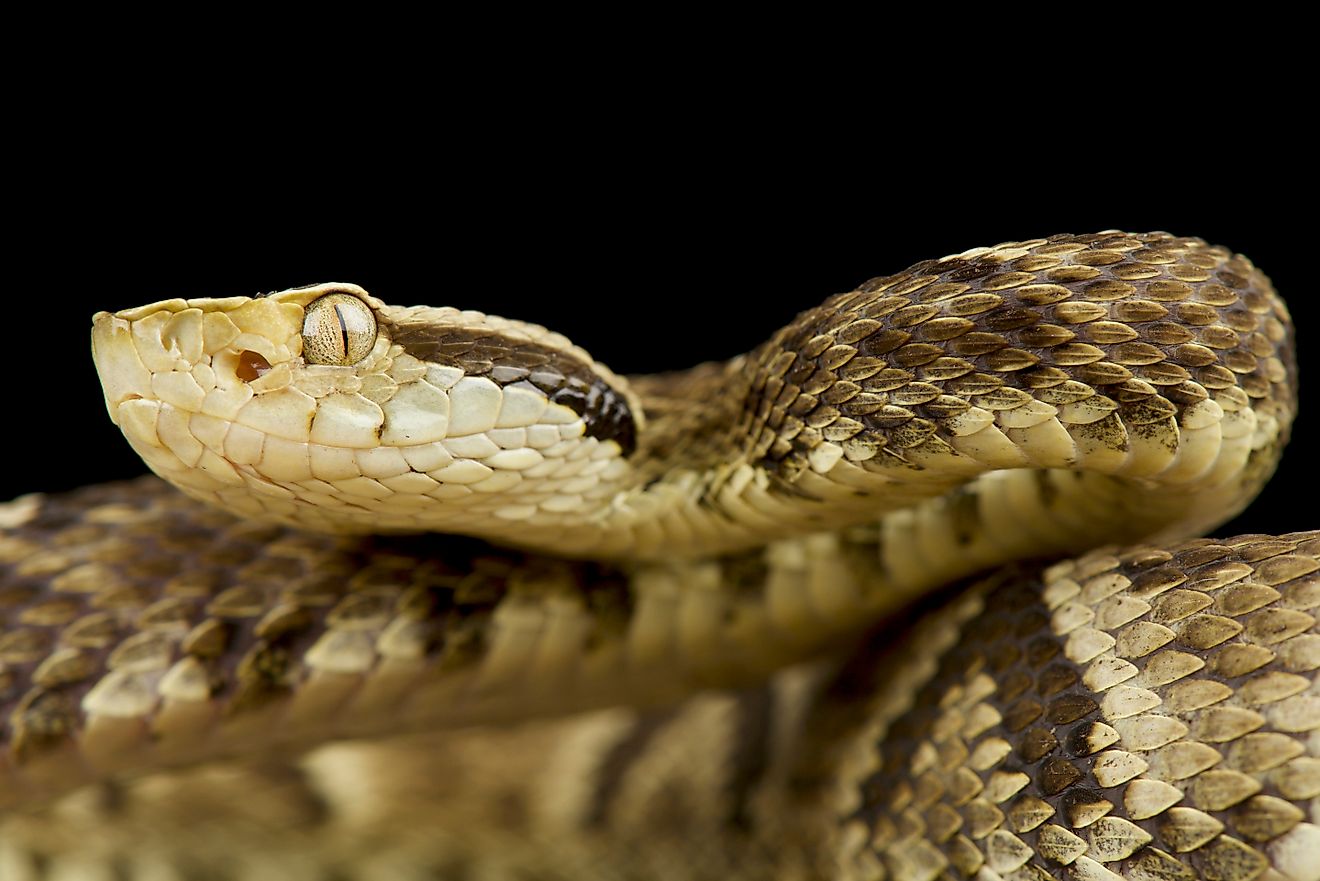
Snakes solved the smelling problem in a way no mammal did: they smell with their tongues. A snake does have nostrils, but the heavy lifting falls to the forked tongue, which it flicks out to grab odor molecules from the air and the ground, then pulls back inside to a pair of pits in the roof of the mouth called the Jacobson's, or vomeronasal, organ. That is where the scent is actually read.
The fork is the clever part. Each tine samples a slightly different spot, so when the snake draws its tongue back in, its brain compares the left reading against the right and works out which way the scent grows stronger. It is smelling in stereo, steering toward prey by the difference between two tips. Sharp eyes and good hearing are optional when your tongue can point you at dinner.
African Elephants

And the champion, by the numbers, is the African elephant (Loxodonta africana). A landmark genetic study found it carries close to two thousand genes devoted to smell, the most of any animal ever tested, about five times a human's tally and more than twice a dog's. That trunk is not just a hand and a straw. It is the single most powerful nose on the planet.
What elephants do with it is remarkable. They can smell water up to 19.2 kilometers (12 miles) off and steer a herd toward it across dry country. In Kenya, researchers found that elephants can tell two local peoples apart by scent alone, reacting with alarm to clothing worn by Maasai, whose young men have historically speared elephants, while staying calm around clothing worn by Kamba farmers who leave them be. Elephants returning to post-war Angola even learned to route around minefields, apparently smelling the buried explosives, which brings the list back around to where it began, with the rats. The difference is that nobody had to train the elephants.
So Whose Nose Wins?
Rank these noses head to head and the exercise falls apart, because they are built for different jobs. A shark's nose is a chemical tripwire strung across the ocean; a silk moth's is a single-frequency radio tuned to one molecule; a bloodhound's is a patient tracking device; an elephant's is a survival map of water and danger. By raw gene count the elephant takes the title, but the silk moth reacting to one molecule and the grizzly winding a carcass across a valley are pulling off feats no elephant can match. The one clear loser in every matchup is us. Somewhere nearby, something is smelling you right now and knows a good deal more about your day than you would like.