What Animals Live In The Nile River?
The Nile is Africa's longest river and, by the traditional measure, the longest in the world, and for thousands of years it has been the thread that Egypt and its neighbors are strung along. Without it, most of Egypt would simply be desert. So it is no wonder the animals of the Nile have been feared, hunted, eaten, and even worshipped down the centuries, from the crocodile-god Sobek to the humble catfish carved into the tombs of the earliest pharaohs. Beneath the surface and along the banks, the river is still full of life. Here are some of the animals that call the Nile home.
Nile Crocodile

Start with the animal everyone pictures. The Nile crocodile, Crocodylus niloticus, is the apex predator of the river and the second-largest reptile alive, after the saltwater crocodile. Big males stretch 3.5 to 5 metres, with females roughly a third smaller, and the whole animal is built around a single strategy: wait, unseen, at the water's edge, then explode into an ambush with one of the most powerful bites ever measured. It eats more or less anything it can catch, from fish and birds to zebra and buffalo at a river crossing, and it is blamed for hundreds of human deaths a year, which makes it one of the most dangerous animals in Africa. For all that menace, it is surprisingly social, sharing basking spots and even food, with the biggest old males sitting atop a clear pecking order. Small wonder the ancient Egyptians worshipped it as Sobek, the crocodile god. The IUCN lists it as Least Concern.
Hippopotamus

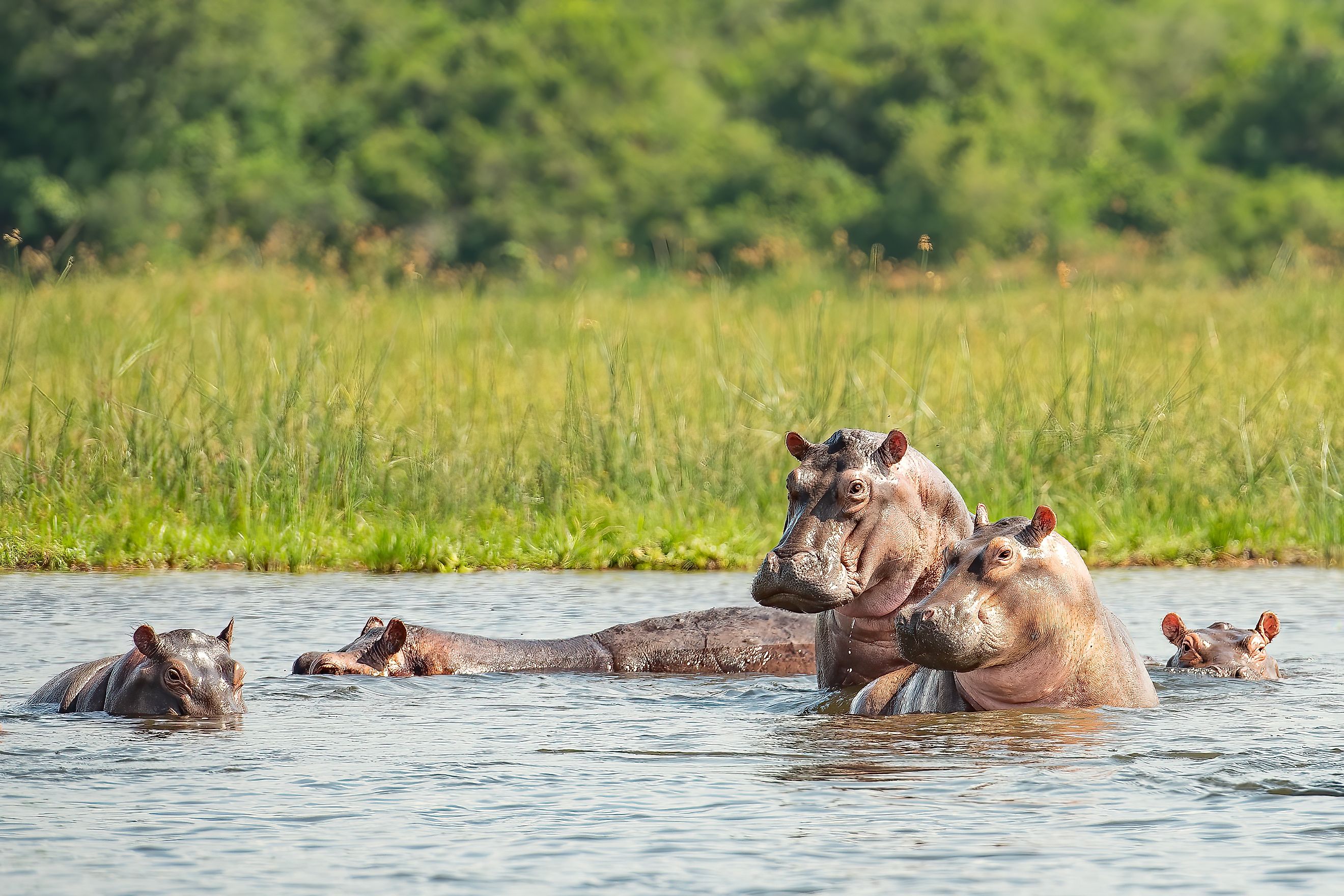
If the crocodile is the most feared animal in the Nile, the hippopotamus is quietly the most deadly. The Hippopotamus amphibius is a herbivore and the third-largest land mammal on Earth, a barrel-bodied, two-tonne grazer that spends its days half-submerged and its nights out of the water, cropping grass along the banks. That placid, wallowing image is misleading. Hippos are aggressive and famously unpredictable, they will capsize a boat that drifts too close, and they kill hundreds of people across Africa every year, more than lions or crocodiles do. The oversized canine tusks that flash when a hippo yawns are a threat display, not a feeding tool, and that same ivory, along with their meat, has made them a target for hunters. The IUCN lists the hippo as Vulnerable. The Egyptians honored them too, in the hippo-goddess Taweret, protector of mothers and children.
Nile Perch

The Nile perch, Lates niloticus, is the giant of the river, one of Africa's largest freshwater fish. It can top 2 metres and 200 kilograms, a silver, blue-tinged predator with black eyes ringed in yellow, and it is native to the Nile, where it has always been an important catch. But the Nile perch also carries one of the great cautionary tales in modern ecology. In the 1950s it was introduced into Lake Victoria to boost the fishery, and it did, for a while, becoming a valuable export. It also ate its way through the lake's astonishing variety of small native cichlid fish, driving an estimated 200 or more species to extinction, one of the worst human-caused extinction events of the last century. The lesson, that dropping a big predator into a new lake can quietly unravel a whole ecosystem, is one biologists still teach today.
Nile Tilapia

Few fish have traveled as far, or mattered as much, as the Nile tilapia, Oreochromis niloticus. Native to the Nile and its neighbors, this hardy, fast-growing member of the cichlid family was prized by the ancient Egyptians, who saw it as a symbol of rebirth and painted it on tomb walls and jewelry, partly because the female broods her eggs and young inside her own mouth and then seems to give birth to living fish. Today the same qualities that made it useful on the Nile, its toughness and quick growth, have made it one of the most farmed fish on the planet, raised in ponds and cages around the world and a staple protein for millions of people. In the wild Nile, it grazes on algae and plankton and forms a key link near the base of the food web, feeding many of the larger predators on this list.
African Tigerfish

The African tigerfish is the Nile's answer to the piranha, only bigger and, if anything, meaner. The Nile species, Hydrocynus forskahlii, is a sleek, silver, black-striped hunter armed with a mouthful of interlocking, dagger-shaped teeth that jut out even when its jaws are shut, the better to shear chunks off prey it grabs at speed. It is a prized game fish, drawing anglers to the river for the fight it puts up, and an important local food fish besides. Watch one strike, all muscle and teeth, and you understand the tiger in the name.
Electric Catfish
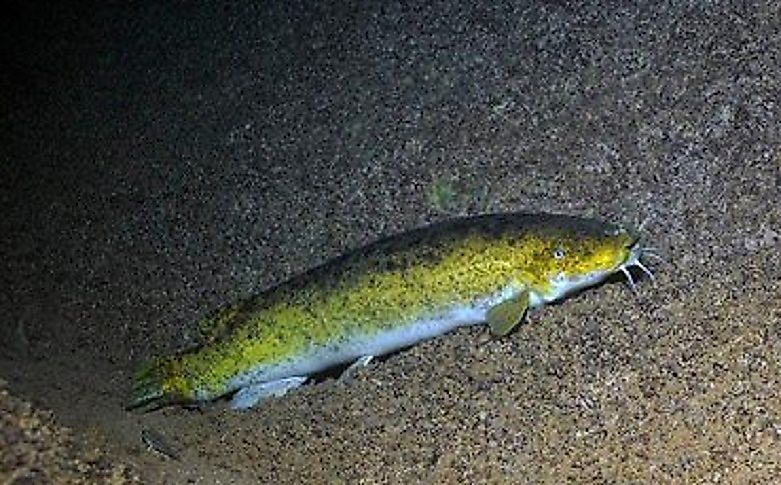
Of all the Nile's animals, the electric catfish may have unsettled the ancient Egyptians the most. Malapterurus electricus is a plump, scaleless, whiskered fish that lives on the murky river bottom and can deliver a jolt of up to 350 volts, enough to stun its prey, deter a predator, or give a fisherman a nasty and unforgettable shock. It generates the charge from a modified muscle that wraps most of its body. The Egyptians clearly knew it well: it appears in tomb reliefs more than 5,000 years old, the earliest known depictions of an electric fish anywhere, and later peoples reportedly used its shock to treat aches and pains. In the Nile it hunts by feel and by electric field in near-total darkness, an ambush predator that never really needs to see its prey.
African Softshell Turtle

The African softshell turtle, Trionyx triunguis, trades the usual hard shell for a flat, leathery pancake of a carapace covered in skin, which lets it move fast and bury itself in the riverbed with only its snorkel-like nose poking up. It is one of Africa's largest freshwater turtles, reaching well over a metre and heavy enough to be formidable, with three clawed, webbed toes on each foot that give it its scientific name. It is an omnivore that will take almost anything, fish, frogs, crustaceans, and carrion, along with fallen fruit and seeds. People hunt these turtles for their meat and dig up their eggs, and the Mediterranean population in particular has become critically endangered.
Nile Monitor

The Nile monitor, Varanus niloticus, is the river's big lizard, a powerful, muscular reptile that can grow past two metres and is completely at home in the water. It is a strong swimmer with a flattened, paddle-like tail, and it will eat almost anything it can overpower, from fish, frogs, and snakes to birds, small mammals, and carrion. Its favorite trick, though, is raiding crocodile nests: a monitor will dig up and devour a clutch of croc eggs, sometimes working in a loose pair to draw off the guarding mother. That appetite has made it a successful colonist far from home, and escaped or released Nile monitors have set up wild populations in Florida, where they cause real trouble. The IUCN lists it as Least Concern.
African Rock Python

Plenty of snakes live in and around the Nile, but the one that truly belongs to the river is the African rock python, Python sebae, the largest snake on the continent. It regularly reaches four to five metres and hunts by ambush, often lying half-submerged where animals come down to drink, then striking, coiling, and squeezing until its prey suffocates before swallowing it whole. It can take surprisingly large meals, from antelope to, on rare occasions, a young crocodile. The Nile region is home to other famous serpents, including the Egyptian cobra, the very snake tradition names as the asp that killed Cleopatra. But those are creatures of the land and the reeds. The rock python is the one you might actually meet in the water.
A River Full of Living History
What ties these animals together is the Nile itself, a ribbon of water running through thousands of miles of otherwise dry country and gathering life along its length. Many of them, the crocodile, the hippo, the catfish, the tilapia, were woven so deeply into ancient Egyptian life that they became gods and symbols, and most are still here, still shaping the river. A few, like the Nile perch turned loose in Lake Victoria, are a reminder of how easily that balance can tip. Watch the Nile long enough, from a boat or a bank, and the whole cast tends to turn up eventually.