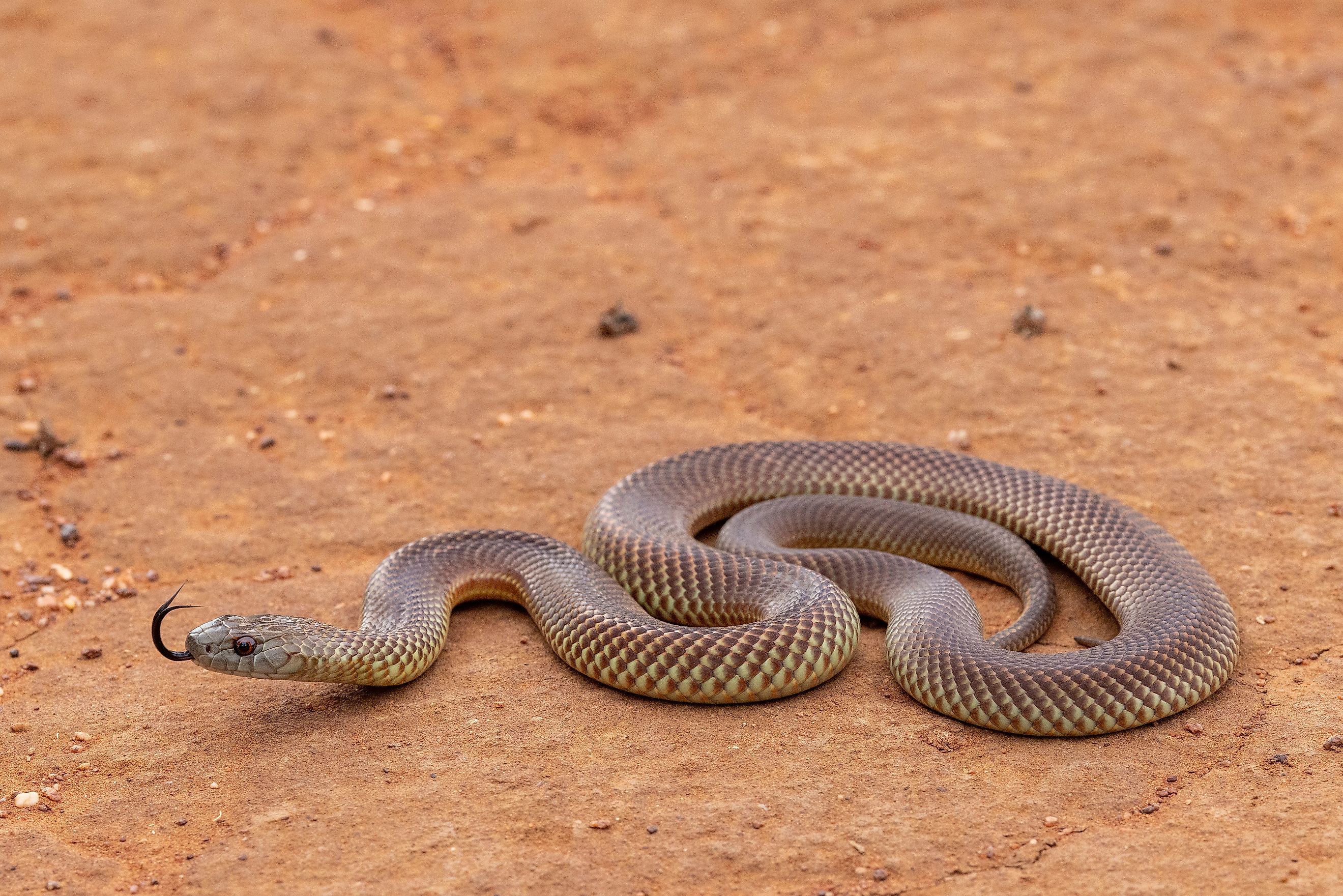
Mulga Snake
The mulga snake is the largest venomous land snake in Australia and one of the longest venomous snakes anywhere on Earth. What sets it apart is not only its size but its capacity for venom. A single large individual can inject a greater volume in one bite than almost any other Australian snake, delivering doses measured in hundreds of milligrams where most species manage a fraction of that amount. This combination of length, bulk and sheer venom output has made it one of the most respected reptiles of the outback.
Known scientifically as Pseudechis australis, the mulga snake is a member of the black snake genus, despite one of its most common names, the king brown snake. It ranges across most of mainland Australia, living in tropical woodlands in the north and arid gibber plains in the interior, and it thrives in more habitats than almost any other large snake on the continent. For a species so widespread, so heavily built and so often encountered near human settlement, it is worth understanding properly rather than by reputation alone.
Taxonomic Classification

The mulga snake belongs to the family Elapidae, the group of front-fanged venomous snakes that includes cobras, taipans and death adders. Within that family it sits in the genus Pseudechis, the black snakes, which makes its popular name of king brown misleading. True brown snakes belong to the separate genus Pseudonaja, and the mulga snake is only distantly related to them. The distinction matters a great deal in a hospital, because the two groups require different antivenoms.
English zoologist John Edward Gray first described the species in 1842 from a specimen collected at Port Essington in the Northern Territory. Working from a single preserved animal, Gray saw a strong resemblance to the Egyptian cobra and originally named it Naja australis. Later work by Albert Gunther at the British Museum recognised its true affinity with the Australian black snakes, producing the accepted combination Pseudechis australis. The species was long treated as a single, highly variable animal, but modern DNA studies (notably work published in 2005 and 2017) revealed several hidden lineages. A number of smaller, dwarf forms have since been recognised as separate species, and the mulga snake's closest relative is now understood to be the spotted mulga snake, Pseudechis butleri. The animal is also called the Pilbara cobra in parts of Western Australia.
Physical Description

This is a large, powerfully built snake. Adults typically measure 2.0 to 2.5 metres (6.6 to 8.2 feet) and weigh 3 to 6 kilograms (6.6 to 13.2 pounds), with the longest confirmed individual reaching 3.3 metres (11 feet). Males grow around 20 percent larger than females, so the biggest snakes tend to be mature males from the north and northwest of the country, where the "king brown" name originated.
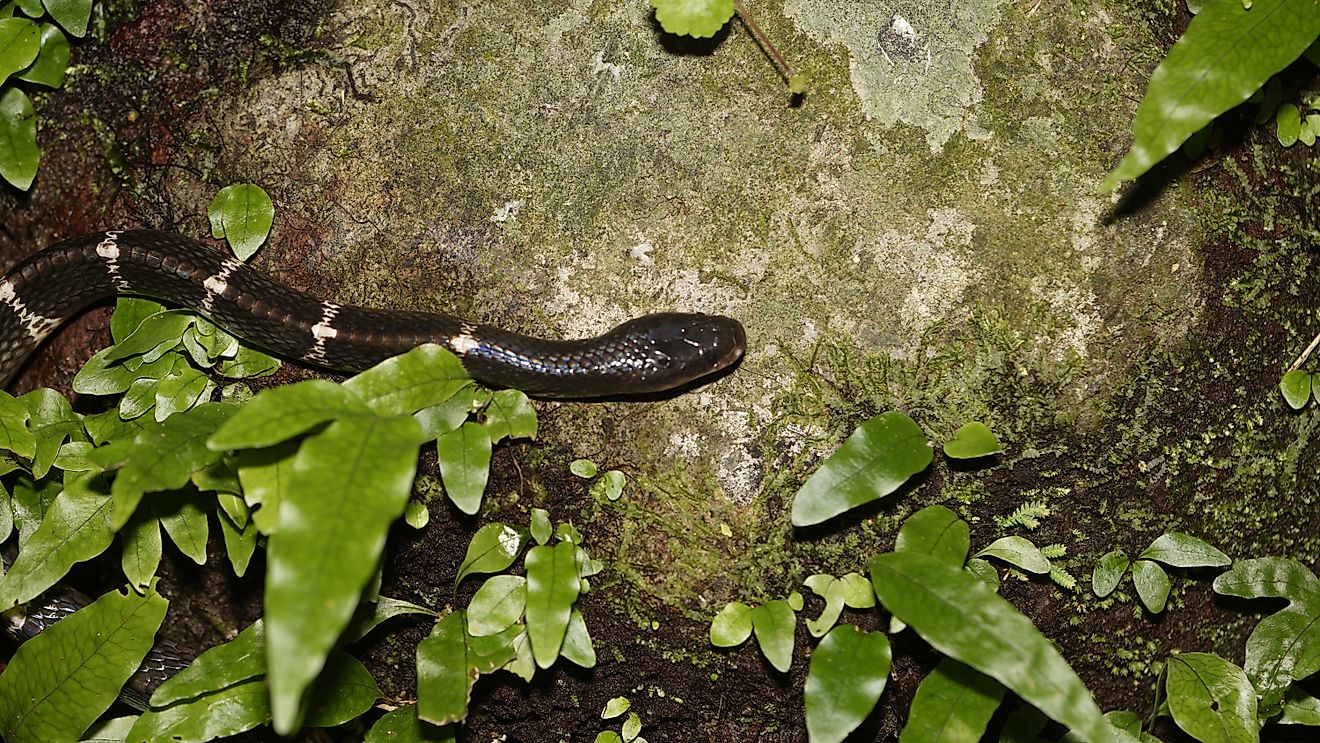
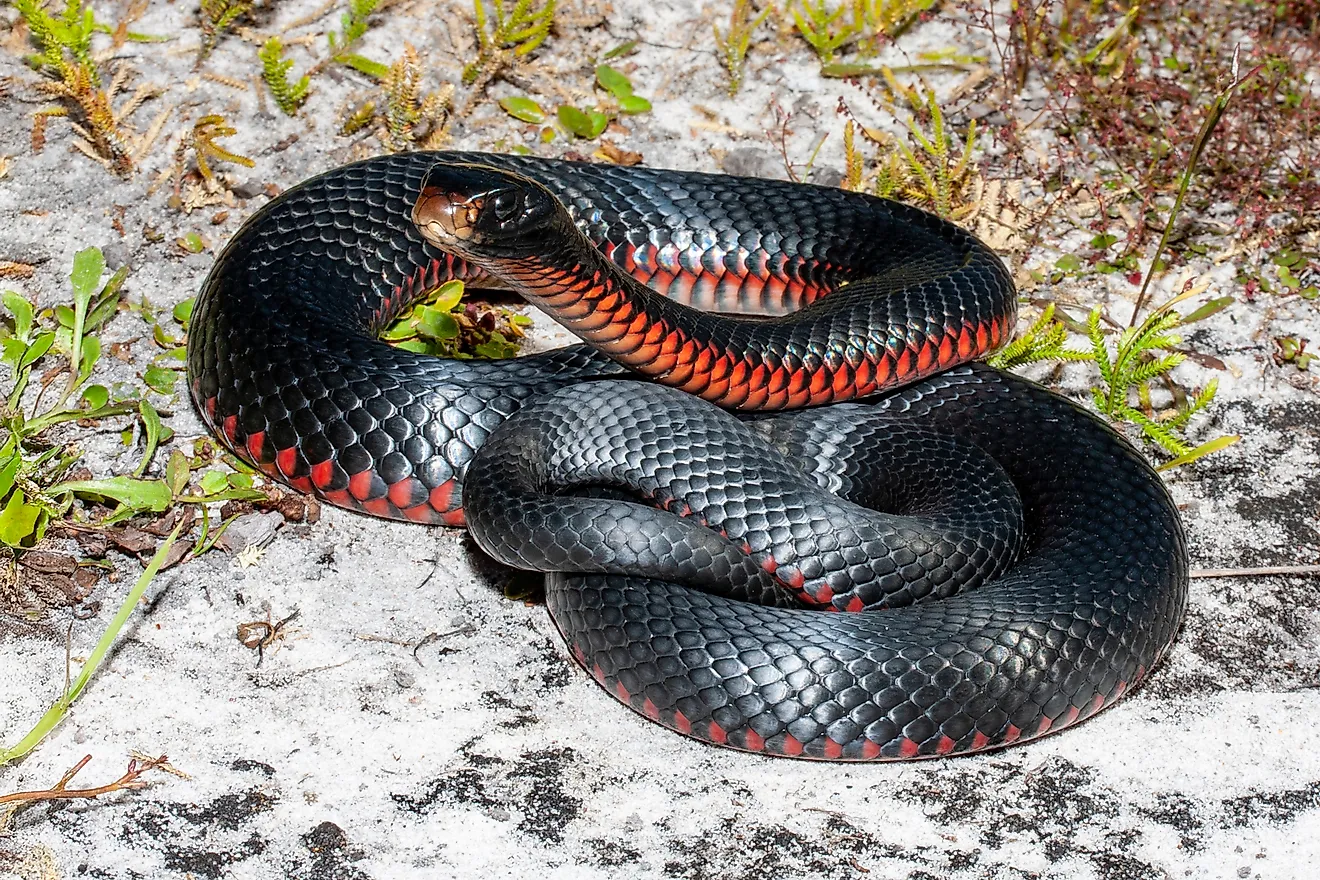
The head is broad and deep, slightly wider than the neck, with bulbous cheeks, small eyes and red-brown irises. The tongue is dark. The body is thick and muscular, and the scales are two-toned, pale or greenish yellow at the base and darker toward the tip. This produces a reticulated, almost netted appearance across the back and flanks. Colour varies enormously across the range. Snakes from the far north are often a light tan, those from the central deserts carry prominent pale markings on each scale, and animals from the cooler south are dark brown to near black. The belly is usually cream, white or salmon, sometimes marked with orange. At mid-body the snake carries seventeen rows of dorsal scales, a detail used by herpetologists to separate it from lookalike species.
Range and Habitat

Few Australian snakes occupy as much of the continent as the mulga snake. It is found in every mainland state except Victoria, and it is absent from Tasmania. Its distribution covers the northern, western and central portions of Australia, extending south and east to limits that run roughly through central Queensland, inland New South Wales and South Australia, and across the southern arid zone toward the coastal plains north of Perth.
The species is a true habitat generalist. It lives in open woodlands, hummock grasslands, chenopod scrublands and stony gibber or sandy deserts that carry almost no vegetation at all. About the only environment it avoids is dense rainforest. Within the driest parts of its range it favours areas of greater moisture such as watercourses, where prey is more abundant. It also takes readily to land modified by people, turning up in wheat fields, around rubbish piles and inside vacated buildings. Near Alice Springs, fieldwork has linked its presence to stands of introduced buffel grass, probably because that dense cover offers shelter and hunting ground throughout the year.
Diet

The mulga snake is an opportunistic generalist predator with an unusually broad menu. Reptiles form the core of its diet, including lizards such as skinks, geckos, dragons and small monitors, along with a wide range of other snakes. It will readily eat other elapids and is a known cannibal, taking members of its own species. Frogs feature more heavily in wetter regions, and the snake also preys on birds, small mammals such as rodents, and even large spiders. Beyond live prey, it has been recorded scavenging roadkill and swallowing the shed skins of other reptiles, which points to a flexible, low-fuss approach to feeding.
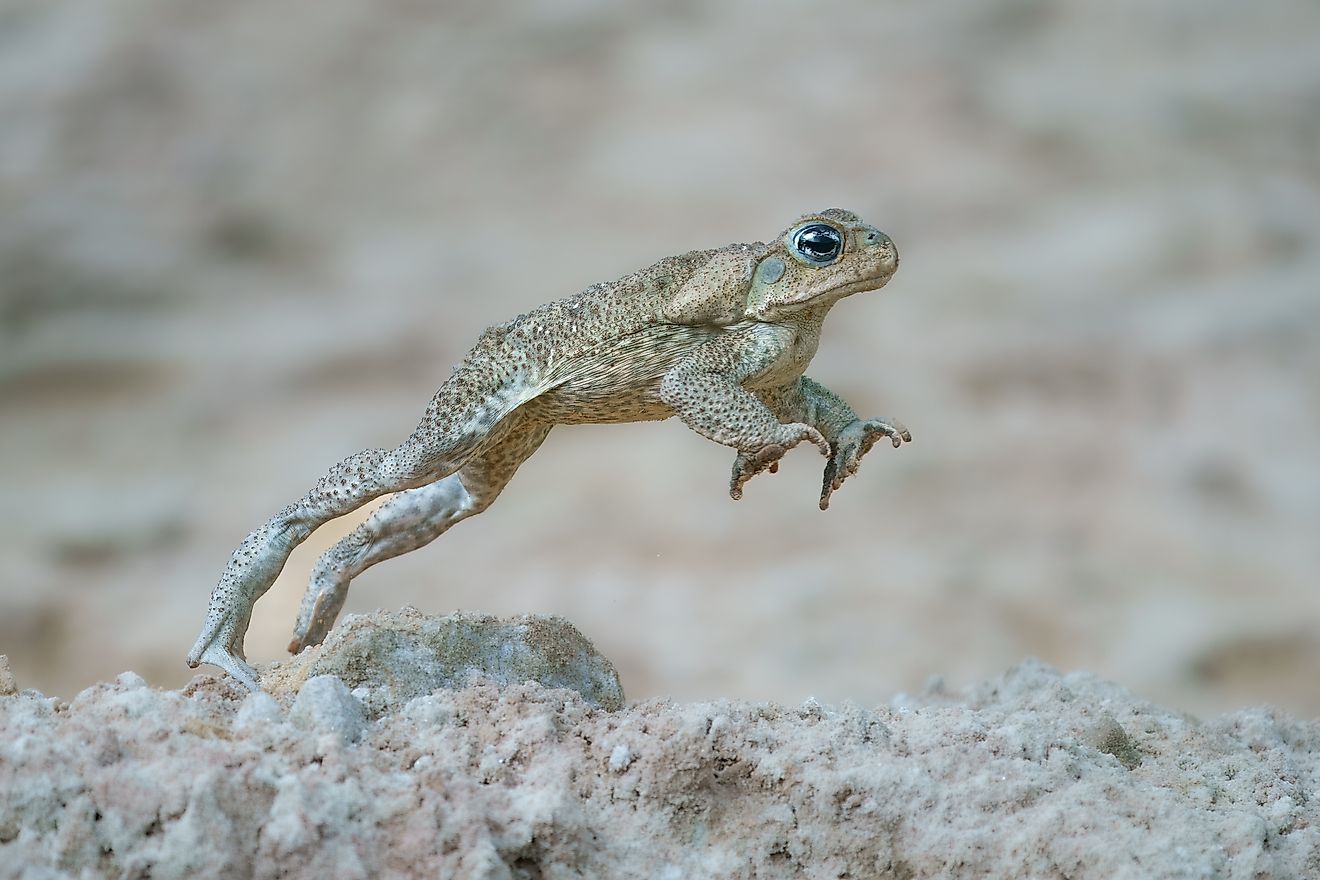
That flexibility has a cost in modern Australia. The mulga snake is sensitive to the toxins of the introduced cane toad and can die after eating one. Because the toad continues to spread across the north, this vulnerability is a real concern for populations in affected areas.
Behavior

The mulga snake is largely crepuscular, most active around dusk, though its schedule shifts with the climate. In cooler regions it moves about more during the day, while in hot country it becomes increasingly nocturnal, hunting well into the evening. During the heat of the day it shelters in soil cracks, abandoned animal burrows and the spaces beneath rocks and fallen timber.
It is a solitary animal for most of the year. When threatened it can flatten its neck, and it is capable of biting savagely, often hanging on and chewing rather than delivering a single quick strike. This chewing behaviour works more venom into a wound and is one reason bites from this species demand urgent medical care.
Reproduction

Breeding begins with ritual combat, in which rival males wrestle and try to push one another to the ground for the right to mate. Mating timing follows the local season, arriving with spring in the southern parts of the range and with the wet season in the tropical north. The species is an egg-layer. Females produce a clutch of four to nineteen eggs, averaging around ten, with larger females laying larger clutches. Eggs are usually deposited about six weeks after mating, placed inside a disused burrow or hidden beneath a log or rock.
There is no parental care once the eggs are laid. Incubation runs for roughly seventy to one hundred days, and the hatchlings emerge fully independent, measuring around 22.6 centimetres (8.9 inches) and weighing about 9.4 grams (0.33 ounces). From that point the young snakes fend entirely for themselves. In captivity mulga snakes have been recorded living up to twenty-five years, a long life that reflects their size and their position near the top of the food chain.
Venom and Envenomation

The mulga snake's venom is not the most potent among Australian snakes, but the animal compensates through raw quantity. A large individual delivers an average of about 180 milligrams of venom per bite, and record milkings have exceeded that many times over. One captive snake named Chewie, held at the Australian Reptile Park, produced 1,500 milligrams in a single milking in 2016, a yield in the same league as the king cobra.
The main toxic agents are myotoxins, which damage muscle tissue and can affect the kidneys. Bites commonly cause considerable local pain and swelling, disruption of blood clotting, and the breakdown of red blood cells, with muscle damage as the most serious systemic effect. The venom shows little of the nerve-targeting action seen in some other elapids. Because the mulga snake is a black snake rather than a true brown snake, it must be treated with black snake antivenom, and prompt treatment matters, since delays allow muscle damage to progress. The last recorded death from a mulga snake bite in Australia occurred in 1969, and the species is listed by the World Health Organization as a snake of medical importance.
Importance and Conservation

As a large, wide-ranging predator, the mulga snake helps regulate populations of reptiles, frogs and rodents across some of the harshest country in Australia. Its appetite for other snakes, including venomous ones, gives it a distinctive role in the outback food web. The species is also of growing interest to science. Its venom is unusually complex, and researchers have identified within it proteins with antibiotic properties, including enzymes that act against bacteria commonly carried by the frogs it eats. Other components block specialised ion channels found in nerve and sensory cells, giving pharmacologists useful tools for studying how those channels work. In this way an animal feared for its bite is helping to advance medical and biochemical research.
The International Union for Conservation of Nature lists the mulga snake as a species of Least Concern, based on its 2017 assessment, reflecting its enormous range and adaptability. That status is not a guarantee of a secure future. The continued spread of the toxic cane toad poses a real risk in the north, and the species has already become rare or absent in parts of coastal Queensland. For now, though, it remains one of the most successful and formidable snakes on the continent, a robust survivor of deserts, woodlands and the edges of human settlement alike.
Takeaway
The mulga snake is not the deadliest snake in Australia by venom potency, yet its enormous size, its willingness to occupy almost every dry habitat on the continent and its sheer capacity to deliver venom make it one of the most formidable reptiles in the country. The tan giants of the tropical north and the near-black animals of the cooler south are the same species, one snake stretched across a vast and varied land, hunting reptiles, frogs, birds and even its own kind wherever it can find them. For now the species remains widespread and secure, but the steady advance of the toxic cane toad is a reminder that even so adaptable a survivor can be tested by pressures it never evolved to face.
Fun Facts

- It is not a brown snake at all. Despite the name king brown, the mulga snake belongs to the black snake genus, and confusing the two can be dangerous because they need different antivenoms.
- Its venom output rivals the king cobra. A single milking of one captive snake produced 1,500 milligrams, an amount that puts this Australian species among the highest-yielding venomous snakes in the world.
- It sometimes bites sleeping people. Unlike many snakes that only strike when cornered, mulga snakes have been recorded biting people who were asleep, a quirk that has caught out more than a few victims in remote areas.
- It eats other snakes, including its own kind. The mulga snake is a confirmed cannibal and a keen predator of other elapids, shrugging off venom that would kill most animals.
- It had a movie moment. The title character famously picks up a king brown snake in the 1986 film Crocodile Dundee, cementing the animal in outback popular culture.
Quick Facts
- Scientific name: Pseudechis australis
- Family / Order: Elapidae / Squamata
- Common names: mulga snake, king brown snake, Pilbara cobra
- IUCN status: Least Concern (2017 assessment)
- Length: typically 2.0 to 2.5 m (6.6 to 8.2 ft), up to 3.3 m (11 ft)
- Weight: 3 to 6 kg (6.6 to 13.2 lb)
- Lifespan: up to 25 years in captivity
- Diet: carnivore (reptiles, frogs, birds, small mammals, spiders)
- Range: mainland Australia, all states except Victoria and Tasmania