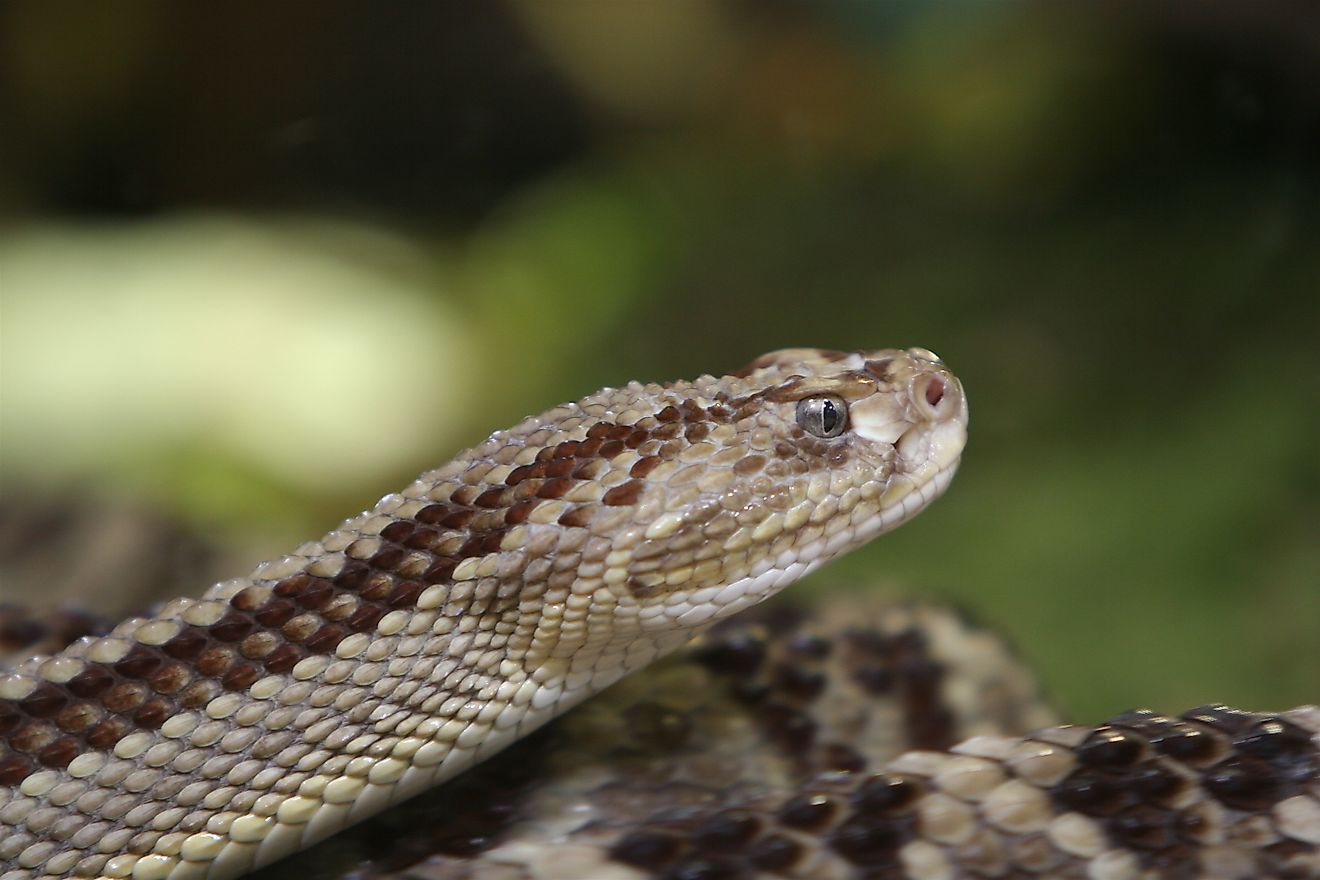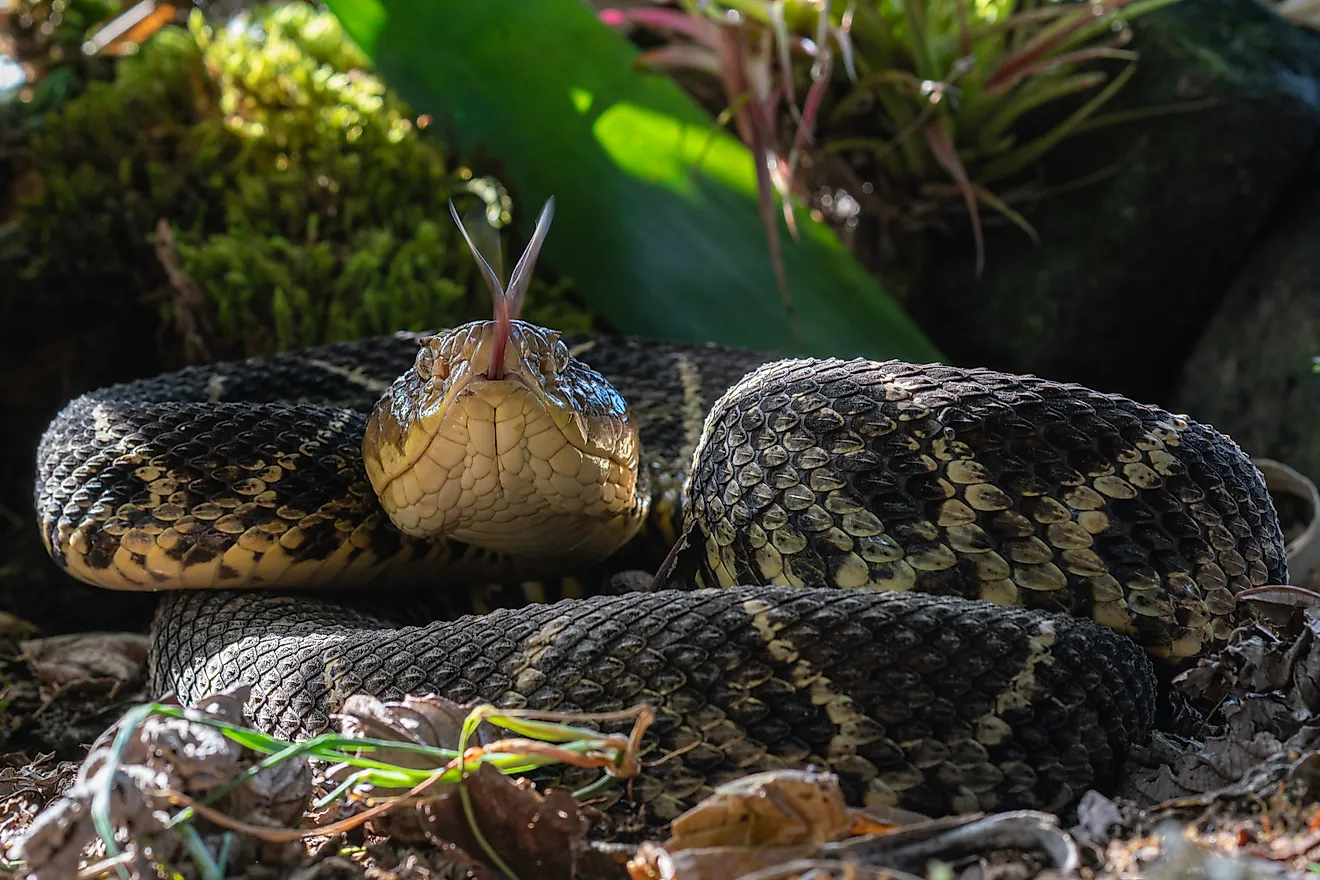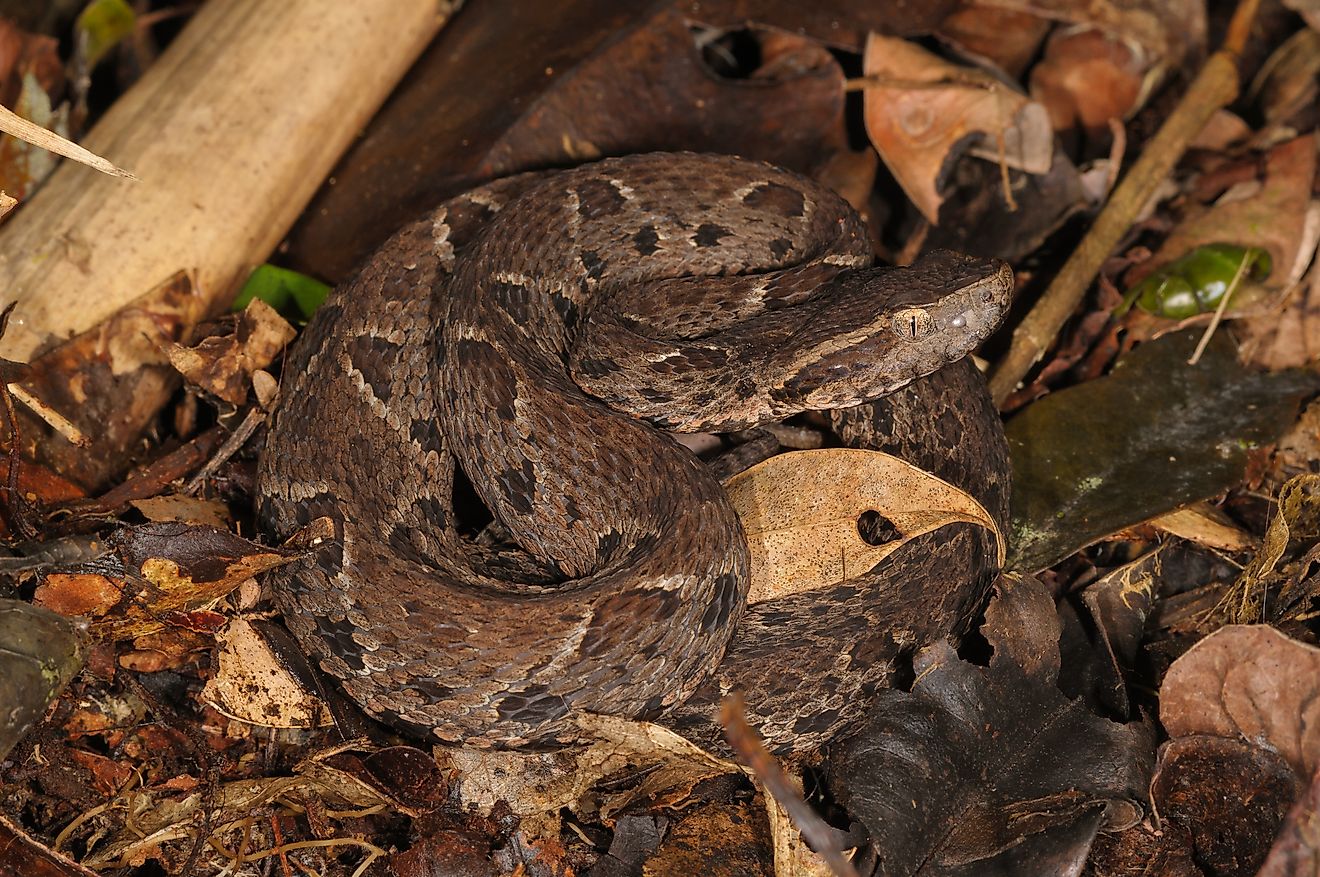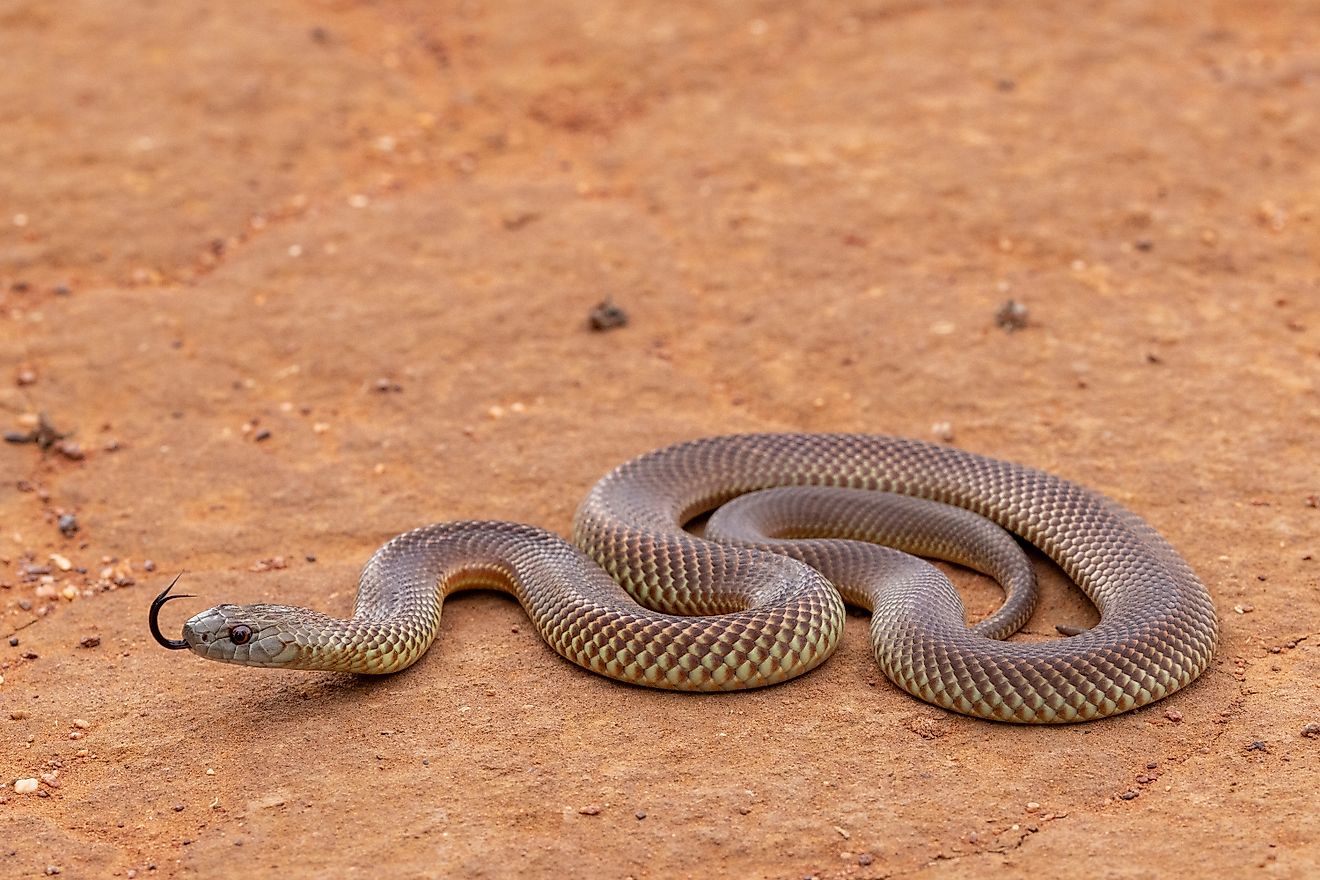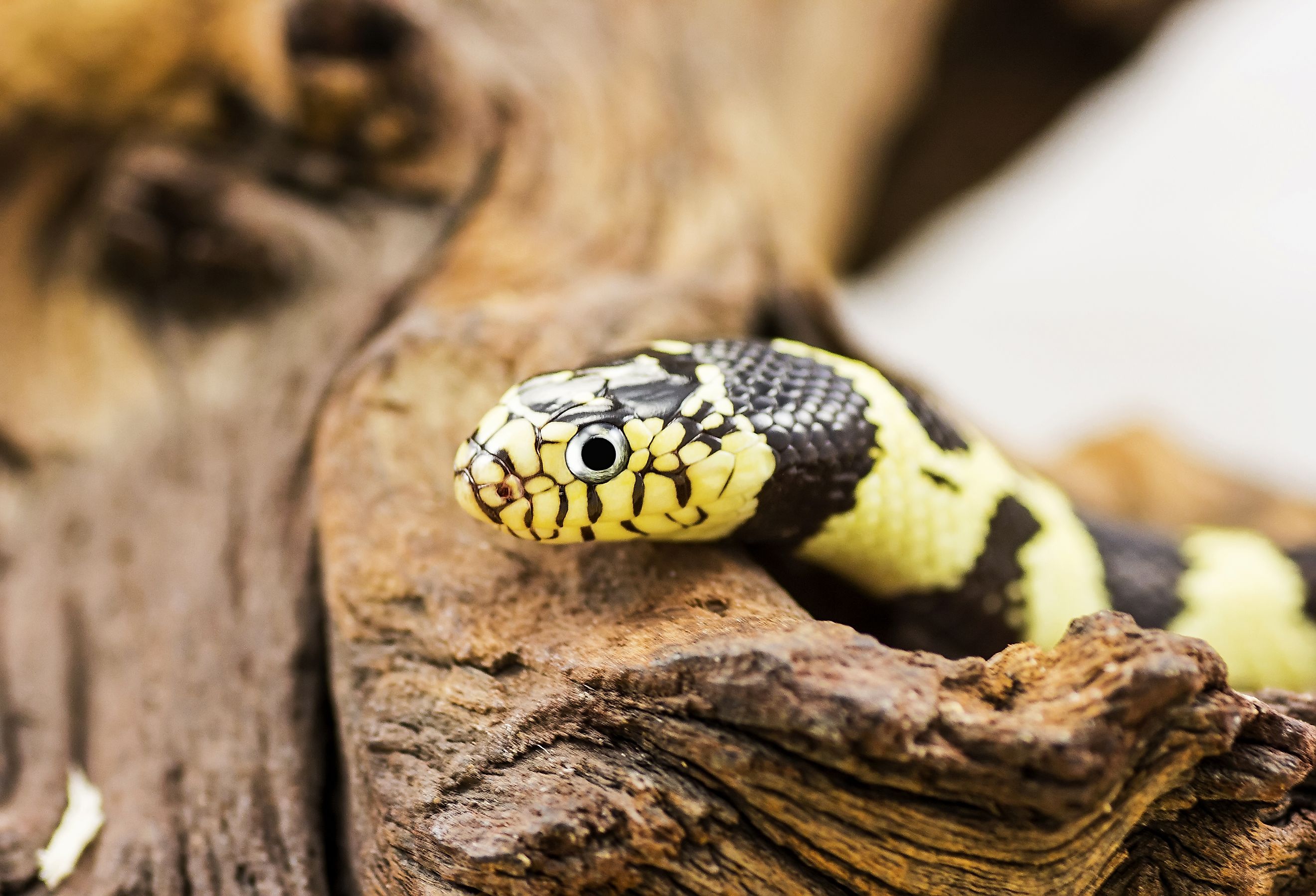
King Snake
Kingsnakes earned the name. Pound for pound they are the most powerful constrictors yet measured, squeezing with roughly twice the pressure of a rat snake the same size. The advantage is mechanical rather than muscular: kingsnakes wrap prey in a tight, evenly spaced spiral like a compressed spring, while rat snakes throw loose overlapping loops. That grip works by stopping circulation rather than by smothering, which matters when the prey is another reptile able to go a long time without oxygen. Kingsnakes are also resistant to pit viper venom, which lets them hunt the rattlesnakes, copperheads, and cottonmouths most people go out of their way to avoid. They are harmless to humans, and a resident kingsnake helps keep rodents and venomous snakes in check.
Taxonomic Classification

Kingsnakes belong to the genus Lampropeltis, in the family Colubridae. The Reptile Database currently recognizes 26 species in the genus, along with roughly 45 subspecies. The best known are the common or eastern kingsnake (Lampropeltis getula), the California kingsnake (Lampropeltis californiae), the gray-banded kingsnake (Lampropeltis alterna), and the milksnake (Lampropeltis triangulum), which is a kingsnake despite the separate common name. Reclassification is ongoing. Genetic work published in 2009 split the common kingsnake into several species, moving the California and desert kingsnakes out of Lampropeltis getula entirely, and a 2014 study divided the milksnake into seven species. Populations with adjoining ranges integrate where they meet, producing intermediate patterns and complicating field identification. Some names rest on very little material. Lampropeltis catalinensis was described in 1921 from Isla Santa Catalina in the Gulf of California and is known from a single specimen, and whether that animal represents a valid species or simply an oddly marked individual has never been resolved.
Range And Habitat

Kingsnakes occur across most of the United States and through Mexico into Central America, where milksnakes become the dominant members of the genus. The common kingsnake's northern edge runs through southern New Jersey, the Ohio valley, southern Iowa, and southern Oregon. The milksnake pushes much further north, reaching southeastern Maine, southwestern Quebec, and Ontario as far as Lake Nipissing. Different species favor different environments, and several are outright generalists. The California kingsnake turns up in chaparral, grassland, desert, marsh, farmland, and suburban yards. It also has the widest elevation range in the genus, climbing to about 6,100 feet (1,860 meters) in the Tehachapi Mountains and above 7,000 feet (2,130 meters) in the southeastern Sierra Nevada. At close range the microhabitat matters more than the habitat type. Kingsnakes turn up under lumber stacks and compost piles, around barns and stone walls, and in stump holes. They also bask in the open where a clearing catches sun.
Food

Kingsnakes are carnivores with a wide menu, and the specifics shift by species and region. Eastern and Florida kingsnakes prey heavily on other snakes, including venomous ones such as coral snakes, copperheads, massasaugas, and rattlesnakes. Black kingsnakes eat hognose snakes, racers, and rat snakes. Across the genus, the diet also runs to birds and bird eggs, rodents, frogs, lizards, turtle eggs, and insects. Kingsnakes forage actively rather than waiting in ambush, trailing prey by scent with the tongue and the vomeronasal organ. They strike at the head or neck of dangerous prey and hold on with their jaws, then throw coils around the body and tighten them until circulation stops. Swallowing follows headfirst, and nothing dislocates to make it possible. The two halves of the lower jaw are unfused and joined by an elastic ligament, and a mobile quadrate bone widens the gape, so the skull effectively walks over the meal. A kingsnake can take a snake longer than itself. Its venom resistance comes from proteins in the blood serum, and it is partial rather than absolute, which is why the neurotoxic venom of a coral snake stays dangerous to a snake that will still try to eat one.
Physical Description

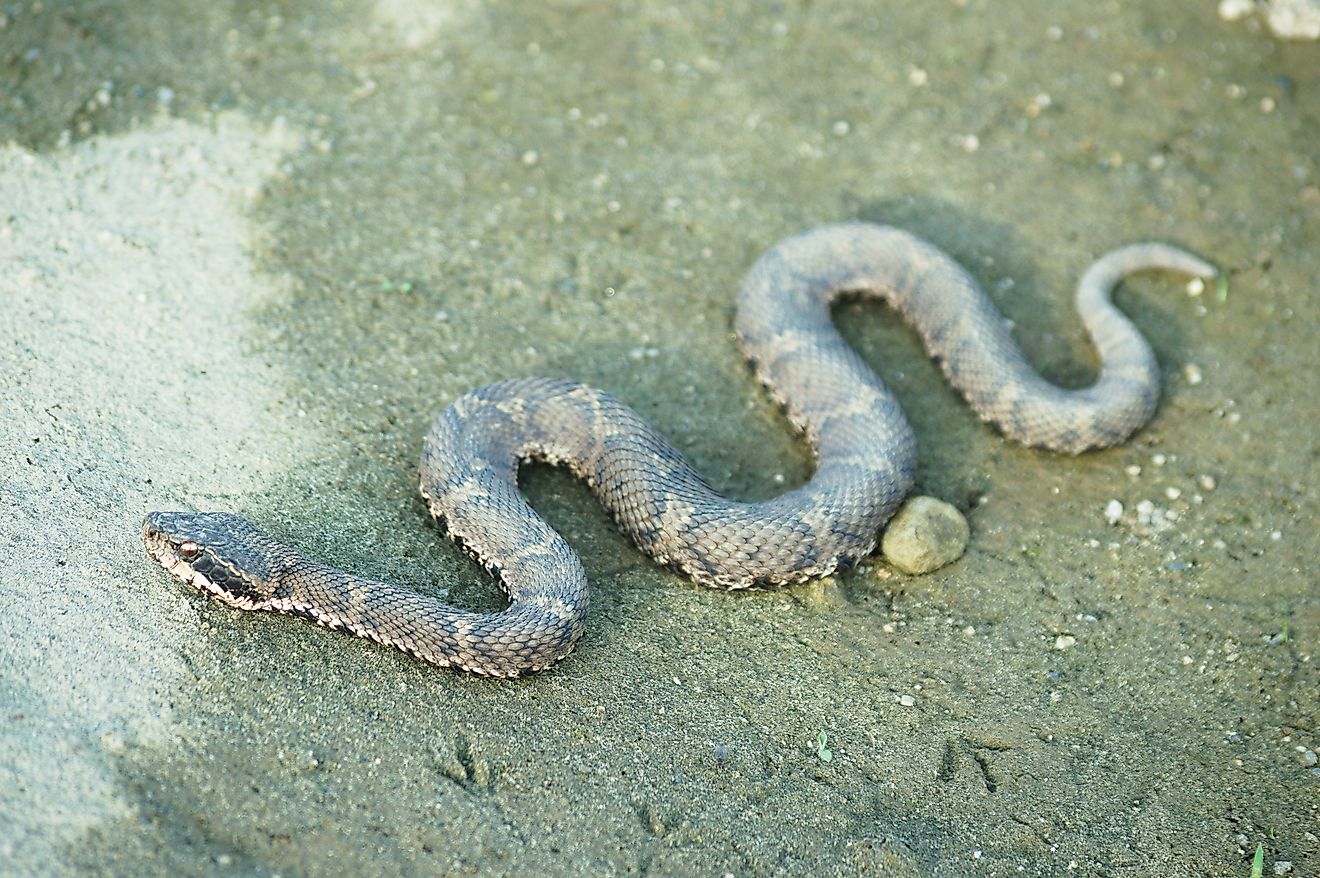
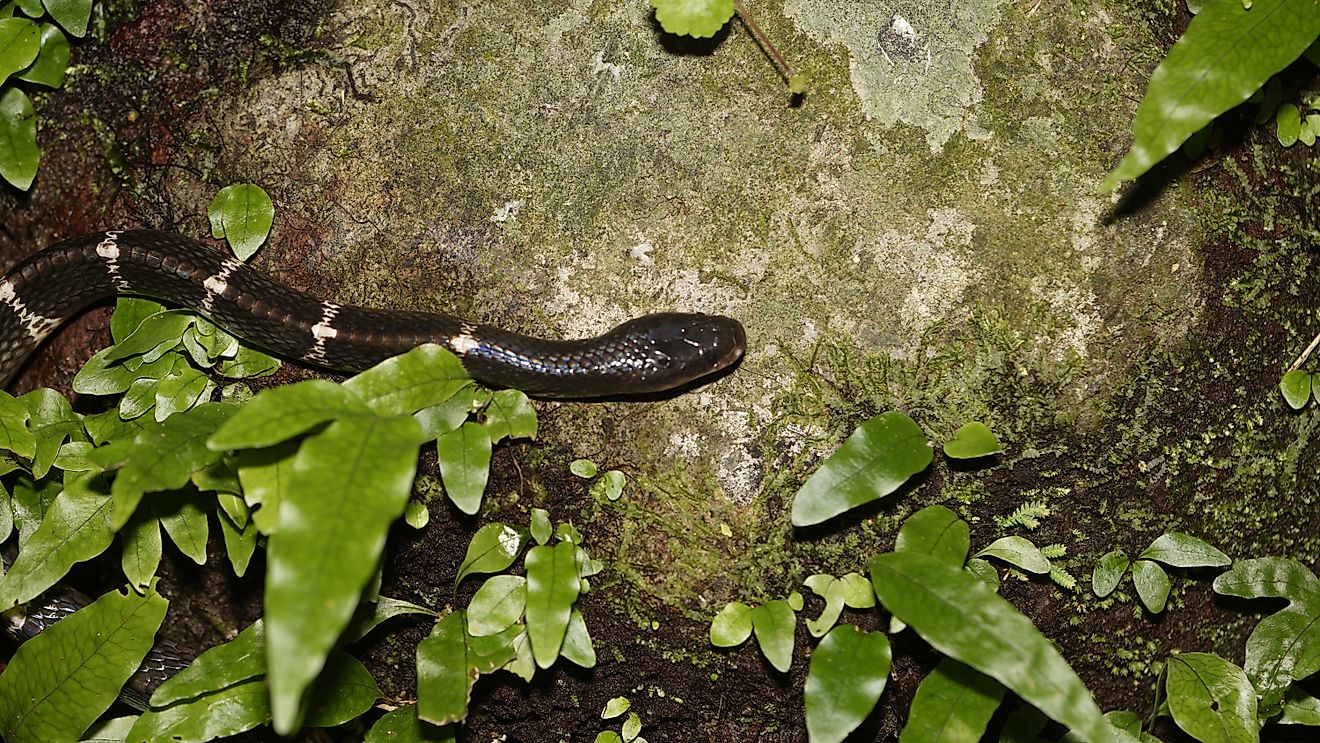
Kingsnakes are medium-sized nonvenomous constrictors, strong for their build. Most adults measure two to five feet (60 to 150 centimetres), and the longest eastern kingsnake on record reached 82 inches, just under seven feet (208 centimetres). Weight usually ranges from 1 to 2 pounds, though the heaviest individuals approach 5 pounds (2.3 kilograms). The body is slender to moderately stout with a tapered tail and a small, blunt head barely wider than the neck. The genus name Lampropeltis comes from Greek roots meaning shiny shield, a reference to the smooth, glossy dorsal scales. That slick surface lets them move through dense brush, rock crevices, and rodent burrows. Color and pattern vary sharply across the range. The California kingsnake wears alternating dark and light bands, black or brown against white or cream, and some populations are striped lengthwise instead. The eastern kingsnake carries narrow cream crossbars in a chain-like pattern over glossy black. Others are banded in red, black, and yellow, and where coral snakes occur, several kingsnakes closely resemble them.
Behavior

Kingsnakes are solitary, opportunistic predators, aggressive toward prey and calm enough with people that bites are uncommon. Cornered or startled, they run through a set of bluffs. They vibrate the tail against dry leaves or grass, which produces a passable rattlesnake buzz. They flatten the body, hiss, and coil as though winding up to strike. They release a foul musk from glands at the base of the tail, often mixed with feces, and smear it on whatever is holding them. A threatened kingsnake will also tuck its head under a ball of coils and wait the encounter out. Rattlesnakes read the threat clearly. Faced with a kingsnake, a pit viper generally will not strike. It raises a loop of its body like a shield and shoves the attacker away, a defensive posture herpetologists documented in 1975. Activity shifts with the season. Kingsnakes hunt by day through the cooler stretches of spring and fall, then move to night hunting in hot summer weather. In winter, they brumate, retreating into underground dens, animal burrows, or hollow logs until temperatures climb again.
Reproduction

Breeding runs through mid-spring and into early summer. Females shed, and the shed skin releases chemical signals that they are ready to mate, after which they stay largely in place and wait. When two or more males trail the same female, they wrestle without biting, twisting their bodies together and each trying to pin the other's head to the ground. The winner approaches and identifies himself as a mate rather than a predator, aligning his body with hers and rubbing his chin along her back to settle her. Mating lasts anywhere between several minutes and a few hours, and the pair separates immediately afterward. The eggs then take 30 to 50 days to develop, and the female basks often to keep the embryos warm while she searches for a warm and humid place to lay them out of sight. A clutch usually holds four to 20 leathery, soft-shelled eggs. They stick together in a clump so they cannot roll, which matters once the embryos attach to the shell membranes. She leaves as soon as the last egg is down, providing no guarding and no incubation, which leaves the clutch exposed to weather and predators. Hatching follows in roughly two to two and a half months, usually in late August or September. Hatchlings arrive fully formed and independent at eight to 12 inches (20 to 30 centimeters), brightly marked, and they shed for the first time within about a week. That first shed switches on the hunting instinct, and they disperse.
Importance to the World

Humans get more out of kingsnakes than out of almost any other snake. They are intraguild predators, hunting animals that occupy the same rung of the food web they do. Their appetite for rodents, insects, and venomous snakes runs squarely against the animals people treat as pests and hazards. Fewer rodents means less hantavirus and leptospirosis, and fewer of the small mammals that host the ticks carrying Lyme disease. In country where rattlesnakes, copperheads, and cottonmouths live, kingsnakes are among the few animals that hunt them deliberately. Their venom resistance has drawn laboratory interest as well. Proteins in kingsnake serum bind and neutralize the metalloproteinases responsible for much of the tissue damage in pit viper venom, and working out that mechanism has obvious value for antivenom research.
Threats
Kingsnakes are not endangered as a group. The species assessed so far, including the eastern and California kingsnakes, are listed as Least Concern on the IUCN Red List. Regional declines are another matter. The eastern kingsnake and the Florida kingsnake are both now treated as full species rather than subspecies. Both have fallen sharply across the southeastern coastal plain since the 1970s, and researchers have not settled on a cause. One population at the Savannah River Site in South Carolina has been closed to collecting and development since 1951. It still declined in both abundance and body condition over three decades of monitoring, which rules out the usual explanations. Habitat loss and fragmentation account for much of the broader picture, including urban expansion, agriculture, drained wetlands, and the loss of native grassland. Road mortality is a steady drain, since kingsnakes cross pavement while foraging and bask on the warm surface. Imported fire ants prey on kingsnake eggs and swarm hatchlings before they can leave the nest, a threat concentrated in the Southeast. Ophidiomycosis, a fungal skin disease spreading among wild snake populations, is being investigated as another potential contributor. Collection for the pet trade continues, and collectors break apart rock outcrops and roll logs looking for nests. Kingsnakes are also killed on sight by people who mistake them for venomous species, and rodenticides both thin their food supply and poison them secondhand.
Conclusion
Few wild animals do as much for people as kingsnakes while asking so little in return. They pose no danger themselves. They hold down rodent populations that spread hantavirus and leptospirosis, chew through stored grain, and prey on rattlesnakes, cottonmouths, and copperheads that genuinely are a threat. The protections that help are small ones: skip chemical rodenticides, leave brush piles and stone walls standing, learn to tell the local kingsnakes from the venomous species they resemble, and slow down on rural roads on warm summer nights. A snake that hunts rattlesnakes for a living has earned that much.