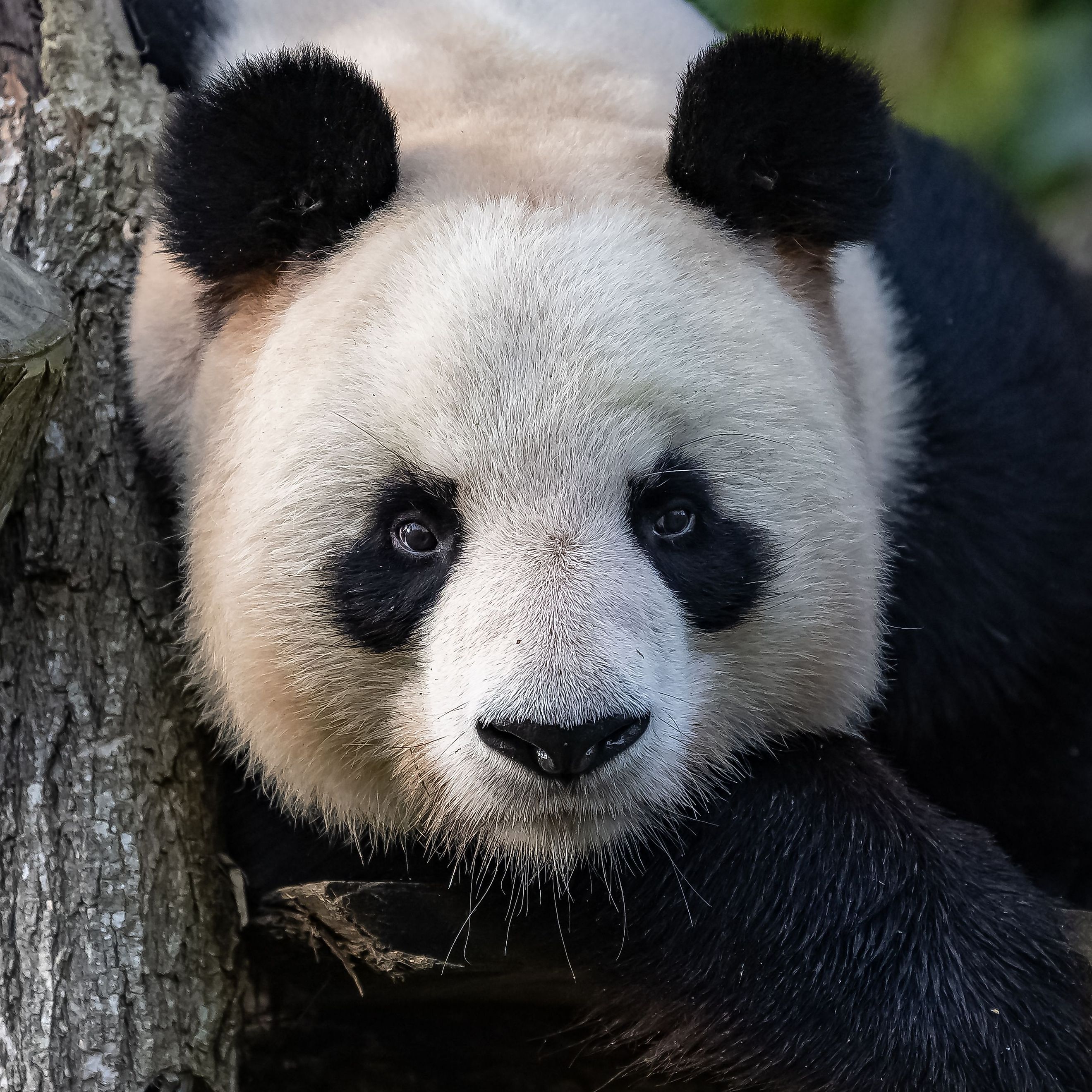
Giant Panda
A global symbol for global biodiversity conservation, giant pandas are unmistakable with their black and white coats, insatiable appetite for bamboo, and sometimes comedic and clumsy antics. Found exclusively in the mountains of southwestern China, these solitary bears spend their days foraging, followed by periods of sleep to preserve energy. On the brink of extinction in the 1980s due to habitat loss and poaching, intense conservation efforts by the Chinese government and conservation organizations like the WWF have seen their populations rebound, creating a template for biodiversity recovery around the world.
Taxonomic Classification
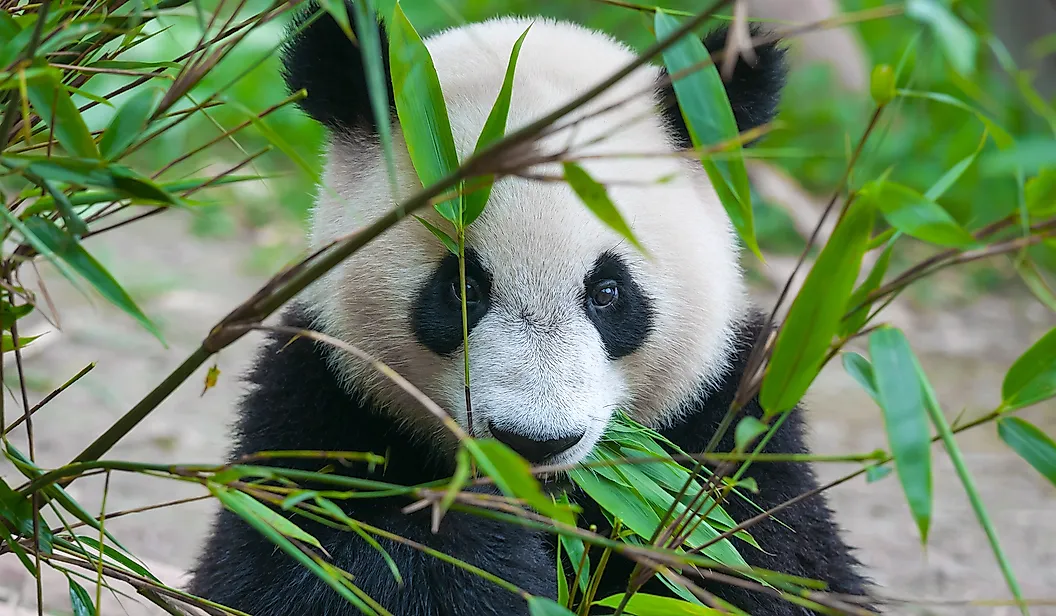
The giant panda (Ailuropoda melanoleuca) is a mammal in the family Ursidae (bears), order Carnivora. Ailuropoda derives from Greek words meaning 'cat-foot,' likely referring to characteristics of the animal's feet, while melanoleuca means 'black and white.' While classified as a carnivore due to its ancestry and digestive system, the giant panda is almost exclusively herbivorous, with 99% of its diet consisting of bamboo. In the early twentieth century, there were ongoing debates linking them to the raccoon family, but advanced genetic evidence has since confirmed they are true members of the bear family. There are two subspecies of the giant panda: the Sichuan giant panda (A. m. melanoleuca) and the Qinling giant panda (A. m. qinlingensis). The giant panda’s closest relative is the Andean bear, also known as the spectacled bear, and despite sharing a name and habitat with the red panda, giant pandas and red pandas are not closely related.
Physical Description

Giant pandas are unmistakable with their thick, woolly white coats contrasted with bold black patches on their ears and over their eyes, as well as on their legs and shoulders. Their thick coat keeps them warm in their chilly, damp mountain habitat. Adult giant pandas have stocky legs and rotund bodies, and measure 4-6 ft (1.2-1.8 m) in length, and weigh between 145-350 lb (66-159 kg), with males being up to 20% larger than females. Giant pandas possess an enlarged wrist bone that functions as an opposable thumb, allowing them to tightly grasp bamboo with high dexterity. Giant pandas employ broad, flat molars and large jaw muscles specialized for crushing tough bamboo stalks. Their paws are covered with hair to provide added traction on ice and steep, wet rocky terrain.
Range and Habitat
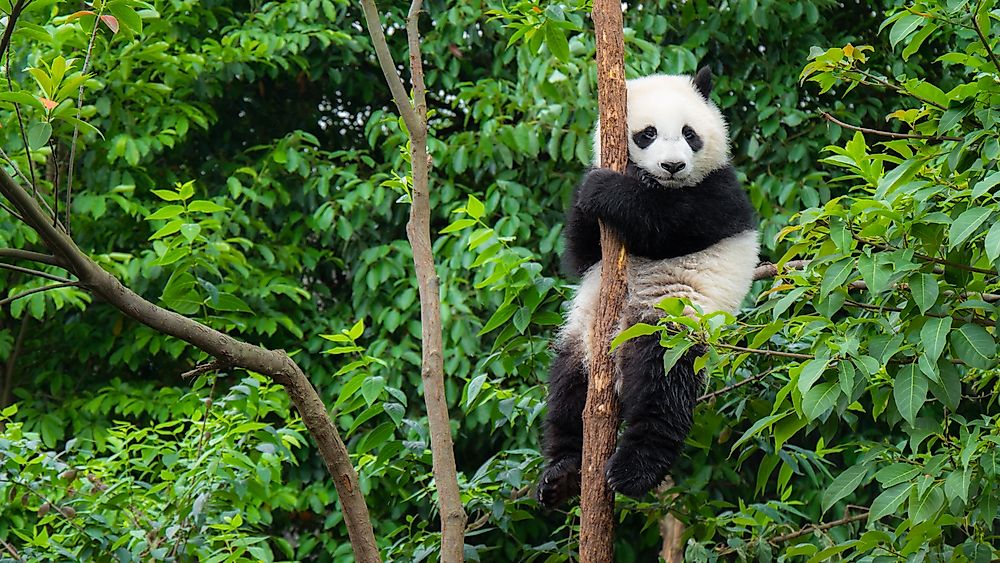
Giant pandas are endemic to southwest China, restricted to about twenty isolated and fragmented mountain forest patches in Sichuan, Shaanxi, and Gansu provinces. Specifically, they are only found in six mountain ranges—Minshan, Qionglai, Qinling, Daxiangling, Xiaoxiangling, and Liangshan. They inhabit dense, misty, high-altitude old-growth coniferous and broadleaf forests, usually at elevations of 5,000-10,000 ft (1,524-3,048 m). Not coincidentally, bamboo thrives in these places due to the cool, rainy conditions and dense canopy. Giant pandas live in well-defined home ranges that often overlap, with males generally ranging over larger areas than females. The largest known concentration of giant pandas is in the Minshan mountains. Conservation measures, including habitat protection, reserve creation, and the establishment of Giant Panda National Park, have contributed to population recovery. China's Fourth National Giant Panda Survey estimated there were 1,864 giant pandas in the wild and reported an increase of nearly 17% compared with the previous survey, making the species one of the world's most notable conservation success stories.
Food

Technically classified as carnivores, giant pandas rely almost exclusively on a diet of bamboo, which makes up 99% of their food intake. They eat the leaves, shoots, and stems, consuming up to 26-84 lb (12-38 kg) daily, while spending approximately 10 to 16 hours a day foraging to meet their energy needs. In spring and summer, they tend to prefer nutritious bamboo shoots, while in autumn and winter, they favor the tougher bamboo leaves and stems. Occasionally, giant pandas will eat other grasses, fruit, fungi, or small rodents such as pikas.
Behavior
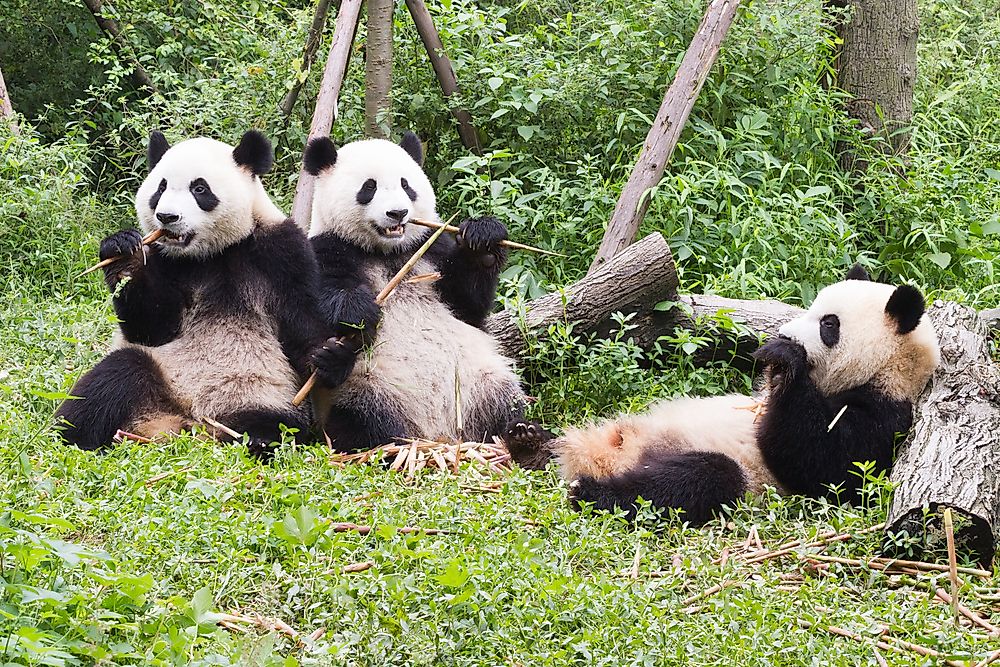
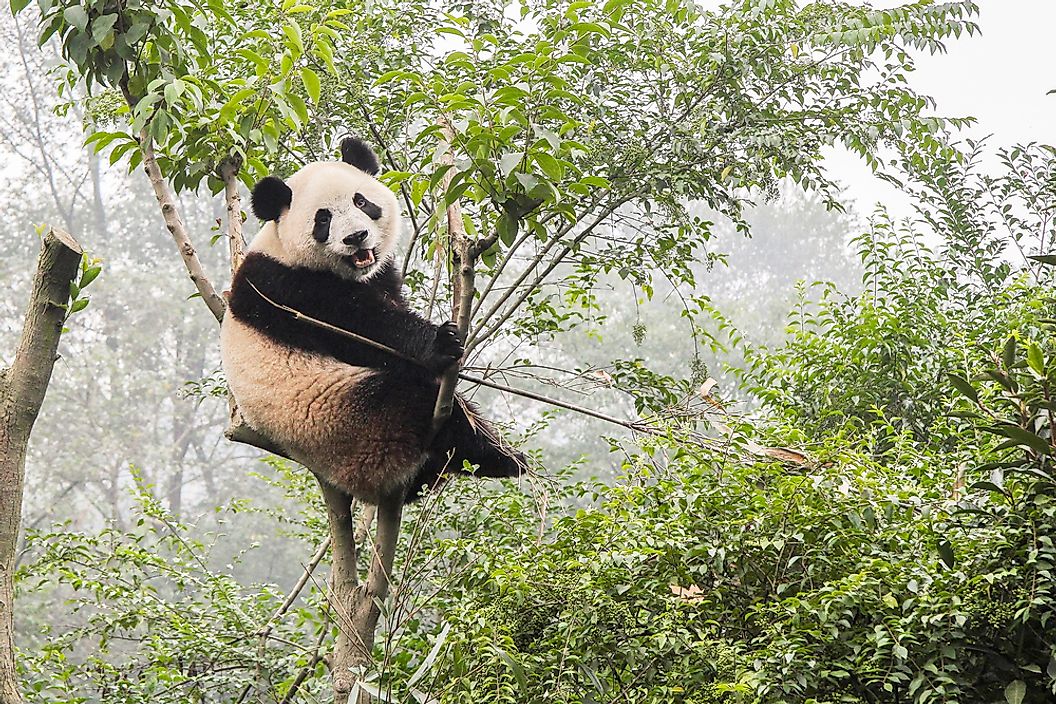
In the wild, giant pandas are solitary, low-energy animals that dedicate most of their day to foraging for bamboo. The balance of their time is spent resting, though they have gained notoriety for goofing around by rolling down hills, playing on branches, and engaging in silly antics like wrestling. Despite their slow-motion demeanor, they are agile and love climbing trees. Giant pandas generally avoid each other and stick to individual home ranges where bamboo is plentiful. They prefer to communicate by scent marking rather than direct contact, but they can also be social. Unlike most bear species, giant pandas do not hibernate because bamboo remains available year-round, and their low-calorie diet does not allow them to accumulate the fat reserves necessary for hibernation. Generally, they are docile animals and avoid conflict, but when approached or threatened, they exhibit aggression by lowering their heads, growling, or swiping with paws. A mother panda with cubs, however, will aggressively defend them if she feels threatened.
Reproduction

Giant pandas breed during a short spring mating season that typically runs from March through May. Females are fertile for only 24 to 72 hours each year, creating a very narrow window for successful reproduction. During this period, males use scent marking and vocalizations such as bleats and chirps to locate receptive females. Competition among males can be intense, with rivals engaging in displays and physical confrontations to establish dominance and gain access to a mate. Once mating is successful, gestation lasts approximately 95 to 160 days due in part to delayed implantation. Females usually give birth to a single cub, although twins occasionally occur. At birth, cubs are tiny and nearly hairless, weighing only about 3 to 5 ounces (85-142 grams), making them among the smallest newborn mammals relative to their mother's size.
Importance to the World

Giant pandas serve as an important umbrella and flagship species within the mountain forests of central China. Conservation efforts aimed at protecting panda habitat also benefit numerous other species, including golden snub-nosed monkeys, takins, pheasants, and many other plants and animals that share the same ecosystem. Although best known for their reliance on bamboo, pandas may also contribute to ecological processes such as seed dispersal through their movements and waste. Because they consume large quantities of bamboo, they defecate frequently, returning nutrients and organic matter to the forest floor and helping support nutrient cycling. Beyond their ecological role, giant pandas have become one of the world's most recognizable conservation symbols, helping generate ecotourism revenue, attract funding for habitat protection, and raise public awareness of biodiversity conservation.
Threats
Despite successful conservation efforts, giant pandas remain highly vulnerable. Habitat loss and fragmentation remain the primary threats as roads, railways, dams, and hydropower projects slice through their habitat, reducing them to smaller, isolated patches. This often results in an increase in inbreeding, reducing genetic diversity. With females ovulating for such a short time and their naturally low reproductive rate, fragmentation exacerbates already very low birth rates. Other human disturbances include accidental snaring. Though intentional poaching has drastically declined due to strict Chinese protections, giant pandas are frequently injured or killed by traps set for other animals like black bears and musk deer.
Climate change will also produce a significant challenge for pandas in the coming decades. Rising global temperatures are expected to shift the suitable climate zones for bamboo, threatening to wipe out significant portions of their habitat by 2070. In the past, bamboo has naturally experienced mass die-offs, forcing pandas to migrate to new areas, though increased fragmentation will make this transition more difficult. Reflecting the success of conservation efforts, the International Union for Conservation of Nature (IUCN) reclassified the giant panda from Endangered to Vulnerable in 2016, though continued protection remains essential for the species' future.