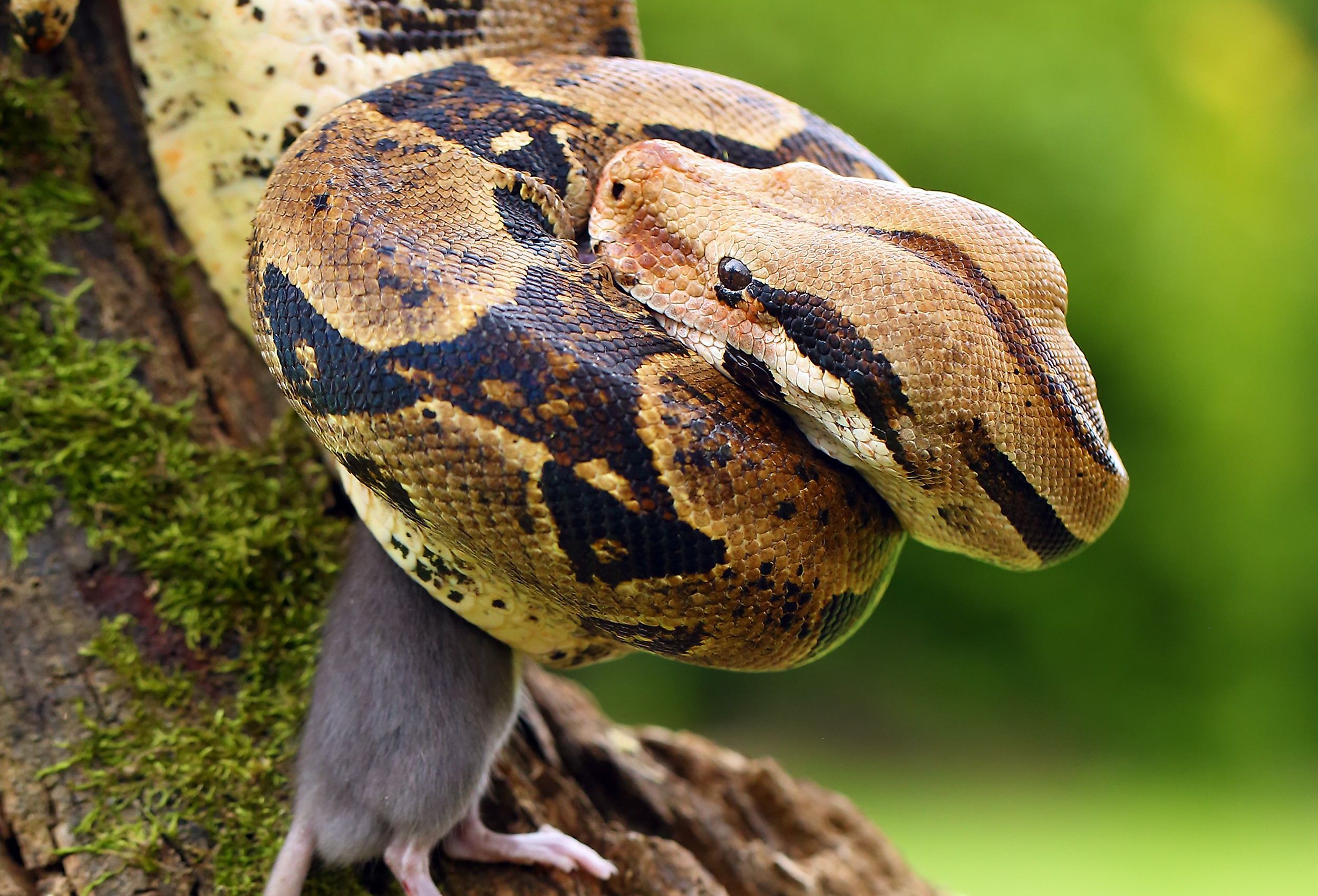
Boa Constrictor
While far from the largest snake species, boa constrictors are one of the most iconic, firmly embedded in world culture and media. The concept of constriction, the inescapable act of crushing, is used widely as a metaphor, and therefore has brought this species of snake forward as an ambassador to human society. And because they thrive in human captivity, boas have become a staple in zoos and as private pets, giving people around the world direct personal contact with them. In their native range across Central and South America and parts of the Caribbean, boa constrictors are solitary ambush predators that help regulate populations of rodents, reptiles, and other small to medium-sized animals.
Taxonomic Classification

Boa constrictors are moderately large, heavy-bodied, non-venomous snakes belonging to the family Boidae. Unusually, its English common name closely mirrors its scientific binomial: boa constrictor and Boa constrictor. Taxonomy within the Boa constrictor complex is unsettled: some authorities recognize several subspecies, while recent work has elevated some former populations, such as Boa imperator, to species level. Well-known forms include the red-tailed boa (Boa constrictor constrictor) and the Argentine boa (Boa constrictor occidentalis), the latter of which is treated as more conservation-sensitive and listed in CITES Appendix I.
Range And Habitat

The boa constrictor’s native distribution spans multiple countries and environments, ranging from northern Mexico through Central America into South America and some Caribbean islands. Under a narrower modern taxonomy, Boa constrictor sensu stricto is largely South American. Able to survive in a wide range of ecosystems, they prefer environments with high humidity and cover like tropical rainforests, but can also be found in savannas and grasslands, semi-arid scrublands, and desert fringes (Mexico), and farmers' fields or plantations.
Food

Boa constrictors are nocturnal ambush predators that rely on stealth and strength to strike their prey, using powerful muscles to squeeze their prey instead of injecting venom. They lie in wait, spending long hours motionless on the ground, or use canopy perches to strike passing prey, latching onto the victim with their teeth before constricting the animal with their powerful bodies until its heart stops beating. It swallows its prey whole, which can take a few minutes to more than an hour, depending on the animal's size. They rely on their camouflage to blend in with the surrounding forest floor or tree branches.
Boas are carnivorous and will eat just about anything they can capture and fit in their mouths. Their diet scales with their growth, with juveniles typically consuming mice, rats, birds, lizards, and amphibians. Adult boas eat birds, bats, reptiles, amphibians, and small to medium-sized mammals such as rodents, opossums, and monkeys, with prey size limited by the snake's own size. Because they are ectothermic and digest large meals slowly, boas may go long periods between meals; feeding frequency varies widely with age, prey size, temperature, season, and whether the snake is wild or captive.
Physical Description

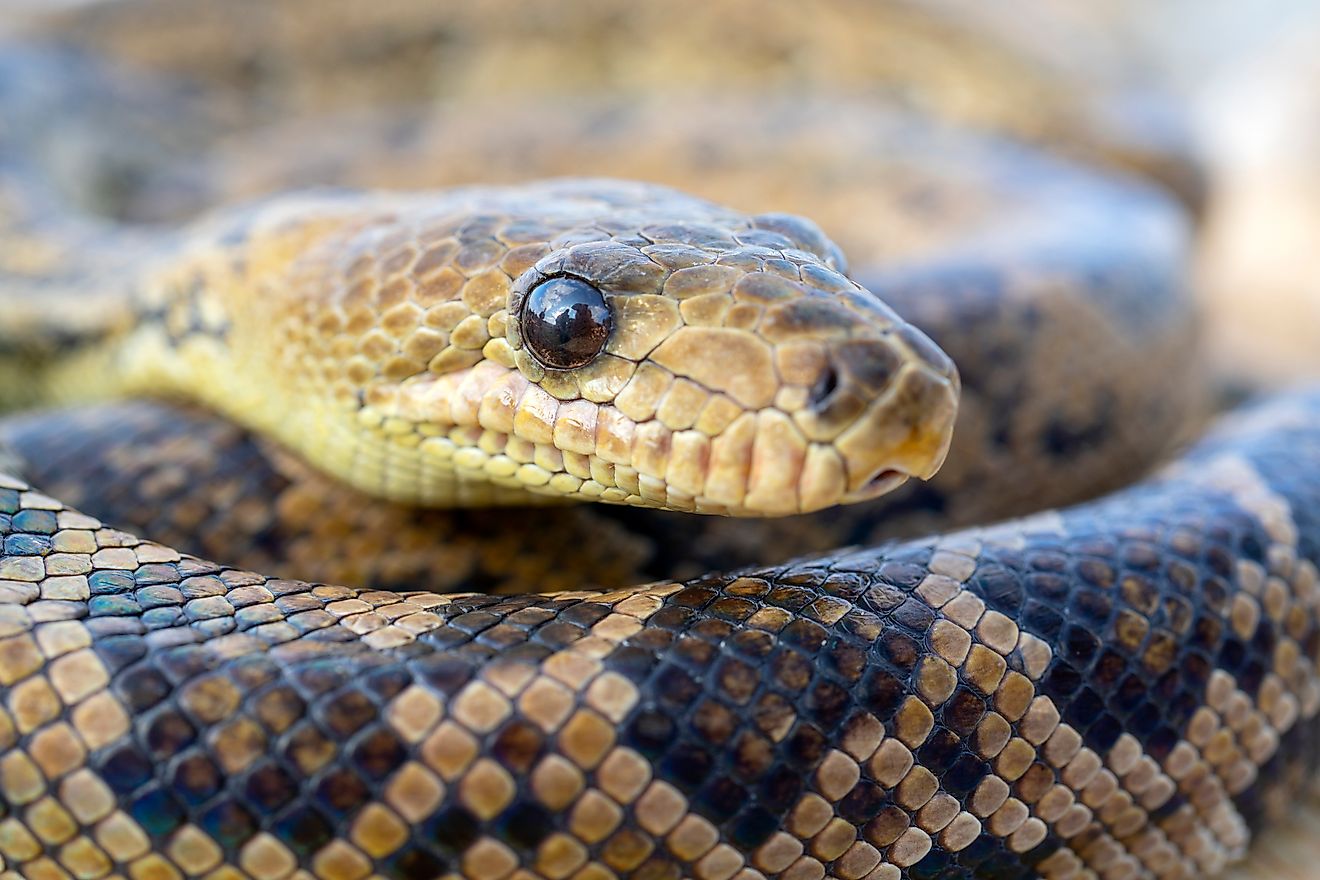
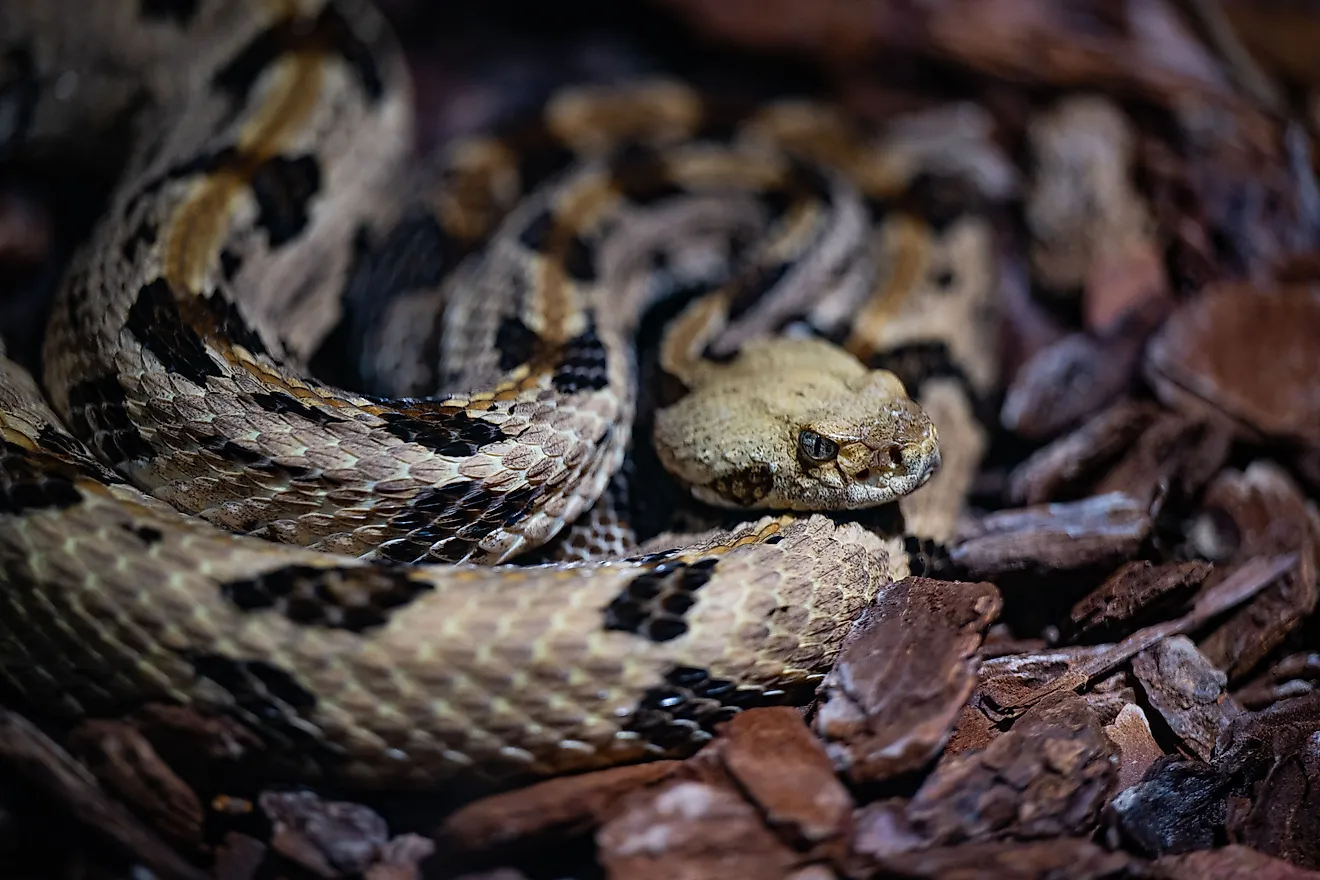
Boa constrictors are thick, long, heavy snakes with strong muscles and relatively short tails. They are easily identified by their unique geometric patterns and distinctive head markings, which vary in color by geographic location. Boas native to tropical forests are darker, while boas native to savannas and grasslands are more sand-colored.
Typically, the base color of a boa is cream, tan, beige, grey, or light brown, while saddle-shaped bands on its back can range in color from brown to a deep black. The sides of their bodies feature circular, oval, or diamond-shaped markings that are usually lighter in the center, while the tail features intense ruby red, orange, or reddish-brown markings. Their broad, arrow-shaped head has a dark stripe running from the snout toward the neck, with additional dark facial markings near the eyes. They lack venomous fangs, instead employing rows of small, backward-curving teeth designed to hold prey securely while the snake constricts it.
Adult boas are commonly about 6 to 10 feet long; exceptionally large individuals may approach or exceed 13 feet. Full-grown adults often weigh about 22 to 60 pounds, though unusually large individuals can be heavier.
Behavior

Despite their size, boa constrictors are generally docile when not hunting and are therefore popular as pets among reptile enthusiasts. In the wild, they are solitary animals, interacting with other boas almost exclusively to mate. They are most active at night, while during the day they can be found inside hollow trees, under logs, or in burrows to stay safe from predators and regulate body temperature. They are excellent at climbing trees and often hunt from branches, though heavier adults spend more time on the ground than juveniles.
When threatened, they may hiss, inflate their bodies, flee, bite if handled or cornered, and sometimes release a foul-smelling musk. Periodically, boas shed their skin, a process called ecdysis. During this time, a lubricating fluid forms between the old and new skin, causing their eyes to turn cloudy and their vision to blur. The process can take several days, and the boa will become inactive and hide until the process is complete.
Reproduction

Seasonal changes like dropping temperatures and shorter daylight hours trigger mating behaviors in boas. Males use cloacal spurs to scratch and stimulate females during courtship, and actual copulation lasts for several hours or even a day. Boas are live-bearing snakes: embryos develop inside the female and are born alive, a system often described as ovoviviparity in popular accounts but, by some sources, as viviparity because of maternal physiological support. Gestation lasts five to eight months, and females give birth to litters ranging from ten to more than sixty ready-to-go babies, each measuring twelve to fourteen inches in length.
The young emerge from their birth membranes and are independent, later feeding on small vertebrates such as lizards, frogs, birds, and rodents. Because reproduction requires a massive amount of physical energy from the female, she won’t reproduce every year as she needs time to restore her reserves.
Importance to the World

As mid- to upper-level predators, boa constrictors contribute to food webs in rainforests, savannas, agricultural areas, and semiarid habitats across their range. They regulate small mammal, rodent, and bird populations and, by keeping these in check, prevent the spread of disease and damage to agricultural crops. Without these checks, prey species like opossums, raccoons, and others could severely damage local habitats. In terms of biodiversity, boas represent an essential link in the food web. While adult boas are top predators, juvenile boas serve as prey for raptors and large cats that help maintain the delicate balance of rainforest and other ecosystems in which the boas live.
Threats

The primary threat to boas is habitat loss and fragmentation. The clearing of tropical forests for ranching, mining, and agriculture destroys the natural habitat of these snakes, forcing them into closer contact with humans and increasing the likelihood of deadly encounters. Humans also hunt wild boas to supply the international leather market and illegal wildlife trade, as well as for medicinal purposes.
Young boas also face natural predation by raptors, carnivorous mammals, and other reptiles, although the major conservation pressures are habitat loss, hunting, and collection for the trade. Inclusion body disease, associated with reptarenaviruses, is a serious disease of boas and pythons, especially in captive collections. It has also been detected in wild boa constrictors, but population-level impacts remain less clear. Still, boas are listed by the IUCN as a species of Least Concern, though in some areas their populations are declining due to the pressures mentioned above.
While humans widely fear snakes, especially large ones, boa constrictors have, through the pet trade, emerged as important ambassadors for tropical biodiversity. Their docile nature in captivity provides an opportunity for humans to connect with them, study them, and better understand these important animals and their role in the natural world. While a species of Least Concern, boas face pressures from the pet trade and international leather markets, prompting efforts to protect them before they become overexploited.