Arctic Wolf
Arctic wolves live in some of the harshest regions on the planet, enduring extreme cold, persistent darkness, unrelenting winds, and limited shelter. Found in Canada, Greenland, and Alaska, these apex predators have evolved to withstand and even thrive in these harsh conditions. Extremely intelligent, curious, and social animals, Arctic wolves prey on everything from musk oxen to beetles to ensure their fat stores can sustain them when prey is scarce and the temperature drops. Because of their remote habitat, Arctic wolves have had little contact with humans and show more curiosity than fear when approached. While their numbers are currently healthy, threats from climate change and industrial development loom for these apex Arctic predators.
Taxonomic Classification

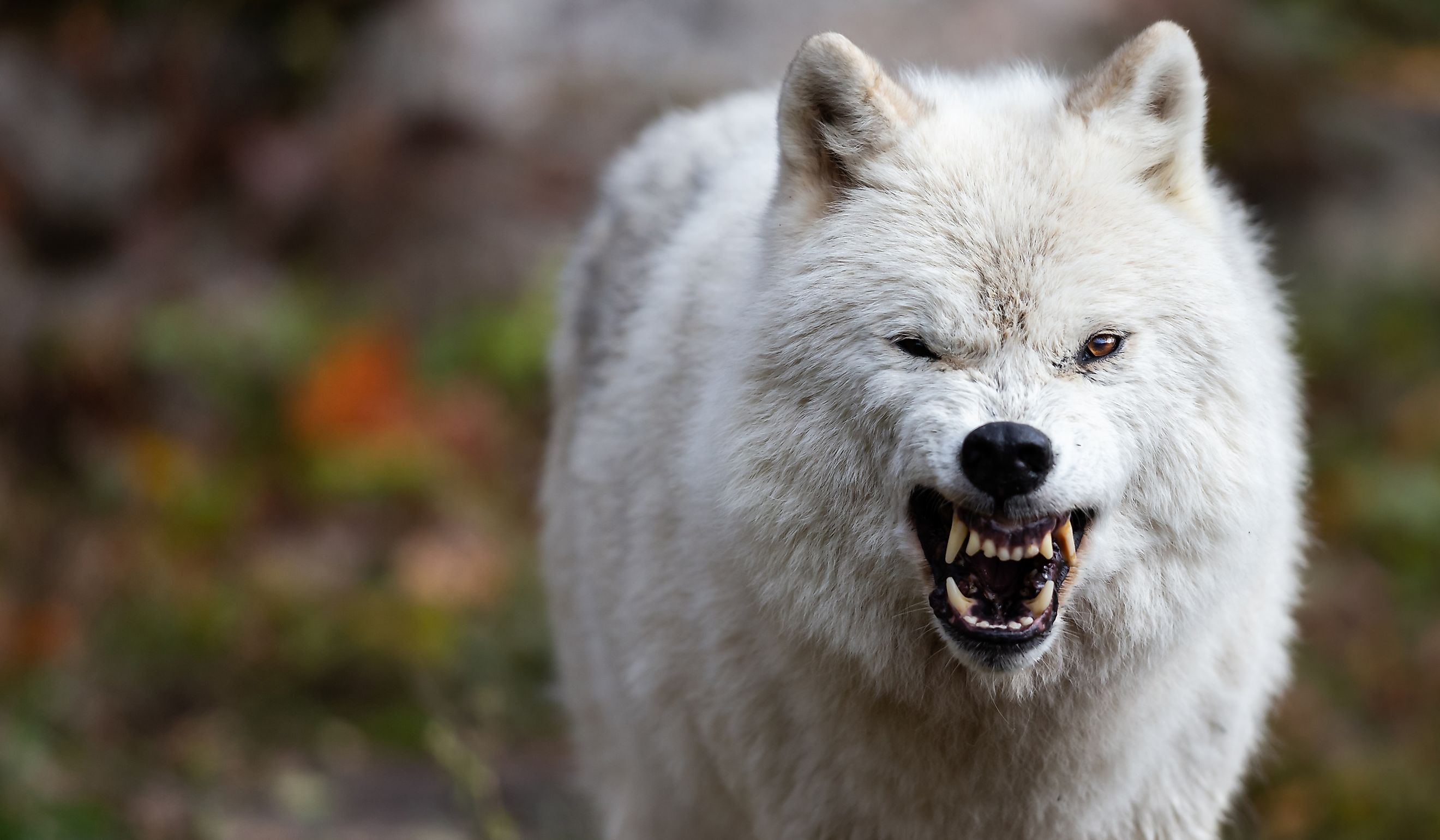
The Arctic wolf (Canis lupus arctos) is a subspecies of the grey wolf (Canis lupus) and is found in the high Arctic region of Canada and Greenland. It also goes by the names White wolf, Polar wolf, and Arctic grey wolf. Unlike other subspecies that may change color, Arctic wolves maintain a white, or sometimes light cream, coat all year to blend into the snow. The Arctic wolf also lives its entire life north of the northern tree line. With the exception of a few physical characteristics evolved for survival in its extreme environment, the Arctic wolf is identical to its southern-based relatives.
Range and Habitat

The Arctic wolf inhabits the High Arctic tundra of Canada, including the Queen Elizabeth Islands, and Greenland’s northern and eastern shores, primarily living north of 67°N latitude. Their southern limit is restricted to the north of the northern treeline and limited in the south by the northern fringes of the Middle Arctic tundra. They thrive in a harsh environment dominated by snow, ice, extreme and prolonged cold, sometimes reaching minus 70° Fahrenheit, seasonal darkness, and incessant winds. The landscape consists of rocky, frozen tundra with minimal vegetation, providing little shelter for these animals. They mostly occupy shallow ground depressions, rocky outcroppings, or caves for relief from the elements. Because of their remote and harsh location, there is little human interference, and as a result, the Arctic wolf is the only subspecies of wolf that exists across its original historic range. Overall, it is estimated that there are about 200,000 individuals in the wild.
Food

Arctic wolves are specialized carnivorous pack hunters that mostly feed on musk oxen and Arctic hares, though they will also target Peary caribou. There is evidence suggesting their population dynamics parallel the increase or decrease of Arctic hares, suggesting a heavy reliance on them. They are also opportunistic hunters, feeding on lemmings, caribou, seals, ptarmigan, and even insects—they’re not picky eaters and will eat whatever is in season. Due to sparse prey, these wolves will range over vast areas. When hunting is scarce, they have been known to scavenge garbage or carcasses. Due to their environment, Arctic wolves possess a thick layer of fat, which helps them store nutrients to survive the harsh winter when food is scarce, so their diet must be high in fat to sustain them for long periods of time, as they have a lower success rate in pack hunting large prey.
Physical Description

Smaller than many other grey wolf subspecies, the arctic grey wolf typically stands 25-31 inches (63-79 cm) high at the shoulder, is three to six feet (100-180 cm) long, and weighs between seventy and 155 pounds (32-70 kg). Their white coat includes two layers—a thick, dense inner undercoat that offers insulation against extreme cold, and long, coarse guard hairs that form the outer layer, acting as a waterproof, wind-resistant barrier that keeps snow and ice from reaching their skin. The guard hairs are hollow, which provides protection while trapping heat. Adapted to their harsh environment, these wolves possess smaller, more rounded ears and shorter muzzles than their southern relatives to protect against the cold, while their feet are larger to allow them to travel over snow efficiently. Thick fur padding on their feet provides improved grip on ice and also provides added insulation. They have 42 specialized teeth designed to shear through frozen meat and bone, and they consume every part of their prey, including bones. Arctic wolves typically live seven to ten years in the wild.
Behavior

Arctic wolves are highly social, intelligent pack animals that live in small family groups of six to ten individuals. They are active both day and night, especially during the long period of winter darkness, and don’t hibernate. Unlike other wolf species that have been exposed to humans, Arctic wolves show little fear of people and have been recorded approaching researchers and photographers in a friendly, curious manner. To communicate, they howl to locate pack members over vast distances, signal the beginning of a hunt, or define their territory. They also use scent and complex body language like ear position, tail wags, licking muzzles, and facial expressions to maintain social bonds.
Reproduction

Arctic wolves reproduce once a year, with mating occurring between January and March (April for populations in the most northern reaches of their range). After a gestation period of about 53-61 days, the female gives birth in early May or June to a litter of two to three pups. The pups are kept in a secure den, which is sometimes used year to year, and are born blind, deaf, and helpless, though they do have dark, fuzzy fur for protection against the cold, and are completely reliant on their mother for the first few weeks of life. Pups open their eyes after ten to fourteen days and are ready to eat meat when they’re one month old. The entire pack contributes to looking after the pups, including feeding them through regurgitation, protecting them, and teaching them. By ten months, young wolves are able to hunt on their own and will eventually leave their pack to form their own pack.
Importance to the World

Arctic wolves are a crucial part of the ecosystem as apex predators, maintaining an ecological balance in their environment by regulating prey populations like musk ox, caribou, and Arctic hares, preventing them from overpopulating and decimating fragile Arctic plant life. By targeting weak, sick, or elderly prey, they prevent the spread of disease and keep herds healthy and strong. They also leave food scraps, which provide a vital source for other Arctic species like foxes and ravens. Arctic wolves are also important climate change indicators. Because they are highly adapted to the coldest places on Earth and have little contact with humans, changes in their population or health are strong indicators of the impacts of climate change in the Far North.
Threats

Arctic wolves don’t face any immediate threats and are listed as a species of Least Concern by the International Union for Conservation of Nature, but there are threats looming. Climate change and the extreme weather variations it brings make it harder for their prey to find food, which may result in prey scarcity for these wolves. As Canada looks to its North for increased mining of critical minerals, an increase in industrial activity, including mining, road building, and pipeline construction, will all encroach on the Arctic wolf’s territory and interrupt their natural habitat, and human conflicts with these wolves will likely increase. Rising temperatures in the Arctic will result in melting sea ice, reducing the quality and range of their habitat. With decreasing habitat, Arctic wolves and polar bears may encounter increasing conflicts over food, but these conflicts are historically rare.
The Arctic wolf is a prime and rare example of how an apex predator species successfully exists without interference or conflict with humans. Because of their remote and harsh habitat, Arctic wolves have largely been left alone to hunt, reproduce, and perform their roles of helping to keep the Arctic ecosystem in balance. These highly social, intelligent, and resilient animals have adapted several amazing attributes to ensure their survival, including unmatched adaptation to cold, a unique lack of fear, especially toward humans, supreme teamwork and hunting skills, and resilience and stamina. With climate change and increased human activity threatening their relatively peaceful existence, time will tell how Arctic wolves endure these new challenges.