Bengal Tiger
One of the world's most charismatic megafauna, Tigers (Panthera tigris) are not just symbols of everything mystical and mighty in nature; they are a 'beacon of Biodiversity' and an indispensable asset of healthy forest ecosystems. Identified by their conspicuous yellow to light orange coat adorned with dark brown to black stripes, the Bengal Tiger (Panthera tigris tigris) is the most abundant of all extant tiger subspecies worldwide and ranges across some of South Asia's most varied landscapes. Also known as the Indian tiger or the Royal Bengal Tiger, this tiger subspecies is inextricably linked with the Indian subcontinent, where India is its major stronghold and small populations are found in Bangladesh, southern Nepal, and Bhutan. As apex predators, Bengal tigers can influence prey communities; as flagship and umbrella species, they help attract funding and political support for conserving large, connected habitats. Today, Bengal Tigers are threatened by climate change, poaching, and declining prey numbers.
Bengal Tiger Taxonomic Classification

Bengal Tigers belong to the Cat family Felidae and the 'Big Cat' genus Panthera, which also includes lions, leopards, snow leopards, and jaguars. In 1758, the Swedish biologist Carl Linnaeus used Felis tigris as the scientific name for tigers. In 1929, the British zoologist Reginald Innes Pocock subordinated the tiger to the Panthera genus. With the Bengal region being the traditional type locality, the Bengal tiger is listed as the nominotypical subspecies of Panthera tigris, having the scientific name Panthera tigris tigris.
In short, the Bengal Tiger is not a separate species from other tigers. It is a geographic population or a subspecies within the tiger species. Tiger subspecies taxonomy remains disputed: the 2017 IUCN classification groups all mainland tigers under P. t. tigris, whereas genome-wide studies support six extant subspecies, including separate Bengal and Amur lineages.
Evolution

Habitat models suggest tigers occupied much of India by roughly 12,000 years ago, but the timing and route of colonization remain uncertain and cannot be attributed simply to northern Asia becoming uninhabitable. The regional fossil record is sparse and disputed: remains from Sri Lanka, including a roughly 16,500-year-old phalanx, have been tentatively attributed to tigers, so their absence from Sri Lanka today does not establish when they reached India. It is believed that Bengal Tigers once coexisted with lions across a large region in northwestern India. Lions and tigers historically overlapped in parts of northwestern India, especially near the edges of their preferred habitats, but evidence does not establish that human-driven lion declines caused tigers to expand into the region.
Physical Description

Ranking among the biggest living wild feline species, adult male Bengal Tigers attain a total length of 283 to 311 cm (111 to 122 inches) and weigh about 200 to 260 kg (440 to 570 pounds). Female Bengal tigers are smaller, with lengths ranging between 255 and 285 cm (100 to 112 inches), and weigh around 110 to 180 kg (240 to 400 pounds).
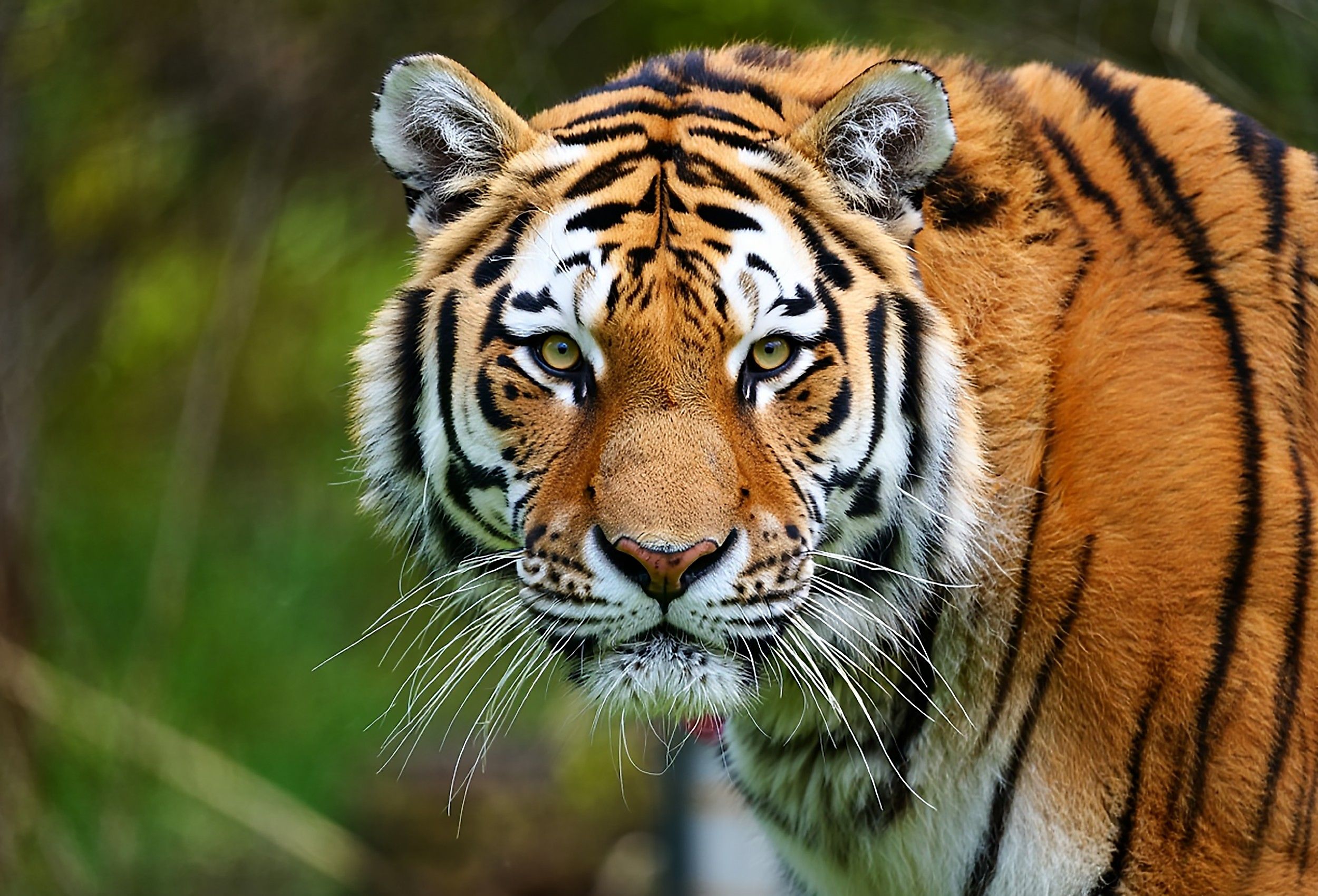
The tiger is easy to spot for its yellow to light orange coat patterned with broad dark brown to black stripes. These stripes, in addition to helping this large predator camouflage among tall grasses, tree trunks, and bushes, are unique to each tiger, allowing easy identification through camera-trap photographs. The tiger's eyes are large, round, and forward-facing, assisting the animal in catching prey in the forest, while the long whiskers are crucial for sensing. The underparts are pure white, similar to the patches around the eyes and on the cheeks. Placed apart on the top of the head are small, rounded black ears, with the backside of each ear having a winking white spot on it.
The physical design of the tiger is well-suited to its position as an apex predator of the jungle. The whole head is set onto the body with a short, muscled neck, combined with powerful jaws and long canines to deliver a deep bite into the prey. The comparatively longer hindlimbs and thick, robust forelimbs with massive paws are built to overpower large prey. The cushioned paw pads allow it to silently stalk prey, while retractable claws provide grip when chasing, slashing rivals during territorial fights, climbing up trees, or scrambling over obstacles, firmly grasping large prey, and scratching tree trunks to mark territories and leave scent signals for other tigers. The tiger has scent glands in the anal region, toes, cheeks, and tail region, with the orange-colored tail being long and banded with black rings to the tip.
Despite their size, Bengal tigers are master swimmers, routinely crossing wide rivers, bays, and tidal creeks, aside from cooling off and spending time in the waters. This ability of Bengal tigers is particularly vital in the riverine habitat of Sundarbans, where the tiger needs to swim through a network of water channels for long distances at a stretch in search of prey.
Variations of Bengal Tigers

Driven by natural genetic mutations, Bengal tigers show rare coat color variations. While the regular yellow to light orange coat and dark brown or bold black stripes are commonly seen, recessive genes produce distinct morphs like white, pseudo-melanistic, and golden tabby. Most modern captive white tigers descend from Mohan, a wild cub captured in Rewa in 1951, although the naturally occurring white morph had previously been recorded elsewhere in India. A specialized 'wideband' recessive trait affects black color production in golden tabby tigers, resulting in a pale golden or light orange body and faint reddish-brown stripes. Pseudo-melanism occurs at an unusually high frequency in the small, isolated tiger population of Odisha's Similipal Tiger Reserve.
Range And Habitat
Historically, tigers occupied a vast region across Asia extending to the Indus River Basin until the first quarter of the 19th century, but indiscriminate hunting and habitat destruction over many years have reduced their distribution significantly. Predominantly a South Asian tiger, Bengal Tigers are found in India, Bangladesh, Bhutan, and Nepal. The latest national estimates are 3,682 tigers in India in 2022 (estimated range 3,167-3,925), 125 in Bangladesh in 2024 (95% CI 100-156), 131 in Bhutan reported in 2023, and 429 in Nepal in 2026; because these surveys used different years and methods, they should be treated as estimates rather than a synchronized regional count.
Bengal Tigers are highly adaptable and thrive in diverse habitats where suitable prey populations are available, along with access to water sources and ample vegetation. Bengal Tigers inhabit the Himalayan foothills, tropical and subtropical rainforests, wet and dry deciduous forests, scrub forests, alluvial grasslands, and mangrove forests. Tiger populations also move between reserved forests through wildlife corridors, the protection of which is of utmost importance to ensure proper tiger movement and long-term survival of tigers, as rapid urbanization and increased thermal, mining, rail, and road link projects continue to fragment this landscape and destroy the corridors.
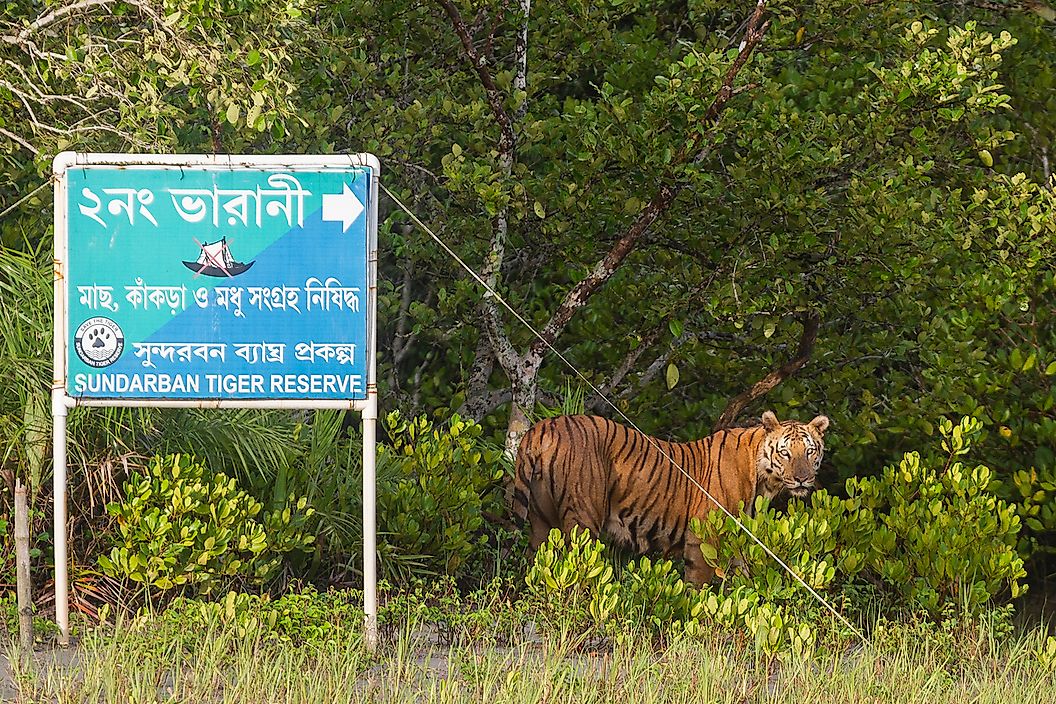
Bengal Tigers' most unusual habitat is the Sundarbans, a massive tidal mangrove forest spanning the Ganges-Brahmaputra-Meghna Delta between India and Bangladesh. It is also the lone mangrove habitat in the world that supports a sizeable Bengal Tiger population. Tigers here possess a strong adaptation to the Delta's circatidal rhythms, regularly swimming across wide saltwater channels between mangrove islands, hunting across shifting mudflats, and living alongside human communities in this otherwise difficult environment for most large terrestrial mammals. The 2022 tiger assessment estimated about 101 tigers in the Indian Sundarbans.
Food

As obligate carnivores, Bengal tigers need nutrients found in meat for their survival. As top predators, tigers mostly prey on animals large enough for a full meal. Although tigers are habitual nocturnal hunters, they have become diurnal in certain protected areas due to the tourist influx. Bengal Tigers prefer hunting not only various species of deer, such as spotted deer/chital, sambar, barasingha, Indian hog deer, barking deer, etc., but also gaur, wild boar, nilgai, serow, water buffalo, takin, and fish (particularly in the mangroves). Quite adaptable, Bengal tigers do occasionally hunt Hanuman langur, wild dogs, Asian black bear, Indian leopard, sloth bear, and mugger crocodile. Diet and kill-site studies show that Bengal tigers consume (and are capable of killing) prey substantially larger than themselves.
As one of the most effective ambush hunters in the wild, Bengal tigers rely less on long-distance chases and more on a mix of stealth and camouflage to hunt effectively. They stalk their prey through tall grasses or bushes, and with one sudden onrush, launch an attack on the unsuspecting prey. The tiger normally grabs the prey by the neck, which is followed by a powerful neck or throat bite, immediately severing the jugular vein, trachea, and carotid artery, causing death owing to blood loss and rapid suffocation. The tiger then drags the carcass into safe cover and then relishes its hard-won meal, eating the prey from the backside up.
With the decline in natural prey numbers and continual shrinkage of tiger habitats due to human encroachments, Bengal tigers need to travel farther and are forced to hunt domestic livestock, increasing the chances of human-tiger conflict. Furthermore, tigers that have injured forepaws on account of a porcupine-quill wound or have worn-out teeth because of old age are known to attack and kill humans.
Bengal Tiger Behavior

Bengal tiger home ranges vary widely by sex, habitat, prey density, and measurement method, and male ranges can exceed 100 square kilometers (about 39 square miles). The territories of dominant males overlap with the smaller territories of multiple females, facilitating mating during the breeding season. The tigers rake their claws down tree trunks to leave visible marks of ownership, and use scent marking through their anal gland secretion, mixed with urine and feces, to signal presence and find a probable mate. Diverse vocalizations like deep roars, growls, chuffing, moans, etc., are used to communicate the different moods of the Bengal Tiger.
Reproduction

Tigers meet briefly solely to mate, especially when females in estrus signal readiness using loud calls and urine scent marks. Male tigers court for about a week with frequent matings that induce ovulation. After a 102 to 108-day gestation period, the females give birth to a litter of about 2 to 4 cubs in safe, secluded dens. The blind and helpless cubs are nursed on milk by the mother for 2 to 3 months. Within a year, the cubs start hunting with their mother, and by 18 months, male cubs begin to disperse farther to establish their own territories. Female cubs, however, do stick around with their mother for 20 to 28 months. Adult male and female tigers reach sexual maturity at around 4 to 5 years and 3 to 4 years, respectively.
Threats
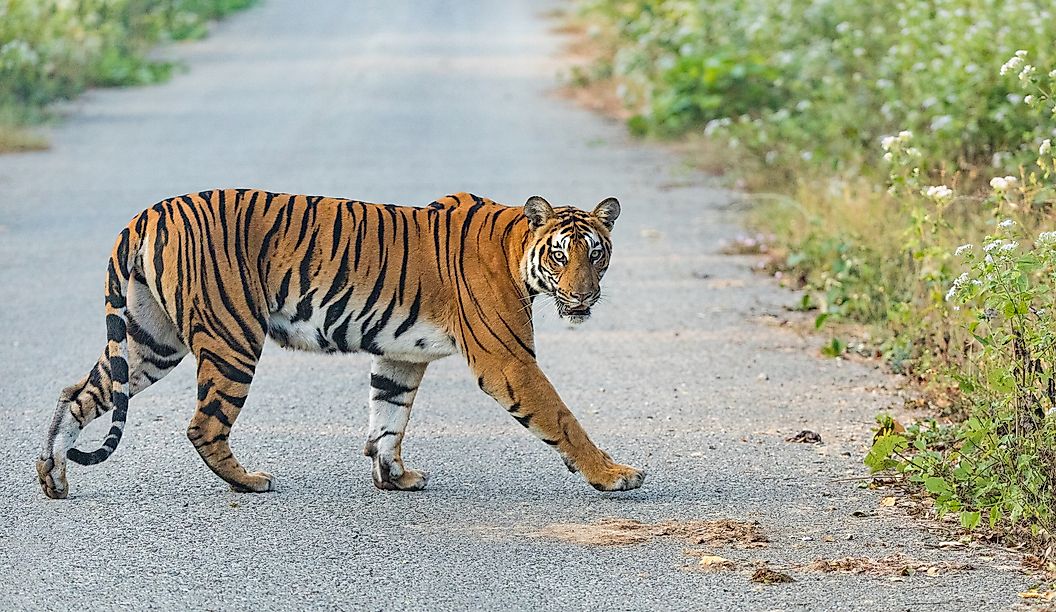
The tiger species, Panthera tigris, is listed as Endangered on the IUCN Red List; the Bengal population was not separately assessed in 2022. The biggest long-term problem that threatens tigers is the fragmentation and shrinking of suitable habitats. Throughout broad expanses of the Bengal tiger's range, forests have been drastically altered for agriculture, infrastructure development, human settlements, mines, and industries. Roads, railway lines, canals, and other barriers have fragmented once-connected tiger habitats, making the tiger more susceptible to unnatural deaths. Many tiger reserves have become small habitat islands, without vital corridors linking to other tiger habitats, preventing healthy mixing of tiger populations and limiting gene flow.
Bengal Tigers have long been targeted by professional poachers for their skin, bones, and body parts that are used in Traditional Chinese medicine and fetch high value in the illegal wildlife trade markets, especially in India, Nepal, and China. Further, overhunting, habitat degradation, and anthropogenic pressures have reduced natural prey populations of tigers, increasing their chance of preying on domestic livestock in adjacent human settlements and resulting in human-animal conflicts. Livestock depredation creates economic hardships for rural families, and farmers thus resort to revenge killing of the tigers. Climate change poses a serious threat to Bengal tiger populations in low-lying coastal habitats. In the Sundarbans, rising sea levels, stronger cyclones, changing freshwater flows, increased salinity, and water pollution have affected tiger habitat and movement.
Bengal Tiger: Importance to the World

Even though the Bengal tiger populations face numerous threats, all hope is not lost yet. As an umbrella species, the tiger can help conserve extensive habitats and many co-occurring species, although tiger-focused protection does not guarantee the survival of every species in those landscapes. Tiger reserves can protect carbon stocks and generate tourism and other ecosystem benefits, but those gains are uneven and must be weighed against displacement, access restrictions, and conflict costs borne by some local communities.
Therefore, protecting existing tiger habitats from further fragmentation, maintaining healthy natural prey populations, restoring wildlife corridors, monitoring climate impacts, addressing human-tiger conflicts, intensifying anti-poaching measures, using scientific and technology-driven monitoring, and involving local communities in taking crucial conservation decisions are the needs of the hour to secure the Bengal Tiger and the ecosystems they inhabit. Over the past five decades, the recovery of India's tiger population through Project Tiger has shown what sustained conservation practices can accomplish. The Bengal Tiger's future will thus depend not only on their increased numbers but also on whether the landscapes they inhabit remain large, intact, connected, and safe for their populations to flourish.