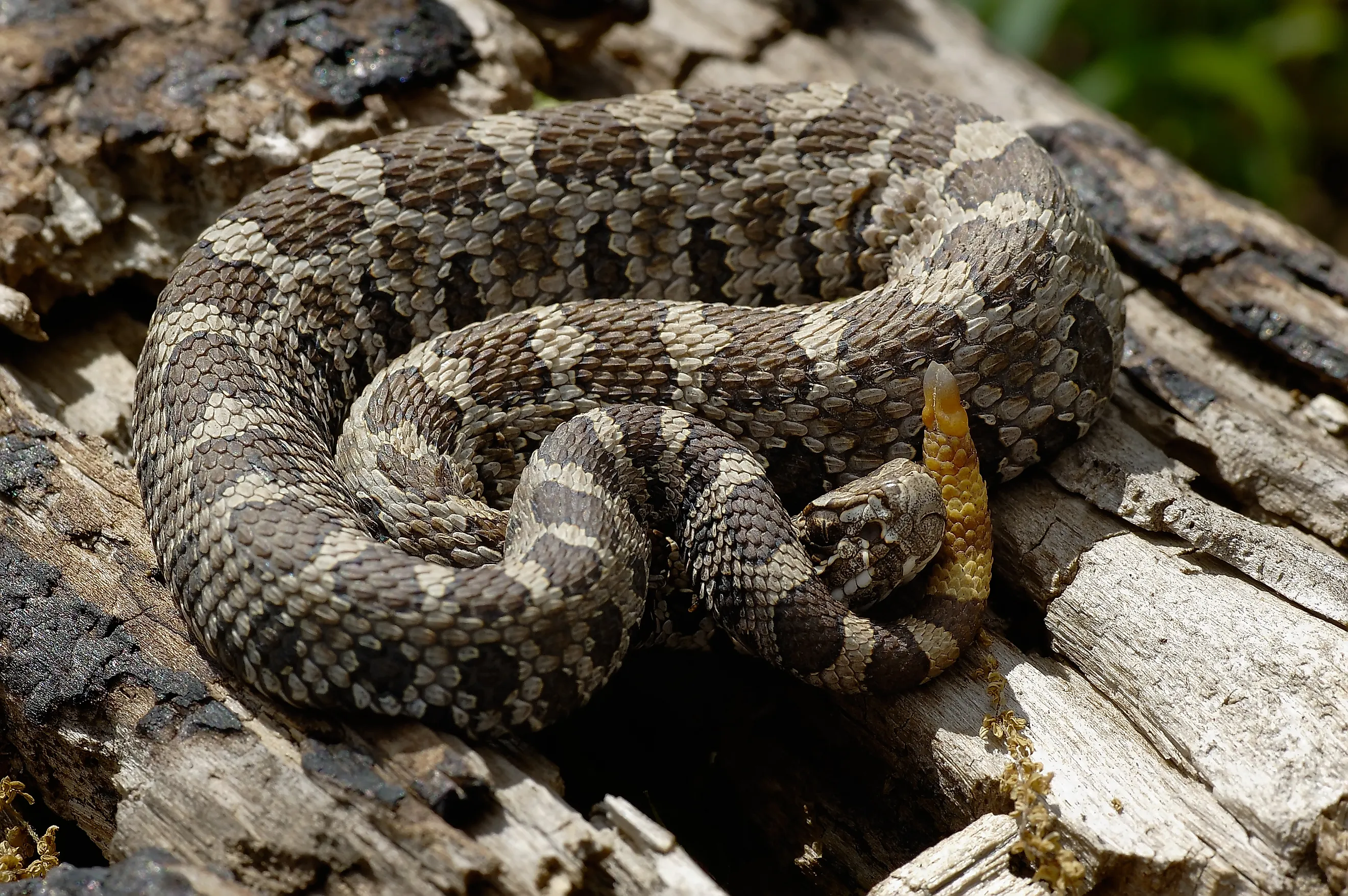
Massasauga
The massasauga is the rattlesnake that most people never hear coming. It is small, thick-bodied, and secretive, and its rattle is a dry, insect-like buzz rather than the loud warning of its desert cousins. This is a snake of soggy ground, at home in the fens, wet prairies, and marshes of central and eastern North America, and it is the only venomous snake native to Ontario.
Two species now carry the name. The eastern massasauga (Sistrurus catenatus) is found in the Great Lakes region, while the western massasauga (Sistrurus tergeminus) inhabits the central plains. Both are pit vipers, both are venomous, and both are far scarcer than they once were. The eastern species in particular has become a symbol of vanishing wetland habitat, protected across nearly every state and province where it survives.
Retiring, well camouflaged, and ecologically valuable, the massasauga rewards a closer look. Here is what makes this understated rattlesnake worth knowing.
Taxonomic Classification

The massasauga belongs to the family Viperidae and the subfamily Crotalinae, the pit vipers, within the reptile order Squamata. It sits in the genus Sistrurus, a small group of North American rattlesnakes that also contains the pygmy rattlesnake (Sistrurus miliarius). Members of this genus are distinguished from the larger Crotalus rattlesnakes in part by the nine large plate-like scales on top of the head.
The naturalist Constantine Samuel Rafinesque first described the snake in 1818, based on specimens from the prairies of the upper Missouri River. For much of the century that followed, researchers recognized three subspecies, the eastern, western, and desert massasaugas. That arrangement changed with modern genetics. A 2011 study of multiple gene regions concluded that the eastern and western forms were distinct enough to be separate species, splitting the old Sistrurus catenatus into the eastern massasauga (Sistrurus catenatus) and the western massasauga (Sistrurus tergeminus). The desert massasauga is now usually treated as a subspecies of the western species (Sistrurus tergeminus edwardsii). The common name comes from the Ojibwe language and is often translated as "great river mouth," a reference to the wet, grassy deltas the snake favors.
Physical Description

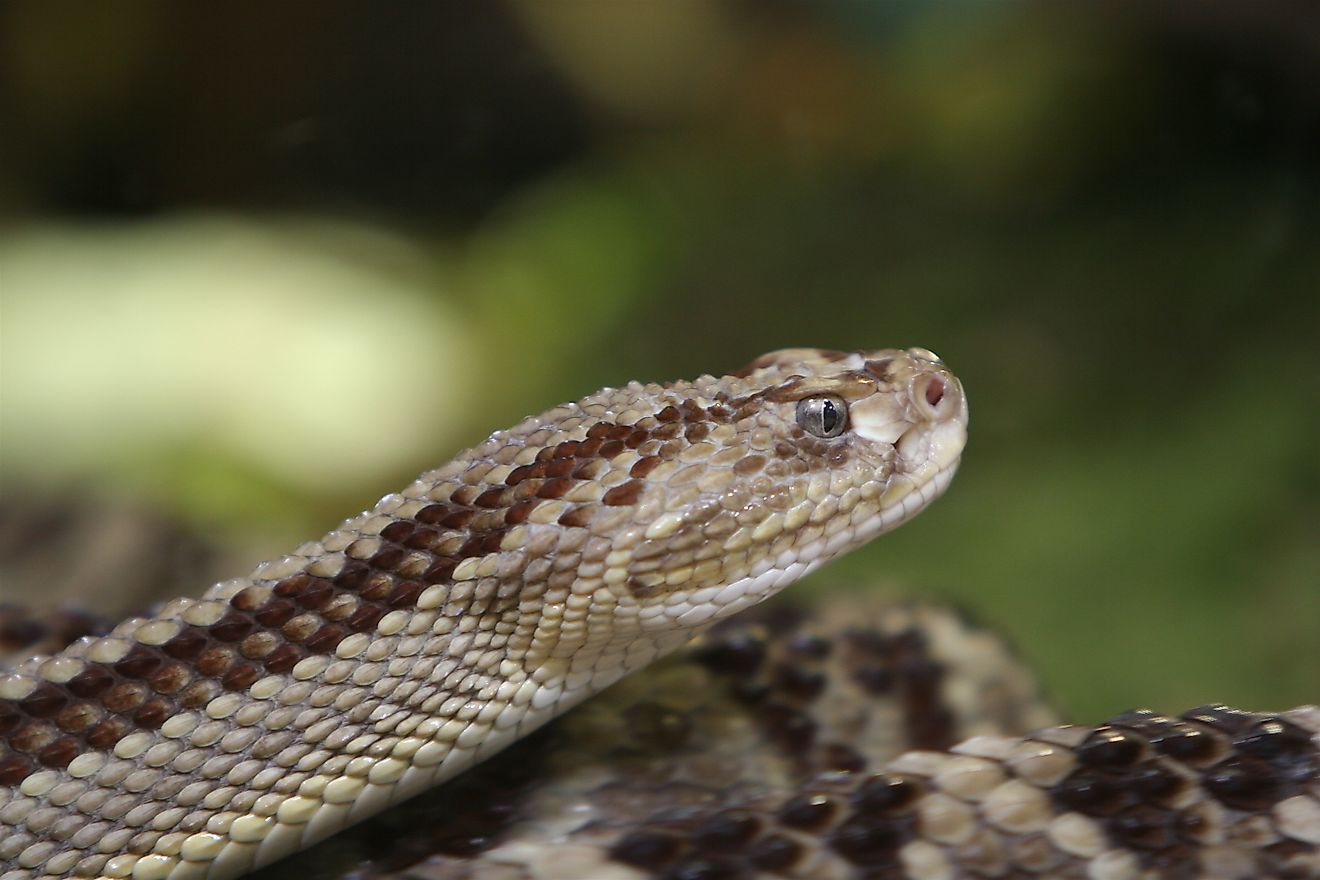
Massasaugas are compact, stout rattlesnakes. Eastern adults typically measure about 2 feet long and can reach roughly 30 inches (76 cm), while western adults tend to run a little shorter, on average around 21 to 26 inches (53 to 66 cm). The body is heavy for its length, tapering to a short tail tipped with the segmented, keratin rattle that all rattlesnakes share. A newborn carries only a single button at the tip and adds a segment each time it sheds.
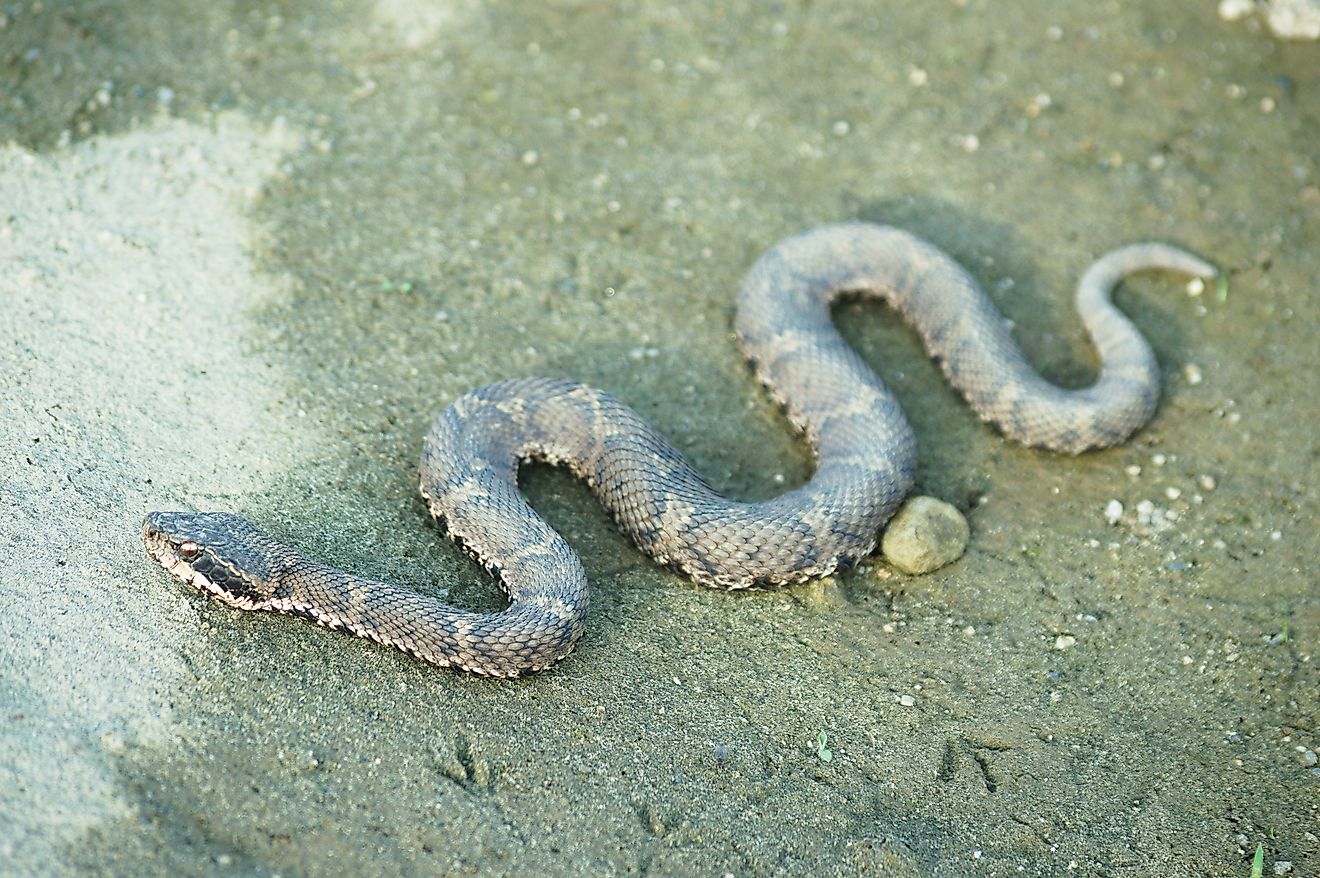
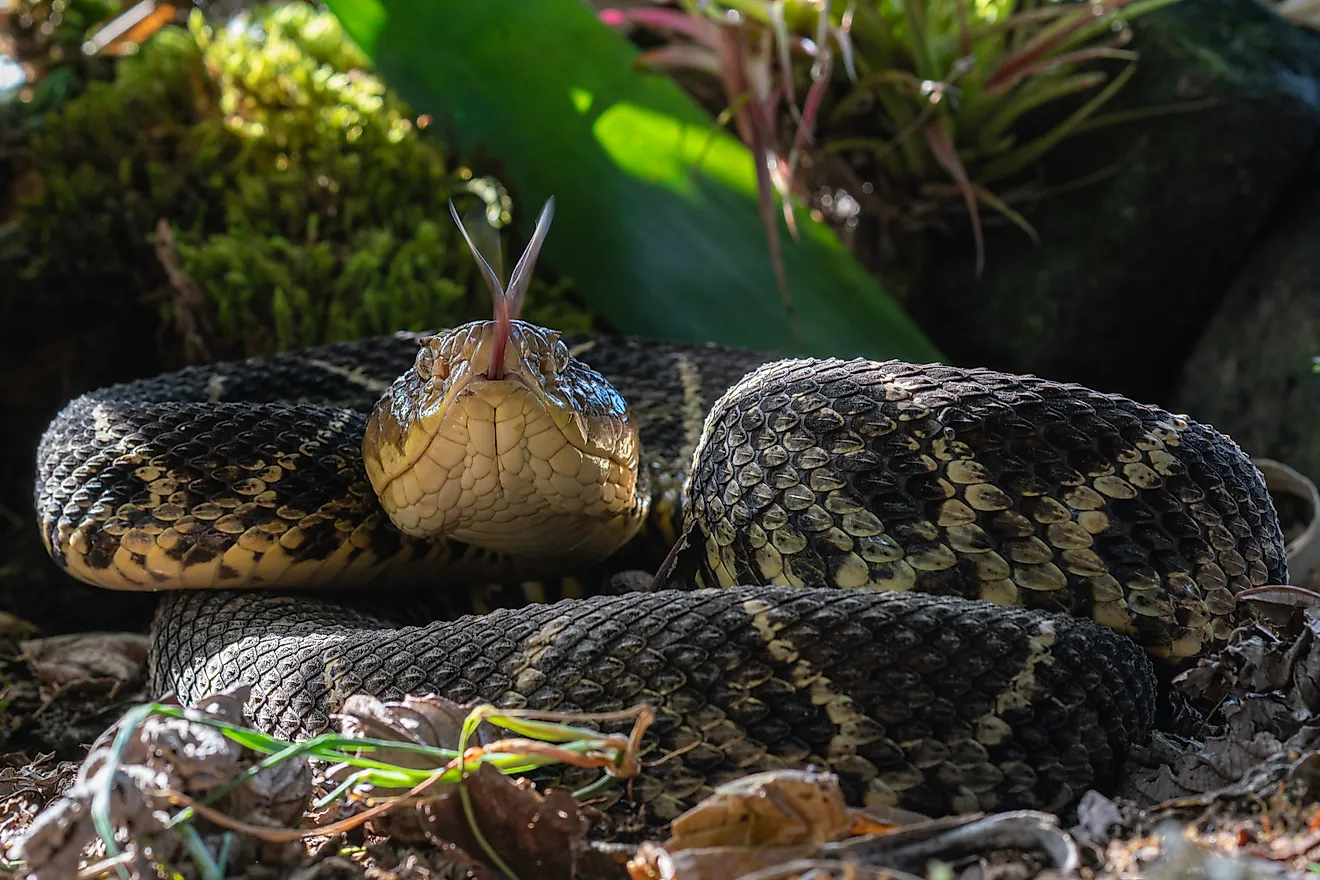
The ground color is usually gray, tan, or light brown, overlaid with a row of large, dark, saddle-shaped blotches running down the spine and smaller alternating spots along each side. Fine light edging outlines the blotches, and the belly is mottled dark gray to black. Some individuals are melanistic, appearing almost entirely black. The head is broad and heart-shaped, set with vertical, cat-like pupils and a heat-sensing pit between each eye and nostril, the feature that gives pit vipers their name. The scales are keeled, giving the snake a matte, roughened look that helps it disappear against leaf litter and grass. This cryptic coloration is the massasauga's first and best defense.
Range and Habitat

Between the two species, the massasauga ranges across a broad band of central and eastern North America. The eastern massasauga occurs from southern Ontario through Michigan, Ohio, Indiana, Illinois, and Wisconsin, with scattered relict populations in New York and western Pennsylvania and a historical presence in Minnesota, Iowa, and Missouri. The western massasauga occupies the prairies and grasslands of the central plains, and its desert subspecies reaches the arid Southwest and northern Mexico.
The eastern massasauga is a wetland specialist. It favors wet prairies, fens, sphagnum bogs, marshes, sedge meadows, peatlands, and the low ground along rivers and lakes, then moves into adjacent drier uplands such as shrubland and open woodland during parts of the year. Its choice of winter shelter is unusual for a snake. Instead of gathering in large communal dens, it often spends the winter alone or in small groups, sheltering in crayfish burrows, beneath logs and root systems, or inside small mammal tunnels, often at or below the water table. This wetland dependence ties the snake tightly to a habitat that has been drained and developed across much of its historical range.
Diet

The massasauga is a carnivore that hunts largely by ambush. Adults feed mostly on small mammals, especially voles, white-footed mice, jumping mice, shrews, and moles. They will also take other snakes, frogs, birds, bird eggs, and insects, and younger snakes lean more heavily on cold-blooded prey such as frogs and small reptiles. The snake locates warm-blooded targets using its heat-sensing pits, tracks scent with its flicking tongue, and detects ground vibrations, then strikes from concealment.
Venom does double duty as both a weapon and a digestive aid. After a strike, the snake can release dangerous prey and wait at a safe distance while the venom subdues and begins breaking down the animal, then follow the scent trail to swallow it whole. Prey unlikely to fight back, such as newborn mice or small frogs, may be eaten without envenomation at all. A slow metabolism means a massasauga can get by on only a few meals a month, an efficiency that suits its cool, northern wetlands.
Behavior

For a venomous snake, the massasauga has a mild disposition. It is solitary, secretive, and inclined to avoid trouble. Confronted with a person, it usually freezes and trusts its camouflage rather than striking, and it will often stay silent unless closely pressed. When it does sound off, the rattle is higher-pitched and quieter than that of a large rattlesnake, closer to the buzz of a grasshopper or a bee than a menacing shake. Bites are uncommon and most often follow deliberate handling or an accidental step onto a hidden snake.
Activity shifts with temperature. During the heat of summer the massasauga tends to be nocturnal or crepuscular, and it becomes more active by day in cooler spring and autumn weather. It is a capable swimmer and will move through and hunt in water. From roughly October through April it enters a period of winter dormancy, dropping its metabolism and body temperature in its chosen burrow or crevice until spring warmth draws it back out. Through the active season, individuals move between wetland foraging grounds and drier resting or gestation sites, following predictable seasonal patterns.
Reproduction

Massasaugas are ovoviviparous, meaning the female carries the eggs inside her body until the young develop and are born live. Mating occurs mainly in spring after the snakes emerge from dormancy, and it can also take place in summer and fall. Males and non-pregnant females tend to stay in the wetlands to feed, while pregnant females move to drier upland gestation sites.
Birth comes in late summer, usually August or early September, in litters that range from about 5 to 20 young, with most litters closer to 7 to 9. Newborns arrive fully equipped, each with venom and a rattle button, and they receive no parental care once born. Females reach maturity at around three years of age, and in the cooler northern parts of the range they typically reproduce only once every two or three years, since a single pregnancy demands substantial energy reserves. Wild massasaugas may live on the order of 14 years, and captive individuals can live longer. This slow, infrequent breeding is a key reason the species recovers so poorly from losses.
Importance to the World

As a mid-level predator, the massasauga helps keep small mammal numbers in check. By eating large quantities of voles, mice, and shrews, it provides natural rodent control that benefits farms and reduces the reservoirs for diseases carried by rodents and their ticks. In turn the snake feeds a range of predators, including hawks, herons, foxes, raccoons, skunks, and larger snakes such as racers and milksnakes, which take eggs and young in particular.
Beyond its place in the food web, the massasauga functions as a barometer of wetland health. Because it depends on intact fens, marshes, and wet prairies, a thriving population signals a functioning wetland system that supports many other plants and animals. Protecting the snake means protecting that habitat as a whole. The species also carries cultural weight, evident in its Ojibwe name and in the rattlesnake's broader symbolism in North American history as a creature that warns before it strikes.
Threats and Conservation

Conservation status for the massasauga depends on which yardstick you use, and the picture is more serious than a single label suggests. The global IUCN Red List still carries an assessment of Least Concern, but that evaluation dates to 2007 and predates the 2011 species split, so it reflects the old, combined massasauga rather than the eastern species as understood today. More current North American measures tell a bleaker story. NatureServe assigns the species a global rank of G3, meaning vulnerable, and the eastern massasauga is federally listed as Threatened under the U.S. Endangered Species Act, a status finalized in 2016. In Canada it is protected under the Species at Risk Act, and it is listed as endangered, threatened, or of special concern in essentially every state and province where it still occurs.
The central driver of decline is the loss, drainage, and fragmentation of the wetlands the snake needs, through agriculture, urban development, and road building. Natural succession that converts open wetland to dense woody growth also degrades habitat, as does the deliberate killing of snakes by people who fear them. Road mortality, illegal collection for the pet trade, and the emerging threat of snake fungal disease add further pressure. Populations that were once large and continuous now survive mostly as small, isolated remnants, and many areas have lost more than half of their historical populations. Total adult numbers are hard to estimate but likely reach at least several thousand across the range, with the trend pointing downward. Michigan remains a relative stronghold. Conservation work focuses on protecting and managing wetlands, using prescribed fire to slow succession, restoring and connecting habitat, and public education to curb needless killing, alongside repatriation efforts in some areas.
Takeaway
The massasauga is a study in the value of unassuming animals. It is small, quiet, and quick to hide, yet it earns its keep by controlling rodents and by standing as a living indicator of healthy wetlands. Its cautious nature makes it far less of a danger to people than its reputation implies, while its slow reproduction and narrow habitat needs make it acutely vulnerable to the loss of the marshes and fens it depends on. Where the massasauga still buzzes softly in the sedges, it signals a wetland worth protecting, and its future will track closely with how well those wet, wild places are conserved.