Indian Rhino
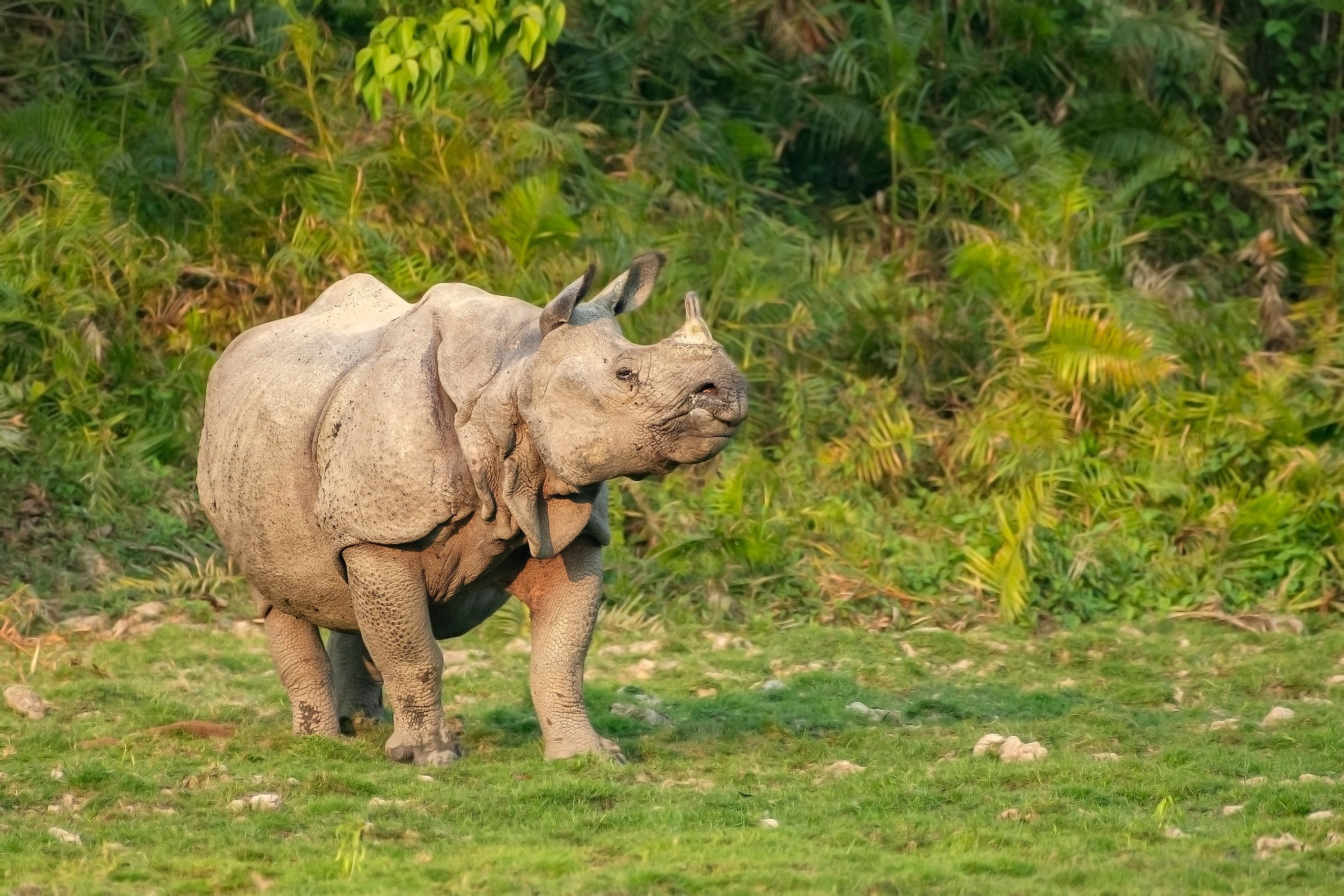
The Indian rhinoceros is one of the world's largest land animals, the largest rhino in Asia, and the second-largest rhino species globally. A single-horned species native to the floodplain grasslands of South Asia, they once ranged across the entire northern Indian subcontinent before their numbers plummeted to a critical low of fewer than 200 wild individuals by the early 20th century.
The population that exists today is listed as Vulnerable by the International Union for Conservation of Nature (IUCN) and is spread across protected areas in India, Nepal, and Bhutan. As of March 2025, 4,075 individuals persist. A recovery in their numbers is a direct result of more than a century of deliberate effort.
Understanding rhinos means understanding the biological and behavioral characteristics that make them remarkable, and the ecological and human-driven challenges that have shaped their survival.
Taxonomic Classification

The Indian rhinoceros (Rhinoceros unicornis), also known as the greater one-horned rhino, belongs to the family Rhinocerotidae. The genus name Rhinoceros is derived from the Ancient Greek words meaning "nose" and "horn." The species name unicornis comes from the Latin for "one horn" and shares the same root as the word "unicorn." The name is fitting, as the Indian rhinoceros bears a single horn, which is present in both males and females.
The species was formally described and named by the Swedish taxonomist Carl Linnaeus in 1758, making it one of the earliest large mammals to receive a scientific classification under the binomial naming system still in use today. Massive land herbivores, Indian rhinos belong to the order Perissodactyla, or odd-toed ungulates. This means their closest living relatives are actually horses and tapirs, rather than other heavy, thick-skinned mammals like elephants or hippos.
Range and Habitat
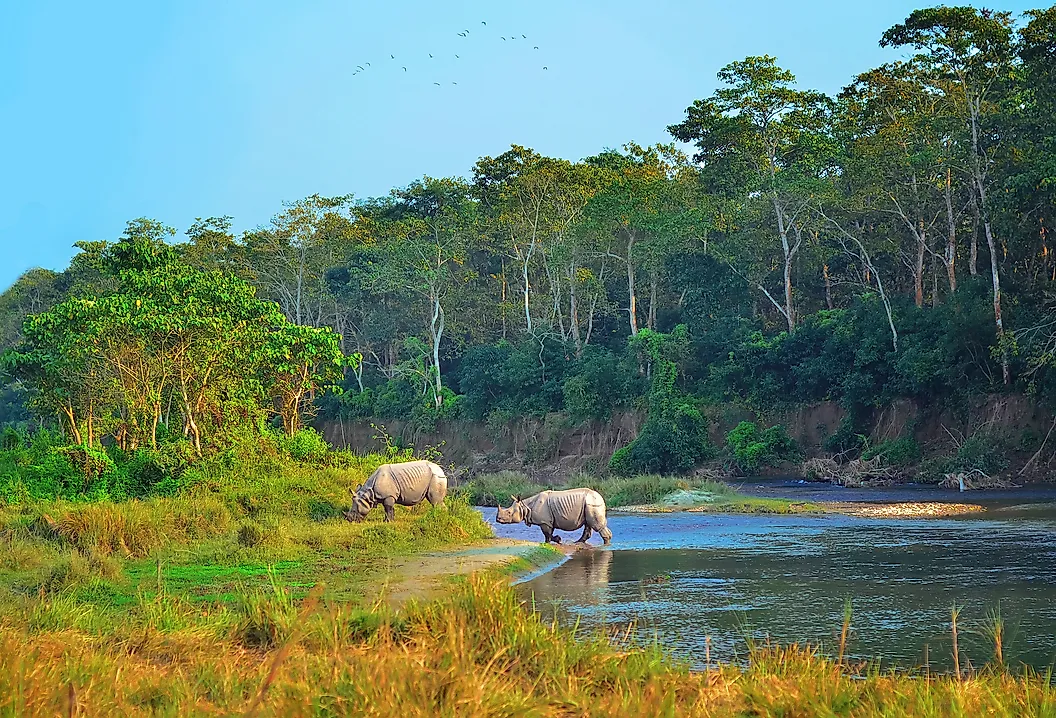
Indian rhinos once ranged across the entire northern Indian subcontinent, from Pakistan through the Gangetic plain and into Myanmar. Agricultural conversion and habitat destruction compressed that range dramatically over two centuries. Today, the species survives in a narrow band of protected areas concentrated in India's northeastern state of Assam, the Terai lowlands of Nepal, and in smaller numbers within Uttar Pradesh. The Chapramari Wildlife Sanctuary in West Bengal is also occassionally used by rhinos moving between protected areas.
They live in floodplain grasslands and wetlands along the Himalayan foothills, especially through the Brahmaputra River valley. Kaziranga National Park in Assam alone supports roughly two-thirds of the global population, making it the species’ main stronghold.
Other significant populations persist across networks of separate sanctuaries. In West Bengal, there are around 250 Indian rhinos in Jaldapara National Park. Orang National Park, in Assam, hosts about 125 individuals. In Assam's Pobitora Wildlife Sanctuary, about 107 Indian rhinos persist. Nepal's Royal Chitwan National Park holds the second largest population of about 750 Indian rhinos.
The species has shown some adaptability, expanding into cultivated areas and modified woodlands where natural grasslands have been degraded. That flexibility has limits, however. Indian rhinos depend on tall riverine grasses, seasonal wetlands, and access to water year-round. These habitats are essential to the rhino's health, providing food, water, the ability to cool down, and areas to wallow which protects their skin from the sun and biting insects. Protecting these habitats is a vital part of ensuring the longterm survival of the herbivorous animals.
Diet and Physical Characteristics

Indian rhinos are herbivores, with about 80 percent of their diet consisting of tall floodplain grasses. They are particularly fond of Kans grass in riverine areas, and their diet also includes leaves, shrub branches, fruit, and aquatic plants. They have a semi-prehensil upper lip that functions like a partial finger. This allows them to grasp and manipulate individual plants with surprising precision for an animal of their size.
When near water, they readily submerge to feed on aquatic vegetation and can spend up to 60 percent of the day wallowing. This aids in thermoregulation and protects their skin. They stand up to 6.5 feet at the shoulder and measure 10 to 12.5 feet from snout to tail. Despite their bulk, Indian rhinos are unexpectedly speedy. They can sprint up to 25 miles per hour over short distances. They're strong swimmers and can cross fast, strong currents with ease.
The physical profile of the Indian rhino is immediately recognizable. Grey-brown skin folds into distinct sections across their body. This creates the armor plated silhouette that distinguishes the species from African rhinos. While males and females look similar, adult males are generally larger, weighing between 4,400 and 6,000 pounds. Females typically weigh between 3,500 and 4,500 pounds.
The upper legs and shoulders carry wart-like bumps. Adult males develop pronounced neck folds that deepen with age. Their horn is made entirely of keratin, the same protein that makes up human fingernails. The horn begins to appear at around six years of age, can grow up to 24 inches in length, and is used to push through vegetation and dig for water in dry streambeds.
Behavior

Indian rhinos are crepuscular animals, meaning they are most active during the cooler hours of dawn and dusk and rest during the peak hours of the day. They are largely solitary outside of mating and raising calves. However, being a solitary species does not mean they are isolated.
They use scent trails to communicate across shared territories. By spreading their scent, Indian rhinos can relay their reproductive status and identify each other over long distances. They use communal dung heaps, called middens, where individuals deposit dung and scrape their feet to leave scent trails as they move through the landscape. These middens serve as chemical bulletin boards, conveying information about who has been through an area and when.
Despite their solitary nature, Indian rhinos at wallows and grazing areas will sometimes share space. Adults males are more territorial, particularly during mating competition. The home range of Indian rhinos range between 1.2 to 5 square miles (two to eight square kilometers). While it can vary depending on habitat and season, a male Indian rhino's breeding territory typically covers between .6 to 2.5 square miles (one to four square kilometers), and these territories often overlap with other males. Confrontations between males can involve fighting and serious injuries.
However, Indian rhinos don't actually fight with their horns. Instead, unlike the two African species that lack incisors and use their horns for fighting, they use their long lower canine incisors to slash at and bite their rivals. Females with calves are also highly defensive of their space, and will charge at perceived threats at full speed with short warning.
To vocalize, these animals utilize a repertoire of at least 10 distinct sounds, including snorts, honks, bellows, and low grunts. These sounds can relay a range of communication, including territorial warnings, greetings, and reproductive calls.
Reproduction

Indian rhinos have one of the slowest reproductive rates of any large land mammal. This characteristic makes population recovery slow and population collapse difficult to reverse. Females reach reproductive maturity between five and six years of age. They typically give birth for the first time between six and eight years old. Males do not reach reproductive maturity until seven to nine years old.
The gestation period runs about 480 days, roughly 16 months. The mother gives birth to a single calf that is born weighing about 100 to 150 pounds. The calf stays with their mother for up to three years, learning foraging behavior and terrain before being driven away prior to the birth of the next calf. With a gap of roughly three years between calves under optimal conditions, a single female produces relatively few young over her lifespan of 35 to 45 years.
That slow pace means every calf lost to flooding or predation has an outsized effect on population recovery. It also means the gains made over the past five decades result from generational commitment from conservation organizations across the Indian rhino's range.
Threats and Recovery

The primary threat to the Indian rhino is the illegal wildlife trade, driven by black market demands for their horns. Rhino horn has been used in Traditional Chinese Medicine for thousands of years, historically prescribed to treat ailments ranging from fevers to rheumatism. However, scientific research has found no medicinal value in rhino horn. The horn is composed primarily of keratin, an inert protein that the human body cannot readily digest, and studies have found that concentrations used in traditional remedies are too low to produce any physiological effect.
The market persists regardless, and the price of rhino horns on black markets has historically made targeting them economically attractive. This is especially true in regions with limited alternative incomes. Indian rhinos in Kaziranga and surrounding sanctuaries, including Laokhowa, Burhachapori, and Orang National Park, exist within landscapes bordered by dense human populations. The edge between protected and unprotected land is easy enough to pass through that determined individuals can consistently operate.
Habitat loss compounds the pressure. Flooding of the Brahmaputra River, intensified by climate change, periodically drives the rhinos out of Kaziranga onto higher grounds outside the park boundary. Fragmented populations face reduced genetic diversity as small groups become reproductively isolated from each other. This is a structural problem that becomes harder to correct as population sizes stabilize at low numbers in disconnected reserves.
The recovery numbers tell a encouraging story. At the start of the 20th century, fewer than 200 individuals remained in the wild. According to 2025 statistics, 4,075 Indian rhinos persist across protected grasslands of northern India and Nepal. Their recovery began when Kaziranga was designated a reserved forest in 1905. This allowed the collapsed population to slowly rebuild over subsequent decades. India's Wildlife Protection Act of 1972 then hardened those gains into national law.
In 2005, the Indian Rhino Vision 2020 program systematically translocated rhinos from Kaziranga into recovering parks across Assam. This spread the population across multiple protected areas to reduce the risk of a single catastrophic loss wiping out the species. The Indian rhino's recovery is an example of what strict legal protection and targeted habitat conservation can produce.
The work is not yet finished. Roughly two-thirds of the global population lives within a single park. The genetic consequences of the concentration will compound over generations without active intervention. Climate change is altering the flooding patterns that share the very habitat the species depends on.
Importance to the World

Indian rhinos are megaherbivores. This is a designation that describes their outsized ecological role relative to their population size. By grazing heavily on tall riverine grasses, they suppress plant growth that would otherwise crowd out lower vegetation. This maintains the structural diversity of floodplain grasslands that dozens of other species depend on. They create wallows that become water sources and microhabitats for birds, reptiles, and amphibians. Their dung distributes seeds across large areas and supports insect communities at the base of the food web.
Beyond ecology, the Indian rhino carries a cultural significance across the region. This species appears in the ancient Buddhist Rhinoceros Sutta, a scripture from the Sutta Nipata text that uses the solitary habits of the Indian rhino as a metaphor to encourage individual spiritual discipline and mindfulness. Their presence remains a source of deep local identity in Assam, where Kaziranga's rhino population has become one of the defining features of the state's public identity. Rhino-based ecotourism generates income for communities living on the edges of protected areas.
The Indian Rhinoceros: A Recovery That Demands Continued Attention
What the Indian rhino represents is a species that came close enough to extinction that their existence depended on a specific set of decisions made in the 1970s. That they are still here, and in growing numbers, is a direct result of choices made by conservationists, local communities, and policy makers across two countries and over five decades. Sustaining this recovery outcome requires the same level of commitment and solutions to evolving challenges for generations to come.