Section 01
From The Highest Peak In The East To The Outer Banks
North Carolina runs roughly 500 miles from Mount Mitchell at 6,684 feet, the highest point in eastern North America, to the barrier islands of the Outer Banks. Very few states cover that much elevation and that much coast, and the state's wildlife divides cleanly into three provinces along the way.
The mountains are the biological headline. The Southern Appalachians are among the most biodiverse temperate regions on Earth, and Great Smoky Mountains National Park, shared with Tennessee, is often called the salamander capital of the world. More than 30 salamander species live there, including the endemic Jordan's salamander complex, and the park's cove hardwood forests hold tree diversity comparable to entire European countries.
The Coastal Plain is where the state's rarest habitats are. Longleaf pine savanna once covered vast areas and now survives in fragments, and the Green Swamp and other pocosin wetlands hold carnivorous plant communities including Venus flytraps, which occur naturally only within roughly a 75-mile radius of Wilmington and nowhere else on Earth.
North Carolina is also home to the only wild red wolf population in the world. Red wolves were declared extinct in the wild in 1980, and a captive-bred population was released into the Alligator River area of eastern North Carolina beginning in 1987. It remains the only place the species exists outside captivity, and its future has been precarious.
Section 02
North Carolina's Official State Animals
| Designation | Animal | Adopted |
|---|---|---|
| State mammal | Eastern gray squirrel Sciurus carolinensis | 1969 |
| State bird | Northern cardinal Cardinalis cardinalis | 1943 |
| State saltwater fish | Channel bass, red drum Sciaenops ocellatus | 1971 |
| State freshwater fish | Southern Appalachian brook trout Salvelinus fontinalis | 2005 |
| State reptile | Eastern box turtle Terrapene carolina | 1979 |
| State salamander | Marbled salamander Ambystoma opacum | 2013 |
| State frog | Pine Barrens treefrog Dryophytes andersonii | 2013 |
| State insect | Honeybee Apis mellifera | 1973 |
| State butterfly | Eastern tiger swallowtail Papilio glaucus | 2012 |
| State marsupial | Virginia opossum Didelphis virginiana | 2013 |
North Carolina is one of the few states to designate an official salamander, and it makes sense here. The Southern Appalachians hold the greatest salamander diversity on Earth, with lungless salamanders that breathe entirely through skin and moist mouth tissue and require cool, damp conditions. The marbled salamander is an unusual choice within that group because it breeds in autumn rather than spring, laying eggs in dry depressions that the female guards until rain fills them.

The Pine Barrens treefrog designation is a nice piece of biogeography. The species occurs in three widely separated areas, in New Jersey, the Carolina sandhills, and the Florida panhandle, with vast gaps between them, a distribution pattern that suggests a formerly continuous range broken up as the climate changed.
Section 03
Habitats By Region, And Who Lives In Each
Southern Appalachians and the Smokies

Spruce-fir on the highest summits, cove hardwood in the sheltered valleys, and heath balds on exposed ridges. This holds the state's black bear stronghold, elk reintroduced to Cataloochee in 2001, plus bobcat, timber rattlesnake, and an extraordinary salamander fauna. Northern flying squirrel persists in spruce-fir as an Ice Age relict. See Great Smoky Mountains National Park and Appalachian Mountains states.
Piedmont

Rolling clay hills between the mountains and the fall line, containing Charlotte and the Triangle. Mostly second-growth forest and development, with wildlife in stream corridors and reservoirs. White-tailed deer, coyote, beaver, and bald eagle on the larger lakes.
Sandhills and longleaf pine

Sandy uplands with longleaf pine and wiregrass, maintained by fire. Red-cockaded woodpecker reaches some of its highest densities here, particularly on Fort Liberty, and other longleaf specialists include Bachman's sparrow, fox squirrel, and the Pine Barrens treefrog. Carnivorous plant bogs support unusual insects.
Coastal Plain, pocosins, and swamp

Peat wetlands, blackwater rivers, and bottomland hardwood. The Great Dismal Swamp on the Virginia border and the Green Swamp near Wilmington are the largest examples. Species include red wolf, American alligator at its northern Atlantic limit, black bear at unusually high density in the Albemarle-Pamlico peninsula, cottonmouth, and Venus flytrap habitat.
Outer Banks and estuaries

A long chain of barrier islands enclosing Pamlico and Albemarle Sounds, together the second largest estuarine system in the United States. Loggerhead and green sea turtles nest on the beaches, piping plover and American oystercatcher nest on the sand, and wild horses persist on Shackleford Banks and Currituck. Bottlenose dolphins are resident, and manatees increasingly wander north in summer.
Offshore and the Gulf Stream

The Gulf Stream passes unusually close to Cape Hatteras, bringing warm water and pelagic species within reach of day boats. This makes North Carolina one of the best places in the country for pelagic birding, with black-capped petrel, Audubon's shearwater, and various tropicbirds and storm-petrels, plus offshore whales and white sharks in winter.
Section 04
The Only Wild Red Wolves On Earth
The red wolf once ranged across the Southeast from Texas to the Atlantic. Hunting, habitat loss, and hybridisation with expanding coyotes reduced it so severely that by the 1970s the Fish and Wildlife Service captured the last animals it could find in coastal Texas and Louisiana. From more than 400 captured, only 14 were judged genetically pure red wolves, and they founded the entire captive population. The species was declared extinct in the wild in 1980.
Reintroduction began in 1987 at Alligator River National Wildlife Refuge in eastern North Carolina. The population grew through the 1990s and 2000s to somewhere around 120 to 130 wild animals at its peak, and the programme was widely cited as a model for carnivore restoration.

It then declined sharply. Gunshot mortality, vehicle strikes, changes in management on private land, and continued hybridisation with coyotes cut the wild population to fewer than 20 known animals by the late 2010s. Litigation forced the resumption of releases, and numbers have since risen modestly, but the population remains very small and dependent on active management including sterilising coyotes to act as placeholders.
The coyote problem is central and unresolved. Red wolves and coyotes interbreed readily, and coyotes only reached the Southeast after red wolves were nearly gone. Every hybrid litter dilutes the genetics that the recovery depends on, so managers sterilise coyotes in the recovery area and remove hybrids. There is also an ongoing scientific debate about whether the red wolf is a distinct species, a subspecies of gray wolf, or an ancient hybrid lineage, and that argument has real consequences for its legal protection.
Section 05
Mammals Of North Carolina
Black bear: North Carolina holds one of the densest black bear populations anywhere, particularly on the Albemarle-Pamlico peninsula where coastal bears reach exceptional body sizes, with some of the largest black bears ever recorded coming from this region. Statewide numbers are in the many thousands.

Elk: extirpated by the late 1700s and reintroduced to Cataloochee Valley in the Smokies in 2001. The herd now numbers a couple of hundred and has expanded beyond the park. Related: where to watch the elk rut.

Red wolf: the only wild population in the world, in five eastern counties.

White-tailed deer, bobcat, coyote, gray and red fox, river otter, mink, beaver, raccoon, opossum, striped skunk, armadillo expanding from the south: all widespread. The Virginia opossum is the state marsupial and the only marsupial native to North America.

Fox squirrel: a large squirrel of longleaf pine, often strikingly patterned with a black head and white nose.

Northern flying squirrel: the Carolina subspecies persists in high spruce-fir as an Ice Age relict and is federally endangered.

Bats: 17 species, with several federally listed and severe declines from white-nose syndrome. Rafinesque's big-eared bat roosts in hollow coastal trees. See where bats live.

Marine mammals: bottlenose dolphin resident, humpback and right whales offshore, and manatees increasingly summering in the sounds.

Section 06
Birds Of North Carolina
More than 470 species have been recorded, one of the highest totals on the East Coast, helped by the Gulf Stream and the state's elevation range.
- Pelagic species: the Gulf Stream close to Cape Hatteras brings black-capped petrel, Audubon's and Cory's shearwaters, band-rumped storm-petrel, and occasionally tropicbirds within day-boat reach, making North Carolina the premier pelagic birding destination in the eastern US.
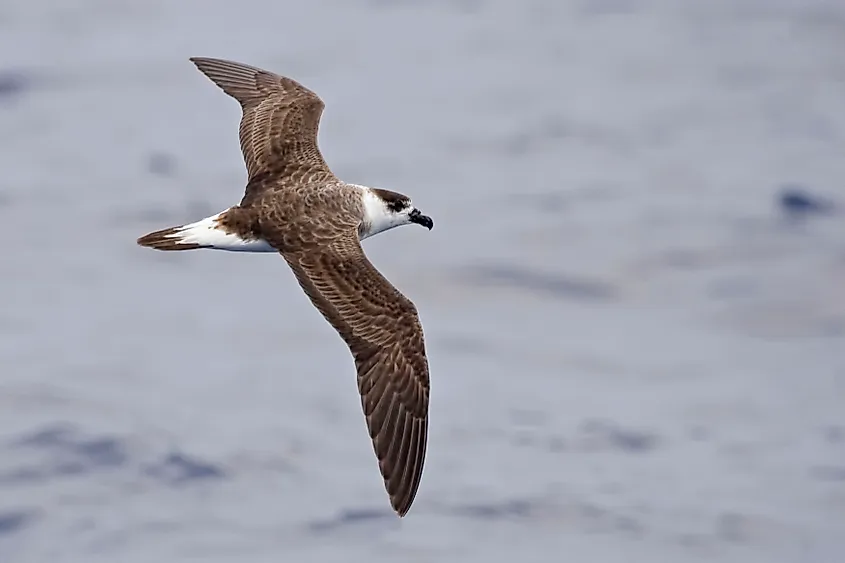
A black-capped petrel (Pterodroma hasitata) - Longleaf pine specialists: red-cockaded woodpecker at some of its highest remaining densities, plus Bachman's sparrow and brown-headed nuthatch.
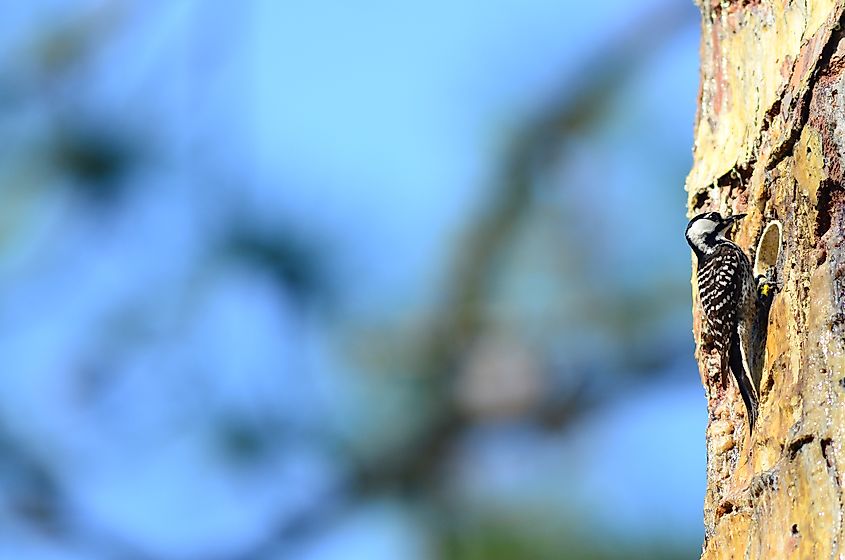
A red-cockaded woodpecker (Leuconotopicus borealis) - Mountain birds: at high elevation the community turns northern, with black-capped chickadee, winter wren, red crossbill, and breeding warblers including Canada, blackburnian, and black-throated blue, plus the very local Appalachian population of northern saw-whet owl.
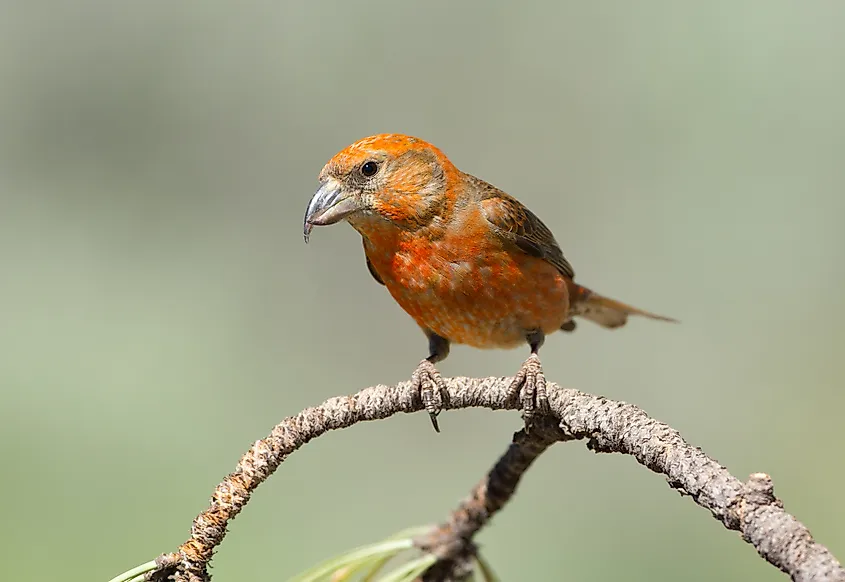
A red crossbill (Loxia curvirostra) - Coastal and marsh: piping plover, American oystercatcher, black skimmer, Wilson's plover, and wintering tundra swans and snow geese at Pea Island and Mattamuskeet in enormous numbers.
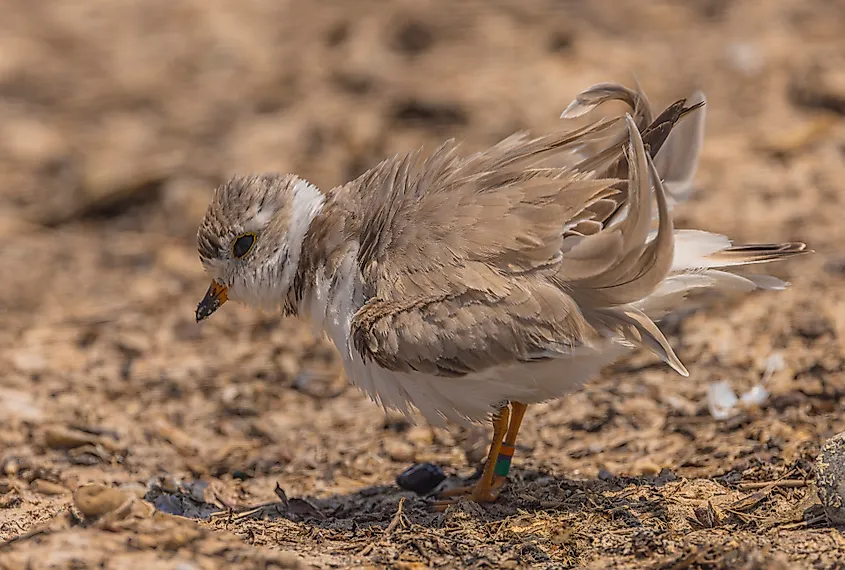
A piping plover (Charadrius melodus) - Swamp species: swallow-tailed kite, anhinga, prothonotary and Swainson's warblers in bottomland forest.
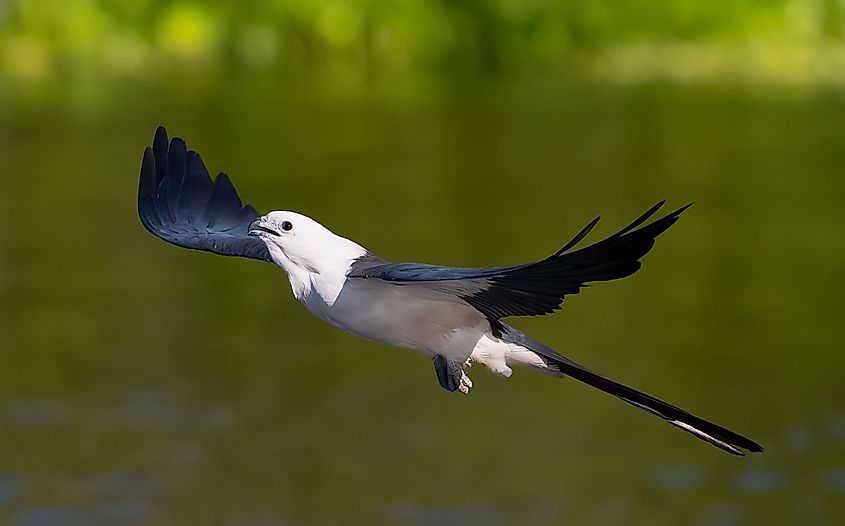
A swallow-tailed kite (Elanoides forficatus)


Section 07
Reptiles, Amphibians, And Fish
North Carolina has around 70 reptile and 90 amphibian species, and the amphibian total is among the highest in the country.
Salamanders

The state's signature group. More than 60 species occur, concentrated in the mountains, including hellbender, mudpuppy, Jordan's salamander with its many locally distinct forms, and numerous dusky, woodland, and brook salamanders. Many are restricted to single mountain ranges or single watersheds.
Snakes

38 species, six venomous: copperhead, cottonmouth, eastern diamondback rattlesnake, timber rattlesnake, pygmy rattlesnake, and eastern coral snake. Copperheads are common and account for most bites in the state, which records among the highest numbers of copperhead bites in the country.
Turtles

The eastern box turtle is the state reptile. Also bog turtle in mountain fens, spotted turtle, diamondback terrapin, and five sea turtle species offshore with loggerheads nesting in nationally significant numbers.
Fish

Southern Appalachian brook trout is the state freshwater fish, the only native trout, now restricted to headwaters above introduced rainbow and brown trout. The state's rivers hold a rich darter and mussel fauna, with the Cape Fear shiner endemic to a small area of the Cape Fear basin and federally endangered. Atlantic sturgeon spawn in several coastal rivers and are federally endangered.
Section 08
Dangerous Animals In North Carolina
- Copperhead: North Carolina reports among the highest numbers of copperhead bites of any state, largely because the snake is common in suburban yards and mulch beds. Bites are painful and rarely fatal.
- Other venomous snakes: five more species. Eastern diamondbacks are now rare and mostly southeastern, and coral snake bites are very unusual.
- Ticks and mosquitoes: Rocky Mountain spotted fever, ehrlichiosis, alpha-gal syndrome, and Lyme disease all occur, and North Carolina reports substantial spotted fever numbers.
- Black bear: no fatal attacks in the state. Coastal bears are large and food-conditioned bears at campgrounds are the practical issue.
- American alligator: in the southeastern coastal plain at the northern edge of the range. Attacks are extremely rare.
- Sharks and rip currents: North Carolina records shark bites most years, almost all minor. Rip currents on the Outer Banks kill far more people.
- Africanized bees and fire ants: fire ants are widespread in the coastal plain, and stinging insects cause the most animal-related deaths.
Section 09
Endangered And Protected Species
| Species | Where | Status |
|---|---|---|
| Red wolf | Five eastern counties | ENDANGERED |
| Cape Fear shiner | Cape Fear basin only | ENDANGERED |
| Carolina northern flying squirrel | High spruce-fir | ENDANGERED |
| Red-cockaded woodpecker | Longleaf pine | ENDANGERED |
| Atlantic sturgeon | Coastal rivers | ENDANGERED |
| North Atlantic right whale | Offshore migration | ENDANGERED |
| Loggerhead sea turtle | Outer Banks beaches | THREATENED |
| Bog turtle | Mountain fens | THREATENED |
| Piping plover | Barrier island beaches | THREATENED |
| Northern long-eared bat | Statewide | ENDANGERED |
| Appalachian elktoe mussel | Mountain rivers | ENDANGERED |
North Carolina's pressures span its three provinces. In the mountains, hemlock loss to woolly adelgid is transforming stream-side forest and warming the cold streams salamanders and brook trout need, and warming pushes spruce-fir species toward summits. On the coastal plain, fire suppression degrades longleaf pine, and development and sea level rise squeeze marsh and beach habitat. Statewide, the red wolf's survival hinges on management decisions rather than habitat availability.
Section 10
Where To See Wildlife In North Carolina
- Cataloochee Valley, Great Smoky Mountains: elk at dawn and dusk, best during the September and October rut.
- Alligator River National Wildlife Refuge: red wolf howling programmes in summer, plus black bears at very high density and coastal marsh birds.
- Pea Island and Lake Mattamuskeet: tundra swans and snow geese in the tens of thousands from December through February.
- Hatteras pelagic trips: Gulf Stream seabirds within day-boat reach, the best in the eastern US.
- Green Swamp Preserve: Venus flytraps and carnivorous plant bogs, with associated insects.
- Sandhills Game Land and Weymouth Woods: red-cockaded woodpecker in managed longleaf pine.
- Great Smoky Mountains streams and coves: salamanders after rain, and synchronous fireflies at Elkmont in June by lottery.
- Shackleford Banks: wild horses and undeveloped barrier island.
Timing: September and October for the Cataloochee elk rut. December through February for tundra swans and snow geese on the coastal refuges. May and June for salamanders after mountain rain, warbler migration, and pelagic trips. June and July for loggerhead nesting on the Outer Banks, with hatchlings from August. Copperheads are most active on warm summer evenings, which is when most bites happen in yards and gardens.
Section 11
Common Questions
- What is the state animal of North Carolina?
- The eastern gray squirrel is the state mammal, adopted in 1969. North Carolina also names the eastern box turtle as state reptile, the marbled salamander as state salamander, the Pine Barrens treefrog as state frog, and the Virginia opossum as state marsupial.
- Are there red wolves in North Carolina?
- Yes, and only here. The red wolf was declared extinct in the wild in 1980, and the entire species descends from 14 animals judged genetically pure. Reintroduction began at Alligator River in 1987, and eastern North Carolina holds the only wild population in the world.
- Why does North Carolina have so many salamanders?
- The Southern Appalachians hold the greatest salamander diversity on Earth. More than 60 species occur in the state, many lungless and breathing entirely through skin, which requires cool damp conditions that the mountains' varied slopes and coves provide. Many are restricted to single ranges or watersheds.
- How many venomous snakes live in North Carolina?
- Six: copperhead, cottonmouth, eastern diamondback rattlesnake, timber rattlesnake, pygmy rattlesnake, and eastern coral snake. North Carolina reports among the highest numbers of copperhead bites in the country, largely because the snake is common in suburban yards.
- Are there elk in North Carolina?
- Yes. Elk were extirpated by the late 1700s and reintroduced to Cataloochee Valley in the Great Smoky Mountains in 2001. The herd now numbers a couple of hundred and has expanded beyond the park boundary.
- Where do Venus flytraps grow wild?
- Naturally only within roughly a 75-mile radius of Wilmington, North Carolina, in wet longleaf pine savanna and pocosin edges. They occur nowhere else on Earth in the wild, and poaching from those sites is a felony in the state.
- What is the most dangerous animal in North Carolina?
- Stinging insects cause the most deaths through allergic reaction, and ticks carry the greatest disease burden. Copperhead bites are the most common venomous snakebite in the state but are rarely fatal.
This page was last updated on October 7, 2026