Section 01
The Most Mountainous State East Of The Mississippi
West Virginia is the only state entirely within the Appalachian Mountains, and it has the highest mean elevation of any state east of the Mississippi. That topography did two things for its wildlife: it made large-scale agriculture impractical, so roughly 79 percent of the state is forested, and it created isolated high-elevation pockets where northern species survived after the last ice age.
Those pockets are the state's biological signature. The high plateau around Canaan Valley and Dolly Sods holds red spruce forest, sphagnum bogs, and heath barrens that belong ecologically to Canada rather than to the mid-Atlantic. Canaan Valley is the highest large valley east of the Rockies, and it holds boreal plants and animals more than 500 miles south of their main range.
West Virginia's other defining feature is what extraction did to it. Coal mining, and particularly mountaintop removal in the southern coalfields, has buried headwater streams under valley fill and altered whole watersheds. Acid mine drainage from older operations still sterilises hundreds of stream miles. At the same time, reclaimed surface mines have accidentally become the state's largest grassland habitat, supporting grassland birds that had nowhere else to go.
The state is also central to bat conservation. Its limestone caves hold major hibernacula for several endangered species, including the Virginia big-eared bat, and West Virginia was among the first states hit hard by white-nose syndrome after it spread south from New York.
Section 02
West Virginia's Official State Animals
| Designation | Animal | Adopted |
|---|---|---|
| State animal | Black bear Ursus americanus | 1973 |
| State bird | Northern cardinal Cardinalis cardinalis | 1949 |
| State fish | Brook trout Salvelinus fontinalis | 1973 |
| State insect | Honeybee Apis mellifera | 2002 |
| State butterfly | Monarch Danaus plexippus | 1995 |
| State reptile | Timber rattlesnake Crotalus horridus | 2008 |
West Virginia is one of only a handful of states to name a venomous snake as its official reptile. The timber rattlesnake designation in 2008 came from a student campaign, and it was deliberately chosen to counter the reflex to kill snakes on sight. Timber rattlesnakes are slow to reproduce, with females often not breeding until nine or ten years old and then only every few years, which means killing adults at a den can remove a population that took decades to build. They are declining across much of their range and are protected in several neighbouring states.

The black bear designation in 1973 was equally deliberate. Bears had been reduced to a few hundred animals confined to the eastern mountains, and naming the species the state animal accompanied stronger protections. The population has since grown to several thousand and now occupies all 55 counties.
Section 03
Habitats By Region, And Who Lives In Each
High Allegheny plateau and Canaan Valley

Red spruce forest, sphagnum bogs, and heath barrens above 3,000 feet, holding species stranded since the ice age. The West Virginia northern flying squirrel lives in spruce and northern hardwood here, was federally endangered, and was delisted in 2013 after recovery. Also snowshoe hare, northern saw-whet owl, and Cheat Mountain salamander, which is federally threatened and found only on a few mountaintops.
Allegheny Mountains and Monongahela National Forest

The state's largest forest block, with northern hardwood, spruce restoration areas, and extensive wilderness. Black bear, bobcat, fisher (reintroduced in the 1960s), beaver, and forest interior birds including cerulean warbler at some of the highest densities anywhere. See Appalachian Mountains and Appalachian Mountains states.
Ridge and Valley, eastern panhandle

Limestone valleys with caves, springs, and drier oak forest. This is the state's karst belt, holding Virginia big-eared bat, Indiana bat, and gray bat hibernacula, plus cave invertebrates restricted to single systems. Timber rattlesnake dens occupy the rocky ridges.
Western hills and Ohio River valley

Lower, more dissected country with mixed oak forest and river bottomland. White-tailed deer, coyote, wild turkey, and bald eagles along the Ohio.
Southern coalfields and reclaimed mine land

Steep hollows and the region most affected by surface mining. Reclaimed mine grasslands now hold the state's largest populations of grassland birds including Henslow's sparrow, grasshopper sparrow, and eastern meadowlark, an accidental habitat created by industrial disturbance. Elk were reintroduced here beginning in 2016 using the same reclaimed landscapes.
New River Gorge and southern rivers

Deep sandstone gorge with the New River, which is among the oldest rivers in North America. It holds a distinctive fish fauna and the gorge walls support peregrine falcons after reintroduction. See New River Gorge National Park.
Section 04
Mammals Of West Virginia
Black bear: the state animal, reduced to a few hundred in the eastern mountains and now several thousand across all 55 counties, one of the clearer recovery stories in Appalachia.

White-tailed deer: nearly extirpated by 1900 and restocked, now abundant enough that browsing suppresses forest regeneration in many areas.

Elk: extirpated by the 1870s and reintroduced to the southern coalfields beginning in 2016 with animals from Kentucky and Arizona, using reclaimed surface mine grasslands as habitat. The herd is small but growing.

Bobcat, coyote, gray and red fox, fisher, river otter (reintroduced and recovered), mink, weasels, striped and spotted skunk, raccoon, opossum, beaver, woodchuck, squirrels, snowshoe hare at high elevation: all present. Related: what happens when beavers leave.

West Virginia northern flying squirrel: a high-elevation spruce specialist that was federally endangered and was delisted in 2013 after red spruce restoration and population recovery, one of relatively few Appalachian delistings.

Marsh rice rat: a wetland and coastal marsh specialist that is locally threatened in parts of its range, affected by sea level rise and habitat fragmentation.

Bats: 14 species, and West Virginia's caves are nationally important. Virginia big-eared bat, Indiana bat, and gray bat all hibernate here. White-nose syndrome reached the state around 2009 and caused catastrophic losses, with some hibernacula losing well over 90 percent of their bats. See do bats hibernate and where bats live.

Gone: gray wolf, eastern cougar, and bison, all extirpated in the 1800s. West Virginia's last known native elk was killed in the 1870s.
Section 05
Birds Of West Virginia
Around 340 species have been recorded, a lower total than coastal states but with disproportionate significance for breeding forest birds.
- Cerulean warbler: West Virginia holds among the highest breeding densities of this declining species anywhere. It nests high in mature deciduous canopy on slopes, and it has declined steeply across its range, making the state's forests globally important for it.
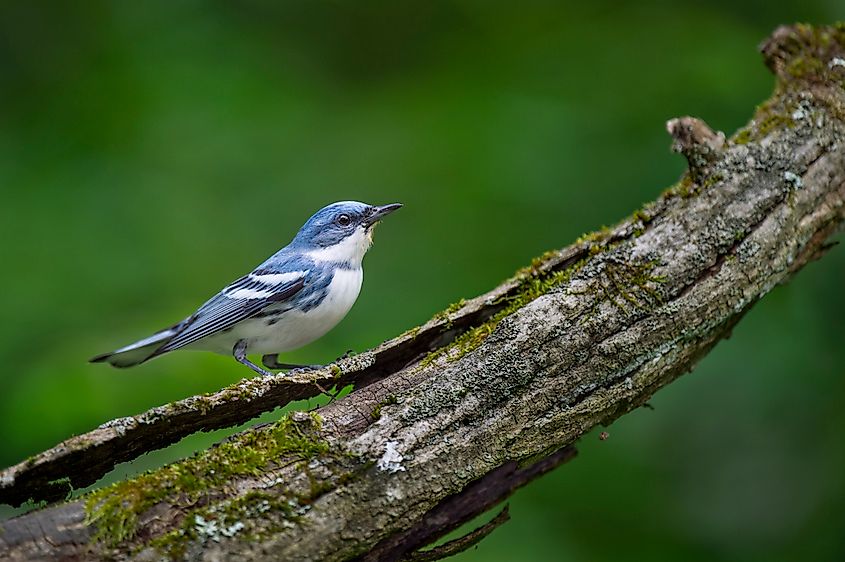
A cerulean warbler (Setophaga cerulea) - High-elevation breeders: species that otherwise breed far north persist in the spruce zone, including northern saw-whet owl, red crossbill, golden-crowned kinglet, and blackburnian and Canada warblers.
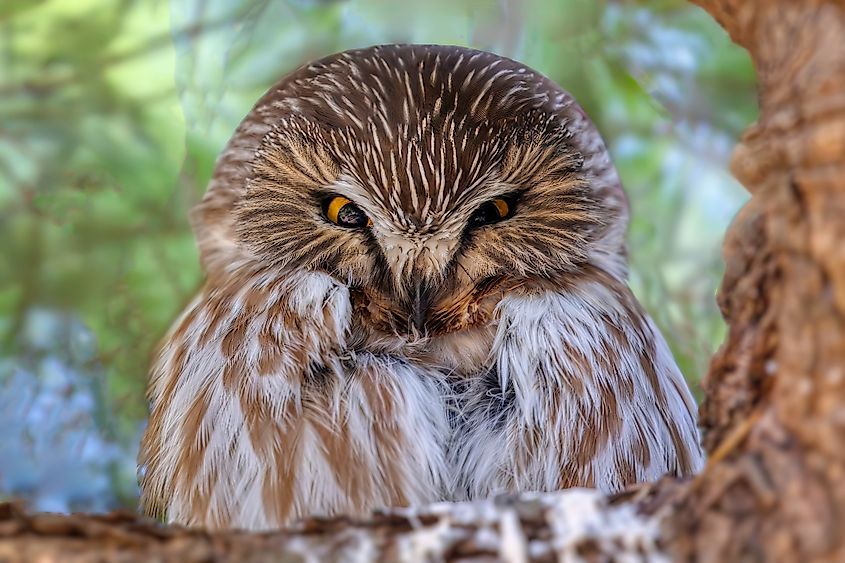
A northern saw-whet owl (Aegolius acadicus) - Golden-winged warbler: a shrubland species declining sharply and hybridising with the blue-winged warbler where their ranges overlap, with West Virginia holding important remaining populations.
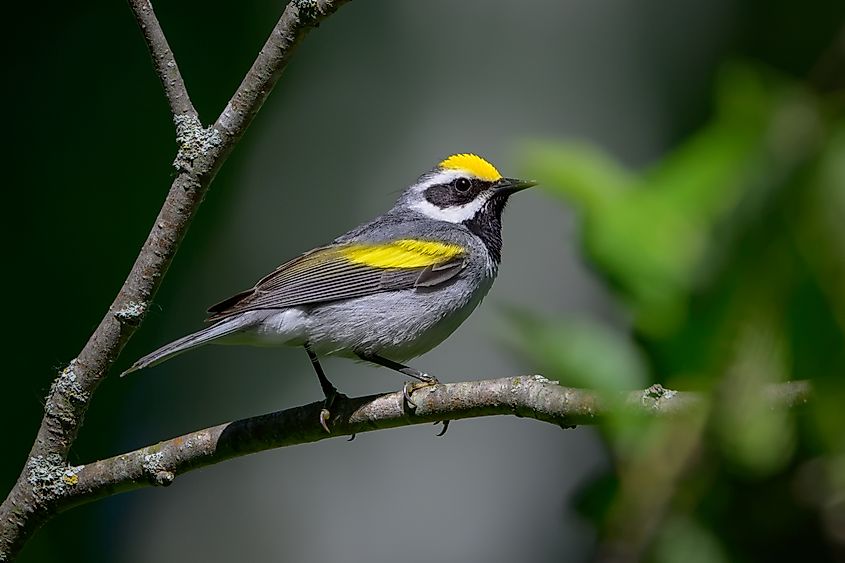
A golden-winged warbler (Vermivora chrysoptera) - Grassland birds on reclaimed mines: Henslow's sparrow and grasshopper sparrow have found their largest state populations on land that was surface mined and replanted with grasses, which is an unintended conservation outcome of industrial disturbance.
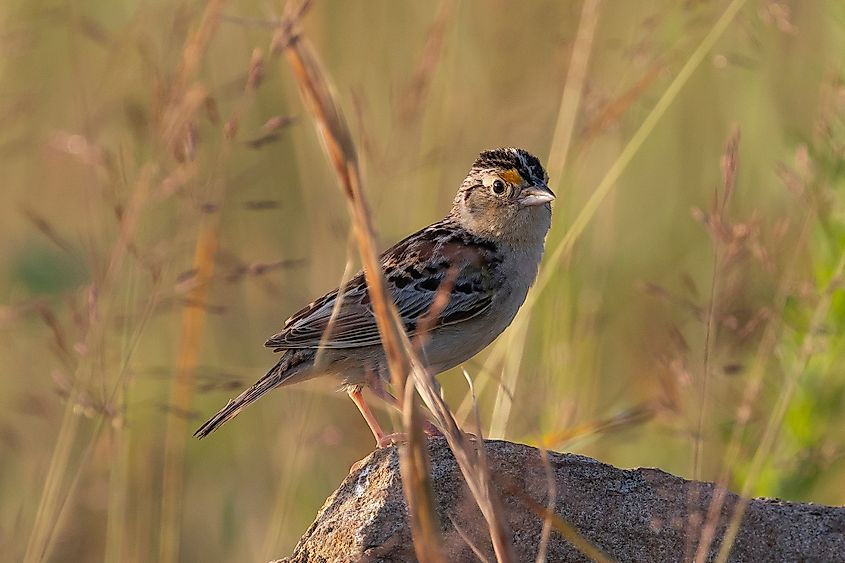
A grasshopper sparrow (Ammodramus savannarum) - Raptors: golden eagles winter in the Allegheny highlands in numbers only recognised in recent decades through camera trap surveys, and the Allegheny Front is a significant autumn migration corridor. Peregrine falcons were reintroduced to gorge cliffs.
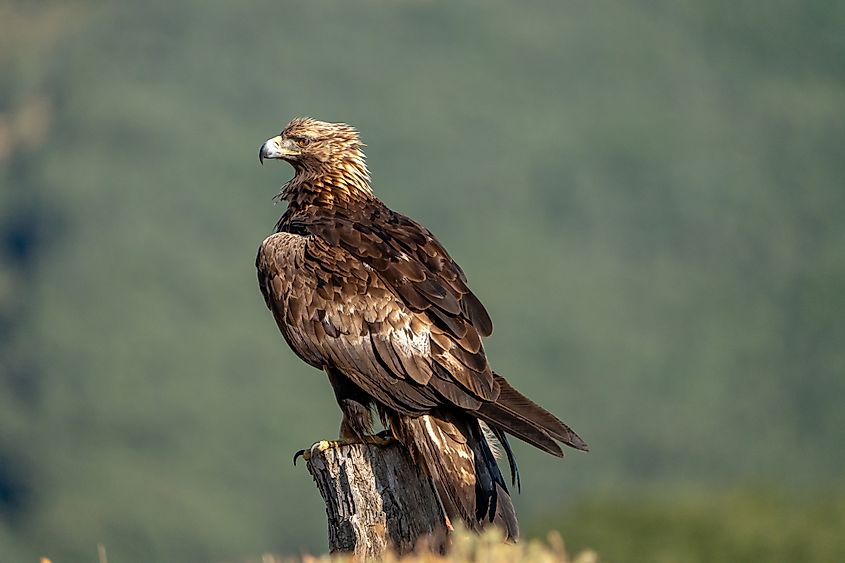
A golden eagle (Aquila chrysaetos)


Section 06
Reptiles, Amphibians, And Fish
West Virginia has around 38 reptile and 47 amphibian species. Two snakes are venomous.
Salamanders

The Cheat Mountain salamander is federally threatened and lives on only a handful of high peaks. Also the Cow Knob salamander with a similarly tiny range, green salamander on shaded cliff faces, eastern hellbender in cold rivers, and numerous dusky and woodland species. West Virginia's mountains are part of the Appalachian salamander hotspot.
Snakes

22 species. The timber rattlesnake is the state reptile and occurs on rocky ridges, and the northern copperhead is more widespread and causes most bites. The other twenty species are harmless.
Turtles

Eastern box turtle, wood turtle, spotted turtle, bog turtle in a few eastern fens, plus map turtles and snapping turtles.
Cave invertebrates
Worth naming separately, because West Virginia's karst holds animals that exist in single cave systems and nowhere else. Blind cave beetles, cave isopods, and amphipods have evolved without eyes or pigment in complete darkness, often over hundreds of thousands of years. Because a cave's fauna depends entirely on water and organic matter washing in from the surface, a single contamination event in the recharge area above can eliminate a species that occurs nowhere on Earth but that one hollow.
Fish

The brook trout is the state fish and the only native trout, restricted to cold headwaters and increasingly squeezed as streams warm and as acid mine drainage sterilises reaches. The New and Kanawha systems hold distinctive fish including the endangered diamond darter, which survives in a single stretch of the Elk River and is one of the rarest fish in North America.
Section 07
Dangerous Animals In West Virginia
- White-tailed deer: West Virginia has consistently ranked among the highest states in the country for the likelihood of a driver hitting a deer, largely because of winding mountain roads and high deer density.
- Ticks: Lyme disease has expanded rapidly, and Rocky Mountain spotted fever and alpha-gal syndrome also occur.
- Venomous snakes: two species. Copperheads cause most bites, and timber rattlesnakes are uncommon and protected as the state reptile.
- Black bear: no fatal attacks in most of the state's history. Bird feeders and garbage drive nearly all conflicts.
- Brown recluse and black widow spiders: both present in outbuildings.
- Rivers: whitewater and flash flooding in steep hollows harm far more people than any West Virginia animal.
Section 08
Endangered And Protected Species
| Species | Where | Status |
|---|---|---|
| Diamond darter | One stretch of the Elk River | ENDANGERED |
| Virginia big-eared bat | Eastern limestone caves | ENDANGERED |
| Indiana bat | Karst caves | ENDANGERED |
| Gray bat | Karst caves | ENDANGERED |
| Northern long-eared bat | Statewide | ENDANGERED |
| Cheat Mountain salamander | A few high peaks | THREATENED |
| Madison Cave isopod | Eastern karst groundwater | THREATENED |
| Clubshell & other mussels | Ohio River tributaries | MULTIPLE LISTED |
| Cerulean warbler | Mature slope forest | STATE CONCERN |
| WV northern flying squirrel | Spruce and northern hardwood | DELISTED 2013 |
West Virginia's pressures are dominated by extraction and by elevation. Mountaintop removal mining buries headwater streams under valley fill, permanently removing the coldest and cleanest water that brook trout and salamanders need. Acid mine drainage from historic operations continues to sterilise stream miles. Forest fragmentation from mining, gas development, and roads reduces the interior habitat cerulean warblers depend on. And the state's boreal relict communities on the high plateau have nowhere to move as the climate warms, which puts the Cheat Mountain salamander and spruce-dependent species in the same position as the Shenandoah salamander across the border.
Section 09
Where To See Wildlife In West Virginia
- Canaan Valley National Wildlife Refuge: boreal bog and spruce habitat with snowshoe hare, woodcock displays, and northern species far south of their range.
- Dolly Sods Wilderness: heath barrens, spruce, and Allegheny Front migration.
- Monongahela National Forest: black bear, fisher, cerulean warblers, and the state's largest forest block.
- New River Gorge National Park: peregrine falcons on the cliffs, forest birds, and an ancient river.
- Cranberry Glades Botanical Area: sphagnum bogs with carnivorous plants and boreal species, with a boardwalk.
- Tomblin and southern coalfield wildlife management areas: the reintroduced elk herd and reclaimed mine grasslands.
- Organ Cave and eastern karst: cave systems, though most bat hibernacula are closed to protect against white-nose syndrome.
Timing: May and June for cerulean warblers and breeding forest birds, when the Monongahela is at its best. September and October for the Allegheny Front hawk migration and autumn colour. Winter for golden eagles in the highlands and snowshoe hare tracks in the spruce. Spring rains for salamanders, which is when West Virginia's mountains are at their most productive for anyone willing to turn over logs carefully and put them back.
Section 10
Common Questions
- What is the state animal of West Virginia?
- The black bear, adopted in 1973 when the population had been reduced to a few hundred animals in the eastern mountains. It has since grown to several thousand across all 55 counties.
- Why is a rattlesnake the state reptile?
- The timber rattlesnake was designated in 2008 after a student campaign, chosen deliberately to counter the reflex to kill snakes. Timber rattlesnakes reproduce very slowly, with females often not breeding until nine or ten years old and then only every few years, so killing adults at a den can erase decades of population growth.
- Are there elk in West Virginia?
- Yes. Elk were extirpated by the 1870s and reintroduced to the southern coalfields beginning in 2016 with animals from Kentucky and Arizona, using reclaimed surface mine grasslands as habitat. The herd is small but growing.
- How many venomous snakes live in West Virginia?
- Two: the northern copperhead, which is widespread and causes most bites, and the timber rattlesnake, which is uncommon, occurs on rocky ridges, and is the state reptile.
- Why does West Virginia have boreal species?
- High-elevation pockets on the Allegheny plateau, including Canaan Valley and Dolly Sods, hold red spruce forest and sphagnum bogs that are ecologically Canadian. Species stranded there after the last ice age persist more than 500 miles south of their main range.
- What is the diamond darter?
- One of the rarest fish in North America, surviving in a single stretch of the Elk River in West Virginia. It is federally endangered and was once more widespread across the Ohio River basin.
- What is the most dangerous animal in West Virginia?
- White-tailed deer, with the state consistently ranking among the highest in the country for the likelihood of a driver hitting one. Ticks carry the greatest disease burden.
This page was last updated on October 7, 2026