Section 01
A Small State With The Worst Weather In America
New Hampshire packs an unusual range into 9,350 square miles. It has 18 miles of Atlantic coast, the shortest of any coastal state, and it has Mount Washington at 6,288 feet, which holds some of the most extreme recorded weather in the world outside the poles. A wind gust of 231 miles per hour was measured at its summit in 1934, and it stood as the world record surface wind for decades.
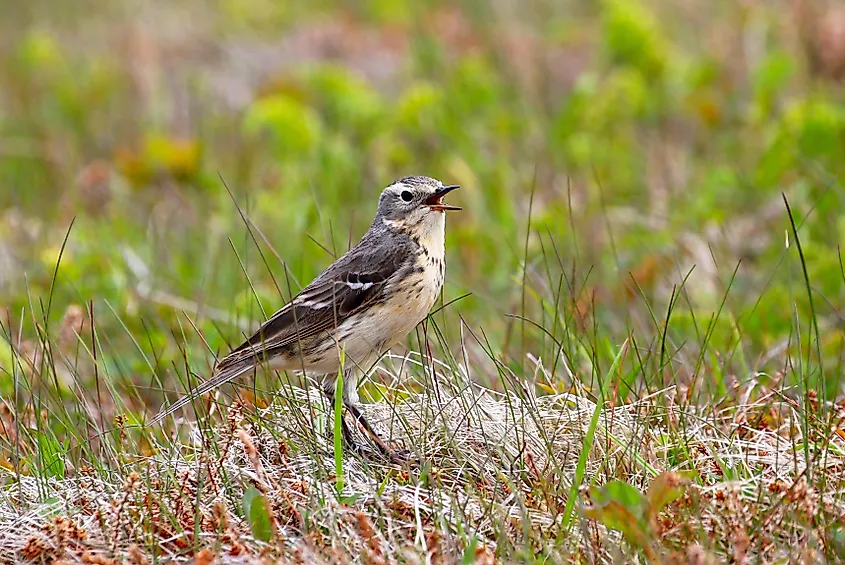
That summit and the surrounding Presidential Range carry roughly eight square miles of true alpine tundra, the largest such area in the eastern United States. Plants and animals there survive conditions closer to Labrador than to New England, and they are relicts stranded since the last ice age. The American pipit breeds there and almost nowhere else in the eastern US.
Below the alpine zone the state is heavily forested, roughly 84 percent, second only to Maine. Like the rest of New England, this is regrown forest: New Hampshire was around half cleared for sheep and hill farms in the mid-1800s, and the woods came back as agriculture collapsed. Beaver, moose, turkey, deer, bear, bobcat, and fisher all returned with them.
The state's most quietly significant wildlife is on its tiny coast and in its rivers. The Isles of Shoals hold nesting terns, the Great Bay estuary is a nursery, and the Merrimack and Connecticut river systems are the focus of long-running fish passage efforts for shad, herring, and sturgeon.
Section 02
New Hampshire's Official State Animals
| Designation | Animal | Adopted |
|---|---|---|
| State animal | White-tailed deer Odocoileus virginianus | 1983 |
| State bird | Purple finch Haemorhous purpureus | 1957 |
| State freshwater fish | Brook trout Salvelinus fontinalis | 1994 |
| State saltwater fish | Striped bass Morone saxatilis | 1994 |
| State insect | Ladybug | 1977 |
| State butterfly | Karner blue Plebejus samuelis | 1992 |
| State amphibian | Red-spotted newt Notophthalmus viridescens | 1985 |
| State wildflower pollinator | Honeybee | — |
The state butterfly was locally extinct when it was named. The Karner blue depends entirely on wild lupine, which grows in sandy pine barrens maintained by fire. New Hampshire's population in the Concord pine barrens declined as the barrens were developed and fire suppressed, and the butterfly disappeared from the state around 2000, roughly eight years after being made the state butterfly. It has since been reintroduced with captive-reared caterpillars and restored lupine, and a small population persists at Concord under intensive management.

The red-spotted newt designation reflects a genuinely odd life cycle. It hatches as an aquatic larva, transforms into a bright orange terrestrial juvenile called an eft that wanders the forest floor for two to seven years, then returns to water as a greenish adult with a paddle-like tail. Many people who have seen both stages do not realise they are the same animal.
Section 03
Habitats By Region, And Who Lives In Each
Alpine zone, Presidential Range

Roughly eight square miles above treeline, the largest alpine area in the eastern US. American pipit breeds here at essentially its only eastern site, and the White Mountain fritillary butterfly is endemic to these summits and found nowhere else on Earth. Also arctic-alpine plants and a distinctive invertebrate community. Background: Mount Washington.
Spruce-fir and high-elevation forest

Below treeline in the Whites and in the far north, dense conifer with heavy snow. Bicknell's thrush breeds almost exclusively in stunted montane fir in the northeastern US and Canada, and New Hampshire holds a significant share. Also spruce grouse, boreal chickadee, blackpoll warbler, American marten (recovered), and Canada lynx, which has returned in small numbers to the North Country.
Northern hardwood forest

Sugar maple, beech, and yellow birch across most of the state's uplands. Black bear, moose, bobcat, fisher, coyote, and forest songbirds including scarlet tanager, wood thrush, and black-throated blue warbler. See Appalachian Mountains.
Lakes, rivers, and wetlands

View of Lake Winnipesaukee from the top of Mount Major trail in New Hampshire
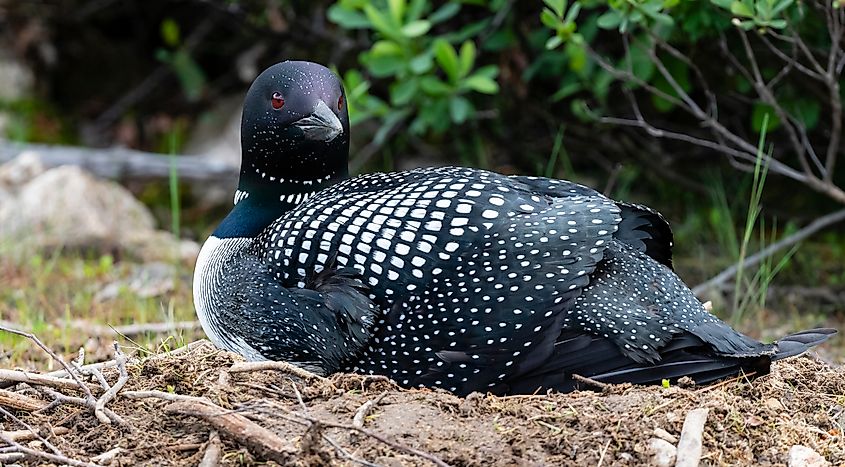
Lake Winnipesaukee and hundreds of smaller lakes, plus extensive beaver-created wetland. Common loons breed on clear lakes and are intensively monitored by a long-running volunteer programme. Also bald eagle restored after complete absence as a breeder, osprey, and brook trout in cold headwaters.
Pine barrens and southern lowlands

The Merrimack Valley holds remnant pitch pine and scrub oak barrens, a globally rare habitat requiring fire. Karner blue butterfly, frosted elfin, and several rare moths depend on it. The southern part of the state is also where most people live, and where white-tailed deer reach suburban densities.
Great Bay estuary and the coast

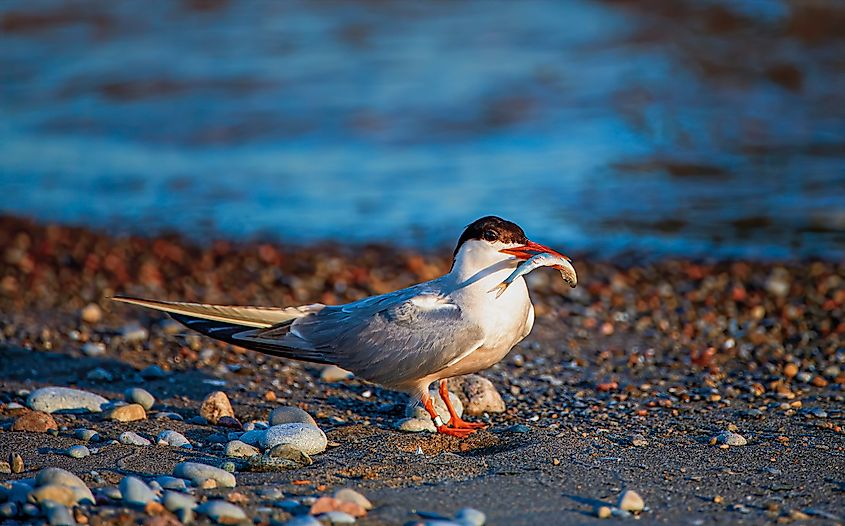
Eighteen miles of shoreline plus a large tidal estuary at Great Bay, which functions as a nursery for winter flounder, striped bass, and rainbow smelt. Harbour and gray seals haul out, and the Isles of Shoals nine miles offshore host common, roseate, and Arctic terns restored through active management after gulls had displaced them.
Section 04
Mammals Of New Hampshire
White-tailed deer: the state animal, roughly 100,000 animals, restored after being nearly eliminated by 1900.

Moose: the population peaked around 7,500 in the late 1990s and has fallen substantially, to something on the order of 3,000 to 4,000. Winter ticks are the main cause: shorter snow seasons let tick larvae survive longer in autumn, and heavy infestations kill calves through blood loss and anaemia. New Hampshire's moose decline is one of the clearest wildlife signals of a warming climate in the Northeast.

Black bear: roughly 5,000 and increasing, present in every county with the highest densities in the north.

Bobcat: reduced to very low numbers by the 1980s and recovered strongly since, now common enough that a proposed hunting season in 2015 drew heavy public opposition and was withdrawn.

Canada lynx: absent for decades and now documented breeding again in the North Country, at the southern edge of the species' range and federally threatened.

Fisher and American marten: fishers are common statewide, martens restricted to northern spruce-fir.

Coyote: arrived mid-20th century, larger than western coyotes with some wolf ancestry, now statewide.

Beaver, river otter, mink, ermine, long-tailed weasel, striped skunk, raccoon, porcupine, snowshoe hare, red and gray squirrel, flying squirrels, woodchuck, muskrat: all common. Related: what happens when beavers leave.

New England cottontail: the region's only native rabbit, now rare and displaced by the introduced eastern cottontail, needing dense young shrubland.

Bats: eight species. Little brown and northern long-eared bats declined by well over 90 percent after white-nose syndrome, and several are now state endangered. See do bats hibernate.

Absent: gray wolf, eastern cougar, elk, and caribou, all extirpated. Wolves are occasionally reported and none confirmed as resident.
Section 05
Birds Of New Hampshire
Around 420 species have been recorded. The state's value is concentrated in montane and coastal specialties rather than in overall numbers.
- Bicknell's thrush: one of the most range-restricted songbirds in North America, breeding almost only in stunted high-elevation fir in the northeastern US and southeastern Canada and wintering largely on Hispaniola. Both ends of its range are small and threatened, which makes it a conservation priority for New Hampshire.
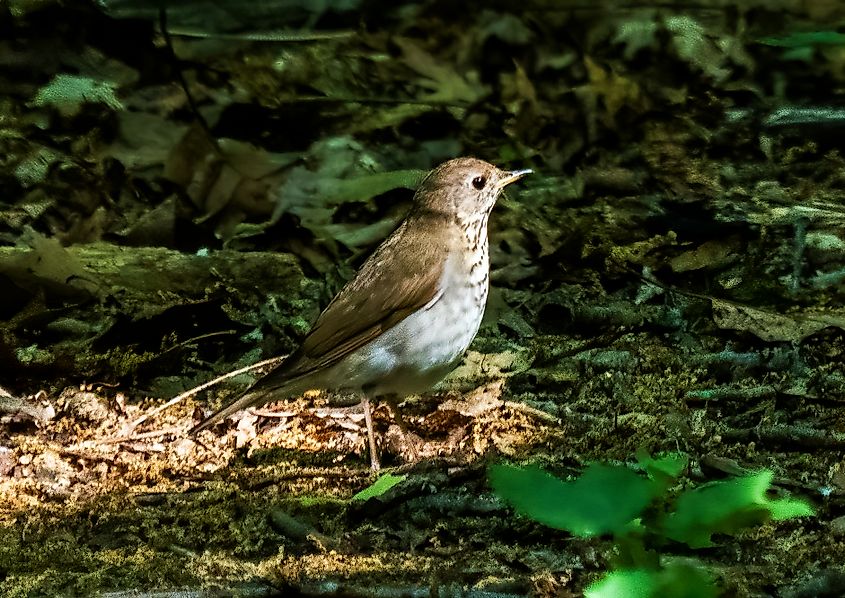
A Bicknell's thrush (Catharus bicknelli) - American pipit: breeds on the Presidential Range alpine zone and essentially nowhere else in the eastern US.
An American pipit (Anthus rubescens) - Common loon: monitored on lakes across the state, with threats from lead fishing tackle, shoreline development, and boat wakes swamping nests. The state's loon programme is one of the longest-running in the country.
A common loon (Gavia immer) - Terns at the Isles of Shoals: common, roseate, and Arctic terns nest on Seavey and White Islands, restored after gull displacement through active management including gull control and decoys.
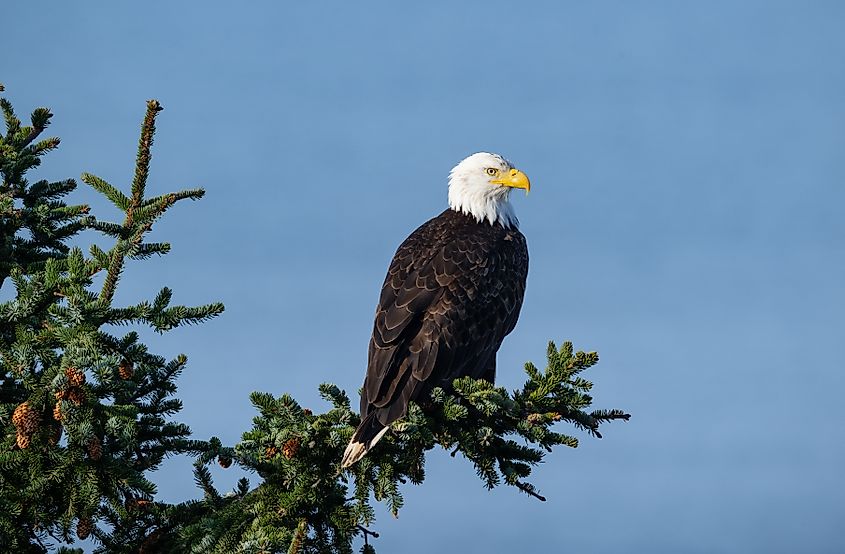
An Arctic tern (Sterna paradisaea) - Raptors: bald eagle restored from zero nesting pairs to dozens, plus peregrine falcon nesting on White Mountain cliffs after reintroduction, osprey, and broad-winged hawk.
bald eagle (Haliaeetus leucocephalus) - Shrubland birds: American woodcock, brown thrasher, eastern towhee, prairie warbler, and chestnut-sided warbler, all declining as forests mature past the young stage they need.
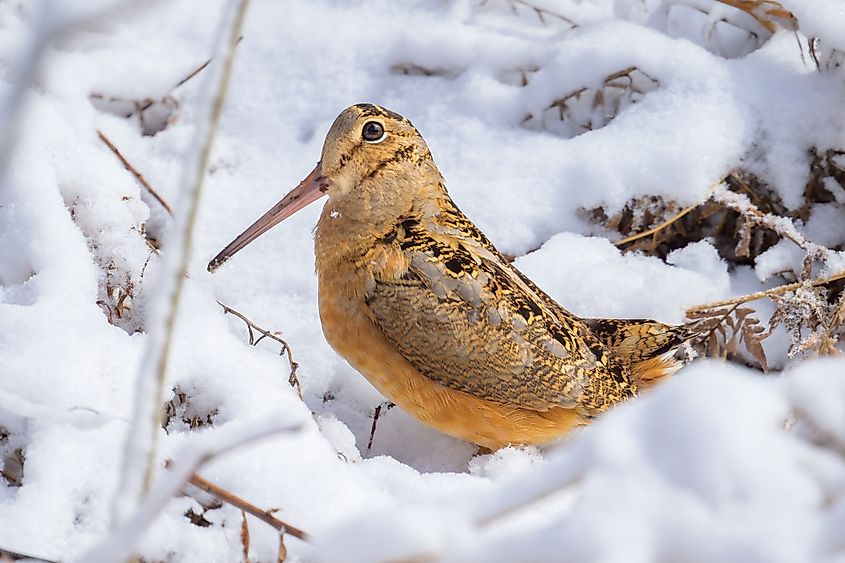
An American woodcock (Scolopax minor)


Section 06
Reptiles, Amphibians, And Fish
New Hampshire has around 19 reptile and 21 amphibian species. One snake is venomous and it is nearly gone.
Snakes

11 species. The timber rattlesnake survives at a single known den site in the state and is state endangered, with a population estimated at only a few dozen animals. It is one of the most precarious vertebrate populations in New England. Every other New Hampshire snake is harmless.
Turtles

Blanding's turtle, spotted turtle, and wood turtle are all state listed, plus eastern box turtle at its northern limit, painted turtle, and snapping turtle. Road mortality during nesting season is the main threat.
Amphibians

Red-spotted newt (the state amphibian), spotted, blue-spotted, four-toed, and Jefferson salamanders, plus marbled salamander at its northern edge, wood frog, spring peeper, mink frog in the north, and northern leopard frog. Vernal pools drive the breeding cycle and are the focus of local protection efforts.
Fish

The brook trout is the state freshwater fish and the only native stream trout, persisting in cold headwaters. Striped bass is the state saltwater fish. The migratory story is the significant one: American shad, alewife, blueback herring, sea lamprey, and Atlantic sturgeon all move between the Gulf of Maine and inland rivers, and dam removal and fish passage on the Merrimack, Lamprey, and Exeter rivers is the main restoration work. Rainbow smelt, which spawn in coastal streams, have declined sharply.
Section 07
Dangerous Animals In New Hampshire
- Moose: the most dangerous animal in the state. Moose-vehicle collisions on northern highways are frequent and often severe because the animal's mass sits above the hood line. Most occur at dawn and dusk from May through July and during the autumn rut.
- Ticks: New Hampshire has among the highest Lyme disease incidence rates in the country, plus anaplasmosis and babesiosis.
- White-tailed deer: thousands of vehicle collisions annually and the main host sustaining adult ticks.
- Black bear: no fatal attacks recorded in New Hampshire. Bird feeders and unsecured trash drive nearly all conflicts.
- Timber rattlesnake: one den site, a few dozen animals, and state endangered. The realistic risk is effectively zero, and the snake is far more endangered by people than the reverse.
- Mountain weather: worth stating plainly. Mount Washington and the Presidential Range kill hikers most years through hypothermia and exposure, and the weather there is more dangerous than any New Hampshire animal by a very wide margin.
Section 08
Endangered And Protected Species
| Species | Where | Status |
|---|---|---|
| Timber rattlesnake | One den site | STATE ENDANGERED |
| Karner blue butterfly | Concord pine barrens | ENDANGERED |
| White Mountain fritillary | Presidential Range only | STATE ENDANGERED |
| Canada lynx | North Country | THREATENED |
| Roseate tern | Isles of Shoals | ENDANGERED |
| Piping plover | Hampton and Seabrook beaches | THREATENED |
| Atlantic sturgeon | Merrimack, Piscataqua | ENDANGERED |
| Northern long-eared bat | Statewide | ENDANGERED |
| Bicknell's thrush | High-elevation fir | STATE CONCERN |
| New England cottontail | Young shrubland, south | STATE ENDANGERED |
| Blanding's turtle | Southeastern wetlands | STATE ENDANGERED |
New Hampshire's pressures are unusual for how much they involve too much forest rather than too little. Shrubland and young-forest species decline as woods mature, so the state actively creates early-successional habitat. Beyond that: development fragmenting the southern tier, warming that stresses moose and squeezes alpine and montane species upward with nowhere to go, white-nose syndrome in bats, road mortality for turtles, and fire suppression closing the pine barrens the Karner blue needs.
Section 09
Where To See Wildlife In New Hampshire
- Route 3 and Route 16 north of Pittsburg: the state's most reliable moose corridors, best at dawn and dusk in early summer.
- Presidential Range and Mount Washington: alpine tundra, American pipit, and the endemic White Mountain fritillary, reached by hiking, cog railway, or auto road.
- Umbagog National Wildlife Refuge: loons, moose, bald eagles, and boreal birds on the Maine border.
- Isles of Shoals: nesting terns, seen from boat tours out of Portsmouth.
- Great Bay National Estuarine Research Reserve: estuary birds, seals, and nursery habitat.
- Concord pine barrens: Karner blue butterfly under management, flying in late May and again in July.
- Pondicherry National Wildlife Refuge: northern bog and boreal species with good trail access.
- Odiorne Point and Hampton Beach: coastal birds, wintering sea ducks, and piping plover nesting areas.
Timing: late May through July for moose along northern highways, when they seek roadside sodium. June for Bicknell's thrush singing at dawn on high ridges, which requires an early start and a long climb. Late May and July for Karner blue flights. September and October for hawk migration at Pack Monadnock and Little Round Top. Winter for seals, sea ducks, and snowy owls on the coast. Alpine areas are dangerous in poor weather at any season.
Section 10
Common Questions
- What is the state animal of New Hampshire?
- The white-tailed deer, adopted in 1983. New Hampshire also names the purple finch as state bird, brook trout and striped bass as freshwater and saltwater fish, the red-spotted newt as state amphibian, and the Karner blue as state butterfly.
- Why are New Hampshire's moose declining?
- The population peaked around 7,500 in the late 1990s and has fallen to roughly 3,000 to 4,000. Winter ticks are the main cause: shorter snow seasons let tick larvae survive longer into autumn, and heavy infestations kill calves through blood loss and anaemia.
- Are there venomous snakes in New Hampshire?
- One, the timber rattlesnake, and it survives at a single known den site with only a few dozen animals. It is state endangered and among the most precarious vertebrate populations in New England. The other ten snake species are harmless.
- Was the state butterfly really extinct in the state?
- Yes. The Karner blue was named state butterfly in 1992 and disappeared from New Hampshire around 2000 as the Concord pine barrens were developed and fire suppressed. It has since been reintroduced with captive-reared caterpillars and restored wild lupine.
- What lives on Mount Washington?
- The Presidential Range holds roughly eight square miles of alpine tundra, the largest in the eastern US. The American pipit breeds there and almost nowhere else in the eastern states, and the White Mountain fritillary butterfly is endemic to those summits and found nowhere else on Earth.
- Are there lynx in New Hampshire?
- Yes, again. Canada lynx were absent for decades and are now documented breeding in the North Country at the southern edge of the species' range. They are federally threatened and depend on snowshoe hare.
- What is the most dangerous animal in New Hampshire?
- Moose, through vehicle collisions that are often severe. Ticks carry the greatest disease burden. Mountain weather in the Presidential Range kills more people than any New Hampshire animal.
This page was last updated on October 7, 2026