Section 01
A State Defined By Two Edges
Indiana is a small, heavily farmed state with two remarkable margins. At the top is a 45-mile strip of Lake Michigan shoreline holding the Indiana Dunes, one of the most botanically diverse places per acre in North America. At the bottom is the unglaciated hill country above the Ohio River, with caves, sinkholes, and forest that escaped the ice sheets entirely.
Between them lies the reason Indiana lost most of its wildlife. Glaciers flattened the middle two thirds of the state and left behind level, fertile till. That land was drained, tiled, and ploughed. The Grand Kankakee Marsh in the northwest, once roughly 500,000 acres of wetland known as the Everglades of the North and a legendary waterfowl destination, was channelised into a straight ditch by 1917. Indiana has lost about 85 percent of its original wetlands, among the highest rates in the country.
Forest went the same way. Indiana was roughly 87 percent forested before settlement and fell to about 6 percent by 1900. It has since recovered to around 20 percent, mostly in the southern hills where farming was never profitable, and that recovery brought back deer, turkey, bobcat, and river otter.
The southern karst is Indiana's biological crown jewel. Limestone caves there hold blind cavefish, cave crayfish, and enormous bat hibernacula. Indiana lends its name to the Indiana bat, a federally endangered species whose largest known winter colonies are in the state's caves and abandoned mines, where hundreds of thousands of bats once packed together on cave ceilings.
Section 02
Indiana's Official State Animals
| Designation | Animal | Adopted |
|---|---|---|
| State bird | Northern cardinal Cardinalis cardinalis | 1933 |
| State insect | Say's firefly Pyractomena angulata | 2018 |
Indiana has one of the shortest symbol lists in the country. There is no state mammal, no state reptile, no state fish, and no state amphibian. The firefly designation took nine years: a second-grade class in Cumberland began lobbying in 2009, and the bill failed repeatedly before passing in 2018. Say's firefly is named for Thomas Say, the entomologist often called the father of American descriptive entomology, who worked at the utopian community of New Harmony, Indiana in the 1820s and is buried there.

The gap is notable given how much wildlife Indiana could plausibly honour. Proposals for a state mammal have surfaced repeatedly without success, and the Indiana bat, which carries the state's name and whose most important hibernation sites are in Indiana caves, has never been designated.
Section 03
Habitats By Region, And Who Lives In Each
Lake Michigan shore and the Indiana Dunes

Sand dunes, interdunal wetlands, black oak savanna, bog, and marsh compressed into a narrow strip beside heavy industry. Arctic bearberry grows near prickly pear cactus, and the plant list rivals far larger parks. Karner blue butterfly, a federally endangered species dependent entirely on wild lupine, lives here. Also Blanding's turtle, eastern massasauga rattlesnake, and huge spring and autumn bird migrations funnelled along the shoreline. See Indiana Dunes National Park.
Northern lakes, moraines, and the Kankakee

Glacial kettle lakes, marshes, fens, and the remnants of the Grand Kankakee Marsh. Restoration projects here have brought back sizeable wetland tracts. Sandhill cranes stage at Jasper-Pulaski in enormous numbers each autumn, sometimes exceeding 20,000 birds. Also trumpeter swans, restored after extirpation, plus river otter, muskrat, and marsh birds. Related: sandhill crane facts.
Central till plain

The agricultural heart of the state, flat and intensively cropped. Wildlife persists in fencerows, woodlots, stream corridors, and reservoirs. White-tailed deer, coyote, red fox, raccoon, and bald eagles on the reservoirs are the common large animals.
Southern hills and the karst belt

Unglaciated, hilly, and forested, with the Hoosier National Forest, sinkhole plains, and extensive limestone caves. This is the state's richest region: bobcat, timber rattlesnake, copperhead, cave salamander, northern cavefish, Indiana and gray bats in hibernacula, and forest birds including cerulean and worm-eating warblers.
Ohio and Wabash river bottoms

Bottomland hardwood, sloughs, and cypress at the extreme southwest corner, where Indiana touches the northern edge of southern swamp habitat. Species reaching their northern limit here include cottonmouth, swamp rabbit, and bird-voiced treefrog. The Wabash and Ohio rivers hold significant mussel beds and paddlefish.
Section 04
Mammals Of Indiana
Indiana has around 55 mammal species. The recovery record is strong for mid-sized animals and blank for large ones.
- White-tailed deer: extirpated entirely by about 1893 and restocked beginning in the 1930s. The population now exceeds 600,000.
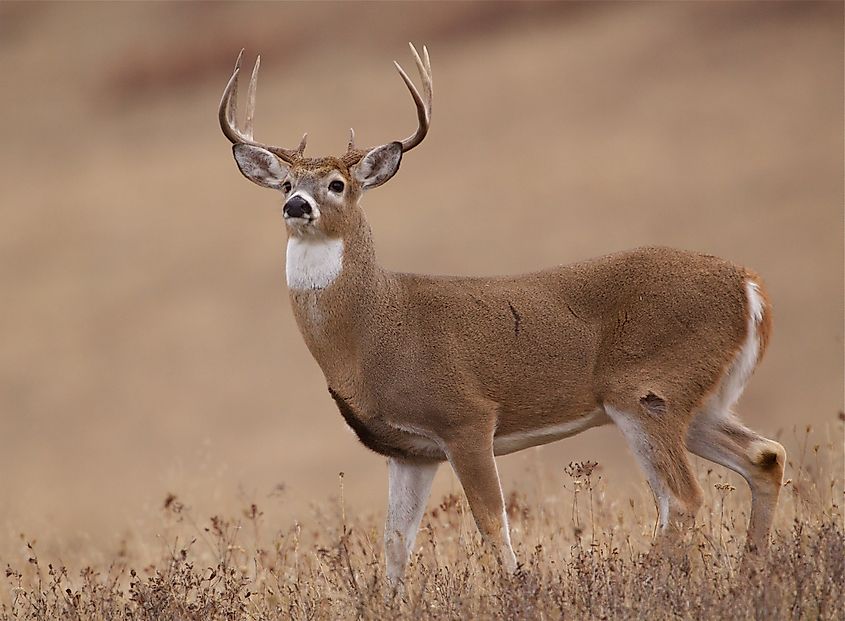
A white-tailed deer (Odocoileus virginianus) buck - Bobcat: nearly gone by the mid-20th century, listed as state endangered in 1969, recovered to the point of delisting in 2005 and a limited harvest season in the south.
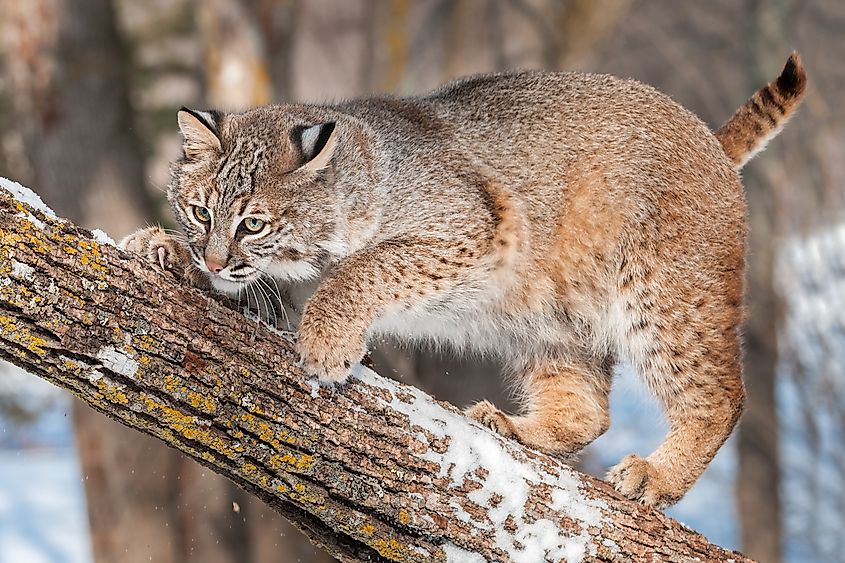
A bobcat (Lynx rufus) - River otter: extirpated by 1942. Between 1995 and 1999 the state released 303 otters from Louisiana, and the population rebounded well enough to be removed from the state endangered list in 2005.
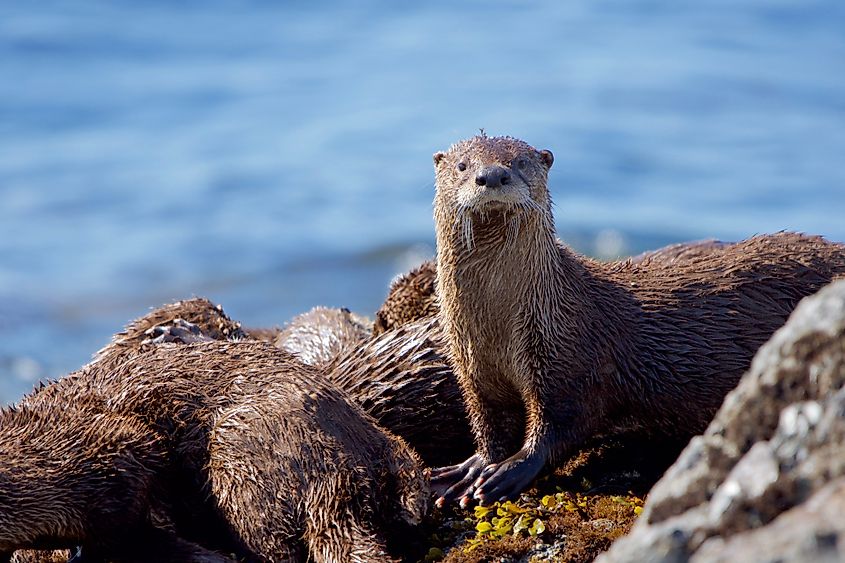
A river otter (Lontra canadensis) - Beaver: gone by 1840, recolonised naturally and by release, now common statewide.
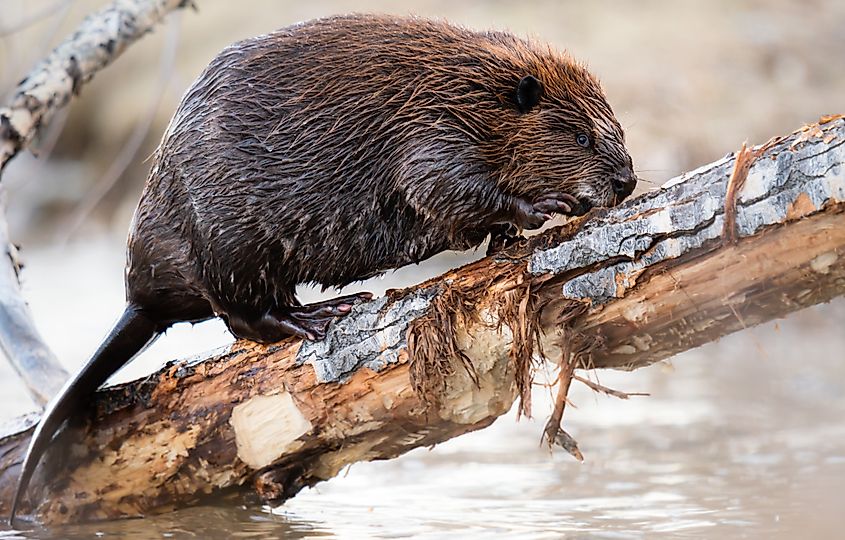
A North American beaver (Castor canadensis) - Wild turkey: not a mammal but the same story: extirpated by 1900, restored to all 92 counties.
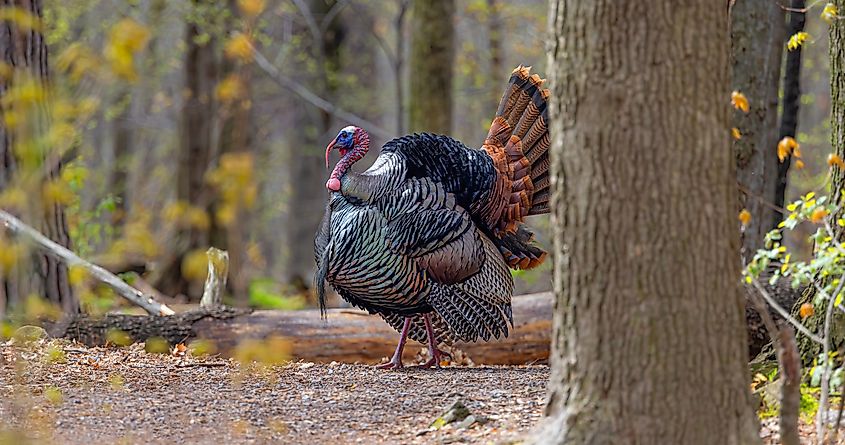
An eastern wild turkey (Meleagris gallopavo silvestris) - Coyote, red and gray fox, mink, long-tailed weasel, badger in the northwest, striped skunk, raccoon, opossum, woodchuck, fox and gray squirrel, southern flying squirrel, muskrat, eastern cottontail, swamp rabbit: all present.
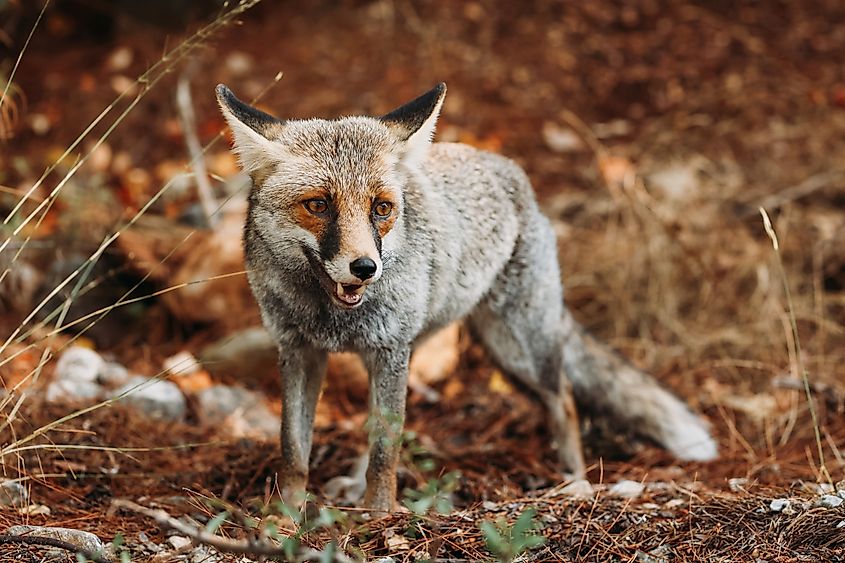
A gray fox (Urocyon cinereoargenteus) - Bats: 13 species. The Indiana bat is federally endangered, and Indiana holds some of its most important hibernacula in Wyandotte and Ray's caves. Northern long-eared and tricolored bats have also collapsed from white-nose syndrome, which reached the state around 2011. See do bats hibernate.
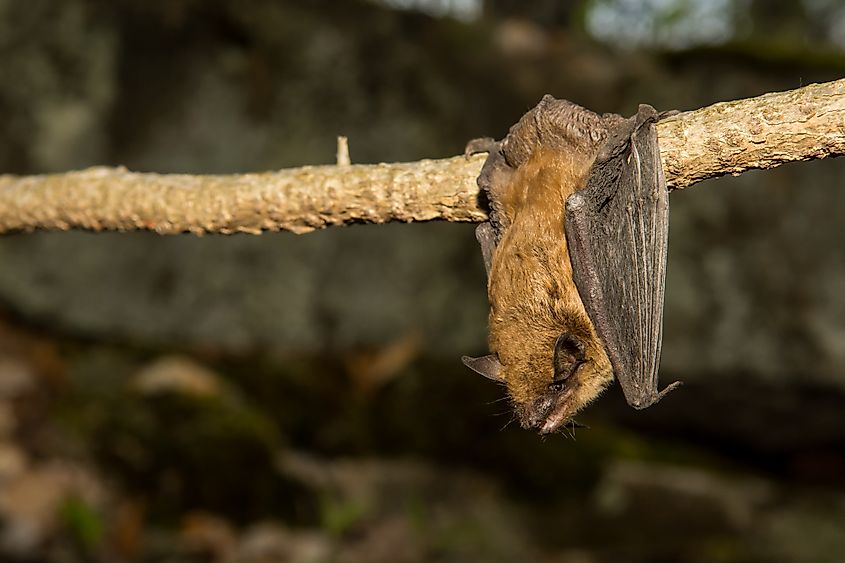
A big brown bat (Eptesicus fuscus)


The Indiana bat's reliance on a small number of caves is what makes it so precarious. A single hibernaculum can hold a substantial share of a regional population, so one disturbance event in winter matters far out of proportion to the site's size. Rousing a hibernating bat burns fat reserves it cannot replace until insects fly again in spring, and repeated disturbance can empty a cave entirely. Indiana now gates its key hibernacula rather than sealing them, which keeps people out while letting bats pass through freely.
Absent: bison, elk, gray wolf, cougar, and black bear, all gone by the mid-1800s. Black bears have recently returned as dispersing individuals from Michigan and Kentucky, with the first confirmed Indiana bear in more than 140 years appearing in 2015 and further sightings since. No breeding population has established.
Section 05
Birds Of Indiana
Around 425 species have been recorded. The Lake Michigan shoreline and the Wabash valley are the two migration highways.
- Sandhill cranes: the state's signature spectacle. Jasper-Pulaski Fish and Wildlife Area hosts one of the largest autumn crane staging concentrations in eastern North America, with peak counts well above 20,000 birds in late October and November.
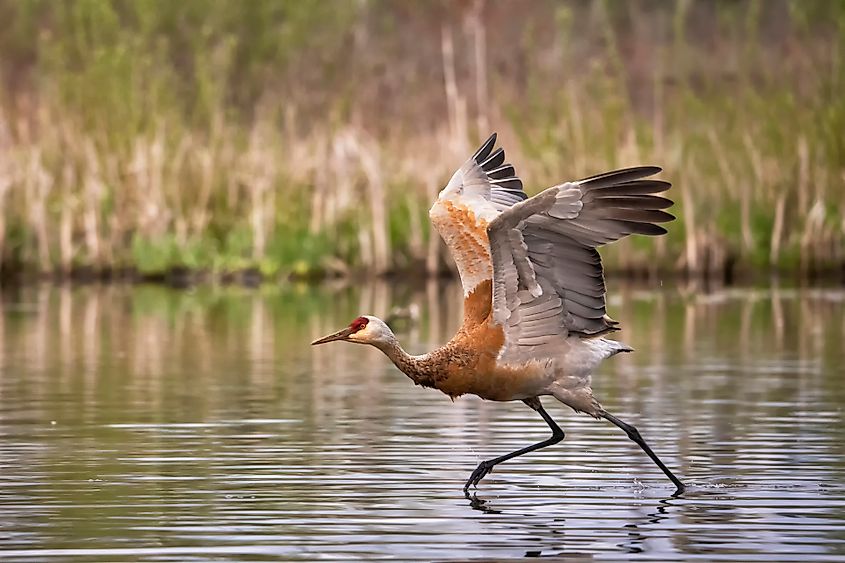
A sandhill crane (Antigone canadensis) - Bald eagles: absent as breeders for decades, reintroduced at Monroe Lake in the 1980s, and now nesting in most counties.
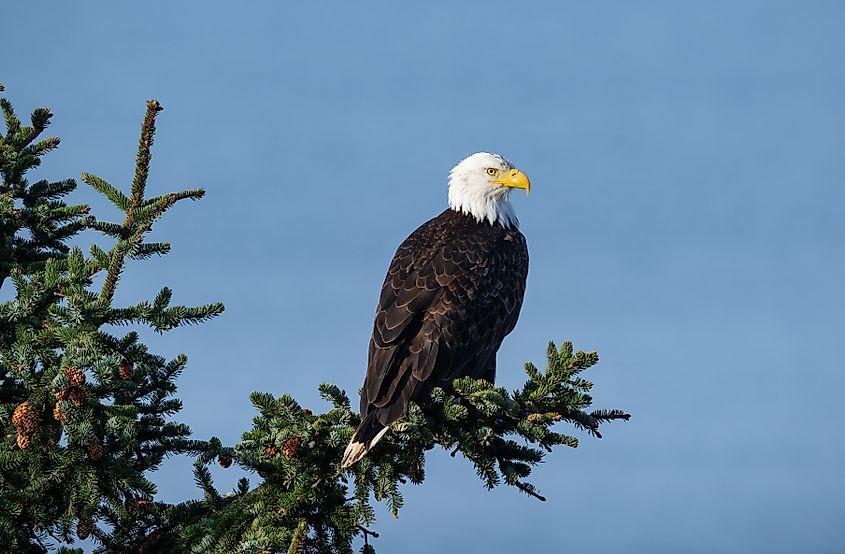
A bald eagle (Haliaeetus leucocephalus) - Residents: northern cardinal (the state bird), Carolina wren, tufted titmouse, red-bellied and pileated woodpeckers, barred owl, wild turkey, and ring-necked pheasant in farm country.
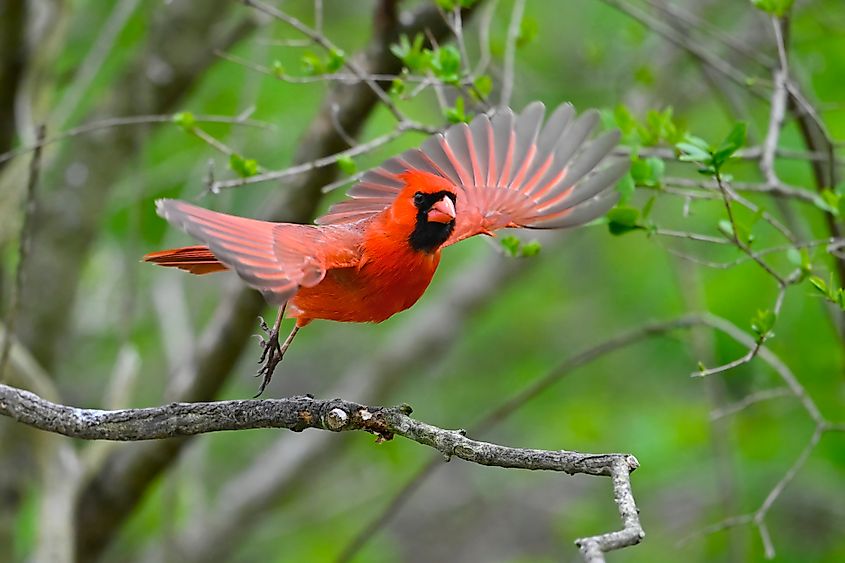
A northern cardinal (Cardinalis cardinalis) - Forest birds: cerulean warbler, worm-eating warbler, hooded warbler, wood thrush, and Acadian flycatcher in the southern hills, which hold Indiana's largest unbroken forest blocks.
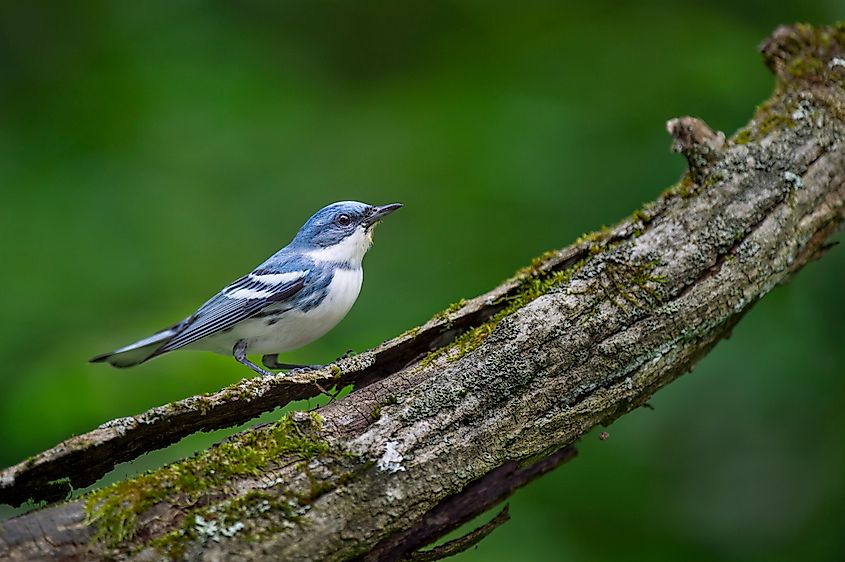
A cerulean warbler (Setophaga cerulea) - Grassland and marsh birds: Henslow's sparrow, dickcissel, bobolink, and eastern meadowlark, all dependent on the small remaining grassland base, plus king rail and least bittern in restored marsh.
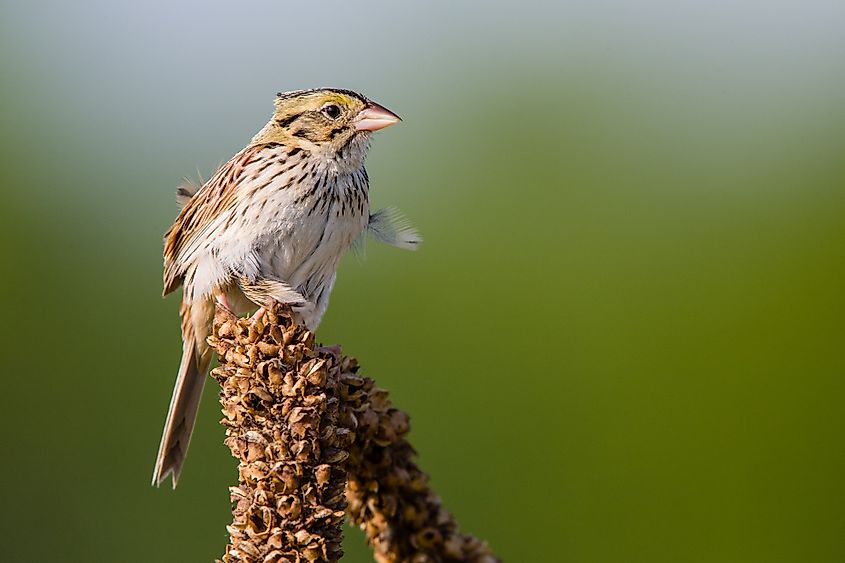
A Henslow's sparrow (Centronyx henslowii) - Shore and dune: piping plover nests occasionally in the dunes, and the shoreline attracts jaegers, gulls, and waterbirds unusual for an inland state.
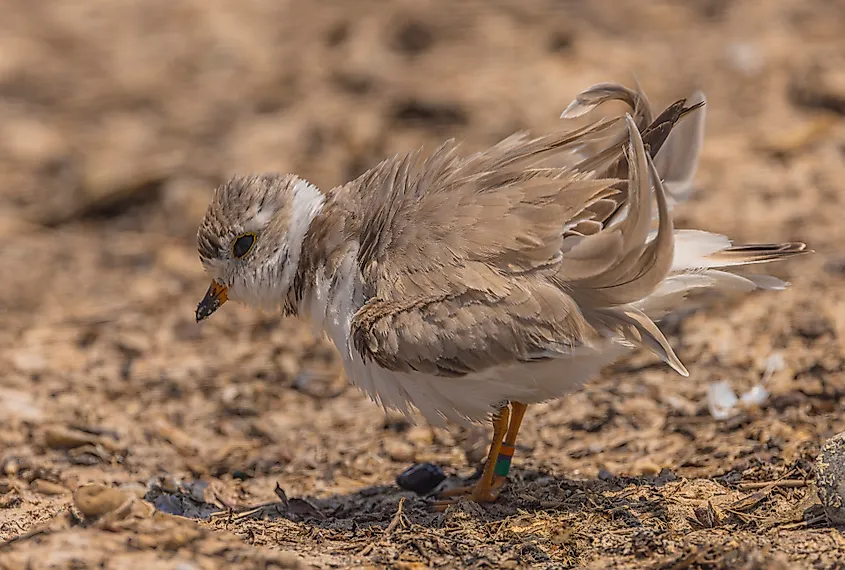
A piping plover (Charadrius melodus)


The Karner blue butterfly is worth a note of its own, because its situation shows how narrow a habitat requirement can be. Its caterpillars eat wild lupine and nothing else, and wild lupine grows in open sandy savanna maintained by fire. Suppress fire, the savanna closes to forest, the lupine disappears, and the butterfly goes with it regardless of how much land is protected. Managing for the Karner blue in the Indiana Dunes therefore means deliberately burning and thinning the very woodland that would otherwise be left alone.
Section 06
Reptiles, Amphibians, And Aquatic Life
Indiana has about 40 reptile and 40 amphibian species. Four snakes are venomous, and all are uncommon.
Snakes

33 species. The venomous four are the timber rattlesnake in the southern hills, eastern massasauga in northern wetlands (federally threatened), copperhead in the south, and cottonmouth confined to a tiny area of the southwest. Encounters are rare, and all four are declining.
Turtles

Blanding's turtle, spotted turtle, ornate box turtle in northwest sand prairie, eastern box turtle, painted and map turtles, plus snapping turtles and softshells.
Amphibians

Eeastern hellbender in the Blue River, one of the last Indiana populations and the focus of an intensive captive-rearing programme at Purdue, plus cave salamander, four-toed salamander, crawfish frog, and around 17 frog and toad species. Vernal pools in the southern forest drive the salamander breeding cycle.
Indiana's hellbender programme deserves a note. The Blue River holds the state's last significant population, and by the 2000s surveys were finding only large old adults with almost no young, meaning the population was aging toward local extinction. Purdue researchers began collecting eggs, rearing the larvae in captivity for several years past the vulnerable stage, and releasing them back into the river. Hellbenders can live over 30 years, so the results of that work will not be clear for decades.
Cave and river life
Northern cavefish and southern cavefish are blind, pigmentless, and live in the karst aquifer, along with several cave crayfish and isopods restricted to single cave systems. The Wabash and Ohio rivers hold a nationally significant freshwater mussel fauna, with several federally endangered species, plus paddlefish, blue catfish, and lake sturgeon.
Invasive aquatic species are a major concern: silver and bighead carp are established in the Wabash and Ohio, and the Chicago-area waterway connection makes Indiana part of the effort to keep them out of Lake Michigan. Related: electric barriers and Asian carp.
Section 07
Dangerous Animals In Indiana
- White-tailed deer: the most dangerous animal in the state by a wide margin, causing roughly 15,000 or more reported vehicle collisions a year.
- Venomous snakes: four species, all uncommon and localised. Bites in Indiana are rare enough to make the news.
- Ticks and mosquitoes: Lyme disease is expanding, and West Nile virus is established.
- Brown recluse and black widow spiders: both present, mainly in the south, and both reclusive.
- Coyote: attacks on people are extremely rare; pets are the realistic concern.
- Rabies: bats and skunks are the main vectors. Never handle a bat found on the ground.
- Silver carp: jumping fish genuinely injure boaters on the lower Wabash.
Section 08
Endangered And Protected Species
| Species | Where | Status |
|---|---|---|
| Indiana bat | Southern caves, statewide summer | ENDANGERED |
| Northern long-eared bat | Statewide | ENDANGERED |
| Gray bat | Southern caves | ENDANGERED |
| Karner blue butterfly | Northwest dune savanna | ENDANGERED |
| Eastern massasauga | Northern wetlands | THREATENED |
| Eastern hellbender | Blue River | STATE ENDANGERED |
| Piping plover | Lake Michigan shore | ENDANGERED |
| Clubshell & other mussels | Wabash, Tippecanoe rivers | MULTIPLE LISTED |
| Blanding's turtle | Northern marsh | STATE ENDANGERED |
Indiana's Tippecanoe River is worth singling out. It holds one of the most diverse freshwater mussel assemblages in the Midwest, including several federally endangered species, which makes a modest Indiana river a nationally significant conservation site. The dominant pressures statewide are wetland drainage, agricultural runoff and sedimentation, forest fragmentation, and white-nose syndrome in bats.
Section 09
Where To See Wildlife In Indiana
- Jasper-Pulaski Fish and Wildlife Area: the sandhill crane staging spectacle, peaking late October into November.
- Indiana Dunes National Park: dune and savanna species, Karner blue butterfly in July, and heavy shoreline migration.
- Muscatatuck National Wildlife Refuge: wetland restoration with waterfowl, otters, and marsh birds.
- Hoosier National Forest and Charles C. Deam Wilderness: forest interior birds, bobcat sign, and salamanders.
- Goose Pond Fish and Wildlife Area: a large restored wetland now among the state's best bird sites, with cranes, shorebirds, and rails.
- Kankakee Sands: restored prairie with a small bison herd used as a management tool.
- Blue River: hellbender country, plus cave-fed springs and karst features.
Timing: late October and November for sandhill cranes at Jasper-Pulaski, which is the single best wildlife event in the state. April and May for warbler migration along the lakeshore and salamander breeding in southern vernal pools. July for Karner blue butterflies in the dunes. Winter for bald eagles at reservoirs and waterfowl at Goose Pond. Caves are closed seasonally or permanently to protect hibernating bats.
Section 10
Common Questions
- What is the state animal of Indiana?
- Indiana has no state mammal, reptile, fish, or amphibian. Its only animal symbols are the northern cardinal, named state bird in 1933, and Say's firefly, named state insect in 2018 after a nine-year campaign by a second-grade class.
- Are there bears in Indiana?
- No breeding population. Black bears were gone by the mid-1800s, and the first confirmed Indiana bear in over 140 years appeared in 2015. Occasional dispersers arrive from Michigan and Kentucky.
- How many venomous snakes live in Indiana?
- Four: timber rattlesnake, eastern massasauga, copperhead, and cottonmouth. All are uncommon and localised, and all are declining.
- Why is the Indiana bat named after Indiana?
- It was first described from a specimen collected in Indiana, and the state's limestone caves hold some of the species' most important hibernation sites, where large numbers cluster together through winter. It is federally endangered.
- Where can I see sandhill cranes in Indiana?
- Jasper-Pulaski Fish and Wildlife Area in the northwest, where autumn staging counts regularly exceed 20,000 birds from late October through November.
- What happened to the Grand Kankakee Marsh?
- It was roughly 500,000 acres of wetland known as the Everglades of the North and was channelised into a straight drainage ditch by 1917. Indiana has lost about 85 percent of its original wetlands, and restoration projects are now rebuilding fragments.
- What is the most dangerous animal in Indiana?
- White-tailed deer, through roughly 15,000 or more vehicle collisions annually. There are no large predators and venomous snakebites are rare.
This page was last updated on October 14, 2026