Section 01
Why A Small, Crowded State Has So Much Wildlife
Connecticut is the third smallest state and one of the most densely populated, which makes its wildlife recovery one of the more surprising stories in American conservation. In 1820 the state was roughly 25 percent forested. Farmland abandonment through the 19th and 20th centuries let the woods return, and Connecticut is now about 60 percent forest again.
Animals followed the trees back. White-tailed deer, wild turkey, beaver, black bear, bobcat, coyote, and fisher were all absent or nearly so from Connecticut by around 1900. Every one of them is present today, several in numbers that now create management problems rather than conservation ones. The state's wildlife story is not about wilderness; it is about what returns when second-growth forest grows up between subdivisions.
Geographically the state is compact but varied: the Litchfield Hills in the northwest are the southern end of the Berkshires and the Appalachian chain, the central lowland is the Connecticut Valley with its distinctive traprock ridges, the eastern uplands are rolling forest, and the southern edge is 96 miles of Long Island Sound shoreline with salt marsh, tidal river mouths, and beaches.
That coast does disproportionate work. Long Island Sound is a large, sheltered estuary, and the Connecticut River, the longest river in New England, empties into it through one of the few relatively undeveloped major river mouths on the northeastern seaboard, designated a wetland of international importance.
Section 02
Connecticut's Official State Animals
| Designation | Animal | Adopted |
|---|---|---|
| State animal | Sperm whale Physeter macrocephalus | 1975 |
| State bird | American robin Turdus migratorius | 1943 |
| State insect | European praying mantis Mantis religiosa | 1977 |
| State shellfish | Eastern oyster Crassostrea virginica | 1989 |
| State fish | American shad Alosa sapidissima | 2003 |
The sperm whale is a history choice, not a wildlife one. Sperm whales do not live in Long Island Sound. The designation honours New London and Mystic, which were among the busiest whaling ports in the world in the 19th century. The legislature named it partly to recognise the industry's role in the state's economy and partly to acknowledge the species' endangered status.

The state insect is more awkward. The European praying mantis is not native to Connecticut or to North America; it was introduced in the late 1800s. It is one of the few state symbols anywhere that is an intentional non-native introduction, which makes it a useful teaching example about what belongs where.
American shad is the more meaningful pick. Shad run up the Connecticut River from the sea to spawn, and their passage was blocked for well over a century by dams. Fish ladders and passage projects have partially restored the run, and shad now serve as the indicator species for whether the river's migratory fish are recovering.
Section 03
Habitats By Region, And Who Lives In Each
Northwest highlands, the Litchfield Hills

The state's highest and coldest country, with northern hardwood forest of sugar maple, beech, and birch plus hemlock ravines and a few boreal-feeling bogs. This is where Connecticut's black bears are concentrated, along with bobcat, fisher, porcupine, and forest-interior birds that need large unbroken blocks: scarlet tanager, wood thrush, ovenbird, and black-throated blue warbler. The state's timber rattlesnake dens are largely in this region and in the traprock ridges.
Central valley and traprock ridges

The Connecticut Valley lowland, with basalt ridges running north to south. Warm, dry, south-facing ridge faces create habitat unusual for New England, holding timber rattlesnake, northern copperhead, five-lined skink, and peregrine falcons nesting on cliffs. The valley floor is the most developed part of the state, with wildlife concentrated in river corridors and remnant wetlands.
Eastern uplands

Rolling mixed oak and hemlock forest with numerous small rivers and the largest remaining unfragmented forest blocks in the state, particularly in the Quinebaug and Shetucket watersheds. Deer, coyote, bobcat, beaver, river otter, and breeding forest songbirds.
Coastal lowland and Long Island Sound

Salt marsh, tidal flats, rocky shore, and barrier beach along 96 miles of shoreline. Saltmarsh sparrow, a globally vulnerable species that nests only in Atlantic coast salt marshes, breeds here. Also piping plover and least tern on beaches, osprey in large numbers after their DDT-era collapse, horseshoe crabs spawning on spring tides, diamondback terrapin in brackish creeks, harbour and gray seals wintering, and bottlenose dolphins occasionally entering the Sound.
The Connecticut River tidelands

The river's lower reaches hold freshwater tidal marsh, a globally uncommon habitat. It supports large wintering bald eagle numbers, one of the largest tree swallow roosts in North America with hundreds of thousands of birds gathering in late summer, and the migratory fish run of shad, striped bass, sea lamprey, and Atlantic sturgeon.
Section 04
Mammals Of Connecticut
Connecticut has around 60 mammal species. Nearly every notable one is a returnee.
- White-tailed deer: down to perhaps a dozen animals in the late 1800s, now roughly 100,000 and dense enough in suburbs to alter forest understory and drive Lyme disease transmission.
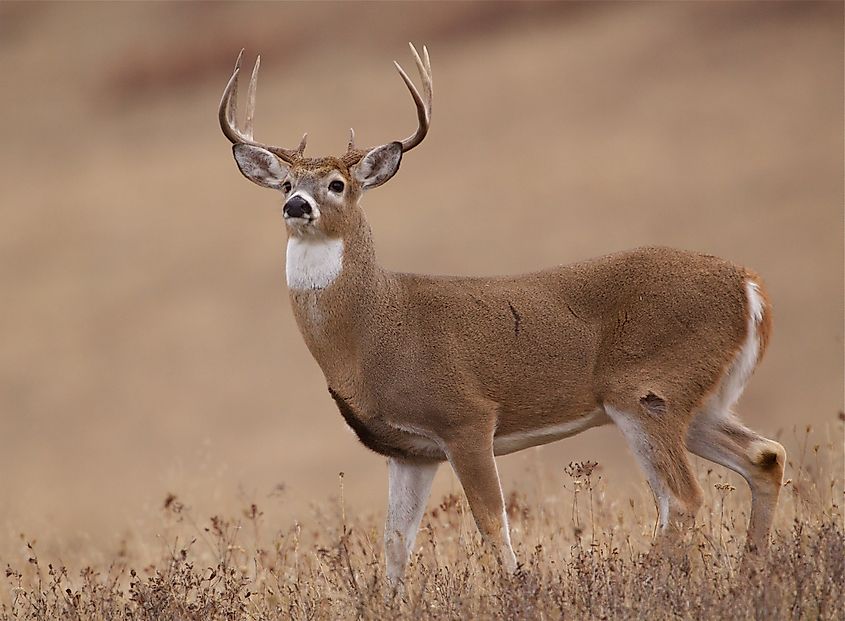
A white-tailed deer (Odocoileus virginianus) buck - Black bear: absent for most of the 20th century, recolonised from Massachusetts, and now well over a thousand animals with sightings in every county. Connecticut's bear-human conflict rate is among the highest per capita in the country because bears are living in dense suburbs.
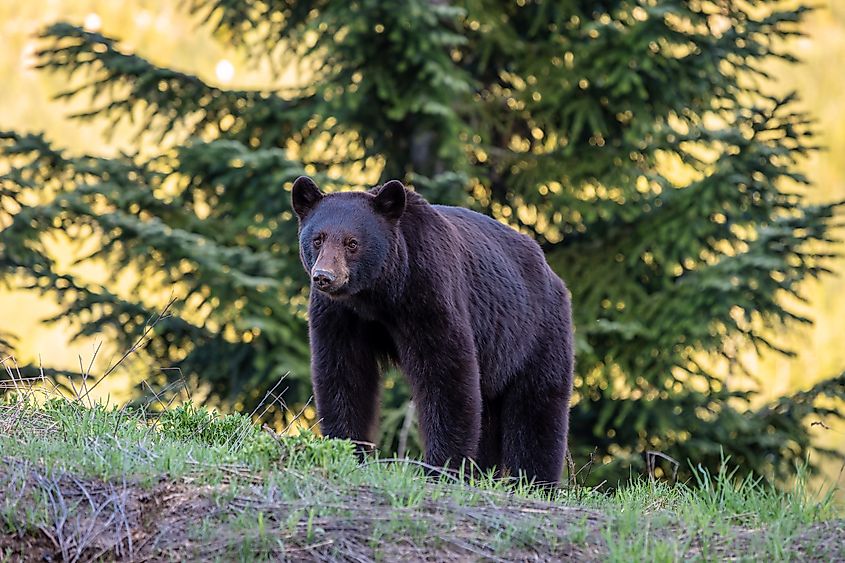
An American black bear (Ursus americanus) - Bobcat: recovered from near-absence to a healthy statewide population.
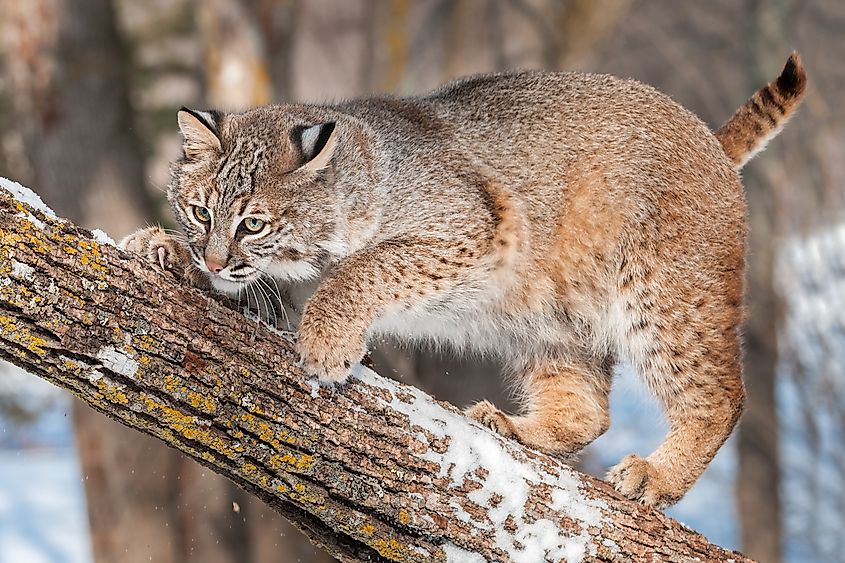
A bobcat (Lynx rufus) - Coyote: not present in Connecticut before the 1950s. The northeastern coyote carries some wolf ancestry and is larger than western coyotes, filling the vacant mid-sized predator niche.
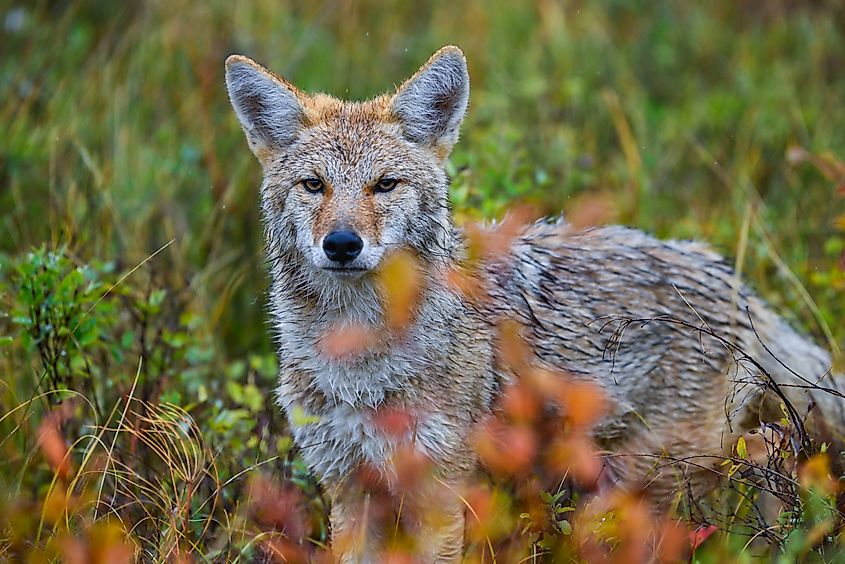
A coyote (Canis latrans) - Fisher: reintroduced in the late 1980s and now established, and one of the few predators that regularly kills porcupines.
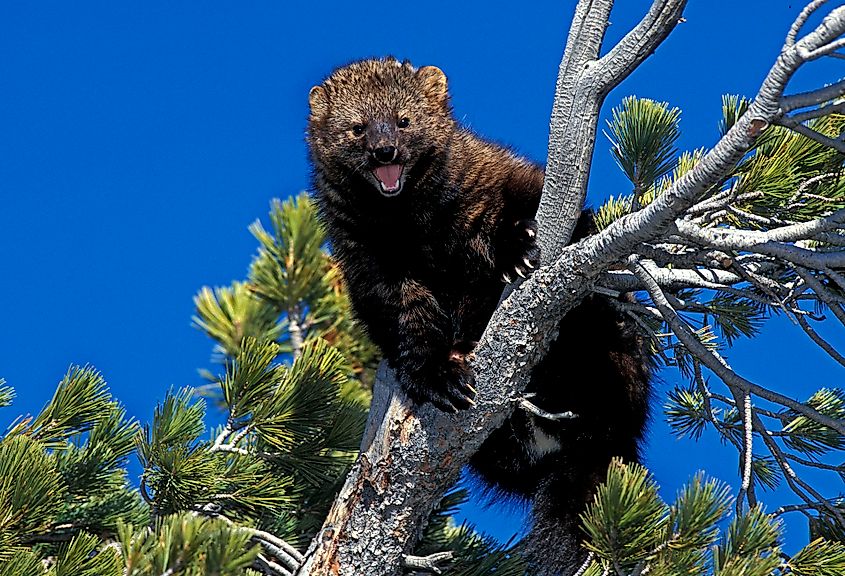
A fisher (Pekania pennanti) - Beaver: trapped out entirely by 1842, reintroduced in the 20th century, now widespread and a major wetland engineer. See what happens when beavers leave.
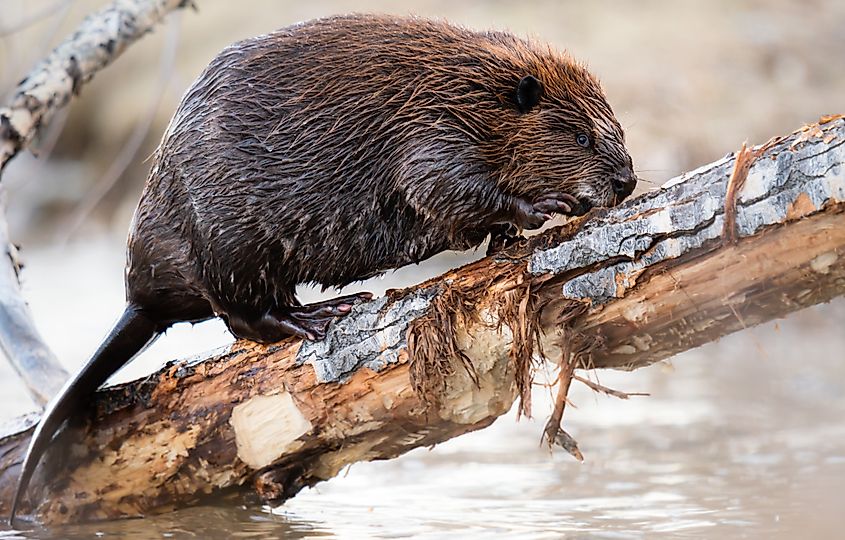
A North American beaver (Castor canadensis) - River otter, mink, long-tailed weasel, gray and red fox, raccoon, striped skunk, Virginia opossum, woodchuck, eastern chipmunk, gray and red squirrel, flying squirrels, muskrat, cottontail: all common.
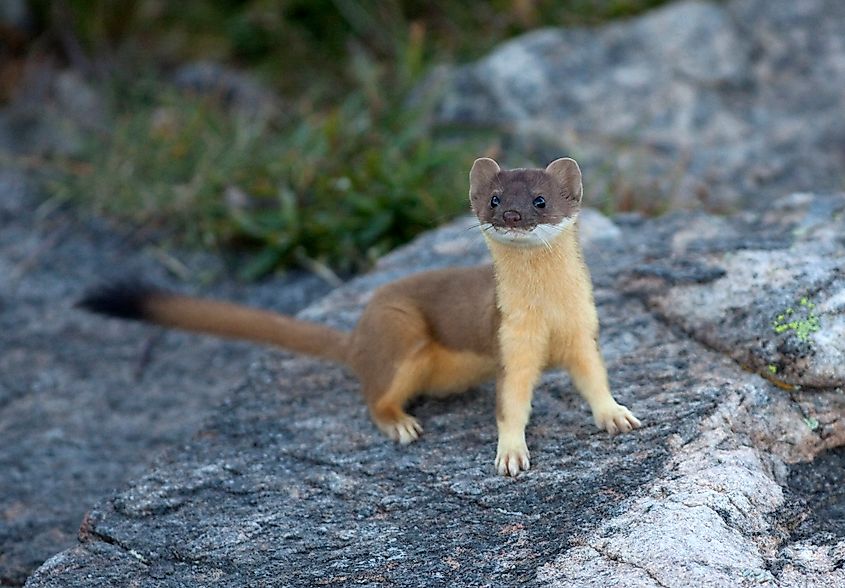
A long-tailed weasel (Neogale frenata) - New England cottontail: the region's only native rabbit, now scarce and outcompeted by the introduced eastern cottontail. It needs dense young shrubland, a habitat that disappears as forest matures.
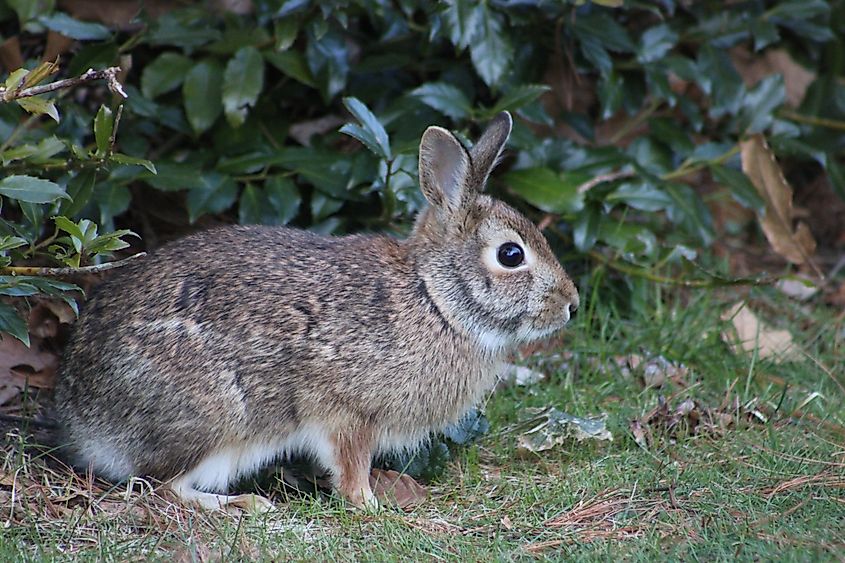
A New England cottontail (Sylvilagus transitionalis) - Bats: eight species, several devastated by white-nose syndrome. The little brown bat, once the most common bat in the state, declined by well over 90 percent.
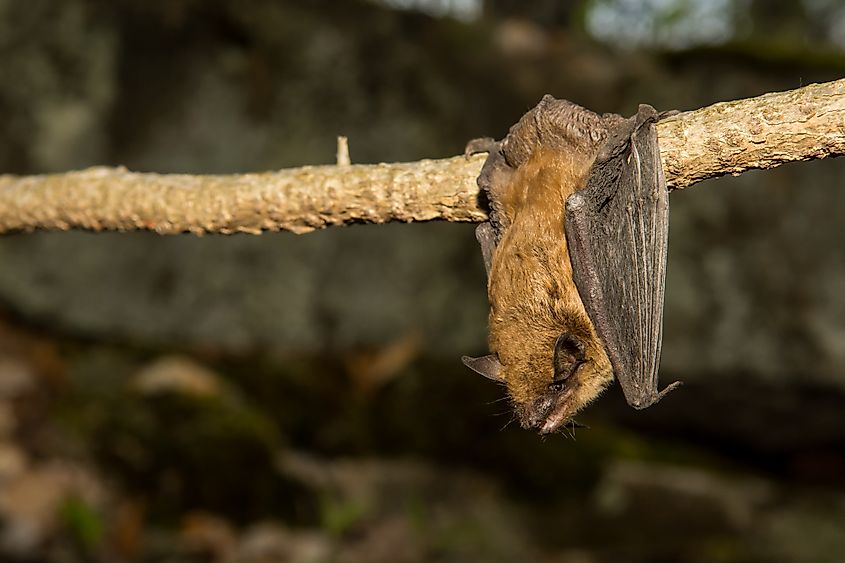
A big brown bat (Eptesicus fuscus) - Moose: a small but growing population in the northwest, at the southern edge of the species' range.
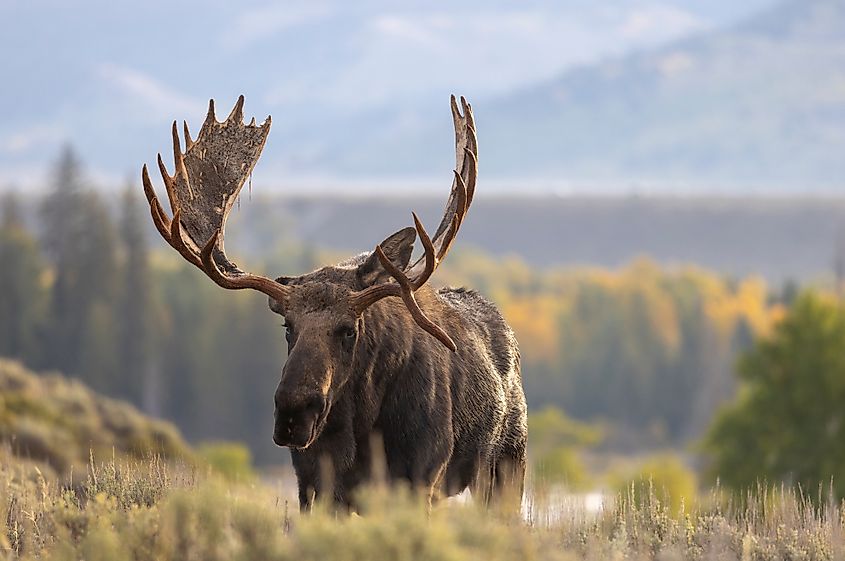
A moose (Alces alces)


Absent: gray wolf, mountain lion, and elk, all extirpated in the colonial and early industrial periods. A mountain lion killed on a Connecticut highway in 2011 was genetically traced to South Dakota, roughly 1,500 miles away, one of the longest documented mammal dispersals on record.
Section 05
Birds Of Connecticut
More than 440 species have been recorded, helped by the state's position on the Atlantic Flyway and the funnelling effect of Long Island Sound.
- Residents: American robin (the state bird), northern cardinal, blue jay, black-capped chickadee, tufted titmouse, downy and pileated woodpeckers, barred owl, great horned owl, wild turkey (reintroduced in the 1970s after total extirpation).
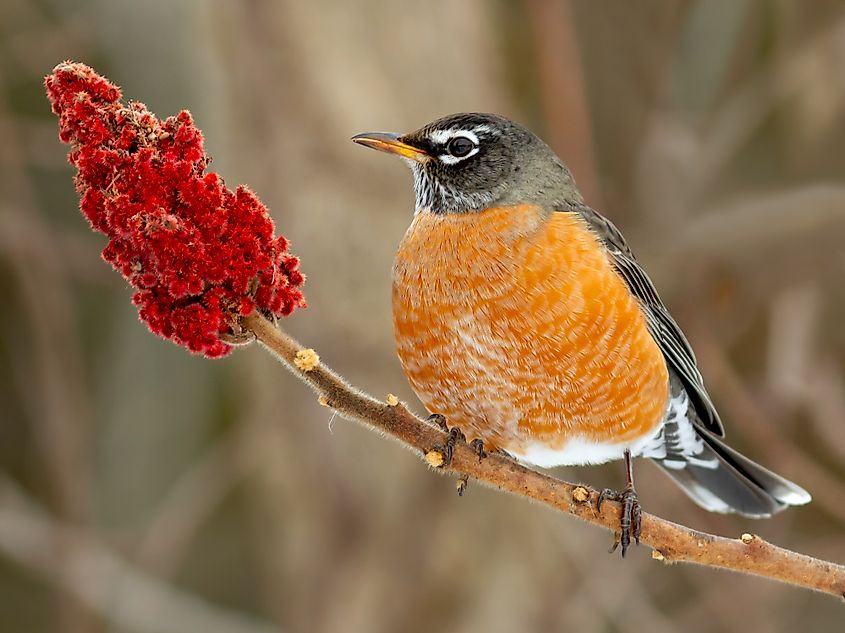
An American robin (Turdus migratorius) - Raptors: bald eagle, which went from zero nesting pairs to dozens, osprey, red-tailed hawk, Cooper's hawk now common in suburbs, and peregrine falcon nesting on both traprock cliffs and city buildings.
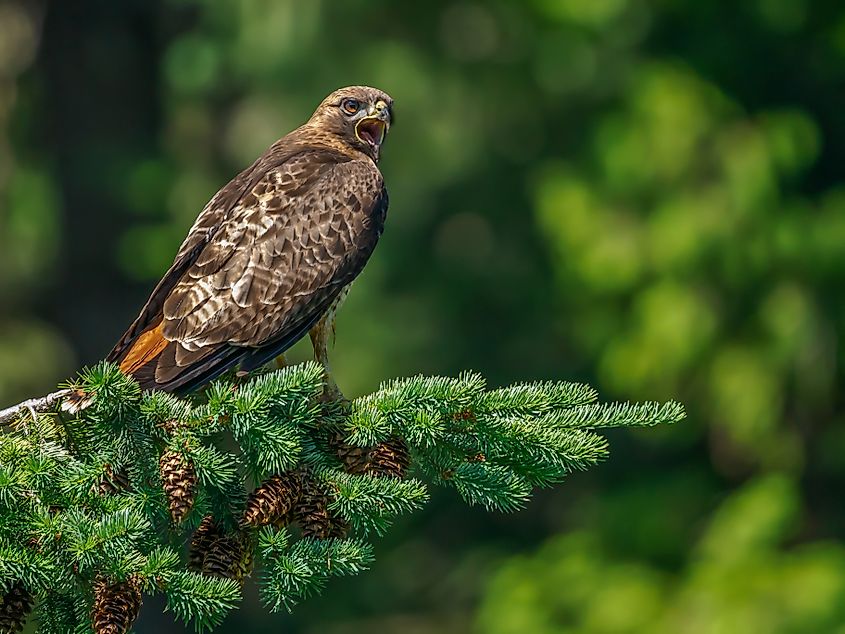
A red-tailed hawk (Buteo Jamaicensis) - Coastal and marsh: saltmarsh sparrow, clapper rail, willet, American oystercatcher, piping plover, least tern, snowy and great egrets, glossy ibis, and large wintering rafts of scoters, long-tailed ducks, and brant on the Sound.
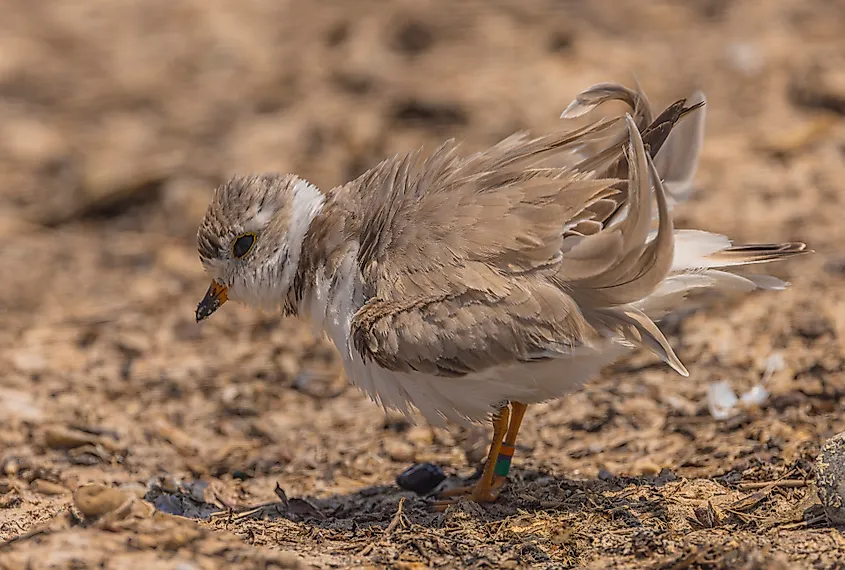
A piping plover (Charadrius melodus) - Migration: spring and autumn songbird movement is heavy, with autumn hawk flights over the ridges at places like Lighthouse Point in New Haven, where the coastline concentrates southbound raptors and songbirds.


The losses are in shrubland and grassland birds. Species that need open, early-successional habitat, including American woodcock, brown thrasher, eastern towhee, whip-poor-will, grasshopper sparrow, and bobolink, have declined sharply as the state's farmland reverted to closed forest. In Connecticut, forest recovery helped one whole group of birds and harmed another.
Two Colorado bird stories are worth knowing. The first is the greater sage-grouse, whose spring lek displays involve males inflating yellow air sacs on their chests to produce a popping sound audible half a mile away. Sagebrush loss to energy development and invasive cheatgrass has cut the species range across the West, and Colorado holds an important share of what remains. The second is the peregrine falcon, which vanished from Colorado entirely by the early 1970s because of DDT thinning eggshells, was restored by releasing captive-bred young from cliff ledges, and now nests on canyon walls and downtown buildings alike.
Section 06
Reptiles, Amphibians, And Fish
Connecticut has around 22 reptile and 21 amphibian species. Two snakes are venomous.
Snakes

14 species. The timber rattlesnake is a state endangered species confined to a handful of den sites, and the northern copperhead is uncommon and localised in the central and western hills. The remaining twelve are harmless, including eastern rat snake, milk snake, black racer, northern water snake, and eastern garter snake.
Turtles

Eastern box turtle, wood turtle, spotted turtle, bog turtle (federally threatened and extremely rare here), painted turtle, snapping turtle, and diamondback terrapin in brackish water. Several are declining from road mortality and illegal collection.
Amphibians

Spotted salamander, marbled salamander, four-toed salamander, red-backed salamander, eastern newt, plus wood frog, spring peeper, green frog, bullfrog, gray treefrog, and American toad. Vernal pools drive the breeding cycle, and their loss to development is the main amphibian threat.
Fish

American shad, alewife, blueback herring, sea lamprey, striped bass, and Atlantic sturgeon all move between the Sound and inland rivers, and dam removal on tributaries has become the state's main fisheries restoration tool. Atlantic salmon restoration on the Connecticut River was pursued for decades and largely abandoned as unachievable.
Section 07
Dangerous Animals In Connecticut
- Ticks: the genuine hazard. Lyme disease is named for Lyme, Connecticut, where it was identified in the 1970s. Blacklegged ticks also transmit babesiosis, anaplasmosis, and Powassan virus. This is the single most consequential wildlife-linked health risk in the state.
- White-tailed deer: vehicle collisions cause more injuries and deaths than any other animal, and deer sustain the tick population.
- Black bear: no fatal attacks recorded in Connecticut, but home entries and conflicts are rising sharply. Never feed bears, remove bird feeders in bear season, and secure garbage.
- Timber rattlesnake and copperhead: both rare, localised, and reluctant. Bites are very unusual.
- Coyote: attacks on people are extremely rare; pets are the realistic concern.
- Rabies: raccoons, skunks, foxes, and bats are the main vectors. Never handle wild mammals, especially those acting oddly or active at unusual hours.
Section 08
Endangered And Protected Species
| Species | Where | Status |
|---|---|---|
| Saltmarsh sparrow | Coastal salt marsh | STATE ENDANGERED |
| Timber rattlesnake | Northwest and traprock ridges | STATE ENDANGERED |
| Bog turtle | A few calcareous fens | THREATENED |
| Piping plover | Barrier beaches | THREATENED |
| Roseate tern | Sound islands | ENDANGERED |
| New England cottontail | Young shrubland | STATE THREATENED |
| Atlantic sturgeon | Connecticut River, Sound | ENDANGERED |
| Northern long-eared bat | Statewide forest | ENDANGERED |
| Dwarf wedgemussel | Connecticut River tributaries | ENDANGERED |
The pressures here differ from most states. Habitat loss is real but the bigger issues are fragmentation by roads and development, sea level rise drowning salt marsh faster than it can migrate inland, loss of early-successional shrubland as forests mature, white-nose syndrome in bats, and the sheer density of human activity in a state where almost no habitat is far from a road.
Section 09
Where To See Wildlife In Connecticut
- Connecticut River tidelands and Essex area: wintering bald eagles, and the late-summer tree swallow roost at Goose Island, where hundreds of thousands funnel into the marsh at dusk.
- Hammonasset Beach State Park: shorebirds, osprey, salt marsh, and migrant songbirds.
- Lighthouse Point Park, New Haven: autumn hawk and songbird migration concentration.
- White Memorial Conservation Center, Litchfield: the largest nature centre holding in the state, with bear, bobcat, and forest birds.
- Pachaug and Natchaug State Forests: the eastern uplands' biggest forest blocks.
- Sandy Point and Milford Point: piping plover, terns, horseshoe crab spawning in late spring.
- Sleeping Giant and traprock ridges: peregrine falcons and unusual dry-ridge species.
Timing: May for warbler migration and horseshoe crab spawning on the new and full moon high tides. Late August and September for the tree swallow roost and southbound shorebirds. September and October for hawk flights on the coast. December through March for wintering eagles, seals, and sea ducks on the Sound. Vernal pool amphibian breeding happens on the first warm rainy nights of March.
Section 10
Common Questions
- What is the state animal of Connecticut?
- The sperm whale, adopted in 1975. It does not live in Connecticut waters; the designation honours the state's 19th-century whaling industry at New London and Mystic and recognises the species' endangered status.
- Are there bears in Connecticut?
- Yes, well over a thousand black bears, having recolonised from Massachusetts after being absent for most of the 20th century. Sightings occur in every county, and conflict rates are high because bears now live in dense suburbs.
- Are there venomous snakes in Connecticut?
- Two: the timber rattlesnake, a state endangered species restricted to a few den sites, and the northern copperhead, uncommon and localised. The other twelve snake species are harmless.
- Are there mountain lions in Connecticut?
- No resident population. A mountain lion killed on a highway in Milford in 2011 was genetically traced to South Dakota, meaning it had travelled roughly 1,500 miles.
- What is the most dangerous animal in Connecticut?
- Ticks, by a wide margin, because of Lyme disease and other tick-borne illnesses. Deer-vehicle collisions are the leading cause of direct injury.
- Why has Connecticut's wildlife recovered so much?
- The state went from roughly 25 percent forest in 1820 to about 60 percent today as farmland was abandoned. Deer, turkey, beaver, bear, bobcat, and fisher all returned with the forest, though shrubland and grassland birds declined for the same reason.
This page was last updated on October 11, 2026