Section 01
Why Arkansas Holds So Many Animals
Arkansas is cut almost exactly in half by a diagonal line. Northwest of it lie the Ozark Mountains and the Ouachita Mountains, uplands of limestone, sandstone, and shale with clear streams and hardwood forest. Southeast of it lies the Mississippi Alluvial Plain, known locally as the Delta, a nearly flat expanse of rich soil, oxbow lakes, and bottomland hardwood swamp.
That split gives the state two entirely different faunas. The Ozarks are cave country, with more than 2,000 documented caves holding blind fish, cave crayfish, cave salamanders, and enormous bat colonies. The Ouachitas run east to west rather than north to south, which is unusual in North America and creates dry south-facing slopes next to cool, damp north-facing ones, doubling the habitats available within a single ridge. The Delta, meanwhile, is one of the most important waterfowl wintering grounds on the continent.
Arkansas also sits at a crossroads of four major biological regions: eastern deciduous forest, southeastern coastal plain, western prairie, and the Ozark-Ouachita highlands, which function as an isolated island of upland habitat surrounded by lowlands. That isolation has produced a striking number of endemic species, animals found in Arkansas and nowhere else, particularly among cave invertebrates, crayfish, and darters.
The state's rivers matter enormously. The Buffalo National River was the first national river in the United States, protected in 1972, and the White, Ouachita, Little Red, and Cache systems support a freshwater fauna that rivals any inland state.
Section 02
Arkansas's Official State Animals
| Designation | Animal | Adopted |
|---|---|---|
| State bird | Northern mockingbird Mimus polyglottos | 1929 |
| State mammal | White-tailed deer Odocoileus virginianus | 1993 |
| State insect | Honeybee Apis mellifera | 1973 |
| State butterfly | Diana fritillary Speyeria diana | 2007 |
The Diana fritillary is the most interesting choice on the list. It is a large butterfly whose sexes look like different species: males are dark brown with orange wing borders, females are black with iridescent blue. Its range has contracted sharply, and the Ouachita and Ozark highlands now hold one of its strongest remaining populations, which is exactly why Arkansas schoolchildren campaigned for it.

Arkansas is also nicknamed the Bear State, a title earned in the 19th century when black bears were abundant enough to support a commercial trade in bear oil shipped out of Little Rock. By 1927 hunting and habitat loss had reduced the population to perhaps 50 animals. Restocking with bears from Minnesota and Manitoba between 1958 and 1968 rebuilt the population to several thousand, one of the most successful large-carnivore restorations in American history.
Section 03
Habitats By Region, And Who Lives In Each
Ozark Plateau (north and northwest)

The landscape consists largely of limestone and dolomite uplands carved by steep hollows, with oak-hickory forests, cedar glades, and thousands of caves and springs. Notable fauna include the black bear, elk in the Buffalo River valley, bobcat, gray fox, Ozark big-eared bat, gray bat, cave salamander, Ozark hellbender, and numerous endemic cave invertebrates. Clear, cool streams in this area support populations of smallmouth bass and a high diversity of darter species.
Ouachita Mountains (west-central)

The Ouachita Mountains consist of east-west ridges formed from folded sandstone and shale, with forests dominated by shortleaf pine and oak. They contain the region's most extensive remaining montane pine-bluestem habitat, which is maintained through prescribed fire and provides important habitat for red-cockaded woodpeckers. Other notable species include the Ouachita dusky salamander, ringed salamander, timber rattlesnake, and Diana fritillary.
Arkansas River Valley (central)

A broad lowland corridor between the two mountain ranges, with isolated flat-topped peaks like Mount Magazine, the state's high point at 2,753 feet. Mixed forest, farmland, and reservoirs. Bald eagles winter along the river and its lakes in good numbers.
West Gulf Coastal Plain (south and southwest)

The West Gulf Coastal Plain features sandy uplands dominated by loblolly and shortleaf pine, along with bottomland hardwood forests along the Ouachita, Saline, and Red rivers. The region marks the northern edge of the American alligator's range and supports sandhill communities associated with gopher tortoise habitat, as well as southern hognose snakes and pine-forest species such as Bachman's sparrow and brown-headed nuthatch.
Mississippi Alluvial Plain, the Delta (east)

The Mississippi Alluvial Plain is a flat, fertile region dominated by agriculture, particularly rice and soybean cultivation, with patches of remnant bottomland hardwood forest along areas such as the Cache and White rivers. The Delta is one of North America's most important wintering areas for mallards, with millions of ducks and geese gathering in flooded rice fields and green-tree reservoirs. Other notable wildlife includes alligator gar, paddlefish, river otters, swamp rabbits, and the largest remaining tract of contiguous bottomland hardwood forest in the Mississippi Valley.
Section 04
Mammals Of Arkansas
Arkansas has roughly 70 native mammal species. The large ones are almost all recovery stories: deer, bear, elk, otter, and beaver were all severely depleted or eliminated by 1930 and rebuilt through 20th-century management.
Large mammals
- White-tailed deer: the state mammal, with a statewide population around one million after being reduced to perhaps 500 animals in the 1920s.
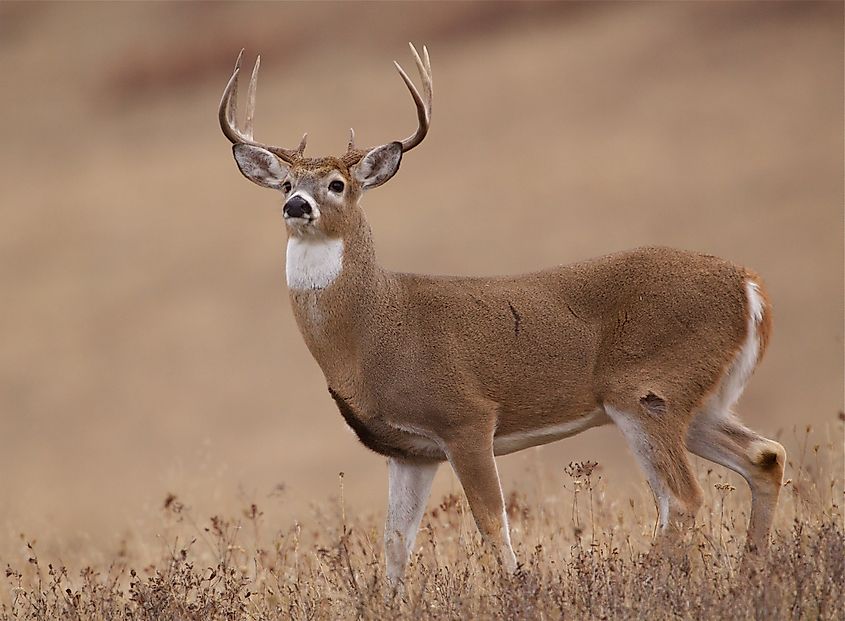
A white-tailed deer (Odocoileus virginianus) - American black bear: several thousand statewide, concentrated in the Ozarks, Ouachitas, and the White River bottoms. The Bear State earned its name back.
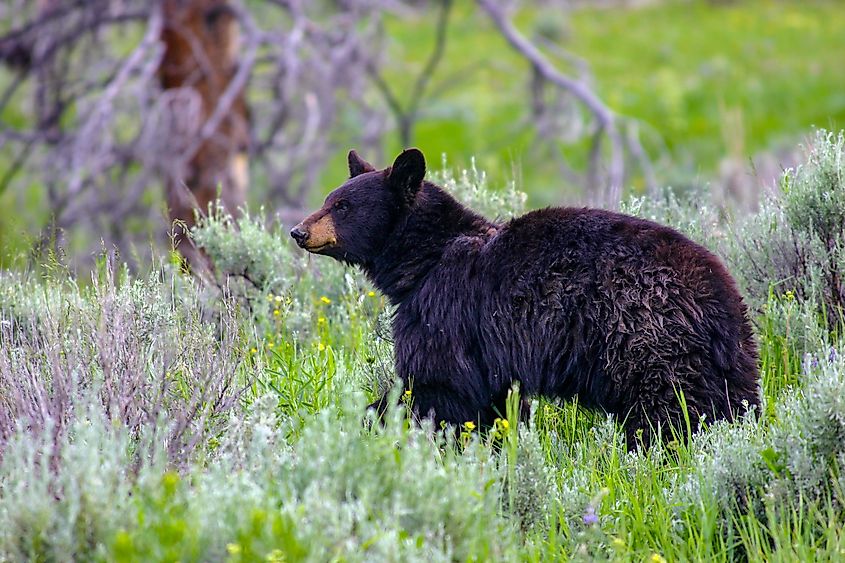
An American black bear (Ursus americanus) - Elk Cervus canadensis: the native eastern elk was gone by the 1840s. Rocky Mountain elk were released in the Buffalo River area starting in 1981, and the herd now runs around 500 to 600 animals in Newton and Searcy counties, viewable from roadside fields at Boxley Valley.
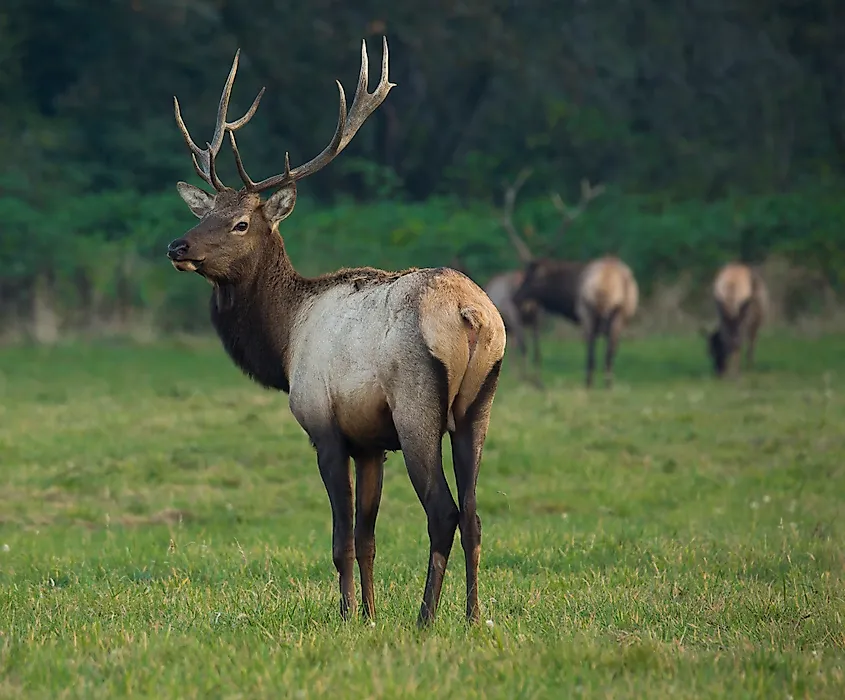
A Roosevelt elk (Cervus canadensis roosevelti) - Feral hog: present in every county and destructive; covered under invasive species.
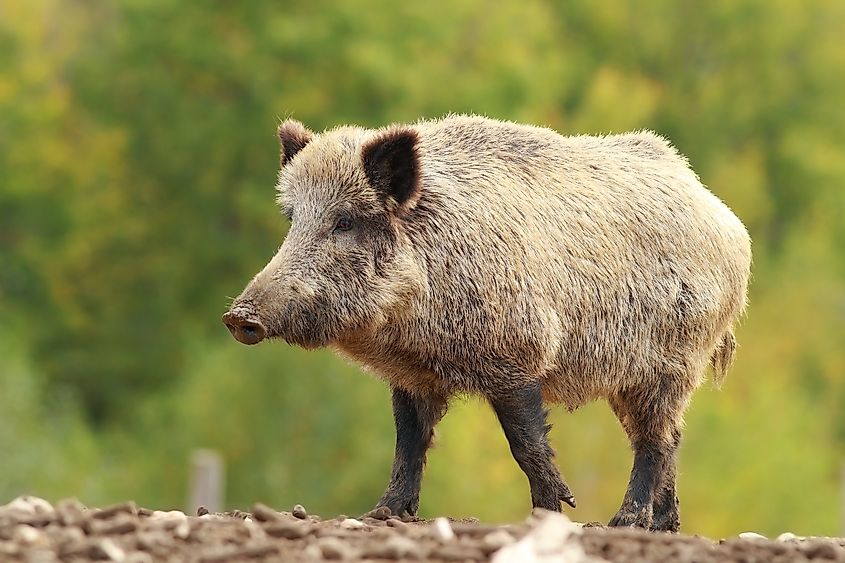
A wild boar (Sus scrofa)


Predators and mid-sized mammals
- Bobcat: the state's only established wild cat, common in every county.
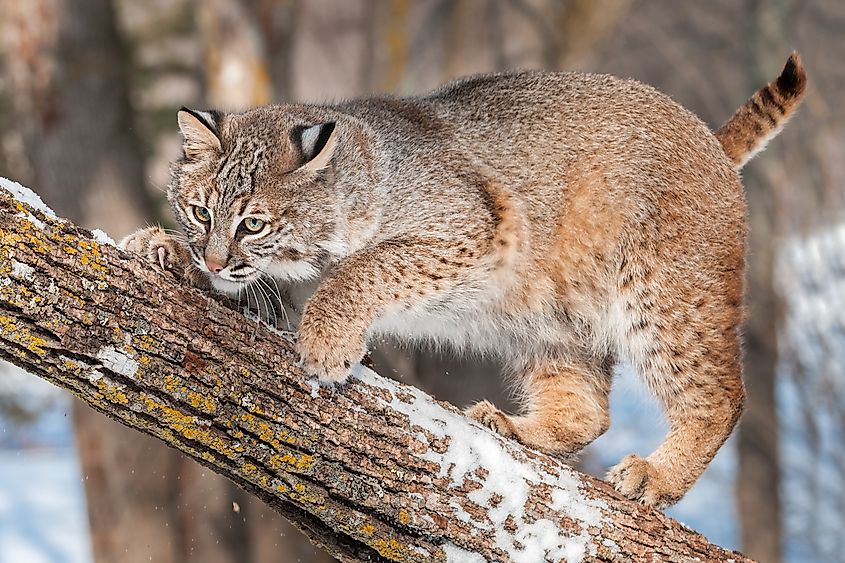
A bobcat (Lynx rufus) - Coyote: absent historically, now statewide and functionally replacing the extirpated red wolf.
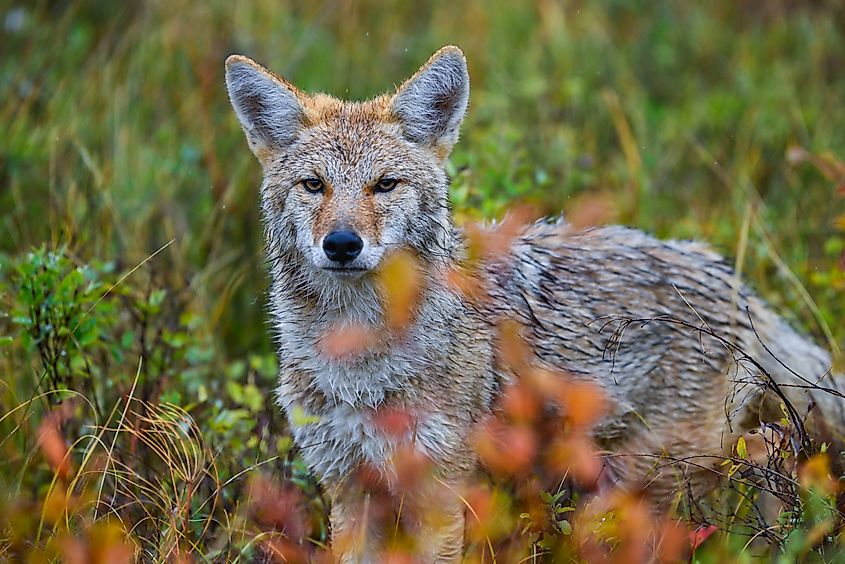
A coyote (Canis latrans) - Gray fox and red fox: gray foxes dominate in forest, red foxes in open farmland.
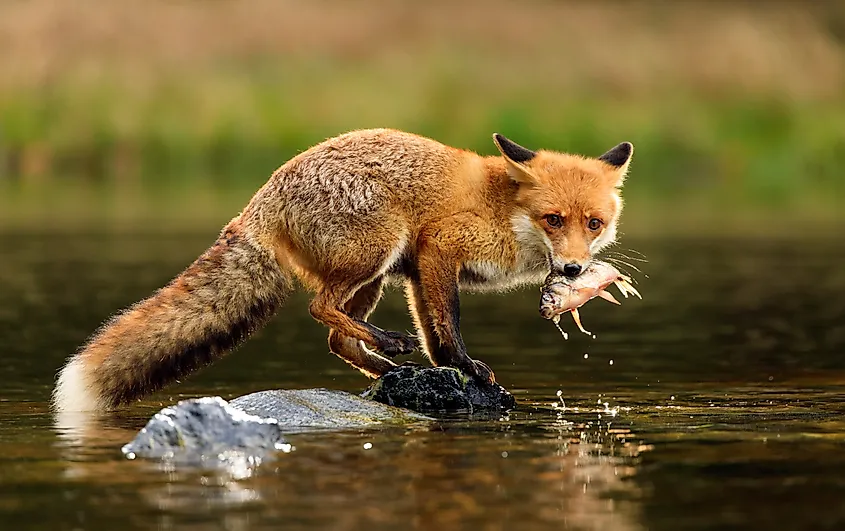
A red fox (Vulpes vulpes) - River otter: recovered strongly and now common in Delta waterways.
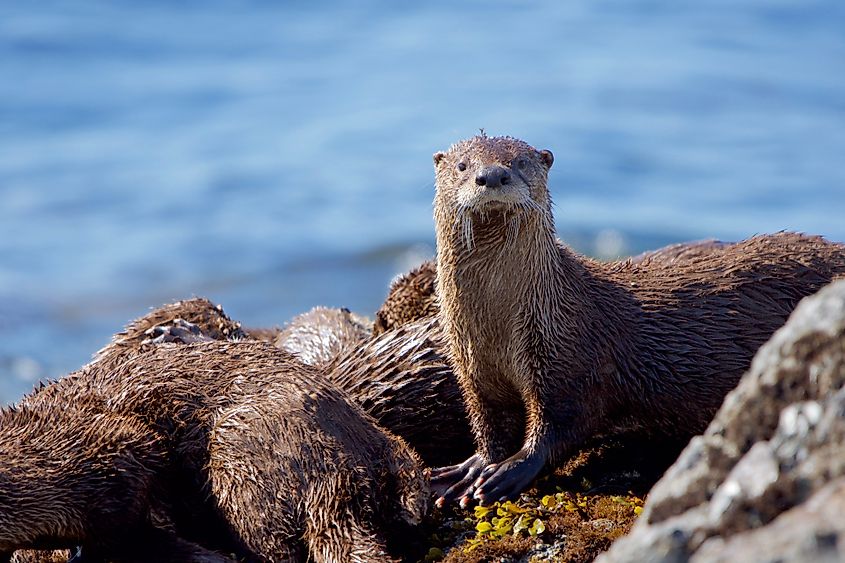
A river otter (Lontra canadensis) - Mink, long-tailed weasel, striped skunk, eastern spotted skunk, raccoon, Virginia opossum, beaver, muskrat, nutria: all widespread.
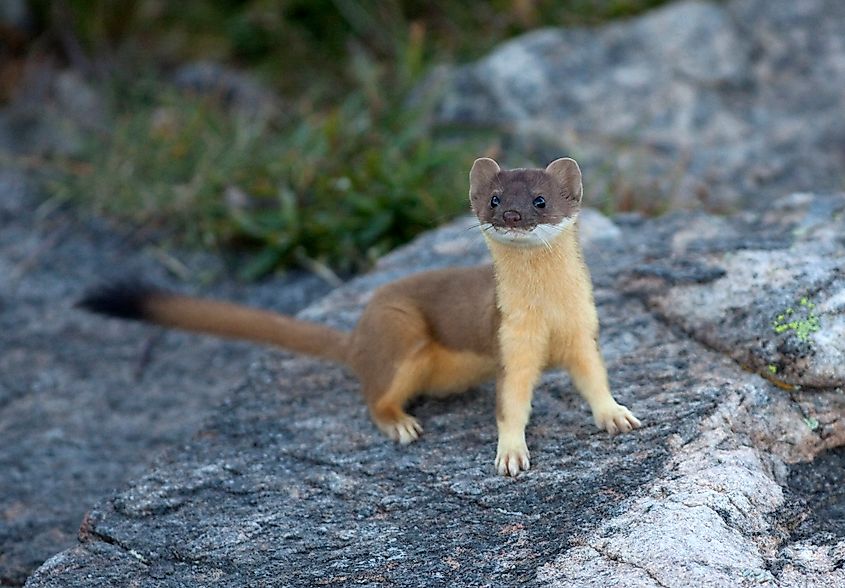
A long-tailed weasel (Neogale frenata). - Nine-banded armadillo: arrived in the 20th century from the southwest and now common statewide.
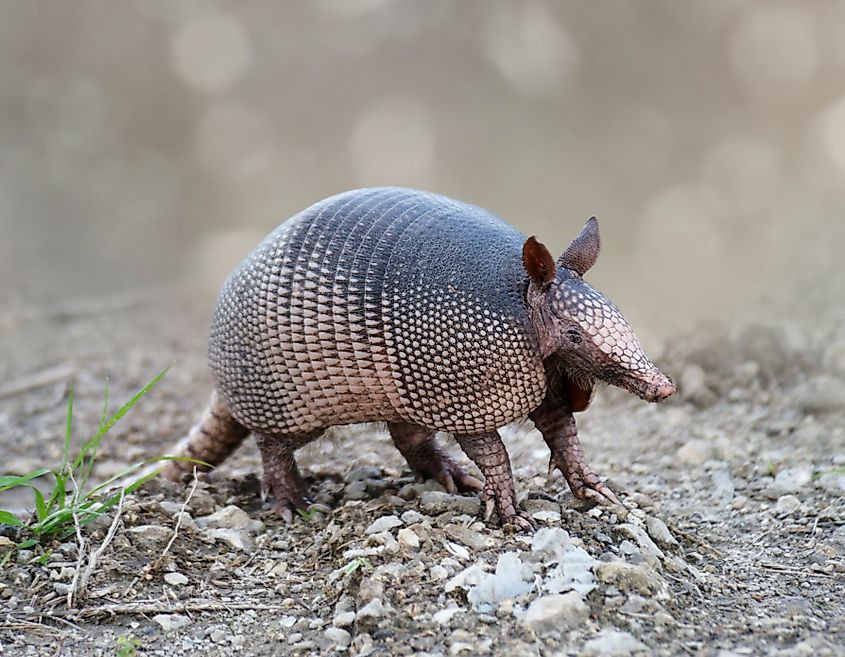
A nine-banded armadillo (Dasypus novemcinctus) - Swamp rabbit: a large, strong-swimming rabbit of Delta bottomlands, alongside the eastern cottontail.
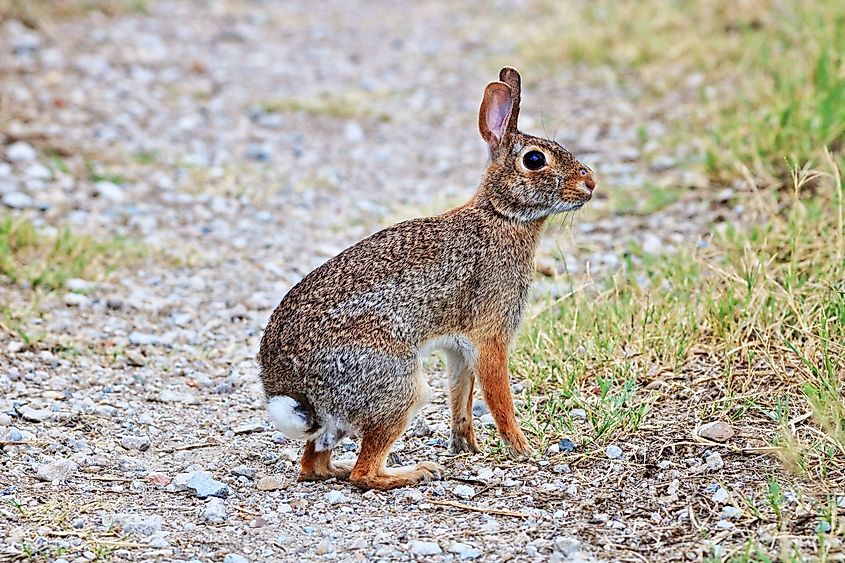
A swamp rabbit (Sylvilagus aquaticus) - Mountain lion: no breeding population, but confirmed transient males have been documented repeatedly since 2010.
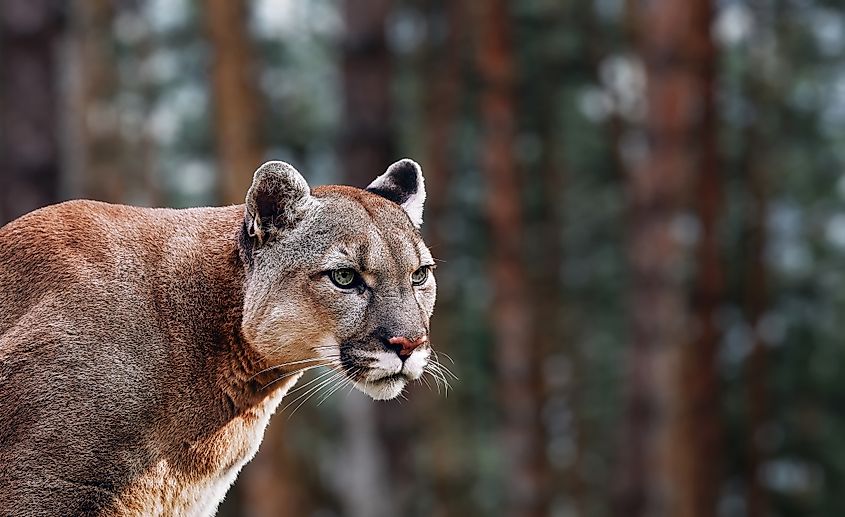
A mountain lion (Puma concolor)


Bats

Arkansas has around 16 bat species, and its caves are regionally critical. The Ozark big-eared bat is endemic to a small area of Arkansas, Oklahoma, and Missouri, with a total population in the low thousands. Gray bats hibernate here in large numbers. White-nose syndrome has hit tricolored and northern long-eared bats hard since arriving in the state around 2012, and many caves are now closed to visitors to slow transmission.
Section 05
Birds Of Arkansas
More than 400 species have been recorded. Arkansas sits squarely in the Mississippi Flyway, and its winter waterfowl concentrations are the state's most significant contribution to continental bird populations.
Waterfowl and the Delta

Eastern Arkansas winters a very large share of the Mississippi Flyway's mallards, drawn by flooded rice fields and bottomland hardwood. Along with mallards: gadwall, northern pintail, green-winged teal, wood duck, snow and Ross's geese, greater white-fronted geese, and Canada geese. The Cache River and White River national wildlife refuges are the core of it.
Residents

- Northern mockingbird, the state bird, plus northern cardinal, Carolina wren, Carolina chickadee, tufted titmouse
- Pileated, red-bellied, downy, hairy, and red-headed woodpeckers
- Red-cockaded woodpecker in managed Ouachita pine stands, a federally listed species that requires open, fire-maintained forest
- Wild turkey, northern bobwhite, barred owl, great horned owl, eastern screech-owl
- Red-tailed and red-shouldered hawks, Mississippi kite in summer, bald eagle nesting statewide
Migrants and specialties

Spring brings prothonotary warblers to flooded bottomland, along with Swainson's warbler, cerulean warbler in Ozark hardwoods, and a long list of neotropical migrants. Interior least terns nest on Arkansas River sandbars. Whooping cranes occasionally pass through as part of the eastern reintroduction effort.
Arkansas is also the centre of the ivory-billed woodpecker question. Reported sightings in the Big Woods of the Cache and White river bottoms in 2004 and 2005 triggered a large search effort. No universally accepted evidence emerged, the species is still officially considered lost, and the episode did produce substantial habitat conservation in eastern Arkansas regardless of the outcome.
Section 06
Reptiles And Amphibians
Arkansas has roughly 55 reptile and 60 amphibian species. The salamander list is the notable one: the Ouachita and Ozark highlands are a global hotspot for lungless salamanders.
Snakes

About 36 species, of which six are venomous. Harmless residents include the eastern rat snake, prairie kingsnake, speckled kingsnake, black racer, rough green snake, and the western hognose. The venomous six are covered in the dangerous animals section.
Turtles, lizards, and alligators

- Turtles: around 18 species, including alligator snapping turtle, common snapping turtle, red-eared slider, Ouachita map turtle, and the three-toed box turtle.
- Lizards: green anole, eastern fence lizard, six-lined racerunner, five-lined and broadhead skinks, slender glass lizard.
- American alligator: at the northern edge of its range in southern and eastern Arkansas, largely in the Felsenthal and Millwood areas. Restocked in the 1970s after near-elimination.
Salamanders and frogs

The Ozark hellbender is the headline amphibian: a fully aquatic salamander reaching two feet, breathing through folds of skin, and requiring cold, clean, fast water. It is federally endangered, with population declines that are still not fully explained. Also present: Oklahoma salamander, many-ribbed salamander, ringed salamander, marbled salamander, cave salamander, grotto salamander (which loses its eyes as it matures in complete darkness), and roughly 25 frog and toad species including green treefrog, spring peeper, crawfish frog, and bird-voiced treefrog in Delta swamps.
Section 07
Freshwater Life
Arkansas has around 200 native freshwater fish species and a mussel and crayfish fauna with a high degree of endemism. The Ozark and Ouachita uplands produced species confined to single river systems, sometimes to single springs.
- Fish: smallmouth bass in upland streams, largemouth in reservoirs and the Delta, plus white and black crappie, bluegill, channel and flathead catfish, walleye, and an exceptional darter fauna. The yellowcheek darter of the Little Red headwaters is federally endangered.
- Alligator gar: an armoured predator reaching eight feet in Delta rivers and oxbows, one of the largest freshwater fish in North America and increasingly managed as a trophy species rather than a nuisance.
- Paddlefish: a filter-feeding relative of sturgeon with a paddle-shaped snout full of electroreceptors, present in larger rivers.
- Cavefish: the Ozark cavefish is blind, pale, and found in a small number of cave systems in Arkansas, Missouri, and Oklahoma.
- Mussels and crayfish: dozens of mussel species and around 60 crayfish species, several endemic, some living in burrows rather than open water.
Why the upland fauna is fragile: the endemic species here are narrow specialists. A darter or crayfish may exist only in the headwaters of one river. Gravel mining, sedimentation from unpaved roads and pasture runoff, nutrient loading from concentrated animal operations, and groundwater withdrawal each remove a specific requirement those animals cannot replace, and dams sever populations from one another permanently.
Section 08
Dangerous Animals In Arkansas
Arkansas has six venomous snakes, two medically significant spiders, alligators in the south, and a great many ticks. As elsewhere, deer-vehicle collisions and stinging insects cause far more harm than any of the animals people worry about.
The six venomous snakes
- Copperhead: the most commonly encountered and responsible for most bites in the state. Painful, rarely fatal.
- Cottonmouth: semi-aquatic, in Delta swamps, sloughs, and river margins.
- Timber rattlesnake: in forested uplands statewide, including the lowland canebrake form.
- Western diamondback rattlesnake: only in a small area of the far west and southwest.
- Western pygmy rattlesnake: small, cryptic, and easy to step near in leaf litter.
- Texas coral snake: southern Arkansas only, secretive, and very rarely responsible for bites.
Other hazards
- Black widow and brown recluse spiders: both common; the brown recluse is especially widespread in Arkansas homes and outbuildings.
- Ticks: the state's most consequential animals for human health, carrying Rocky Mountain spotted fever, ehrlichiosis, tularemia, and alpha-gal syndrome. Arkansas consistently reports among the highest tick-borne disease rates in the country.
- American alligator: only in the south and east, and attacks are extremely rare.
- Feral hogs: aggressive when cornered, and a genuine risk to hunters and dogs.
- Africanized honeybees and fire ants: both established in the southern part of the state.
Snakebite basics: get to a hospital, keep the limb still and roughly level with the heart, remove rings and watches, and do not cut, ice, or use a tourniquet. Most bites happen to people trying to handle or kill a snake, so the simplest prevention is to walk away.
Section 09
Endangered And Protected Species
| Species | Where | Status |
|---|---|---|
| Ozark big-eared bat | Ozark caves | ENDANGERED |
| Gray bat | Ozark and Ouachita caves | ENDANGERED |
| Northern long-eared bat | Statewide forest and caves | ENDANGERED |
| Ozark hellbender | Upland Ozark rivers | ENDANGERED |
| Red-cockaded woodpecker | Ouachita pine-bluestem | ENDANGERED |
| Interior least tern | Arkansas River sandbars | RECENTLY DELISTED |
| Yellowcheek darter | Little Red headwaters | ENDANGERED |
| Ozark cavefish | Northwest cave systems | THREATENED |
| Pink mucket & other mussels | White, Ouachita rivers | MULTIPLE LISTED |
| Benton County cave crayfish | A few caves only | ENDANGERED |
The red wolf is gone from Arkansas entirely, as is the eastern cougar and the eastern elk. The ivory-billed woodpecker remains the state's most debated absence. Against those losses stand deer, bear, elk, otter, alligator, and bald eagle, every one of which was severely depleted a century ago and is now secure or abundant.
Current pressures fall mainly on aquatic and cave systems: sedimentation, nutrient runoff, groundwater depletion, cave disturbance, and white-nose syndrome in bats. Fire suppression is the main threat to upland pine species like the red-cockaded woodpecker, which is why prescribed burning is central to Ouachita management.
Section 10
Invasive And Non-Native Animals
- Feral hogs: the most destructive vertebrate in the state, rooting up ground cover, fouling streams, and eating ground nests. No closed season.
- Asian carp: silver, bighead, black, and grass carp in the Arkansas and Mississippi systems, outcompeting native filter feeders. Silver carp famously leap from the water when startled by boat motors.
- Zebra mussels: established in several reservoirs and rivers, fouling infrastructure and smothering native mussel beds.
- Nutria: a South American rodent damaging Delta wetlands.
- Red imported fire ant: spreading north through the state and harming ground-nesting wildlife.
- House sparrow, European starling, feral cats: long established, with measurable effects on native birds.
Section 11
Where To See Wildlife In Arkansas
- Buffalo National River and Boxley Valley: the state's elk herd, plus black bear, otter, and bald eagle. Elk are visible from the road at dawn and dusk in autumn.
- Cache River and White River National Wildlife Refuges: the Big Woods; wintering ducks in the millions, plus bottomland songbirds in spring.
- Holla Bend National Wildlife Refuge: wintering eagles and waterfowl on the Arkansas River.
- Felsenthal National Wildlife Refuge: alligators, wading birds, and flooded bottomland.
- Ouachita National Forest: red-cockaded woodpecker habitat, Diana fritillary, and montane salamanders.
- Devil's Den and Mount Magazine State Parks: bats, butterflies, and Ozark-Ouachita specialties.
- Blanchard Springs Caverns: guided access to Ozark cave systems where visitation is permitted.
Timing: late October through February for waterfowl and bald eagles in the Delta. September and October for the elk rut at Boxley Valley. April and May for migrating songbirds and salamander activity. Summer nights for frogs, bats, and alligators in the south. Many caves are seasonally or permanently closed to protect hibernating bats, so check before planning any cave visit.
Section 12
Common Questions
- What is the state animal of Arkansas?
- The white-tailed deer, designated state mammal in 1993. Arkansas also names a state bird (northern mockingbird), state insect (honeybee), and state butterfly (Diana fritillary).
- Why is Arkansas called the Bear State?
- Black bears were abundant enough in the 19th century to support a commercial trade in bear oil. Hunting and habitat loss reduced them to roughly 50 animals by 1927, and restocking between 1958 and 1968 rebuilt the population to several thousand.
- Are there elk in Arkansas?
- Yes. Native eastern elk were gone by the 1840s, but Rocky Mountain elk released near the Buffalo National River from 1981 onward now number around 500 to 600, mostly in Newton and Searcy counties.
- How many venomous snakes live in Arkansas?
- Six: copperhead, cottonmouth, timber rattlesnake, western diamondback rattlesnake, western pygmy rattlesnake, and Texas coral snake. The other 30 or so species are harmless.
- Does Arkansas have alligators?
- Yes, in the southern and eastern parts of the state at the northern edge of the species' range, concentrated around Felsenthal and Millwood. The population was restocked in the 1970s.
- What is the most dangerous animal in Arkansas?
- Ticks, by a wide margin, because of the disease load they carry. Arkansas reports some of the highest tick-borne illness rates in the country. Deer-vehicle collisions and stinging insects follow.
- Is the ivory-billed woodpecker still in Arkansas?
- Unresolved. Reported sightings in the Big Woods in 2004 and 2005 prompted a major search, but no evidence emerged that satisfied the wider ornithological community. The species is still officially considered lost.
This page was last updated on October 9, 2026