Section 01
Why Arizona Holds So Many Animals
Arizona is often stereotyped as a landscape dominated by saguaro cacti, red rock formations, and high temperatures. However, the state encompasses regions of four distinct deserts and reaches an elevation of 12,633 feet at Humphreys Peak, where the vegetation more closely resembles that of Canada than Mexico. Traveling from Phoenix to Flagstaff in two hours traverses an ecological gradient comparable to a journey from northern Mexico to southern Alberta.
Biologists call this arrangement a sky island system. Isolated mountain ranges rise out of the desert floor in the southeast corner of the state, each one carrying cool, wet forest at its summit and separated from the next range by miles of hostile lowland. Species stranded on those peaks after the last ice age evolved in isolation, so each range holds its own squirrels, salamanders, and insects. Meanwhile the desert basins between them hold an entirely different fauna adapted to heat and drought.
The second factor is Mexico. Arizona's southern border is a biological doorway, and tropical and subtropical species push north into the state that occur nowhere else in the country. Jaguars, ocelots, coatis, elegant trogons, and more than a dozen hummingbird species reach the United States here and essentially nowhere else. The result is a state with the most reptile species in the country, the most rattlesnake species, the most bat species, and one of the highest bird totals anywhere in North America.
Water is the limiting factor for all of it. Arizona's rivers, including the Colorado, the Gila, the Salt, the Verde, and the San Pedro, support a disproportionate share of the state's wildlife in a thin ribbon of cottonwood and willow. Roughly 80 percent of Arizona's vertebrate species use riparian habitat at some point, and that habitat covers well under one percent of the state.
Section 02
Arizona's Official State Animals
Arizona picked most of its animal symbols in a single 1986 legislative session, and the choices are unusually specific to the state rather than generic regional picks.
| Designation | Animal | Adopted |
|---|---|---|
| State bird | Cactus wren Campylorhynchus brunneicapillus | 1931 |
| State mammal | Ringtail Bassariscus astutus | 1986 |
| State reptile | Arizona ridge-nosed rattlesnake Crotalus willardi willardi | 1986 |
| State amphibian | Arizona tree frog Hyla wrightorum | 1986 |
| State fish | Apache trout Oncorhynchus apache | 1986 |
| State butterfly | Two-tailed swallowtail Papilio multicaudata | 2001 |
The ringtail is the sleeper pick. Most Arizonans have never seen one, because it is nocturnal, silent, and shy. It is a relative of the raccoon with a cat-like body, enormous eyes, and a banded tail longer than the rest of it. Ringtails can rotate their hind feet 180 degrees to descend rock faces headfirst, which makes them unusually good at living in canyon country. Miners kept them as companions to control rodents, which earned them the nickname miner's cat.

The Apache trout is the more consequential choice. Native only to the headwaters of the Salt and Little Colorado systems in the White Mountains, it was nearly lost to hybridization with introduced rainbow and brown trout. Recovery work led largely by the White Mountain Apache Tribe brought it back from a handful of streams, and in 2024 it became one of the few sport fish ever removed from the federal endangered species list.
Section 03
Habitats By Region, And Who Lives In Each
Sonoran Desert (south and southwest)

The Sonoran Desert is the hottest and most biologically rich desert in North America, largely because it gets two rainy seasons: winter frontal rain and summer monsoon. Saguaro forest supports an entire vertical community. Gila woodpeckers and gilded flickers excavate nest holes in the cactus, and elf owls, purple martins, and lizards use the holes afterward. Ground level holds desert tortoise, Gila monster, javelina, kangaroo rats, and round-tailed ground squirrels. See also Saguaro National Park.
Mojave Desert (northwest)

Higher, colder, and drier than the Sonoran, with Joshua trees instead of saguaros and only winter rain. Fewer species overall, but distinctive ones: Mojave desert tortoise, chuckwalla, desert bighorn sheep on the ranges, and desert kit fox. Background: the Mojave Desert.
Colorado Plateau and the Grand Canyon (north)

Pinyon-juniper woodland, sagebrush, and slickrock cut by the deepest canyon system in North America. The canyon itself functions as a biological corridor and a barrier: the Kaibab squirrel on the North Rim is found nowhere else, having been isolated by the gorge. California condors released in the 1990s now nest here. Other residents include elk, mule deer, mountain lion, bighorn sheep, and the Grand Canyon rattlesnake, a pink-toned endemic subspecies. Related: Grand Canyon National Park.
Mogollon Rim and White Mountains (east-central)

A 200-mile escarpment carrying the largest continuous ponderosa pine forest in the world, rising into spruce-fir and alpine tundra on the highest peaks. Elk, black bear, Merriam's turkey, Abert's squirrel, northern goshawk, and Mexican wolves reintroduced into the Blue Range live here. Apache trout hold the coldest headwater streams.
Sky islands and the Madrean borderlands (southeast)

The Chiricahua, Huachuca, Santa Rita, and Santa Catalina ranges are the biological crown jewels of the state and among the richest areas in the United States for birds and bats. Species that reach the country only here include the elegant trogon, five-striped sparrow, Montezuma quail, white-nosed coati, and lesser long-nosed bat. The San Pedro River valley below them is one of the most important migratory bird corridors on the continent.
Section 04
Mammals Of Arizona
Arizona has roughly 140 mammal species, and a remarkable share of them are bats. The state's mix of desert, forest, and Mexican borderland gives it a mammal list unlike any other in the country.
Large mammals
- Elk Cervus canadensis: Arizona's native Merriam's elk went extinct around 1900, and the state's current herd of roughly 30,000 descends from Rocky Mountain elk brought in from Yellowstone in 1913. They hold the Mogollon Rim and White Mountains.
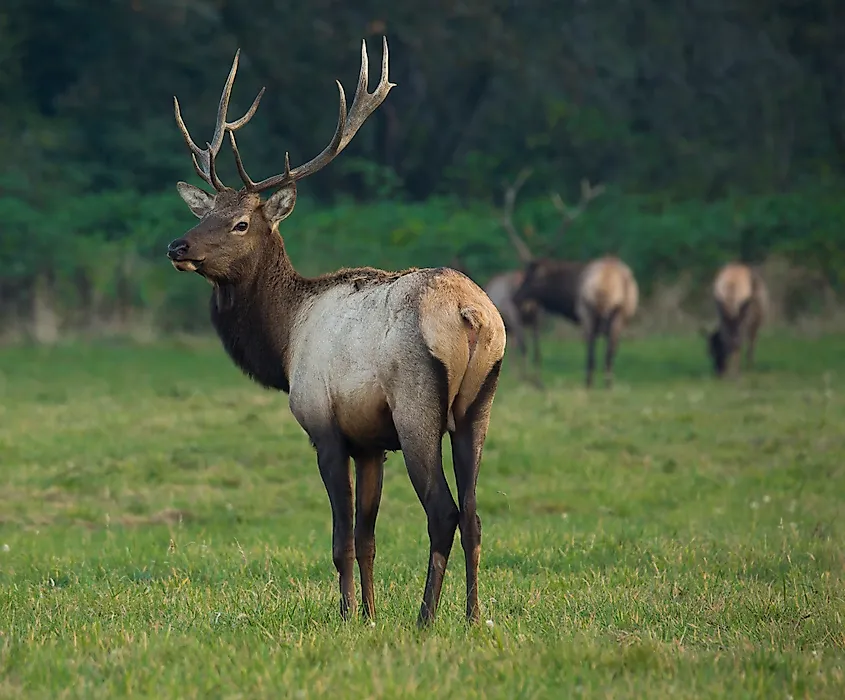
A Roosevelt elk (Cervus canadensis roosevelti). - Mule deer and white-tailed deer: mule deer statewide, plus the small Coues white-tailed deer in the southeastern mountains.
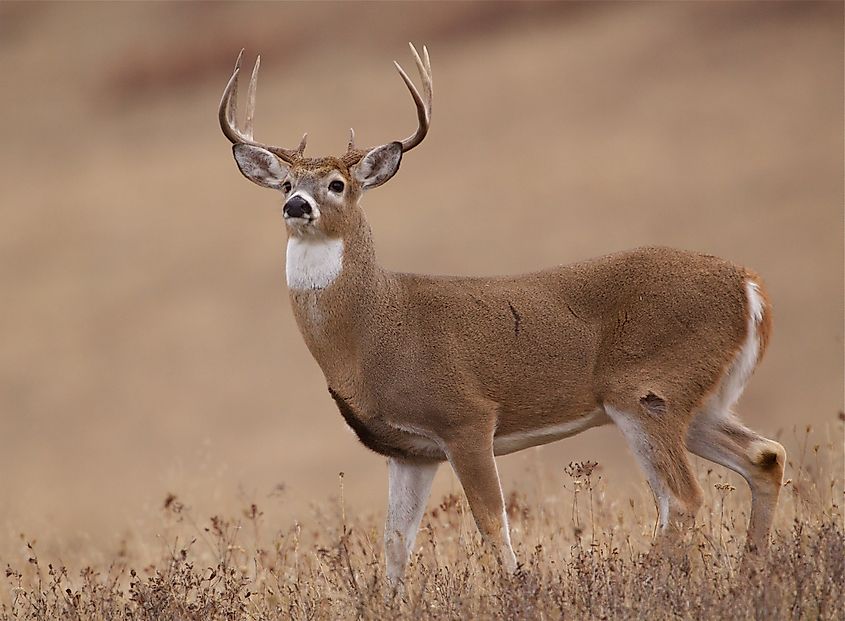
A white-tailed deer (Odocoileus virginianus) buck - Pronghorn: on the northern grasslands, plus the critically endangered Sonoran pronghorn in the southwest deserts.

A pronghorn (Antilocapra americana) - Desert bighorn sheep: on isolated desert ranges, dependent on scattered water sources.
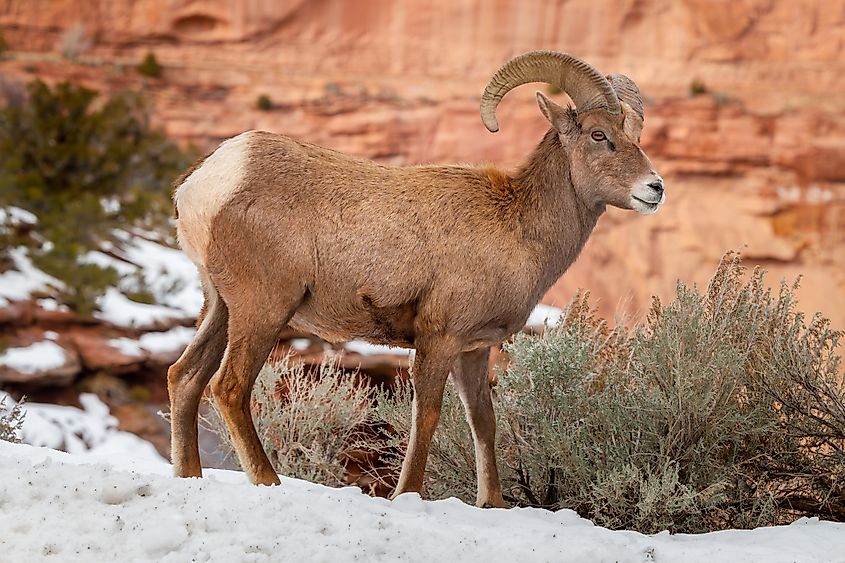
A desert bighorn sheep (Ovis canadensis nelsoni) - American bison: a managed herd on House Rock Wildlife Area and a controversial population on the Kaibab Plateau.
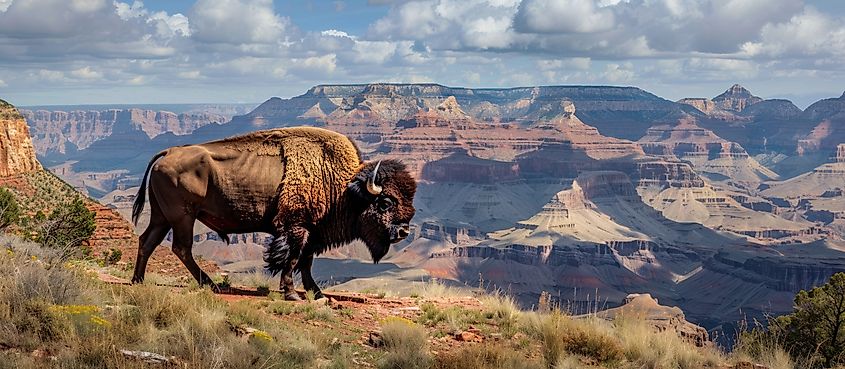
An American bison (Bison bison) - Black bear: in the forested high country and sky islands. Arizona has no grizzlies; the last was killed in the 1930s.
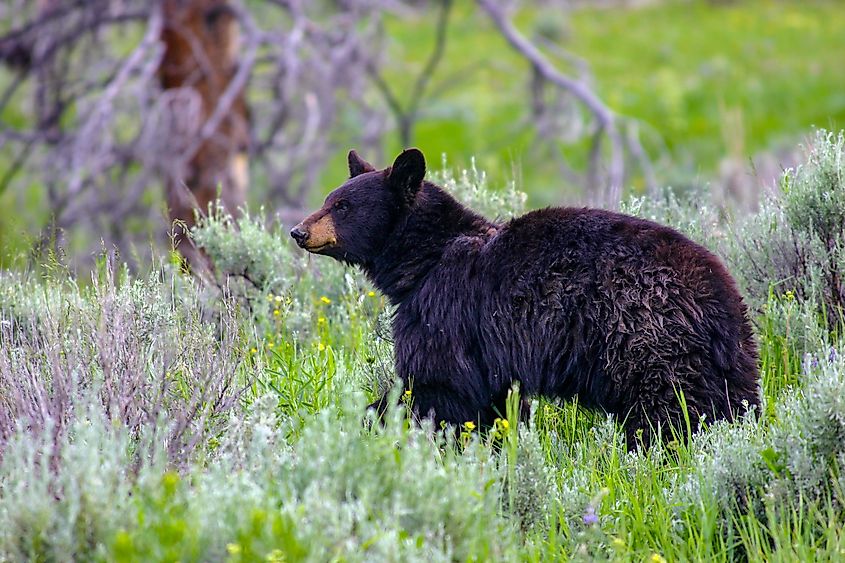
An American black bear (Ursus americanus) - Javelina Pecari tajacu: also called collared peccary, and not a pig despite appearances. Travels in family groups, eats prickly pear, and has poor eyesight but a strong sense of smell.
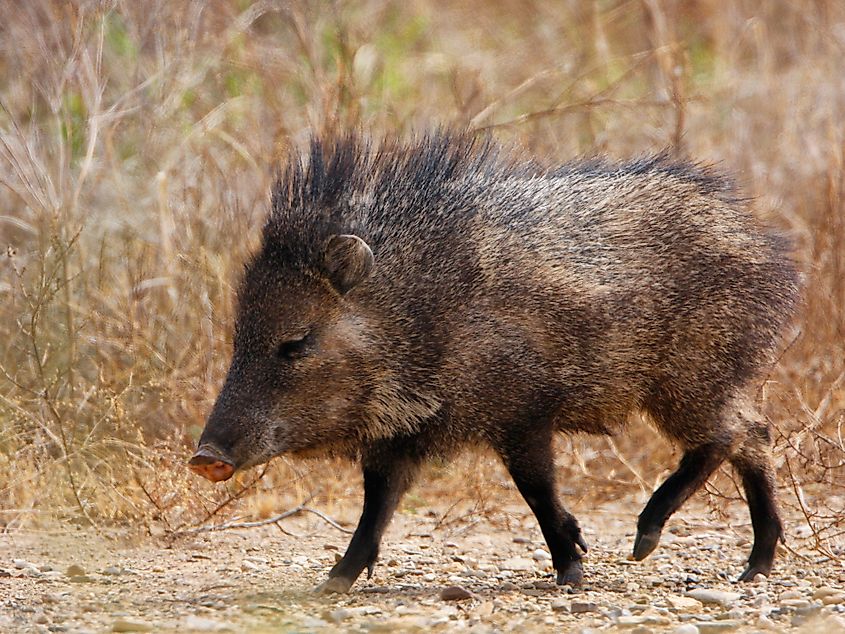
A javelina (Pecari tajacu)


Predators
- Mountain lion: statewide and surprisingly common, including in the hills around Tucson and Phoenix.
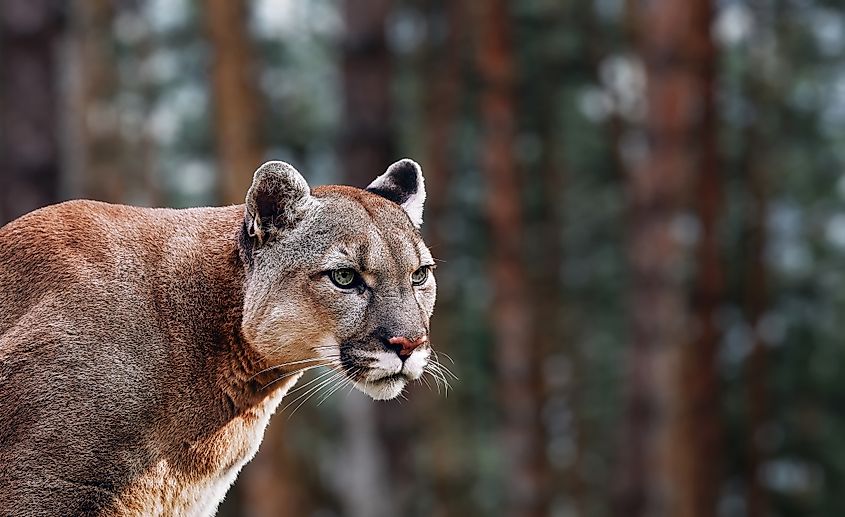
A mountain lion (Puma concolor) - Mexican gray wolf: extirpated by the 1970s and reintroduced to the Blue Range beginning in 1998. The wild population in Arizona and New Mexico now numbers in the high hundreds.
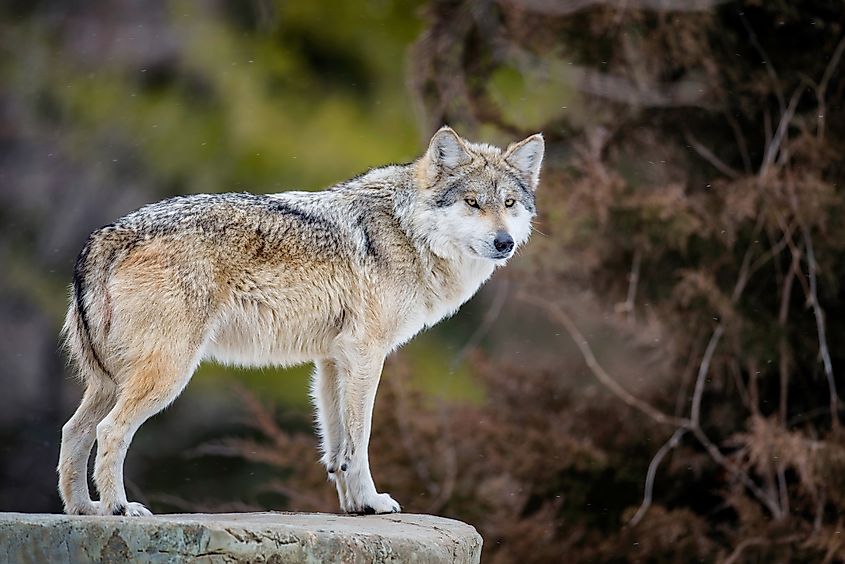
A Mexican gray wolf (Canis lupus baileyi) - Jaguar Panthera onca: individual males from Mexican populations have been photographed in southern Arizona repeatedly since the mid-1990s. No breeding female has been confirmed in the state in decades.
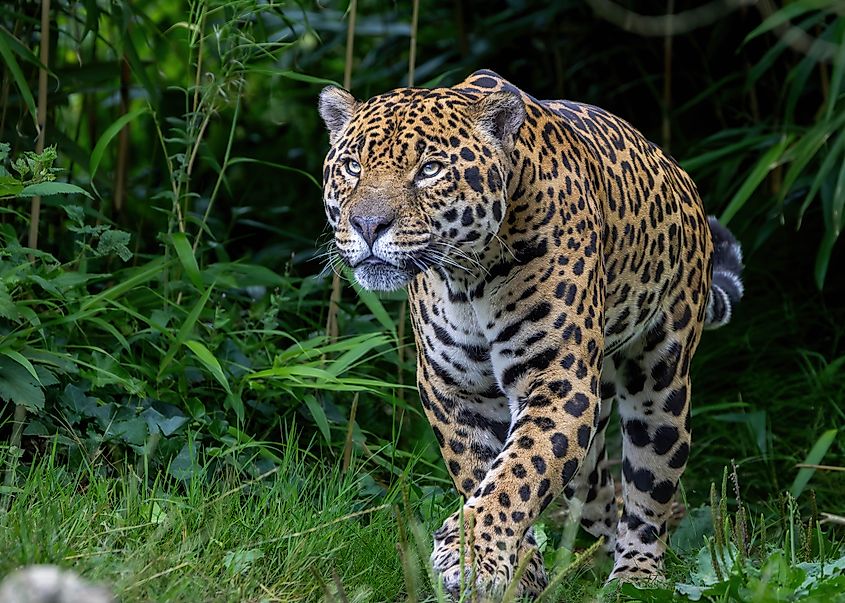
A jaguar (Panthera onca) - Ocelot: similarly, a handful of confirmed individuals in the sky islands.
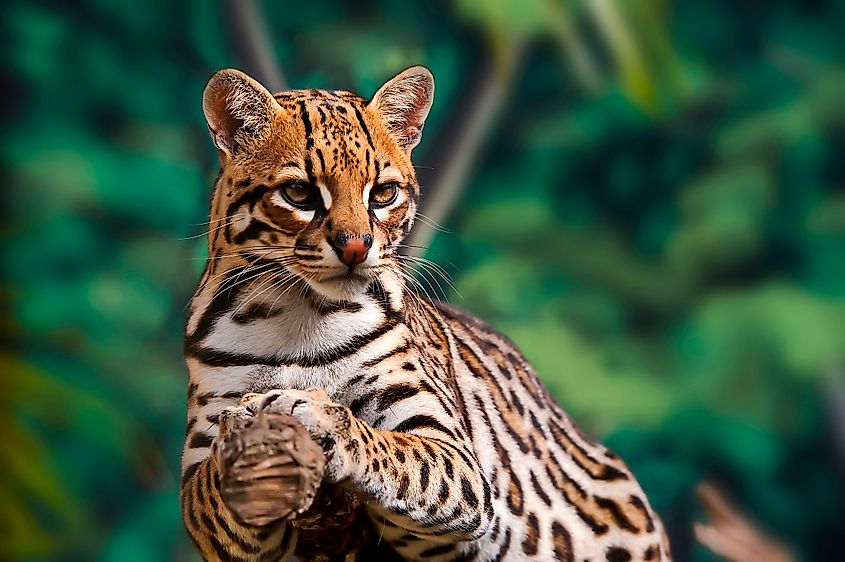
An ocelot (Leopardus pardalis) - Bobcat, coyote, gray fox, kit fox, and the tiny desert-dwelling ringtail: all widespread and all active mainly at night in summer.
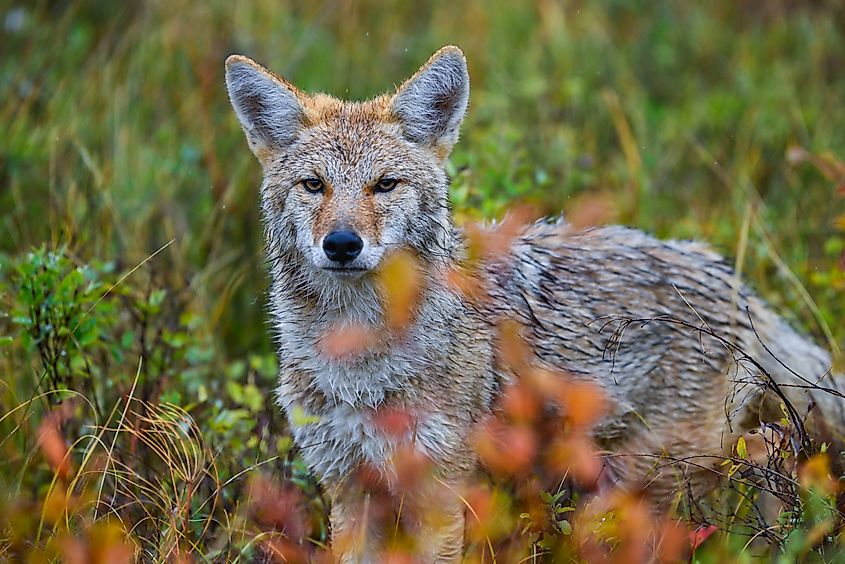
A coyote (Canis latrans) - White-nosed coati: a tropical relative of the raccoon that travels in noisy bands through the southeastern canyons.
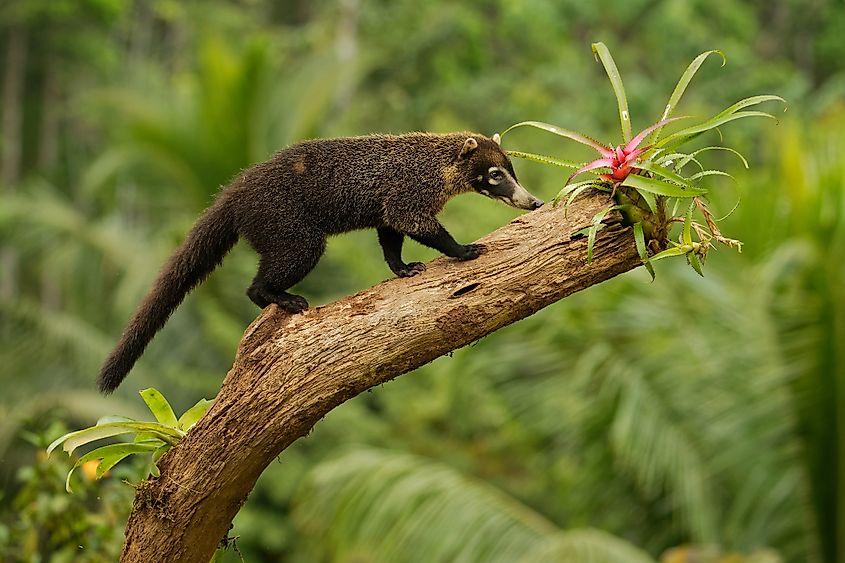
A white-nosed coati (Nasua narica)


Bats and small mammals

Arizona has about 28 bat species, the most of any state, including two nectar-feeding species that migrate north with the saguaro and agave bloom and pollinate them. The lesser long-nosed bat's recovery and delisting in 2018 is one of the clearest conservation successes in the Southwest. On the ground: Merriam's kangaroo rat, which can live its whole life without drinking water, along with pocket mice, woodrats, antelope squirrels, and the Kaibab squirrel found only on the Grand Canyon's North Rim.
Section 05
Birds Of Arizona
More than 550 species have been recorded in Arizona, a total that puts it among the top few states despite having no ocean coastline. Birders come here for two things: hummingbirds and Mexican specialties.
Desert and lowland birds

- Cactus wren, the state bird, which builds football-shaped nests in cholla
- Gambel's quail, curve-billed thrasher, verdin, phainopepla, Gila woodpecker, gilded flicker
- Greater roadrunner, which runs down lizards and snakes and rarely flies
- Harris's hawk, which hunts cooperatively in family groups, a behaviour almost unique among raptors
- Elf owl and ferruginous pygmy-owl, both nesting in cactus and tree cavities
Hummingbirds and Mexican specialties

Southeastern Arizona is home to more than a dozen hummingbird species, such as the magnificent hummingbird, blue-throated mountain-gem, violet-crowned, broad-billed, and Lucifer hummingbirds. The elegant trogon, found in Madera and Cave Creek canyons, is considered the most sought-after bird in the state. Additional notable borderland species include the Montezuma quail, thick-billed kingbird, sulphur-bellied flycatcher, red-faced warbler, painted redstart, and whiskered screech-owl.
High country and raptors

The California condor represents a significant conservation success. Since their release near Vermilion Cliffs in 1996, the Arizona and Utah population has grown to over one hundred individuals, with wild-hatched chicks fledging from Grand Canyon cliffs. Other notable species in the region include the golden eagle, bald eagle along the Salt and Verde rivers, peregrine falcon, Mexican spotted owl, northern goshawk, and Merriam's turkey in the pine forests.
Section 06
Reptiles And Amphibians
Arizona has around 107 reptile species, more than any other state, and 13 rattlesnake species, also a national record. Heat and aridity favour animals that do not need to sweat or drink much, and the state's topographic variety multiplies the niches available.
Lizards

Roughly 50 species. The Gila monster is the celebrity: a heavy, beaded, orange-and-black lizard that spends most of its life underground and is one of only a handful of venomous lizards on Earth. More on that: venomous lizards of North America. Others include chuckwalla, desert iguana, desert spiny lizard, regal horned lizard, Gila spotted whiptail, zebra-tailed lizard, and several all-female whiptail species that reproduce without males.
Snakes

About 52 species. Non-venomous residents include gopher snake, coachwhip, kingsnakes, long-nosed snake, patch-nosed snake, and the rosy boa. The venomous list is where Arizona stands apart, and it is covered in the dangerous animals section below.
Turtles and amphibians

Sonoran and Mojave desert tortoises are the state's flagship reptiles, both in decline from habitat loss, disease, and collection. Aquatic turtles are few, with the Sonora mud turtle in perennial streams. Amphibians survive by timing their entire reproductive cycle to monsoon rain: Couch's spadefoot toad can spend eleven months buried, emerge within minutes of the first heavy storm, breed in a temporary pool, and produce tadpoles that metamorphose in under two weeks before the puddle dries. Also present: Sonoran desert toad, Arizona tree frog, canyon tree frog, and the endangered Chiricahua leopard frog.
Section 07
Native Fish, The State's Most Endangered Group
Arizona's native fish fauna is small, strange, and in worse shape than any other group of animals in the state. Roughly 36 native freshwater species evolved in isolated desert rivers and springs, adapted to floods, silt, and water temperatures that would kill most fish.
- Colorado pikeminnow: once reached six feet and 80 pounds; now gone from Arizona's portion of the Colorado.
- Humpback chub and bonytail: bizarre, keel-backed fish built for torrential canyon flows. The humpback chub population in the Little Colorado confluence is the largest remaining anywhere.
- Razorback sucker, Gila topminnow, desert pupfish, loach minnow, spikedace: all federally listed.
- Apache trout and Gila trout: the state's two native trout, both recovered from a handful of streams.
The causes are consistent: dams that turned warm, silty, seasonally flooding rivers into cold, clear, stable reservoirs, plus more than 60 introduced species including largemouth bass, catfish, and rainbow trout that eat or outcompete natives. Roughly two thirds of Arizona's native fish are now federally listed or extirpated. Related: why the Colorado River is drying up.
Section 08
Dangerous Animals In Arizona
Arizona genuinely does lead the country in venomous species, but the practical risk is low and the animals responsible for the most emergency room visits are small.
The rattlesnakes
Thirteen species, more than any other state. The most significant are:
- Western diamondback: the most commonly encountered and responsible for most serious bites in the state.
- Mojave rattlesnake: carries a neurotoxic venom component that makes its bites more medically complex.
- Sidewinder: small, nocturnal, and moves across loose sand in a distinctive looping crawl.
- Blacktail, tiger, speckled, twin-spotted, rock, ridge-nosed, and Grand Canyon rattlesnakes: mostly montane, mostly rarely seen.
Arizona also has two coral snake relatives of note: the small, secretive Sonoran coralsnake, and the Gila monster, whose bite is painful but very rarely dangerous. Compare with national parks with the most rattlesnakes.
Arthropods, which cause more incidents
- Arizona bark scorpion: the most medically significant scorpion in North America. Stings are common in Phoenix and Tucson, painful, and occasionally serious for small children. It climbs, so it turns up on walls and ceilings.
- Africanized honeybees: established across southern Arizona since the 1990s and far more defensive than European bees. Mass stinging incidents are the state's most lethal animal risk.
- Black widow and Arizona brown spider: both present, both reclusive.
- Giant desert centipede and tarantulas: intimidating, essentially harmless.
Practical rules: shake out shoes and bedding, do not reach into crevices you cannot see, carry a light after dark, and leave snakes alone. Roughly half of all rattlesnake bites happen while someone is trying to handle or kill the snake. If bitten, go to a hospital, keep the limb still, remove rings, and do not cut, ice, or apply a tourniquet.
Section 09
Endangered And Protected Species
| Species | Where | Status |
|---|---|---|
| Sonoran pronghorn | Southwest deserts | ENDANGERED |
| Mexican gray wolf | Blue Range (reintroduced) | ENDANGERED |
| Jaguar | Sky islands (transient) | ENDANGERED |
| California condor | Vermilion Cliffs, Grand Canyon | ENDANGERED |
| Mexican spotted owl | Canyon and montane forest | THREATENED |
| Southwestern willow flycatcher | Riparian corridors | ENDANGERED |
| Yellow-billed cuckoo | Cottonwood-willow galleries | THREATENED |
| Mojave desert tortoise | Northwest Arizona | THREATENED |
| Chiricahua leopard frog | Southeast springs and streams | THREATENED |
| Humpback chub | Colorado River, Grand Canyon | THREATENED |
| Desert pupfish | Isolated springs | ENDANGERED |
Two delistings deserve mention as counterweights. The lesser long-nosed bat was removed from the list in 2018 after roost protection and agave conservation worked, and the Apache trout followed in 2024. Both took roughly four decades.
The dominant pressures in Arizona are water related: groundwater pumping that dries springs and streams, dams that alter river flow and temperature, and riparian habitat loss to development and non-native tamarisk. Add to that non-native predators and competitors in aquatic systems, and border infrastructure that cuts movement corridors for jaguars, ocelots, pronghorn, and bighorn sheep.
Section 10
Invasive And Non-Native Animals
- American bullfrog: arguably the most destructive introduced animal in the state, eating native frogs, snakes, and fish, and spreading chytrid fungus.
- Crayfish: non-native crayfish strip vegetation from desert streams and eat amphibian eggs.
- Africanized honeybees: now the default wild honeybee across southern Arizona.
- Introduced sport fish: largemouth and smallmouth bass, channel catfish, flathead catfish, and rainbow trout, collectively the main reason native fish are collapsing.
- Feral hogs and burros: burros descended from prospectors' stock damage desert springs badly.
- Rock pigeon, European starling, house sparrow, and Eurasian collared-dove: all widespread in towns and farmland.
Section 11
Where To See Wildlife In Arizona
- Saguaro National Park (Tucson): the classic Sonoran community, best at dawn and dusk.
- Madera Canyon and the Santa Rita Mountains: elegant trogon, a dozen hummingbird species, coati.
- Cave Creek Canyon, Chiricahua Mountains: the single richest bird and bat locality in the state.
- San Pedro Riparian National Conservation Area: a globally important migratory corridor; hundreds of species in a narrow green strip.
- Vermilion Cliffs: California condor release site with regular viewing.
- Grand Canyon North Rim: Kaibab squirrel, condors, and high-country species.
- Buenos Aires National Wildlife Refuge: masked bobwhite recovery, pronghorn, grassland birds.
- Ramsey Canyon, Huachuca Mountains: hummingbirds and Madrean specialties.
Timing: April and May for spring migration and reptile activity before extreme heat. July through September for the monsoon, which triggers amphibian breeding, a second wildflower bloom, and peak hummingbird numbers in the sky islands. Winter is excellent for raptors, waterfowl on the reservoirs, and comfortable desert hiking. In summer, plan wildlife watching for the first two hours after sunrise and the last hour before dark.
Section 12
Common Questions
- What is the state animal of Arizona?
- The ringtail, designated state mammal in 1986. Arizona also names a state bird (cactus wren), reptile (Arizona ridge-nosed rattlesnake), amphibian (Arizona tree frog), fish (Apache trout), and butterfly (two-tailed swallowtail).
- How many rattlesnakes does Arizona have?
- Thirteen species, more than any other state. The western diamondback and Mojave rattlesnake are the two most medically significant.
- Are there jaguars in Arizona?
- Yes, though only as occasional individuals. Several male jaguars dispersing north from Mexican populations have been photographed in the sky island ranges since the 1990s. No resident breeding population exists in the state.
- Are there bears in Arizona?
- Black bears, yes, in the forested high country and sky islands, numbering a few thousand. Grizzlies were eliminated from Arizona by the 1930s.
- What is the most dangerous animal in Arizona?
- Africanized honeybees cause the most deaths, through mass stinging incidents and allergic reactions. The Arizona bark scorpion causes the most stings requiring medical attention. Rattlesnake bites are more feared but rarely fatal.
- Why does Arizona have so many bird species?
- It combines four deserts, extensive high-elevation forest, isolated sky island mountains, and a Mexican border that lets tropical species reach the United States. That variety in a single state produces a bird list above 550 species.
- What animals live in the Grand Canyon?
- Mule deer, elk, bighorn sheep, mountain lion, ringtail, rock squirrel, the endemic Kaibab squirrel on the North Rim, California condor, and the pink Grand Canyon rattlesnake, plus humpback chub in the river below.
This page was last updated on October 8, 2026